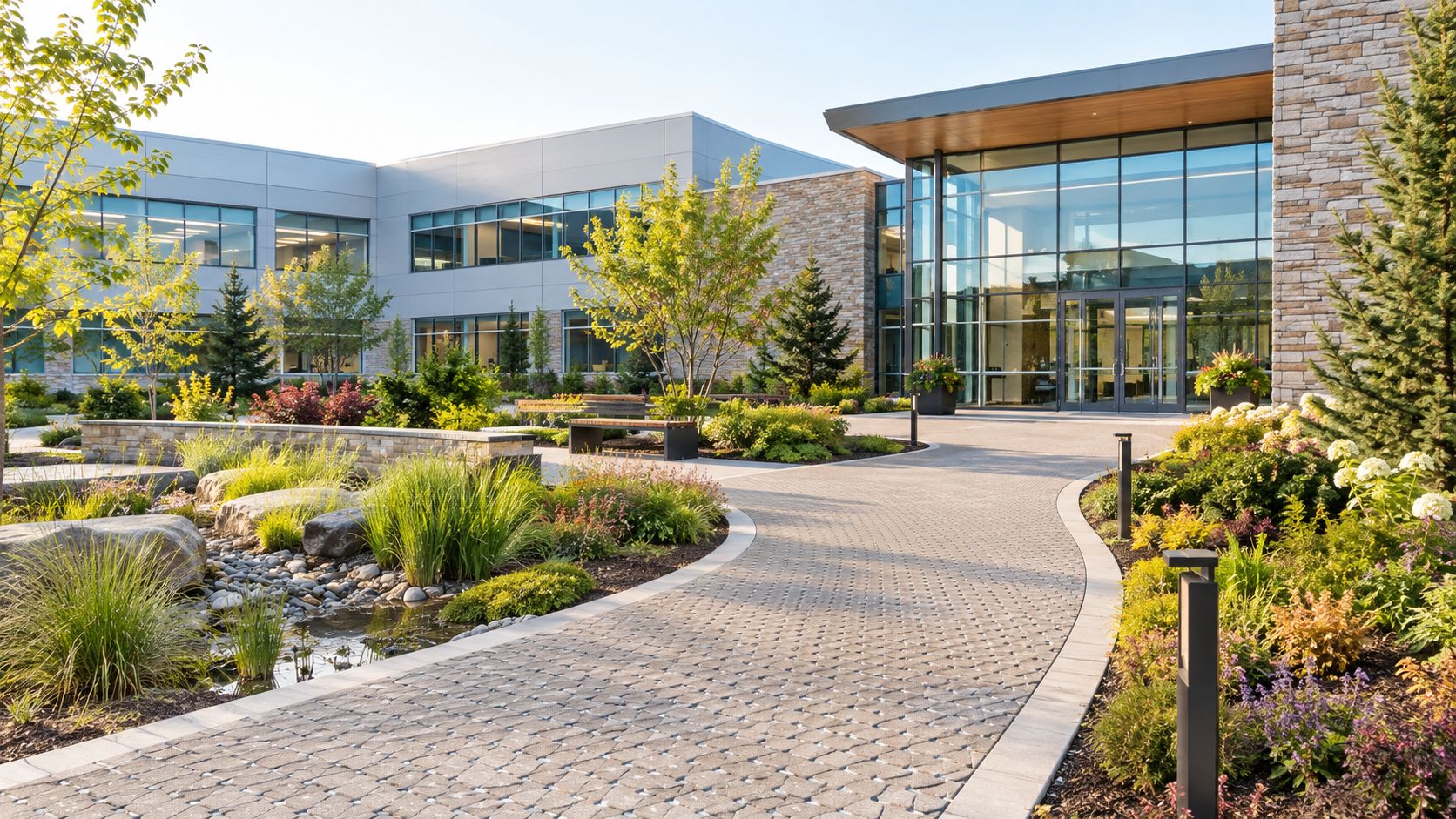
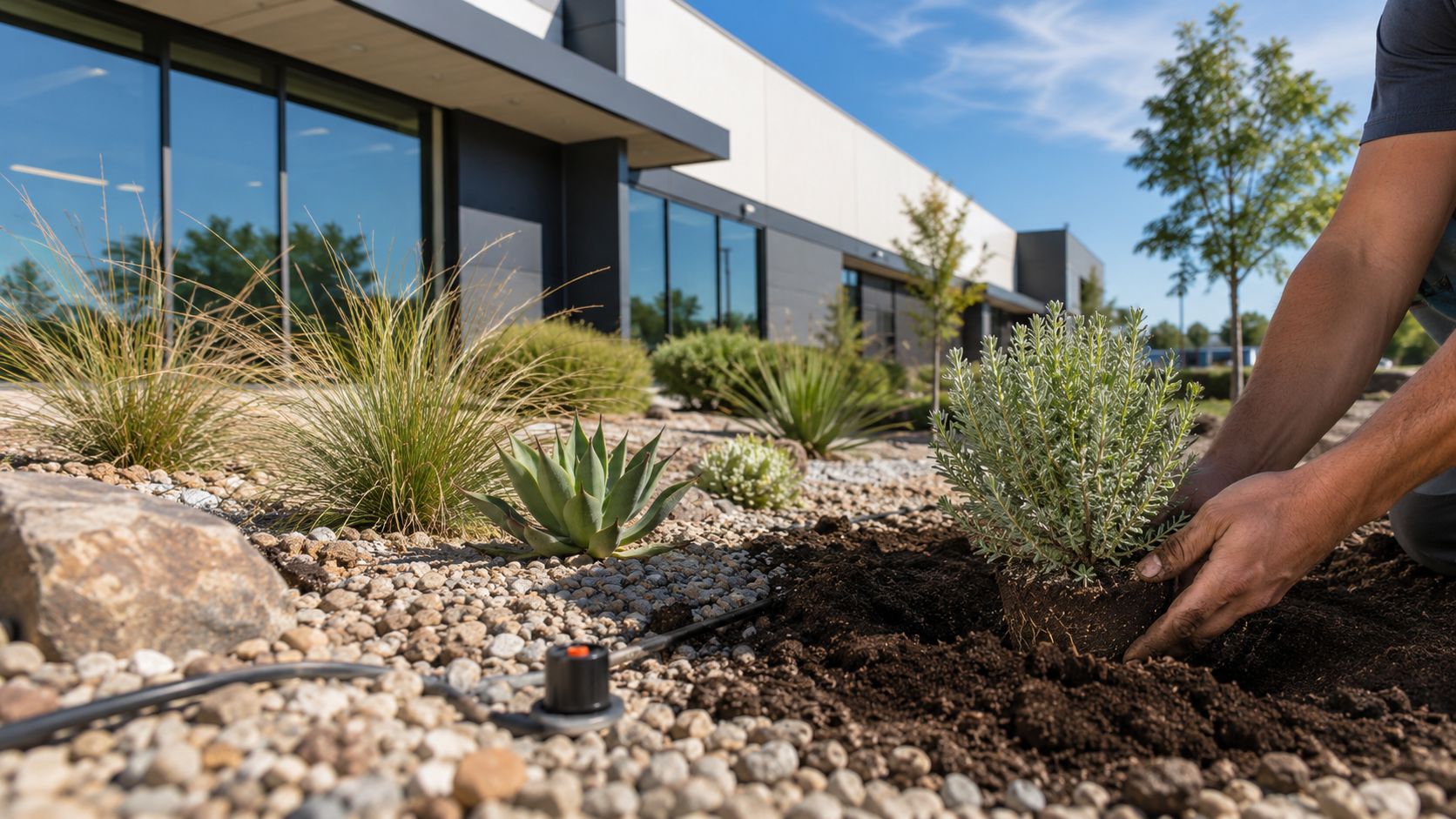
Xeriscape is a water-efficient outdoor system built on seven core principles, not a single visual style, and it can reduce outdoor water use by 50% to 70% when designed and managed well. For commercial properties, that makes xeriscape less of a gardening trend and more of an operating strategy with real value in regions where irrigation demand, drought pressure, and appearance standards all collide.
That matters in Dallas-Fort Worth and San Antonio, where commercial grounds have to do several jobs at once. They need to protect curb appeal, support leasing and tenant experience, stay presentable through heat stress, and avoid turning into a maintenance headache every summer. A traditional high-water design can still look good, but it often asks property managers to keep spending more water, more labor, and more repair effort to preserve a look that the site's climate may not naturally support.
The better question isn't just what is xeriscape. It's whether your grounds are working with Texas conditions or fighting them. On office campuses, retail centers, healthcare sites, industrial parks, and community associations, that distinction shows up in monthly water bills, irrigation break frequency, plant replacement cycles, and how well the property holds its appearance during dry periods.
Table of Contents
- Beyond Drought Tolerance to Strategic Asset Management
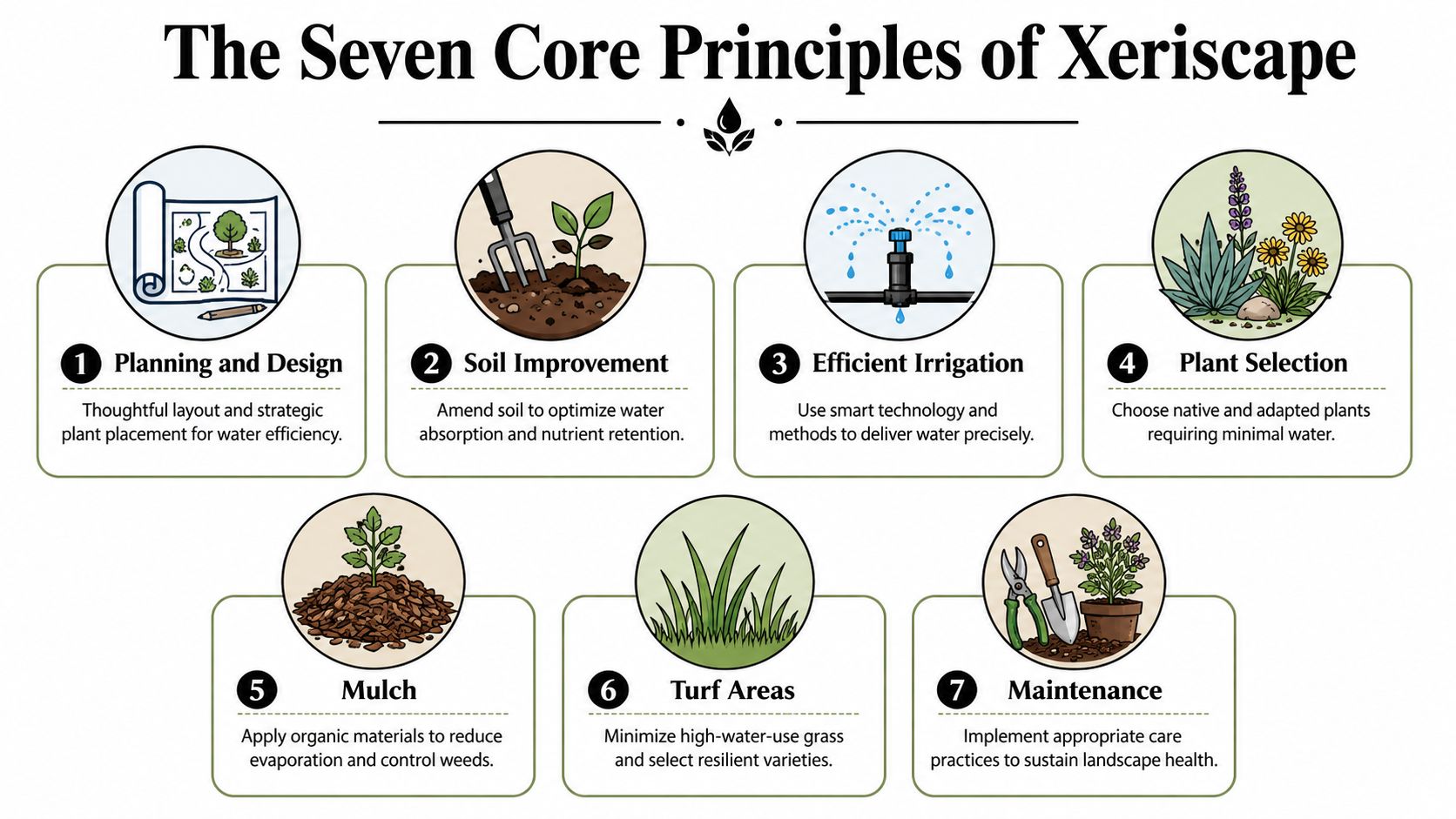
- The Seven Core Principles of Xeriscape
- The Business Case Quantifying Your Xeriscape ROI
- Designing for Dallas–Fort Worth and San Antonio Climates
- Debunking Common Xeriscape Myths
- Implementation and Long-Term Landscape Management
- Partnering for Xeriscape Success in Texas
Beyond Drought Tolerance to Strategic Asset Management
Water costs and drought pressure can turn a decorative site feature into an operating problem fast. On commercial properties in Dallas-Fort Worth and San Antonio, xeriscape is best evaluated as an asset management decision. It reduces exposure to irrigation restrictions, lowers recurring maintenance inputs, and helps outdoor areas hold their intended appearance through long heat periods.
For property managers, that changes the conversation. The question is not whether a site can survive with less water. The question is whether the grounds can stay presentable, predictable, and budgetable under Texas conditions.
Where xeriscape came from
Xeriscape emerged as a formal concept in the early 1980s. Denver Water trademarked the term in 1981 and defined it around seven principles: planning and design, soil improvement, practical turf areas, appropriate plant selection, efficient irrigation, mulching, and proper maintenance, as outlined by Moon Valley Nurseries.
That history matters for commercial work because xeriscape was never limited to one visual style or one plant palette. It is a disciplined method for fitting site design to climate, soil, use patterns, and irrigation realities so the property performs with less water stress.
On a retail center, office campus, industrial park, or multifamily site, the financial upside usually comes from fewer avoidable problems. Less overspray on paving. Fewer seasonal plant losses. Less mowing in low-value turf zones. More control over how irrigation water is applied and where it delivers a return. Property teams planning around water supply resilience should also review commercial irrigation and water management strategies in Texas.
Practical rule: If a site plan is driven by appearance alone and irrigation is treated as a late-stage add-on, the result will be expensive to maintain in Texas.
Why commercial owners should care
The strongest xeriscape programs in Dallas-Fort Worth and San Antonio start with operations, not aesthetics.
A North Texas property may deal with clay soils, runoff, and sharp summer heat. A San Antonio property often faces longer dry periods, water supply pressure, and stricter expectations around efficient water use. In both markets, the wrong turf allocation or plant mix increases labor, replacement costs, and irrigation demand.
Property managers should evaluate four business questions early:
- Water risk: How vulnerable is the site to drought, rate increases, and watering limits?
- Labor use: How many crew hours are tied up in mowing, edging, hand-watering, and replacing stressed material?
- Tenant and visitor perception: Can the grounds stay clean and intentional during heat stress without constant corrective work?
- Long-term asset value: Will the installed materials mature well, or will the property need repeated renovations to fix decline?
Some owners also connect xeriscape planning to broader site infrastructure. For teams assessing water capture, backup supply, or storage capacity, USA Tank polyethylene storage offers useful context on how stored water can support larger property operations.
Done well, xeriscape gives a commercial site more control. Budgets become easier to forecast. Irrigation performs with more discipline. The grounds support the property's image without acting like a seasonal liability.
The Seven Core Principles of Xeriscape
Why the system matters more than the label
On a commercial property, xeriscape works as an operating strategy, not a plant style. The seven principles matter because each one affects water use, labor hours, replacement rates, and how consistently the site presents through a Texas summer.
That distinction matters in Dallas-Fort Worth and San Antonio. North Texas properties often deal with compacted clay, runoff, and heat reflected off pavement. San Antonio sites usually face longer dry stretches, stricter attention to water efficiency, and tougher plant stress during extended summer conditions. A xeriscape plan has to perform under those realities, not just look good on installation day.
As outlined in Kansas State Extension's guide to xeriscape landscaping practices, the core framework includes planning, soil preparation, practical turf use, appropriate plant selection, efficient irrigation, mulching, and proper maintenance. On commercial grounds, these principles work together. If one is ignored, the others carry more cost.
How each principle works on a commercial site
Planning and design
Start with business priorities. Map pedestrian flow, visibility, sun exposure, drainage patterns, and irrigation zones before selecting plant material. Entry features, leasing fronts, outdoor amenity areas, and street-facing beds usually deserve the highest finish. Service yards, low-traffic edges, and utility corridors should be simpler, tougher, and less expensive to maintain.Soil improvement
Many Texas properties underperform because the soil profile was never corrected after construction. Compaction limits infiltration, roots stay shallow, and crews compensate with more frequent watering. In DFW, heavy clay can hold water at the surface and still fail below grade. In San Antonio, thin or rocky soils can dry out fast. Improving the root zone helps water move where plants can use it.Practical turf areas
Turf should earn its keep. Keep it in spaces where people walk, gather, or expect a clean green foreground. Remove it from narrow curb strips, detached corners, and leftover patches that add mowing time without improving the property.
Turf with no functional purpose raises operating cost every month.
Appropriate plant selection
Plant choice should match heat load, sun angle, wind exposure, soil conditions, and irrigation capacity. That lowers stress and cuts replacement churn. For commercial owners in Dallas-Fort Worth and San Antonio, regional judgment matters most. A plant palette that survives a mild season can still fail during water restrictions or extended triple-digit heat.Efficient irrigation
Irrigation determines whether xeriscape performs or becomes a maintenance problem. Bed areas often benefit from drip or low-volume delivery. Turf zones need scheduling that reflects exposure and use, not a one-size-fits-all timer. Pressure regulation, matched precipitation, functioning sensors, and periodic audits reduce overspray, runoff, and waste. For teams reviewing irrigation performance standards on Texas properties, this guide to commercial water management and irrigation in Texas gives useful operating context.Mulching
Mulch does more than improve appearance. It slows evaporation, moderates soil temperature, reduces weed pressure, and helps crews maintain a cleaner finish in high-visibility bed areas. On large commercial grounds, that visual consistency has real value because it keeps the property looking intentional even during heat stress.Proper maintenance
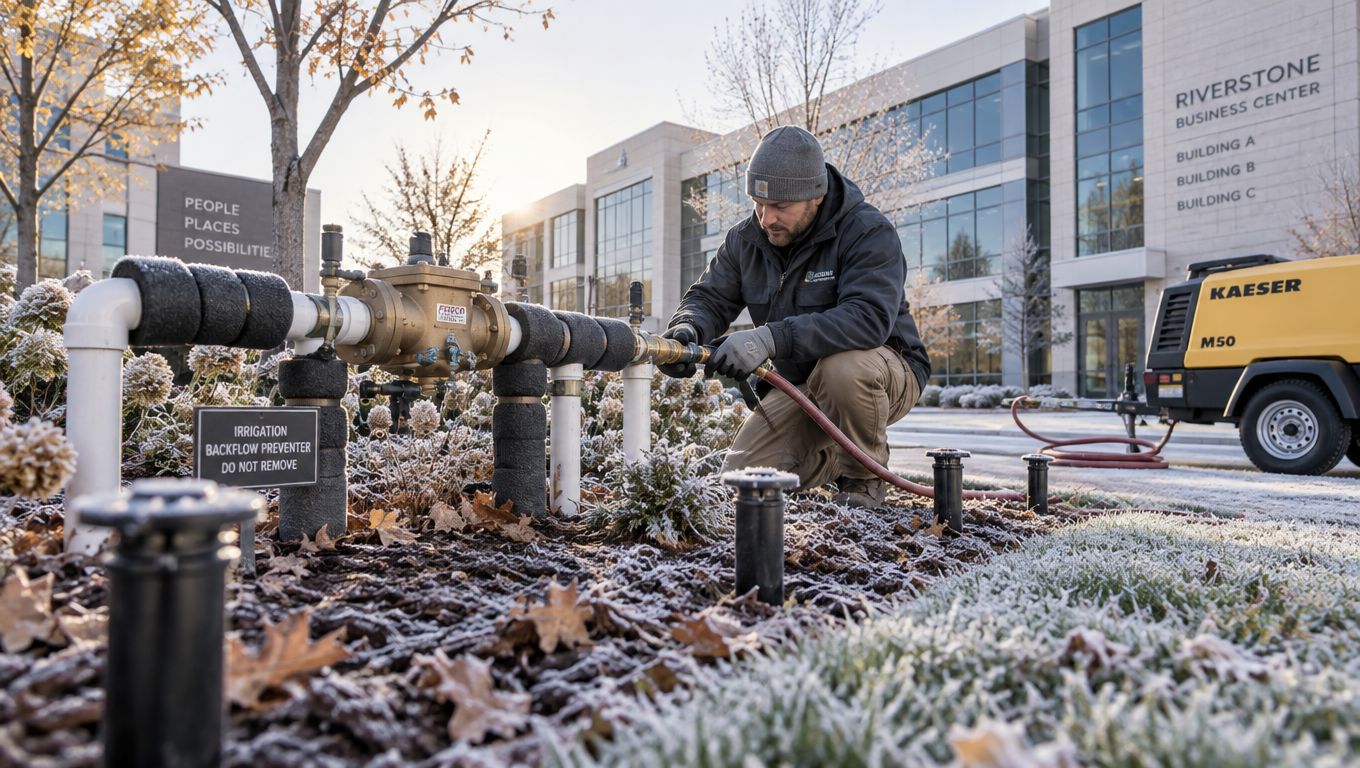
Xeriscape still requires skilled care. Crews need to adjust irrigation by season, monitor valves and emitters, prune for plant health instead of constant shearing, and keep beds clean. Deferred maintenance usually shows up as plant loss, patchy coverage, and a site that looks neglected faster than ownership expects.
Here is the operational view:
| Principle | Business impact |
|---|---|
| Planning and design | Puts budget into high-visibility, high-use areas |
| Soil improvement | Lowers water waste and reduces plant stress |
| Practical turf | Cuts mowing, edging, and unnecessary irrigation |
| Plant selection | Reduces replacement cost and seasonal decline |
| Efficient irrigation | Improves control and limits runoff and overspray |
| Mulch | Supports moisture retention and cleaner bed presentation |
| Maintenance | Protects long-term performance and property image |
The Business Case Quantifying Your Xeriscape ROI
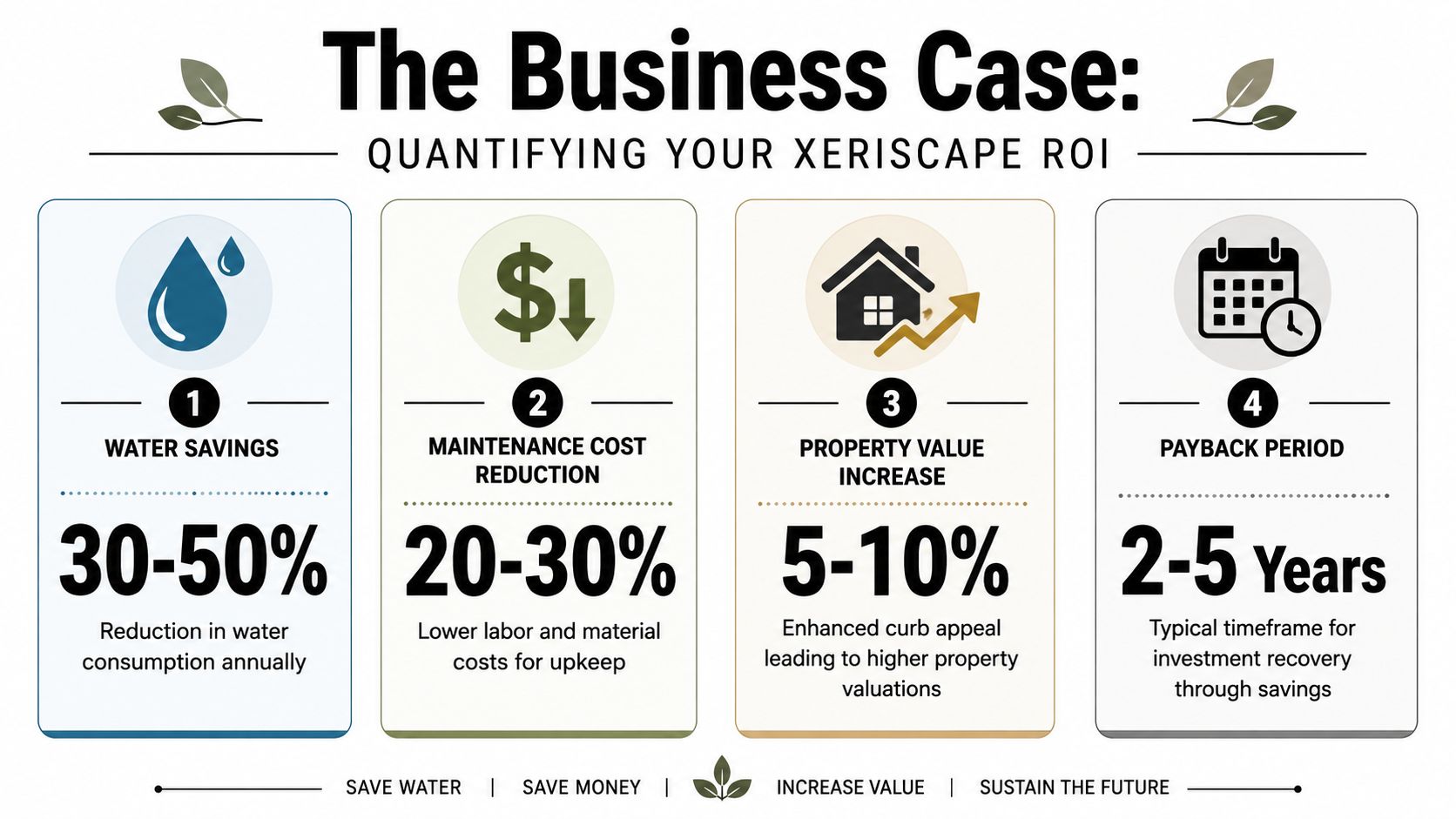
Outdoor irrigation often accounts for a large share of avoidable site operating cost, and in Texas that exposure gets worse fast during drought restrictions and summer heat. For commercial properties in Dallas-Fort Worth and San Antonio, xeriscape is a capital decision that can cut water demand, reduce labor intensity, and protect site appearance during weather stress.
Documented savings are significant. The Board of Water Supply xeriscape guidance states that outdoor water use can drop by 30% to 80%, and maintenance costs can fall by as much as 50% when the design reduces unnecessary turf, uses adapted plant material, and improves irrigation efficiency. Those ranges are broad for a reason. Results depend on starting conditions, irrigation discipline, and how much high-input turf the property carries today.
In DFW, I usually see the financial case sharpen on properties with aging spray systems, oversized lawn areas, and heavy clay soils that create a cycle of runoff, dry spots, and repeated service calls. In San Antonio, the pressure point is often long hot stretches, water supply concern, and the cost of keeping a conventional site presentable through peak summer. Site conditions differ, but the business objective is the same. Spend less to maintain a more stable exterior.
Where the savings come from
Water gets the headline, but most owners see the return through several budget lines at once.
- Lower irrigation demand: Fewer high-water zones reduce monthly utility cost and soften the impact of watering restrictions.
- Less mowing and edging: Smaller turf areas cut recurring labor on weekly appearance work.
- Lower replacement cost: Adapted planting reduces seasonal losses from heat stress, poor drainage, and uneven coverage.
- Fewer reactive repairs: Better hydrozoning and irrigation control reduce the habit of overwatering one area just to keep another alive.
- More predictable upkeep: Mulched beds and durable plant groupings shift crews toward scheduled care instead of constant recovery work.
That matters to property managers because operating waste rarely sits in one line item. It shows up across water, labor, plant replacement, tenant complaints, and appearance drift.
How to read xeriscape ROI on a commercial property
A property's grounds affect NOI through operating expense control, tenant perception, and the risk of visible decline. The return is not just a simple payback calculation on irrigation savings. It is a package of gains that improves budget stability over time.
For office, retail, industrial, healthcare, and multifamily sites, drought resilience has direct value. A property that holds its structure and color through a dry period protects curb appeal and reduces the chance of rushed seasonal replacements before tours, inspections, or renewals. That is especially relevant in markets where heat arrives early and stays.
The strongest ROI usually shows up on properties with several of these conditions:
- A large irrigated footprint
- High-visibility turf that adds cost more than function
- Recurring summer decline in beds or lawn areas
- Frequent irrigation troubleshooting
- Pressure to control OPEX without lowering site standards
Regional context matters. A plan that pencils out in San Antonio may need different plant mixes, soil preparation, and drainage responses in North Texas. Property teams evaluating a conversion should account for those differences early, especially if the site operates in the conditions described in San Antonio's commercial outdoor environment.
A weak redesign can cut cost and leave the property looking thin. A disciplined xeriscape plan does the opposite. It lowers inputs, reduces drought exposure, and supports long-term asset value.
Designing for Dallas–Fort Worth and San Antonio Climates
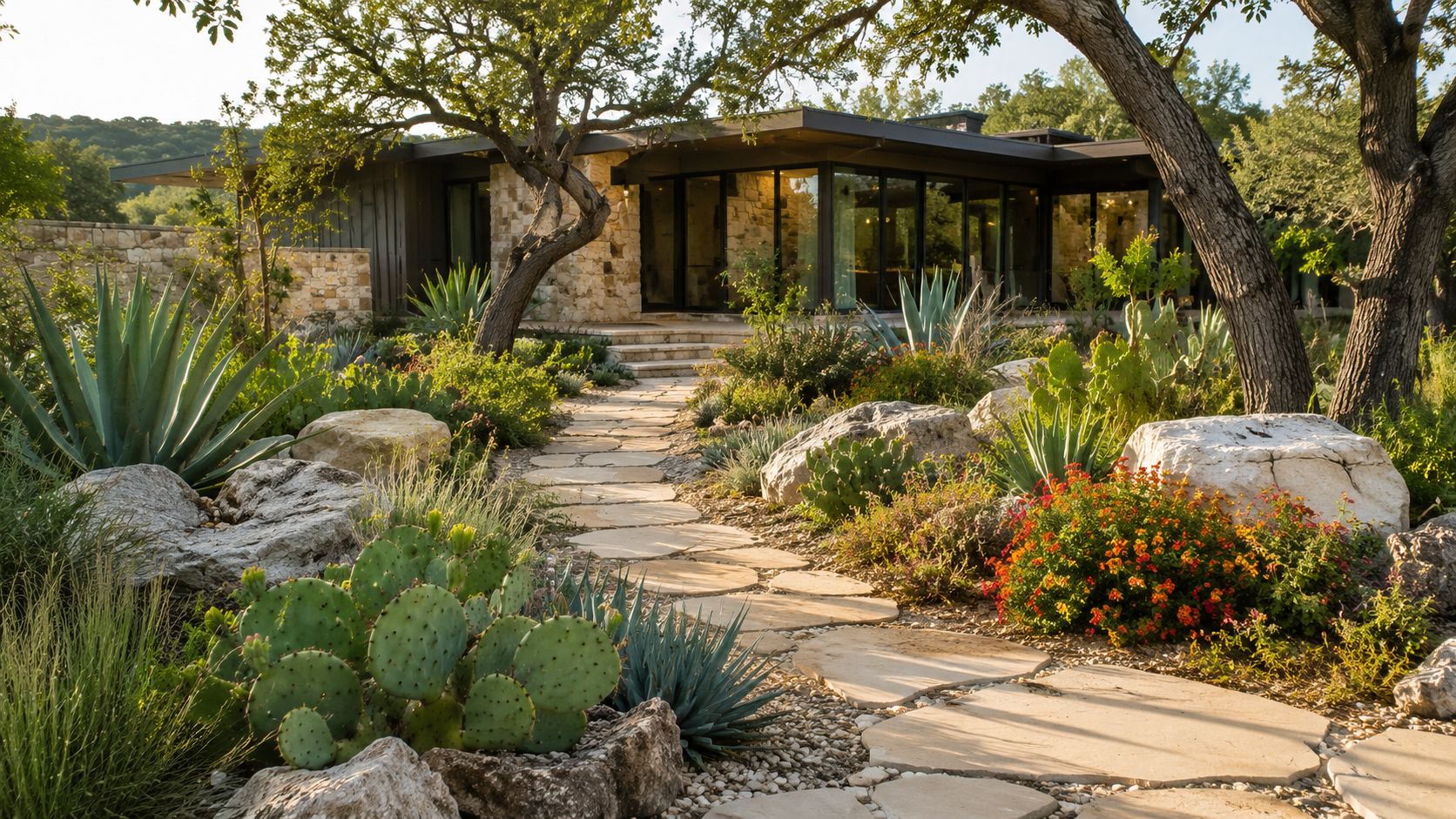
Regional success depends on local restraint. The same xeriscape plan should not be dropped into Dallas-Fort Worth and San Antonio without adjustment. Both markets deal with heat and periodic drought, but they don't stress outdoor environments in exactly the same way.
What works in Dallas–Fort Worth
DFW commercial sites often wrestle with heavy clay soils, drainage inconsistency, and stronger freeze exposure than many owners expect. That changes design decisions.
A durable DFW xeriscape usually benefits from:
- Clear hydrozones: Separate planting areas by water need so one schedule doesn't punish the whole site.
- Drainage-aware grading: Beds that hold too much water in one storm and crack dry later need soil work, not just tougher plants.
- Selective turf retention: Keep lawn where tenants or visitors use it, especially around entries and active common areas.
- Layered planting: Use trees, shrubs, ornamental grasses, and perennials to build structure instead of relying on broad annual color massing alone.
For many properties, the visual goal in DFW isn't “desert.” It's structured, clean, and seasonally resilient. You want an outdoor space that can absorb summer stress without looking thin or unmanaged by late August.
What works in San Antonio
San Antonio sites often face hotter, more intense summer exposure, alkaline soils, and an outdoor design vocabulary that can support bolder drought-adapted plant forms. That opens design opportunities, but it also creates a temptation to overdo hardscape and rock.
Good San Antonio xeriscape tends to balance:
- Shade strategy: Tree placement matters for pedestrian comfort, building frontage, and soil temperature.
- Adapted plant character: Architectural plants can work well, but they should be blended with softer material for depth and continuity.
- Irrigation precision: Heat load can vary sharply between exposed medians, courtyard beds, and shaded building edges.
- Mulch discipline: The right mulch treatment helps prevent beds from looking harsh or unfinished.
For local context on conditions that shape plant and irrigation decisions, this overview of the San Antonio landscape environment is worth reviewing.
In San Antonio, a landscape can be water-wise and still feel lush. Texture, canopy, and plant spacing do most of that work.
A useful distinction between the two cities is visual tone. DFW often rewards a greener, more formal expression of xeriscape. San Antonio can support a more regional, heat-adapted identity with stronger native and adapted plant character. In both places, the winning formula is the same: design for the site you have, not the visual design you imported from somewhere else.
Debunking Common Xeriscape Myths
On commercial properties in Dallas-Fort Worth and San Antonio, the biggest barrier to xeriscape is usually not budget. It is a bad mental picture. Property managers hear the term and picture gravel, cactus, and a front entry that looks underbuilt for the asset.
That picture costs money. It keeps owners tied to high-irrigation turf, repetitive plant replacement, and grounds that struggle through water restrictions and long summer heat.
Myth and reality on commercial sites
Myth 1: Xeriscape means a rock yard with cactus.
Reality: Xeriscape is a water-use strategy, not a style. Colorado WaterWise explains that xeriscape means “less lawn landscaping,” not “lawn-less landscaping,” and it is “NOT just rocks and gravel.” On Texas commercial sites, too much rock often creates its own problems. It can raise surface heat, make entries feel harsh, and weaken the property's visual value if plant massing and shade are stripped out.
Myth 2: Xeriscape removes all grass.
Reality: Strong site design keeps turf where it earns its keep. That usually means entry panels, tenant-facing courtyards, gathering areas, and other spaces where a green surface supports leasing, circulation, or brand standards. The waste is in oversized turf medians, narrow strips, and low-visibility areas that consume water and labor without improving the property.
Myth 3: Xeriscape looks sparse and cheap.
Reality: Poor composition looks cheap. Well-designed grounds can read as polished, full, and intentional with lower water demand. In DFW, that may mean a cleaner, more formal expression. In San Antonio, it often means stronger regional character with shade, texture, and heat-adapted planting. In both markets, appearance comes from spacing, canopy, repetition, and maintenance discipline, not from high water use.
Myth 4: Once installed, it takes care of itself.
Reality: Xeriscape changes the maintenance model. It does not eliminate it. Crews still need to monitor irrigation, manage pruning cycles, control weeds, refresh mulch, and replace failures before beds start to unravel. From an operations standpoint, this is a shift toward more targeted labor and fewer chronic water-related problems.
Here is the practical comparison property teams should use:
| Myth | What happens on a well-run commercial site |
|---|---|
| No lawn allowed | Turf stays in areas with tenant, visitor, or visual value |
| Rock solves everything | Planting, soil prep, mulch, and irrigation design drive performance |
| No irrigation needed | Irrigation stays in place, but zones are more precise and efficient |
| Maintenance disappears | Maintenance becomes more focused, predictable, and strategic |
The phrase “drought tolerant” often causes the confusion. For commercial ownership groups, the better standard is operational resilience. A xeriscape program works because the site is designed and managed to hold appearance, reduce water exposure, and protect asset value during Texas drought cycles.
Implementation and Long-Term Landscape Management
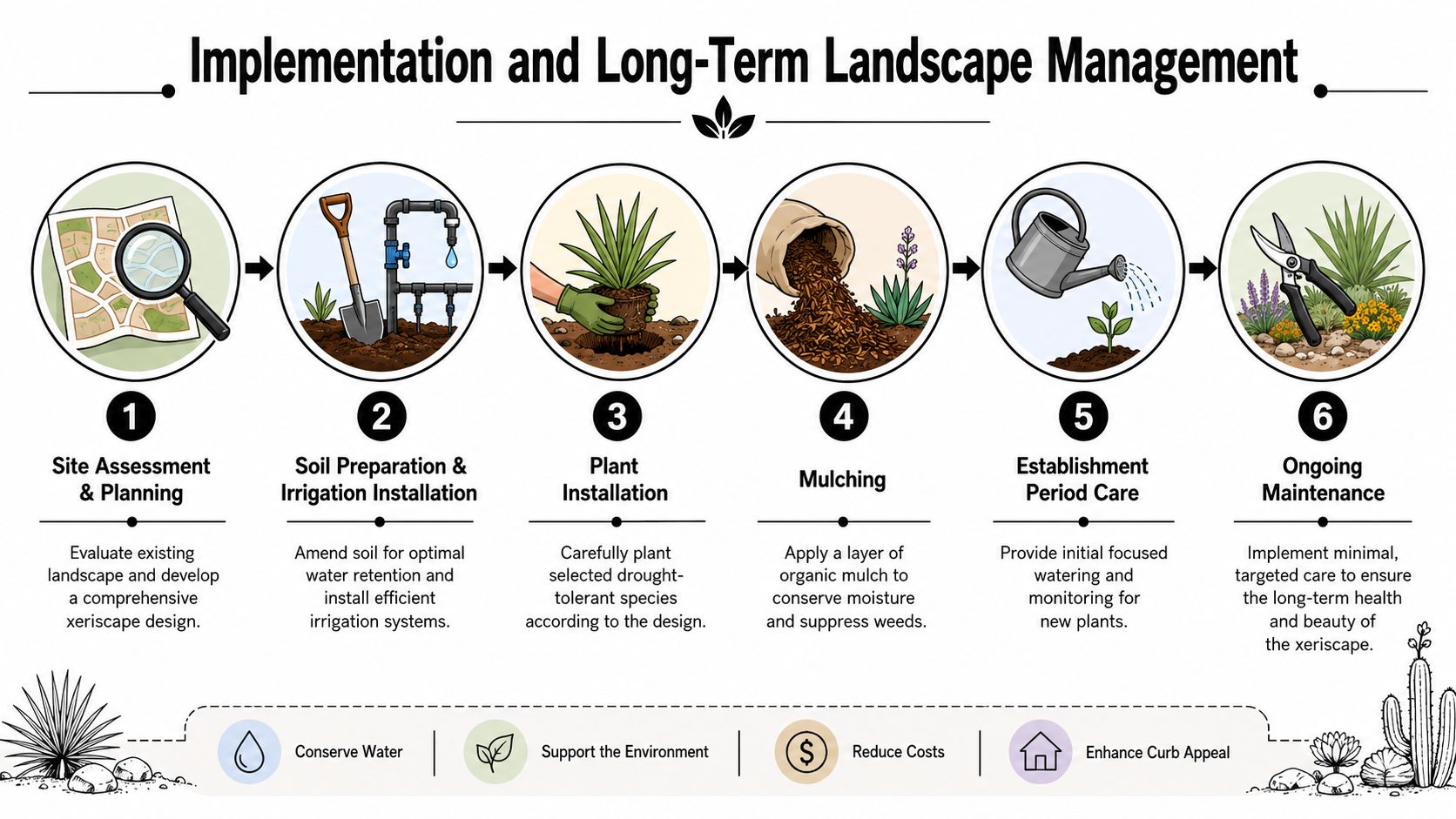
For commercial properties in Dallas-Fort Worth and San Antonio, the installation phase is where water savings either become a durable operating advantage or turn into a costly rework item. A xeriscape conversion needs to be managed like any other site capital project, with scope control, sequencing, and post-install performance checks.
Teams get into trouble when they rush the visible parts and underfund the hidden ones. Poor soil prep, irrigation zones left in their old configuration, and plant selection that ignores reflected heat from pavement usually show up later as higher water use, warranty replacements, and inconsistent curb appeal.
Colorado State University makes the maintenance standard clear in an article from Colorado State University on the principles and upkeep of xeriscaping. Xeriscape requires regular inspections, seasonal irrigation changes, soil attention, and plant grouping by water demand. For property managers, that means the goal is lower-input grounds management, not a zero-service site.
What a conversion process should look like
A disciplined commercial rollout usually follows four stages.
Site assessment
Review irrigation coverage, drainage, heat exposure, recurring plant loss, pedestrian visibility, and which turf areas still earn their keep. In DFW, I usually see more issues tied to runoff, overspray, and large, sun-exposed beds near drives. In San Antonio, shallow soils, extended heat, and localized water pressure issues often shape the plan.Design and budgeting
Build the plan around hydrozones, maintenance access, and appearance standards. Keep turf only where it supports leasing, circulation, or frontage image. The budget should also account for controller updates, valve repairs, soil amendments, and establishment care, because those line items protect the long-term return.Soil preparation and irrigation retrofit
This work carries a lot of the financial value. Healthy soil stores moisture better. Correct zoning reduces waste. Pressure problems, broken heads, and poor head spacing should be fixed before new material goes in, not after the first stress cycle.Installation and establishment
New plantings need scheduled monitoring while roots develop. That usually includes targeted watering, early weed control, mulch correction, and quick replacement of failures before gaps start to read as neglect.
The establishment period is where many owners misjudge performance. Heat-adapted material can still decline fast if the first growing season is unmanaged.
What long-term management looks like on a commercial site
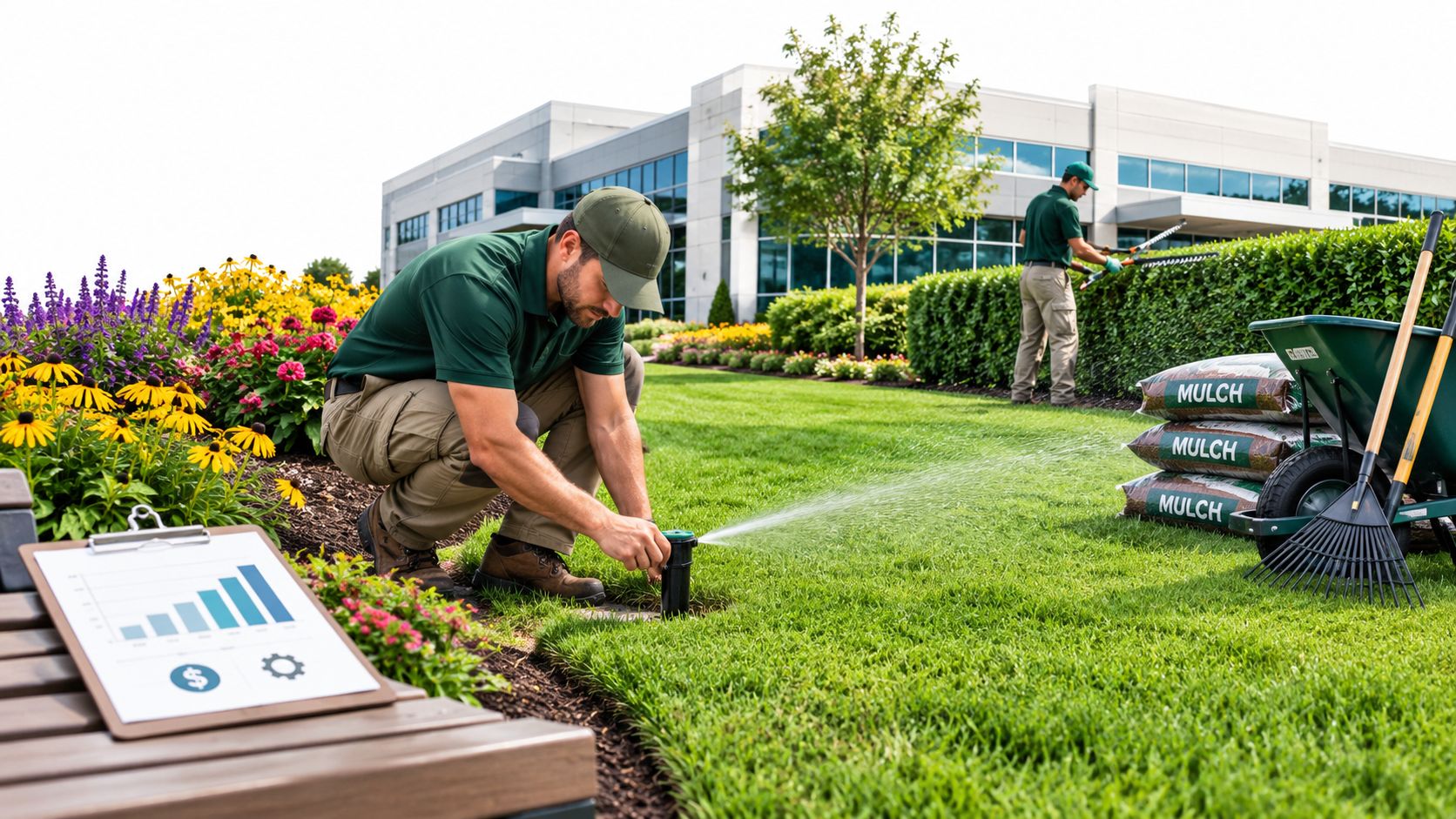
After establishment, the work becomes more precise. Water use should trend down, but only if crews keep adjusting the system to actual conditions on the property.
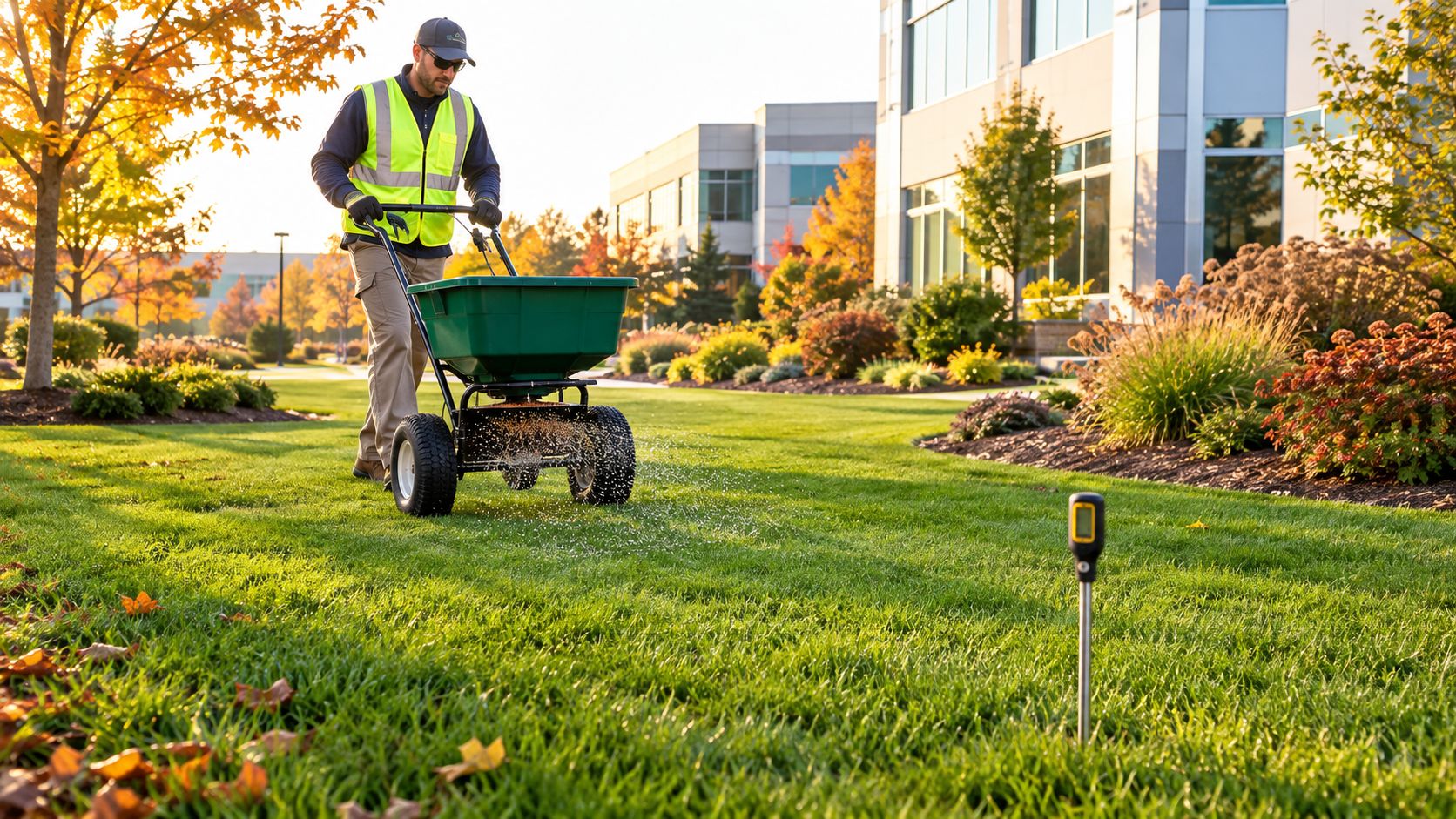
- Irrigation tuning: seasonal controller resets, rain sensor checks, pressure review, and periodic audits by zone
- Mulch management: maintain coverage to limit evaporation, suppress weeds, and keep bed lines clean
- Pruning and cleanup: preserve form, sightlines, and clearance without forcing unnecessary regrowth
- Weed control: prevent new beds from turning into a labor-heavy recurring problem
- Plant replacement: remove weak performers and refine the palette based on how each area handles heat, shade, and traffic
Vendor quality shows up quickly at this stage. Prestonwood Commercial Outdoor Services handles commercial water management, irrigation audits and repairs, outdoor construction, and ongoing maintenance in Dallas-Fort-Worth and San Antonio. Those are the service categories property teams usually need across the full xeriscape lifecycle.
Communication matters too, especially for multi-site portfolios where irrigation failures or appearance issues can sit unresolved if work orders are not handled well. Teams comparing vendor responsiveness may also review tools like an answering service for landscapers when evaluating how contractors manage calls, dispatch, and tenant-facing service issues. A practical screening standard is this checklist of what property managers should look for in a commercial landscaping partner.
The payoff is operational, not theoretical. Well-managed xeriscape reduces exposure to drought restrictions, lowers irrigation waste, and gives ownership a cleaner cost structure over time. Poorly managed xeriscape becomes a patching cycle. The difference is disciplined implementation and consistent site management.
Partnering for Xeriscape Success in Texas
A xeriscape project succeeds or fails long before the first plant goes in the ground. It depends on whether the contractor understands commercial operations, not just planting design. Property managers need a partner who can read irrigation systems, phase work around tenant activity, and maintain appearance standards after the conversion.
What to expect from the right landscape partner
The right commercial grounds partner should be able to handle these tasks without hand-holding:
- Assess existing conditions clearly: Which turf areas are worth keeping, which beds fail repeatedly, and where irrigation is wasting water.
- Translate design into operations: A plan that looks good on paper but can't be maintained efficiently is a bad plan.
- Support communication: Fast response matters, especially across multi-site portfolios. Teams evaluating front-end responsiveness may also find resources on an answering service for landscapers useful when comparing how vendors manage calls, work orders, and service coordination.
- Maintain performance after installation: The property needs ongoing irrigation tuning, horticultural adjustments, and clean site presentation.
When owners review vendors, they should also look beyond bid price. This checklist of what property managers should look for in a commercial landscaping partner reflects the kinds of capabilities that matter once the work is underway.
The strongest xeriscape outcomes in Texas usually come from firms that can do three things well. They can redesign the outdoor space around regional realities, execute the irrigation and construction work cleanly, and maintain the site without drifting back into inefficient habits.
For Dallas-Fort Worth and San Antonio properties, that combination is what protects ROI. Not the buzzword. Not the plant palette alone. The system, the installation quality, and the long-term management discipline are what make xeriscape pay off.
If you're evaluating a xeriscape conversion for an office park, retail center, industrial campus, healthcare site, or HOA, Prestonwood Commercial Landscape Services can help you assess water use, redesign inefficient areas, and manage installation and ongoing maintenance for Texas commercial properties.