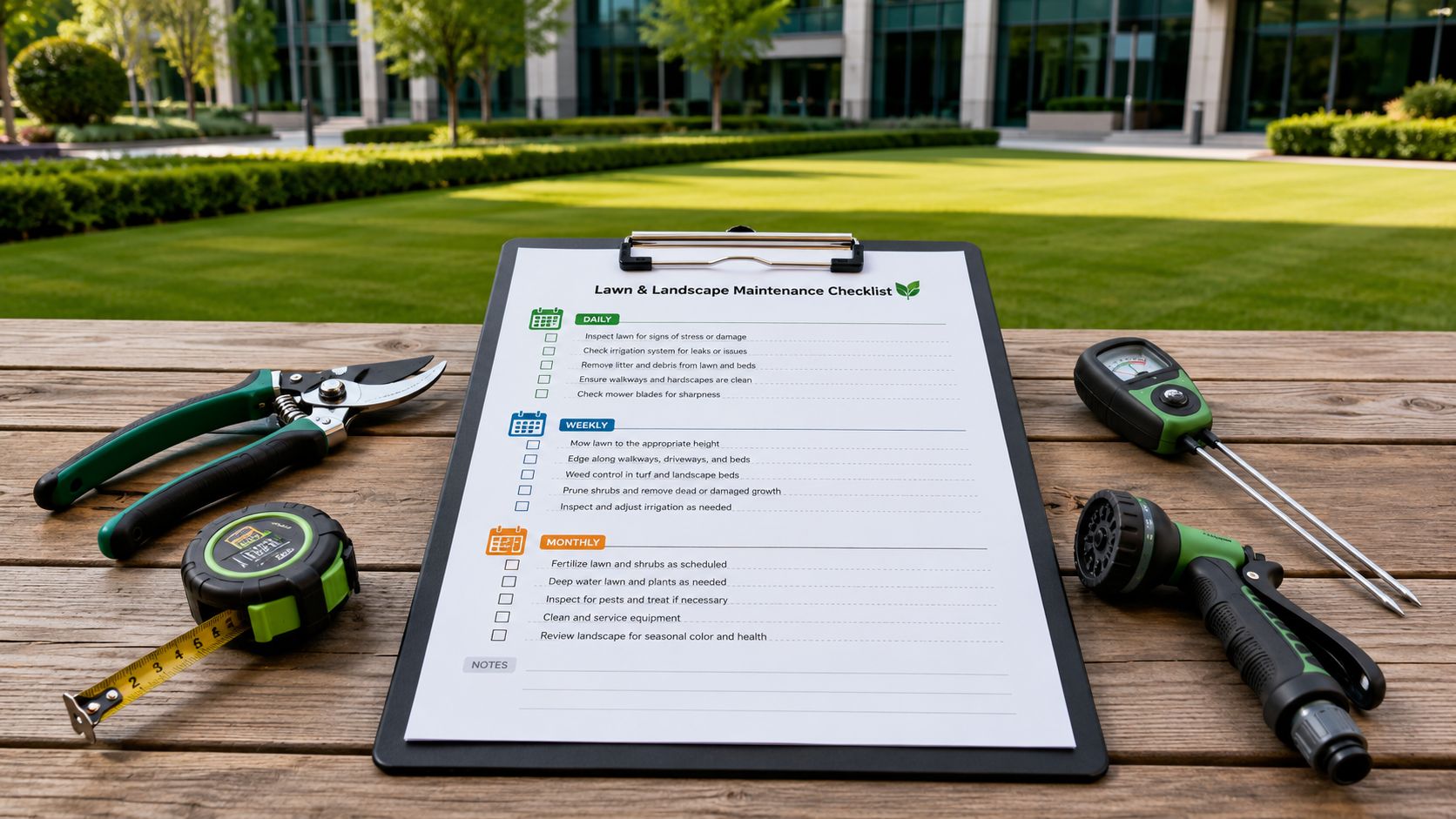
A property can look maintained from the entrance while problems are already developing out of sight. A small irrigation leak may be saturating one bed and starving another. Compacted soil can leave turf thin, declining plants can weaken a visual focal point, and dark or obstructed walkways can create safety concerns after sunset. Missed debris removal may also clog drainage points before the next storm.
A useful commercial property maintenance checklist turns those risks into a repeatable property standard. It combines daily care with weekly service routines, monthly inspections, seasonal planning, quality documentation, and clear escalation rules. The right cadence also depends on the site. A retail center needs customer-ready presentation, a healthcare campus needs safe access and low-risk conditions, and an industrial property may prioritize durability, drainage, and clear vehicle routes.
The broader landscaping services industry was estimated at $176.7 billion in 2026 across 556,000 businesses, with roughly 1.1 million workers, according to the 2026 U.S. lawn care and landscape industry report. That scale helps explain why recurring outdoor maintenance work functions as facilities management, not just cosmetic upkeep. Prestonwood Commercial Landscape Services provides an example of a full-service partner serving Dallas-Fort Worth and San Antonio with routine maintenance, seasonal color, irrigation audits, central water management, responsive communication, and grounds renovation.
Use the following ten tasks to build a service system your team can schedule, inspect, document, and improve.
Table of Contents
- 1. Irrigation System Audits and Optimization
- 2. Lawn Mowing and Turf Management
- 3. Landscape Bed Maintenance and Mulching
- 4. Shrub and Tree Pruning
- 5. Seasonal Color and Planting Updates
- 6. Hardscape Cleaning and Maintenance
- 7. Plant Health Monitoring and Pest and Disease Management
- 8. Landscape Lighting Maintenance and Inspection
- 9. Debris Removal and Property Cleanup
- 10. Soil and Turf Amendment Programs
- 10-Item Commercial Landscape Maintenance Comparison
- Make Every Site Visit Measurable and Actionable
1. Irrigation System Audits and Optimization
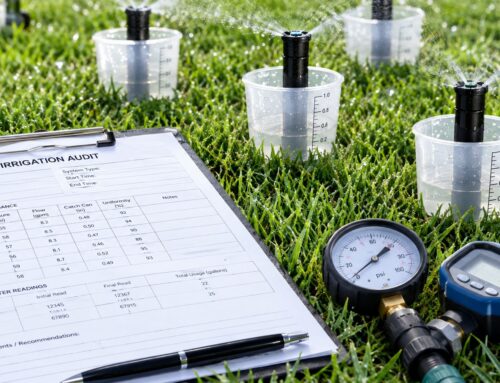
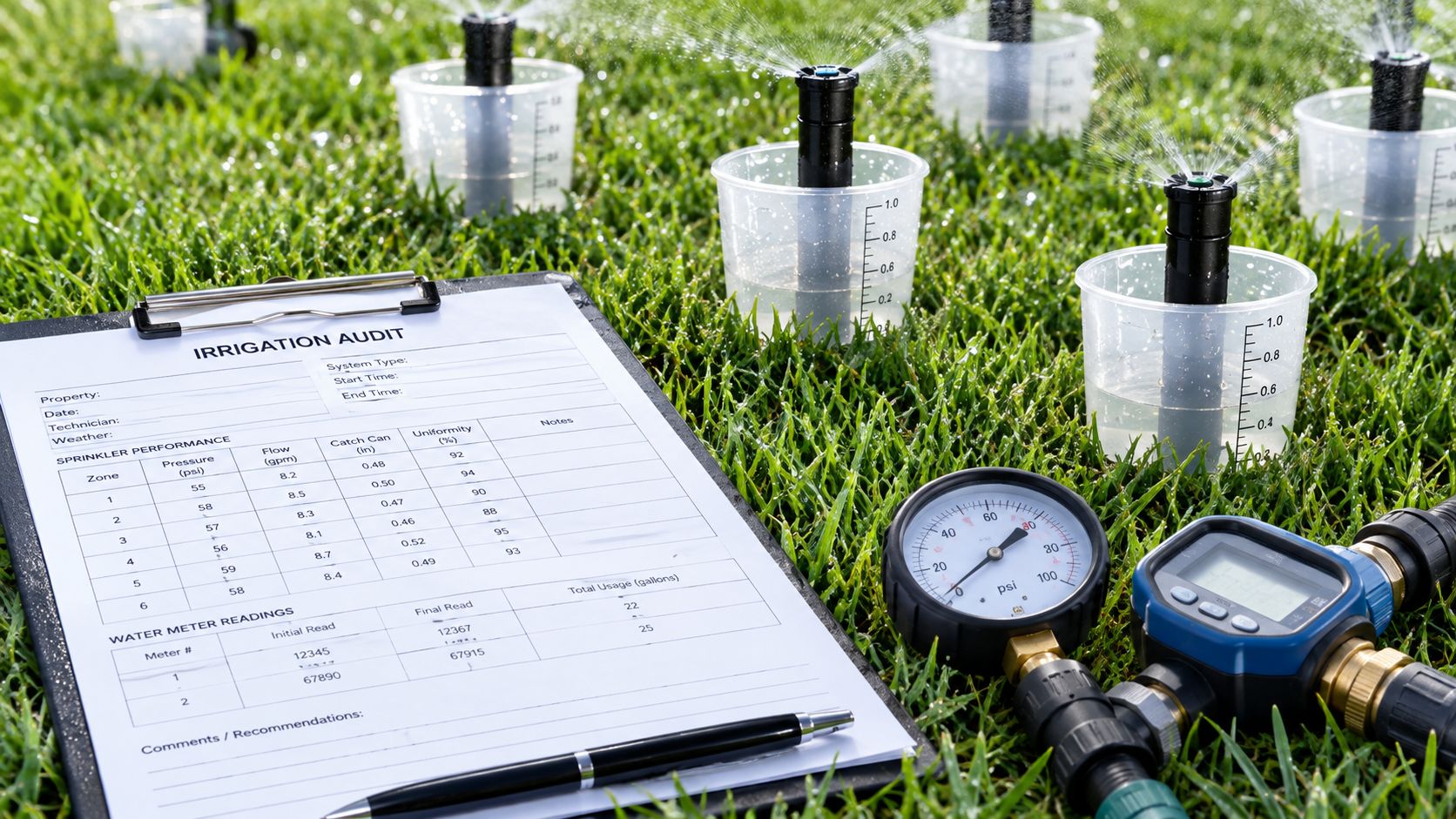
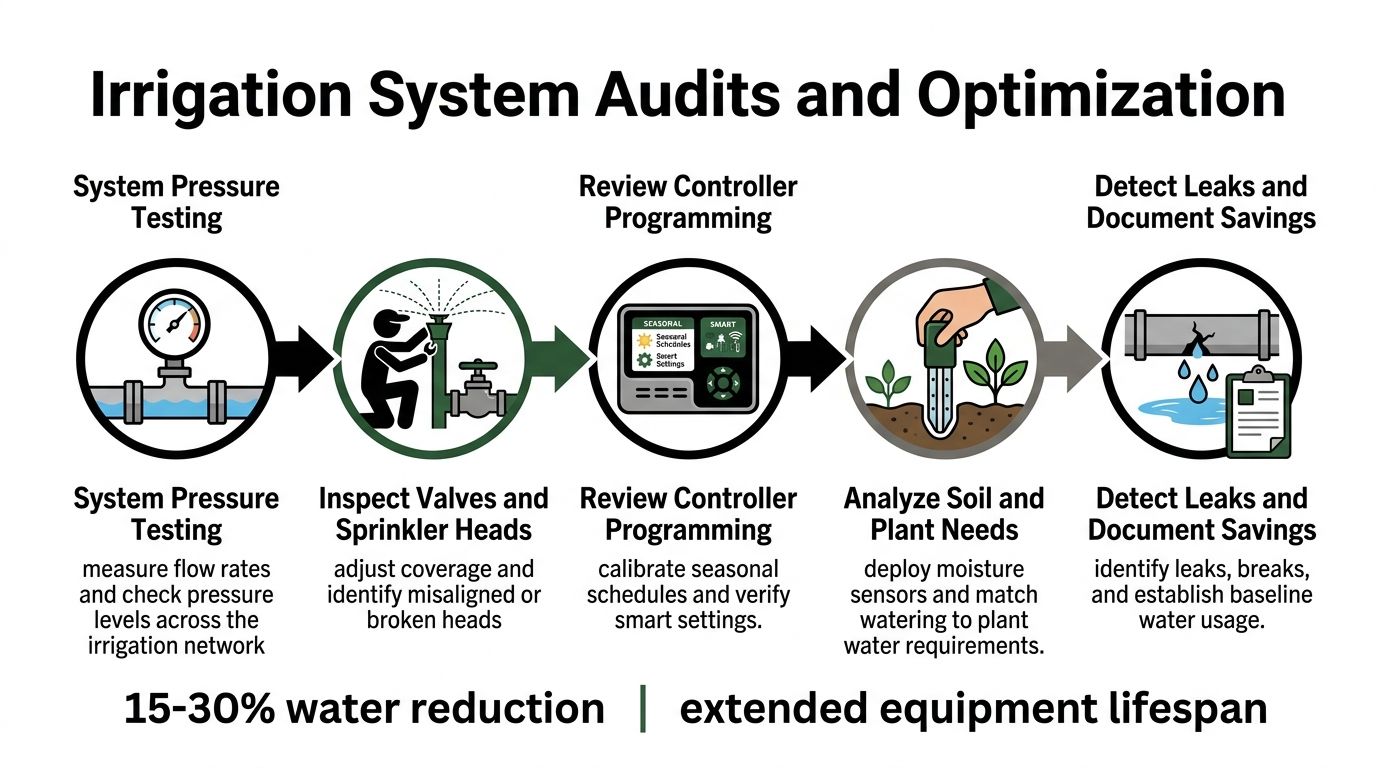
A property can look well maintained while an irrigation zone wastes water every night. Dry turf, overspray on paving, leaking valves, and rising utility costs usually point to an audit gap. Inspect each zone for even coverage, aligned heads, blocked nozzles, damaged pipes, and controller settings that match current weather and plant demand.
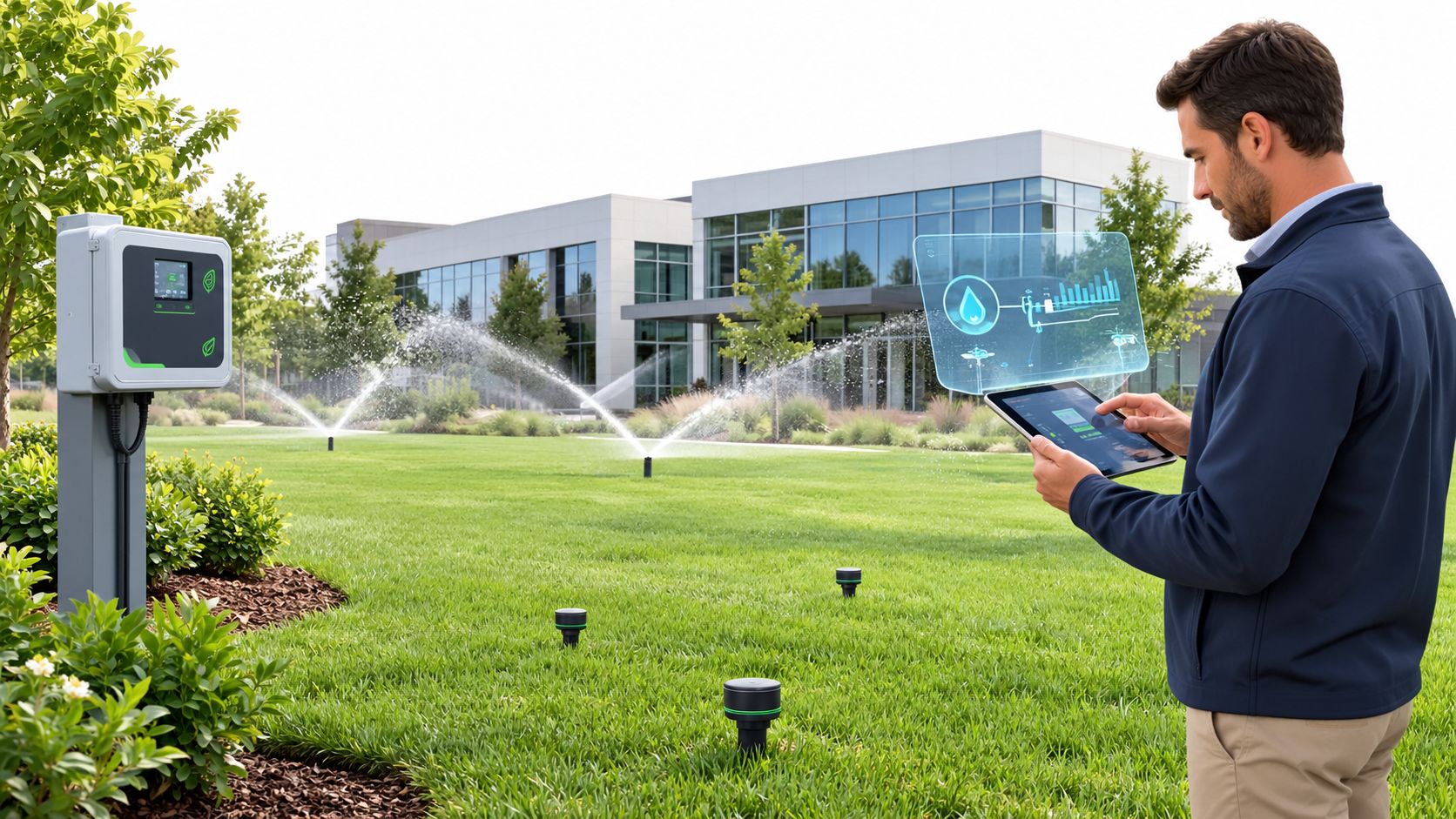
Begin with high-water-demand turf zones, then inspect planted beds separately. Turf, shrubs, trees, and annual color require different schedules. Soil-moisture sensors can prevent beds from receiving water because a nearby turf zone is operating. Record baseline water use before repairs or programming changes, then compare results during later inspections.
The U.S. Geological Survey has collected nationwide water-use data regularly since 1950, creating a long-term reference for conservation planning in its USGS overview of water use in the United States. Residential figures do not transfer directly to commercial properties, but the operating lesson applies: treat outdoor irrigation as a managed utility. Prestonwood Commercial Landscape Services describes a service model that includes routine maintenance, seasonal color, irrigation audits, central water management, communication, and grounds renovation.
Build the audit around decisions
A technician should document:
- Coverage: Record dry patches, overspray, runoff, broken heads, and blocked nozzles.
- Controller logic: Check seasonal schedules, rain delays, weather-based adjustments, and zone runtimes.
- System pressure and flow: Investigate unusual readings that may indicate leaks or damaged components.
- Plant-zone matching: Separate areas by sun exposure, soil conditions, and water requirements.
- Follow-up work: Classify each finding as an adjustment, repair, retrofit, or capital improvement.
Weather-based smart controls provide a practical benchmark for reprogramming decisions. Field guidance reports typical savings of 20% to 40% compared with timer-based systems. Its life-cycle example covers a facility using 4 million gallons annually, water priced at about $1.40 per thousand gallons, and installation costing roughly $20,000. Review the field guidance on weather-based irrigation controls before building a site-specific business case. Regional operating considerations are also covered in this water management and irrigation guide for Texas commercial landscaping.
2. Lawn Mowing and Turf Management
Turf appearance depends on several operating details: a consistent cutting schedule, clean edges, suitable height, sharp blades, and routes that limit repetitive wear. Set mowing frequency by growth conditions instead of an inflexible calendar. Fast growth may require additional visits, while stressed turf may need a lighter service approach.
Apply the one-third rule on every route. Remove no more than one-third of the grass blade in a single cut. Heavier removal can stress turf and leave clippings in piles that make the site look unfinished.
Protect presentation and turf health
Create a written turf standard covering acceptable height, edging quality, clumping, bare areas, weed pressure, and damage near curbs or foundations. Crews should alternate mowing patterns to reduce rutting and compaction. Raise the cutting height somewhat during hot, dry periods to help turf retain resilience.
Mulch clippings when they disperse cleanly under normal conditions. Remove them when wet growth, heavy thatch, or visible clumping affects presentation. Keep blades sharp and inspect equipment before each route. Torn blades produce a rough finish and can make healthy turf appear dull.
Service priorities vary by property type. Retail centers need clear sightlines around storefronts and pedestrian routes. Office campuses often require broad, uniform turf panels and formal entrance edges. Industrial sites may prioritize access routes and reduced rutting near loading areas. Hospitality and healthcare properties need clean approaches where visitors form immediate impressions. HOAs require consistent standards across many homes, making route documentation and exception reporting important.
Record each service area, unusual turf condition, irrigation concern, and inaccessible zone. Add before-and-after photos when a problem requires follow-up, such as bare turf, repeated clumping, or damage beside a curb. A property manager can then compare the documented result with the site standard during the next audit.
Prestonwood's commercial lawn care service shows how mowing, edging, trimming, and recurring turf care can fit within a broader maintenance program.
3. Landscape Bed Maintenance and Mulching
Commercial grounds beds show whether a property receives careful attention between mowing visits. Weeds around sign monuments, exposed irrigation lines, scattered plant debris, and uneven mulch quickly reduce the quality of an otherwise healthy site.
Bed maintenance should follow a defined visual standard. Crews need to remove weeds, collect fallen material, maintain crisp borders, check plant spacing, and report declining specimens. High-visibility areas deserve more frequent hand work than remote service corridors. A retail entry, healthcare drop-off zone, or hospitality frontage can't be judged by the same tolerance as a back-of-house bed.
Treat mulch as a surface system
Mulch helps suppress weeds, retain moisture, and present a finished surface, but it can become a problem if crews add new material over old layers. Remove degraded or compacted mulch where necessary, inspect the soil and plant crowns, then apply fresh material evenly. Keep mulch away from trunks and stems so moisture doesn't remain against plant tissue.
Color should support the property's architecture and brand rather than compete with it. Dark brown can reinforce a formal appearance, while natural tones may suit campuses or properties with a softer aesthetic. In high-traffic areas, fabric may reduce weed pressure, but it won't replace inspection. Weeds can emerge at seams, edges, and openings around plants.
A practical bed route includes:
- Visible weed control: Hand-pull or carefully remove weeds around entrances, signs, and pedestrian paths.
- Surface inspection: Look for exposed roots, washouts, mulch displacement, and erosion after rain.
- Plant condition: Record wilt, discoloration, pest damage, broken stems, and failed seasonal color.
- Edge quality: Check that bed lines remain distinct from turf, pavement, and building approaches.
- Material planning: Schedule replenishment before the property enters a high-visibility season.
Texas heat can accelerate mulch breakdown, so a property may need more frequent replenishment than a cooler climate would require. The correct decision depends on appearance, soil exposure, moisture behavior, and material condition, not on applying a fresh layer automatically.
4. Shrub and Tree Pruning
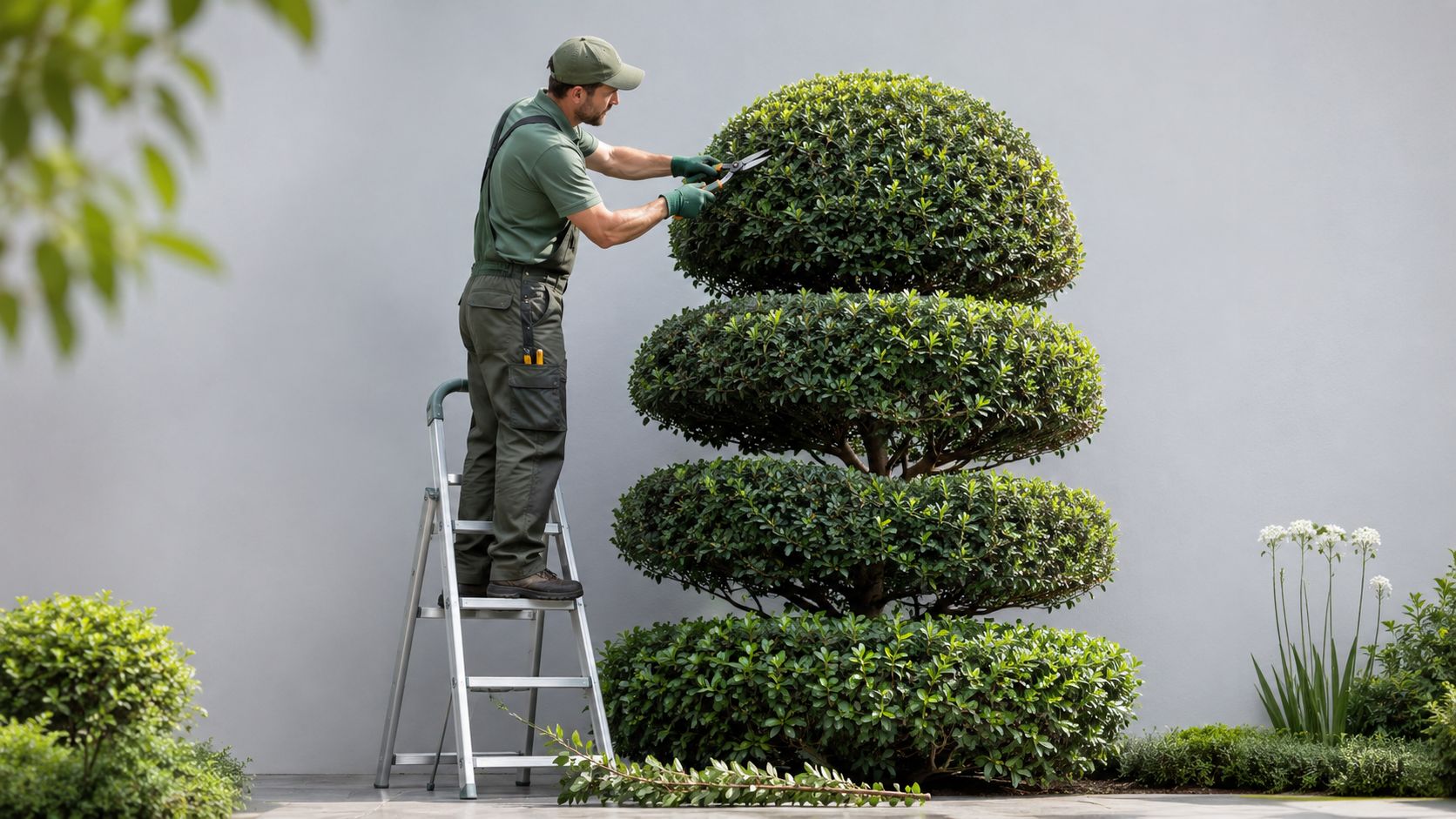
Pruning affects appearance, plant health, clearance, and safety at the same time. Poor cuts can weaken a plant, expose interior branches, distort natural form, or create future maintenance problems. Crews should prune with a defined purpose, not just shear every plant into the same shape.
Begin with clearance. Inspect branches near roofs, signs, lighting, windows, sidewalks, parking areas, and vehicle routes. Formal hedges may need regular shaping, while specimen trees usually need selective structural work. Avoid topping trees. Thinning and reduction cuts performed with an understanding of branch structure create a more natural result and reduce the risk of weak regrowth.
Match the work to the plant
Seasonal timing matters. Spring-flowering shrubs are generally pruned after flowering, while summer-flowering plants are often addressed during late winter. Dormant-season pruning can be useful for many trees and shrubs in the Dallas-Fort Worth region, but the crew should identify the species and objective before scheduling work.
A field checklist should confirm:
- Pruning objective: Define whether the work addresses clearance, shape, deadwood, structure, or rejuvenation.
- Cut location: Make cuts just outside the branch collar rather than leaving long stubs or cutting flush to the trunk.
- Canopy balance: Preserve the plant's natural form and avoid removing too much live growth at once.
- Site protection: Keep branches, chips, and tools away from parked vehicles, entrances, and pedestrian routes.
- Escalation: Refer larger trees, overhead conflicts, or structural concerns to a qualified arborist.
Trees over 15 feet or near structures deserve specialist review, especially when branches extend over parking or occupied areas. The checklist should record the tree location, observed defect, recommended action, responsible party, and target date. That record helps property managers distinguish routine pruning from work requiring a separate arboricultural scope.
Pruning also changes how a site feels. Clean hedge borders can frame an office entrance, while thoughtfully managed canopies can improve visibility and preserve shade. The best result looks intentional without making every plant look mechanically identical.
5. Seasonal Color and Planting Updates
Seasonal color gives a property a visible refresh, but successful planting begins well before installation day. Property managers need to coordinate design intent, plant availability, irrigation capacity, maintenance labor, and the property's brand standards.
Plan rotations in advance so the team can source appropriate material and confirm access for bed preparation. Spring and fall installations often require different plant selections, soil preparation, and watering attention during establishment. Group plants by similar water requirements rather than arranging them only by color. A vivid display that needs a separate irrigation strategy can create avoidable waste and uneven plant performance.
Design for hierarchy and resilience
A strong seasonal bed usually combines a base structure of perennials, shrubs, or permanent foliage with annuals used as accents. Layer tall, medium, and short plants to create depth without blocking signs, windows, or sightlines. Color should complement the building, entry features, and existing outdoor grounds rather than function as a disconnected decoration.
Texas conditions require honest plant selection. The plan notes that impatiens perform poorly above 85°F, so summer displays should favor plants suited to local heat and exposure. Don't select a plant because it looks strong in a catalog photograph. Confirm its sun tolerance, soil needs, mature size, watering demand, and ability to withstand the property's traffic and maintenance conditions.
For each rotation, document:
- Color intent: Record the palette and its relationship to the property brand.
- Bed preparation: Confirm removal of failed material, soil conditioning, edging, and irrigation readiness.
- Plant mix: Note species, quantities, spacing, exposure, and water grouping.
- Establishment care: Assign the watering checks and replacement decision process.
- Quality review: Photograph the installation and review it after establishment, not only on day one.
Healthcare sites may favor calm, restrained palettes near patient entrances. Hospitality properties may use more theatrical displays at arrival points. Retail centers need color that remains legible from parking and pedestrian approaches. The checklist should make those choices explicit so seasonal work supports the property's experience rather than becoming a recurring last-minute purchase.
6. Hardscape Cleaning and Maintenance
Quality outdoor spaces include the surfaces people walk, park, gather, and queue on. Dirty concrete, algae on shaded paving, oil stains, damaged edging, and clogged surface drains make a property look neglected and can create access or slip concerns.
Inspect sidewalks, parking areas, patios, loading zones, curbs, decorative stone, seat walls, and transitions between pavement and planting beds. Cleaning should be matched to the surface. Concrete can tolerate more pressure than delicate stone, jointed pavers, painted finishes, or older surfaces. Test a small area first, protect nearby plants, and keep runoff and cleaning products away from storm drains where possible.
Prioritize the pedestrian experience
A useful hardscape route starts at the points people use most:
- Primary entrances: Remove staining, organic growth, soil, and plant debris from arrival zones.
- Walkways: Check for slippery buildup, uplift, cracks, uneven transitions, and obstructed width.
- Parking areas: Look for oil, loose material, broken curbs, and vegetation entering pavement joints.
- Drainage points: Clear grates, inlets, channels, and low areas after heavy rain.
- Amenity spaces: Inspect patios, courtyards, seating areas, and outdoor dining surfaces.
Pressure washing can restore appearance, but it won't repair a trip hazard or solve recurring drainage failure. The service record should separate cleaning from corrective maintenance. That distinction helps the property manager assign work to the grounds provider, a paving contractor, or the facilities team.
Shaded hardscapes need special attention because algae and organic buildup can return when moisture persists. Don't wait for a complaint from a tenant or visitor. Add post-storm and seasonal inspections to the routine, especially at healthcare, hospitality, and retail properties where visitors may not know which surfaces are hazardous.
A related exterior cleaning checklist for Colorado Springs can help property teams think beyond planting beds and include surrounding exterior conditions in site reviews.
7. Plant Health Monitoring and Pest and Disease Management
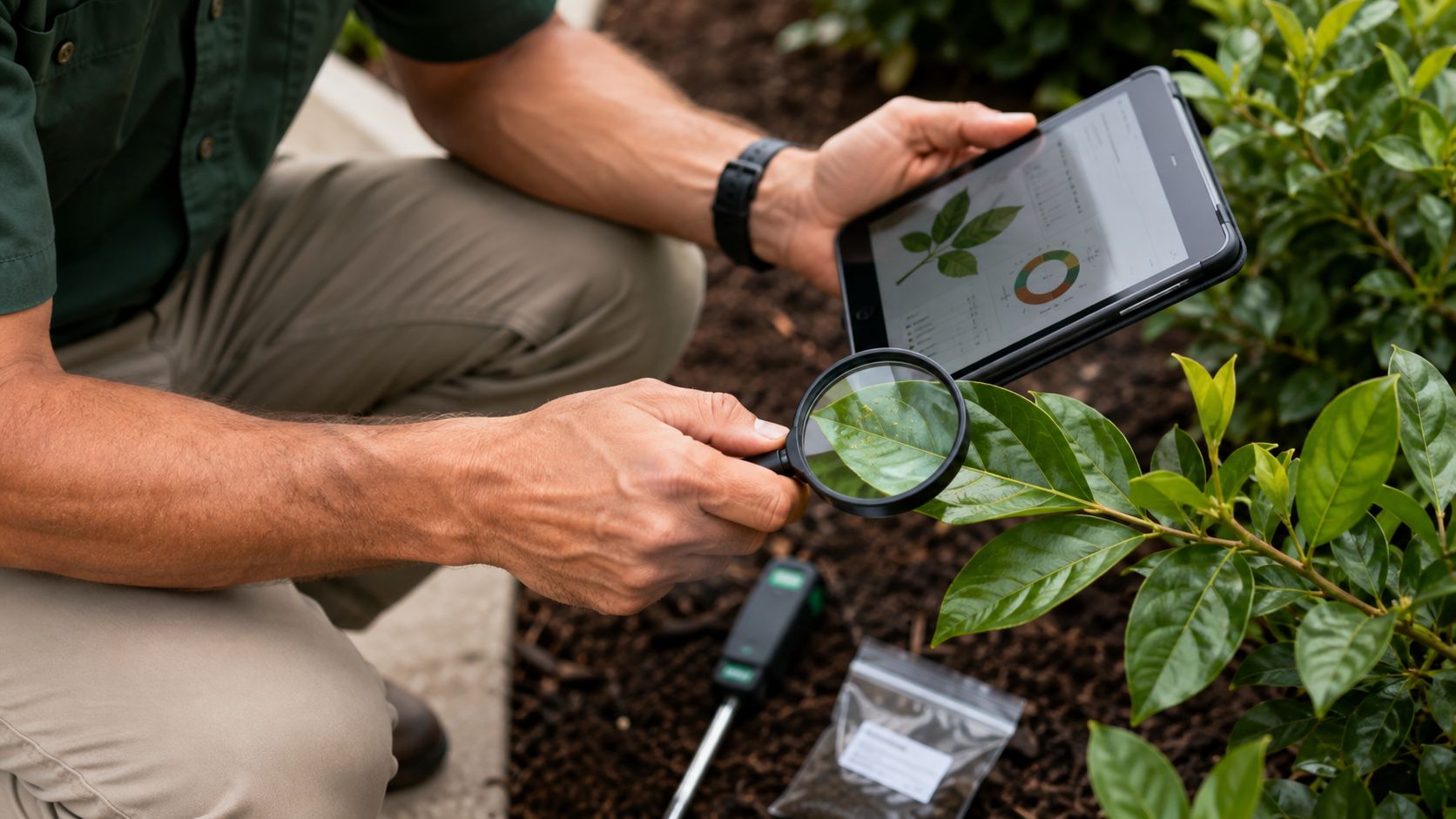
Plant health work succeeds when crews find stress early enough to correct the cause. Yellow leaves, wilt, premature leaf drop, bark damage, distorted growth, and recurring dieback may indicate irrigation imbalance, poor drainage, nutrient deficiency, pests, disease, or unsuitable plant placement. Treating the symptom without diagnosing the cause wastes material and can prolong decline.
Monitor high-value and high-visibility plants more closely than ordinary background vegetation. Specimen trees, entry plantings, seasonal color, and plants near heat-reflective walls deserve clear inspection notes. During the growing season, a weekly scouting rhythm can help the team identify changes before they spread across a bed or canopy.
Use an integrated response
Integrated pest management starts with cultural and environmental corrections. Improve watering, airflow, soil conditions, sanitation, pruning, and plant placement before reaching for chemicals. Biological controls may be appropriate in some settings, while chemical treatment should follow label requirements, site restrictions, and the property's communication process.
Train staff to recognize common symptoms, but don't ask unqualified personnel to make uncertain diagnoses. A strong escalation record includes:
- Location: Identify the bed, tree, zone, or elevation precisely.
- Symptoms: Describe what changed, when it appeared, and whether it is spreading.
- Site conditions: Note irrigation behavior, shade, drainage, recent pruning, and construction activity.
- Immediate control: Remove infected material or isolate affected plants when appropriate.
- Recommendation: Assign inspection, treatment, replacement, or soil testing to the responsible party.
Stressed plants are more vulnerable to pest pressure, so plant care and irrigation management belong in the same operating conversation. Prestonwood's plant health care services provide a relevant example of integrating observation and treatment into commercial grounds care. For seasonal planning, property teams can also review pest-pressure reduction tips from FullScope Pest Control.
8. Landscape Lighting Maintenance and Inspection
Lighting for commercial outdoor spaces supports three property outcomes: nighttime visibility, security, and visual presentation. A fixture that is misaligned, buried by vegetation, corroded, or no longer operating can leave a walkway dark and make an entry area look unfinished.
Inspect lighting during the seasons when darkness affects more operating hours. Walk the property after sunset when possible, because a daytime inspection can't confirm glare, shadowing, dead zones, or poor aiming. Check pathway fixtures, uplights, accent fixtures, transformers, connections, timers, photocells, and exposed wiring.
Review light as a system
Cleaning the lens may restore output, but it won't correct a failing transformer or an overloaded circuit. The checklist should record the fixture location, failure type, action taken, and whether the issue requires an electrician or lighting specialist. Trim vegetation around fixtures, but make sure pruning doesn't expose the equipment to unnecessary damage.
LED upgrades can reduce energy demand and maintenance frequency, but replacement isn't automatically the first step. Compare the existing fixture's condition, wiring, transformer compatibility, light distribution, and remaining service life. A poorly designed LED conversion can produce harsh glare or uneven coverage even when the equipment itself is efficient.
Use timers and sensors to keep lights operating during useful hours rather than leaving every fixture on continuously. Pathway lighting can improve wayfinding at healthcare facilities and hospitality venues, while carefully aimed uplighting can give a corporate campus a stronger evening presence. Industrial properties may prioritize clear, reliable visibility over decorative effects.
Night inspection rule: If the property is judged after dark, inspect the lighting after dark. Daylight-only reviews miss the conditions visitors actually experience.
Document lighting defects with location-based photos. That makes follow-up faster and gives the property manager a clear record of what was repaired, what remains open, and what should be included in a future improvement project.
9. Debris Removal and Property Cleanup
Cleanup is the maintenance task visitors notice immediately. Leaves around entrances, branches in parking spaces, litter in planting beds, and windblown material near loading areas make a property look unmanaged even when the turf and shrubs are healthy.
Set routes by risk and visibility. High-traffic retail areas may need daily attention, while less visible industrial edges can follow a different cadence. The point isn't to apply the same frequency everywhere. It's to define what must be customer-ready, what can wait for the next scheduled visit, and what requires an emergency response.
Connect cleanup to drainage and safety
Debris removal should include more than blowing surfaces clean. Crews need to inspect gutters, inlets, grates, channels, curb lines, and low points. Organic material can move during rain and collect where drainage depends on an open path. A cleanup route that ignores those points is incomplete.
Use a seasonal adjustment process:
- Normal conditions: Complete scheduled litter, leaf, and branch removal across defined zones.
- Heavy leaf periods: Increase visits where accumulation creates slip, visibility, or drainage concerns.
- High-traffic areas: Clear parking lots, sidewalks, and entrances more often than remote beds.
- After storms: Inspect for hanging branches, blocked drains, displaced mulch, and damaged signs or fixtures.
- Post-storm escalation: Assign urgent hazards immediately and document areas awaiting specialty work.
Mulching leaves can reduce hauling when the material disperses cleanly and doesn't cover turf excessively. Removal is better when leaves are wet, piled, blocking drainage, or making the property appear neglected. Keep disposal instructions clear so crews don't leave green waste in unauthorized locations.
A storm response plan should identify who receives the first report, who authorizes extra work, which hazards require isolation, and how completion is confirmed. This is especially important for healthcare and hospitality properties, where access and presentation can change quickly after severe weather.
10. Soil and Turf Amendment Programs
A commercial property can receive regular mowing, pruning, and watering and still decline because the root zone isn't supporting healthy growth. Soil testing gives the property team a baseline for pH, nutrient availability, salinity, organic matter, and drainage-related concerns before it spends money on broad, untargeted treatments.
North Texas properties may encounter high-pH soils that limit the performance of acid-loving plants such as azaleas and rhododendrons. Clay-heavy soils can also restrict drainage and root development. Those conditions call for a site-specific amendment plan, not a routine product applied everywhere.
Build a treatment record
Before a renovation or major replacement, test representative areas and connect each result to a mapped location. A useful program records:
- Baseline condition: Note soil results, turf density, plant symptoms, compaction, and drainage behavior.
- Treatment decision: Specify the amendment, application area, intended outcome, and any plant restrictions.
- Incorporation method: Mix approved amendments into the appropriate root-zone depth rather than leaving material on the surface.
- Turf timing: Coordinate aeration and nutrition with the turf type and local growing pattern.
- Review date: Schedule a follow-up inspection to assess whether growth, color, drainage, or rooting improved.
Organic amendments can support soil structure over time, but they won't fix every drainage problem. Excess material can bury crowns, alter grades, or create a false sense of correction. Similarly, fertilizer can intensify weak growth without addressing compacted soil, poor irrigation coverage, or an unsuitable plant choice.
Aeration should match regional turf conditions. Dallas-Fort Worth programs may schedule warm-season turf aeration in fall, while San Antonio properties may coordinate it in late spring. The exact timing depends on turf type, weather, site use, and the property's recovery window. Retesting on a recurring basis helps the team adjust the program instead of repeating treatments by habit.
10-Item Commercial Landscape Maintenance Comparison
| Service | Implementation complexity | Resource requirements | Expected outcomes | Ideal use cases | Key advantages |
|---|---|---|---|---|---|
| Irrigation System Audits and Optimization | Moderate–High (specialized diagnostics) | Flow/pressure meters, soil sensors, trained technicians, smart controllers | 15–30% water reduction; leak detection; optimized schedules | Large irrigated turf, water-restricted sites, sustainability programs | Significant water & cost savings; preventive maintenance; improved plant health |
| Lawn Mowing and Turf Management | Low–Moderate (routine but skilled) | Mowers, edgers, blade maintenance, recurring crew | Consistent appearance; denser turf; reduced weed seed set | Office parks, retail lawns, HOAs, high-visibility turf | Core maintenance for curb appeal; predictable scheduling; turf longevity |
| Landscape Bed Maintenance and Mulching | Low–Moderate (hands-on) | Hand labor, mulch supply, weeding tools, soil monitoring | Weed suppression; moisture retention; refreshed aesthetics | Plant beds, entry zones, properties needing polished appearance | Conserves moisture; suppresses weeds; seasonal aesthetic refresh |
| Shrub and Tree Pruning | High (expertise & safety) | Certified arborists, pruning tools, lift equipment, debris removal | Improved structure and health; hazard reduction; aesthetic shaping | Specimen trees, large campuses, safety-risk trees, formal hedges | Enhances safety and plant longevity; professional form and health |
| Seasonal Color and Planting Updates | Moderate (planning + installation) | Seasonal plants, soil prep, planting crews, irrigation adjustments | Strong visual impact; seasonal interest; brand-aligned displays | Retail centers, hospitality, corporate entrances, event sites | High visual ROI; customizable seasonal themes; signals active management |
| Hardscape Cleaning and Maintenance | Moderate (equipment & technique) | Pressure washers, sealcoating materials, trained operators | Safer surfaces; extended pavement life; improved appearance | Parking lots, sidewalks, patios, high-traffic paved areas | Rapid visual improvement; reduces slip/trip hazards; preventive care |
| Plant Health Monitoring & Pest/Disease Management | High (horticultural expertise) | Trained scouts, diagnostic tools, IPM supplies, soil tests | Early detection; reduced plant loss; targeted treatments | Healthcare sites, campuses, properties with specimen plantings | Prevents outbreaks; lowers replacement costs; minimizes pesticide use |
| Landscape Lighting Maintenance & Inspection | Moderate–High (electrical work) | Licensed electricians, LED bulbs, testers, replacement parts | Improved safety/security; energy savings with LEDs; consistent lighting | Security-sensitive sites, hospitality, wayfinding, branded facades | Enhances safety and nighttime aesthetics; reduced energy use; longer fixture life |
| Debris Removal and Property Cleanup | Low–Moderate (labor-intensive, frequent) | Crews, blowers, disposal logistics, emergency response plans | Clean appearance; reduced drainage/blockage; lower pest habitat | Tree-lined properties, post-storm cleanup, high-traffic commercial sites | Maintains curb appeal; reduces safety hazards; responsive cleanup capability |
| Soil and Turf Amendment Programs | Moderate–High (testing & tailored application) | Soil tests, compost/amendments, aeration equipment, labor | Improved soil structure; better turf vigor; reduced irrigation needs | Sites with poor soils, renovation projects, high-performance turf areas | Science-based soil improvement; long-term plant health; fewer replacements |
Make Every Site Visit Measurable and Actionable
A checklist becomes valuable when it changes what people do after a service visit. Assign every task a frequency, owner, quality standard, and escalation path. Daily work may include litter removal, entrance review, visible hazards, and high-traffic cleanup. Weekly work can cover mowing, edging, bed care, plant scouting, and route-level condition checks. Monthly reviews should examine drainage, lighting, irrigation performance, recurring defects, and unresolved work orders. Seasonal planning should address irrigation transitions, pruning windows, seasonal color, mulch, soil programs, storm preparation, and winterization.
The commercial landscaping market is large enough that repeatable service systems matter across property types. The North American commercial facility landscaping services market was estimated at $54.9 billion in 2023 and projected to reach $70.35 billion by 2030, according to the commercial facility landscaping services market reference. For a property manager, the important takeaway isn't the forecast itself. It's that recurring maintenance must remain consistent across multiple sites, crews, seasons, and service scopes.
Record conditions, not just completed tasks
A completed checkbox shouldn't be the entire service record. Capture:
- Irrigation readings: Note controller changes, leaks, zone problems, sensor conditions, and repairs.
- Missed tasks: Explain why work wasn't completed and assign a recovery date.
- Safety hazards: Record trip hazards, blocked drainage, dark paths, hanging branches, and slippery surfaces.
- Plant issues: Identify symptoms, locations, suspected causes, and recommended action.
- Response times: Track when the issue was reported, assigned, addressed, and closed.
- Completion evidence: Use location-based photos and notes that allow another person to verify the result.
A monthly quality review should look for patterns. If the same bed repeatedly develops dry patches, the issue may be hydraulic rather than a crew failure. If the same walkway repeatedly collects debris, the property may need a drainage or tree-management solution. If seasonal color repeatedly fails in one exposure, revise plant selection instead of approving another identical replacement.
Use a concise communication template for every priority issue:
Property condition: What did the team observe?
Priority issue: Why does it matter now?
Recommended action: What repair, adjustment, inspection, or replacement is needed?
Responsible party: Which provider, property team, tenant, or specialist owns the next step?
Target date: When should the work be completed or reviewed?
Completion status: Is it open, scheduled, in progress, completed, or awaiting approval?
This format supports vendor accountability and makes scope discussions clearer. Written scope should define routine maintenance, irrigation responsibilities, seasonal add-ons, and exclusions, which helps prevent assumptions from becoming missed work.
Property priorities should reflect how each site operates. Office and retail properties need strong appearance standards and clear visitor flow. Industrial properties need durable plantings, unobstructed access, and reliable drainage around vehicles and loading areas. Hospitality properties need polished arrival zones and guest-ready outdoor spaces. Healthcare facilities need safe, low-risk access and careful plant and chemical decisions. HOAs and POAs need consistent standards across shared areas and clear communication about exceptions.
Prestonwood Commercial Services offers routine maintenance, horticulture, seasonal color, irrigation audits and repairs, central water management, and outdoor space renovation across Dallas-Fort Worth and San Antonio. Property managers evaluating vendor selection for properties should compare not only service lists, but also documentation practices, response procedures, local coverage, and the provider's ability to manage the full operating rhythm.
The final test is simple. Can your team show what was inspected, what was found, who owns the correction, and whether the result meets the property's standard? If the answer is yes, the checklist has become an operating system rather than a static list.
Prestonwood Commercial Services provides recurring commercial maintenance, seasonal color, irrigation audits and repairs, central water management, horticultural care, and renovation for properties in Dallas-Fort Worth and San Antonio. Review how Prestonwood Commercial Landscape Services can help turn your checklist into documented, responsive site care.