
Your phone lights up before 8 a.m. The tenant at the front entrance says the shrubs look dead, the irrigation clock seems off, and one of the oaks dropped a limb over the weekend. By the time you walk the site, you're already behind, and the worst part is that the emergency feels preventable.
That's exactly why plant health care services exist. For commercial properties, this isn't a vague arborist concept or a fancy fertilizer add-on. It's a scheduled, diagnostic-first service line that helps you catch plant stress before it turns into replacements, complaints, or liability.
Table of Contents
- What Plant Health Care Services Actually Mean for a Commercial Property
- The Six Core Components of a Real Plant Health Care Program
- How a Plant Health Care Schedule Works Through the Year
- Early Warning Signs Your Landscape Is Heading Toward Decline
- What a Plant Health Care Program Actually Returns to a Commercial Property
- How Plant Health Care Services Are Priced and What to Budget
- Choosing a Plant Health Care Provider You Can Actually Trust
- How This Plays Out in Dallas-Fort Worth and San Antonio
What Plant Health Care Services Actually Mean for a Commercial Property
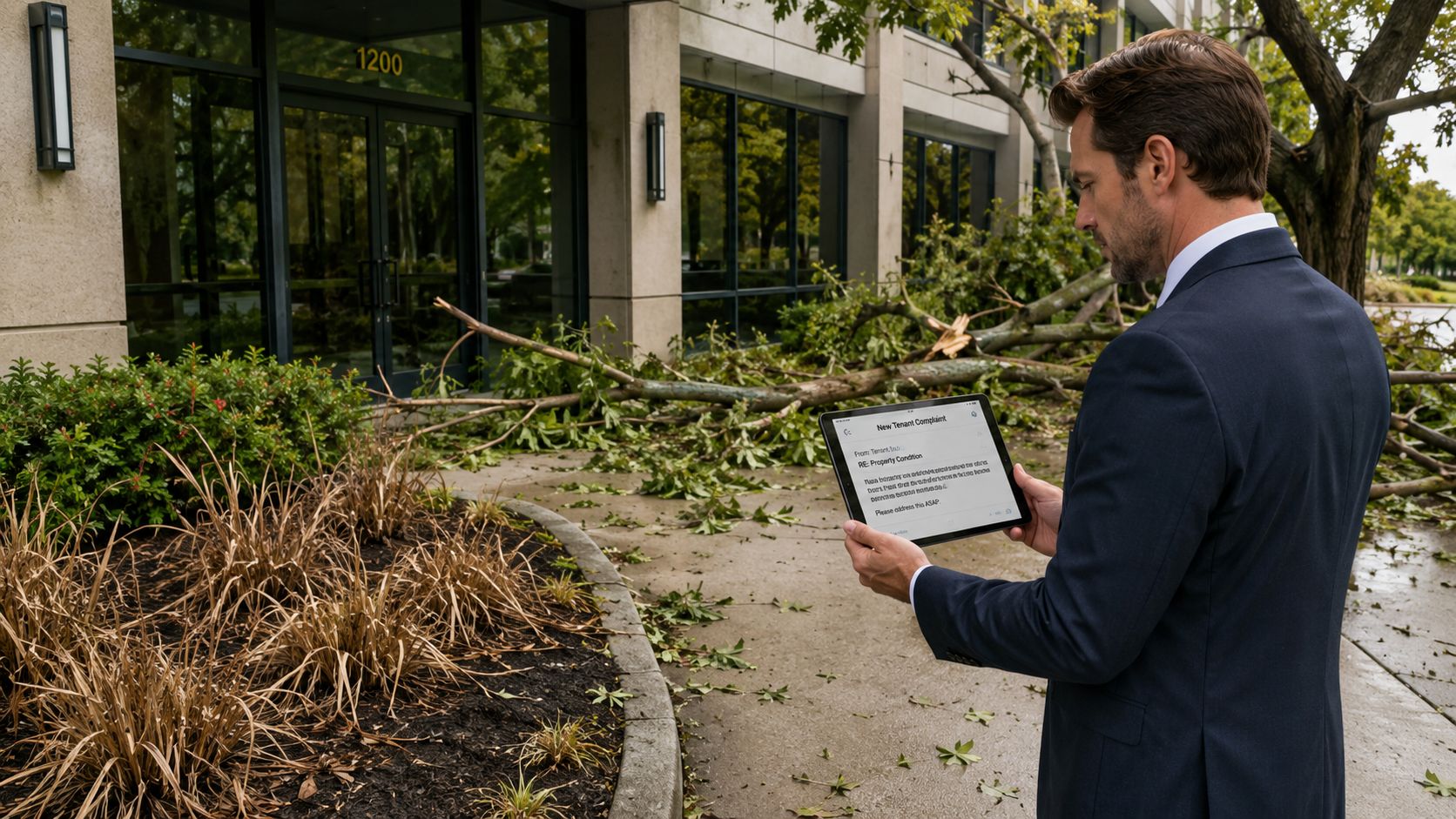
Monday morning usually starts with a brown shrub bed at the entry, a dead limb on the pavement, or an email from a tenant who does not care why the grounds are failing. They care that the site looks neglected, and on a commercial property, that quickly turns into lost confidence.
That is the primary job of plant health care services. The modern model is scheduled inspections and proactive strategies, not panic treatments after the damage is obvious. A 1994 arborist publication described PHC as a program built around scheduled inspections and proactive tactics, and the Arbor Day Foundation later framed it as a systematic approach that can save money, preserve trees, and reduce reliance on toxic chemicals, which is the direction smart commercial properties should want to move in. Arbor Day Foundation and ISA archive on plant health care
Why this matters on commercial sites
The commercial buyer is not buying “tree stuff.” You are buying a repeatable service that keeps entryways presentable, reduces surprise removals, and gives you records you can defend when a board, tenant, or insurer asks what happened. That is why a real PHC agreement should read like a maintenance plan, not a product list.
If a proposal only talks about fertilizer, it is incomplete. If it talks about monitoring, diagnosis, timing, and follow-up, you are closer to a real program. The University of Illinois guidance on diagnosis before treatment is the right mindset here, because many plant health failures come from interacting stressors, not just one pest or disease.
Practical rule: If the provider cannot explain what they inspect, what triggers treatment, and what gets reported back to you, you are not buying PHC. You are buying a guess.
This guide is written for office, retail, industrial, hospitality, healthcare, HOA, and campus decision-makers in places like Dallas-Fort Worth and San Antonio. If you manage visible property and care about budget discipline, this is the service line you need to understand before you sign the next grounds maintenance contract. If you are also evaluating other high-use surfaces on your site, high traffic commercial flooring is a useful parallel for thinking about durability, maintenance cadence, and lifecycle planning. For a closer look at how tree care decisions should be handled on commercial properties, see professional arbor care guidance for property managers.
The Six Core Components of a Real Plant Health Care Program
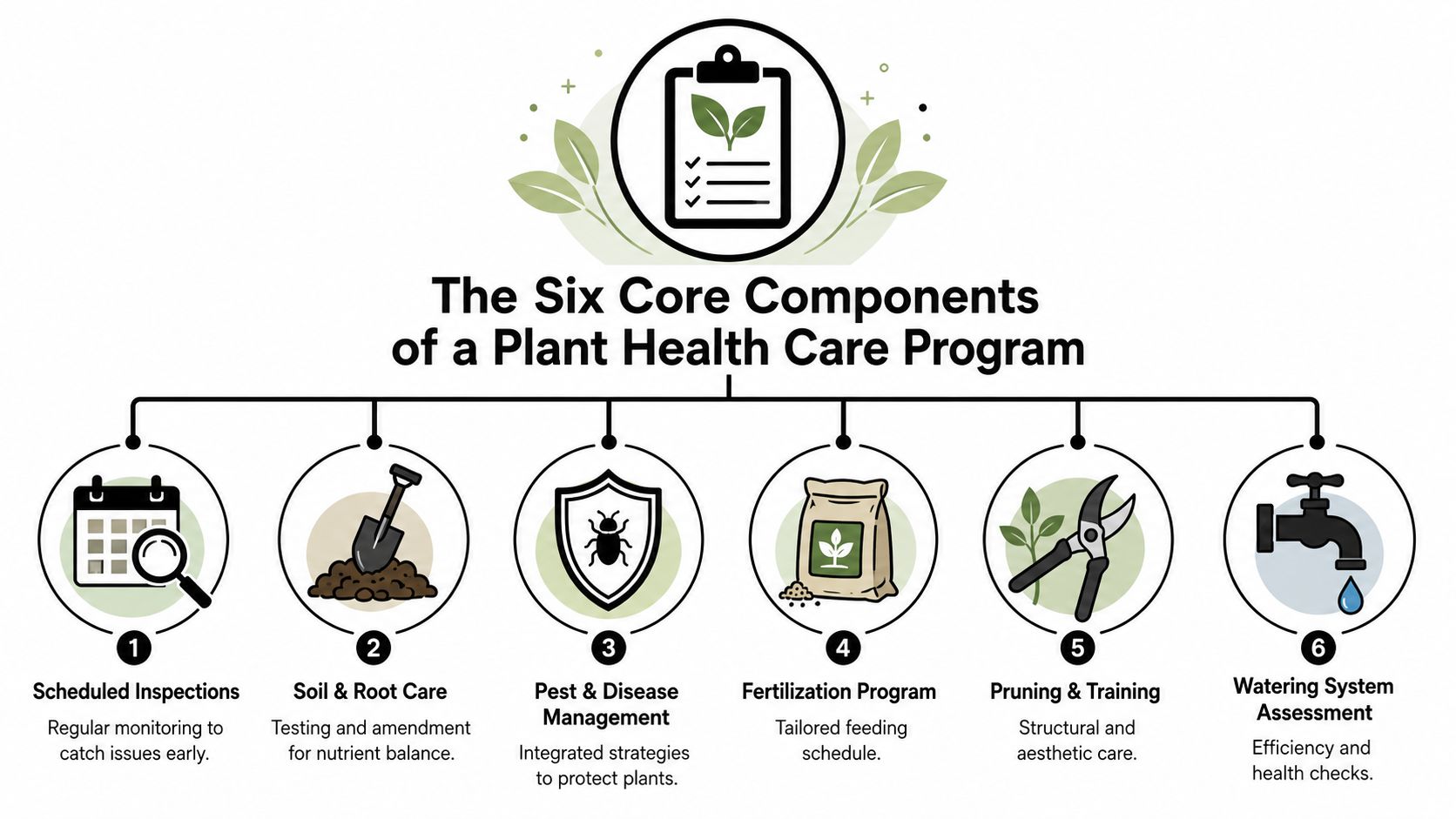
A serious PHC program isn't one product, one spray, or one visit when something looks rough. It's a repeatable operating model with specific deliverables, and if any one of these parts is missing, the program gets thin fast. TCIA's guidance is blunt about the need for protocols, pricing logic, and follow-up, and that's the standard to hold providers to. TCIA PHC service guidance
1. Scheduled inspections
This is the backbone. A technician walks the site on a defined cadence, looks at canopy density, leaf color, branch structure, trunk condition, soil surface, and irrigation performance, then documents what changed since the last visit. Without this, everything else is just guessing.
2. Soil and root-zone assessment
If the roots are struggling, the plant is struggling. The crew should be checking drainage, compaction, mulch depth, root flare visibility, and visible stress around the root zone, then recommending the least disruptive correction. Weak providers skip this because soil work is slower and harder to sell than a spray label.
3. Nutrient management
This should be targeted, not generic. A real program ties feeding to plant type, site conditions, and observed stress, then explains what was applied and why. If the report only says “fertilized,” push back.
4. Integrated pest and disease management
Diagnosis matters most. A good provider identifies the likely issue, confirms it against site history and symptom pattern, and chooses the least aggressive effective response. A bad one reaches for the same treatment every time.
5. Targeted pruning
Not every PHC provider should be the pruning crew, but a real commercial program coordinates structural pruning, deadwood removal, and clearance work with plant health goals. If the canopy is dense, damaged, or rubbing, you want that captured in the service record and corrected on purpose. For a deeper look at tree care standards, see professional arbor care.
6. Irrigation coordination
A plant can't out-treat bad water management. The best PHC programs check for run times, overspray, dry spots, and chronic saturation, then coordinate with irrigation repairs or adjustments. If the crew ignores irrigation, they're treating symptoms, not causes.
A clean service report should show what was inspected, what was found, what was treated, and what gets watched next. That's the difference between a real program and a fertilizer upsell.
How a Plant Health Care Schedule Works Through the Year
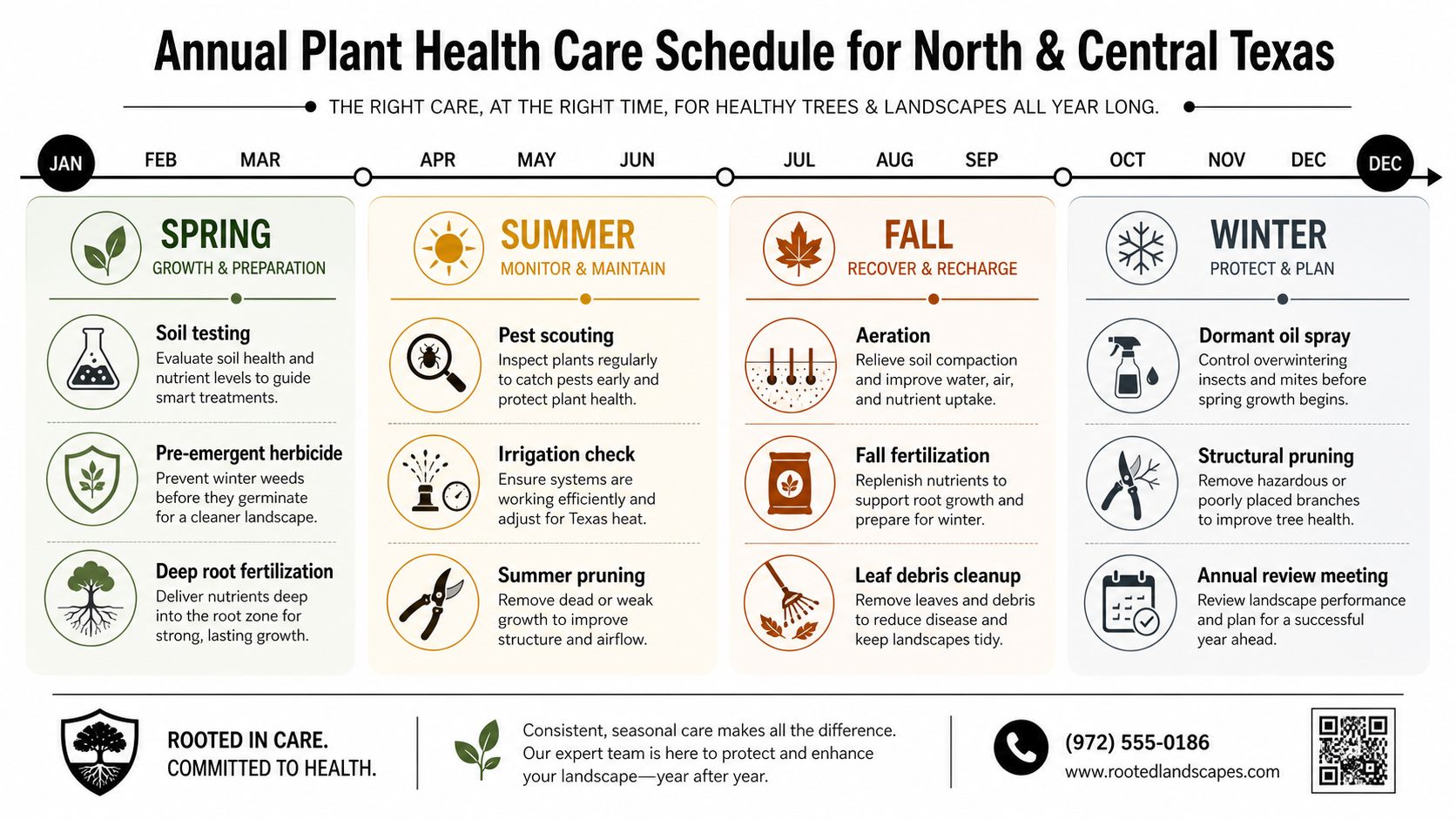
A real PHC schedule is bought like any other property service line. You are not paying for a vague promise to “keep plants healthy.” You are paying for inspections, timing, documented treatments, and follow-up that fit Texas stress cycles. If a proposal does not say when the crew comes out, what they inspect, and what triggers the next step, it is not a program, it is a spray visit with better marketing.
Timing drives results. You can apply the right treatment at the wrong moment and still miss the problem, which is why a PHC calendar should follow plant stress patterns, pest pressure, and Texas weather rather than the calendar page on a wall. The University of Illinois guidance on diagnosis supports that logic, because the visit has to be timed to catch the issue early enough to matter.
A Texas-ready cadence
In late winter, the work should focus on dormant oil where appropriate, structural pruning, and root-zone checks before spring growth starts. That is the window for cleanup work that is easier to do before the canopy fills in and hides problems.
Spring should be a scouting season. Soil review, early disease pressure, and pest checks belong there, because once plants flush, the symptoms get harder to read and the property manager gets less useful information from a rushed report.
Summer is the stress season. That is when irrigation checks, heat-stress monitoring, and pest scouting earn their keep, especially on exposed parking lot islands and west-facing beds. Fall is the right time for renewal work, cleanup, and selective fertilization, while winter is for review, pruning, and resetting the plan for the next cycle. If your property's water strategy needs tighter coordination, water management and irrigation in Texas commercial landscaping is the right companion subject.
Bottom line: Timing beats intensity. A small, well-timed intervention usually protects more value than a large emergency treatment after decline is obvious.
What the calendar should tell you
A credible PHC schedule should answer three questions for every visit. What are you looking for, what do you do if you find it, and when do you come back to confirm the result? If a provider cannot answer those plainly, the calendar is decoration.
The best programs also leave room for site-specific pressure. North and Central Texas are unforgiving, so the plan has to flex for heat load, water restrictions, and known disease windows. That is not overcomplication, it is basic risk management. The schedule should also tell you whether the crew is adjusting to property conditions or just repeating the same spray rhythm everywhere.
Early Warning Signs Your Landscape Is Heading Toward Decline
You do not need to be an arborist to catch the early signs. You need a routine walk, a decent eye, and the willingness to escalate problems before they get expensive. The point is to notice the plant before the failure becomes visible to everyone else.
What to look for on a Friday property walk
- Thinning canopies: When foliage looks sparse or uneven, it often points to root stress, water issues, or repeated pest pressure.
- Premature leaf drop: If the plant is shedding early, something in the site conditions or biology is off.
- Sticky residue on cars or hardscape: That usually means sap-feeding insects are active nearby.
- Deadwood in the canopy: Dead branches raise risk and should never be ignored near walkways or parking areas.
- Chronic wet spots: Persistent saturation often signals irrigation, grading, or drainage trouble.
- Yellowing foliage: Chlorosis usually points to nutrient or root-zone problems, not just a need for more fertilizer.
- Bark cracks at the root flare: That's a structural warning sign and deserves quick review.
The research on overwatering is useful here because too much water often gets mistaken for “healthy irrigation.” It isn't. Saturated roots, weak color, and decline around the base are signs you're likely feeding the wrong problem, not solving it. Signs of overwatering is a good reference point for the visual cues managers tend to miss.
Practical rule: Sudden wilting, limb failure risk, and active canopy dieback need immediate escalation. Yellowing, thinning, and residue are usually slower problems, but they still belong on the next scheduled inspection.
The sharpest managers don't wait for the quarterly meeting to mention these issues. They send a photo, note the location, and ask for a diagnosis, not just a treatment. That single habit shortens the gap between first symptom and effective intervention.
What a Plant Health Care Program Actually Returns to a Commercial Property
The value of PHC shows up in property-management language, not horticulture jargon. You're not buying healthier leaves for the sake of it, you're buying fewer surprises, better presentation, and fewer avoidable spend spikes. That matters on sites where a bad-looking outdoor space affects leasing, tenant sentiment, or brand perception.
The four outcomes that matter
Consistent curb appeal is the most visible return. Scheduled inspections, pruning, and targeted pest control keep entrances, medians, and amenity zones from drifting into obvious decline, which helps protect the image that tenants and visitors form the moment they arrive.
Lower lifecycle cost is the quieter win. A plant that gets monitored, corrected, and protected is less likely to become a replacement item, and mature replacements are never cheap in operational terms because they bring disruption, downtime, and rework. PHC doesn't save a plant planted in the wrong place, but it does help you avoid losing plants that still had useful life left.
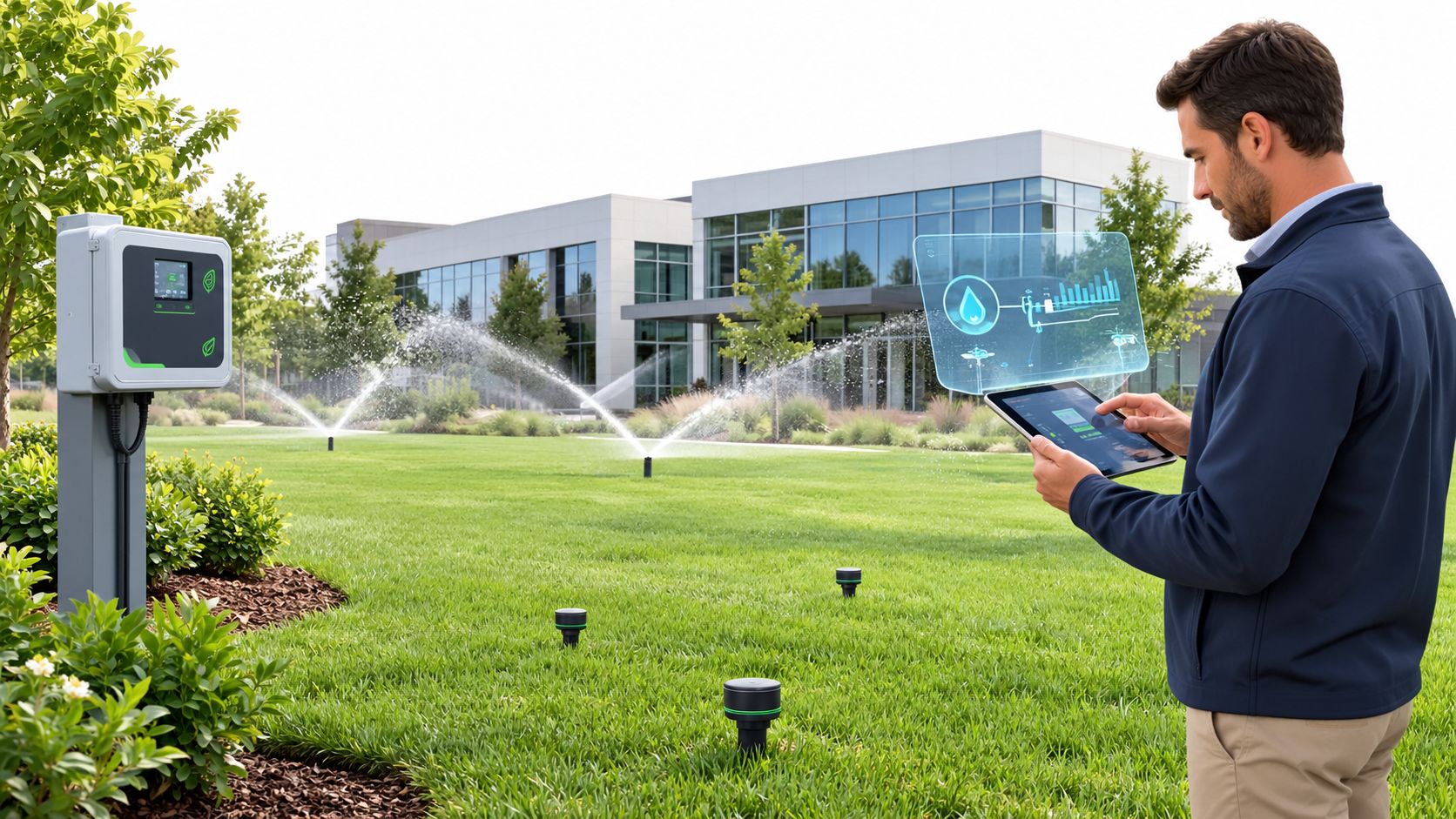
Water discipline matters more every year in Texas. When irrigation review is integrated into PHC, you reduce waste from overspray, broken heads, chronic dry spots, and the kind of overwatering that damages roots. That coordination is a big deal on hot sites where water use and plant stress move together.
Liability reduction comes from proactive pruning and deadwood removal. Branch failures don't just create cleanup costs, they create exposure, and the safer way to manage that exposure is regular inspection and documented response.
A program record is often as valuable as the treatment itself. When something fails, you want the history, not just a verbal promise.
If you manage a property with visible pedestrian traffic, I'd rather see a measured PHC plan with documented follow-up than a vague “full property enhancement” line item. Prestonwood Commercial Services is one example of a provider that combines ground maintenance, irrigation audits and repairs, and proactive recommendations into a recurring service model, which is the right shape for this kind of work. The key is whether the proposal reads like an operating plan or a sales sheet.
How Plant Health Care Services Are Priced and What to Budget
A weak PHC quote shows itself fast. If the provider cannot explain where the number comes from, you are not looking at a service model, you are looking at a guess dressed up as a proposal. Pricing should be built around material cost, labor, travel and setup time, and margin, and the work should be measured in units the property manager can audit, such as square footage for soil-health work and DBH for insect and disease treatments.
The pricing logic you should expect
Per-visit pricing belongs with scheduled monitoring and routine site work. Per-DBH pricing fits tree treatments that scale with trunk size and access difficulty. Per-square-foot pricing belongs in soil and bed work, where the service area drives the labor and materials.
Budget rule: If the proposal does not show labor, materials, travel or setup, and follow-up expectations, the number is too soft to manage against.
Budget conversations get clearer when you separate preventive work from reactive work.
Preventive PHC vs reactive replacement
| Cost Driver | Preventive PHC Program | Reactive Replacement |
|---|---|---|
| Site disruption | Planned visits with limited downtime | Emergency work, messier access, and more tenant friction |
| Plant outcome | Monitored and corrected before decline spreads | Removal or major repair after the plant is already failing |
| Budgeting | Predictable recurring line item | Spiky, harder-to-forecast expense |
| Records | Inspection history and treatment notes | Patchwork documentation after the fact |
| Risk exposure | Lower through pruning and early intervention | Higher because failures happen first, then cleanup follows |
That table is the cleanest way to frame the budget discussion. Preventive care is a planned operating expense. Reactive replacement is the bill you get when the program was not there.
Choosing a Plant Health Care Provider You Can Actually Trust
A provider's confidence is not proof of competence. I've seen plenty of smooth proposals that skipped diagnosis, skipped reporting, and skipped the inspection cadence entirely. A real PHC partner should be able to show you the process before they ever ask for the signature.
What to require before you sign
- ISA-certified arborist on staff or on call: You want someone who can interpret tree condition, not just sell treatments.
- Written diagnostic protocol: They should explain how they identify the problem before recommending anything.
- Service reports after every visit: You need findings, actions, and follow-up items in writing.
- Clear pricing units: Ask how they price visits, tree treatments, and soil work.
- Comparable references: Office, retail, HOA, healthcare, and campus work are all relevant if that's your asset class.
- Treatment schedule and communication plan: You should know when they'll be on site and how they'll flag urgent issues.
If you want a sharper filter, ask one blunt question, then listen carefully. “What do you inspect before you treat?” A strong provider answers with a process. A weak one answers with a product.
The selection checklist below is the one I'd use in a meeting with a skeptical board or asset team. It forces the conversation away from generic promises and toward operational proof.
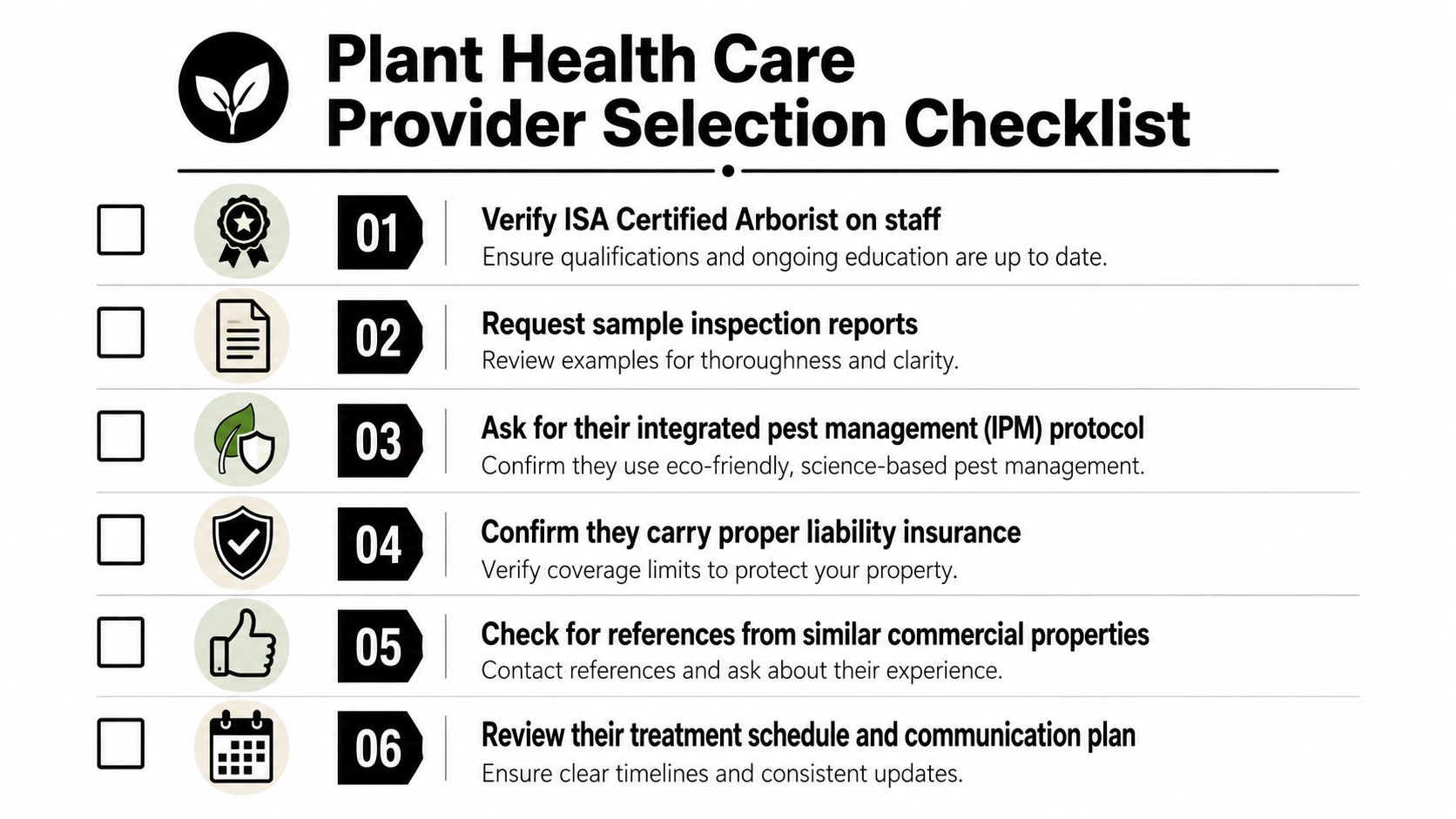
The fastest way to separate a real program from a mow-and-blow add-on is to ask for a sample report. If the report shows inspections, diagnosis, treatment notes, and next steps, you're getting closer. If it reads like a bill with plant names on it, keep looking.
How This Plays Out in Dallas-Fort Worth and San Antonio
Dallas-Fort Worth industrial sites usually need PHC to handle exposure, heat, and inconsistent irrigation performance around parking lot islands and perimeter beds. San Antonio hospitality properties tend to need tighter visual standards, more frequent guest-facing inspections, and better water coordination because the greenery is part of the experience, not just the backdrop.
Two site types, same framework
On a Dallas-Fort Worth industrial park, the first 90 days usually start with inspections, root-zone review, and irrigation corrections before much gets treated. Summer is where the calendar tightens, because stressed plants show it fast and ignored water problems turn into replacements. If the property also needs stronger perimeter visibility and access control, commercial property security planning is worth reviewing alongside the site aesthetic budget, because curb appearance, safety, and site monitoring tend to overlap in real operations.
On a San Antonio hospitality property, the work leans harder into soil health, irrigation precision, and fast response to visible decline around guest areas. Caliche conditions and water sensitivity make it even more important to track what's happening below the canopy, not just what's visible at eye level.
The first year should show a cleaner entry presentation, fewer emergency calls, and a more stable service rhythm. That's the sign the program is working, not because every plant became perfect, but because the property stopped living on callbacks.
If you want that kind of predictability on your site, talk to Prestonwood Commercial Services about a plant health care schedule built around your inspection cadence, irrigation reality, and budget cycle. Ask for a plan that shows what gets inspected, when treatments happen, and how the service reports will help you manage the property all year.