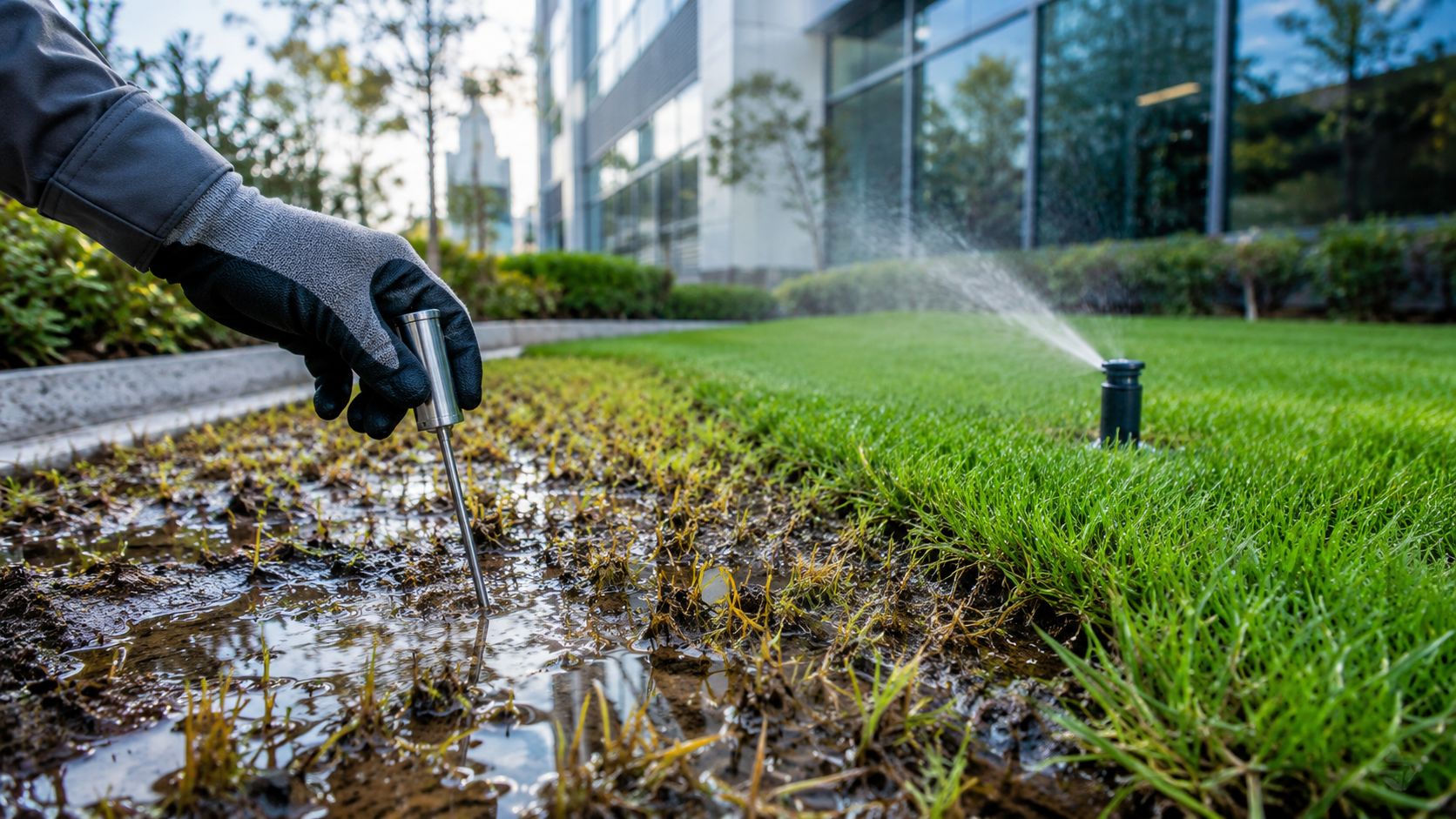
A property manager can walk a site, see green turf, hear irrigation cycling on schedule, and still be looking at grounds that are underperforming. Beds stay dull. Shrubs yellow from the inside out. Turf feels soft underfoot and starts thinning in patches. Trees lose vigor for reasons that don't seem obvious from the curb.
That's often where overwatering hides. It doesn't always look like “too much water” at first glance. In commercial grounds, it usually looks like inconsistency, recurring stress, and plant material that never quite rebounds even though the controller keeps running.
The expensive mistake is assuming more water is the safe option. On large properties, that mindset can lead to wasted irrigation, declining curb appeal, unnecessary plant replacement, and ongoing service calls that treat symptoms instead of the cause. The root issue is usually below grade. When soil stays saturated, roots lose access to oxygen, and the plantings start to fail from the bottom up.
Commercial properties need a more disciplined approach. The goal isn't just to water less. The goal is to water correctly, confirm what's happening in the root zone, and protect the appearance and long-term performance of turf, beds, and trees across the whole site.
Table of Contents
- Introduction
- Why Overwatering Is a Hidden Risk for Commercial Properties
- Visual Signs of Overwatering in Landscapes
- Simple Field Tests for Accurate Diagnosis
- Immediate Steps to Remediate Overwatering
- Long-Term Prevention and Smart Water Management
Introduction
On commercial sites, overwatering usually starts as a well-intentioned decision. Someone wants to protect new color, keep turf green through heat, or avoid tenant complaints about dry areas. The irrigation schedule gets extended, hand watering gets added, and no one realizes the root zone is staying wet long after the surface looks dry.
That's where the science matters. Roots need oxygen as much as they need moisture. When soil remains saturated, gas exchange drops, roots begin to suffocate, and decline starts below ground before the site shows obvious damage. By the time leaves yellow or turf thins, the problem may already be established in the root zone.
Practical rule: Don't treat a green surface as proof that watering is correct. On large properties, healthy roots matter more than temporarily green foliage.
This matters more on commercial grounds than on a few plants around a home entry. A property manager is protecting tenant perception, brand image, safety, and the useful life of a grounds investment across many zones with different exposures, slopes, soils, and drainage conditions.
The signs of overwatering are consistent once you know how to read them. The challenge is that they're often mistaken for drought, nutrient problems, or seasonal decline. A clear diagnosis saves time and prevents the common mistake of adding even more water to stressed plants.
Why Overwatering Is a Hidden Risk for Commercial Properties
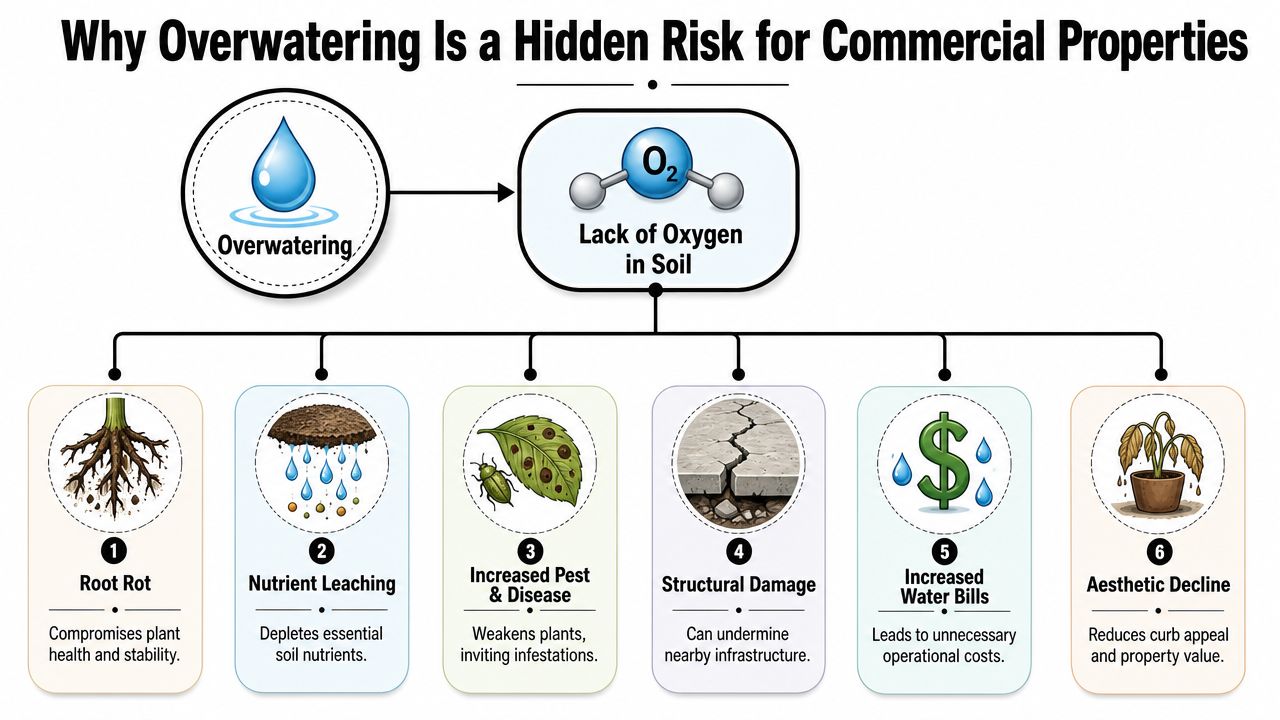
The danger in overwatering is not just excess moisture on the surface. It's lack of oxygen in the soil. According to Missouri Botanical Garden guidance on overwatering, saturated soil reduces oxygen availability around roots, which can lead to root death and then secondary symptoms like yellowing, leaf scorch, wilt, and crown rot.
That sequence creates a management problem on commercial sites. The visible decline usually lags behind the irrigation mistake. A bed can look acceptable from the drive aisle while roots are already under stress. A lawn can stay green but feel spongy and weak. A tree can hold canopy longer than a shrub even while its root environment remains unsuitable.
Why the problem gets missed
Commercial properties rarely have one uniform condition. You may have full-sun medians, shaded building edges, compacted turf near pedestrian traffic, and low spots that collect runoff. One controller setting can overwater half the property while barely meeting the needs of another area.
That's why overwatering often hides behind mixed symptoms:
- Beds decline unevenly because drainage varies from one planting pocket to another.
- Turf stays green but weak because roots are shallow and oxygen-limited.
- Trees struggle slowly because deep root zones stay wet longer than the surface suggests.
- Manual watering makes it worse when crews or tenants respond to wilt by adding water without checking soil conditions.
Wet soil can produce wilt, yellowing, and poor vigor that look like drought stress. If no one checks the root zone, the usual response is more irrigation, which pushes the site further in the wrong direction.
Why property managers should care early
Overwatering affects more than horticulture. It affects operations. Repeated decline means more replacements, more troubleshooting, more tenant questions, and more time spent chasing recurring issues instead of running the property.
It also undermines maintenance efficiency. A groundskeeping team can mow, edge, prune, and detail a site well, but if water management is off, the property never develops the consistency you want from a professional program. That's one reason many managers fold irrigation oversight into broader commercial landscape maintenance services instead of treating it as a separate afterthought.
A site with chronic excess moisture also becomes harder to predict. Symptoms move around. One month it's fungal growth in turf. The next month it's yellow shrubs near a downspout, or standing water in a planter bed after routine irrigation. Those aren't isolated cosmetic issues. They're warning signs that the grounds are being managed by schedule rather than by actual root-zone conditions.
Visual Signs of Overwatering in Landscapes
You usually won't identify overwatering from one symptom alone. Experts describe it as a pattern of symptoms that can include yellowing leaves, limp foliage, mold, and root rot. A more advanced sign is edema, where leaf cells burst from excess water uptake and create blisters or corky lesions, often on the undersides of leaves, as explained in Rockledge Gardens guidance on overwatering symptoms.
What overwatered turf looks like
On commercial turf, the first clue is often feel, not color. The surface may stay soft and spongy underfoot, especially in lower areas or near poorly draining heads. Turf may thin instead of filling in, and fungal growth can appear where moisture lingers.
Watch for these field signs:
- Thinning patches: Turf loses density even though irrigation seems generous.
- Spongy soil: The surface gives underfoot, which often means the soil profile is staying too wet.
- Persistent wet areas: Water remains in place after a cycle instead of moving through the profile.
- Problem weeds or algae-type growth: Wet conditions tend to show up through opportunistic growth before a manager sees full turf decline.
When managers only judge by color, they miss the structure of the lawn. A green lawn with poor rooting is still a problem lawn.
What overwatered shrubs and seasonal beds look like
Beds usually show the most recognizable signs of overwatering. The common mistake is reading yellow leaves as a feeding problem or a need for more water.
Look more closely:
- Yellowing leaves with wet soil: This often points to stressed roots rather than thirst.
- Limp or soft foliage: Plants can look wilted even when moisture is abundant.
- Leaf drop: Plants shed foliage because damaged roots can't support normal growth.
- Mold or fungal growth at the soil line: A sign that the area is staying damp too long.
- Edema: Raised blisters, corky patches, or warty tissue, often on leaf undersides.
If a bed has automatic irrigation and frequent hand watering, these symptoms deserve immediate scrutiny.
What overwatered trees and larger plantings look like
Trees can be slower to signal trouble, which makes them easy to misread on a large property. The canopy may still hold while the root environment stays saturated. By the time decline is obvious, recovery can be slower and more expensive.
Common signs include:
- General lack of vigor: The tree looks off but not dramatically distressed.
- Discolored leaves: Foliage loses clean, healthy color.
- Wilt despite damp soil: A classic sign of oxygen-limited roots.
- Poor performance in a wet basin or low area: The setting often explains the problem.
On tree zones, the biggest diagnostic mistake is judging conditions by surface dryness near the trunk flare while deeper soil remains wet.
Overwatering vs underwatering symptoms
Many plant managers misread these two problems because both can involve wilt and decline. The fastest way to avoid a bad decision is to compare symptom patterns with actual soil conditions.
| Symptom | Sign of Overwatering | Sign of Underwatering |
|---|---|---|
| Wilting | Plant wilts even though soil is wet | Plant wilts when soil is dry |
| Leaf color | Leaves often yellow and look soft or limp | Leaves typically look dry, dull, or stressed |
| Soil condition | Soil stays wet, heavy, or poorly drained | Soil feels dry through the active root zone |
| Surface issues | Mold, fungal growth, or standing water may appear | Soil may look dry and pull moisture away quickly |
| Root condition | Root rot risk increases in persistently wet soil | Roots are stressed by lack of moisture, not saturation |
| Growth pattern | Slow growth with soft tissue and decline | Reduced growth with dry stress symptoms |
For larger sites, consistency is the clue. If a problem repeats in the same irrigation zones, the issue usually isn't random plant failure. It's water distribution, drainage, or scheduling.
When several crews or vendors touch the same property, coordination matters too. Good scheduling and dispatch for landscaping can help managers keep irrigation checks, work orders, and follow-up visits organized so wet-zone problems don't get missed between routine service stops.
Simple Field Tests for Accurate Diagnosis
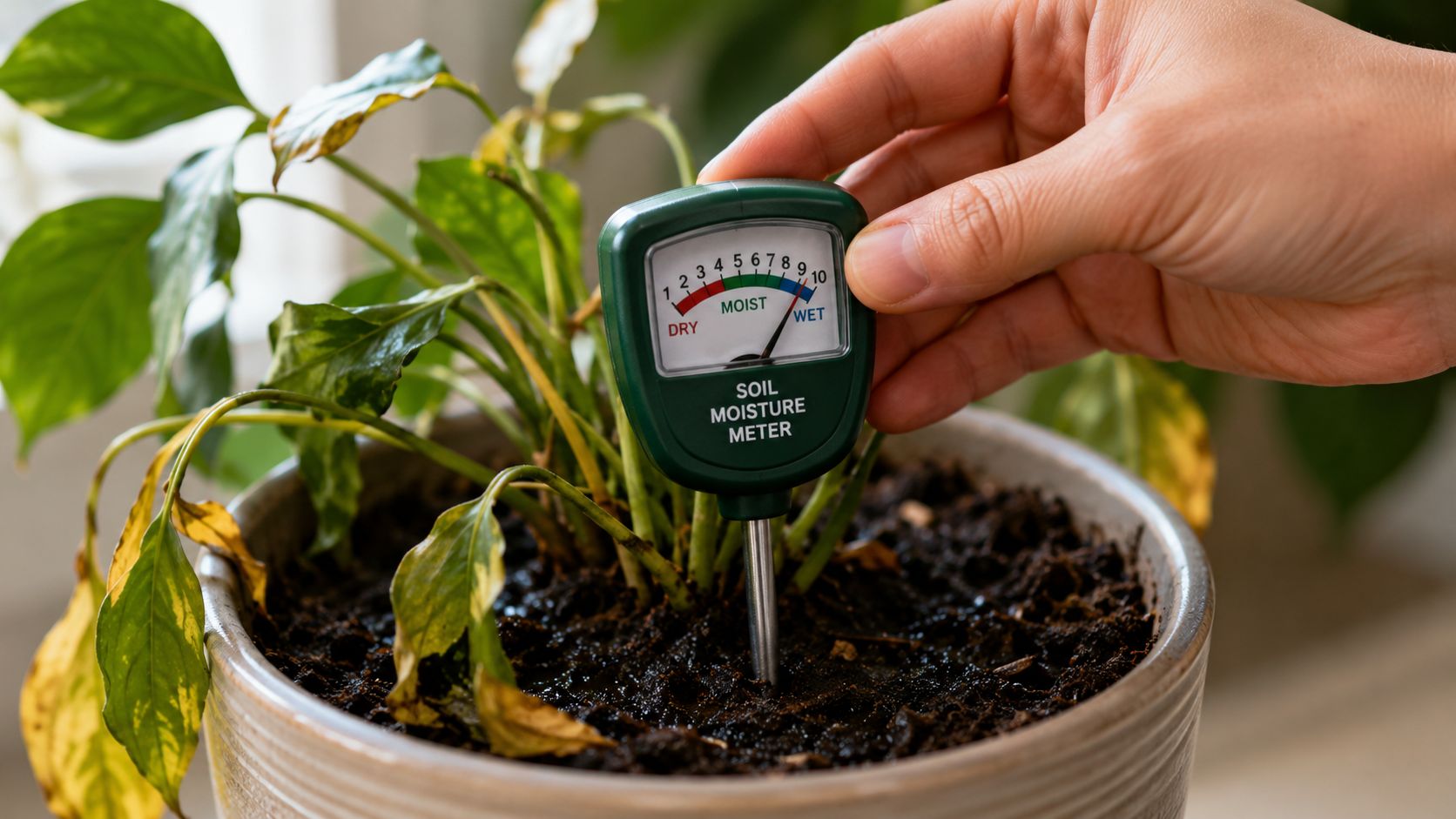
Visual symptoms are useful, but they shouldn't be the final word. The most reliable confirmation is persistent wetness in the root zone. Guidance from Baldor on checking for overwatering in the root zone notes that probing 5–8 inches down is more reliable than inspecting surface moisture because the root zone can remain anaerobic even when the top layer looks manageable.
The root-zone moisture check
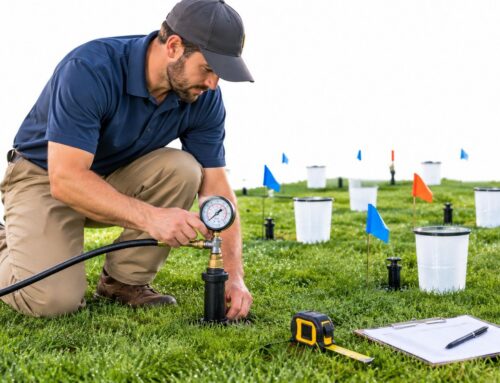
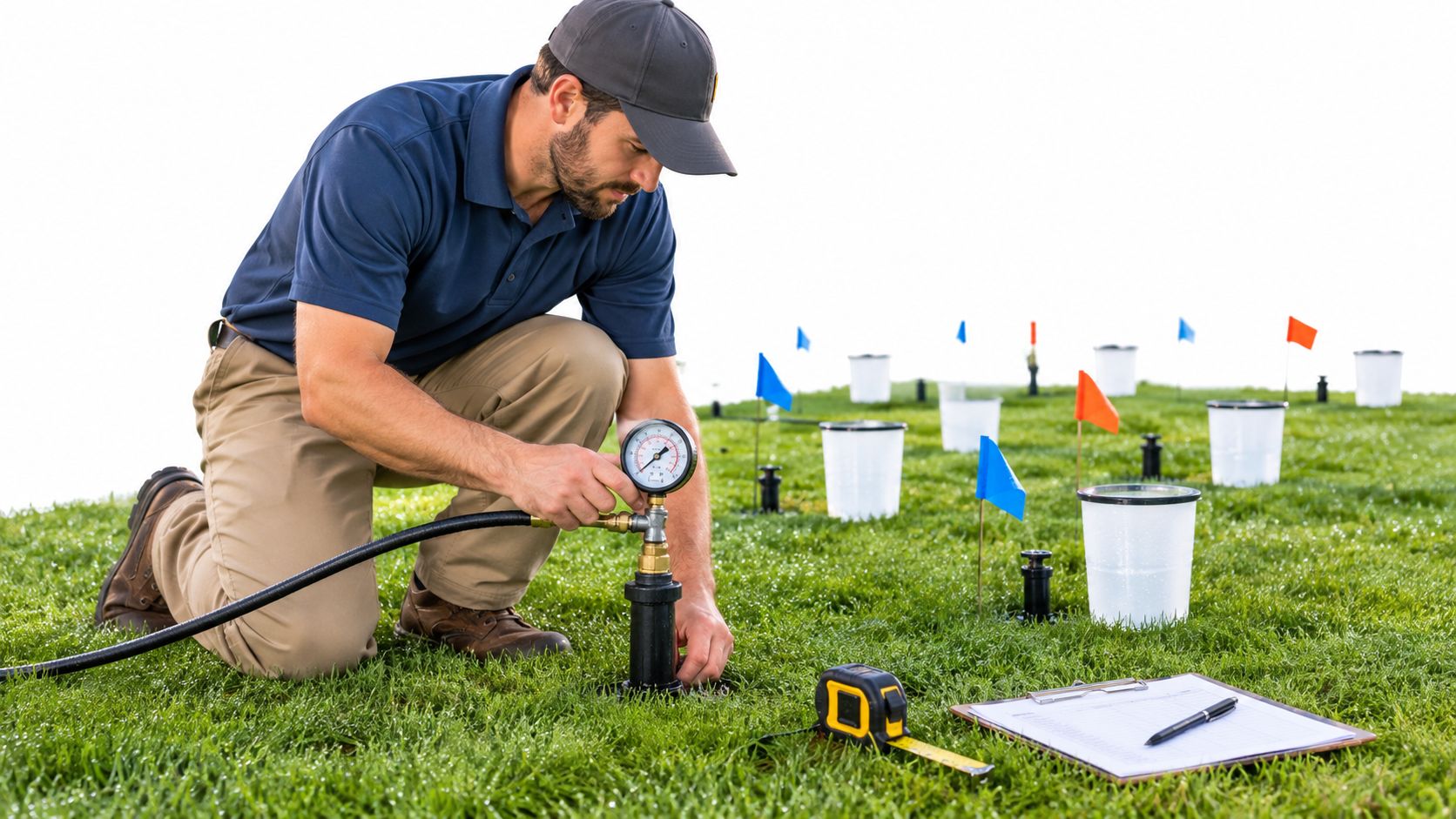
Use a soil probe, a hand trowel, or even a long screwdriver if that's what you have on site. The goal is simple. Don't ask whether the surface is dry. Ask whether the active root zone is still wet.
A practical sequence:
- Choose the right spots: Check the trouble area, then compare it with a healthier nearby zone.
- Probe below the surface: On beds, inspect below the dry crust. On tree areas, check deeper into the root zone.
- Feel the soil: If it's persistently wet below grade, that's stronger evidence than a dry-looking surface.
- Look for odor and texture: Sour smell, smear, or consistently soggy soil supports an overwatering diagnosis.
- Repeat after irrigation is paused: If the area stays wet well after watering stops, drainage or scheduling is likely the issue.
The surface lies all the time on commercial landscapes. Heat, wind, and sun dry the top layer first. Roots respond to what's happening lower in the profile.
If you suspect root damage in a bed plant, inspect the root ball carefully. Healthy roots should feel firm. If roots are dark, soft, or sloughing off, treat that as a serious warning sign.
The fast response plan for a wet zone
When field checks point to overwatering, move quickly and in order.
- Pause irrigation in the affected zone: Don't wait for the next grounds review.
- Flag the exact location: Map the valve, bed, station, or turf panel so teams act on the correct area.
- Check for pooling sources: Heads aimed incorrectly, low spots, blocked drains, and runoff from nearby hardscape can all contribute.
- Separate symptom from cause: Don't approve fertilizer or plant replacement until moisture conditions are verified.
- Reinspect before restarting water: The zone should earn its next cycle based on actual drying, not habit.
This approach prevents the most common operational error on commercial sites. A stressed area gets noticed, someone assumes it's dry, and irrigation gets increased before anyone checks the soil.
Immediate Steps to Remediate Overwatering
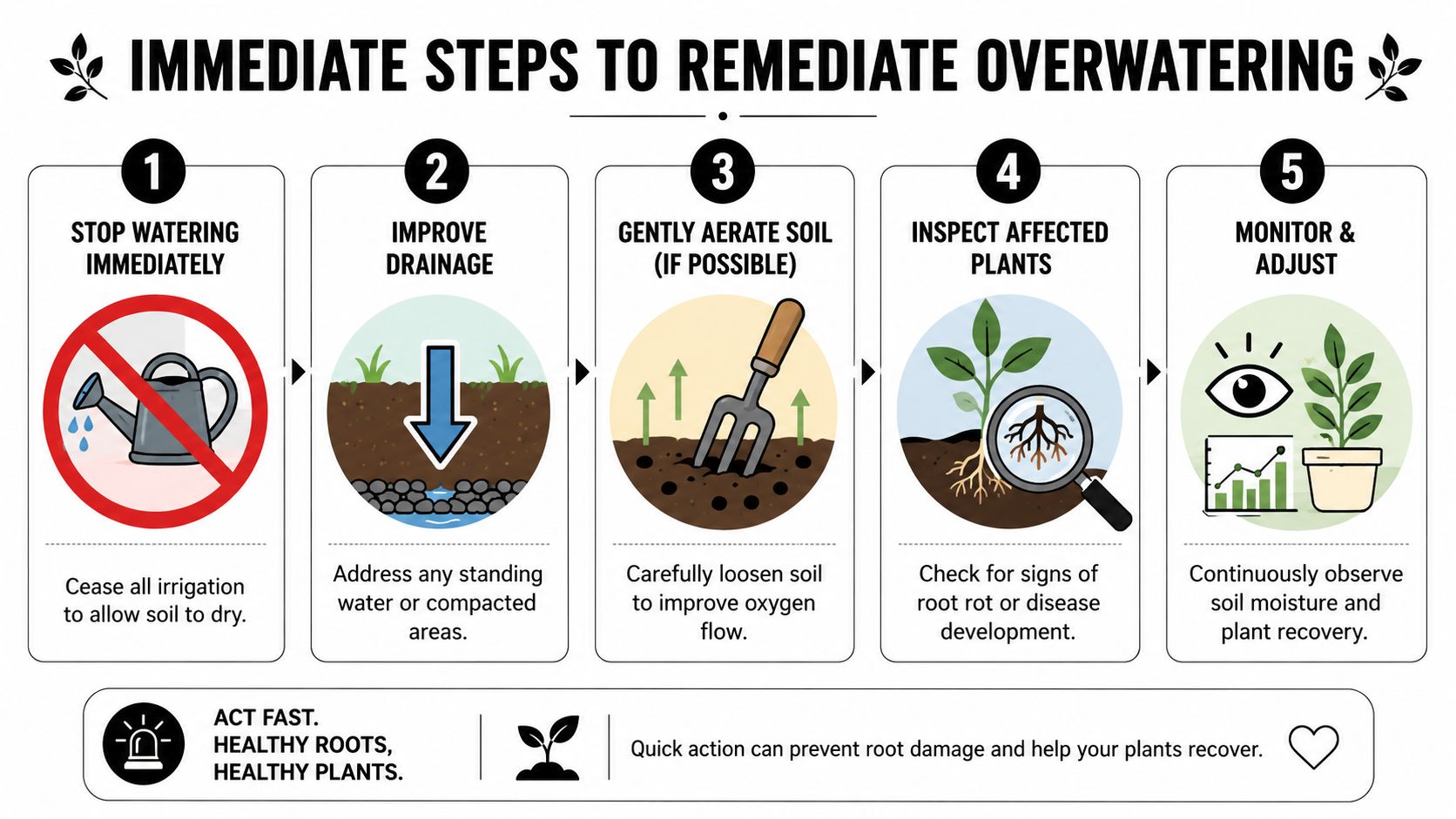
Once overwatering is confirmed, the first job is triage. Stop feeding the problem. Then create conditions that let the root zone recover.
What to do first on the property
Start with control measures, not cosmetic work.
- Shut off irrigation in the affected area: Automatic cycles and manual watering both need to stop.
- Open the soil to air where practical: Light aeration or careful loosening can help oxygen move back into the upper profile.
- Address standing water: If a saucer effect, basin, blocked drain, or low spot is holding water, correct that condition immediately.
- Inspect nearby hardscape flow: Runoff from sidewalks, roof discharge, or poorly directed drainage can keep the area wet even after irrigation is reduced.
In commercial settings, this has to happen zone by zone. Don't shut down the whole property if the issue is localized. At the same time, don't assume the issue is isolated until surrounding stations are checked.
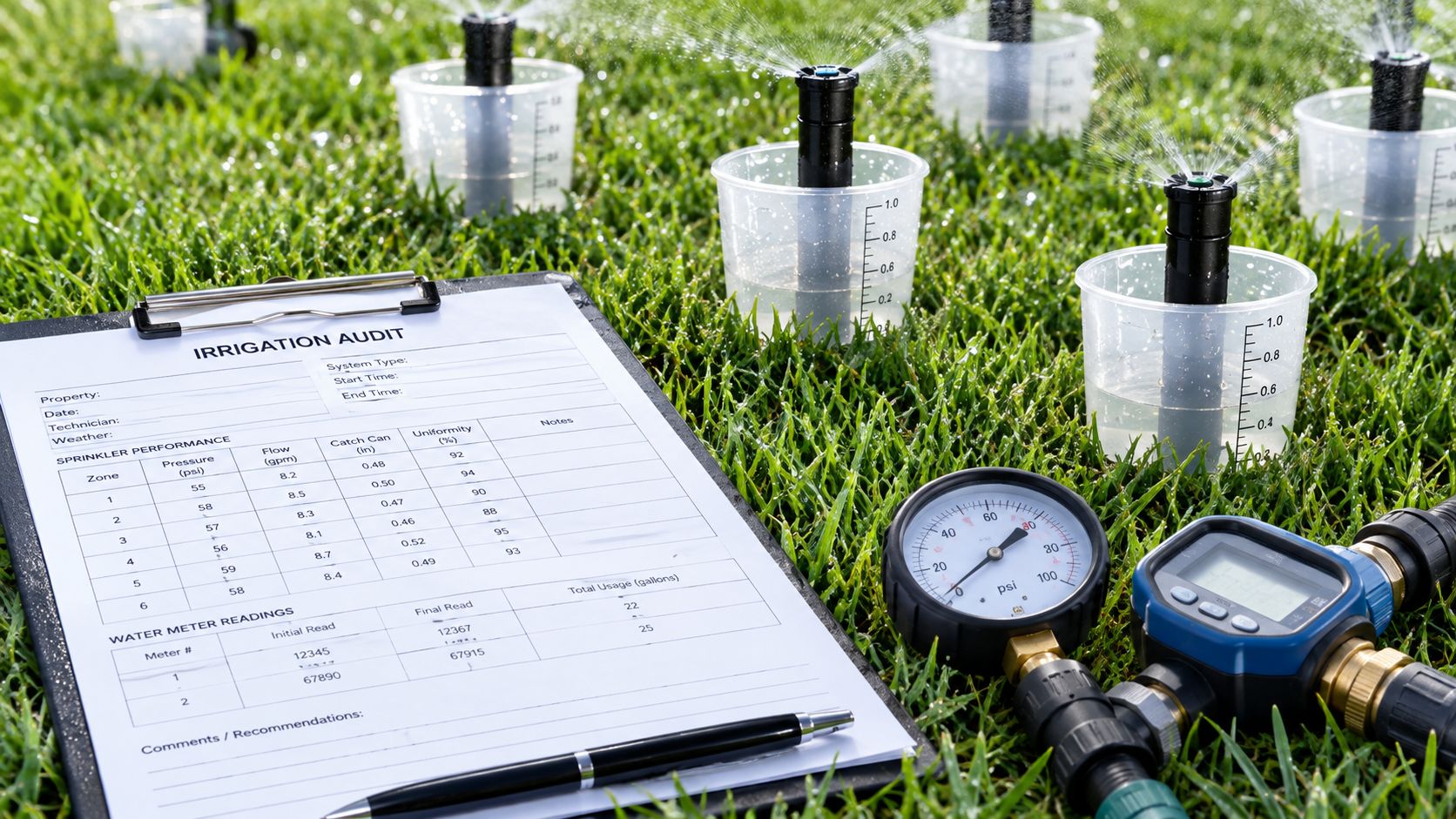
A disciplined irrigation review matters here. Managers who need support with controller settings, coverage issues, and drainage-related corrections usually benefit from a focused commercial irrigation service program rather than repeated one-off fixes.
What not to do while plants are stressed
Some common responses feel productive but usually make recovery harder.
Don't fertilize immediately. Stressed, oxygen-starved roots aren't in a good position to take up nutrients well. Don't replace plant material before you fix moisture conditions either, or the new material can fail in the same way as the old.
Avoid shallow “just a little” watering to keep appearances up. That often prolongs saturation in the wrong part of the soil profile.
If a plant is declining in wet soil, adding more inputs usually doesn't solve the problem. Correct the moisture environment first.
Keep monitoring after the shutoff. Some properties dry quickly. Others reveal deeper drainage and compaction issues once irrigation stops. The visual improvement may lag behind the correction, especially with shrubs and trees, so decisions should follow soil conditions, not panic.
Long-Term Prevention and Smart Water Management
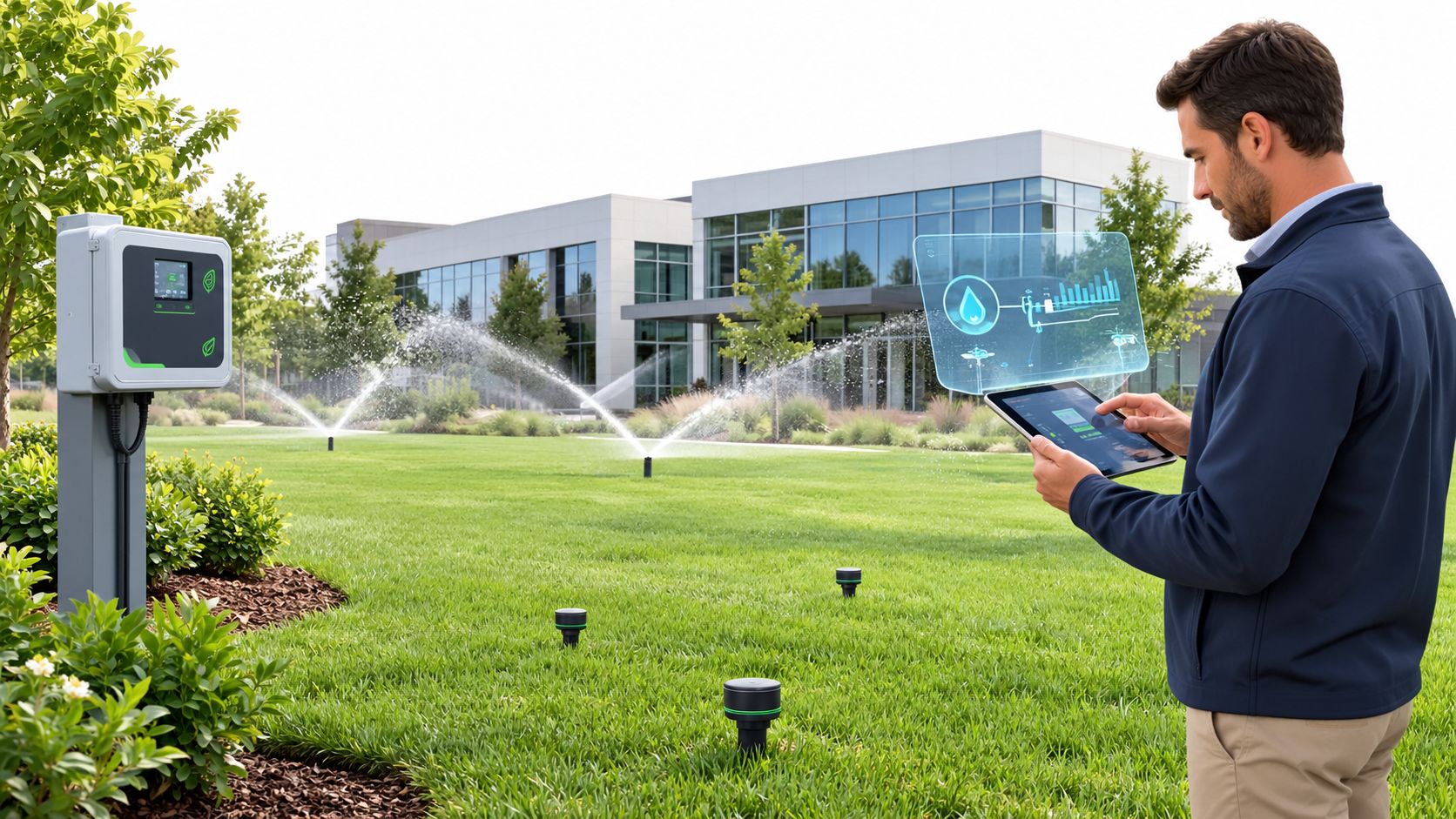
The most effective way to prevent overwatering is to stop managing irrigation by routine alone. Commercial properties change constantly. Season, rainfall, heat, shade, plant maturity, and drainage all shift how water behaves on a property. If the schedule doesn't change with those conditions, overwatering eventually shows up somewhere.
Horticultural guidance has increasingly aligned around one practical idea. Overwatering is an oxygen deprivation problem, and the recommended response is to check moisture 1 to 2 inches below the surface before watering, favor deeper watering followed by drying cycles, and adjust frequency based on season, temperature, and rainfall, as summarized in Yellowstone Landscape's overwatering guidance.
Build irrigation decisions around soil conditions
The strongest long-term habit is simple. Water based on need, not calendar habit.
That means:
- Checking before watering: Crews and managers should verify moisture below the surface instead of reacting to a dry-looking top layer.
- Favoring deeper, less frequent irrigation: Shallow, frequent watering keeps roots near the surface and increases the chance of chronic saturation.
- Adjusting by season and weather: A schedule that works during one part of the year can be excessive in another.
- Separating unlike zones: Turf, annual color, shrubs, and tree areas rarely perform well under one blanket watering approach.
Many commercial sites frequently struggle with water management. The controller runs, the site gets watered, and no one asks whether the plantings needed that cycle.
Match site operations to landscape reality
A water-smart property also accounts for how the site functions day to day. Heavy foot traffic compacts soil. Low areas collect runoff. Shade slows drying. Newer plantings may need a different approach than established material.
Good prevention usually includes a few management decisions:
- Review drainage after storms and irrigation events: Wet areas often reveal themselves only when someone looks at the right time.
- Correct recurring hardware issues: A misaligned head, broken valve, or overspray pattern can create chronic wet zones.
- Align plant selection with site conditions: The right plant in the right place lowers the odds that managers will keep compensating with water.
- Document recurring problem areas: If the same bed or turf panel keeps failing, treat it as a systems issue.
Some managers also use outside tools for homeowner- or community-facing guidance when they need plain-language summaries for boards or residents. Resources with actionable lawn recommendations can help support conversations, but commercial sites still need on-the-ground inspection and professional irrigation judgment.
Use a partner who manages water proactively
Long-term prevention gets easier when one team owns the full picture. That includes irrigation scheduling, site inspections, drainage observations, and maintenance follow-through. When those responsibilities are fragmented, overwatering tends to recur because no one is managing cause and effect together.
For Texas commercial properties, that usually means combining field observation with water-management planning, controller adjustments, and periodic irrigation review. One example is water management and irrigation planning for Texas commercial landscapes, which focuses on how irrigation oversight fits into broader property performance.
Used correctly, a commercial grounds management partner can help standardize moisture checks, identify repeat wet zones, and keep turf, beds, and trees from being managed by assumptions. Prestonwood Commercial Services is one option for that kind of integrated commercial program, with maintenance, irrigation, and water management handled as connected site functions rather than isolated tasks.
The takeaway for property managers is straightforward. If you're seeing yellowing shrubs, soft turf, recurring fungal issues, or plants that wilt in wet soil, don't assume the answer is more water. Confirm root-zone conditions, correct the irrigation pattern, and treat overwatering as an operational issue that affects appearance, plant longevity, and avoidable replacement costs.
If you're dealing with recurring wet spots, declining plant material, or irrigation that doesn't match site conditions, Prestonwood Commercial Landscape Services can help evaluate the property, identify the signs of overwatering, and build a practical plan for correction and long-term water management.