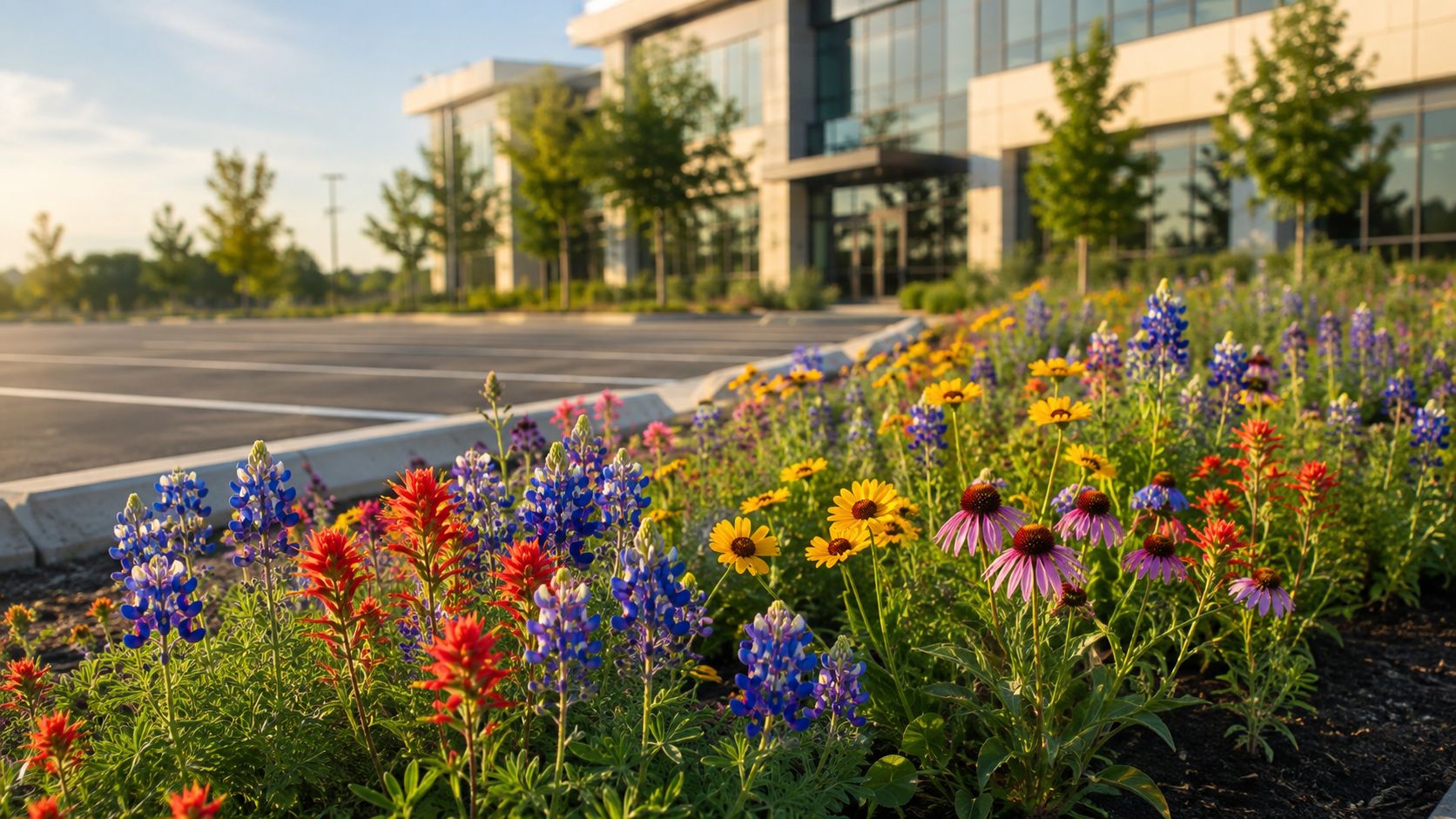
You're looking at a median that's gone thin, a few patches of bermudagrass that won't hold, and a client who still wants the place to look intentional in July. On a lot of DFW and San Antonio properties, that's the point where native wildflowers stop being a design choice and start being a maintenance strategy. Used the right way, they can replace expensive, high-touch color beds with plantings that fit Texas heat, lean irrigation, and rougher soils.
Texas is one of the most species-rich U.S. states for native wildflowers, and that matters on commercial sites because the plant palette is broad enough to solve real site problems, not just make a spring photo look good. The Lady Bird Johnson Wildflower Center says Texas has about 5,000 native plant species, and roughly 2,700 can be considered wildflowers (Wildflower Center facts). That's a serious toolbox when you're trying to stabilize a roadside edge, soften a parking-lot island, or keep a campus perimeter from looking barren between mow cycles.
Table of Contents
- Why Native Wildflowers Solve Commercial Problems
- Matching Species to Your Site and Region
- Seeding Versus Plug Installation for Commercial Sites
- Installation Sequence From Soil Prep to First Bloom
- Long-Term Maintenance and Cost Trade-Offs
- Verifying Seed Provenance and Responsible Sourcing
- Your Wildflower Planting Action Plan
Why Native Wildflowers Solve Commercial Problems
A July walkthrough in a DFW office park usually tells the same story. The median is baking, the St. Augustine is gone in the hottest spots, and irrigation is still running because nobody wants a dead-looking corridor in front of the building. Native wildflowers fit that kind of property because they shift acreage away from water-hungry turf and constant seasonal replacements.
Where they help on commercial sites
The best use cases are the places that fight turf the hardest. Medians, parking-lot islands, retention pond edges, right-of-way shoulders, and low-traffic campus perimeters are all better candidates than highly manicured entry zones. TxDOT says its wildflower program uses native grasses and wildflowers to reduce mowing and labor while improving water conservation, erosion control, and wildlife habitat across Texas (TxDOT wildflower program). That is the operational model to copy, because it matches how real maintenance crews work.
Practical rule: put wildflowers where people can tolerate seasonal change, not where a client expects a perpetual carpet.
The state's scale matters here too. TxDOT reports it buys and sows about 30,000 pounds of wildflower seed each year and cares for 800,000 acres of right-of-way (TxDOT wildflower program). That tells you these plantings are part of how Texas manages large, heat-stressed acreage.
What they won't fix
Wildflowers do not solve every commercial problem. They do not belong in high-foot-traffic entry walks where footing, order, and year-round symmetry matter most. They also will not make a neglected site look polished if the contractor skips weed control, site grading, or mow access. The planting is only as good as the access around it.
The mindset shift is simple. Stop designing for “always green” and start designing for seasonally dynamic. In Texas, that often means accepting that a planting can look sparse or dormant part of the year and still be performing exactly as intended. For properties trying to pair biodiversity with tenant-friendly presentation, a well-planned native bed can support the same branding goal as color rotations without dragging in the same level of water and labor demand. A good starting point is this pollinator-friendly landscaping approach, especially when the goal is curb appeal with less input.
Matching Species to Your Site and Region
A seed mix that works on one property can fail badly on the next. I have seen the same commercial mix do fine on an open median and disappear in a shaded entry bed with compacted clay, poor drainage, and no room for mowing equipment. The primary filter is soil, drainage, sun, and the Natural Vegetative Region.
Start with the site, not the seed bag
Before ordering anything, check four things. Soil texture, because clay and caliche behave very differently. Drainage, because standing water kills a lot of natives faster than drought does. Sun exposure, because many showy species need full sun. And maintenance access, because if crews cannot mow or weed without tearing up the planting, the design is wrong for the property.
TxDOT's regional tables are useful because they tie species to specific conditions instead of pretending there is one statewide recipe. In one example, bluebonnet is listed at 46% of a mix, with a 20 lb/acre single-seed rate, 13,500 seeds per pound, and a full-sun, well-drained-soil requirement. Indian paintbrush is listed at 1% of a mix, with a 1/4 lb rate and 5,100,000 seeds per pound (TxDOT native wildflowers by region). The lesson is simple. Seed density only matters when the site fits the plant.
A practical site-to-species screen
| Site Condition | Recommended Species | Bloom Window | Region Fit |
|---|---|---|---|
| Full sun, well-drained median | Bluebonnet | Spring, mainly March to May | Broad Texas fit, strong roadside use |
| Full sun, mixed native mix for color variety | Indian paintbrush | Spring | Region-specific mix, best where drainage is reliable |
| Poorly drained edge with seasonal moisture swings | Region-appropriate wet-tolerant natives | Varies by mix | Match to local region and drainage, not statewide generic seed |
| Rocky limestone slope | Region-adapted drought-tolerant natives | Spring to early summer, depending on mix | Best in Hill Country-type conditions |
| Parking-lot island with heat and reflected glare | Drought-tolerant native wildflowers with low canopy spread | Spring display, then summer decline | Use only where irrigation is limited and mowing access is tight |
For DFW properties, the Blackland Prairie context usually means heavier soils and compaction pressure from traffic and construction. In San Antonio, the transition between the South Texas Brush Country and Edwards Plateau makes drainage and limestone influence more important. A planning tool like garden ai design can help as a first-pass layout aid, as long as the final plant list still gets checked against actual soil and exposure.
The better commercial approach is to treat native wildflowers as site-engineered plantings, not decoration. A mix that performs on a roadside shoulder can fail fast in a shaded entry island. If the site data does not support the species, the bloom window will not save it. For North Texas projects, this native plant reference for North Texas is a useful regional filter before anyone orders seed.
Seeding Versus Plug Installation for Commercial Sites
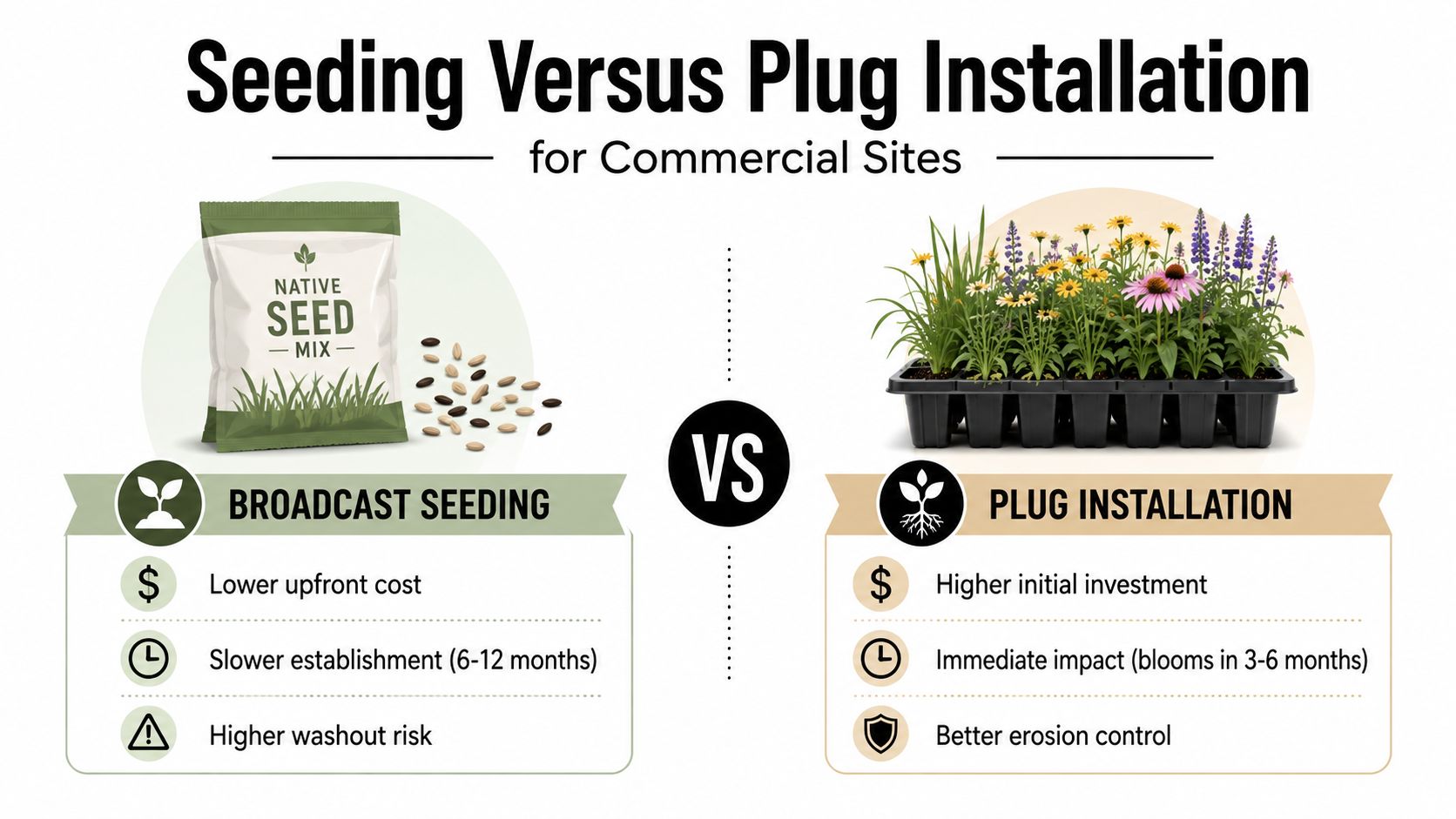
On a loading dock edge in August, the client wants color fast, the irrigation clock is tight, and the maintenance crew needs access without tearing up new material. That is the decision point on commercial wildflower work. Seed gives you coverage at a lower cost per square foot. Plugs give you quicker visual payoff and a tighter finish where people notice the planting.
Broadcast seeding works when scale matters
Broadcast seeding is the practical choice for large medians, slopes, right-of-way edges, and broad campus buffers. Crews can cover more ground with less material handling, which matters on properties with long access runs and limited labor windows. The trade-off is that seed sits closer to washout, bird loss, and weed pressure before it can take hold.
Seed rate still has to match the site. A roadside mix can be built around a heavier bluebonnet component, but that does not mean every property should copy the same approach or throw seed at thin soils and expect a good result. On a commercial site, the better question is whether sun exposure, drainage, soil firmness, and access for mowing will let the seed make contact and stay put.
Broadcast seeding also fits projects where the first season can be a little uneven. If the client wants a quick carpet of flowers, seed alone usually disappoints. If the goal is to establish broad coverage across a large area with a maintenance plan that can handle patchiness, seed is the cleaner operational choice.
Plugs buy speed and certainty
Plug installation makes sense when the site is small, highly visible, or under close client scrutiny. Entry islands, healthcare fronts, and retail corners usually need faster visual return than a wide roadside swath. Plugs also help where erosion is strong or seed may move before germination.
Plugs are the safer bet when the property cannot afford a thin first impression.
The downside is obvious. Plugs cost more in material and labor, and they need closer watering during establishment. They are also harder to justify on very large areas unless the project is phased. On drought-stressed sites with limited irrigation, a plan built around water-efficient establishment and irrigation timing can keep plug losses down, but it still takes more oversight than a simple broadcast seeding job.
For most portfolios, the best answer is mixed. Seed the broad, low-visibility areas, then use plugs only where the client's eye lands first. That keeps the budget in line while protecting the parts of the property that carry the most visual weight. Contractors who plan around soil prep, access, and irrigation discipline, such as teams using a soil preparation resource, tend to get the sequencing right even when the site is difficult.
Installation Sequence From Soil Prep to First Bloom
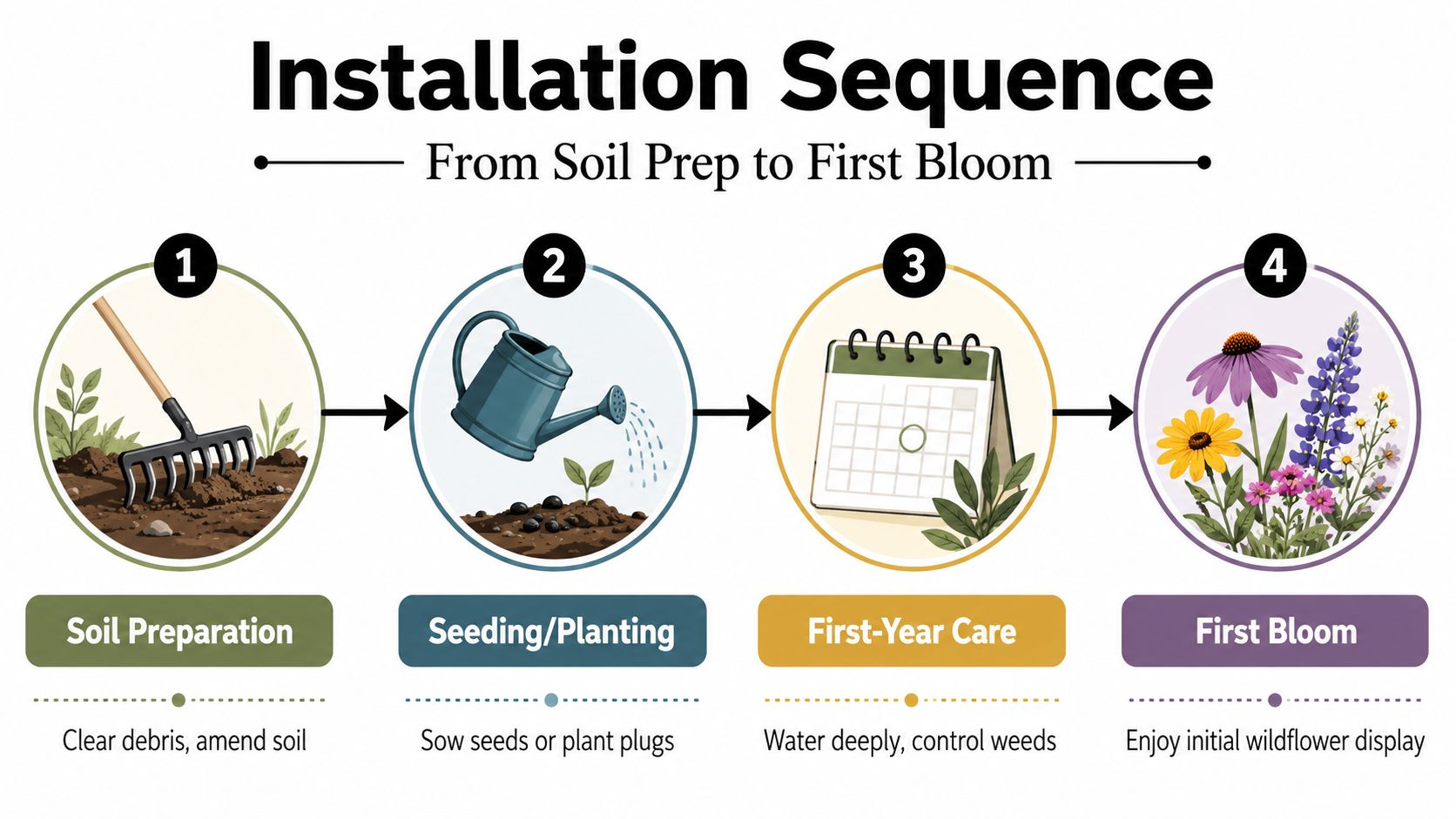
On commercial properties, the install fails long before the first bloom if crews rush prep, bury seed too deep, or leave turf and weeds alive under the new planting. I see it most on compacted clay, caliche, and mixed-fill soils, where poor seed contact and old root mass can wipe out a bed before it has a chance to establish.
Get the surface right before you sow
The first step is site cleanup, not seeding. Kill existing turf and weeds completely, remove debris, and open the surface just enough for seed to make contact. Texas guidance also points to minimal soil disturbance and firm soil-to-seed contact, which fits commercial sites where crews need a bed that can hold up under routine maintenance and limited rework (Texas Highways native wildflowers guidance).
A deep till on a median or entry bed may look thorough, but it usually creates more work later. It brings buried weed seed to the surface, loosens the grade, and raises erosion risk on slopes and runoff lines. On tight, compacted sites, a light scarify and a clean seedbed usually perform better than aggressive cultivation. The guide to amending native Arizona soil covers the same basic principle, keep the soil workable without overprocessing it.
Plant with the timing and moisture window in mind
Native wildflower planting has to match the species' seasonal rhythm. In Texas, that usually means working around the spring bloom cycle rather than forcing growth out of season. If the mix fits the region, the goal is a stand that can settle in before heat stress overwhelms young plants.
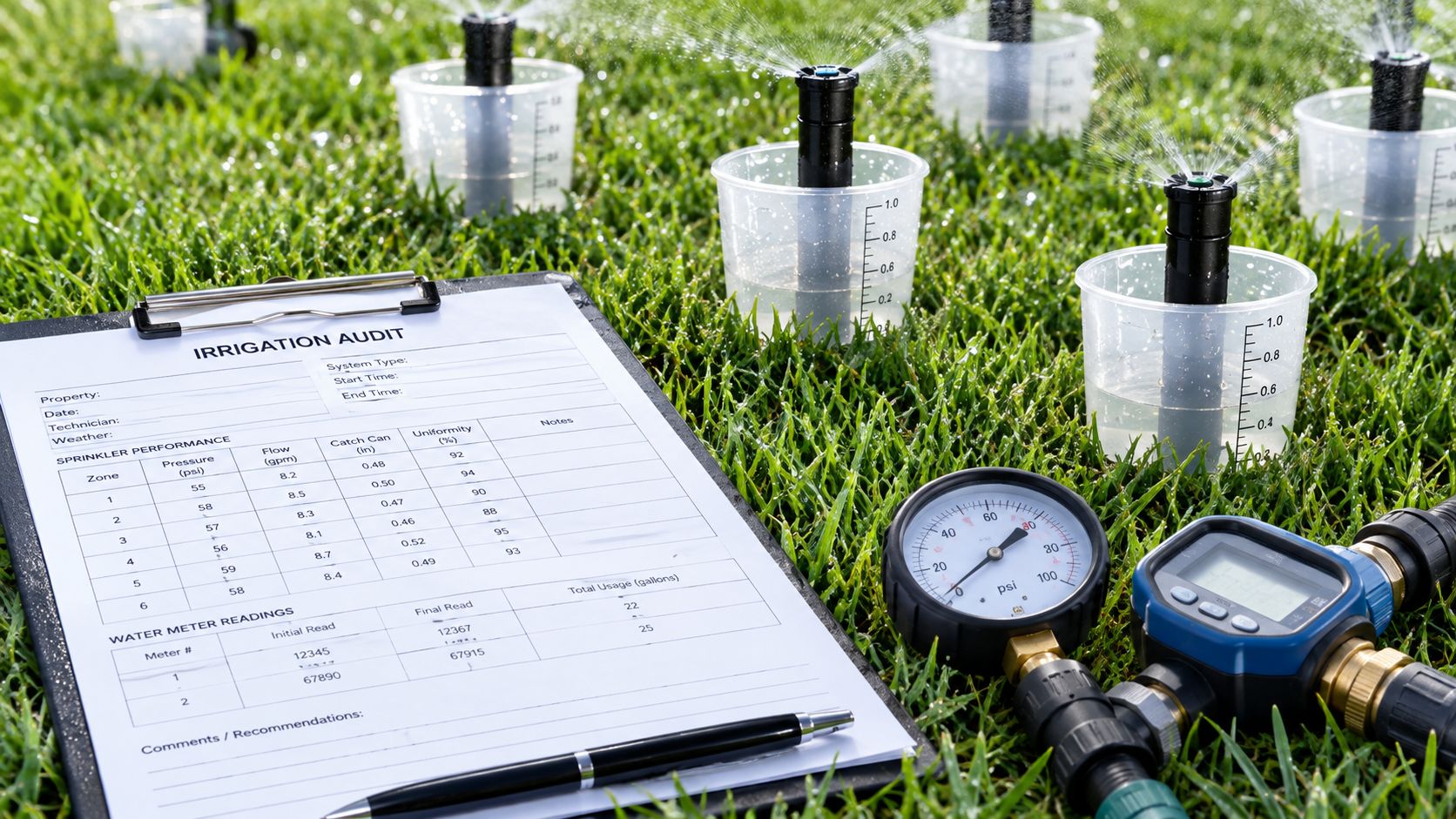
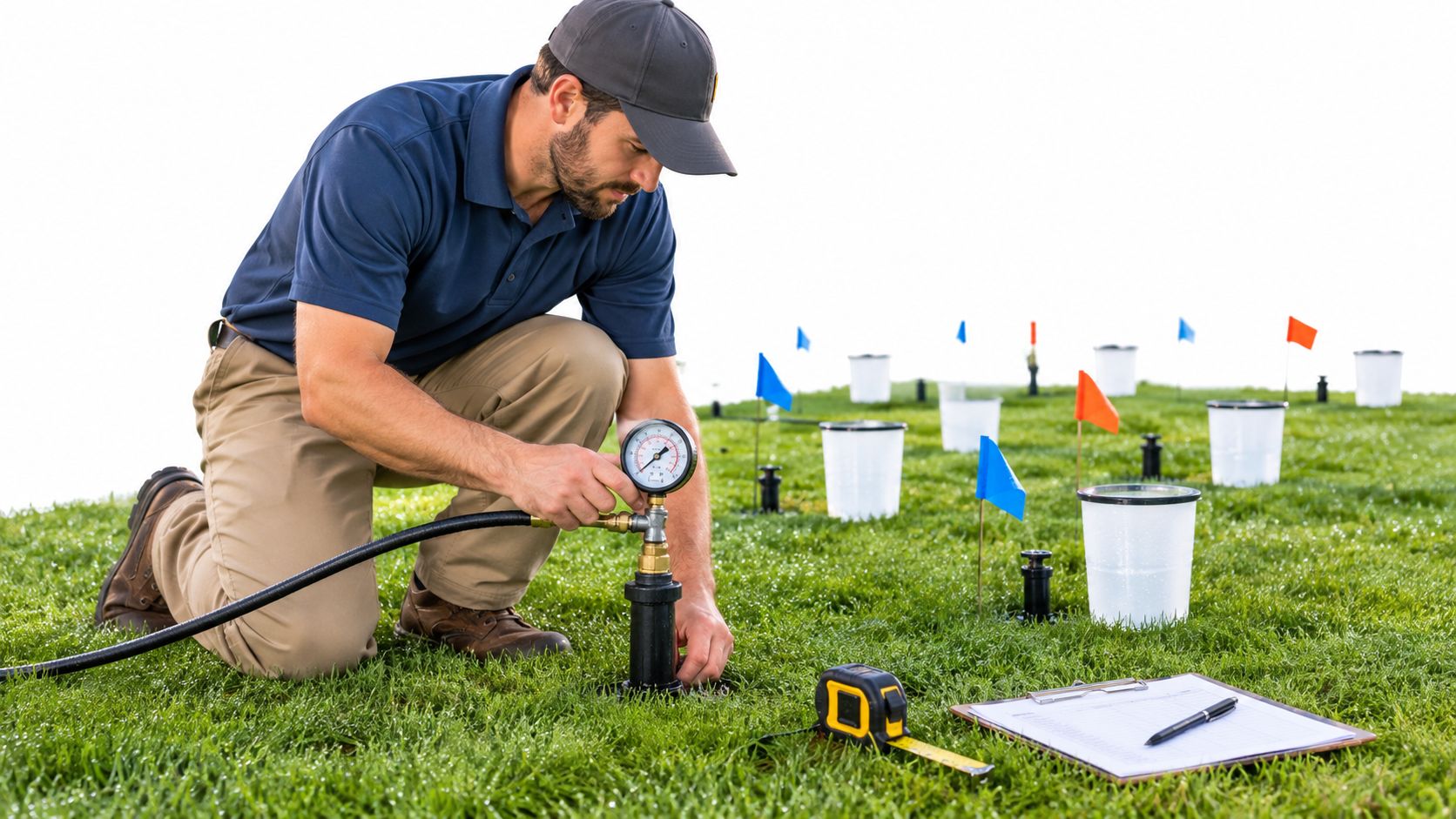
Temporary irrigation helps during establishment, but it has to taper. Overwatering creates weak growth, feeds weeds, and trains the site to rely on water it will not get later. The right approach is to keep the seedbed active, then back off as roots take hold and rainfall starts doing more of the work.
For contractors, the bid scope should spell out four separate tasks:
- Surface prep: remove old turf and living weeds first.
- Seed placement: spread seed evenly and keep it shallow.
- Firming: press seed into contact without burying it.
- Early care: irrigate lightly, then reduce intervention as plants establish.
The hard part is usually not spreading the seed, it is leaving the bed alone after install. Crews that understand that difference are far more useful than crews that move faster.
Long-Term Maintenance and Cost Trade-Offs
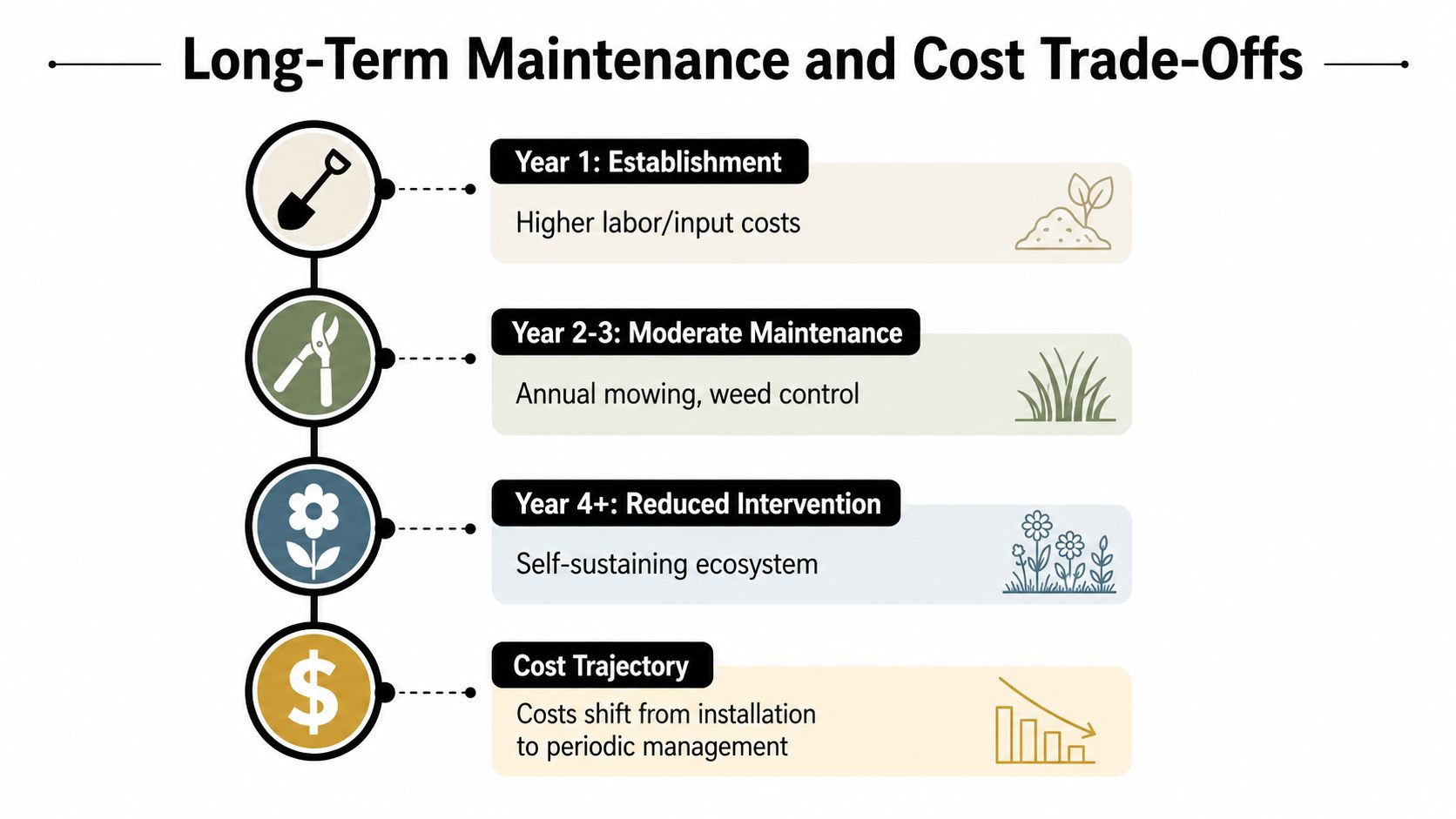
The biggest mistake I see is calling a native wildflower bed “low maintenance” and stopping there. The better phrase is different maintenance. The work shifts away from frequent mowing and seasonal replanting and toward timed mowing, weed control, irrigation control, and a clean annual reset.
What the first years really look like
The first two establishment seasons are the hardest. Weeds try to outrun the wildflowers, and crews need the discipline to keep the bed clean without cutting too hard into new growth. Once the stand is established, the maintenance pattern gets simpler, but it does not disappear.
TxDOT says its wildflower program uses native grasses and wildflowers to reduce mowing and labor while improving water conservation, erosion control, and wildlife habitat across Texas (Wildflower Center plant fields). That is the operational promise. It is not zero work, it is a better work mix.
A practical mowing calendar usually means one or two cuts per year, timed after seed set and before the site looks ragged enough to trigger complaints. Cut too early and you remove the next generation of flowers. Cut too late and the property can look neglected, especially in front of tenants or visitors who do not understand the cycle.
Set expectations before the complaint call
Native beds get judged hardest in late summer and winter dormancy. They can look brown, thin, or inactive and still be healthy. That is why client education matters as much as the planting itself. If the account team has not explained the seasonal cycle, someone will call and ask why the “flowers are dead.”
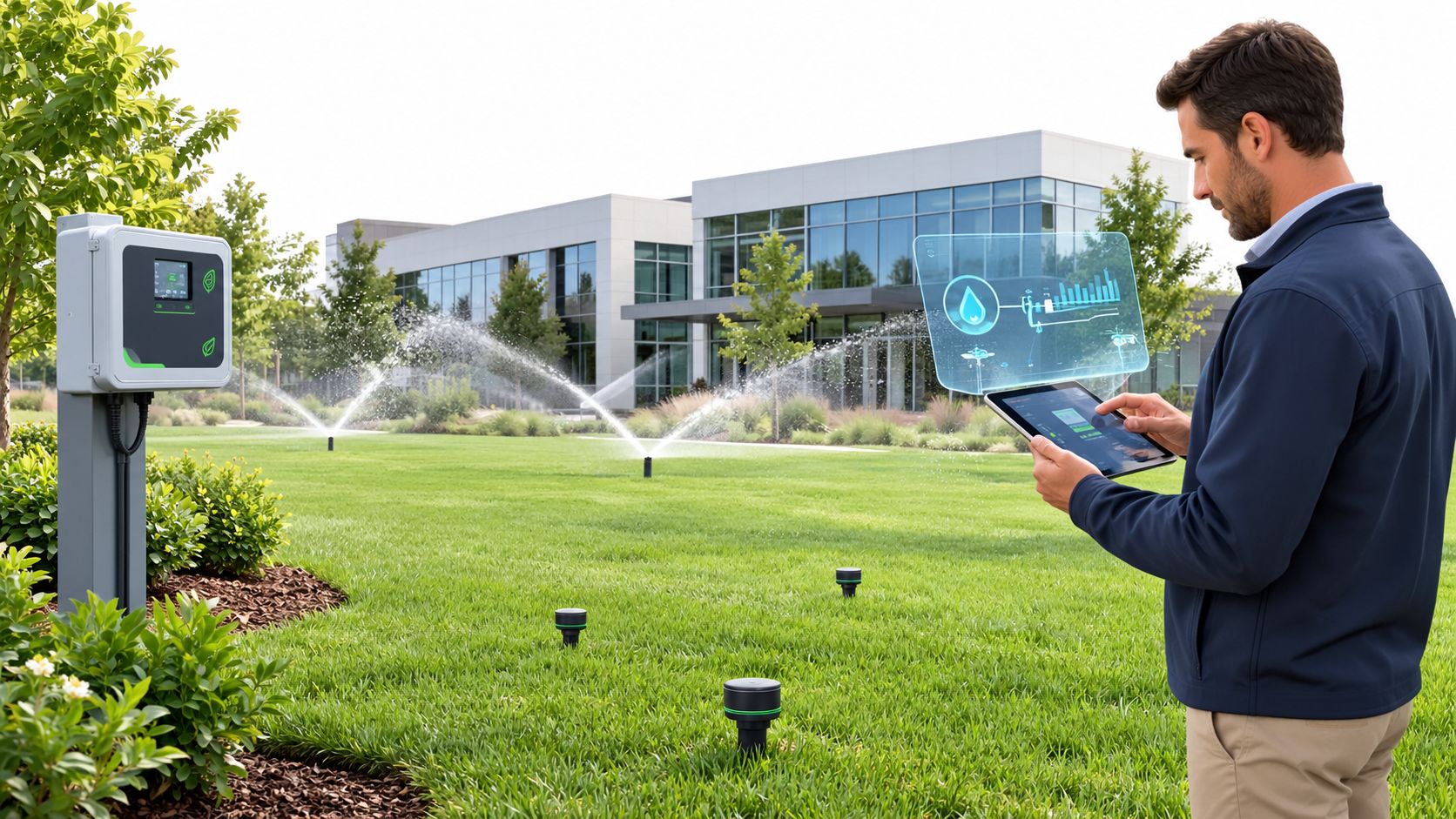
Water use should taper after establishment, not stay on a turf schedule forever. If the property manager is still running a high-frequency irrigation program, the planting is being managed like ornamentals instead of a native stand. That usually means more weeds, weaker roots, and a higher utility burden than the site needs. For irrigation-focused planning, this water conservation and irrigation reference is a useful operational comparison.
Where the budget moves
Traditional turf and seasonal color demand repeated mowing, regular irrigation, and continual replanting in visible beds. A native wildflower area shifts more of the spend into site prep, seed, establishment care, and periodic mowing. That does not make it free, but it does change the cost profile from constant inputs to occasional management.
The budget line items also change how a site is managed day to day. On commercial properties, the savings only hold when the crew has access for mowing, the irrigation schedule is kept conservative, and the bed is not treated like a high-input display bed. Poor access, compacted edges, and overwatering will erase part of the benefit fast.
On mixed-use and institutional sites, I plan for the stand to look uneven at times and to need a reset after the first flush of bloom and seed drop. That is normal. The job is to keep the planting functioning, not to force a manicured look that conflicts with how natives grow.
The client conversation should be about lifecycle value, not whether the bed looks perfect in every month of the year.
Verifying Seed Provenance and Responsible Sourcing
A lot of labels say “native,” but that word alone doesn't tell you enough. On commercial projects, especially those tied to ESG reporting or public visibility, seed provenance matters just as much as bloom color. You need to know where the material came from, whether it matches the region, and whether it was ethically produced.
Ask where the seed came from
Texas conservation guidance warns that habitat loss and fragmentation are major threats to native species, and it explicitly tells buyers to ask where plants came from and whether they were wild-collected or grown from seed (Texas Parks and Wildlife source). That's a direct sourcing question, not a marketing suggestion.
The practical takeaway is to treat “native to Texas” and “native to your ecoregion” as different standards. A plant can be native somewhere in the state and still perform poorly, or create the wrong ecological signal, on your specific site. Corporate campuses, healthcare properties, and education facilities should expect suppliers to document provenance rather than hand over a vague label.
What to check before you buy
A serious supplier should be able to answer a few basic questions without dodging:
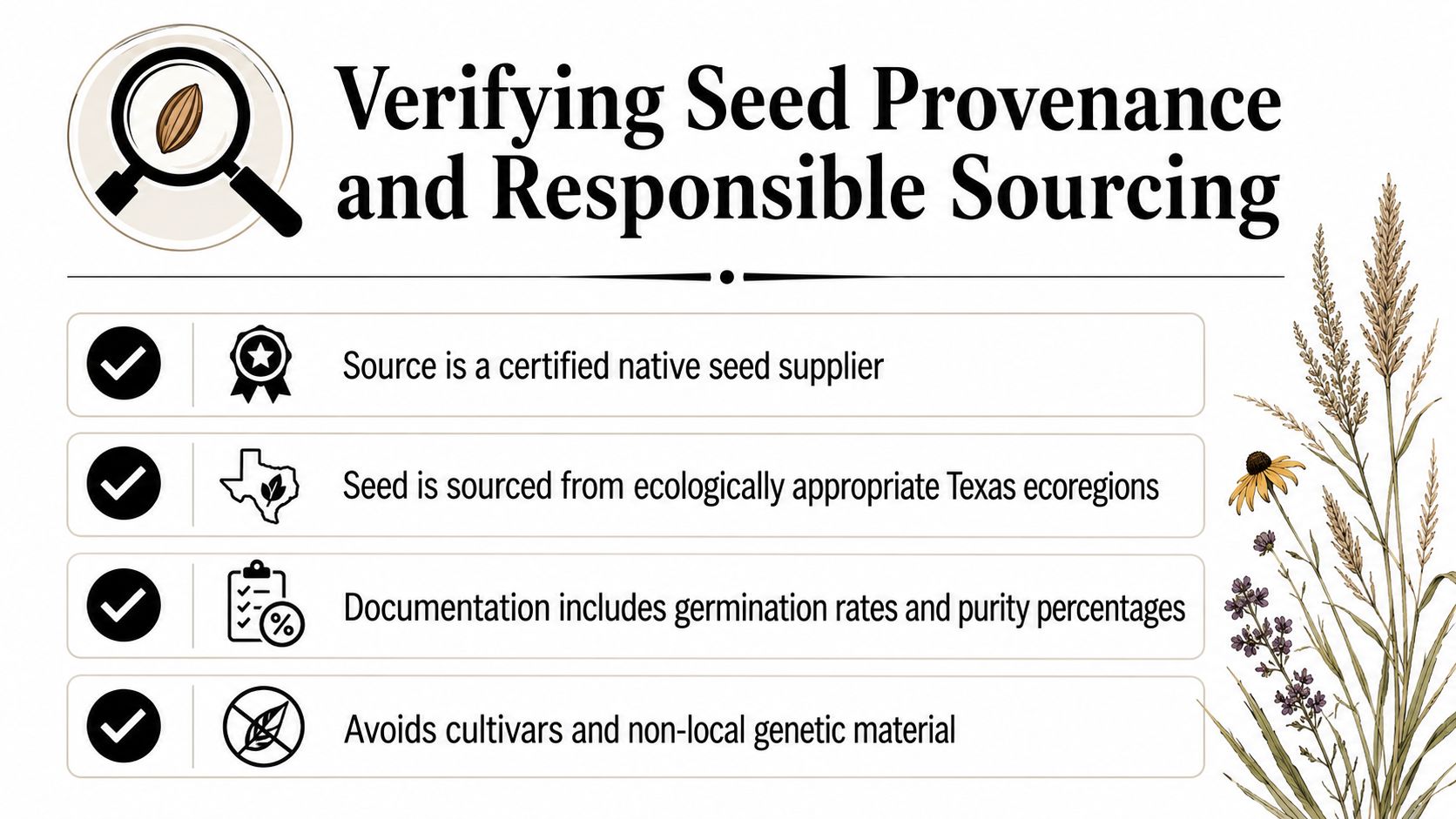
- What region was the seed collected from? The answer should match the project site, not just the state.
- Was it grown from cultivated stock or wild-collected? That difference matters for conservation pressure.
- Can you show germination and purity documentation? Those numbers help you judge what you're really buying.
- Are cultivars or non-local genetics included? If the goal is restoration or responsible native planting, that's a real issue.
Sourcing isn't just ethics, it's performance. Seed that's better adapted to the local environment usually gives you a cleaner establishment path, especially on difficult commercial sites where irrigation and maintenance are limited. It also protects the credibility of a sustainability claim when the property is audited or publicly reviewed.
If the supplier can't explain provenance in plain language, keep looking. The cheapest wildflower mix is expensive if it's the wrong genetics, the wrong region, or collected in a way that undermines the habitat you're trying to support.
Your Wildflower Planting Action Plan
A native wildflower project holds together when the first decisions are practical. Start with the site, not the bloom photos. Check sun, drainage, soil compaction, irrigation access, and mowing routes before you ask for pricing. That is the difference between a planting that survives and one that turns into a weed-filled cleanup job.
Species choice has to match what the property can support. Use region-fit seed or plugs, not a broad Texas mix that ignores the Blackland Prairie, brush country, limestone, or drainage conditions on the ground. If the area is highly visible, phase in plugs at the front edge and seed the broader zones behind them.
Before contractor bids go out, ask three questions. How will existing vegetation be removed? How will seed-to-soil contact be achieved? What is the mowing and irrigation plan for the first year? If the answers are vague, the crew is probably planning to improvise in the field.
First-year oversight needs site walks after rain, not just after install. Check for seed movement, bare patches, weeds, and any compaction or erosion that showed up after work started. If the bed is thinning in a few spots, spot-reseeding or supplemental plugs can keep the stand from breaking into patchwork.
The smartest way to phase a conversion is to start where the property can absorb the visual learning curve. Put the first pilot in a median, rear border, or drainage edge, then expand once the maintenance team and tenants understand the cycle. Native wildflowers Texas properties can support are only as good as the execution behind them, so treat the install like a managed asset, not a one-time beautification project.
Prestonwood Commercial Landscape Services helps commercial properties in Dallas, Fort Worth, and San Antonio build native wildflower programs that hold up under real maintenance contracts. If you want a partner that can coordinate site prep, planting, irrigation, and long-term care, visit Prestonwood Commercial Landscape Services and start the conversation with a team that knows how these plantings perform on busy properties.