
Water waste shows up in a commercial property manager's budget before it appears in a sustainability report. It can raise utility costs, trigger watering restrictions, damage grounds, generate tenant complaints, and attract scrutiny from local authorities. Reliable supply is harder to assume, so irrigation performance now belongs in routine operating decisions.
Water conservation gives managers tighter budget control and helps protect the property's grounds investment. Efficient systems also reduce exposure when weather, supply conditions, or local requirements change. The return comes from preventing wasted water, avoidable repairs, replacement planting, compliance problems, and disruptions to normal operations.
For a busy property team, the practical choice is straightforward: identify waste before it becomes an invoice, damaged grounds, or a service issue. Conservation is therefore a management discipline tied to cost control, regulatory readiness, and the property's reputation, not a seasonal environmental project.
Table of Contents
- Beyond the Buzzword Why Conservation Is a Business Strategy
- The Big Picture and Its Local Impact
- The Financial Case for Smart Water Management
- Navigating the Complex Regulatory Landscape
- Protecting Your Grounds as a Business Asset and Brand Feature
- How to Put Water Conservation into Practice
Beyond the Buzzword Why Conservation Is a Business Strategy
Commercial water conservation works best when managers treat it as an operating discipline rather than a seasonal sustainability project. Irrigation affects utility expenditure, maintenance labor, plant health, site appearance, and the property's ability to meet local watering requirements. Those concerns sit in different budget lines, but they're connected by the same system.
A leaking valve can inflate water use and damage planting areas. Poorly adjusted heads can create runoff on sidewalks, while overspray leaves hardscape stained and slippery. A controller that follows an outdated schedule may continue watering during weather conditions that make irrigation unnecessary. Each issue can look minor in isolation, yet together they weaken financial control over the property.
Practical rule: Manage irrigation with the same attention you give HVAC, lighting, and access systems. It's infrastructure, not decoration.
Four business pillars make the case clear:
- Financial control: Lower non-beneficial use helps limit avoidable utility expense and reduces the chance that leaks or overwatering create secondary repair costs.
- Regulatory readiness: Properties that monitor schedules, repair defects, and document adjustments can respond more effectively when municipalities impose conservation measures.
- Environmental responsibility: Efficient water use supports local resilience and gives tenants, visitors, and ownership a visible sign of responsible management.
- Asset longevity: Healthy plants and turf are less vulnerable to stress, decline, and premature replacement when irrigation delivers water at the right time and in the right amount.
The financial argument extends beyond a water bill. The EU's water investment outlook identifies an annual water-investment gap of about EUR 23 billion and supports a twin-track response that combines new supply with reduced demand. For property managers, that reinforces a straightforward principle: efficiency is often a more controllable resilience measure than waiting for new infrastructure to solve supply pressure.
Water conservation also strengthens the property's operating story. Ownership can justify irrigation upgrades through reduced waste, better grounds performance, and lower exposure to disruption. Tenants see a maintained site. Facilities teams gain clearer information. The asset becomes less dependent on guesswork.
The Big Picture and Its Local Impact
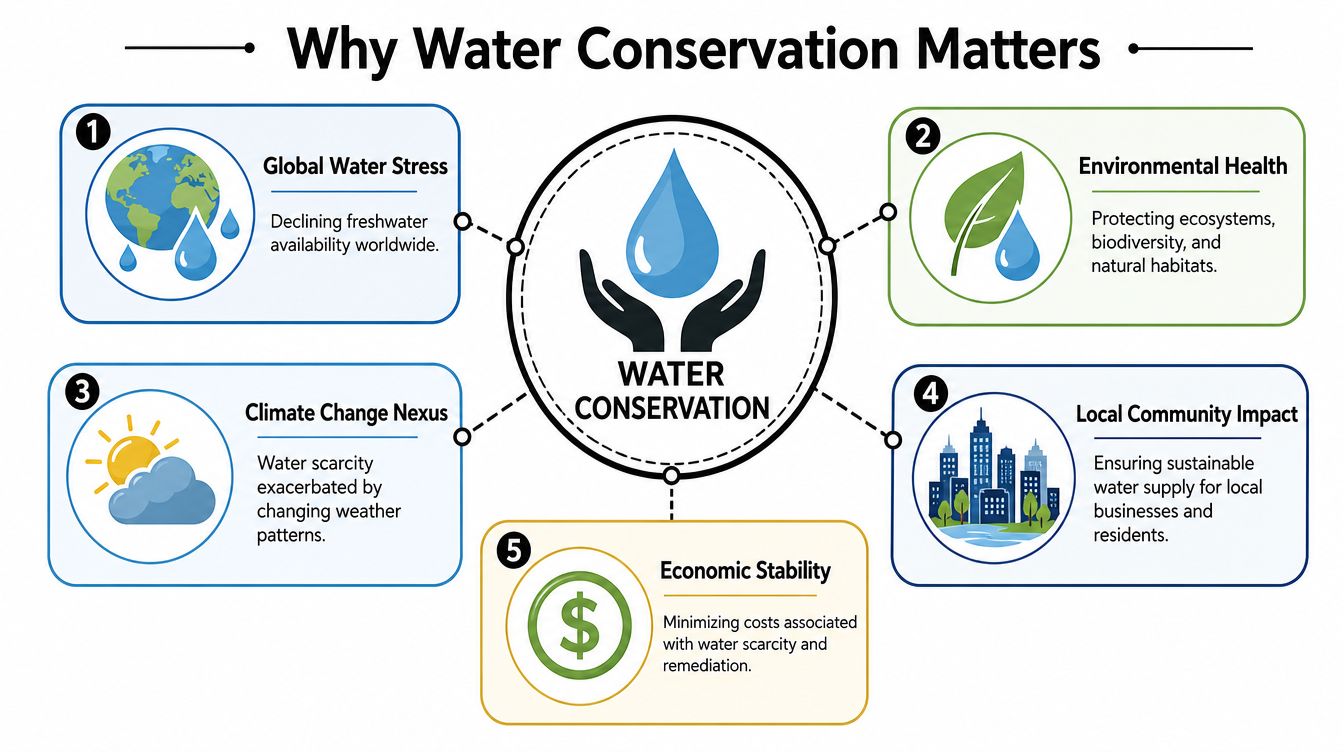
Freshwater pressure reaches commercial properties through local systems. As demand rises or supply becomes less reliable, cities and utilities must balance households, businesses, agriculture, public services, and ecological needs. Conservation policies respond to that competition. They are not arbitrary administrative preferences.
Agriculture accounts for 72% of all freshwater withdrawals, according to UN-Water's water scarcity data. Drought, seasonal variability, and aquifer stress can leave urban and commercial users with less flexibility. UN-Water also warns that three out of four people worldwide could face drought impacts by 2050, which explains why water planning increasingly addresses demand alongside supply.
Why urban growth changes the operating risk
Urban water scarcity is projected to expand substantially. The UNESCO and UN-Water report reports that the number of urban residents facing water scarcity could rise from 930 million in 2016 to as high as 2.4 billion by 2050. In growing Texas markets, including Dallas, Fort Worth, and San Antonio, that pressure can affect commercial properties competing for municipal capacity with expanding residential and industrial demand.
A property manager cannot control regional rainfall or population growth. Management can control irrigation schedules, leak response, plant selection, soil condition, and the site data used to set watering decisions. Conservation therefore serves as a local risk-control measure, even when regional pressure develops far beyond the property boundary.
The Texas connection
In DFW and San Antonio, strained supply can lead to watering schedules, drought-stage restrictions, allocation rules, or tighter requirements for outdoor use. The response varies by water provider and current conditions, so managers should verify applicable rules instead of relying on a generic statewide assumption.
A commercial irrigation plan should identify who checks the controller, verifies repairs, and confirms that seasonal changes follow current guidance. This practical discussion of water management and irrigation for Texas commercial properties offers additional context for connecting irrigation performance with site operations.
The strongest response is proactive. Audit systems before restrictions arrive, correct waste before it becomes visible, and keep records showing that the property manages demand responsibly. This protects service continuity and reduces the disruption caused by emergency adjustments.
The Financial Case for Smart Water Management
Water is an operating cost that many commercial properties manage without reliable performance data. Consumption records, zone-level issues, and seasonal patterns give a property manager the evidence needed to defend an irrigation budget, identify abnormal use, and judge whether an upgrade is paying off. Conservation turns an uncontrolled expense into a cost that can be monitored and managed.
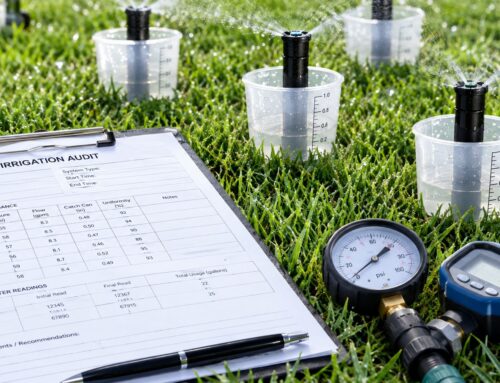
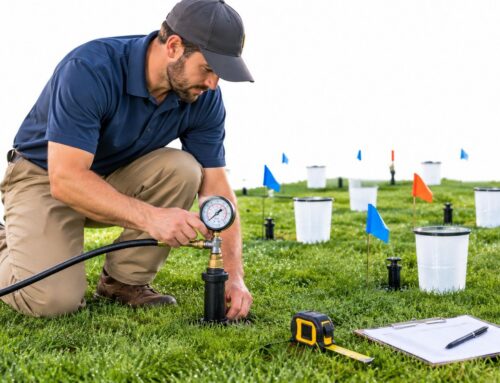
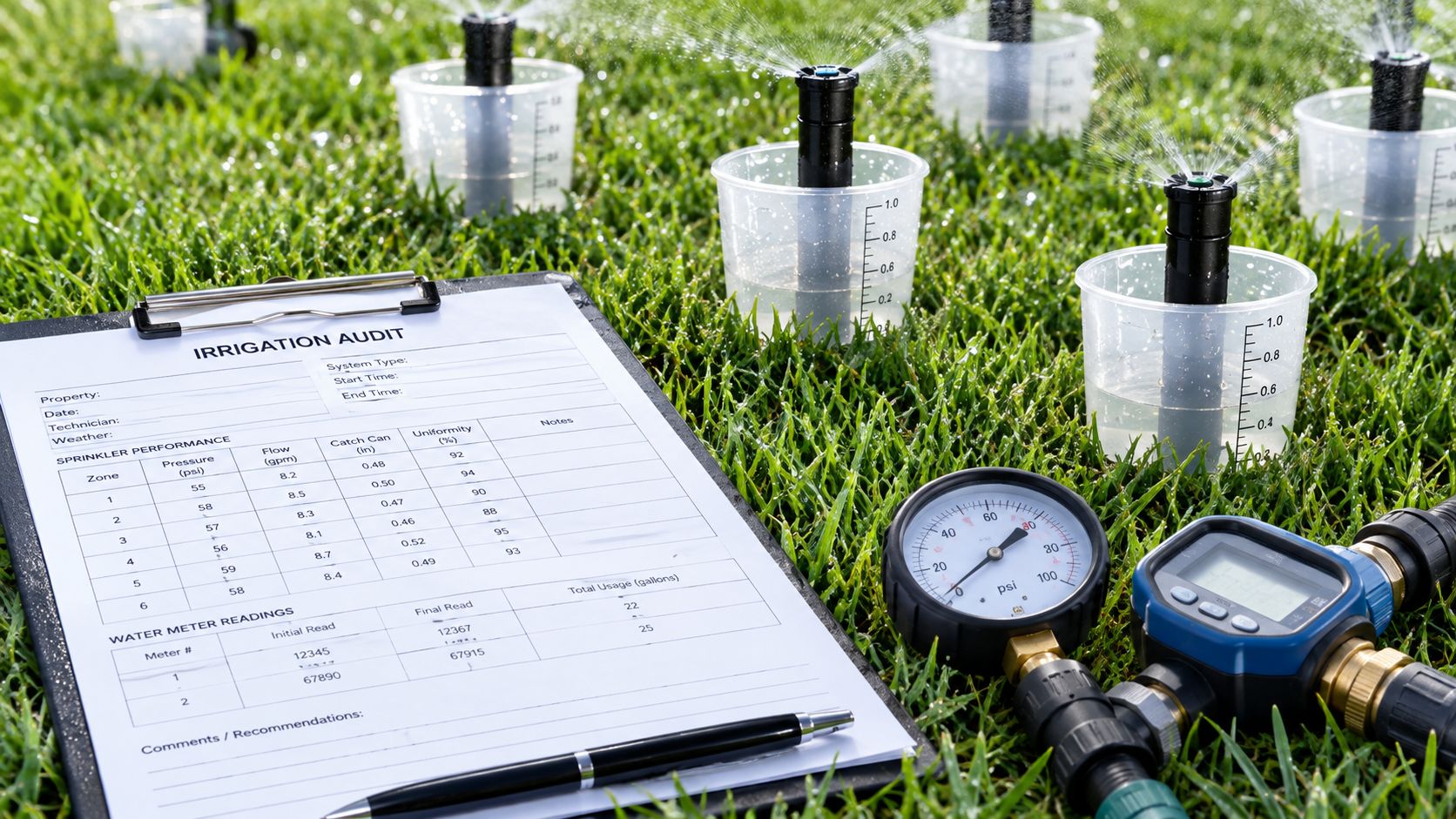
An irrigation audit can expose broken heads, pressure problems, controller errors, uneven coverage, runoff, and leaks that a quick daytime inspection misses. Flow monitoring helps identify unusual consumption. Pressure regulation and correctly matched heads improve delivery. Smart controllers and weather-based scheduling can reduce dependence on fixed run times, although technology cannot correct damaged equipment or poor zone design.
A practical assessment should connect each deficiency to a business consequence. A leak may raise the utility bill and create saturated areas. Poor coverage can leave plants stressed while other zones receive excess water. Both conditions increase service work and make future budgeting less predictable.
Where the return comes from
The return on a water-management project usually comes from several sources:
- Direct utility reduction: Less wasteful use can reduce consumption-related expenditure, depending on the property's rate structure and billing arrangement.
- Avoided grounds repairs: Overwatering can damage turf, soil, planting beds, and hardscape. Underwatering can cause decline that requires replacement work.
- Lower maintenance friction: A properly adjusted system creates fewer wet spots, erosion issues, and recurring service calls.
- Compliance cost avoidance: Following watering rules reduces exposure to enforcement action and the staff time needed to correct repeated violations.
- Better capital planning: Monitoring lets managers prioritize repairs and upgrades based on observed need instead of replacing equipment across the site without diagnosis.
The U.S. Government Accountability Office's irrigation efficiency guidance gives indicative efficiencies of about 60% for gravity systems, 75% for sprinkler systems, and 90% for micro-irrigation. These figures do not promise equivalent savings at every property. They show why delivery method matters. Water that misses the root zone cannot support vegetation, regardless of what the property paid for it.
How to approve the budget
Present conservation work as a risk and lifecycle investment. Start with consumption records, irrigation deficiencies, repair history, and visible plant stress. Separate immediate corrective work, such as leak repair and nozzle replacement, from capital improvements, such as controller modernization or conversion to more efficient irrigation.
Commercial water conservation and irrigation support may include audits, scheduling, monitoring, and equipment improvements. The appropriate scope depends on site conditions, plant material, soil, pressure, exposure, and maintenance objectives.
Approve technology only with an operating plan. A smart controller that nobody reviews becomes an expensive timer. The strongest business case pairs equipment with recurring inspections, seasonal adjustments, documented settings, and a defined response to abnormal flow.
Navigating the Complex Regulatory Landscape
Compliance starts with ownership of the information. Water rules can vary by city, provider, drought stage, property type, and irrigation source. A commercial site may need to follow designated watering days, time-of-day limits, or temporary restrictions that change as conditions develop.
The pressure behind those rules is increasing. FAO reports that renewable water availability per person has fallen 7% over a decade, which helps explain why municipalities are placing greater emphasis on demand management and enforcement.
Build a compliance routine
A property manager can reduce uncertainty with a repeatable process:
- Confirm the governing authority. Identify the municipal utility, water district, or other provider responsible for outdoor watering rules at the property.
- Record current requirements. Keep active schedules, drought-stage notices, exceptions, and contact information in the property's operating records.
- Map irrigation zones. Label controllers, valves, meters, backflow devices, and major grounds areas so staff and contractors can act quickly.
- Assign responsibility. One person should own compliance checks, even when grounds maintenance is outsourced.
- Document changes. Record controller adjustments, repairs, inspections, and weather-related decisions.
- Escalate abnormal use. A sudden flow change, wet area, or pressure issue should trigger investigation rather than wait for the next routine visit.
Why permanent rules deserve attention
Some conservation measures remain in place even when a drought stage ends. That means a manager shouldn't treat compliance as a temporary emergency task. Permanent expectations around efficient equipment, permitted schedules, or preventing runoff can influence outdoor area specifications and renovation decisions.
The cost of inaction includes more than a possible penalty. A property can face tenant frustration, public complaints, emergency contractor expense, and reputational damage if a visibly wasteful system operates during restrictions. Managers should also make sure leases, vendor agreements, and internal service standards clearly identify who handles irrigation compliance.
A useful review asks three questions. Can the team prove what schedule the system is using? Can it show that leaks and failures receive prompt attention? Can the property adjust quickly when the local authority changes requirements? If the answer to any question is no, water management remains an unmanaged business risk.
Protecting Your Grounds as a Business Asset and Brand Feature
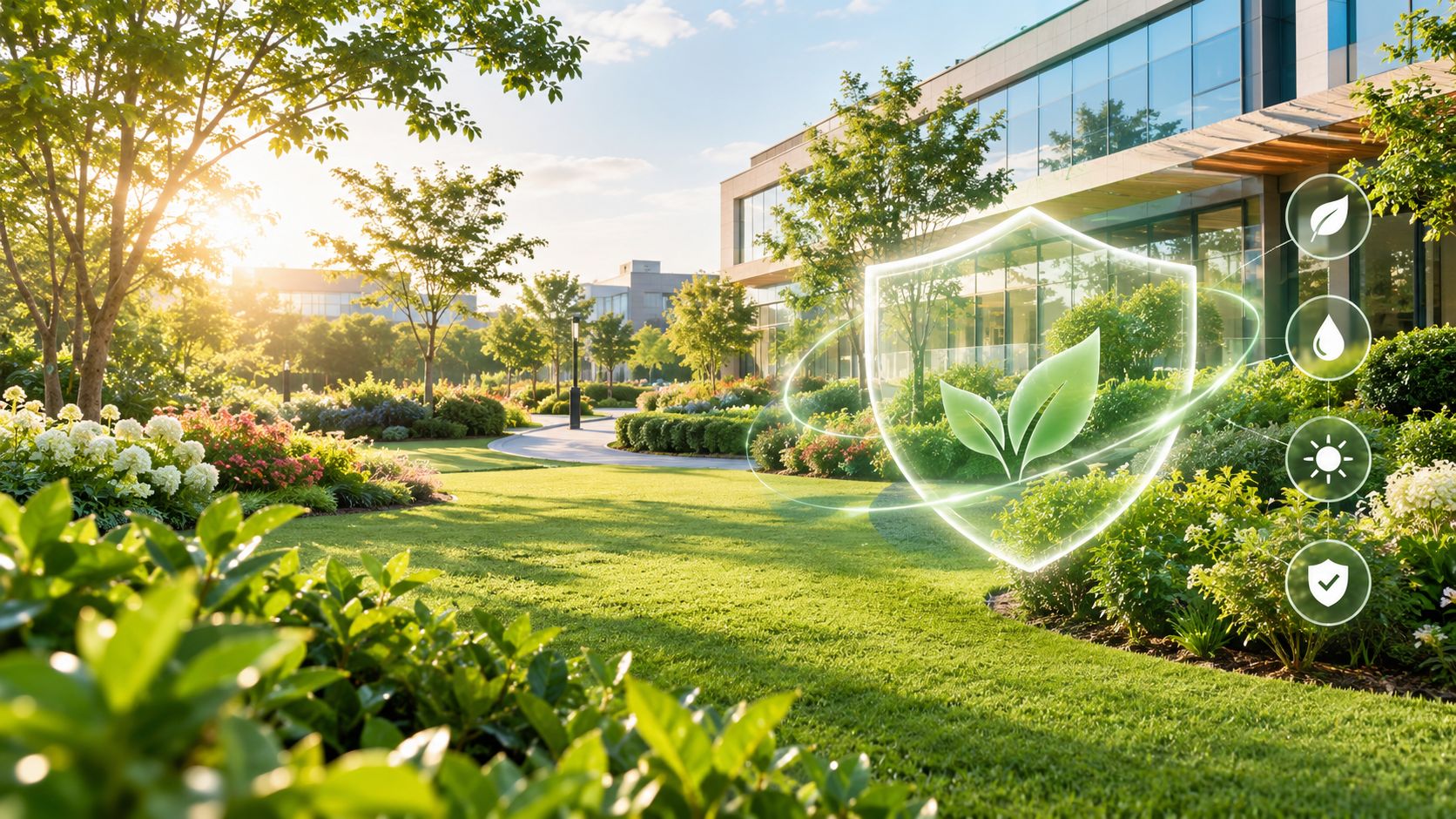
A commercial property's grounds are a working asset. They frame entrances, guide visitors, support tenant experience, and shape perceptions of how the property is managed. Water conservation protects that asset when it improves delivery quality instead of cutting irrigation run time.
Too much water can damage plants as surely as too little. Saturated soil weakens roots, increases disease pressure, and produces runoff. Insufficient water leaves turf thin and plants stressed. Both conditions raise maintenance demands and may require replacement planting before the original installation has delivered its expected service life.
Efficient irrigation depends on equipment condition, pressure, coverage, and application method. When those elements are poorly matched, part of the applied water misses the root zone or runs off hard surfaces. The result is higher operating cost without a corresponding improvement in appearance or plant health.
Design for resilience, not visual excess
Managers should assess plant selections against exposure, soil conditions, maintenance capacity, and appearance standards. Climate-appropriate and drought-tolerant plants can reduce dependence on frequent irrigation, but they still need suitable placement and establishment care. Xeriscaping does not mean removing all green space. It means designing the grounds so water demand fits site conditions.
A practical site review considers:
- Hydrozone separation: Group plants with similar water needs so one controller setting does not overwater a low-demand bed or stress a thirstier one.
- Root-zone delivery: Use drip or micro-irrigation where it suits the planting design. Protect components from damage and inspect emitters regularly.
- Soil and grading: Address compaction, poor drainage, and uneven grades that cause runoff or prevent infiltration.
- Seasonal appearance: Select plant combinations that maintain a deliberate, professional look without excessive dry-season irrigation.
Sustainability becomes visible
Well-maintained grounds communicate operational competence. Tenants and visitors may never see a flow meter or controller setting, but they notice standing water, eroded beds, dead turf, and consistently healthy planting. Those conditions influence perceptions of the property, its ownership, and its management.
Brand value comes from consistent performance, not a sustainability label alone. A property that uses water carefully while maintaining a polished appearance can support tenant discussions about responsible operations without sacrificing curb appeal.
Some areas may need a transition period. Replacing unsuitable plant material, changing irrigation zones, or reducing turf requires planning and communication. That upfront work can protect the broader asset from repeated stress, emergency replacement, and an inconsistent public-facing appearance. The business case is straightforward: preserve visual quality, control avoidable maintenance expense, and reduce the risk that water management becomes a visible weakness in the property's brand.
How to Put Water Conservation into Practice
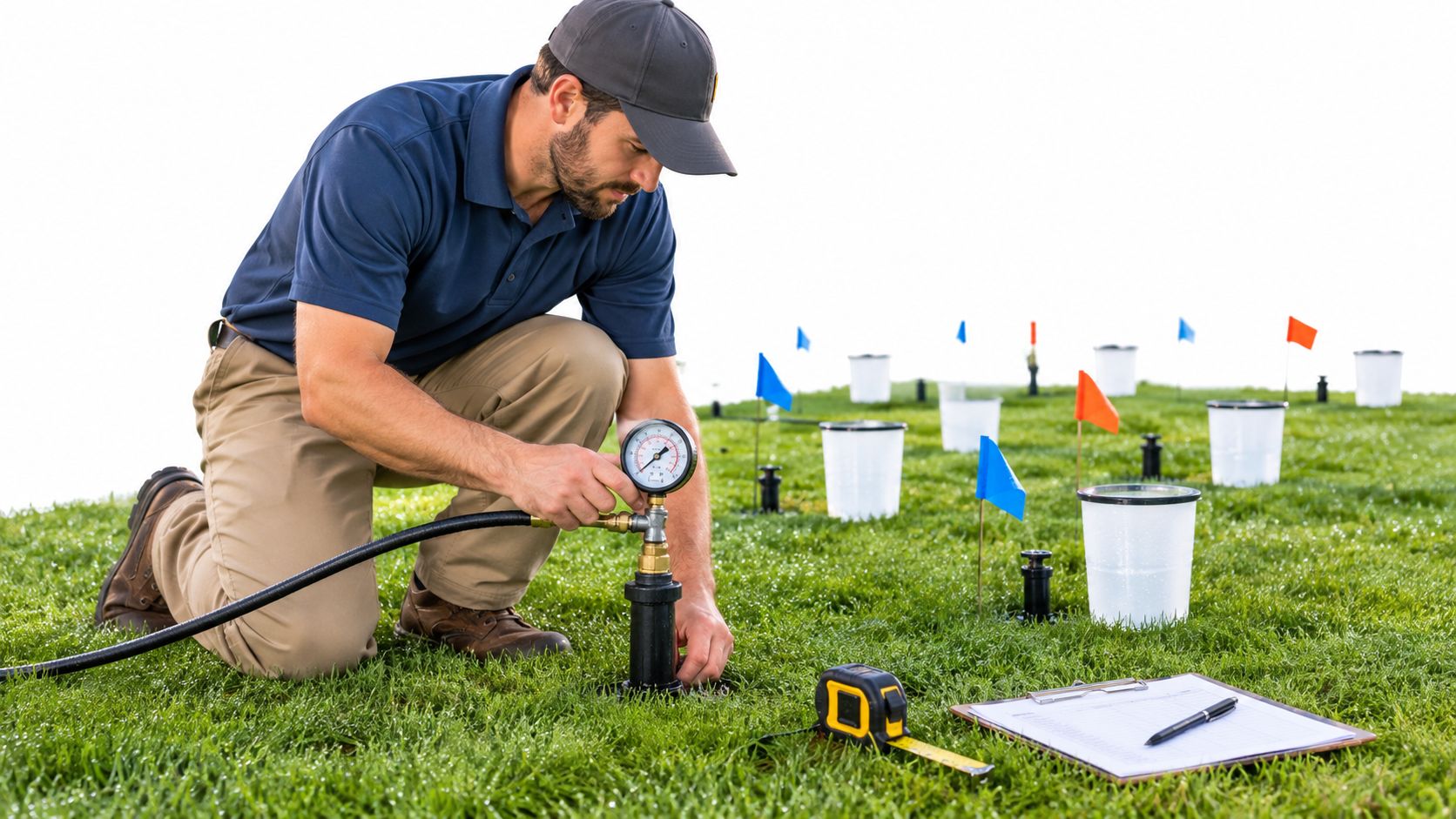
Begin with an irrigation audit, not an equipment catalogue. A qualified review should cover controllers, valves, heads, pressure, coverage, leaks, flow, soil, drainage, plant zones, and current schedules. The result should be a prioritized action plan, estimated effort, and a method for verifying performance.
A practical implementation sequence
Correct obvious waste first. Repair broken heads, leaking valves, exposed lines, and misaligned sprays. Stop runoff onto pavement, and adjust excessive pressure that creates misting or uneven distribution. Properties should also keep a trusted resource for reliable leak repair for homeowners, applying the same urgency to commercial irrigation failures.
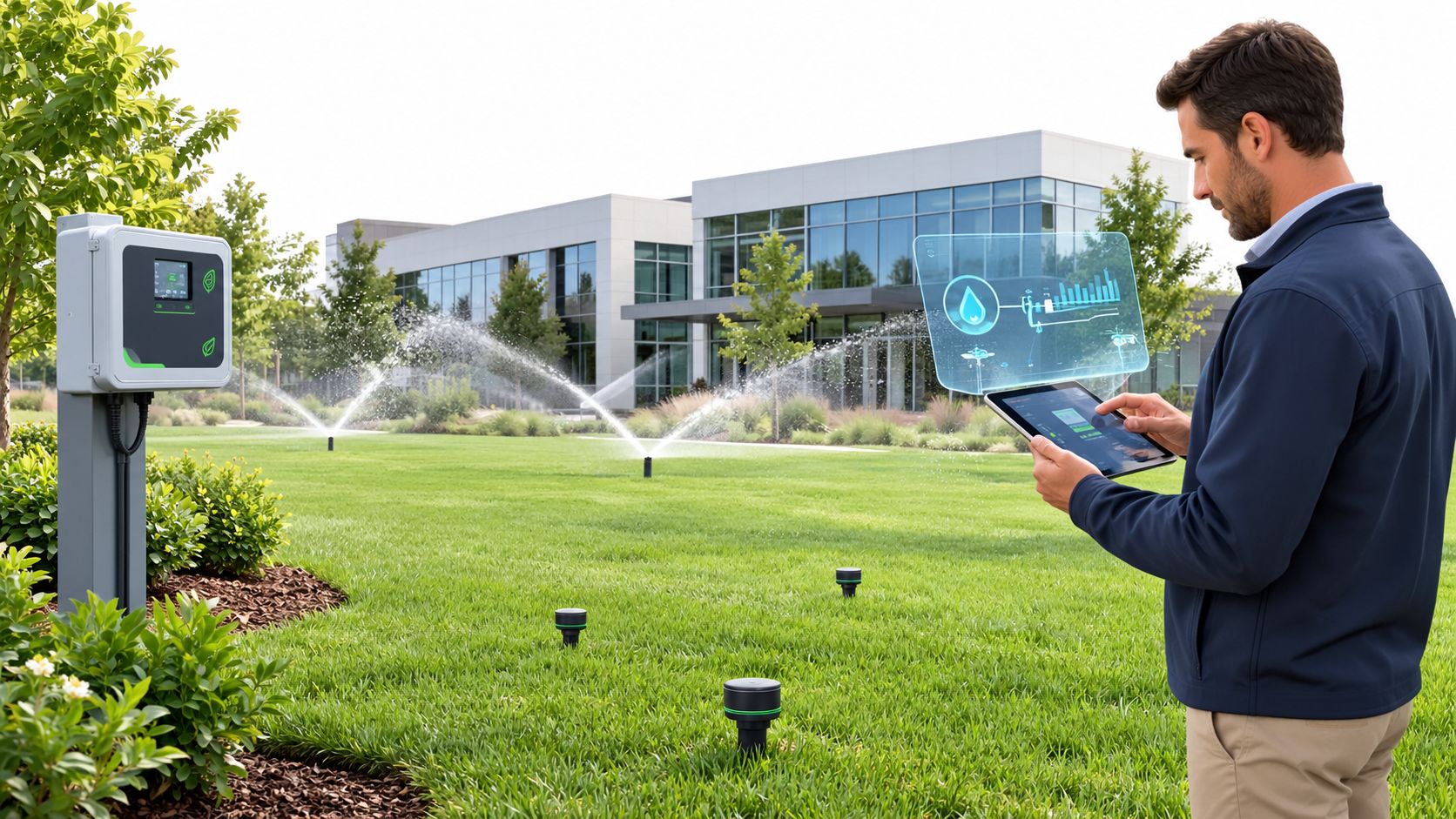
Improve control next. Smart controllers, moisture sensors, onsite weather information, flow meters, and pressure-regulated heads can support more precise scheduling. They only produce value when staff or contractors review alerts, confirm site conditions, and adjust settings as weather and plant demand change.
Match plants to available water. Create hydrozones, replace persistently unsuitable selections during planned renovations, and choose drought-tolerant material where it supports the property's design. Do not remove irrigation from a planting area until the plants and establishment plan can tolerate that change.
Run maintenance as an operating program. Seasonal scheduling, monthly monitoring, documented repairs, and periodic audits prevent an efficient installation from drifting back into waste. A leak between inspections can erase the savings from careful scheduling, so assign responsibility for response times and record completed work.
For a site-wide plan, review water-wise grounds strategies alongside the irrigation schedule. The objective is to deliver enough water to the right plants, prevent avoidable damage, control operating costs, and give ownership a defensible record for internal reviews or compliance needs.
A commercial grounds partner can coordinate audits, irrigation repairs, central water management, seasonal adjustments, and ongoing maintenance across office, retail, industrial, healthcare, hospitality, education, and community properties. Require reporting that states what changed, why it changed, and which action comes next. That documentation helps managers connect water work with budget control and asset protection.
Prestonwood Commercial Grounds Services helps commercial properties across Dallas–Fort Worth and San Antonio manage irrigation, grounds maintenance, audits, repairs, seasonal adjustments, and water-conscious grounds improvements. Visit Prestonwood Commercial Landscape Services to discuss a practical water-management plan for your property, budget, and compliance requirements.