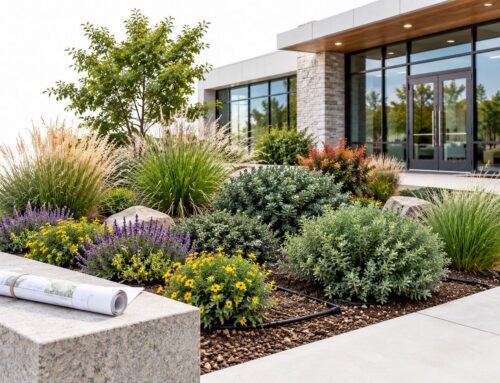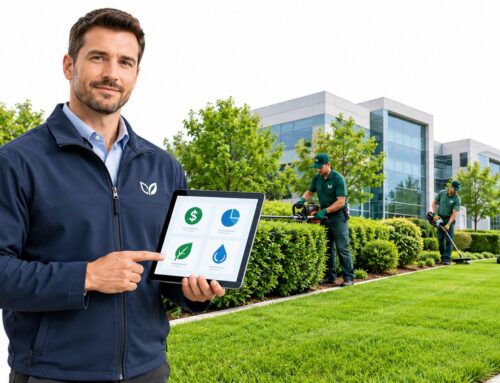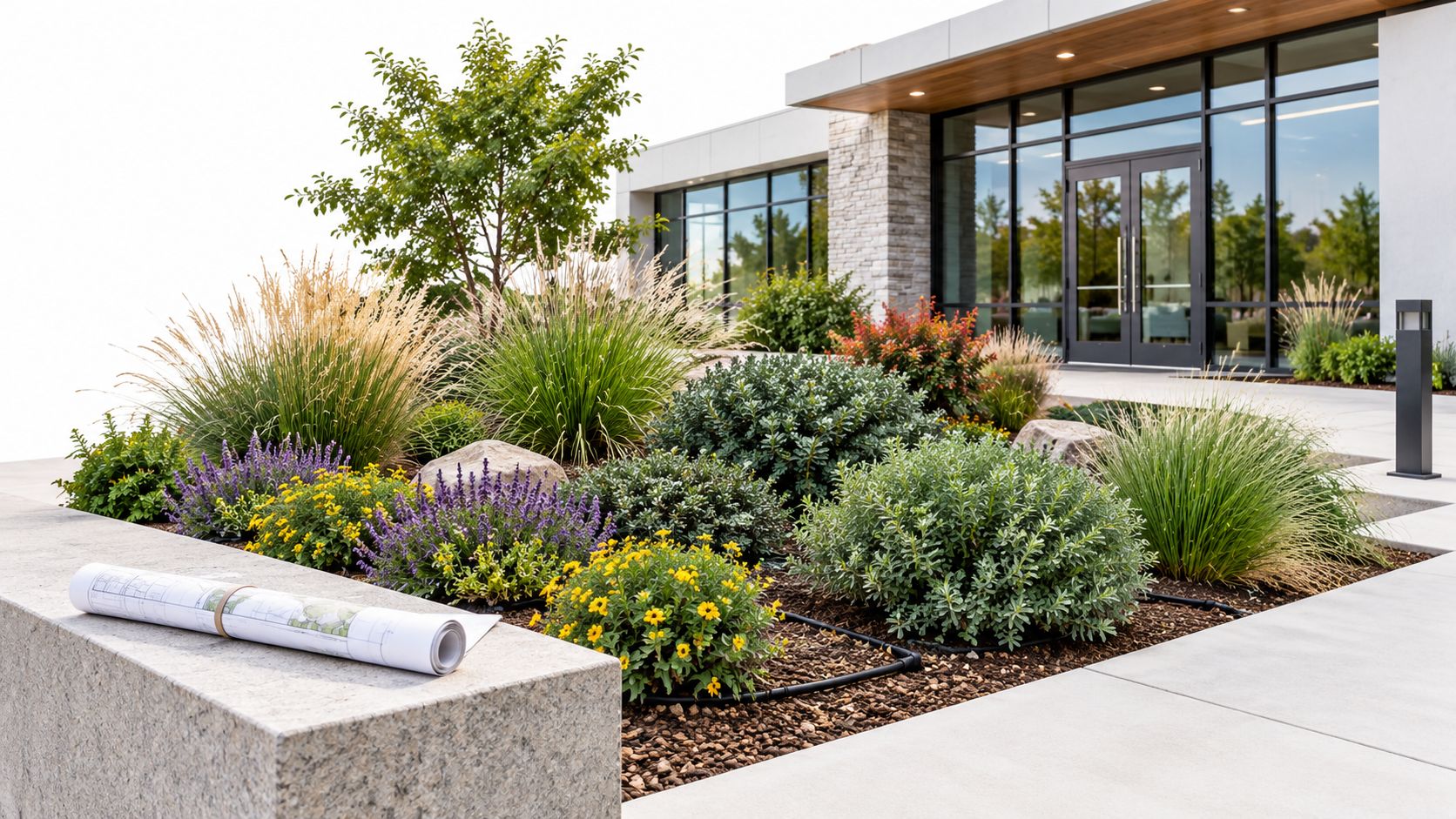
If you're managing an office park, retail center, medical campus, or HOA, you've probably had this moment. The grounds crew shows up every week, the grass gets cut, and the property still doesn't feel under control. Beds drift out of shape, irrigation issues linger too long, seasonal transitions look rough, and your budget discussions keep circling back to “what exactly are we paying for?”
That's usually where the core question starts. What is grounds maintenance, really? For a property manager, it isn't just mowing and blowing. It's the operating system behind curb appeal, site safety, water use, and day-to-day tenant perception. Done poorly, it becomes a recurring expense with constant callbacks. Done well, it protects the property's image and reduces avoidable replacement and repair costs.
Table of Contents
- Beyond Mowing The Critical Difference Between Maintenance and Management
- The Core Components of a Commercial Maintenance Program
- From Expense to Investment Understanding Benefits and Cost Drivers
- Mastering Water and Seasons in Commercial Landscapes
- What a Commercial Maintenance Agreement Looks Like
- How to Choose the Right Commercial Landscape Partner
- Frequently Asked Questions for Property Managers
- How should unforeseen issues like storm damage or irrigation failures be handled?
- How is communication and reporting usually handled?
- What contract length is typical?
- Should maintenance scope include hardscape and compliance observations?
- What's the biggest mistake property managers make when buying grounds care service?
Beyond Mowing The Critical Difference Between Maintenance and Management
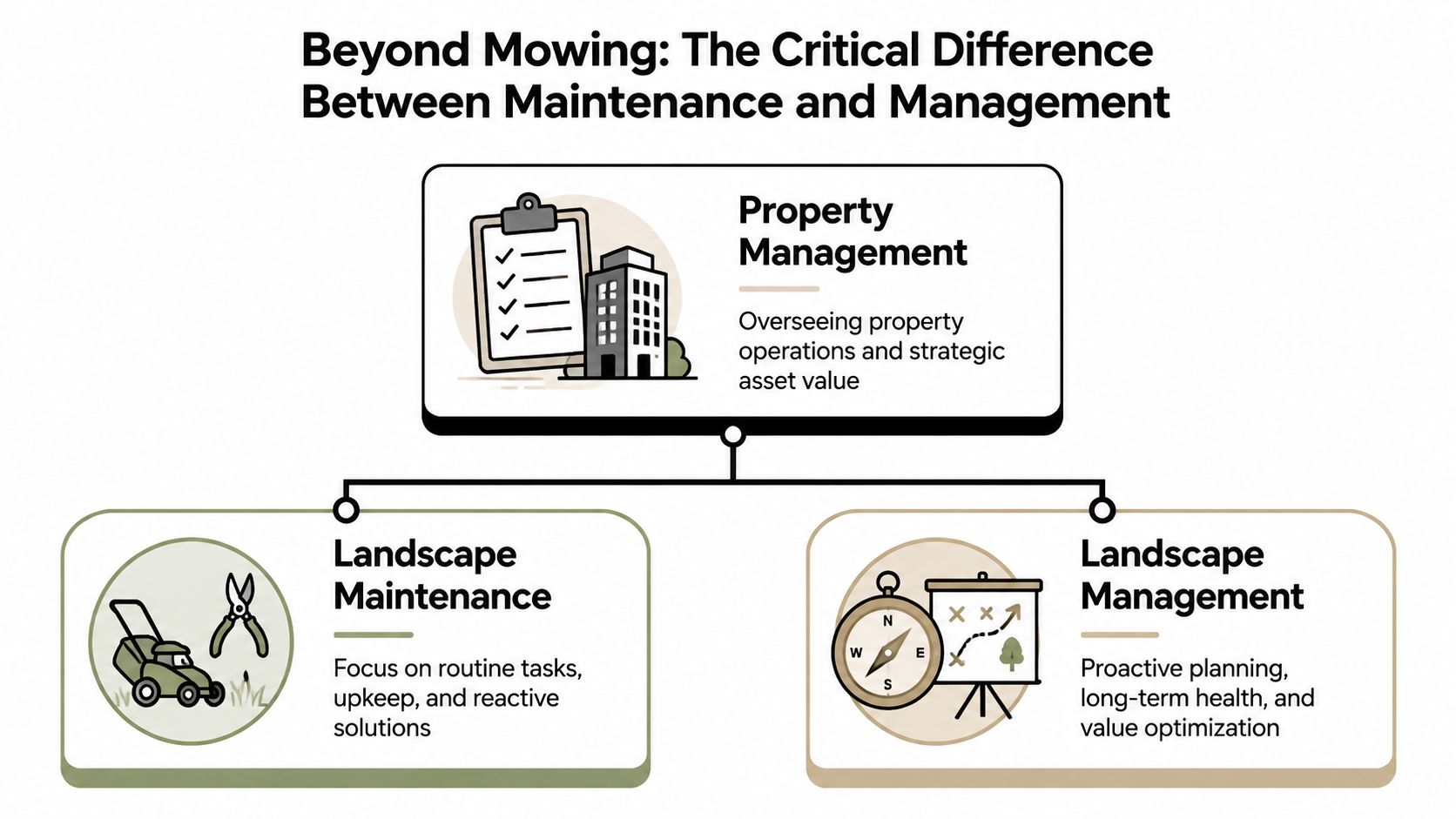
Often, grounds care is defined by a task list. Mow the turf. Edge the walks. Trim shrubs. Pull weeds. Keep the place neat. That definition isn't wrong, but it is incomplete.
A more useful distinction for property managers is this. Maintenance is repetitive upkeep. Management is proactive oversight. Industry guidance often misses that difference, even though it directly affects scope, accountability, and budget structure, as explained in this discussion of the difference between landscape management and maintenance.
Maintenance handles tasks
Maintenance is what most contracts are built around. A crew follows a route, completes recurring services, and keeps the property from looking neglected. That includes mowing, trimming, blowing, bed cleanup, pruning touch-ups, and basic visual inspection.
For some sites, that's enough. A small property with simple turf areas and limited planting beds may only need dependable routine service. If the expectations are modest and the grounds are uncomplicated, maintenance alone can work.
A helpful consumer-facing example is this guide to fresh lawn mowing service, which shows how service lists are usually framed. That's useful as far as it goes, but commercial sites usually need a broader operating mindset.
Management protects the asset
Management starts where the task list ends. It asks different questions.
- Why is one turf zone always stressed?
- Why do the same shrubs keep failing near the entrance?
- Why is water hitting pavement instead of root zones?
- Why does the property look uneven two days after service?
Those aren't mowing questions. They're management questions.
Practical rule: If your contractor only reports what they did, you're buying maintenance. If they explain what the site needs next and why, you're getting management.
A good comparison is building operations. One vendor replaces filters when asked. Another tracks system performance, flags wear early, and helps you avoid failure. Commercial grounds work the same way. The first approach maintains appearance. The second protects value.
Why the distinction matters to a property manager
This difference changes how you write scope and evaluate performance. A maintenance-only vendor is measured by completion. A management-minded partner is measured by condition, consistency, and judgment.
That matters more on properties with:
- Heavy foot traffic where appearance changes quickly
- Irrigation systems that need monitoring and adjustment
- Seasonal color or mixed planting beds that require timing
- Tenant-facing entries and common areas where visual gaps show up fast
When a property manager asks what is grounds maintenance, the practical answer is this: it's the recurring work that keeps the site presentable. But if you want fewer surprises, better water control, and stronger accountability, you need management layered on top of maintenance.
The Core Components of a Commercial Maintenance Program
A usable commercial maintenance program reads like an operating plan, not a generic task sheet. Property managers need to see what gets serviced, what gets inspected, and what gets adjusted before small issues turn into visible decline or tenant complaints.
Analysts at Workyard's landscaping industry statistics report that, as of 2024, 82% of contractors provide core maintenance tasks like mowing and trimming, and 86% offer lawn treatments, across a field with more than 1.29 million professionals in the U.S. Availability is not the hard part. The key question is whether those services are being coordinated with enough oversight to protect the site.
Turf care that supports appearance and durability
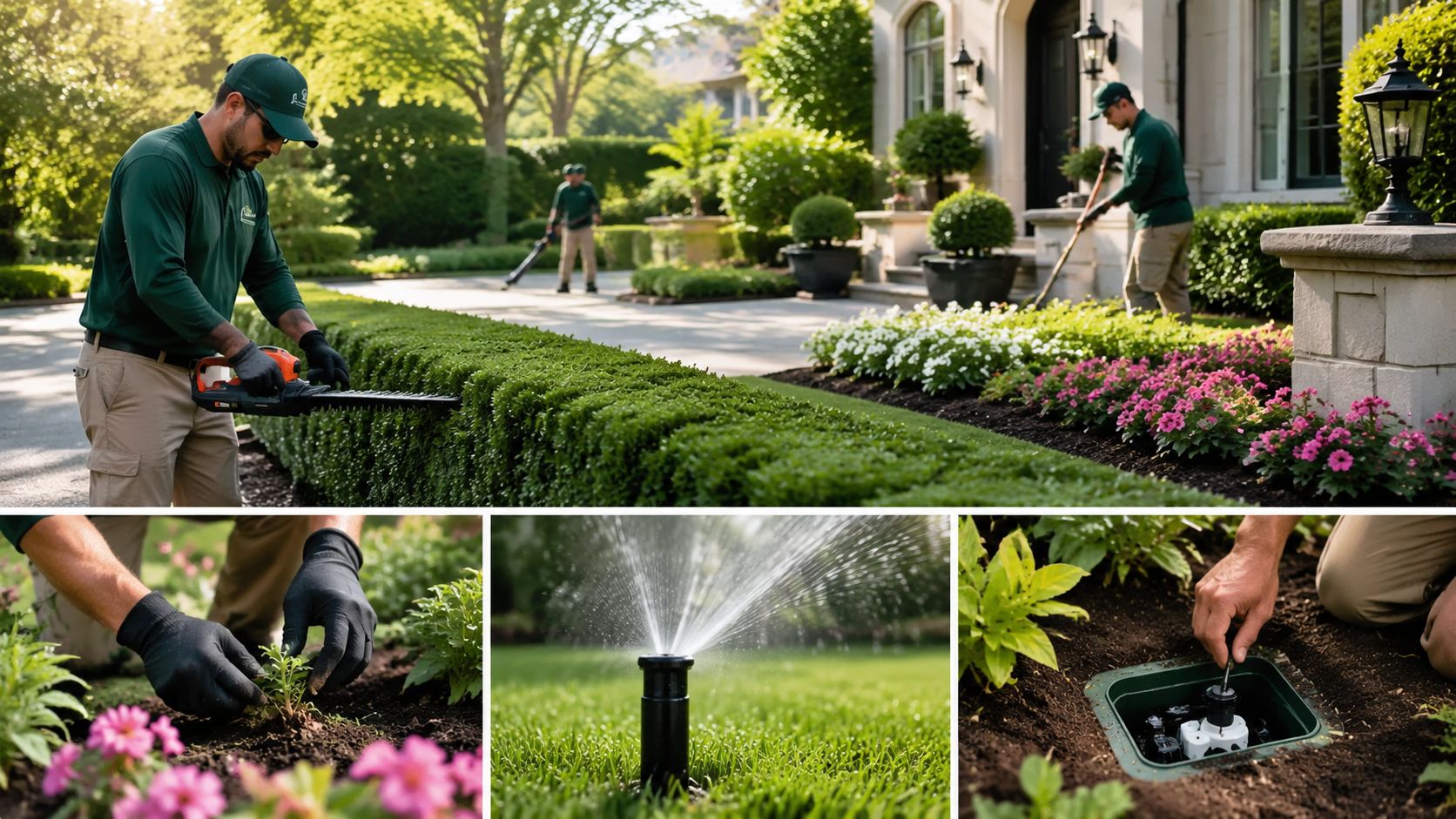
Turf usually carries the first impression. It also absorbs the most traffic, heat, and service wear.
A mowing crew can cut grass every week and still leave the property looking inconsistent if height is wrong, turns are too tight, or clippings collect along curbs and entries. On commercial sites, turf care has to balance appearance with recovery. Cutting too low may look neat for a day, but it often creates stress, opens the door to weeds, and leaves thin areas around corners, mail kiosks, and pedestrian shortcuts.
A sound turf scope usually includes:
- Mowing and trimming for a uniform finish around curbs, utilities, signs, and hard edges
- Edging and blowing so paved areas read clean after each visit
- Fertilization and weed control timed to support density instead of forcing short-term color
- Traffic monitoring in worn areas where compaction or repeated foot paths are starting to show
Planting beds and ornamentals that hold their shape
Beds show whether the contractor is managing details or just passing through. A clean-up visit can make them look sharp for 48 hours. Sustained quality takes better judgment.
Shrubs should be pruned to fit their species, location, and clearance needs. Crepe myrtles, hollies, boxwoods, and dwarf yaupon do not all respond well to the same schedule or the same cut. Mulch depth needs to be maintained without burying crowns. Seasonal rotations need timing that matches the property's leasing cycle, not just the grower's delivery window.
Crews should also be checking for weak coverage, exposed roots, dead pockets, and signs that water is missing the intended zone. On properties with mixed beds and irrigated color, commercial irrigation and water management practices in Texas often have more effect on bed performance than pruning alone.
For adjacent hardscape, appearance and upkeep overlap. If your property includes plazas, pedestrian zones, or decorative paving, site scope often extends into surface care. A property manager reviewing those details may also find value in these paver maintenance solutions, especially where joint stability, staining, or edge definition affect the overall look of the site.
Site integrity, visibility, and risk control
This category gets overlooked until someone complains, slips, or asks why the entry looked rough before a tour.
Site integrity work includes debris pickup, curb and drain cleanup, sightline control, and routine observation of irrigation performance. It protects presentation, but it also reduces avoidable service calls. A blocked drain, a broken head spraying pavement, or shrubs covering monument signage are minor issues early and expensive distractions later.
Property managers should expect recurring attention to:
- Walkways and entries so leaves, trash, and buildup do not create hazard or neglect signals
- Signage visibility so tenants and visitors can read directional and monument signs clearly
- Drainage edges and curbs where debris collects and quickly makes a property feel unmanaged
- Irrigation observation for runoff, tilted heads, broken nozzles, and dry zones between formal inspections
The strongest programs combine recurring field work with routine condition checks. That is the line between simple upkeep and real site management.
From Expense to Investment Understanding Benefits and Cost Drivers
A new property manager usually sees grounds care in the operating budget first. Then the true test starts. A broker walk is scheduled, a tenant emails about dead shrubs at the main entry, or an irrigation break sends water across the drive lane. At that point, the monthly line item stops feeling abstract.
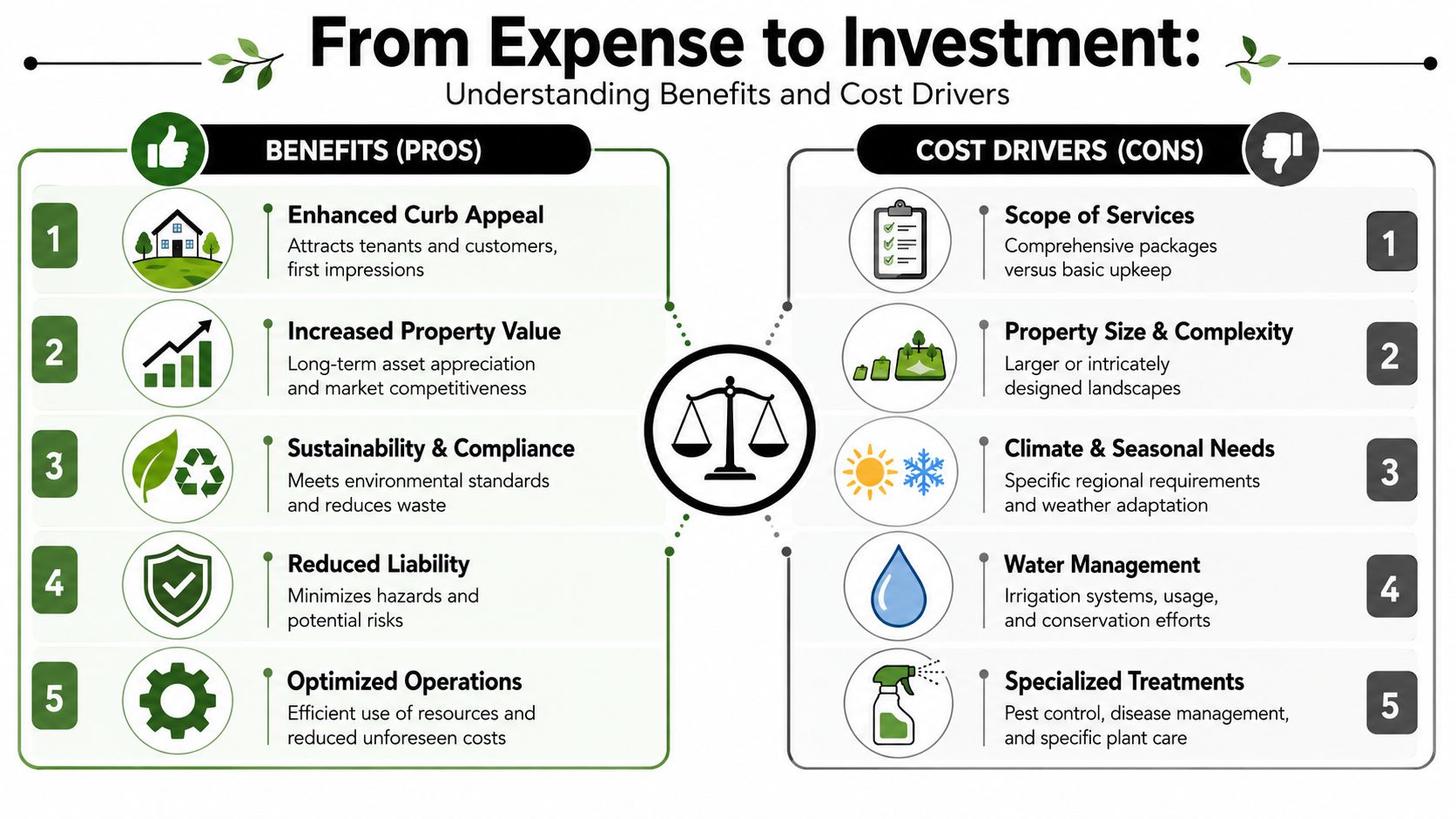
The useful question is not whether grounds care costs money. It does. The question is whether the program protects the site well enough to reduce complaints, avoid preventable repairs, and support leasing activity. That is the dividing line between basic maintenance and active management.
Where the investment shows up
Professional grounds care is a technical service, not a mowing route. In the Landscape Professionals maintenance reference, maintenance is described as a site-specific process that combines irrigation oversight, soil monitoring, fertilization, pruning, and related inputs based on plant physiology and site conditions.
That matters to property managers because site condition shows up in business results.
- Curb appeal holds steady when turf, beds, and entries look consistent between visits, not sharp one day and tired three days later.
- Tenant satisfaction improves when common areas stay clean, usable, and presentable without constant follow-up from management.
- Replacement costs stay lower when crews spot stress, pest pressure, and irrigation issues early enough to correct them.
- Brand perception stays intact because the exterior reads as managed and reliable.
People touring a commercial property notice the outside before they hear the pitch. A neglected entry, thin turf, or missed pruning tells them management is reacting instead of staying ahead.
What drives cost
Two properties can have similar square footage and very different service needs. Price usually follows site complexity, visibility, and the amount of control the owner expects.
A few drivers shape cost more than anything else:
| Cost driver | Why it changes price |
|---|---|
| Property layout | Islands, medians, courtyards, and tight bed lines take more labor than open areas |
| Plant mix | Ornamental beds, hedges, groundcover, and seasonal color need more skilled attention |
| Service frequency | High-traffic properties often need shorter intervals and more detail work |
| Irrigation demands | More zones and more equipment create more inspection, adjustment, and repair oversight |
| Site expectations | Office, retail, healthcare, and hospitality sites are judged against different presentation standards |
One practical mistake is comparing bids by monthly total alone. Compare scope, visit frequency, irrigation oversight, enhancement assumptions, and response standards. A commercial grounds maintenance contract should make those differences clear.
Lower pricing often shifts cost into other buckets. The property manager pays later through replacements, emergency repair calls, cleanup before inspections, and more tenant complaints. Higher-performing programs usually cost more upfront because they include observation, adjustment, and follow-through. In my experience, that extra control is what keeps annual spend predictable.
Mastering Water and Seasons in Commercial Landscapes
A property can look fine on Monday and draw complaints by Friday if irrigation is off and the season turns hard. That is usually the point when a manager realizes the crew has been maintaining appearances, not managing risk.
Water and seasonal timing separate reactive upkeep from real asset protection. Crews can mow on schedule and still miss the issue that is driving decline, tenant complaints, and replacement costs. On most commercial sites, that issue starts with irrigation performance.
If water distribution is uneven, every other service becomes less effective. Turf thins in patches, shrubs decline at different rates, disease pressure increases, and the site starts to look inconsistent from one frontage to the next. The budget gets hit twice. First through wasted water, then through plant replacement and repair work.
Water management is where good programs separate themselves
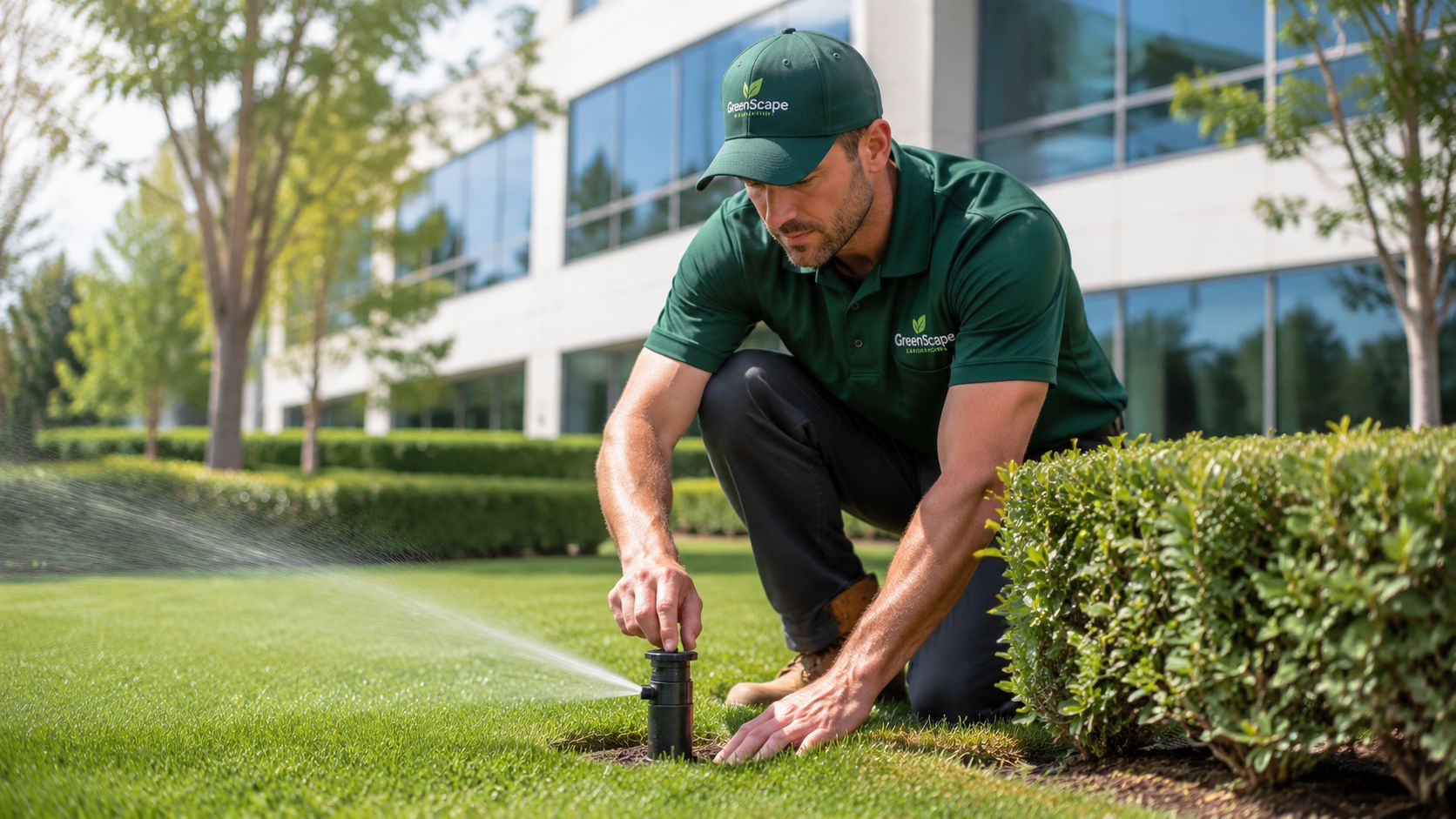
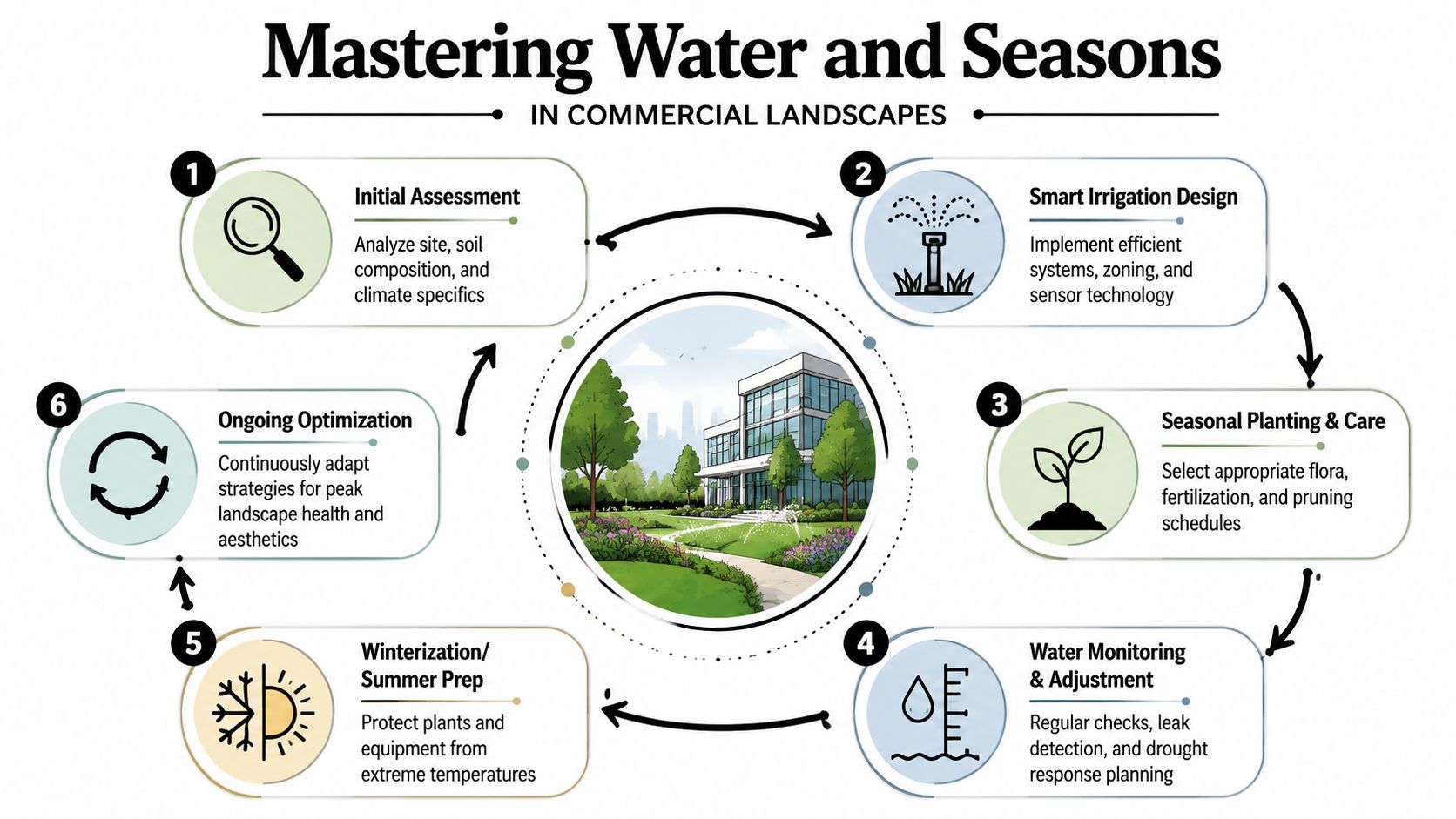
Strong programs use inspection and adjustment, not visual guessing. In this water management and irrigation guide for Texas commercial properties, the recommended controls include semi-annual irrigation inspections, leak and flow monitoring, rain shut-off devices, flow sensors, ET-based controllers, low-flow emitters, seasonal controller reprogramming, and proper mulch depth to reduce evaporation.
On the ground, that usually comes down to a few habits done consistently:
- Inspect the system with intent. Broken heads, clogged nozzles, stuck valves, and coverage gaps create avoidable stress fast.
- Change runtimes by season. A schedule that worked in late spring can waste water in one month and fall short in the next.
- Track runoff and overspray. Water on pavement, walls, and storefront glass is an operating problem with cost and liability implications.
- Maintain mulch at the right depth. It helps hold moisture in the root zone and reduces pressure to overwater.
Good managers ask for proof. Zone checks, controller changes, repair logs, and recommendations show management. Waiting until turf looks weak from the curb is reactive maintenance, and by then the property is already behind.
One practical example in the market is Prestonwood Commercial Services, which offers irrigation audits, repairs, and central water management as part of its commercial service mix. That support matters on larger sites where appearance standards, water use, and response time are tightly connected.
Seasonal work changes the playbook
Commercial grounds do not need the same approach every month. A fixed route can keep crews busy without protecting the property.
Spring usually calls for cleanup, system startup, and a full condition review. Summer is about stress management, irrigation adjustment, and watching for decline before it becomes visible from the main drive. Fall often shifts attention to renovation work, pruning decisions, and preparing beds and turf for cooler conditions. Winter is the time for cutbacks, cleanup, freeze response, and planning upgrades before the next growth cycle starts.
Managers should expect more than task completion. A vendor focused only on recurring visits will keep doing the same work after site conditions change. A vendor managing the property will explain what changed, what was adjusted, what can wait, and what needs action now.
That difference shows up in results. The grounds stay more consistent, water use stays under better control, and annual spending is easier to predict.
What a Commercial Maintenance Agreement Looks Like
Most service agreements fail for one reason. The property manager thinks they're buying one level of care, and the contractor prices another. Clear package structure helps fix that.
A commercial agreement should define frequency, scope, exclusions, response expectations, and who owns proactive recommendations. If you're comparing formats, this overview of commercial landscape contracts is a useful reference point for what should be documented.
Sample Commercial Landscape Maintenance Packages
| Service | Essential Care | Premium Grounds | All-Inclusive Management |
|---|---|---|---|
| Mowing and trimming | Included | Included | Included |
| Edging and blowing | Included | Included | Included |
| Bed weeding | Basic recurring service | Enhanced detail service | Enhanced detail service with ongoing monitoring |
| Shrub pruning | Basic seasonal shaping | Scheduled horticultural pruning | Scheduled horticultural pruning with condition review |
| Lawn treatments | Not always included | Included | Included |
| Seasonal color rotation | Optional add-on | Included in key areas | Included with planning and refresh recommendations |
| Irrigation checks | Visual observation only | Routine operational review | Active monitoring, adjustment, and repair coordination |
| Debris and site policing | Included | Included | Included with higher visibility standards |
| Reporting and site walks | Limited | Regular account review | Regular review with proactive planning |
| Budget planning for enhancements | Not typically included | Occasional recommendations | Included as part of ongoing site strategy |
This isn't a universal template, but it reflects how scopes usually separate.
Essential care keeps the property serviceable. Premium grounds improves consistency and detail. All-inclusive management adds planning, diagnostics, and accountability for how the site performs over time.
What to look for in the fine print
The most important lines in a maintenance agreement are often the ones outside the service list.
Check for these items:
- Response protocols: How are irrigation failures, storm debris, or safety issues handled between scheduled visits?
- Exclusions: Are treatments, repairs, seasonal flowers, and mulch refreshes included or billed separately?
- Inspection rhythm: Will someone walk the property and document issues, or will the crew only complete route work?
- Approval process: What requires your sign-off, and what can the account manager correct without delay?
A solid agreement doesn't just describe labor. It describes decision-making.
When a contract is vague, every issue becomes a debate. When it's specific, both sides know what “good service” looks like.
How to Choose the Right Commercial Landscape Partner
A property usually looks fine on bid day. The critical test starts in month three, when irrigation breaks, seasonal color fades, sightlines tighten, and tenants begin emailing photos. That is when you find out whether you hired a mowing vendor or a true grounds management partner.
Price still matters, but operating discipline matters more. A low bid loses value fast if your team has to chase service gaps, explain preventable complaints, and approve avoidable corrective work. Use this checklist of what property managers should look for in a commercial landscaping partner as a companion when comparing firms.
Questions that reveal how a contractor really operates
Ask for specifics tied to process, not promises. Good operators can explain how they run an account under normal conditions and when the site starts slipping.
- Who owns the account day to day? You need one accountable manager who can make decisions, not a chain of supervisors and forwarded emails.
- How is site quality reviewed between service visits? Crews complete tasks. Account managers should inspect, spot drift, and correct issues before tenants notice them.
- How are irrigation problems identified and escalated? Look for a clear method for spotting leaks, runoff, dry zones, broken heads, and controller problems.
- What properties do you maintain that match this site type? Office, retail, industrial, medical, and mixed-use sites each carry different appearance standards and service pressure.
- How do you handle change? Storm cleanup, water restrictions, declining beds, and special events separate reactive vendors from firms that can manage the site as an asset.
One more point matters. Ask who on their team is qualified to recommend pruning, plant replacement, drainage correction, or irrigation repair. If nobody can answer beyond the route foreman, you are buying upkeep, not management.
What a strong partner sounds like
The best answers show judgment.
Listen for statements like these:
- “We inspect the property, document issues, and rank them by urgency and budget impact.”
- “This irrigation schedule should change by season and exposure, not stay fixed all year.”
- “Those shrubs need selective pruning on a cycle that fits the species and the sightline requirement.”
- “We separate recurring scope from improvement work so ownership can see what it is paying to maintain versus what it is paying to correct.”
That language signals a partner who is protecting appearance, controlling waste, and helping you plan ahead.
Be cautious with broad promises like “we handle everything.” In commercial grounds care, vague coverage usually means unclear responsibility. The right partner defines scope, flags risk early, and helps you make better site decisions before small problems become tenant complaints or budget surprises.
Frequently Asked Questions for Property Managers
A common problem shows up after the first big storm or irrigation break. The crew finishes the scheduled visit, but nobody tells you what failed, what puts people or property at risk, and what needs approval today versus next week. That is the difference between basic upkeep and active site management.
How should unforeseen issues like storm damage or irrigation failures be handled?
The contractor should follow a clear escalation process. Property managers need fast photos, a short explanation of the issue, the immediate risk, temporary protection steps if needed, and priced repair options. If the vendor only says, “we found a problem,” you are left chasing details and approvals.
Good partners also separate urgent corrective work from items that can wait for the next budget review. That protects curb appeal without turning every surprise into a rushed spend.
How is communication and reporting usually handled?
One account manager and one reporting cadence works best. Monthly summaries, open-item tracking, irrigation observations, and notes from site walks give you a usable record of what was done, what is declining, and what may need owner approval.
Scattered texts from crews and one-off emails create gaps.
What contract length is typical?
Most commercial agreements run on annual terms with defined renewal language, but the paper term matters less than the operating detail. Review service frequency, exclusions, seasonal color or enhancement billing, response expectations, and the approval process for extra work.
A short contract with vague scope usually creates more friction than a longer agreement with clear standards.
Should maintenance scope include hardscape and compliance observations?
Yes. The grounds team is often on site more than any other exterior vendor, so they should flag trip hazards, blocked sightlines, drainage concerns, damaged curbs, and access issues. For managers reviewing accessibility items, this guide on ADA compliance for FL businesses shows how exterior upkeep and compliance review often intersect.
What's the biggest mistake property managers make when buying grounds care service?
They buy visit frequency instead of site performance. A weekly schedule sounds organized, but it does not tell you whether the provider is controlling water use, catching decline early, protecting plantings, or helping you plan corrective work before tenants notice. Ask whether the company is merely completing tasks or actively managing the property's exterior condition as an asset.
If you're reviewing your current scope or planning a new contract, Prestonwood Commercial Landscape Services provides commercial grounds maintenance, irrigation support, seasonal enhancements, and site-focused service for properties across Dallas, Fort Worth, and San Antonio. A practical next step is to compare your current program against the level of oversight your property needs.