Your irrigation calls are already costing more than the repair ticket. A few dry strips near the front entrance, one controller acting up, one valve that sticks open after hours, and suddenly the site manager is fielding complaints, the groundskeeper is guessing, and the accounting team is staring at a water bill nobody wants to explain. That's the core problem with deferred irrigation work, it doesn't stay “small” for long.
For commercial properties, an irrigation system repair company should be judged by one question, not by how fast it replaces a broken head. Does it reduce waste, restore coverage, and give you clean documentation you can defend in a budget review or audit? If the answer is no, you're buying temporary relief, not control.
Table of Contents
- What an Irrigation System Repair Company Actually Does
- Warning Signs Your Commercial Irrigation System Needs Repair
- How Professional Technicians Diagnose and Repair Irrigation Faults
- Water Management and Conservation Benefits of Proper Repairs
- Emergency Repair Services Versus Planned Maintenance Contracts
- How to Vet and Select the Right Irrigation Repair Vendor
- Next Steps and Frequently Asked Questions
What an Irrigation System Repair Company Actually Does
A property manager sees a dead turf strip, a wet sidewalk, and a sprinkler head that has been clipped by a mower. The easy assumption is that irrigation repair means swapping a few heads and moving on. That is a patch, not a commercial repair program.
The full scope extends beyond heads and nozzles
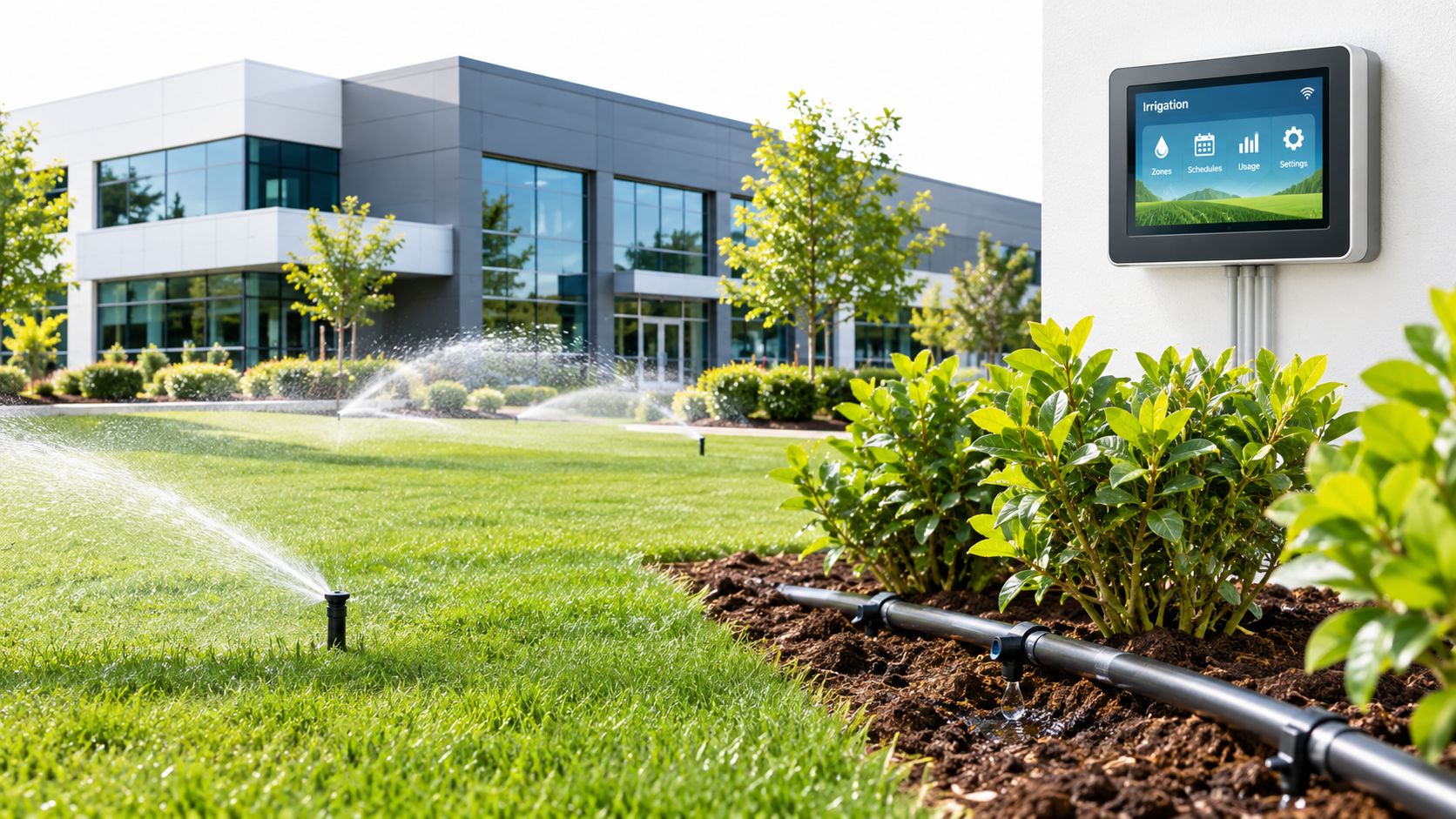
A competent irrigation system repair company works across the full operating chain, controller, wiring, valves, pressure, emission devices, and zone balance. On a commercial site, the technician may be checking a failed solenoid, tracing a wire issue back to the controller, cleaning debris from a valve, correcting pressure at the zone level, or reconfiguring coverage so one area is not flooding while another stays dry. That is a different job from a handyman replacing broken plastic parts.
Commercial property managers need to understand the market behind that work. The broader U.S. Water Supply & Irrigation Systems industry reached an estimated $132.5 billion in revenue in 2026 and included 45,902 businesses that year, after 45,795 businesses in 2025 IBISWorld. That kind of installed base creates a mature, competitive service environment, which means vendor quality matters more than sales talk.
Practical rule: if the vendor only talks about head replacement, you are not getting a systems repair. You are getting a parts swap.
Commercial repair should protect operations, not just landscaping
On office parks, retail centers, healthcare facilities, and campuses, irrigation failures affect curb appeal, tenant satisfaction, and risk exposure. Water pushed onto walkways creates slip hazards, and hidden leaks can contribute to broader property damage. If you need a related reminder of how water issues can escalate beyond the grounds, commercial water damage cleanup costs are a useful lens for thinking about the downstream impact.
A real repair company also understands central water management systems, seasonal settings, and zone-by-zone performance. It should be able to explain what it fixed, what it observed, and what still needs attention. If your vendor leaves without that kind of report, you do not have a maintenance partner. You have a caller ID.
Warning Signs Your Commercial Irrigation System Needs Repair
The biggest mistake property managers make is waiting for visible failure. By the time turf is collapsing or water is running across hardscape, the problem has already moved from nuisance to cost exposure. The right move is to sort symptoms by urgency and act fast on the ones that threaten waste, damage, or compliance.
Immediate red flags need same-day attention
A geysering head, a zone that won't shut off, or a controller that's completely unresponsive should trigger an emergency call. Those symptoms usually mean active water loss or an electrical fault that can spread the damage. If a zone keeps running, you're not just paying for water, you're risking runoff, erosion, and tenant complaints.
A manually opened valve that runs properly but won't activate through the controller points to an electrical path problem. A non-response can signal hydraulic blockage or a mechanical diaphragm issue, which is a different repair path entirely. This is why quick guesses often fail and repeat service calls start piling up.
Slower symptoms still deserve action
Dry spots, uneven coverage, misting, or heads that don't complete their arc usually point to pressure mismatch or poor zone balance. Over-pressure wears seals faster and creates mist, under-pressure leaves rotor heads short of their intended throw. In commercial settings, that means the property looks inconsistent even when the system is “technically running.”
If you're comparing vendors or diagnosing chronic issues, leak detection from Axis Meter Solutions is a practical reference point for understanding how hidden losses get found before they become obvious failures.
Use a quick field triage
- Wet pavement or standing water: likely a leak, stuck valve, or broken head.
- Dry bands in otherwise healthy turf: likely pressure, nozzle, or coverage imbalance.
- Controller errors or blank display: likely electrical failure or power interruption.
- Sputtering heads or misting spray: likely pressure too high or mismatched components.
- Patchy activation across the site: likely valve, wiring, or zone-level fault.
Seasonal conditions can hide or exaggerate these signs in DFW and San Antonio. Hot, dry stretches make coverage problems look like plant stress, while cooler periods can hide overspray until runoff becomes obvious. Don't wait for the season to “normalize” the symptom, inspect the zone now and document what you see.
How Professional Technicians Diagnose and Repair Irrigation Faults
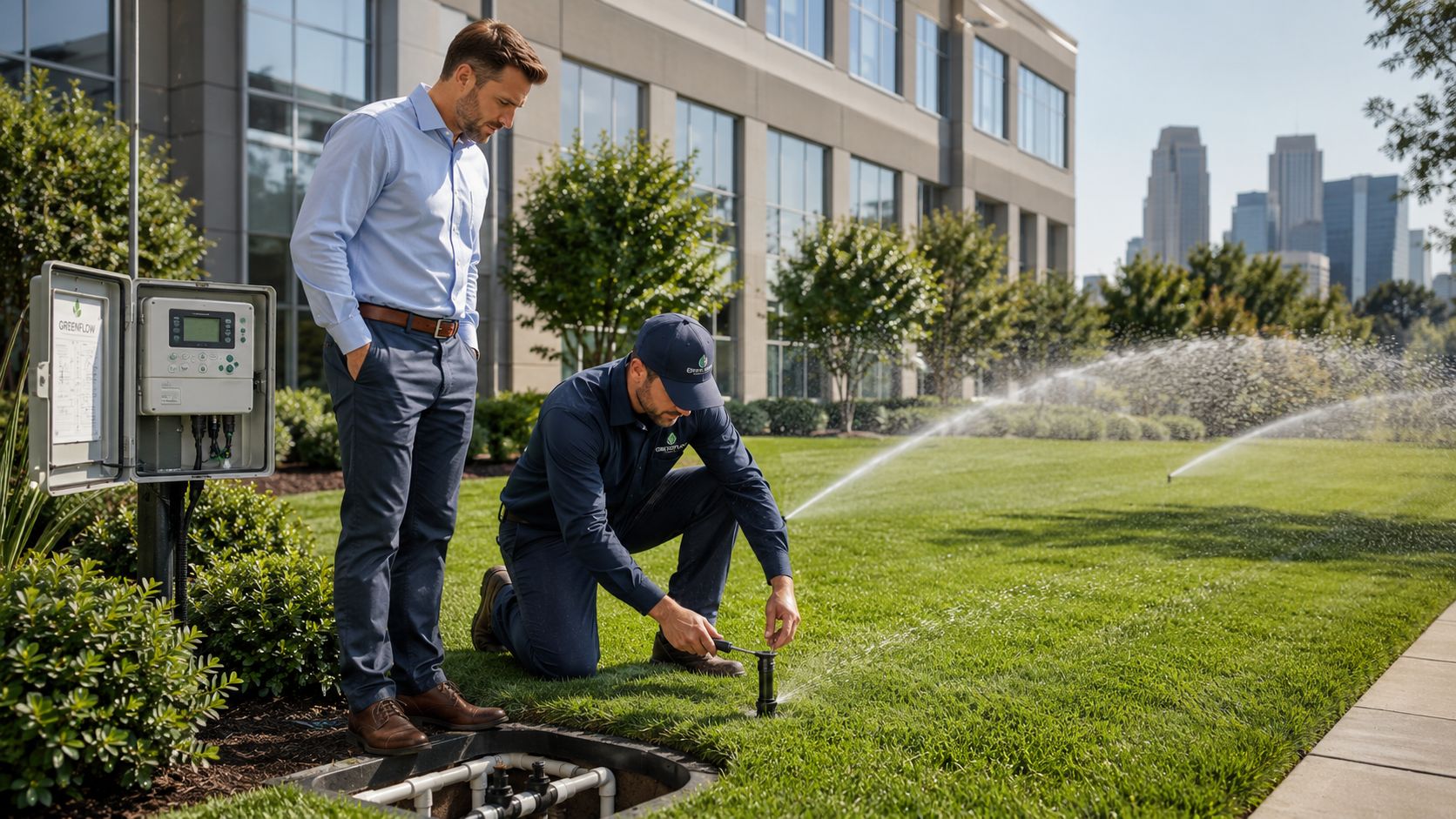
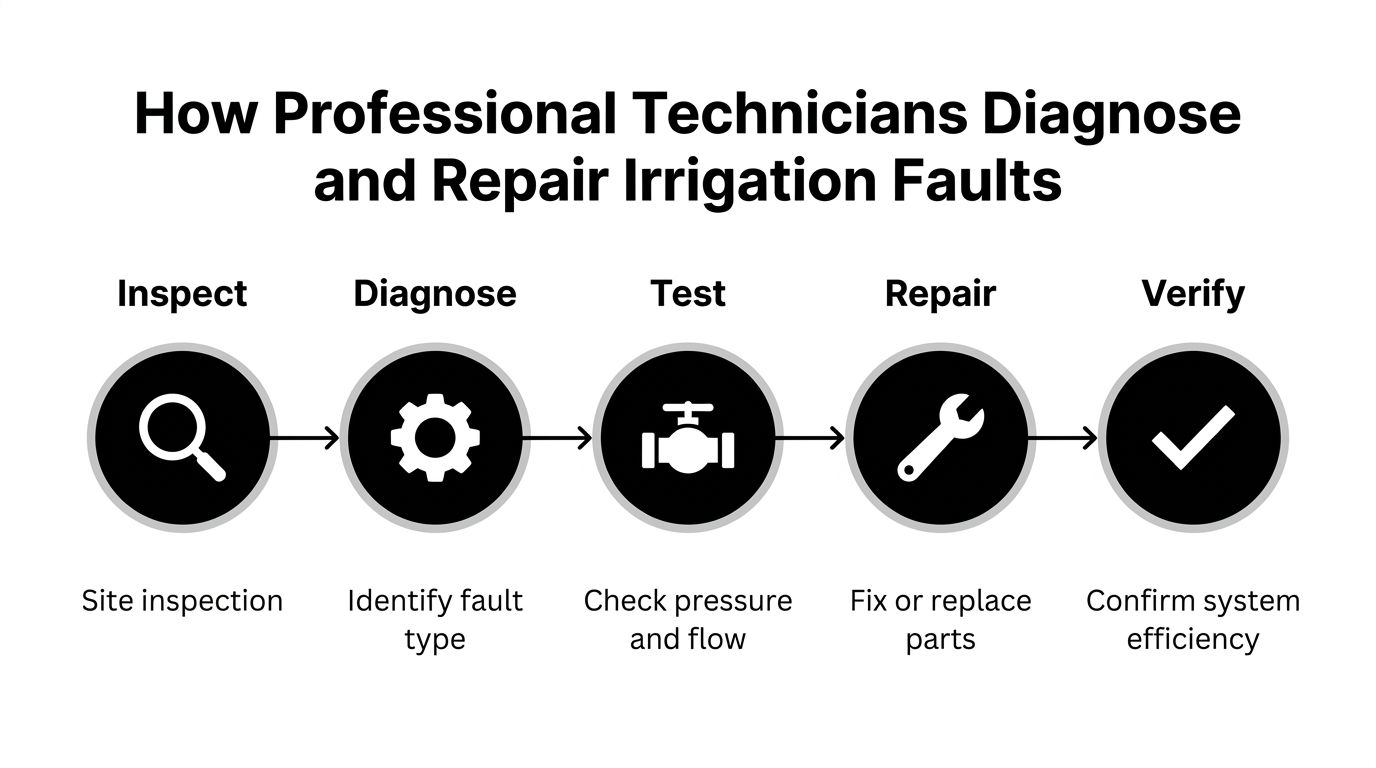
A real diagnostic visit starts with isolation, not replacement. That is the difference between a technician who understands the system and someone who is guessing with parts in hand. The best crews separate problems into electrical, hydraulic, and mechanical failure paths before they touch the budget.
Start with the valve, not the assumption
A competent technician will manually open the valve first. If the zone runs, the issue is usually electrical, often a failed solenoid or damaged controller wiring. If it does not respond, the problem is more likely hydraulic blockage or a mechanical diaphragm issue.
That step saves time because the repair path splits immediately. Electrical issues call for wiring tests, controller checks, and solenoid evaluation. Hydraulic or mechanical failures push the technician toward debris removal, diaphragm inspection, or component replacement. If a crew skips this first check, they waste labor and leave the fault in place.
Read the system, then test it
For common solenoid valves, a resistance reading around 20 to 60 ohms is a useful benchmark during troubleshooting Irrigation Repair Authority. If the reading is outside that range, the valve may be failing even if it still moves water. Pressure testing also matters, because many systems are designed to operate around 30 to 45 PSI at the emission point Irrigation Repair Authority.
If you want a cleaner reference for hidden loss detection, leak detection from Axis Meter Solutions shows how field teams find water loss before it shows up as visible damage or a billing surprise.
Vendor check: if a contractor skips meter readings and pressure checks, they are not diagnosing. They are substituting guesswork for procedure.
Use the repair to correct the system, not just the symptom
The point of testing is to restore performance, not just make a zone run again. If heads, regulators, and pipe sizing are mismatched, the result is poor distribution, runoff, or chronic dry spots. Those are system design and maintenance issues, not isolated head failures.
For property teams that want a deeper water-management angle, commercial water management and irrigation practices for Texas properties are worth reviewing alongside repair work. Prestonwood Commercial Services offers commercial maintenance and irrigation services across Dallas, Fort Worth, and San Antonio, including irrigation audits and repairs. The right provider should be able to explain what failed, what was corrected, and what still needs follow-up.
Water Management and Conservation Benefits of Proper Repairs
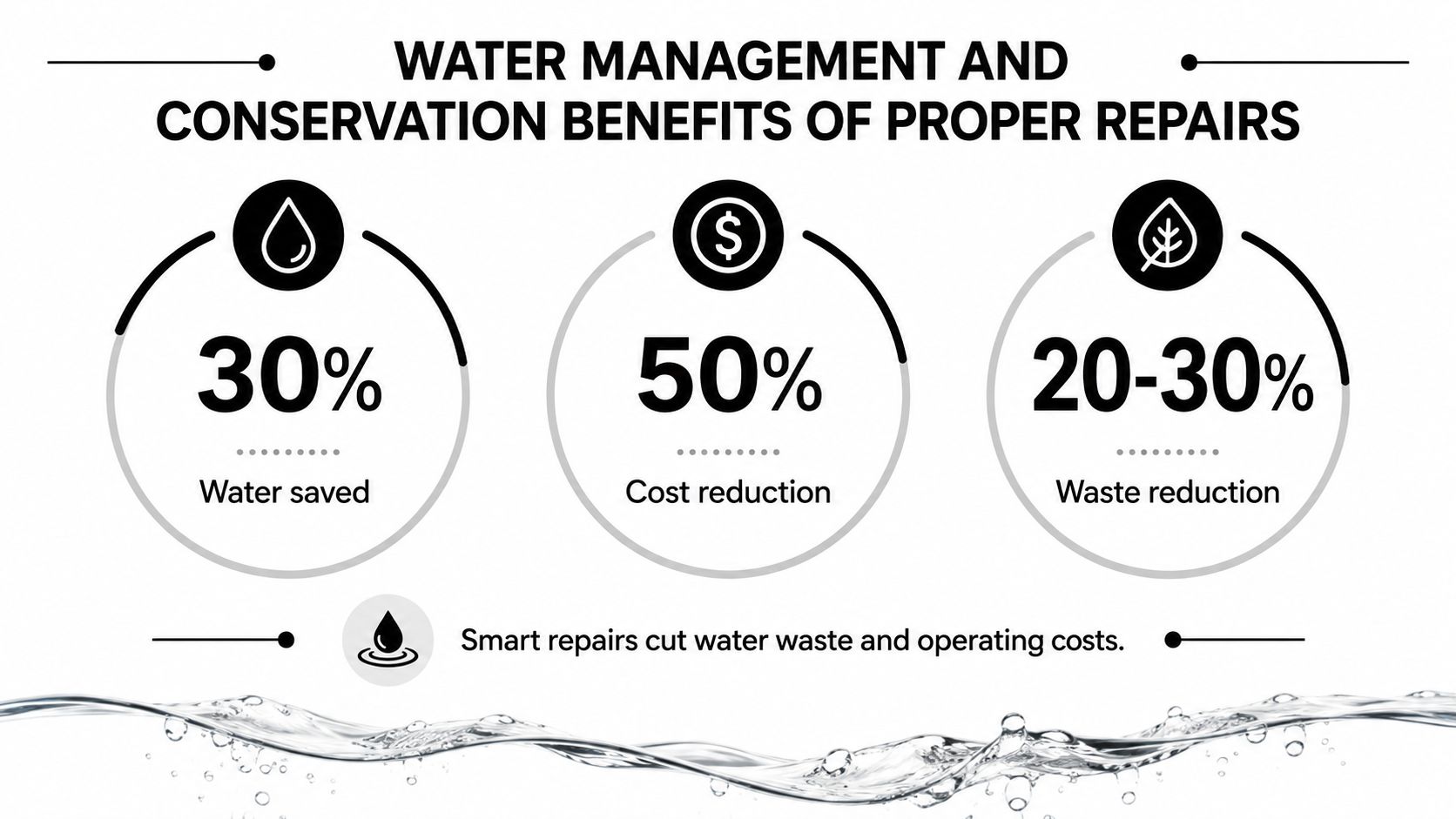
A broken head is obvious. The costliest problem is the one that keeps wasting water after the visible failure is fixed. If the controller is wrong, the pressure is off, or the zone layout is out of balance, the site keeps losing water, money, and control over its irrigation record.
Systemic fixes beat isolated part swaps
A failing controller can keep a property watering at the wrong time or for the wrong duration. Poor pressure regulation can create misting, runoff, and incomplete coverage, which wastes water without improving plant health. Zone rebalancing matters because uneven distribution usually means some areas are being overwatered while others are being underfed. That is the point where an irrigation maintenance and water management review for Texas commercial properties becomes useful, because it ties repair decisions to actual site performance instead of guesswork.
The repair market reflects that reality. The global Irrigation Systems Repair and Operations Market was estimated at $5.5 billion in 2024 and is projected to reach $8.7 billion by 2035 at a 4.26% CAGR from 2025 to 2035 Market Research Future. That is a durable maintenance category built on aging systems and ongoing operational need.
Compliance and documentation now matter
A repair company should help you think beyond curb appeal. Water-use compliance, audit readiness, and ESG reporting are tied to how well a site documents irrigation performance and corrective action. Existing service pages often stop at “fix the leak,” but property managers need records that show what was repaired, why it mattered, and how the site's water use was addressed. That is the operational value of using E & I Sales maintenance resources alongside repair planning, because it keeps maintenance tied to documentation and repeatable follow-up.
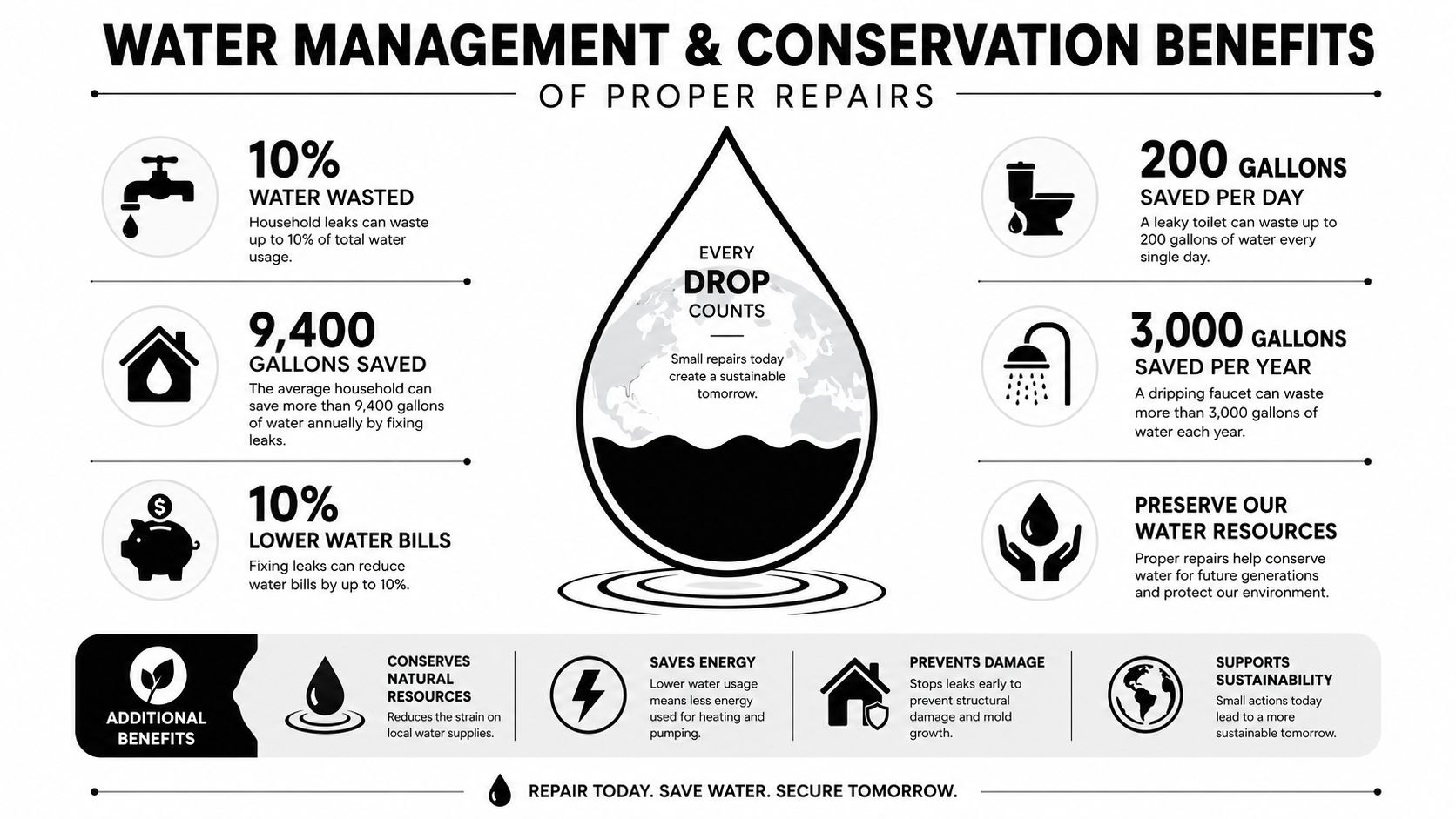
The broader pressure is real. The UN reports that water stress is rising globally, with around 2.4 billion people living in countries experiencing water scarcity at least one month per year, and the World Bank has warned that urban water systems and utilities are under increasing strain from climate variability and demand growth The Sprinkler Company. For commercial sites in water-stressed markets, a better repair decision can be more valuable than repeated cosmetic fixes.
Emergency Repair Services Versus Planned Maintenance Contracts
A broken head at 4 p.m. is the visible problem. The hidden problem is the cost stack that follows, missed watering cycles, tenant complaints, repeat truck rolls, and weak records when someone asks what was fixed and why. Emergency-only service looks cheaper on paper, but it usually creates the very spend property managers are trying to avoid.
Side-by-side, the difference is operational
| Criteria | Emergency Repair | Planned Maintenance Contract |
|---|---|---|
| Response trigger | Something breaks first | Issues are caught before failure |
| Scope | Usually one zone or one visible fault | Seasonal audits, controller checks, proactive repairs |
| Cost behavior | Unpredictable visit-by-visit spending | More predictable service relationship |
| Documentation | Often limited to the immediate fix | Better records for audits and reporting |
| Site impact | Higher risk of visible damage and complaints | Lower risk of surprise outages and waste |
The economics favor planned work. Typical repair jobs are around $100 to $400, with a national average near $250 Market Research Future. If the same valve, head, or controller issue keeps coming back because no one is inspecting the system between failures, the emergency model stops making financial sense fast.
A maintenance contract also gives you cleaner documentation. That matters when a site needs proof of corrective action, proof of follow-up, or a record that supports water-use review. A vendor who only shows up after a failure rarely leaves you with useful records. A contract provider should.
Use a hybrid model when the site risk justifies it
The practical setup for commercial properties is a baseline maintenance contract with emergency response coverage on top. That gives you seasonal checks, controller review, leak detection, and planned component replacement, while still covering a mainline break or valve failure that cannot wait. It is the right model for sites with high-visibility entrances, tenant pressure, large irrigated areas, or a history of repeat faults.
Use the contract to control the boring work and the emergency line for true exceptions. That keeps labor planned, keeps water waste down, and makes vendor performance easier to audit. For a closer look at preventive service concepts, E & I Sales maintenance resources are a useful reference. For scheduling and scope planning, sprinkler system maintenance guidance should be treated as a normal operating expense, not an optional extra.
How to Vet and Select the Right Irrigation Repair Vendor
A strong vendor should make your job easier on day one. If the first conversation is vague, you're already behind. The selection process should be simple, direct, and tied to property risk.
Ask for proof, not promises
Start with licensing, insurance, and commercial experience in Texas. Then ask who will show up on site, what diagnostics they use, and how they report findings. If the technician can't talk clearly about controllers, zones, pressure, and valve behavior, keep looking.
You should also expect references from similar property types, not just residential jobs. A retail center, healthcare campus, and HOA all have different operational demands, and the vendor should understand that difference. If the company avoids discussing response times or won't define its service scope, that's a red flag.
Red flags show up fast
- Vague scoping: they say they'll “take a look” but won't explain the process.
- No documentation: they can't show what was repaired or why.
- No smart controller expertise: they treat modern controls like a mystery.
- Reluctance to provide references: they want the work, not the scrutiny.
- Poor follow-up: the first visit ends with more questions than answers.

If you want a pricing reference before you start those conversations, irrigation system repair cost is worth reviewing so you're not negotiating blind. Good vendors welcome informed questions because it keeps the repair plan honest.
A vendor that can't explain what they fixed in plain language usually didn't fix enough.
Next Steps and Frequently Asked Questions
A broken head is rarely the sole issue. On a commercial site, the bigger cost comes from leaving small faults in place, because they drive water waste, tenant complaints, and weak records when someone asks what was repaired and why. Start with a site walk. Look for overspray, dry zones, pooling, controller errors, and zones that behave differently from the rest of the property. Then schedule a professional assessment and ask for a written summary that separates immediate repairs from system issues that affect water use and documentation.
What should happen first on a commercial property
Triage the site by urgency. Address active leaks first, then coverage failures, then documentation and optimization. That order protects both the grounds and the budget. If the system is under municipal restrictions, document the condition of the zones before and after repair so you can defend the work later.
Common questions from property managers
How often should commercial irrigation systems be inspected? Regular inspections catch drift before tenants notice it. Seasonal review is the minimum standard for serious properties, and more frequent checks make sense on high-profile sites.
Are smart controller upgrades worth it? Yes, if the property has recurring scheduling problems, uneven zones, or water-use scrutiny. Upgrades make the most sense when the current system is already being repaired for controller or distribution issues.
What if a repair crew damages the area? Require photo documentation before and after service, and make sure the vendor explains how any disturbance will be restored. If they can't document the work, they can't easily defend the result.
How should repairs be handled during water restrictions? Prioritize leaks, pressure issues, and controller corrections first. Those repairs reduce waste fastest and make the site easier to defend during review.
Prestonwood Commercial Irrigation Services handles commercial irrigation audits, repairs, and ongoing site maintenance across Dallas-Fort Worth and San Antonio, with the reporting and responsiveness property managers need. If your site is dealing with wasted water, uneven coverage, or repeat irrigation failures, visit Prestonwood Commercial Irrigation Services and set up a conversation about a repair plan that protects your property and your operating budget.