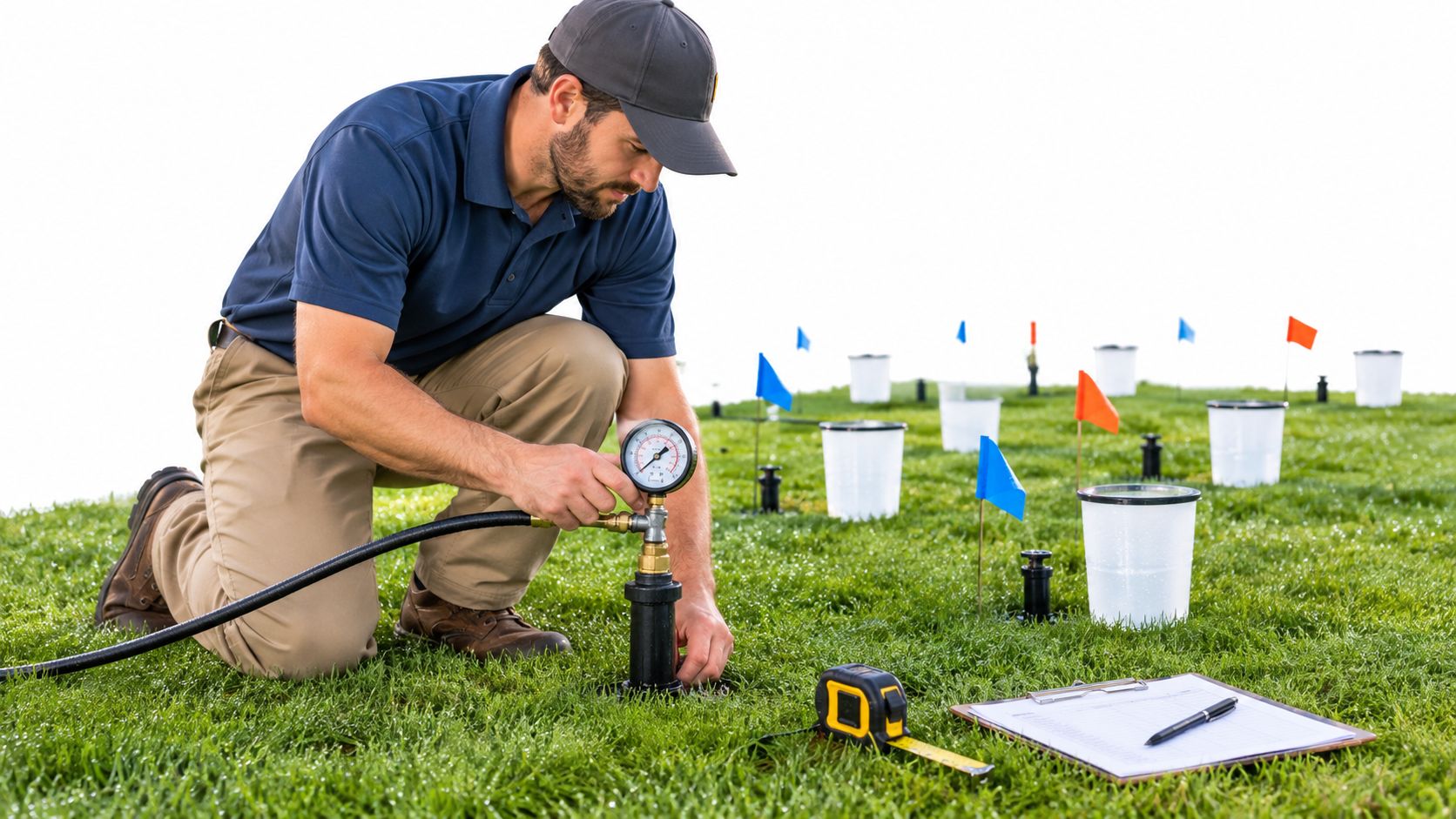
You're probably dealing with one of two problems right now. Either the outdoor areas look fine and you're wondering whether sprinkler system maintenance can wait another month, or something has already gone wrong and now you're balancing tenant complaints, water waste, and a repair request that wasn't in the budget.
On commercial properties, irrigation problems rarely stay “grounds problems.” A leaking lateral line can turn into soft turf at an entry drive. Overspray can create slick pavement near storefronts. A controller left on the wrong schedule can burn through water, damage plant material, and make your site look poorly managed even when the rest of the property is in good shape. That's why experienced managers stop treating sprinkler system maintenance as a seasonal chore and start treating it like risk control.
Good systems don't stay good on their own. They stay good because someone checks the heads, audits the controller, tracks abnormalities, and knows when a quick adjustment is enough and when a licensed technician needs to step in.
Table of Contents
- The High Cost of Irrigation Neglect
- Routine Inspections and Controller Audits
- Mastering the Annual Maintenance Cycle
- Troubleshooting Common System Failures
- Compliance and Smart Water Management
- When to Partner with a Commercial Irrigation Pro
- Frequently Asked Questions
- Is professional sprinkler system maintenance worth the cost for a commercial property
- What should staff do first during an irrigation emergency
- Can we adjust the system for new plantings or landscape renovations
- How often should we look for hidden leaks
- What's the biggest maintenance mistake new property managers make
The High Cost of Irrigation Neglect
The expensive part of irrigation neglect usually isn't the first broken head. It's everything that follows when no one catches the issue early.
A hidden leak can push water into a planter bed for weeks before anyone notices. By then, you may be dealing with runoff onto pavement, stressed plantings in the rest of the zone, and a utility bill that raises questions from ownership. On busy retail and office properties, overwatered entries and sidewalks also create liability exposure. If water is regularly pooling where people walk, irrigation is no longer just a landscaping issue. It's an operations issue.
That's why smart property managers fold irrigation into the same discipline they apply to lighting, pavement, and shared amenities. If you're reviewing broader essential common area maintenance tips, irrigation belongs on that list because poor watering affects safety, appearance, and cost control at the same time.
Practical rule: If irrigation only gets attention when tenants complain, you're already paying too much.
There's also a budgeting mistake that shows up on a lot of properties. Managers often compare the cost of a service visit with the cost of doing nothing. That's the wrong comparison. The better comparison is routine maintenance versus emergency repair, wasted water, damaged plant material, and staff time spent chasing recurring problems. If you need a baseline sense of how repair expenses can escalate from small defects into larger work orders, this overview of commercial irrigation repair cost considerations is a useful reference point.
Where neglect shows up first
- In the water bill: Hidden leaks, stuck valves, and poor controller settings waste water long before turf decline becomes obvious.
- At the curb: Brown patches, ponding, and overspray make the property look unmanaged.
- In tenant feedback: People notice wet sidewalks, muddy entries, and dead material faster than they notice good irrigation.
- In risk exposure: Water where people walk, drive, or unload creates a preventable operations problem.
The main shift is simple. Stop thinking of sprinkler system maintenance as “keeping the grass green.” Think of it as protecting the asset, reducing avoidable expense, and preventing a small irrigation defect from becoming a visible management failure.
Routine Inspections and Controller Audits
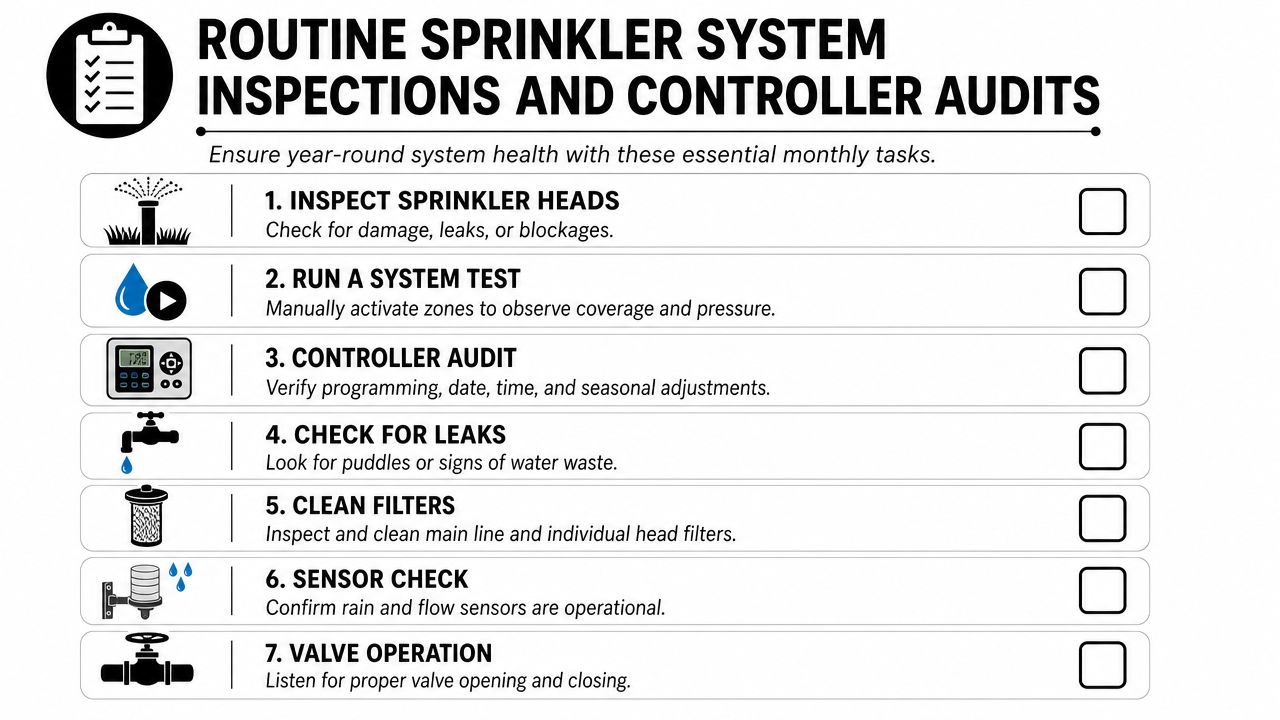
Most irrigation problems become expensive because the system wasn't observed while it was running. Paper reviews help. In-field observation matters more.
The best routine I've seen on commercial sites is simple and repeatable. Someone walks the property on a set schedule, manually runs zones, and records exceptions before they turn into service calls. That cadence matters because patterns show up over time. A single tilted spray head is minor. The same area with repeated pressure swings, runoff, and weak coverage points to a larger issue.
What to check on every walk
Start with what you can see and hear. You don't need to be a technician to catch obvious waste.
- Sprinkler heads: Look for broken risers, clogged nozzles, heads buried by mulch, and arcs aimed at curb, wall, or pavement.
- Valve boxes: Open boxes that are easy to access and check for standing water, damaged wiring, and hard-to-operate valves.
- Drip zones: Inspect emitters, tubing connections, and end caps. Drip failures often stay hidden under mulch until plant stress appears.
- Pressure symptoms: Mist, fogging, weak pop-up performance, and uneven throw usually point to pressure or flow issues.
- Runoff areas: Watch sloped entries, medians, and narrow strips beside hardscape. These are the first places bad programming shows up.
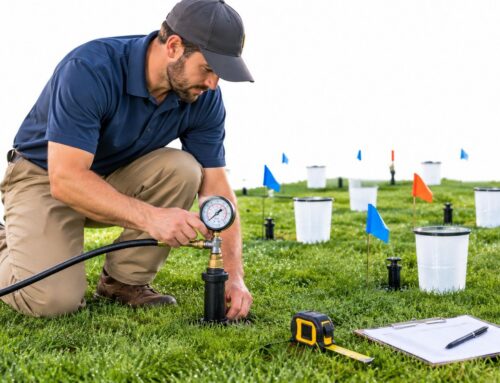
A useful field habit is to run one zone at a time and stay with it for a few minutes. Many managers rush this part and only confirm that “water came on.” That's not enough. You want to confirm coverage, runoff behavior, head rotation, and shutoff.
The controller is where waste starts or stops
A surprising number of commercial irrigation issues are controller issues, not hardware failures. The heads may be fine. The schedule isn't.
Audit the controller every time season, weather pattern, or plant demand changes. Verify date, time, start times, program assignments, and whether any manual run left the system in an unintended mode. If a property has multiple programs, make sure each one serves a clear purpose. Turf, shrubs, and drip beds rarely need the same run profile.
For slopes and compacted areas, cycle-and-soak programming is one of the most useful adjustments you can make. Instead of applying all the water in one long run, you split runtime into shorter cycles with a pause between them. That pause lets water infiltrate instead of washing toward the gutter. On a sloped office entry, that single programming change often does more than replacing parts.
Don't assume a smart controller is saving water if no one has reviewed the station runtimes and zone assignments. Bad programming gets automated just as efficiently as good programming.
A quick controller audit standard
| Checkpoint | What you're confirming | Why it matters |
|---|---|---|
| Clock and calendar | Correct date and time | Prevents accidental daytime watering or wrong-day runs |
| Programs | Each program has a defined landscape type | Stops turf, shrubs, and drip from being watered the same way |
| Start times | No duplicate or stacked starts | Prevents repeated watering cycles you didn't intend |
| Runtime logic | Short cycles where runoff is likely | Reduces pavement flow and saturation |
| Sensor status | Rain and flow inputs are active | Keeps the controller from watering blindly |
Build a simple reporting habit
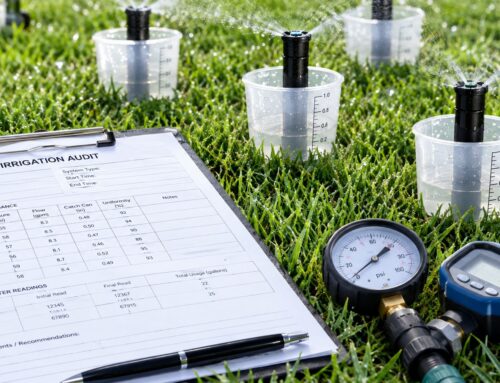
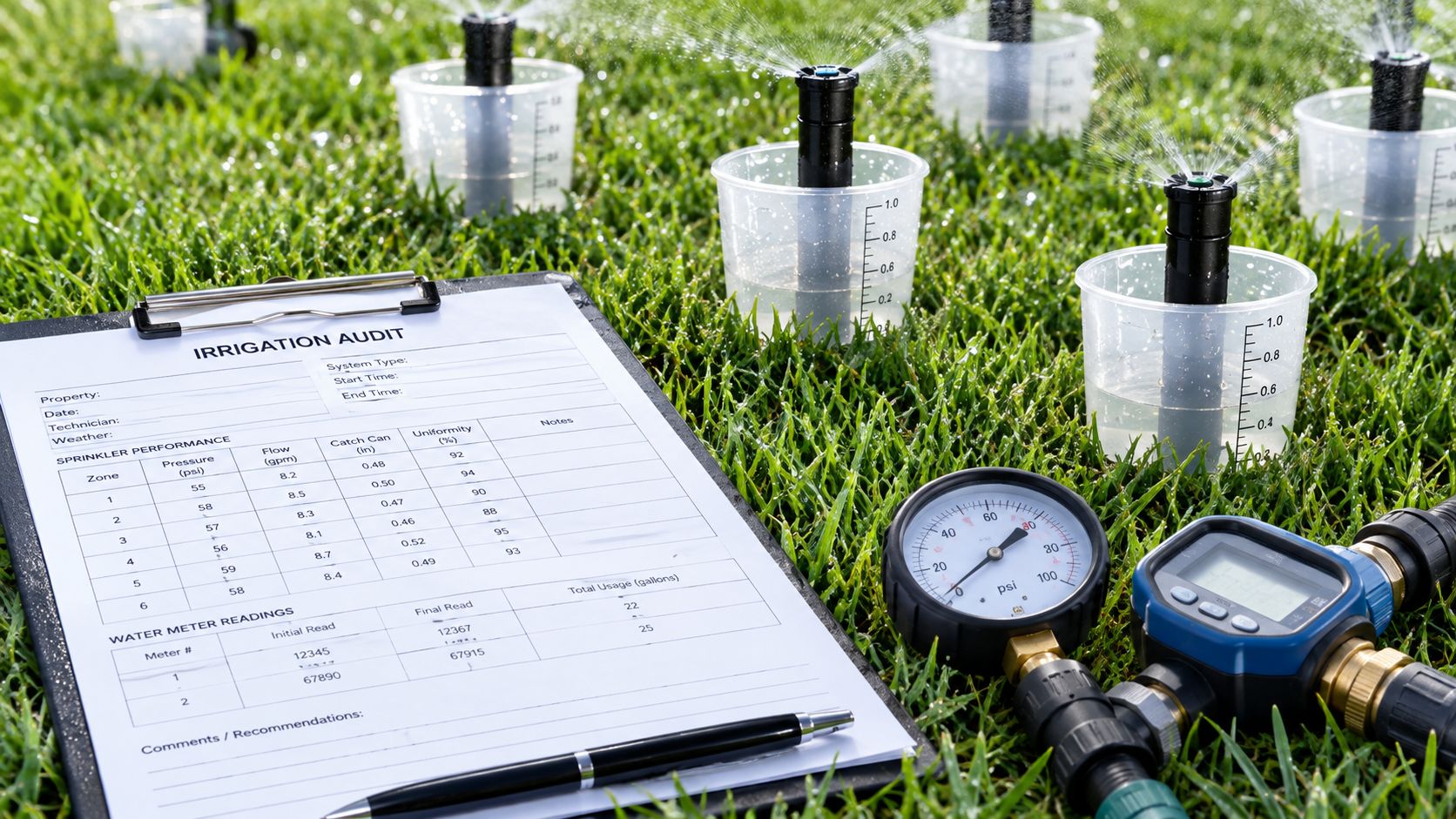
The inspection itself isn't enough if findings disappear into texts and memory. Use a recurring log that tracks zone number, issue observed, urgency, and whether the problem is operational, hydraulic, or electrical. Over a few months, that log tells you whether you're dealing with isolated wear or a system that needs broader correction.
Routine sprinkler system maintenance works best when the field walk and the controller audit are tied together. If the turf looks stressed, don't just increase runtime. Confirm coverage. If there's runoff, don't just reduce minutes. Check pressure, arc, nozzle match, and slope conditions. That's how you stop chasing symptoms.
Mastering the Annual Maintenance Cycle
A commercial property usually shows irrigation failure on the books before it shows up in the turf. You get a higher water bill, a slip hazard near an entry walk, a tenant complaint about muddy access, or a replacement invoice for a line that should have lasted years longer. Annual maintenance is how you control those costs instead of absorbing them.
The annual cycle should be planned like any other building system with budget exposure. Set the work by season, assign responsibility, and record what changed. Properties that do this usually see fewer emergency calls, fewer repeat repairs, and less waste from bad seasonal programming.
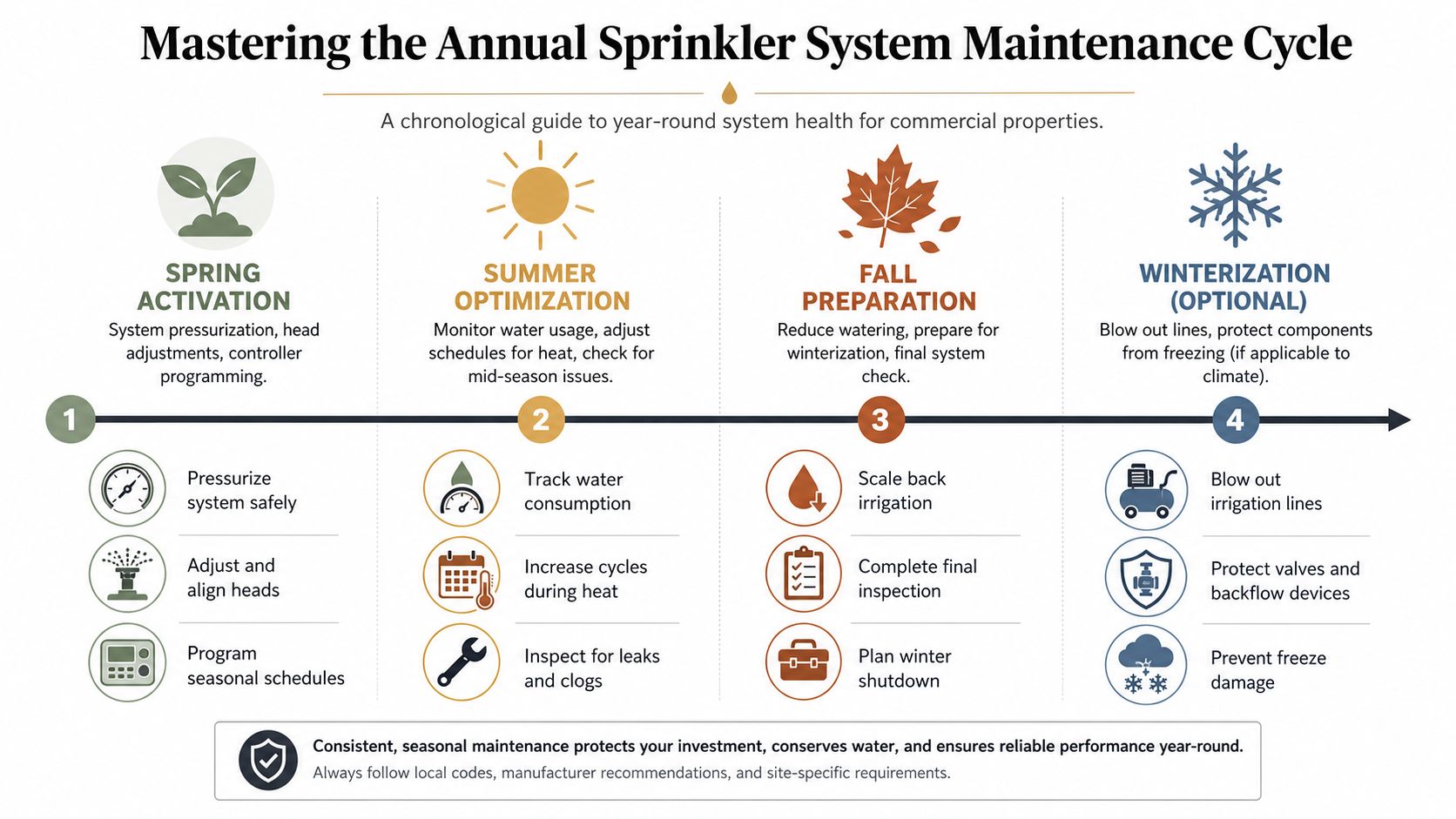
Spring Commissioning
Spring startup sets the tone for the year. Rush it, and you can create leaks, stuck valves, and washouts in the first week.
Open the system slowly. Bring pressure up in stages and watch the meter or flow reading if the site has one. A sudden spike often means a break, a valve not seating, or damage that happened during winter work. On commercial sites, that matters because one uncontrolled failure can damage paving, stain hardscape, or interrupt operations in customer-facing areas.
A disciplined spring commissioning process usually includes:
- Gradual pressurization: Reduces stress on aging fittings, valves, and lateral connections.
- Zone-by-zone activation: Verifies that heads rise, rotate, and shut down correctly under normal operating pressure.
- Hardware inspection: Catches cracked bodies, broken risers, buried heads, missing nozzles, and damaged drip components before water schedules increase.
- Controller cleanup: Clears old manual changes and confirms the seasonal program matches current plant material and site use.
- Repair prioritization: Separates immediate water-loss issues from lower-risk corrections so you can spend maintenance dollars where they reduce exposure first.
Spring is also the right time to decide what should be repaired and what should be replaced. If the same valve box floods every year or the same turf edge keeps breaking heads from foot traffic, repeated spot repair is usually the expensive option. A small redesign now can cost less than another season of labor, water loss, and tenant complaints. If you need a framework for documenting recurring field problems before authorizing work, this commercial sprinkler repair planning guide is a useful reference.
Summer Tuning
Summer determines whether your irrigation program supports asset protection or just hides weak performance with extra runtime. Heat, reflected temperature from pavement, event traffic, and seasonal plant changes all put pressure on the system. If you answer every stress symptom with more minutes, water use climbs fast and drainage problems follow.
The better approach is targeted adjustment. Narrow turf strips beside concrete may need a different solution than interior lawn panels. Annual color at an entrance may need separate scheduling from established shrub beds. High-profile zones deserve tighter review because appearance problems there become service calls, leasing friction, or brand issues for the property.
Focus summer tuning on these operating decisions:
| Summer task | Financial or operational reason |
|---|---|
| Inspect high-visibility areas more often | Prevents small coverage issues from turning into tenant complaints or landscape replacement costs |
| Adjust runtimes by hydrozone and exposure | Cuts waste from watering shaded or low-demand areas like full-sun turf |
| Correct arcs and nozzles after mowing or traffic | Reduces overspray onto walks, cars, storefront glass, and hardscape |
| Manage runoff with cycle changes or hardware correction | Lowers slip risk and helps avoid water code violations |
| Track repeat problem zones | Identifies where redesign is cheaper than repeated service |
One trade-off needs to be clear. A property can keep plant material greener in extreme heat by adding water, but that does not always make the site healthier or cheaper to operate. More runtime can expose weak drainage, increase fungal pressure, soften turf in traffic lanes, and push water onto pavement. Good summer management protects appearance while staying inside reasonable water-use and risk limits.
Communication matters here because summer changes happen fast. If onsite staff, the landscaping crew, and the irrigation vendor all make separate adjustments, your water budget loses control. One person shortens a cycle. Another adds a manual run. A third swaps a nozzle to solve a dry area. Require one log, one decision path, and one current record of program changes.
Fall Blowouts
Fall work is where disciplined properties separate preventive maintenance from avoidable damage. Demand drops, occupancy patterns may shift, and cooler weather changes how quickly soil dries. The irrigation schedule should respond before overwatering creates runoff, algae on pavement, or root problems in ornamental beds.
In freeze-prone markets, compressed-air blowouts need planning, not guesswork. Sequence matters. Pressure control matters. So does the technician's judgment about older pipe, drip zones, and specialty components. A rushed blowout can break the very system it is supposed to protect, and on a commercial property that means spring repair costs before the season even starts.
A sound fall process includes:
| Fall task | Why you should care |
|---|---|
| Reduce runtimes as evapotranspiration drops | Avoids paying for water the site no longer needs |
| Inspect low points and drainage areas | Finds sections where standing water can freeze or damage pipe |
| Complete obvious repairs before shutdown | Shortens spring startup delays and avoids carrying known defects into the next year |
| Schedule blowout service where climate requires it | Prevents freeze breaks that can disrupt operations and inflate first-quarter maintenance costs |
Winterization
Winterization is recordkeeping as much as shutdown. Close the water source properly for the site, protect exposed assemblies, and leave clear notes on what was repaired, what was deferred, and what should be budgeted for the next cycle.
This is the point in the year where a property manager should stop looking at repairs as isolated events. Repeated breakage around loading areas may point to traffic protection issues. Chronic soggy turf near a building edge may point to drainage conflict or poor nozzle selection. Frequent controller changes in one section may mean the original zoning no longer fits the current plant palette.
A year-end review that protects budget
Use the off-season to review performance by cost and risk, not just by appearance.
Ask:
- Which zones produced repeat labor charges
- Where did water waste or runoff complaints happen more than once
- Which areas created liability concerns such as slick pavement or pooling near entries
- What repairs kept returning instead of staying fixed
- Which problem areas should be redesigned, capped, or separated into a new hydrozone
That review supports next year's budget request. It also gives you documentation if ownership asks why a redesign, smart controller upgrade, or professional oversight contract makes financial sense. Predictable irrigation costs usually come from planned seasonal work, not from reacting after failure.
Troubleshooting Common System Failures
When a sprinkler system fails, the symptom you see in the irrigated area is only the starting point. Good troubleshooting works backward from that symptom instead of guessing and replacing parts.
Start with observation. Run the affected zone. Watch the first minute, the middle, and the shutoff. Many failures reveal themselves in those three moments.
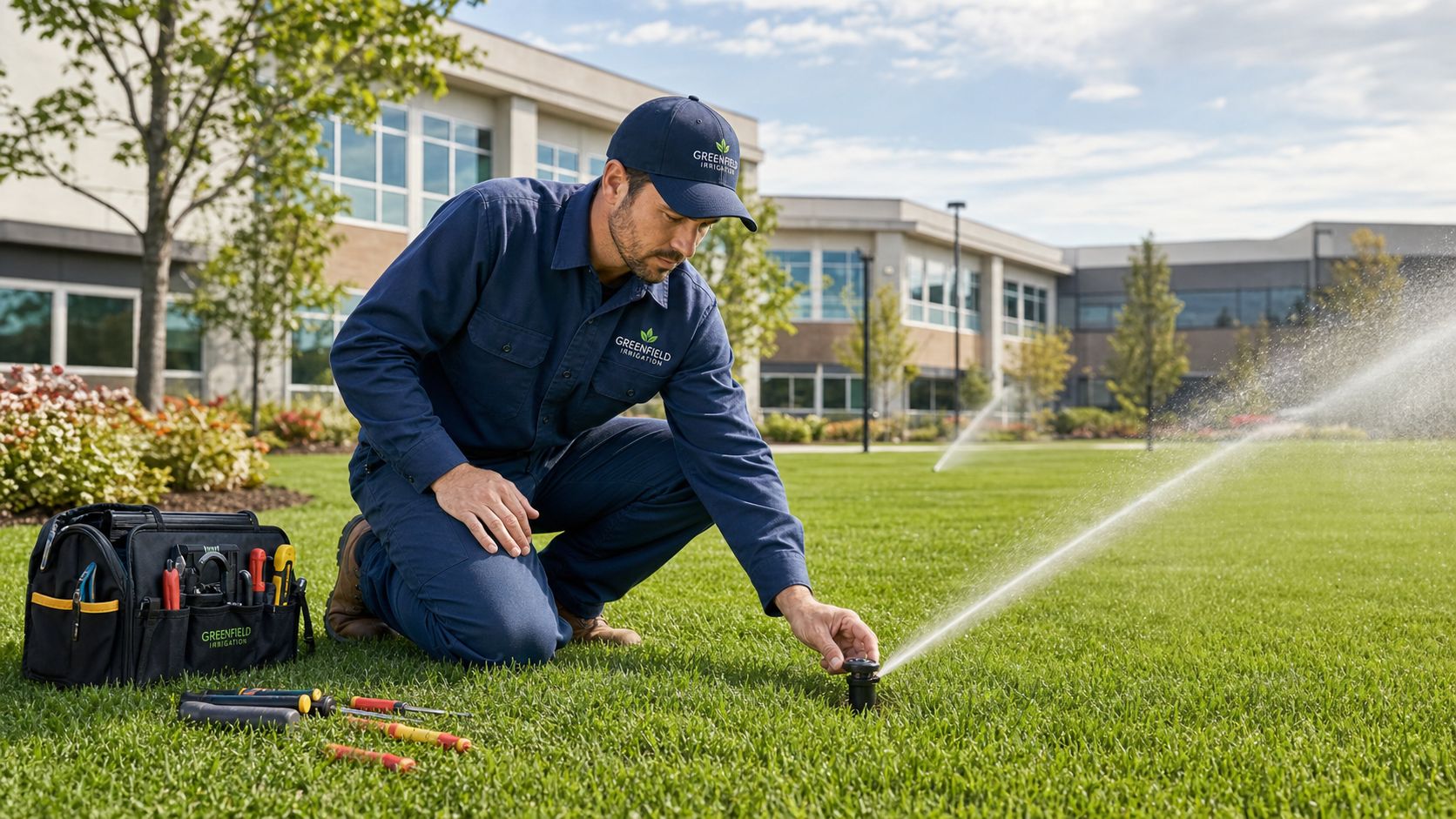
Brown Patches and Dry Corners
Dry turf doesn't automatically mean the zone needs more water. It usually means the water isn't reaching the area correctly.
Possible causes and fixes:
- Misaligned head: A spray body may be aimed away from the turf after mowing or foot traffic. Re-aim the arc and confirm the pattern overlaps with adjacent heads.
- Blocked nozzle: Dirt or debris can distort the pattern. Clean or replace the nozzle and rerun the zone.
- Low pressure in one area: If multiple heads in the same zone are weak, look for a leak, partially closed valve, or damaged lateral line.
- Plant growth blocking coverage: Shrubs and ornamental grasses often mature around heads and create hidden dry pockets. Raise the head or modify the layout.
If the same area keeps browning after these corrections, stop adjusting runtime and move toward a full diagnostic. A recurring dry corner usually points to design spacing, pressure inconsistency, or a hidden leak.
Geysers, Flooding, and Constant Saturation
These symptoms need quick action because they waste water fast and can create safety issues.
Check the likely causes in this order:
- Broken lateral line or fitting: Sudden flooding or a visible geyser usually means a line failure below grade. Shut off the affected zone or isolate the system.
- Valve stuck open: If the area stays wet even when the controller is off, a valve may be leaking or failing to close.
- Head seal failure: A damaged head can leak heavily around the stem and mimic a larger issue.
- Runoff from poor scheduling: Water may be arriving too quickly for the soil or slope. Shorter cycles can help, but only after you rule out hardware failure.
For managers handling active incidents, a practical walkthrough on how sprinkler system repair is typically approached in the field can help you separate a simple zone issue from a problem that needs immediate professional repair.
If water is crossing pavement or collecting near an entry, treat it like an active site risk first and an irrigation problem second.
Heads That Don't Pop Up or Zones That Won't Run
This symptom can be hydraulic, electrical, or mechanical. That's why random part replacement gets expensive.
Use a simple sequence:
Confirm the controller command
Make sure the station is programmed and manually activated.Listen at the valve
A click with no water may indicate flow restriction. No click may indicate wiring or solenoid failure.Check for localized obstruction
Heads that don't rise may be buried by soil, mulch, or turf overgrowth.Compare nearby zones
If one zone is dead and others are fine, focus on that valve, wire path, or station output.
Quick symptom guide
| Symptom | Most likely issue category | First response |
|---|---|---|
| One head leaking when off | Head seal or valve seepage | Replace head or inspect downstream valve |
| Whole zone weak | Pressure or leak problem | Run zone and inspect for hidden loss |
| Zone dead | Controller, wire, solenoid, or valve | Test activation path in order |
| Water on pavement only | Arc, nozzle, or schedule issue | Adjust hardware before changing runtime |
Good sprinkler system maintenance reduces failures, but it also makes failures easier to diagnose. When your zones are labeled, your controller is documented, and your prior repairs are logged, troubleshooting becomes a process instead of a guessing game.
Compliance and Smart Water Management
A commercial site can look fine from the parking lot and still waste thousands of gallons a week. That is the trap. By the time brown turf, runoff, or a failed test puts irrigation on your desk, you are already dealing with avoidable cost, tenant complaints, or a compliance issue that should have been caught earlier.
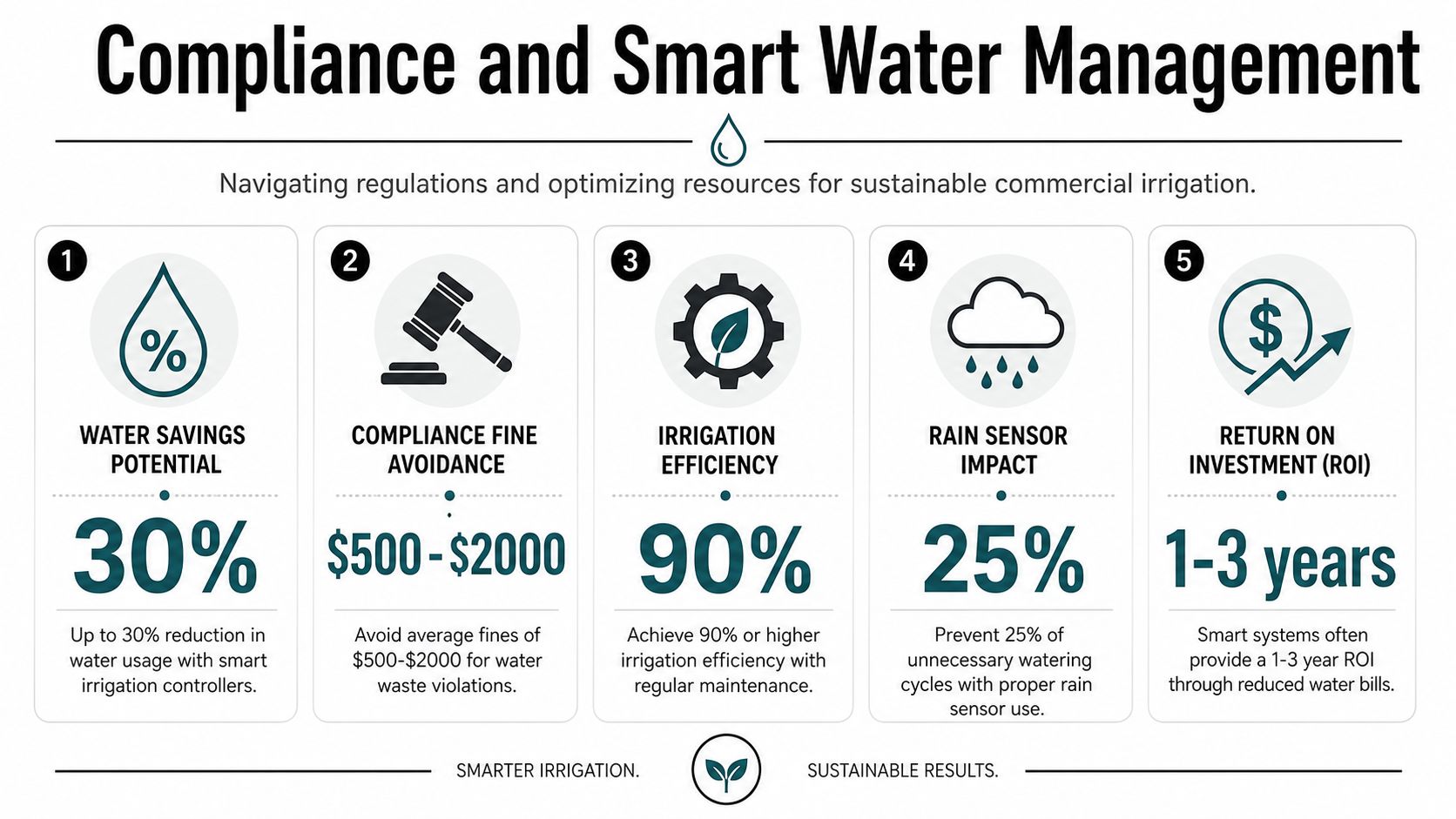
Backflow, records, and liability control
Backflow prevention sits in the same category as fire alarm testing and elevator inspections. It is part of property risk management. If the assembly fails or testing lapses, you are no longer dealing with plant health. You are dealing with water supply protection, code exposure, and a documentation problem that can become expensive during an inspection, ownership review, or claim.
Keep a current irrigation file for each property. At minimum, it should include backflow test records, repair history, controller programming changes, as-built updates when zones are modified, and notes on any water-use exceptions or restrictions from the local jurisdiction. If your water bill spikes or a city inspector asks for records, you need clean documentation the same day, not a scramble through old invoices.
The budgeting side matters too. Backflow repairs, failed tests, emergency shutoffs, and preventable water loss rarely hit in isolation. They show up as a cluster. One preventable issue becomes labor, vendor dispatch, water waste, and internal time spent explaining why the property missed something that should have been on a calendar.
KPIs that help you manage irrigation like an operating cost
Commercial irrigation should be tracked the way you track janitorial variance, lighting outages, or HVAC service calls. If you do not measure it, you end up managing by complaints.
Use a short KPI list that your team can review monthly:
- Water use by irrigated area
- Repair frequency by zone or valve group
- Runoff or overspray incidents
- Manual watering or override frequency
- Variance between scheduled runtime and actual site need
- Water bill spikes after tenant improvement, paving, or changes to the grounds
These numbers help you separate a one-off repair from a system that is drifting out of control. A zone that fails twice in a season may need redesign, pressure correction, or hardware standardization. A site that relies on frequent manual runs usually has a scheduling, coverage, or sensor issue that is costing you labor on top of water.
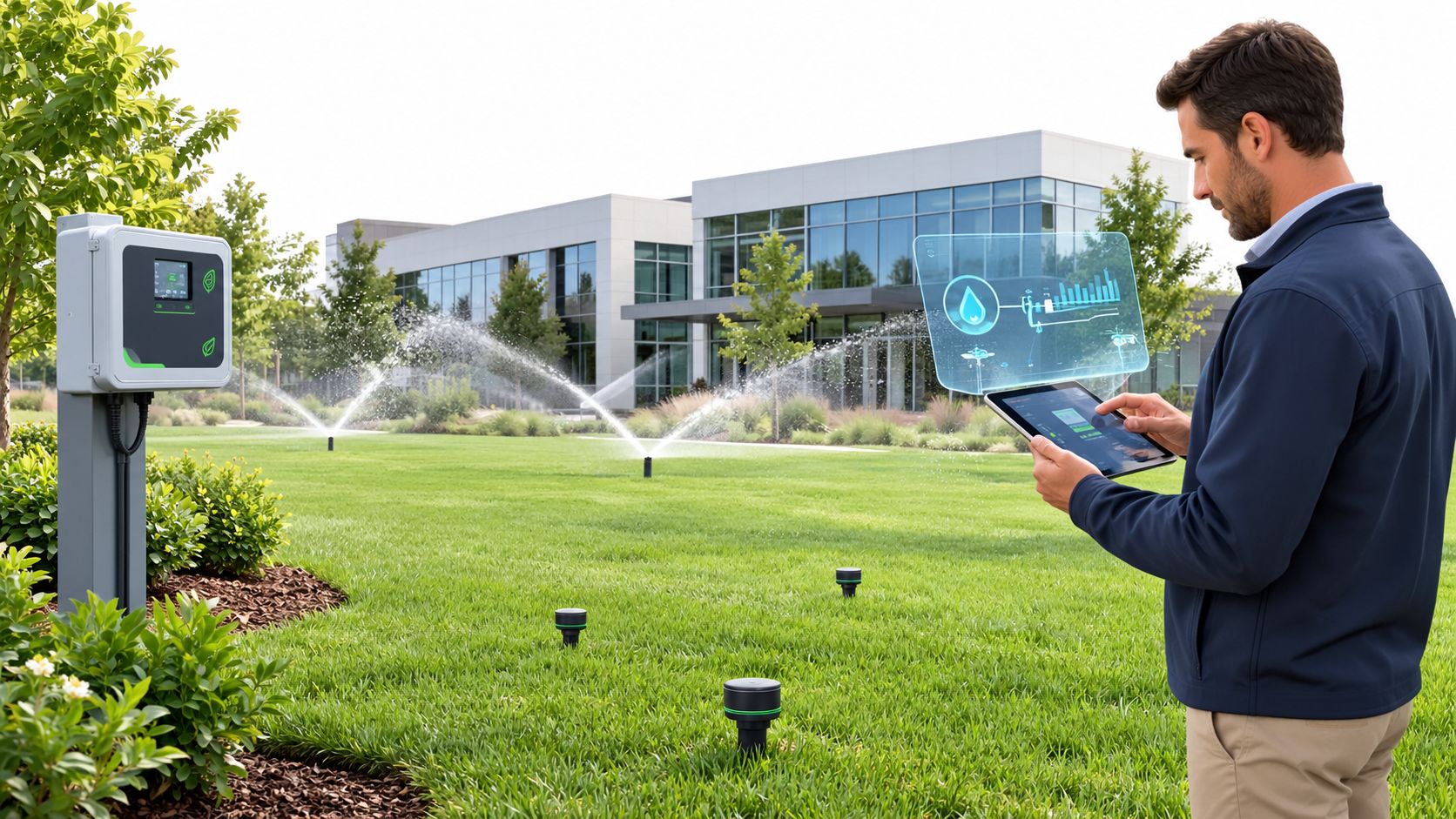
Smart controllers can help, but only when the programming matches the site. Weather inputs, flow sensing, and alerts are useful if someone reviews exceptions and adjusts for plant type, exposure, and hydraulic limits. If you are weighing that upgrade, this overview of weather-based irrigation control for commercial properties gives a practical starting point.
Hidden loss is where budgets slip
Visible leaks get attention. Subsurface loss often does not.
The Regional Water Providers Consortium sprinkler maintenance guidance notes that slow leaks can waste a meaningful share of outdoor water use before they are obvious at the surface. On a commercial property, that means your grounds may still look acceptable while the meter keeps climbing.
That is why visual checks are not enough on larger sites or multi-building properties. Add operating data to field observation. Review pressure trends, compare water use to prior periods at the same property, and investigate unusual consumption after construction, planting changes, or hardscape work. Those are the moments when wire paths, lateral lines, and head elevations get disturbed.
What smart water management looks like in practice
- Quarterly water-use review against the same season last year
- Pressure and flow checks on properties with repeated leak history
- Documented controller changes, with dates and reason for adjustment
- Follow-up audits after renovations, utility work, or planted area replacement
- Local compliance calendar for backflow testing and watering restrictions
Well-run irrigation programs protect appearance, but that is only part of the job. The bigger win is controlling utility spend, reducing slip-and-fall and runoff exposure, and keeping the property ready for inspection without last-minute cleanup.
When to Partner with a Commercial Irrigation Pro
A zone is flooding near the front entrance at 6:30 a.m., tenants are arriving by 8:00, and your maintenance lead is deciding whether to start digging. That is the moment to stop treating irrigation as a handyman task. On a commercial property, a bad repair decision can turn a water issue into a liability claim, damaged pavement, tenant complaints, and a larger invoice by the end of the day.
Your staff should own observation, shutdown, and documentation. They should not be expected to diagnose wire faults, open up backflow assemblies, or chase recurring pressure problems across a live site. Good property management depends on knowing that line and enforcing it.
What your staff can own
Use your on-site team for the work that improves response time and gives the service vendor usable information:
- Run active zone checks and note visible failures
- Photograph leaks, dry spots, ponding, and overspray
- Confirm controller settings against approved schedules
- Shut off a zone or isolate irrigation water during an active hazard
- Submit clear work orders and track repeat trouble spots
That division of labor saves money. Your team handles fast site response. The irrigation contractor handles diagnosis, repair quality, and code-sensitive work.
What should trigger a service call
Bring in a commercial irrigation pro when the problem affects buried infrastructure, electrical components, water waste exposure, or compliance responsibility.
Typical triggers include:
- Mainline or lateral line breaks
- Valve failures that require disassembly, tracing, or rewiring
- Controller output problems or multi-zone electrical faults
- Backflow testing, replacement, or code corrections
- Recurring pressure problems across several zones
- System changes after renovations, regrading, or planting conversions
- Leak detection and water-loss investigation beyond visible inspection
Repeated failures deserve special attention. If the same zone keeps sticking, shorting, or breaking, you are no longer dealing with a one-off repair. You are dealing with an underlying design, pressure, wiring, or installation problem. Patchwork fixes keep the site running for a week or two, then the cost returns through labor, water use, and tenant disruption.
The same management principle applies across building systems. Scheduled inspection and qualified service produce more reliable performance than reactive repair. For irrigation, that means fewer emergency calls, better budget control, and cleaner records if a water event leads to a complaint or claim.
How to evaluate a commercial provider
Do not hire on repair price alone. Hire for reporting, accountability, and the ability to support property operations.
Use this screen:
| What to ask | Why it matters |
|---|---|
| Do they document zone-by-zone findings | You need maintenance history that supports budgeting, troubleshooting, and owner reporting |
| Can they handle audits, repairs, and controller adjustments | One provider with full system visibility reduces handoff errors |
| Do they understand commercial site priorities | High-traffic properties require scheduling that limits safety risk and tenant disruption |
| Will they recommend redesign when repairs repeat | Repeated patching often costs more than correcting the root problem |
| Do they provide service records your team can keep on file | Documentation matters when you need to explain water use, repairs, or compliance actions |
One option in this category is Prestonwood Commercial Grounds Services, which includes irrigation maintenance, system inspections, repairs, controller work, and water management support as part of its commercial grounds operations. That can help if you want one vendor relationship tied to broader site performance instead of splitting responsibility between grounds and irrigation contractors.
Review the service agreement before you approve it. It should spell out inspection frequency, response times, documentation standards, emergency procedures, and what is included in routine service versus billed as repair work. If those terms are vague, the property usually pays for the ambiguity later.
Frequently Asked Questions
Is professional sprinkler system maintenance worth the cost for a commercial property
Yes, in most commercial settings it is. Planned service gives you predictable maintenance costs, better water control, and documentation you can use during budgeting and owner reporting. Reactive repair work usually costs more once you factor in water loss, replacement of damaged plantings, trip hazards, tenant complaints, and after-hours emergency calls.
The bigger issue is liability. A broken head near a walkway or a valve failure that floods pavement can turn a small irrigation problem into a claim.
What should staff do first during an irrigation emergency
Stop the water first. Shut off the affected zone if you can identify it quickly, or isolate the irrigation supply if water is causing flooding, slick pavement, or property damage.
Then document the location, time, and visible symptom with photos and a short incident note. That record helps your irrigation contractor troubleshoot faster and helps your team explain the event if damage, water waste, or safety questions come up later. Do not start digging unless your staff is trained, authorized, and clear on utility locate requirements.
Can we adjust the system for new plantings or landscape renovations
Yes, but treat it as a design and water-distribution question, not just a runtime change. New beds, different plant types, added shade, and hardscape revisions often change precipitation rates, coverage patterns, and drainage behavior.
If you only add minutes at the controller, you can create runoff in one area while another stays dry. On commercial properties, that means wasted water, weak plant performance, and more service calls. Review nozzle type, spacing, zoning, pressure, and whether drip conversion makes better financial sense.
How often should we look for hidden leaks
Staff should keep an eye out during regular site walks, especially around valves, pavement edges, and unusually green areas. Hidden leaks often show up first as a water bill increase, a pressure drop, recurring muddy spots, or irrigation running longer than expected to maintain the same plant quality.
For larger sites, quarterly checks are a practical standard. If water costs are high or the property has a history of underground failures, add pressure testing or other diagnostic work to the maintenance plan.
What's the biggest maintenance mistake new property managers make
They approve irrigation work without tracking performance.
A system that gets repaired over and over without reviewing runtime, zone output, leak history, and seasonal water use will keep draining the budget. Good management means watching the right KPIs, keeping service records, and asking why the same zone keeps failing. That is how you catch chronic pressure problems, outdated controllers, and poor zone design before they become a budget line you cannot defend.
If your property needs a more structured approach to irrigation oversight, Prestonwood Commercial Landscape Services can help you evaluate system condition, improve maintenance routines, and align irrigation performance with your broader commercial grounds goals.