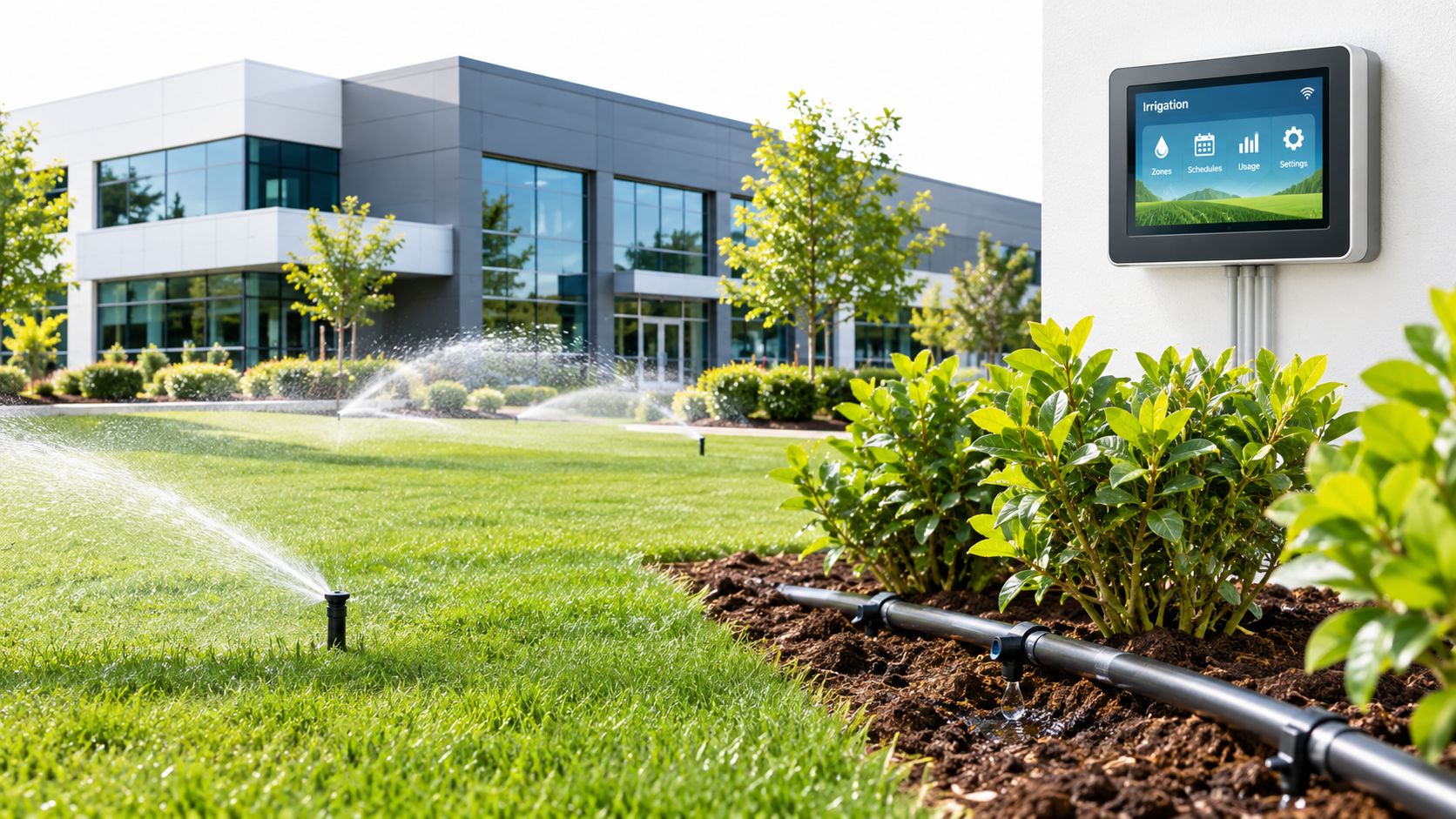
You're probably dealing with irrigation only when something has already gone wrong. A tenant notices brown turf by the entry monument. A regional manager asks why water is running after a rain. A city inspector flags runoff into the curb. The system was there before you took over the property, it runs before sunrise, and most days it stays invisible until the or the water bill says otherwise.
That's why understanding irrigation systems matters so much on commercial properties. If you manage office parks, retail centers, healthcare campuses, HOAs, or industrial sites, irrigation isn't background infrastructure. It's a controllable operating system for water, plant health, site appearance, and risk.
Table of Contents
- Why Understanding Irrigation Systems Matters for Commercial Properties
- How Irrigation Systems Work From Source to Root Zone
- Comparing Sprinkler Drip Subsurface and Smart Central Systems
- Design Principles and Water Conservation Technology That Actually Saves
- Common Failure Modes and How to Audit and Repair Them
- Lifecycle Costs ROI and Regulatory Considerations for Managers
- Working With a Professional Provider and Your Next Steps
Why Understanding Irrigation Systems Matters for Commercial Properties
A commercial irrigation system can look fine from the parking lot and still perform poorly every night. Heads can be tilted, valves can seep, pressure can run too high, and the controller can be programmed for a season that ended weeks ago. By the time you see dry spots or runoff, the system has usually been wasting water or missing plant needs for a while.
That hidden nature is what confuses new property managers. They assume irrigation is a one-time install, like pavement or curbing. It isn't. It behaves more like HVAC. It needs adjustment, inspection, testing, and seasonal tuning.
The business side of irrigation
The site is one of the first things people judge when they arrive on site. If the turf near the entrance is stressed or shrub beds look uneven, visitors don't separate that from the building brand. They read it as a management issue.
At the same time, irrigation touches operating cost and compliance:
- Water use: Poor distribution often pushes crews to run zones longer just to keep the driest areas alive.
- Repair cost: A minor nozzle, wiring, or valve issue can become a larger replacement problem if it sits too long.
- Liability and compliance: Overspray onto walks, runoff into streets, and watering during restrictions can create avoidable headaches.
- Tenant and visitor experience: Mud, dead plant material, or patchy turf around entries hurts perception fast.
Globally, irrigation already operates at enormous scale. The FAO estimates that over 307 million hectares are equipped for irrigation, including 261 million hectares irrigated, and that this system requires about 1,500 km3 of irrigation water annually while 2,673 km3 are withdrawn to meet that need, showing the importance of scale and efficiency in any irrigation discussion (FAO irrigation water use conclusions).
What good management looks like
A well-managed commercial irrigation system doesn't just “turn on.” It delivers the right amount of water, to the right place, at the right pressure, with enough consistency that you aren't compensating for weak spots by overwatering everything else.
Practical rule: If a zone only works when you run it longer and longer, assume there's a performance problem before you assume the plants need more water.
That's the shift that helps most managers. Stop thinking about irrigation as buried hardware. Start treating it as an auditable water-management system. When you do, pressure, uniformity, scheduling, and follow-up become more important than whatever controller brand is mounted on the wall.
How Irrigation Systems Work From Source to Root Zone
The easiest way to understand irrigation systems is to think of them like a circulatory system. Water starts at a source, moves through control points, travels through distribution lines, exits through emitters, and ends where it matters most, in the root zone, the soil area where plants take up moisture.
If you can follow that path, you can follow almost any irrigation conversation on a site walk.
The path water takes
Most commercial systems begin at a water source. That might be municipal water, a stored supply, or another approved source. Near that source, you'll usually find backflow prevention, which protects the potable water supply from contamination if pressure changes and water tries to reverse direction.
From there, water may pass through a pump if the site needs added pressure or flow. Then it enters the mainline, the larger pipe that feeds the property. Electric valves open and close sections of the system one at a time. Each valve controls a zone, which is a group of heads or emitters that run together.
Beyond the valve, water moves through lateral lines to the delivery devices:
- Sprinkler heads for turf and larger open areas
- Drip emitters for beds, shrubs, and trees
- Subsurface components where water is delivered below the surface
- Specialty nozzles for shapes like corners, strips, or narrow medians
The controller acts like the brain. It tells each valve when to open and for how long.
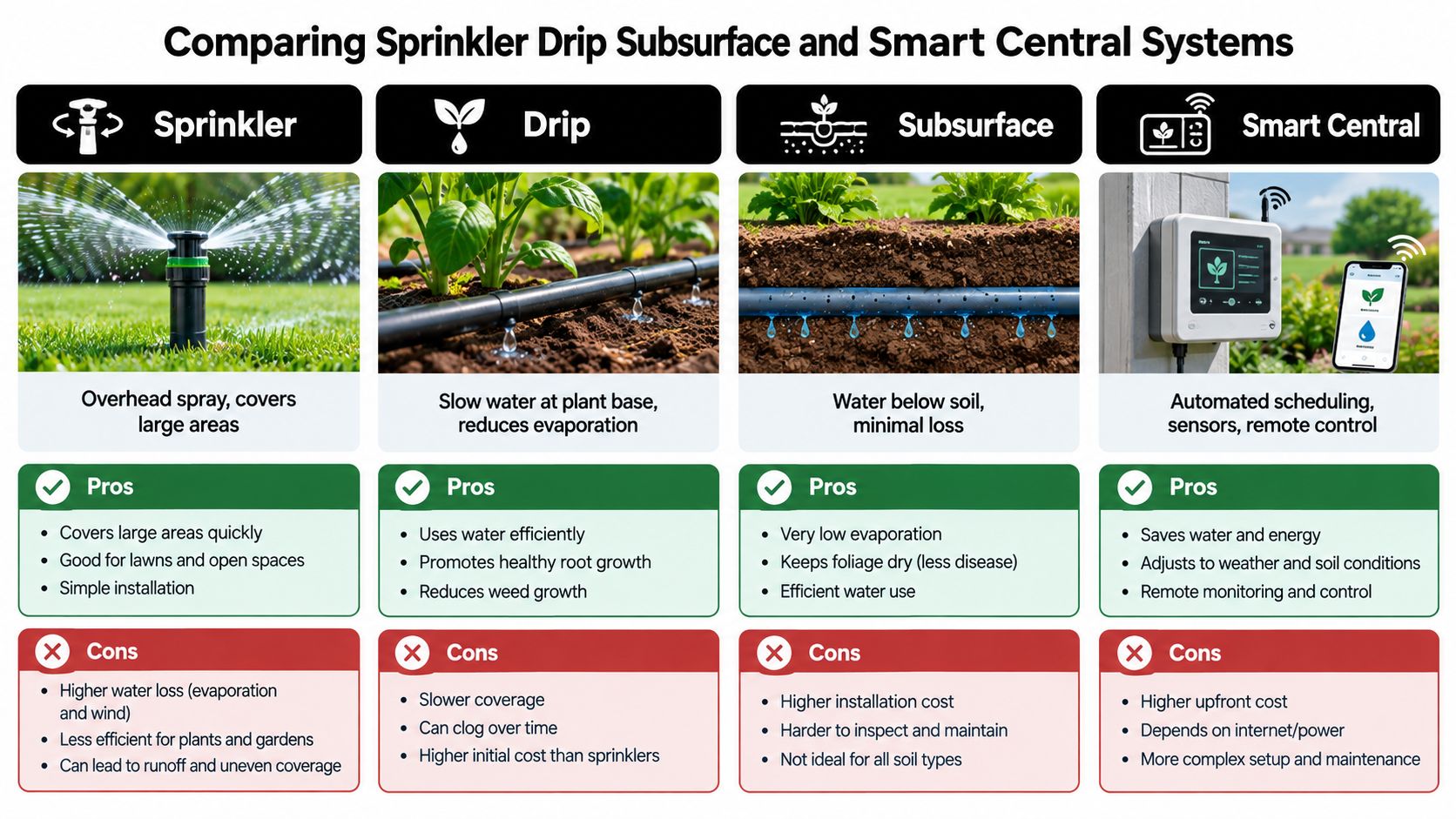
Here's a simple visual to keep the major system categories straight:
Where new managers usually get lost
Most confusion starts with three ideas: flow, pressure, and uniformity.
Flow is how much water moves through the system.
Pressure is how forcefully it moves.
Uniformity is how evenly that water gets applied across the zone.
You can have enough water and still irrigate badly if pressure is wrong or distribution is uneven. The EPA notes that about 63% of irrigation systems operate above recommended sprinkler nozzle pressure, which is around 30 psi for most products. The same guidance says WaterSense-labeled spray sprinkler bodies can reduce water use by 20% or more when system pressure exceeds 60 psi, because excess pressure creates misting, overspray, and uneven distribution (EPA commercial landscape irrigation guide).
That's why a zone can appear to be “watering” while still failing. If the spray turns into fog, the property manager sees water in the air, but the roots may see less of it than expected.
Why the root zone matters more than wet pavement
Plants don't care whether a sidewalk got wet. They care whether moisture reached the root zone and stayed there long enough for uptake. That's why matching system type to plant material, soil, and layout matters so much.
If you're reviewing a renovation or planning garden irrigation, it helps to ask one simple question first: where does the water need to end up, and how reliably can this system place it there?
A healthy-looking spray pattern isn't the goal. Effective moisture in the root zone is.
Comparing Sprinkler Drip Subsurface and Smart Central Systems
Not every irrigation system solves the same problem. On a commercial property, the “right” choice depends less on what's newest and more on what the zone needs, how easy it is to maintain, and how quickly your team can spot and correct failures.
Some systems distribute water. Some help control distribution. Smart central control, in particular, should be treated as a management layer, not a magic replacement for sound design.
How the main system types differ
Sprinkler systems work well in turf areas and larger open spaces where overhead coverage makes sense. They're common because they can cover broad areas efficiently, but they're vulnerable to overspray, wind drift, and pressure-related misting if the zone isn't set up correctly.
Drip irrigation applies water near the plant base, which makes it useful in shrub beds, foundation plantings, medians, and irregular planting areas. It usually gives you tighter placement, but it also requires attention to emitter condition, line damage, and maintenance practices around mulch and bed work.
Subsurface systems place water below the surface. They can help reduce visible spray and surface evaporation, but they also make problems harder to spot because the delivery point is hidden. If part of the zone underperforms, you may not notice until the planting shows stress.
Smart central systems don't replace sprinklers or drip. They coordinate them. A central platform can help managers view schedules, shut down problem zones, respond to changing conditions, and create consistency across multiple sites. That's valuable, but only if field components still work properly.
Choosing by use case instead of marketing
The table below gives a practical starting point.
| Choosing the Right Irrigation System for Commercial Zones | |||
|---|---|---|---|
| System Type | Best Commercial Use | Water Efficiency | Maintenance Needs |
| Sprinkler | Open turf, common lawns, large visible greenspace | Can be efficient when pressure and spacing are correct | Head alignment, nozzle matching, pressure checks, coverage audits |
| Drip | Shrub beds, tree rings, medians, narrow planters | Often efficient because water is placed close to roots | Emitter inspection, tubing repair, filtration attention |
| Subsurface | Areas where surface spray is undesirable | Can reduce visible losses when properly installed and monitored | Harder troubleshooting, periodic verification, careful repair practices |
| Smart Central | Multi-site portfolios, mixed-use campuses, properties needing remote oversight | Depends on field performance and programming quality | Software oversight, scheduling review, sensor verification, staff training |
If you need help identifying field hardware before making decisions, this guide to types of sprinkler system can help you distinguish common components and use cases.
A useful rule for mixed commercial sites
Don't ask, “What system should this property have?” Ask, “What system should each zone have?”
A retail center may need overhead irrigation for the main turf panels, drip for foundation beds, and central control for oversight across tenant-heavy schedules. A corporate campus may justify subsurface in select high-visibility areas where spray onto walks creates recurring issues. A narrow parking median almost never wants the same setup as a broad lawn panel near the monument sign.
Recent market projections show strong growth in smart irrigation spending, including forecasts from about USD 2.14 billion in 2025 to USD 4.15 billion in 2030, with other estimates projecting USD 6.88 billion by 2033. Those projections suggest fast adoption, but they don't answer the on-site question every manager faces: who will keep the sensors, schedules, and field devices working over time (smart irrigation market report overview).
Design Principles and Water Conservation Technology That Actually Saves
Good irrigation performance starts with design choices that are easy to overlook because they're not flashy. Spacing, pressure, zoning, slope, and programming usually matter more than a long feature list on a controller box.
That's the part many buyers miss. Technology can support efficiency, but it can't rescue a zone that was laid out poorly or left unaudited.
The design principles that drive real performance
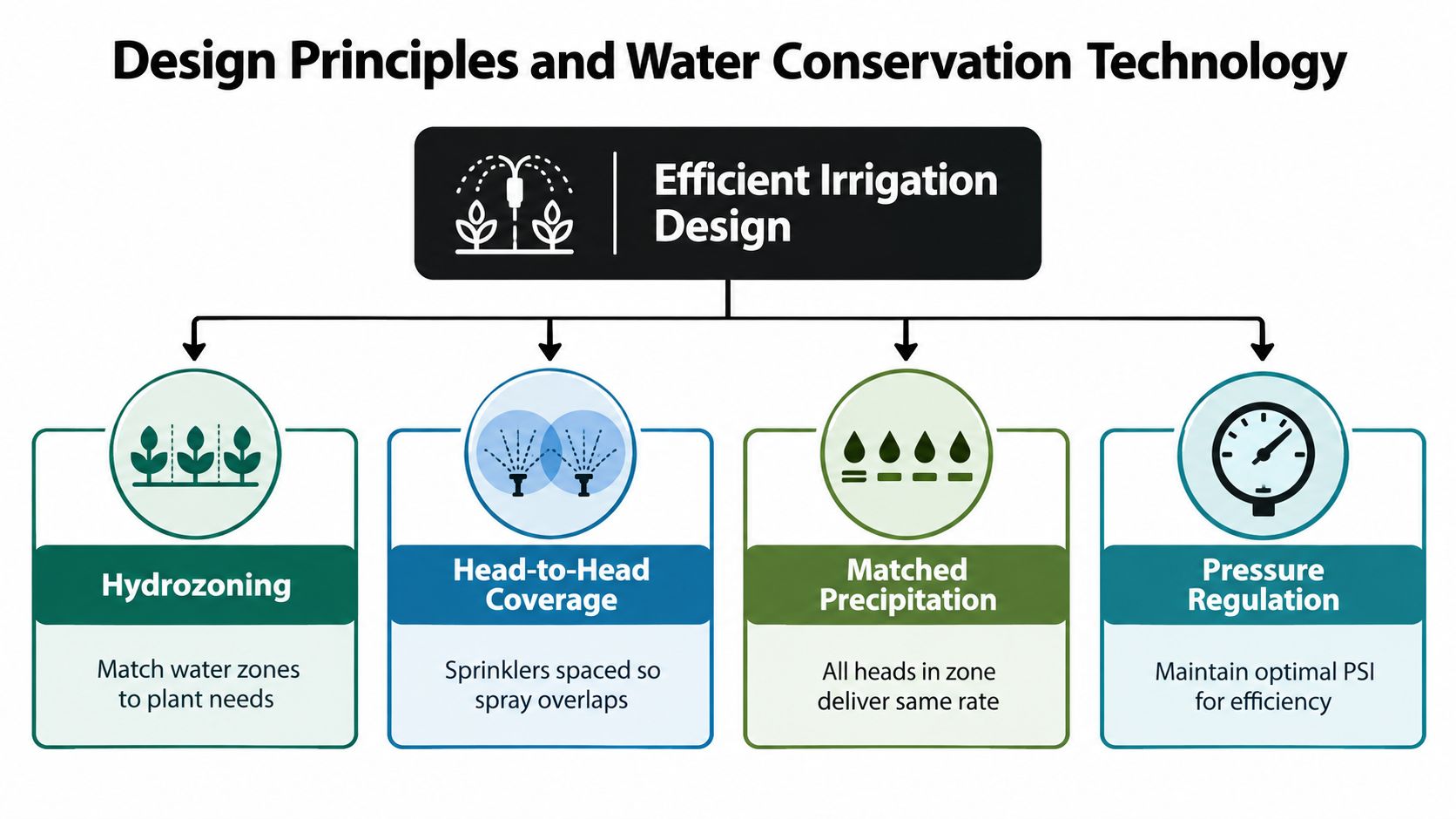
A few principles do most of the heavy lifting on commercial sites:
- Hydrozoning: Group plants with similar water needs together. Turf, shrubs, annual color, and trees rarely belong on the same runtime.
- Head-to-head coverage: Sprinklers should be spaced so their patterns overlap properly. Without overlap, you get dry gaps and crews compensate by extending runtime.
- Matched precipitation: Heads within the same zone should apply water at compatible rates. If one part of a zone applies faster than another, either runoff or under-watering follows.
- Pressure regulation: Even strong layout decisions can break down when pressure runs too high or fluctuates across the site.
- Slope and soil awareness: Heavy soils and sloped areas need runtimes that reduce surface movement and encourage infiltration.
This overview of landscape irrigation design is useful when you need to connect those principles to actual site planning and retrofit decisions.
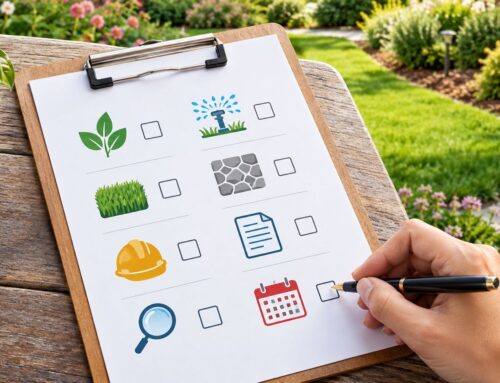
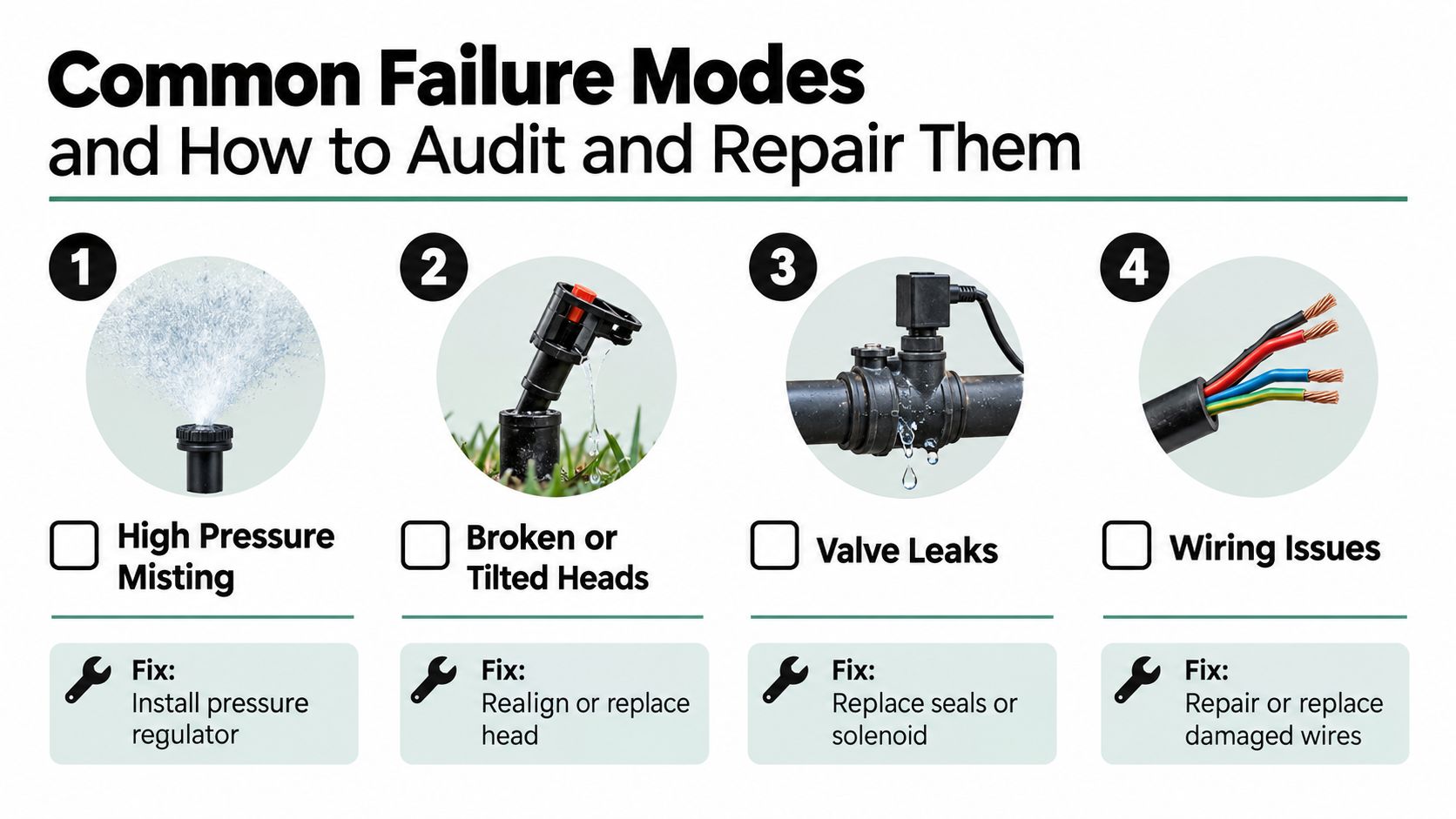
Here's a visual checklist of common trouble areas tied directly to those design choices:
What smart water technology can and can't do
Weather-based controllers, soil-moisture tools, rain shutoffs, flow sensors, and central dashboards can all help reduce unnecessary watering. They're especially useful on properties with changing schedules, multiple water-use zones, or geographically spread portfolios.
But each tool depends on calibration and follow-up.
A rain sensor that isn't responding correctly won't save water. A flow alert that no one reviews is just another notification. A central dashboard with old schedules can automate waste very efficiently.
Field lesson: Smarter control only pays off when someone verifies that the field output matches the intent on the screen.
The strongest setup usually combines practical design with manageable technology. Many managers would rather have a simpler system that staff can inspect, adjust, and repair quickly than an advanced platform no one fully owns.
Why resilience matters more than novelty
Water scarcity and climate volatility are pushing investment decisions across irrigation. Bluefield Research notes that U.S. irrigation spending is forecast at about USD 13.5 billion annually over the next five years, while Kazakhstan expanded water-saving irrigation coverage from 389,900 hectares in 2024 to 702,300 hectares by September 2026, including drip growth from 42,500 hectares in 2023 to 254,300 hectares in 2026 (water scarcity and irrigation investment trends).
For commercial properties, the takeaway is practical. The best system is often the one your team can control, monitor, and repair fast during restrictions, seasonal swings, and site-specific pressure changes.
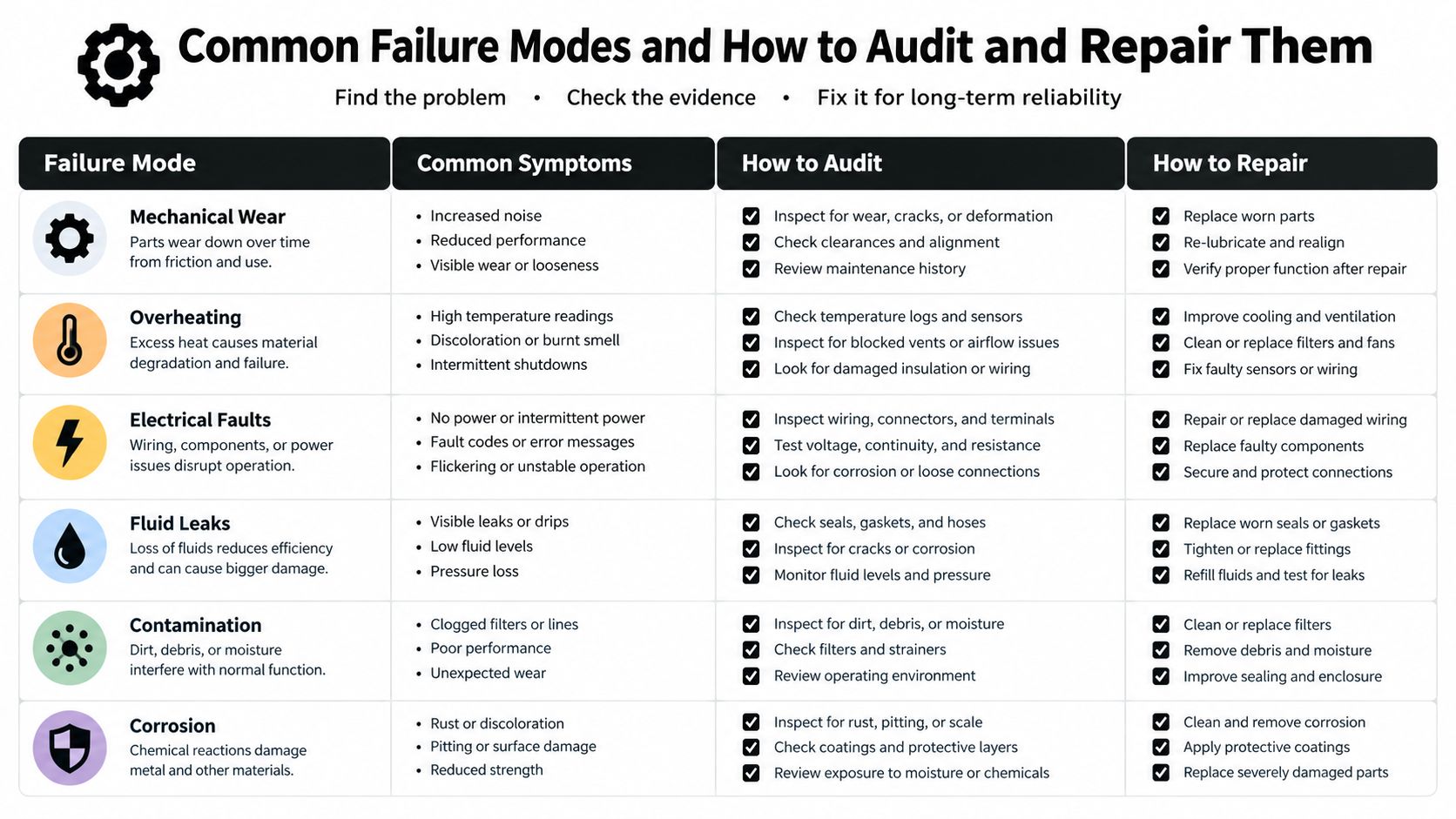
Common Failure Modes and How to Audit and Repair Them
Most irrigation waste doesn't come from dramatic pipe breaks. It comes from ordinary failures that stay in service too long. A broken head. A leaking valve. A zone with high pressure. A controller program that no longer matches the season. Each issue looks small by itself. Together, they push managers into longer runtimes, more service calls, and stressed plant material.
The fix is to audit the system as a system, not just react to visible damage.
What to look for first on a site walk
Start with signs that don't require tools:
- Misting at the head: Fine fog usually points to excessive pressure rather than effective watering.
- Crooked or sunken heads: The pattern may miss the target even if the zone activates normally.
- Constantly wet valve box areas: That often suggests leakage or a valve not sealing cleanly.
- Sharp green rings and dry centers: Coverage may be uneven, or nozzles may be mismatched.
- Runoff at pavement edges: Runtime, pressure, spacing, or slope response may be off.
- Zones running at odd times: Programming drift, manual overrides, or communication issues may be in play.
One useful mindset is to separate activation from performance. A zone that turns on isn't automatically a zone that irrigates well.
A practical audit sequence
When crews or providers inspect a system thoroughly, the sequence matters.
- Run each zone manually. Watch the zone operate, not just the controller screen.
- Check pressure conditions. If spray looks atomized or erratic, verify whether pressure is exceeding what the nozzle or head is built to handle.
- Inspect head condition and spacing. Look for tilt, blockage, wrong arc, wrong nozzle, or physical damage.
- Review distribution. Catch-can style testing can help reveal whether water is landing evenly across the zone.
- Confirm valve and wiring behavior. Intermittent activation often traces back to electrical faults or valve problems.
- Review programming. Seasonal settings, runtimes, and zone groupings should match current needs.
If you need a framework for documenting these findings, an irrigation audit report can help structure what gets inspected and what should be corrected first.
When poor uniformity causes overwatering
Uniformity sounds technical, but the concept is simple. If one part of a zone gets much less water than another, managers often increase runtime to protect the driest patch. The rest of the zone then gets too much.
For center pivot systems, USDA ARS field testing reported Heermann and Hein coefficient of uniformity values of 86.5% under constant application and 84.3% across variable-rate tests, with the highest value at 89.2% under a full application rate. Extension guidance in that same source classifies 90 to 100 as excellent, 85 to 90 good, 80 to 85 fair, and below 80 poor (USDA ARS uniformity testing paper).
You won't evaluate every commercial zone with that exact method, but the lesson carries over. Once uniformity drops, overwatering becomes a management workaround instead of a plant need.
If one side of a zone stays dry while the other side puddles, the problem isn't “more water.” The problem is delivery.
Repair or retrofit
Repair makes sense when the original layout is still sound and the problem is component-level. Retrofit makes sense when the zone repeatedly fails because the hardware type, spacing, pressure conditions, or zoning logic never matched the site very well.
Prestonwood Commercial Landscape Services is one option managers use for irrigation audits, repairs, and central water management when they need field verification tied to commercial site maintenance.
Lifecycle Costs ROI and Regulatory Considerations for Managers
Irrigation budgets often get split across too many line items to see clearly. Installation might sit in capital planning. Water hits utilities. Repairs fall into maintenance. Plant replacement shows up later. That separation makes poor irrigation performance easier to underestimate.
A better approach is to treat irrigation as a lifecycle cost system.
What the system really costs over time
The visible cost is installation or replacement. The ongoing costs are usually larger in day-to-day operations:
- Water cost: Waste from misting, overspray, runoff, or poorly matched zones adds up over time.
- Energy cost: If the site uses pumps, extra runtime and pressure problems affect operating expense.
- Repair labor and parts: Small unresolved issues trigger repeat visits.
- Plant replacement: Chronic under-watering or saturated root zones both damage assets.
- Technology oversight: Smart platforms may also require subscriptions, monitoring time, and staff training.
That's why irrigation decisions shouldn't be made on equipment price alone. A cheaper setup that is hard to diagnose can cost more across a property portfolio than a simpler, better-zoned system with straightforward maintenance.
ROI comes from control, not gadget count
At a global level, irrigation's role in food and land productivity is enormous. FAO reports that land area equipped for irrigation reached about 349 to 350 million hectares in 2020, roughly 22% of cropland, up from 289 million hectares in 2000, a 20% increase over two decades. The same FAO source notes that irrigated agriculture produces 48% of global crop value while covering only 23% of croplands, and irrigated yields are on average 76% higher than rainfed yields. In the United States, USDA reported irrigation accounted for 150 million acre-feet of withdrawals in 1995 and 91 million acre-feet of consumptive use, or 81% of total U.S. freshwater consumptive use (FAO global irrigation outlook).
On a commercial site, the lesson is narrower but clear. Irrigation influences land productivity, water demand, and the value you get from maintained area. ROI usually comes from a mix of lower waste, fewer emergency repairs, better plant survival, and steadier curb appeal.
Compliance and resilience
Property managers also need systems that hold up under restrictions and changing conditions. Local rules may govern watering windows, runoff, backflow requirements, and repair expectations. A system that's difficult to monitor becomes a compliance risk faster than expected.
The strongest portfolio strategy is usually operationally simple:
- Know which zones matter most visually
- Keep as-built information current
- Audit pressure and performance periodically
- Adjust seasonally instead of set-and-forget programming
- Prioritize equipment that crews can repair quickly
That last point matters more as weather patterns become less predictable. A resilient irrigation system isn't the most advanced one on paper. It's the one your team can keep under control when conditions change.
Working With a Professional Provider and Your Next Steps
Most property managers don't need to become irrigation designers. They do need enough understanding irrigation systems knowledge to ask better questions, spot weak recommendations, and insist on verification instead of assumptions.
When you talk with a provider, focus less on promises and more on process.
What to ask before hiring
Ask how they inspect pressure, how they verify coverage, how they document deficiencies, and how they separate urgent repairs from longer-term retrofit recommendations. Ask who updates seasonal programming and how they communicate controller changes across multiple sites.
A thorough provider should also be able to explain what they found in plain language. If they can't describe why a zone is failing without hiding behind jargon, the handoff will be hard for your team to manage.
What a solid ongoing plan includes
Look for a service approach with these basics:
- Routine field observation: Someone should watch zones run, not just review schedules.
- Measured checks: Pressure and distribution need occasional verification.
- Clear repair priorities: Safety, water loss, visibility impact, and plant risk should shape response order.
- Seasonal adjustments: Programming should change with conditions, not stay fixed all year.
- Documentation: Site history helps new managers understand recurring trouble spots.
A reliable irrigation partner doesn't just install parts. They help you keep the system knowable.
If you manage multiple properties, consistency matters even more than complexity. Standard reporting, repeatable inspection routines, and fast corrective action usually produce more value than a long list of smart features no one fully monitors.
Use that as your filter. Buy control. Buy visibility. Buy a process your team can sustain.
Prestonwood Commercial Landscape Services helps commercial property managers with irrigation audits, repairs, central water management, and ongoing support designed for multi-zone, high-traffic sites. If you want a practical partner that treats irrigation as a controllable water-management system, visit Prestonwood Commercial Landscape Services to learn more.