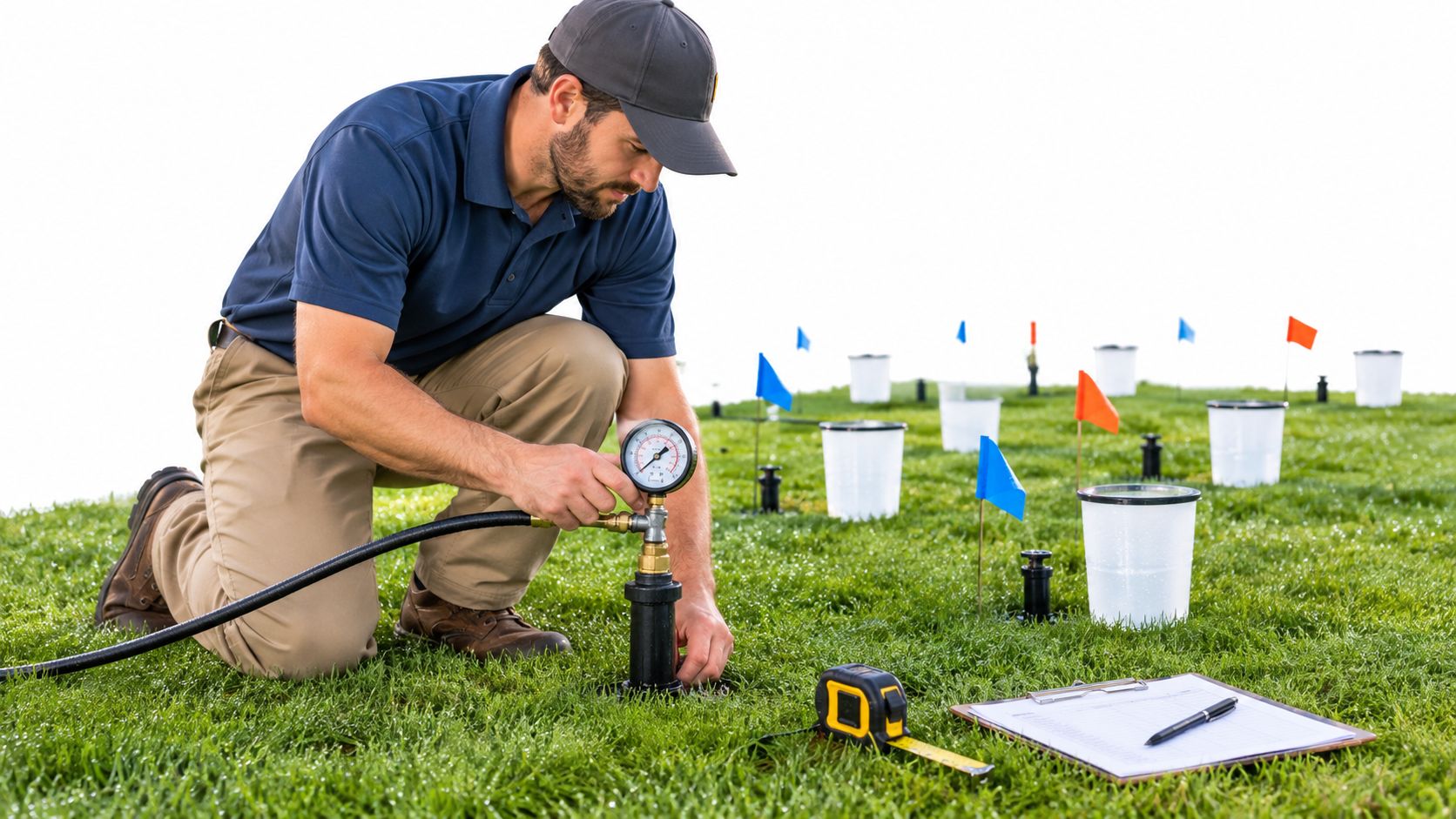
A Texas storm hits hard for twenty minutes, then your phones start ringing for the next two days. Tenants complain about standing water near the front walk. Visitors track mud into the lobby. Someone slips stepping out of a car. The parking field you paid to maintain suddenly looks like a drainage basin.
That's usually when property managers start asking a better question than “How do we patch the puddles?” They ask what is permeable pavement, and whether it can solve runoff problems without giving up more land to swales, pipes, or visible detention features.
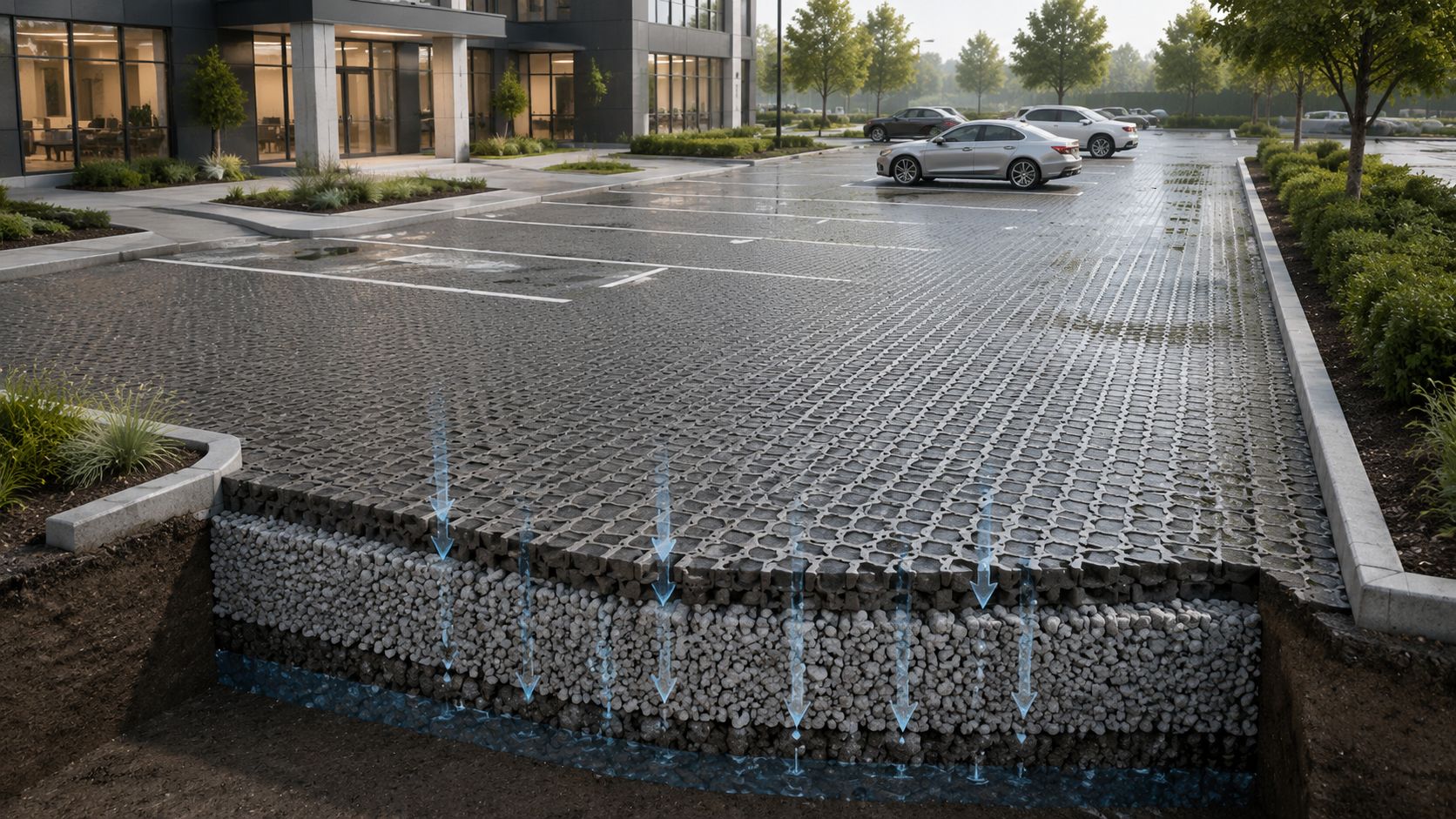
For commercial sites, that's the right question. Permeable pavement isn't a decorative sustainability upgrade. It's an engineered paving system that lets water move through the surface, into a stone storage layer, and then into the soil or an overflow system. On the right site, it can reduce nuisance flooding, improve water quality, support compliance, and protect usable square footage. On the wrong site, or with the wrong maintenance plan, it can disappoint fast.
Table of Contents
- The End of Puddles A Modern Solution to Stormwater
- How Permeable Pavement Manages Stormwater
- Comparing the Four Main Types of Permeable Pavement
- The Business Case Beyond the Environmental Benefits
- Design and Installation Factors for Commercial Properties
- Protecting Your Investment Maintenance and Lifecycle Costs
- A Property Manager's Action Plan for Permeable Pavement
The End of Puddles A Modern Solution to Stormwater
On many Texas commercial properties, the stormwater problem isn't subtle. You can see it from the curb. Water stacks up in low parking stalls, runs across pedestrian routes, and settles near entry drives where traffic already beats the pavement up.
A conventional asphalt lot moves water away fast, but “away” often means toward your weakest point. It may overload a drain inlet, wash sediment into the street, or push runoff toward storefronts and planted area edges. On dusty sites, the problem gets worse because every storm picks up fines, trash, and vegetative debris before dumping them where you least want them.
Permeable pavement changes that sequence. Instead of treating rain as waste that has to be rushed off the property, it turns the paved surface into part of the stormwater system. Water passes through the surface instead of skating across it, which can reduce the pooling and sheet flow that create complaints, maintenance calls, and liability concerns.
What property managers usually notice first
The first benefit isn't abstract. It's operational.
- Safer access: Fewer puddles near entries, walks, and parking stalls can mean fewer slip hazards and fewer tenant complaints.
- Cleaner appearance: Less standing water often means less staining, less splash-up onto facades, and less debris collecting at curbs.
- Better use of the site: In some layouts, owners can avoid dedicating as much visible space to above-ground stormwater features.
Permeable pavement works best when you treat it as infrastructure, not a surface finish.
That distinction matters. A good system can help a retail center, office campus, healthcare facility, or industrial property handle stormwater more intelligently. A bad system just gives you an expensive surface that clogs and underperforms.
Why this matters more in Texas
Texas sites see two conditions that don't always get discussed together. Rain can arrive intensely, and many commercial properties stay dusty between storms. That combination is rough on any drainage strategy. Fine sediment accumulates during dry periods, then a heavy event pushes it where it can block inlets or seal surface openings.
That's why permeable pavement has become a practical conversation, not just a sustainability one. For a property manager trying to control lifecycle costs and reduce runoff headaches, it offers a modern alternative to “add another drain and hope it keeps up.”
How Permeable Pavement Manages Stormwater
On a Texas commercial site, the test comes 20 minutes into a hard storm. Water hits a hot, dusty parking lot fast. On a conventional surface, it sheets off, heads for the nearest inlet, and exposes every grading mistake on the property. Permeable pavement changes that sequence by taking water through the surface instead of pushing it across it.
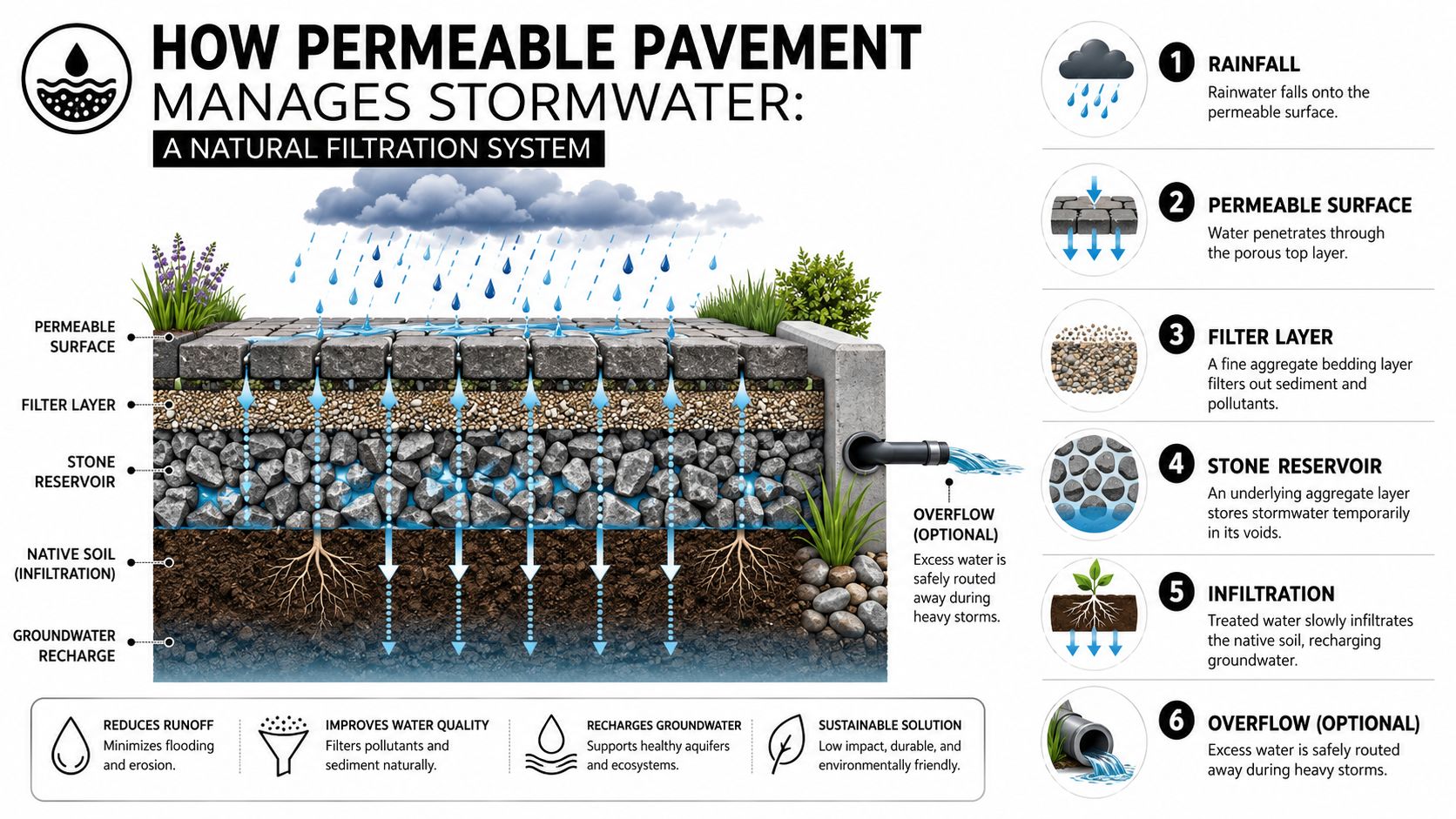
According to the EPA permeable pavements guidance, the agency classifies permeable pavements as a stormwater best management practice. Well-designed systems can infiltrate 70–80% of annual rainfall, achieve roughly 75–99% total suspended solids removal, and reduce overall runoff volume by 85% or more in some cases.
What happens when it rains
A permeable pavement system manages runoff in layers, and each layer has a job.
- The surface admits water. That surface may be porous asphalt, pervious concrete, or pavers with stone-filled joints.
- The bedding or filter layer provides support and helps keep fines from migrating downward too quickly.
- The stone reservoir stores water temporarily. Much of the stormwater control occurs in this layer.
- The subgrade either absorbs the water or passes it to an underdrain or overflow system. The right choice depends on soils, drainage goals, and code requirements.
For property managers, the business value is straightforward. Slowing runoff at the pavement reduces the burden on inlets, underground pipe, and downstream detention features. In some projects, that can help the site meet drainage requirements with less visible stormwater infrastructure and fewer problem spots after major rain events.
Why the layered design matters
The buried stone reservoir drives performance. It provides temporary storage below grade, which is why permeable pavement can reduce peak flow instead of sending a surge across the lot all at once. If the reservoir is undersized, the subgrade is compacted incorrectly, or overflow routing is ignored, the system can look fine on day one and still underperform during the first serious storm.
That is why pavement selection, grading, and drainage design have to be coordinated from the start. On dusty Texas commercial sites, this matters even more. Fine sediment from adjacent bare soil, worn mulch beds, loading areas, and unpaved edges can clog the surface over time. Once that happens, infiltration drops and the owner is left with a premium pavement system performing like a conventional one.
I tell property managers to evaluate the whole drainage chain, not just the parking surface. If runoff is crossing from unstable side areas or access drives, a guide on how to prevent driveway erosion and pooling helps frame the surrounding drainage risks. The same principle applies to broader commercial water management and irrigation planning in Texas properties. Irrigation overspray, eroded planting beds, and poor surface drainage all shorten the useful life of a permeable system.
Used correctly, permeable pavement is not just a paving choice. It is a stormwater control asset with compliance, maintenance, and lifecycle cost implications.
Comparing the Four Main Types of Permeable Pavement
Not all permeable systems fit the same site. The best choice depends on traffic, appearance, maintenance access, and how much risk you're willing to carry on long-term performance. On commercial properties, the wrong material usually fails for practical reasons, not theoretical ones.
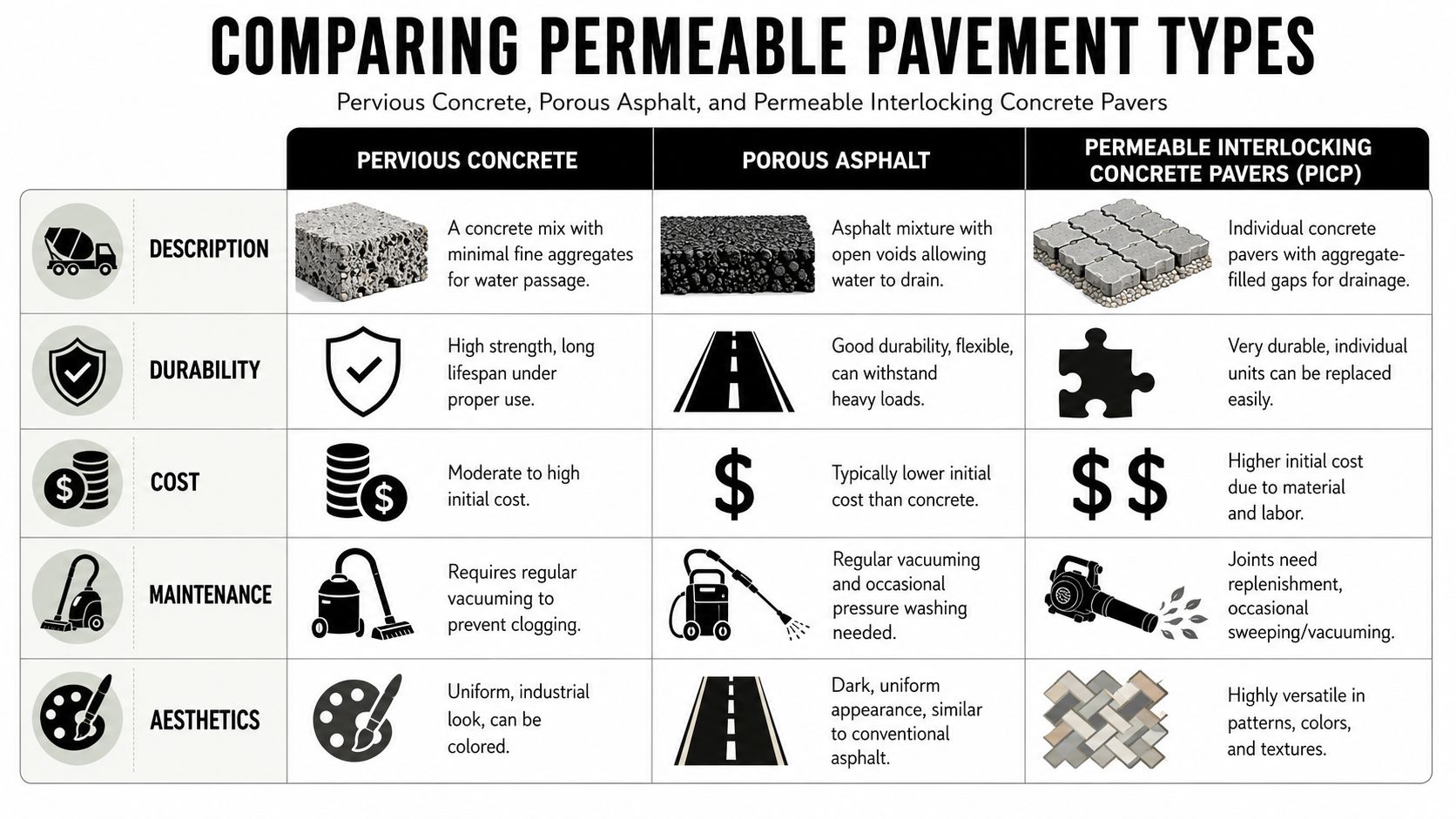
Porous asphalt
Porous asphalt is often the most familiar option for parking applications because it resembles conventional asphalt. Owners like that it doesn't radically change the look of the site, and contractors who already work in paving can usually understand the surface side of the installation quickly.
It's a strong fit for parking stalls, light-vehicle circulation areas, and projects where appearance should stay close to a standard blacktop lot. The trade-off is maintenance discipline. Dust, fines, and neglected adjacent edges can clog the surface over time, especially on retail or industrial sites with steady traffic.
Pervious concrete
Pervious concrete gives a cleaner, more rigid look. It often suits walkways, plazas, and selected parking areas where a property wants a more finished appearance than asphalt provides.
Its weakness isn't aesthetics. It's intolerance for poor installation practice. If batching, placement, curing, or subgrade prep are handled badly, you can end up with surface problems that are difficult to correct. For that reason, I'd only consider it where the installer has real experience and the site team can protect the pavement during and after construction.
Permeable interlocking concrete pavers
Pavers are usually the most flexible option from a design standpoint. They can create a high-end look at office campuses, hospitality entries, pedestrian zones, and mixed-use developments where branding and finish matter.
They also have a practical advantage: individual units can be lifted and reset if underground work becomes necessary. That makes them attractive where future utility access is a concern. The trade-off is higher labor complexity, plus the joints must be maintained so the system keeps draining as intended.
If appearance matters and future access matters, pavers often deserve a serious look.
Plastic grid systems
Plastic grids filled with gravel or turf are usually the right answer for overflow parking, service access, and low-frequency use areas, not front-door arrival zones. They can solve runoff problems while preserving a more natural look, but they aren't a universal replacement for hard commercial paving.
On a property with occasional event parking or emergency access needs, they can be a smart tool. On a high-traffic retail drive aisle, they usually aren't.
Permeable Pavement Comparison
| Pavement Type | Best For | Relative Cost | Maintenance Needs | Aesthetics |
|---|---|---|---|---|
| Porous asphalt | Parking lots, light-vehicle lanes, retrofit paving | Lower relative initial cost | Regular vacuum sweeping and sediment control | Similar to conventional asphalt |
| Pervious concrete | Walks, plazas, selected parking areas | Moderate to high | Regular cleaning and strict protection from clogging | Clean, uniform, more architectural |
| Permeable interlocking concrete pavers | Entrances, pedestrian zones, premium commercial spaces | Higher | Joint aggregate upkeep plus sweeping or vacuuming | Most design flexibility |
| Plastic grid systems | Overflow parking, occasional access, low-use areas | Varies by application | Vegetation or fill maintenance plus debris control | More natural, less formal |
One technical point applies across all four systems. High initial infiltration matters. In practice, many permeable pavements are accepted only when the finished surface drains extremely fast and the underlying reservoir can hold stormwater long enough to manage runoff rather than create surface ponding. That's why material choice should always be tied back to site use, expected sediment load, and maintenance commitment.
The Business Case Beyond the Environmental Benefits
The environmental story is fine, but most owners approve projects for business reasons. Permeable pavement gets serious attention when it solves three commercial problems at once: stormwater compliance, land-use efficiency, and long-term asset performance.
Why owners pay attention
Permeable pavement has moved well beyond pilot-project status. The global permeable pavements market was valued at about $9.2 billion in 2025 and is projected to reach roughly $18.7 billion by 2034, with an expected CAGR of about 8.2%. That projected growth reflects tighter stormwater requirements and the push for more resilient urban infrastructure. Properly installed systems can also deliver a service life of 20 to 30 years, which puts them in the conversation for mainstream commercial paving decisions.
That matters because property managers don't need novelty. They need something banks, engineers, insurers, and owners will accept as durable infrastructure.
Where the ROI really comes from
The return usually doesn't come from one dramatic line item. It comes from stacked advantages.
- Land efficiency: A site may be able to rely less on visible stormwater features, which can preserve usable area for parking, circulation, or green space.
- Compliance support: Permeable pavement can help meet runoff-control objectives that would otherwise require more separate infrastructure.
- Asset image: A cleaner, better-draining parking field changes how people experience the property during storms.
- Lifecycle alignment: A system that performs for decades can fit ownership horizons better than a short-term patch-and-repair approach.
The fee discussion needs caution. Many managers assume that if the pavement is permeable, stormwater utility savings will automatically follow. That's not how local programs usually work. Credits can be conditional, capped, or tied to proof that the system is still performing.
The financial win comes from coordinated design and documentation, not from the label “permeable.”
There's also a less obvious operational benefit. When a site can handle runoff within the paved footprint, maintenance teams spend less time reacting to washouts, edge erosion, and recurring nuisance drainage calls. That may not show up as a single flashy number, but it shows up in fewer headaches and more predictable budgeting.
For owners with long hold periods, that predictability matters as much as any green-building narrative.
Design and Installation Factors for Commercial Properties
A permeable pavement project succeeds or fails before the surface material arrives. If the site isn't evaluated properly, the finished pavement can look good on day one and still become a disappointment after the first season of storms.
Site conditions decide the outcome
Commercial design manuals typically require the underlying soil to infiltrate at least 0.5 to 2 inches per hour, the system to sit at least 2 feet above the seasonal high-water table, and the pavement surface slope to stay around 5% or less so water enters the system instead of running off it, based on permeable pavement design criteria used in stormwater manuals.
Those aren't paperwork details. They determine whether the pavement can drain, store, and release water the way the design intends.
For Texas commercial properties, the due-diligence list usually includes:
- Soil testing: Clay-heavy soils may limit infiltration and change whether an underdrain is needed.
- Traffic mapping: Employee parking, delivery routes, fire access, and loading zones shouldn't all be designed the same way.
- Drainage context: Roof runoff, adjacent terrain slopes, and sediment sources can overwhelm a good pavement system.
- Construction sequencing: If trades drive, stockpile, or wash out materials on the finished surface, performance can be compromised before turnover.
Commercial design mistakes that get expensive
The most common failure is treating permeable pavement as a simple paving substitution. It isn't. The base, storage layer, edge restraints, overflow routing, and protection from sediment during construction all matter.
A second mistake is putting the system in the wrong place. High-dust loading zones, trash enclosures, and areas with constant soil movement from nearby planting beds can clog fast if the owner isn't prepared to maintain them aggressively.
A third mistake is underestimating structural design. Parking stalls, fire lanes, and service drives place very different demands on the section below the pavement. If you want a useful outside reference on how engineers think through load-bearing and material selection, this overview of infrastructure pavement design is a good companion read.
On commercial sites, the smartest path is usually integrated design. The paving, drainage, grading, and site construction teams need to work from one coordinated plan. That's the same mindset used in full commercial landscape construction and installation, where surface materials, drainage performance, and long-term maintenance all need to line up.
Protecting Your Investment Maintenance and Lifecycle Costs
Permeable pavement is not maintenance-free. That myth causes more disappointment than the material itself.
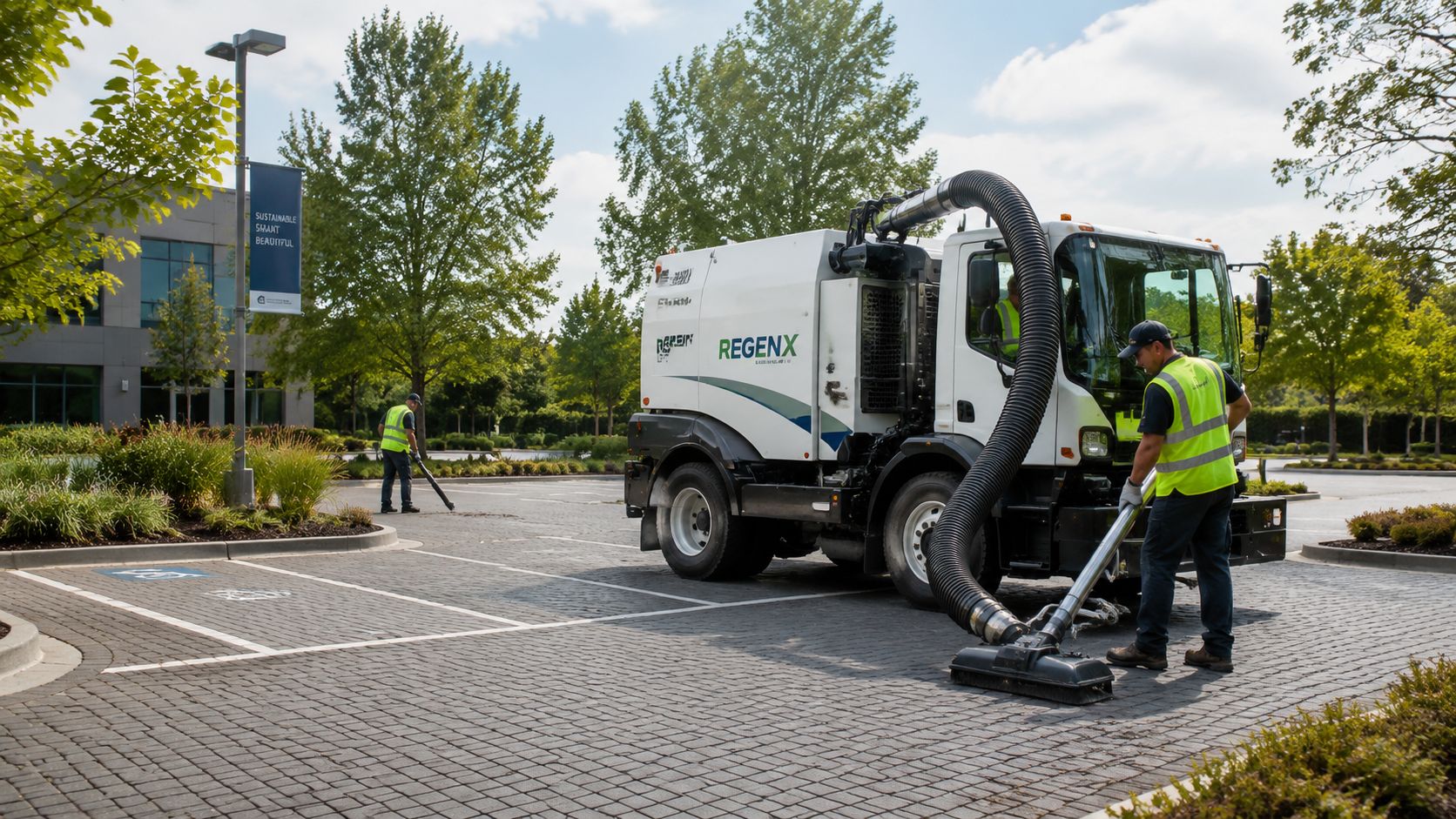
On dusty Texas properties, a system can still function for a while after the surface starts clogging, which is exactly why some owners miss the warning signs. Water may continue filtering through lower layers even as surface infiltration slows, so the pavement doesn't always fail dramatically at first. It just stops performing at the level you paid for.
Maintenance is part of the system
In hot, semi-arid climates like Texas, high-traffic permeable systems can lose 30–50% of surface infiltration within 12–24 months without proper maintenance. The practical answer is periodic vacuum sweeping, not just cosmetic blowing or surface cleaning.
That changes how a property manager should budget the asset. You're not maintaining a parking lot surface alone. You're maintaining a stormwater device built into the pavement.
A solid maintenance plan usually includes:
- Vacuum sweeping on a set schedule: Especially after pollen, leaf drop, nearby construction, or heavy dust periods.
- Edge control: Soil and mulch should not wash onto the permeable surface.
- Debris removal: Leaves, trash, and sediment need to be removed before storms grind them into the voids.
- Performance checks: Maintenance should be tied to infiltration testing or field verification, not just appearance.
What works and what fails
What works is boring and disciplined. Scheduled sweeping. Clean edges. Quick response after sediment events. Coordination between the grounds contractor and the pavement maintenance vendor.
What fails is common. Pressure from operations teams to treat the surface like ordinary asphalt. Cosmetic blowing that leaves fines in place. Irrigation overspray carrying soil onto the pavement. Deferred service because the lot “still looks okay.”
A permeable surface can look clean and still be clogging. Visual inspection alone isn't enough.
This is one reason routine site care matters so much. The same operational discipline that keeps a property professional year-round also protects specialized paving assets. If your team is already reviewing broader commercial landscape maintenance practices in Dallas, permeable pavement should be folded into that calendar, not treated as a separate afterthought.
Done right, maintenance protects both function and lifespan. Done poorly, it turns a strong stormwater investment into a surface rehab project.
A Property Manager's Action Plan for Permeable Pavement
The best time to evaluate permeable pavement is before a resurfacing cycle forces a rushed decision. If your site already has ponding, drain overload, eroding edges, or pressure to improve runoff performance, start with a structured review.
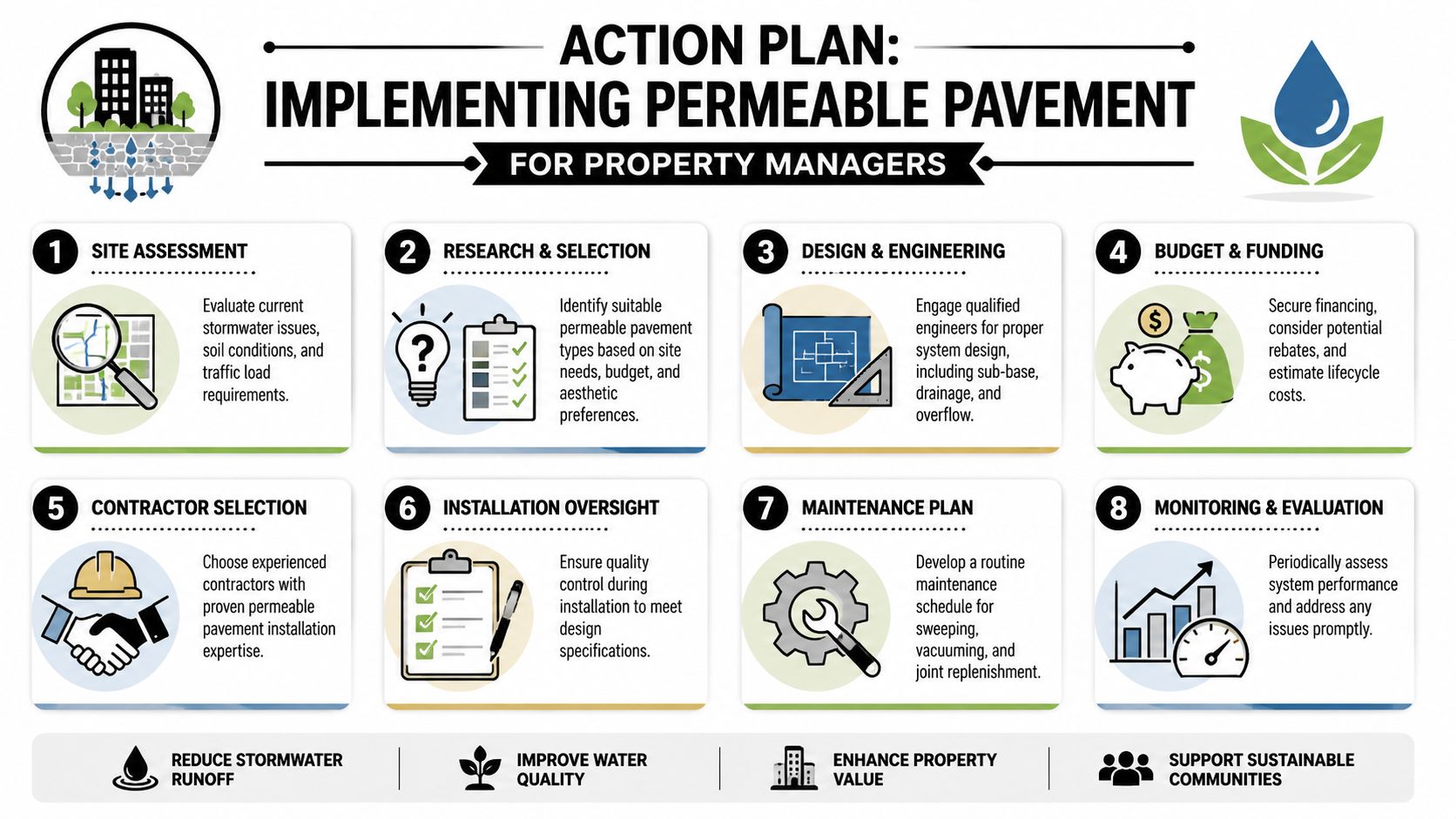
A practical screening checklist looks like this:
- Identify the problem areas. Don't evaluate the whole property in the abstract. Mark the stalls, drives, walks, and entrances that repeatedly hold water.
- Review soil and drainage constraints. Some sites are good candidates for full infiltration. Others need underdrains or hybrid solutions.
- Match the pavement type to the traffic. Don't use the same section for a loading route and a decorative walkway.
- Check local fee and compliance rules early. Credits may be capped or require annual verification, so don't build the financial model on assumptions.
- Plan maintenance before installation. If nobody owns the sweeping schedule, the system will drift toward underperformance.
The biggest financial mistake is assuming permeable pavement works as a standalone fix. On many commercial sites, it works best as one component inside a broader stormwater plan that also considers overflow paths, existing inlets, detention requirements, and local ordinance language.
Property managers often expect full fee reductions, but many municipal programs limit credits or require annual proof of performance. That's why the true lifecycle advantage depends on getting design, documentation, and maintenance aligned from the start.
If you're evaluating drainage upgrades, repaving a commercial lot, or trying to reduce stormwater headaches on a Texas property, Prestonwood Commercial Landscape Services can help you assess site conditions, coordinate practical drainage and site solutions, and build a maintenance plan that protects the investment long after installation.