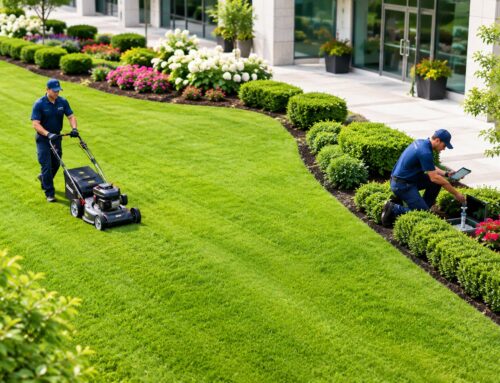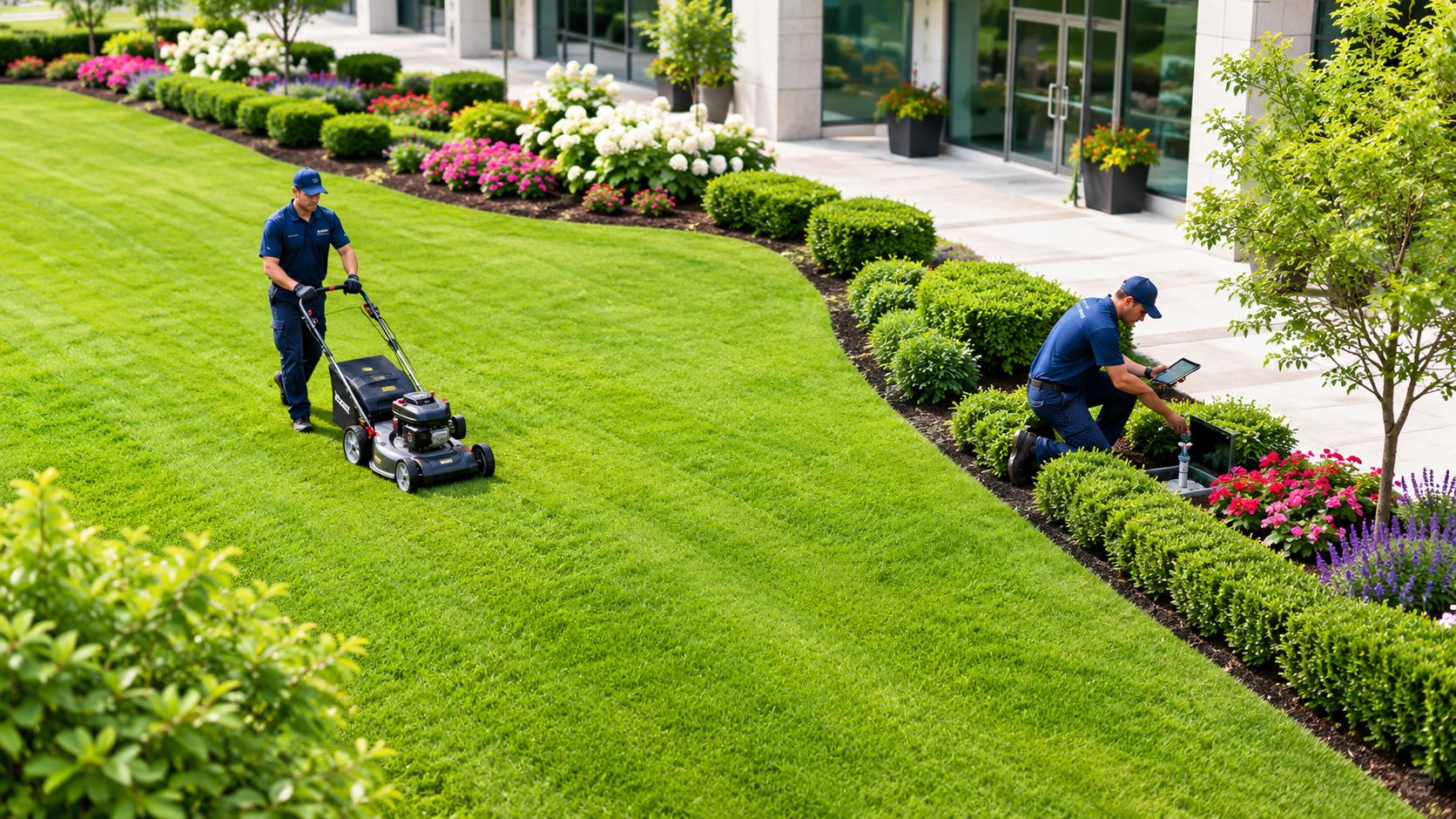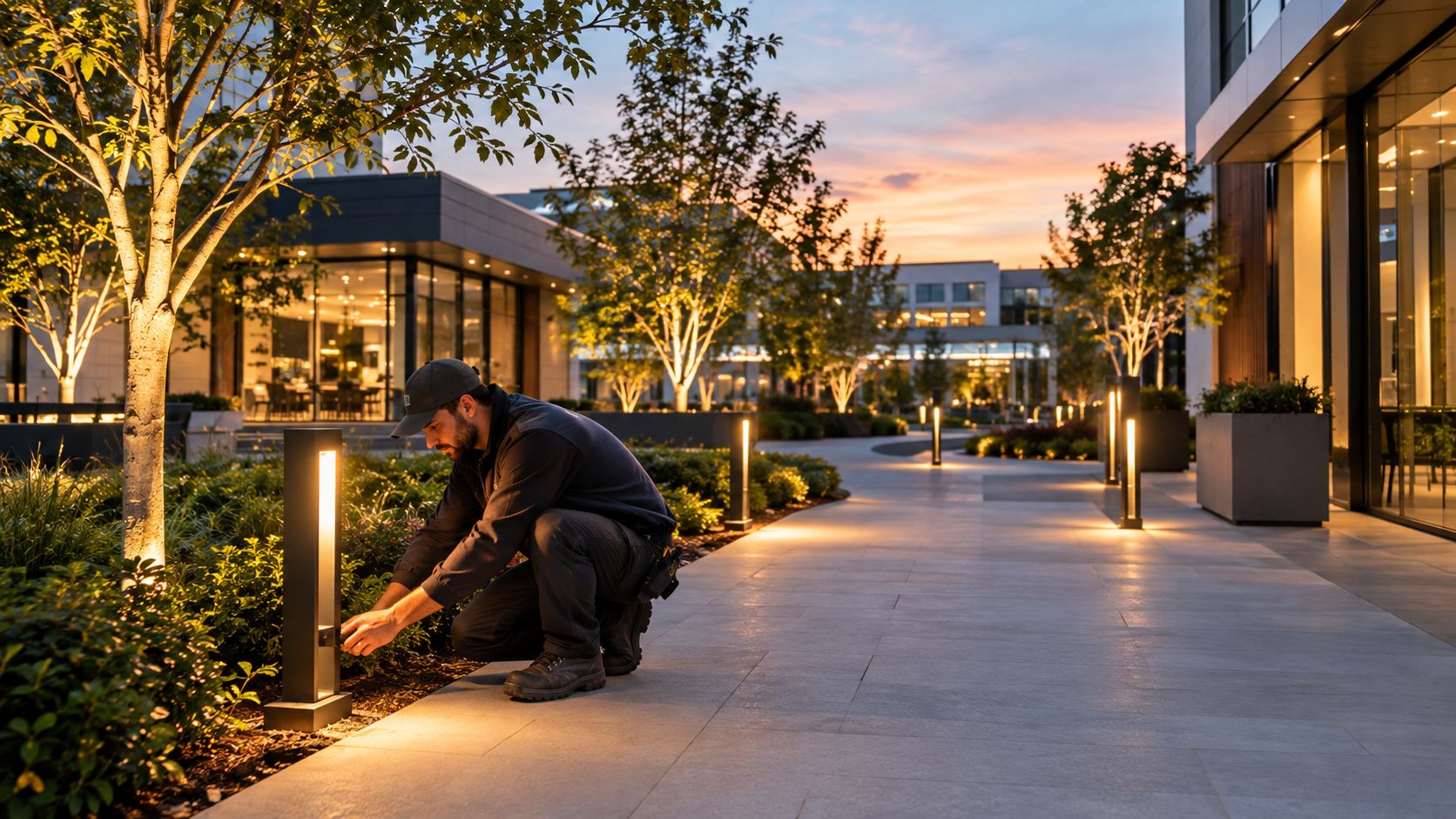
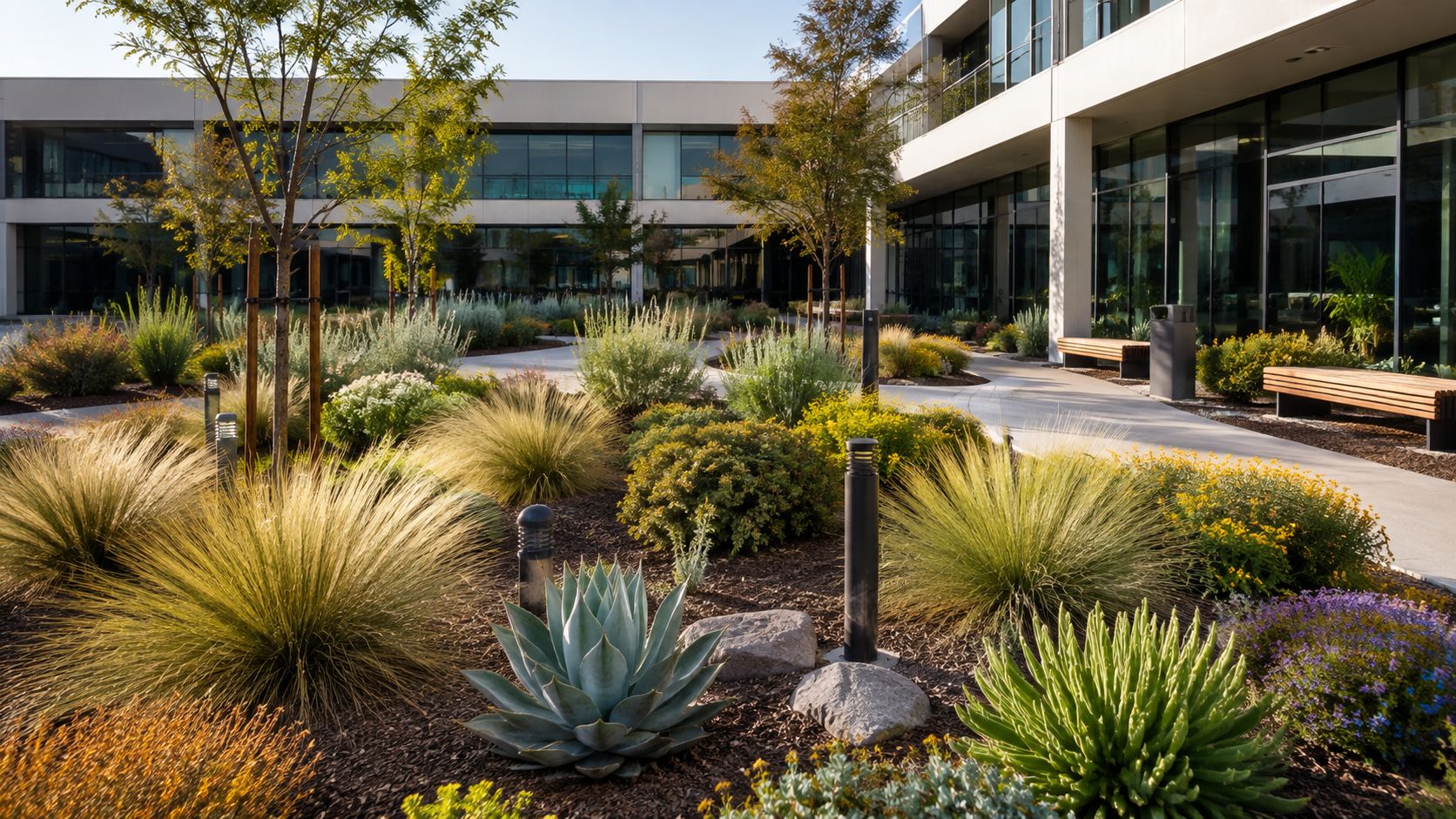
The water bill shows up first. Then the site walk reveals the same ugly pattern again, a sun-baked Bermuda strip, a few stressed shrubs near the parking lot, overspray on the sidewalk, and a crew that's doing its best to keep everything green with a system that was never designed for this much heat, traffic, and pressure. On a commercial property, that combination isn't just a maintenance headache, it's a brand problem, a budget problem, and eventually a replacement problem.
A drought resistant landscape design for office parks, retail centers, and healthcare campuses has to work like a system, not a plant list. The property needs to look good every day, take abuse from people and equipment, and stay manageable when staffing changes. For a practical overview of the broader property side of that equation, the tips from Northpoint Construction are a useful complement to the decisions that follow.
Table of Contents
- Why Commercial Sites Need a Different Drought Resistant Plan
- Reading the Site and Soil Before You Draw a Line
- Hydrozoning by Water Demand and a Texas-Friendly Plant Palette
- Building Soil That Holds Water and Mulch That Keeps It
- Smart Irrigation Design and the Audit That Keeps It Honest
- Installation Sequencing That Avoids Costly Rework
- Lifecycle Maintenance, Water Savings ROI, and Rebate Pathways
Why Commercial Sites Need a Different Drought Resistant Plan
A property manager watching a water bill climb while a Bermuda strip burns out in July knows the problem is not one bad plant. The issue is a system that expects shaded entries, full-sun medians, pedestrian edges, loading areas, and high-visibility frontage to all live on the same water schedule. That approach fails on commercial properties because the site use is uneven from the start.
On a home lot, a little inconsistency may be acceptable. On an office park or retail center, it is not. Curb appeal has to hold, foot traffic compacts soil, and maintenance crews change over time, so the design has to stay readable and manageable even when the people caring for it change.
Practical rule: if a bed or turf area cannot be explained zone by zone, it probably is not engineered well enough for a commercial property.
A commercial drought resistant design starts with how the site will be used, then it moves to what the ground can support, and only then does it pick plants and irrigation. That order matters because water savings are only part of the job. The outdoor space also has to survive trucks, carts, pedestrians, reflected heat, and maintenance lapses without falling into a patchwork of failures.
That is why the savings benchmark matters here. Replacing turf with water-wise planting, adding 2 to 3 inches of mulch, and switching to drip irrigation can reduce outdoor water use by 30% to 60% (Gardenia). Outdoor watering can account for about 30% of household water use, and as much as 50% of outdoor water is lost to wind, evaporation, and runoff when irrigation is inefficient. On commercial property, that waste adds up fast because the system is serving more square footage and more visible failure points.
The right way to think about the work is as a workflow, not a makeover. Site assessment leads to hydrozoning, hydrozoning leads to soil prep and irrigation layout, and all of it has to be sequenced so the property still looks presentable during install. For crews that manage mixed-use sites, the details matter, from irrigation audits to drainage control, including a review of erosion control measures where runoff can undo the work, and coordination with owners who rely on tips from Northpoint Construction to keep projects on schedule. That is what separates a one-season install from an outdoor space that still performs three years later.
Reading the Site and Soil Before You Draw a Line
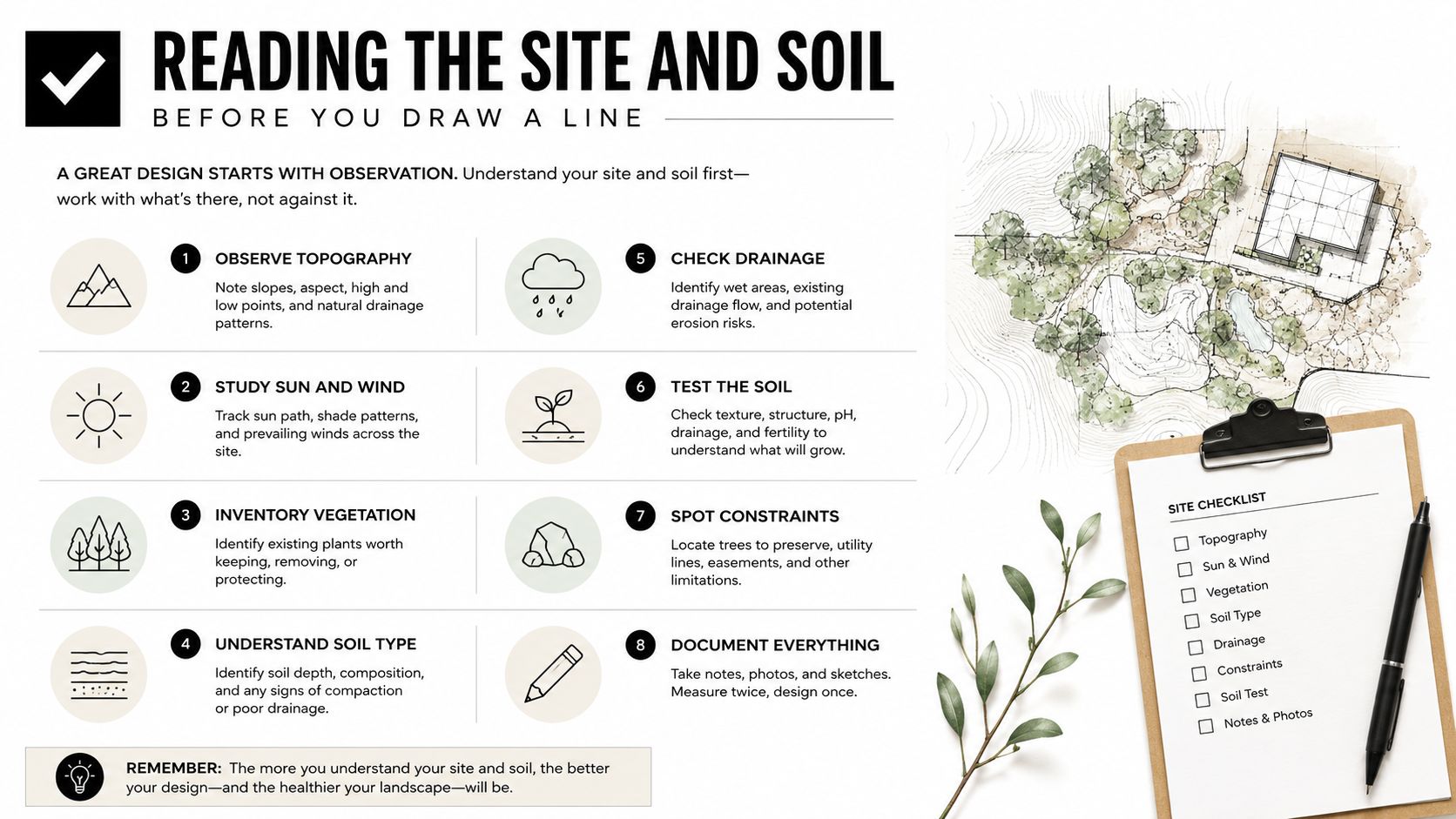
The first mistake on a retrofit job is drawing a planting plan before the site has been read. I've seen properties where the beds looked fine on paper, then failed because nobody mapped the shade pattern from the building, the runoff path from the parking lot, or the compacted zones where people cut across the grass every day. The ground tells you what the design can support.
Start with drainage, light, and compaction
Walk the site after irrigation has run and after a hard rain if you can. Watch where water sits, where it leaves too quickly, and where it moves across slopes into hardscape. On North Texas black clay, that matters even more, because heavy clay behaves like a sealed container unless it's opened up and treated with care.
Then map sun and shade by hour. A bed that gets morning shade and afternoon reflected heat from paving is not the same bed as one under open sky. In high-traffic sites, that microclimate difference is often the reason one planting survives and another gets replaced twice.
For the soil itself, use a jar test to get a rough texture read, a screwdriver push to gauge resistance, and a basic penetrometer if you want a more objective compaction check. If the screwdriver barely goes in, the root zone will struggle unless the design corrects it early. The key question is infiltration. If water can't move through the profile, then planting choices and irrigation will fight the soil instead of working with it.
The J&M Gutter Tech Inc. stormwater guide is a helpful companion when runoff, roof drainage, or lot grading is part of the problem. For erosion-prone edges, the principles in this erosion control resource are worth reviewing before any new bed line gets marked.
Audit the existing irrigation before redesign
On retrofit work, old sprinkler heads should be mapped before the new plan is finalized. That sounds basic, but it saves crews from trenching twice and keeps the redesign honest about what can stay, what can be re-zoned, and what has to be abandoned. A quick audit also shows whether current coverage is overshooting hardscape, leaving blind spots, or running a whole zone for a few needy pockets.
The site tells you where the design will fail. The irrigation tells you where the old design was already failing.
Once that data is in hand, the contractor can sort the site into problem areas, low-risk areas, and zones that need deeper amendment or drainage correction before anything gets planted. That's the diagnostic work that prevents a nice-looking plan from becoming an expensive replacement cycle.
Hydrozoning by Water Demand and a Texas-Friendly Plant Palette
A commercial site starts saving water only after the beds are grouped by demand. Hydrozoning keeps a low-water planting from being watered on the same schedule as a hotter, thirstier pocket, and that matters on office parks, retail centers, and healthcare campuses where one weak zone can force the whole system into overwatering. The bed shape should follow plant demand, not the other way around.
Match irrigation frequency to plant behavior
USU's water-wise landscaping guidance uses irrigation zones from “no irrigation” to “twice per week”, with mulch recommendations of 3 to 4 inches of organic mulch or 2 to 3 inches of inorganic mulch (USU). That framework helps on commercial work because it forces a clear call, where can plants live with little or no supplemental water, and where does the site need regular irrigation to keep the property presentable.
For North Texas, that zone logic usually looks like this:
| Hydrozone | Irrigation Frequency | Sample Plants | Best Use |
|---|---|---|---|
| No irrigation | Established natives, rain-fed beds | Live oak, cedar elm, Texas mountain laurel, frogfruit | Perimeter beds, naturalized edges, lower-traffic areas |
| Low irrigation | Periodic deep watering | Texas sage, dwarf wax myrtle, dwarf plumbago, silver ponyfoot | Entry beds, foundation plantings, shaded accents |
| Moderate irrigation | Seasonal tuning, not constant runoff | Nandina, Gulf muhly, big muhly | Signature beds, larger commercial masses |
| Higher irrigation | More attentive scheduling | Mexican feathergrass in the right exposure, turf in limited areas | High-visibility spots, transitional areas |
| Twice weekly | Closely managed zones | Limited seasonal color or stressed sun areas | Feature displays, short-term color, not broad coverage |
The plant list matters, but placement matters more. Live oak and cedar elm hold up well on hotter commercial sites because they fit the structure of the space without demanding constant attention. Texas mountain laurel works where a smaller tree needs to carry visual weight without adding irrigation pressure. Among shrubs, Texas sage, dwarf wax myrtle, and nandina can carry much of the visual load if they are matched to the right light and heat exposure. For texture, Gulf muhly and big muhly work in broad masses, while frogfruit, silver ponyfoot, and dwarf plumbago are useful groundcovers when the bed needs coverage without constant watering.
The trade-off is exposure. In deep shade, many sun-loving drought-adapted plants thin out and open up. Near parking lots and south-facing hardscape, reflected heat can punish anything that is only marginal for the zone. On commercial properties, that is where a property manager should push back on any plan that treats every bed as interchangeable.
For a deeper plant reference, this drought-tolerant plant guide is a practical cross-check when the palette needs refining.
Avoid forcing the wrong plant into the wrong zone
A strong outdoor plan is not the one with the most species. It is the one where each species is placed where it can perform with the least intervention. The commercial payoff shows up in fewer replacements, cleaner sightlines, and irrigation that supports the site instead of rescuing it.
Building Soil That Holds Water and Mulch That Keeps It
On a commercial site, a drought resistant planting plan can still fail if the soil stays tight and sealed. I have seen beds on clay-heavy properties look watered and still act dry because the roots never got enough air, movement, or room to expand. The plant palette matters, but the root zone usually decides whether the site settles in or struggles.
Use amendment work to open the root zone
For heavy clay, the goal is usually to loosen and improve the upper profile instead of just spreading compost on top and hoping it works its way down. A practical approach is to incorporate compost into the top 6 to 8 inches where site conditions allow, then use structural amendments like expanded shale or decomposed granite where drainage and long-term pore space are part of the plan. Gypsum can help in specific conditions, but it rarely solves the whole problem by itself.
The soil work has to support how the site will be maintained. On office parks, retail centers, and healthcare campuses, that means shaping the bed so water moves in, roots move down, and the irrigation system is not forced to compensate for a bad profile. A bed that accepts water slowly but evenly supports deeper roots, reduces surface evaporation, and lowers the need for emergency watering during the first hot season. That is a better use of budget than trying to correct a weak root zone later with more runtime.
Field rule: if the soil stays sealed, the irrigation budget becomes a bandage.
Mulch is more than a finish layer
Mulch protects the investment, but only when it is specified and delivered with care. The practical depth for most beds is 2 to 4 inches, and the USU principles guide recommends 3 to 4 inches of organic mulch or 2 to 3 inches of inorganic mulch. At a 2-inch depth, the rough delivery math is about 6 cubic yards of mulch per 1,000 square feet. That kind of check helps when you are confirming truckloads and catching a shorted bid before it becomes a field problem.
Organic mulch holds moisture and improves the bed over time. Inorganic mulch can work where appearance, slope, or longevity matters more than building soil. Weed fabric needs a practical review too. Under shredded mulch in most beds, it often creates maintenance problems later because debris catches, roots spread oddly, and the bed becomes harder to refresh. On slope stabilization under rock, it can make more sense.
A clean mulch edge matters on commercial properties because it frames the site and keeps material out of walks, drives, and curb lines. If the contractor cannot hold the edge, the bed will not stay sharp, and the maintenance crew ends up spending more time fixing detail failures than caring for the plants. On higher-traffic sites, that is more than a visual issue. It affects how quickly the property starts to look tired.
For teams evaluating smart water control as part of the soil and mulch plan, this smart water overview is a useful check on how irrigation strategy and bed preparation support each other.
The best soil work usually disappears once the site is finished. That is fine. It means the root zone was built for performance instead of show.
Smart Irrigation Design and the Audit That Keeps It Honest
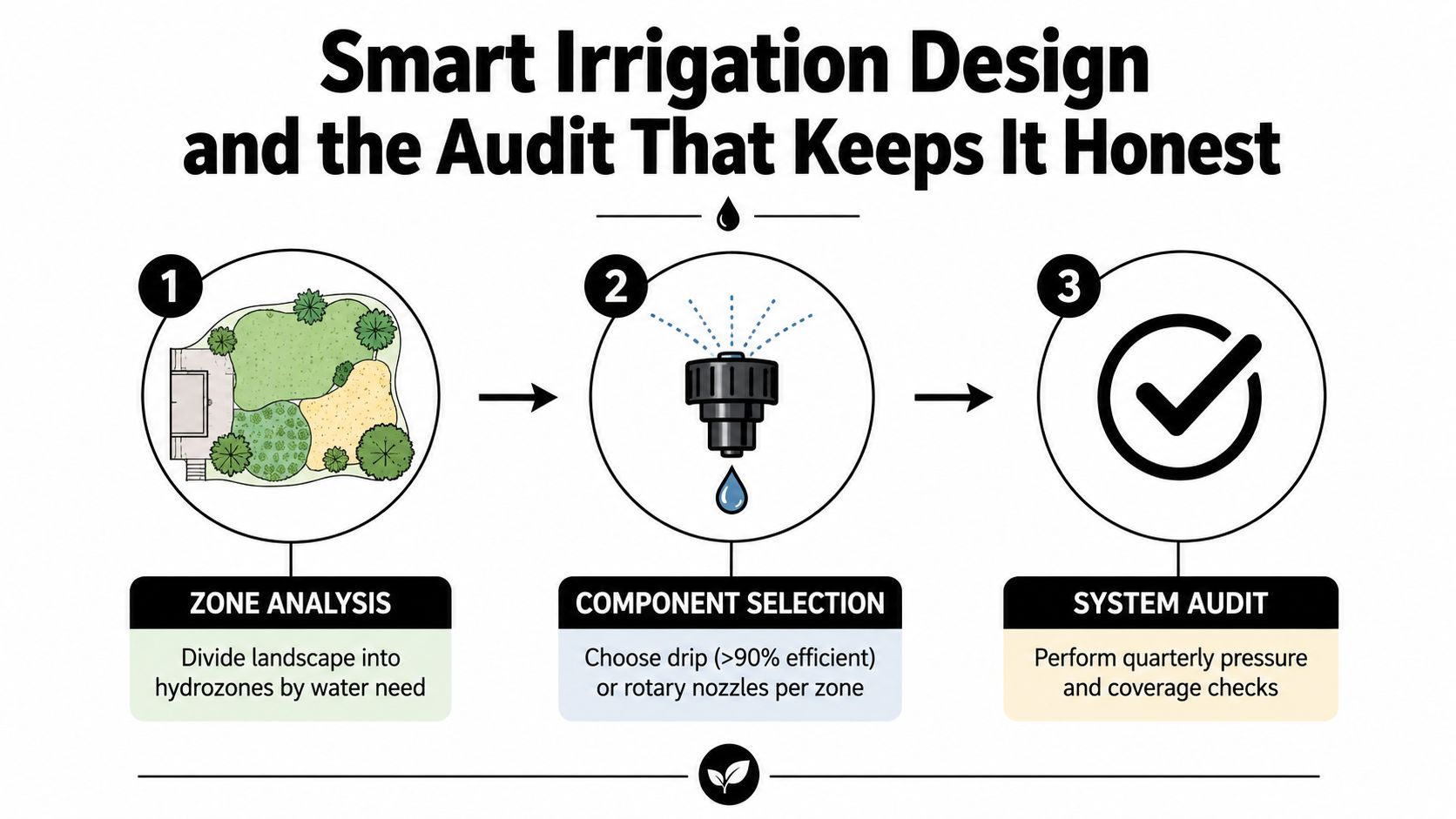
A drought resistant plan only pays off if the irrigation system matches the plant zones and gets checked after the site is in use. In commercial work, I have seen good plant material fail because the whole property was watered the same way, even though the beds, tree rings, and turf all needed different treatment. Drip irrigation is often cited as very efficient, while traditional spray systems use more water and leave more room for overspray and runoff. That gap is why mixed-use sites save water when the design starts with the plant zones instead of assuming every area needs the same schedule.
Choose the right delivery method by zone
Drip belongs in areas that need precision, especially beds with mixed shrubs, groundcovers, or trees that would take on too much water from spray. Rotary nozzles and other spray methods still have a place, but they belong in the spaces that can justify them. Matched precipitation rate nozzles and pressure regulation help reduce the brown-spot, swamp-spot pattern that shows up when one part of a zone is dry and the next part is soaked.
Controller choice matters just as much. ET-based controllers and soil-moisture-sensor controllers tie the schedule to actual site conditions instead of habit. Central water management platforms help on larger portfolios because they let a maintenance manager adjust multiple properties without waiting for a separate site visit every time weather changes. For a plain-language overview of how smart water management fits into irrigation control, it helps to see the hardware and the scheduling logic together.
If you are comparing a retrofit path, a commercial provider that handles irrigation audits, repairs, and central water management can keep the system aligned after install. That matters because efficiency drops when nobody re-tunes the zones.
Audit the system on a schedule
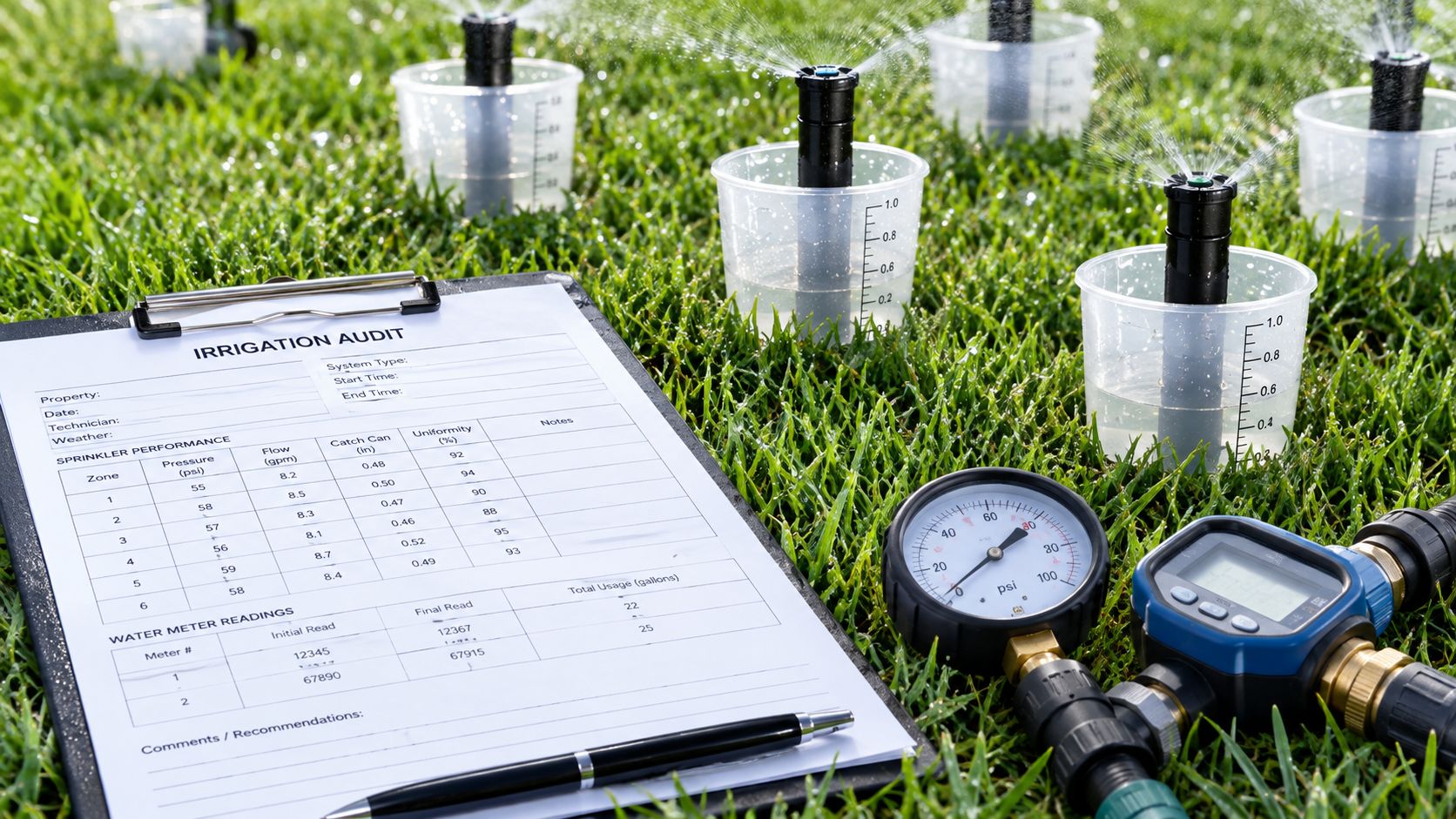
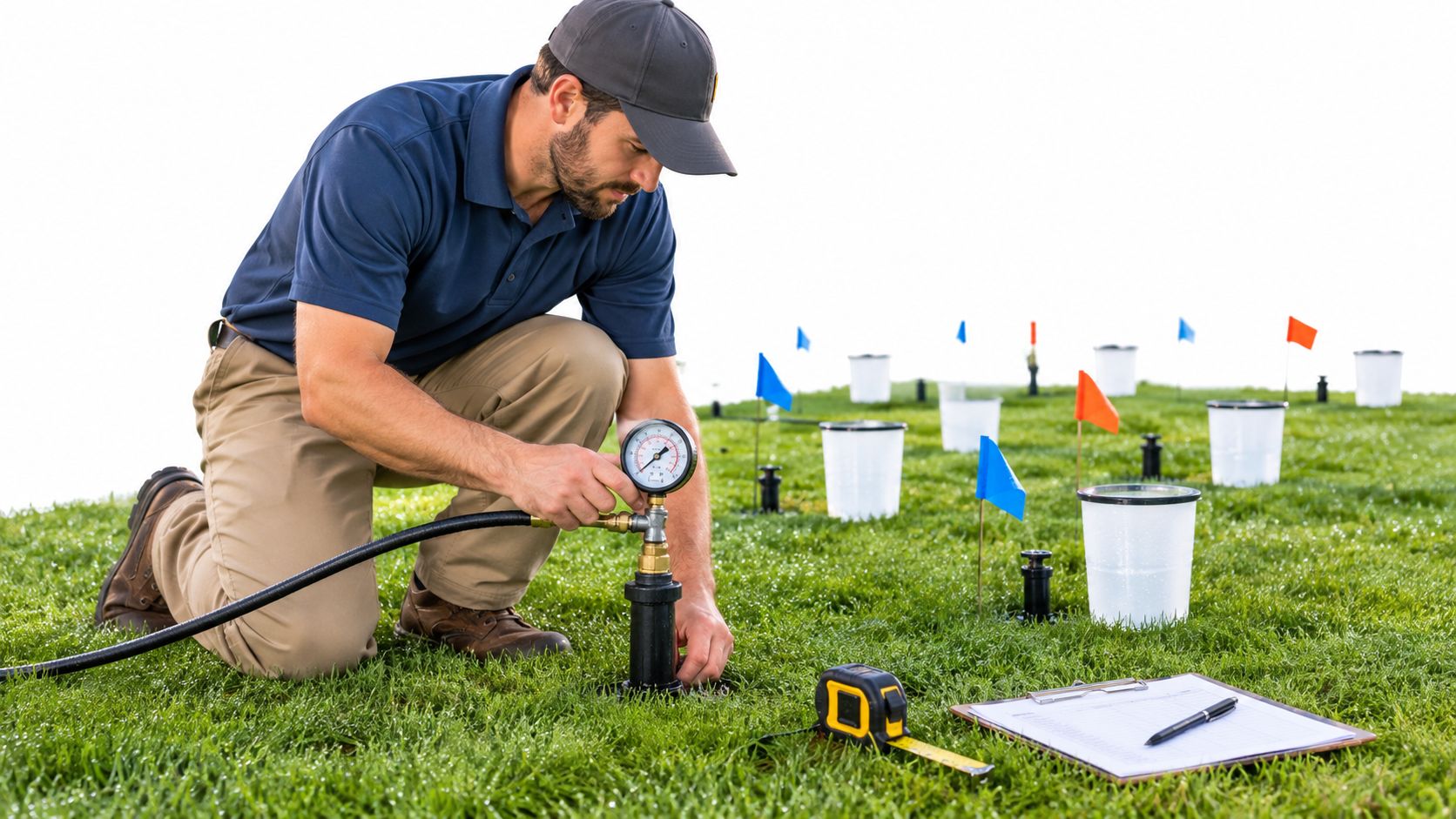
A smart irrigation plan is not complete until there is a repeatable audit process. That means a catch-can test, a walk-through for overspray onto sidewalks and walls, a check for broken heads, and a pressure review at the manifold. The first audit should happen after install and again after the site has had time to settle, then the team should keep it on a seasonal rhythm.
Quarterly review usually makes sense on commercial sites because plant growth, weather, and use patterns keep changing. If the maintenance crew does not re-tune the zones, the system drifts back toward waste. The audit also tells you whether the original design still fits the property, which is where a commercial site can lose water savings even when the plants look fine.
For teams setting a water strategy, this overview of smart water management is a useful companion when irrigation hardware needs to support long-term site performance.
Installation Sequencing That Avoids Costly Rework
Good sequencing keeps the site from being damaged by the work itself. The easiest way to blow a commercial project budget is to let crews do things out of order, then pay to undo them. The right sequence protects both the new outdoor space and the public face of the property while the job is underway.
Build from grade to finish, not the other way around
Start with rough grading and drainage corrections. If water sheds wrong at the beginning, no plant palette will fix that later. Next comes the irrigation mainline and laterals, before soil amendment, so trenches don't re-compact finished beds after the soil has already been improved.
After that, incorporate amendments, finish grade the beds, install bed edges, and lay out the plants by hydrozone. Planting comes before mulch, and mulch comes before controller startup and walk-through. That order keeps the crew from stepping back into finished areas and keeps the final inspection clean.
Watch for the mistakes that drive rework
The most expensive errors are usually procedural, not technical. Amending after irrigation is buried means re-trenching. Planting before the audit is complete means the heads may not match the zones. Skipping a settle period before controller programming means the schedule is guessed, not tuned.
If the contractor can't explain why each day's work comes in that order, the schedule probably isn't protecting the site.
A property manager should expect the site to look unfinished in the middle of the job, but not disorganized. By the end of each day, trenches should be backfilled, materials staged neatly, and any exposed soil protected from traffic and washout. That's the difference between a professional install and a rushed one.
Lifecycle Maintenance, Water Savings ROI, and Rebate Pathways
The true test begins after the install crew leaves. Drought resistant designs can perform well over time, but only if maintenance is treated as part of the design. On commercial sites, that means auditing, re-tuning, and replacing weak performers before the whole bed starts to drift.
Track the maintenance rhythm
Quarterly irrigation audits are the baseline. Seasonal mulch top-offs keep the root zone protected and the beds looking intentional. High-failure species in shaded microclimates should be flagged early instead of left to decline slowly, because one weak pocket can make an otherwise strong entry look neglected.
The harder question is whether the site still carries its design intent after establishment. Public guidance does not give a universal canopy-coverage target, but the practical metric is straightforward. Does the planting mass still read as full, layered, and intentional, or has it thinned into a maintenance problem? That is the kind of question a property manager should ask after year two and again at every seasonal review.
Put the water savings in context
The old turf model is expensive to keep pretending is efficient. In Colorado, traditional Kentucky bluegrass has been estimated at 40 to 60 gallons per square foot per year, while a comparable xeriscape needs only 10 to 15 gallons per square foot per year, which implies a reduction of roughly 75% to 83% in annual water demand for the planted area (JPC Engineering). That comparison matters because it shows why turf conversion is often the biggest savings lever on large commercial properties.
In a commercial setting, a 50,000 square foot site with a heavy turf footprint can move to a very different water profile once planting areas are reworked into water-wise zones. The exact bill depends on the site, but the direction is clear. Less area devoted to high-demand turf usually means a more stable long-term operating cost.
For ownership teams that want a budgeting companion, DreamYard's accurate yard design budget planner can help frame renovation scope before bids come in.
Check rebates and compliance early
North Texas property teams should look at utility and regional incentive programs before finalizing the scope. Texas Water Development Board programs, Dallas Water Utilities, and SAWS all belong on the checklist if the project includes turf replacement, irrigation upgrades, or fixture changes. The documentation usually comes down to before-and-after photos, irrigation specs, plant lists, and proof that the work matches the program rules.
The practical takeaway is simple. Do not wait until the finished ground is designed to ask whether it qualifies. The rebate path can shape the scope, but only if it is checked early enough to influence the design and paperwork.
If you are ready to turn a high-water, high-maintenance site into something that holds up under North Texas conditions, Prestonwood can design, install, and maintain commercial grounds with irrigation audits, drought-tolerant plantings, and smart water management built in. Visit Prestonwood Commercial Landscape Services to start a conversation about a site review, a retrofit plan, or a maintenance program that keeps the grounds looking consistent without wasting water.