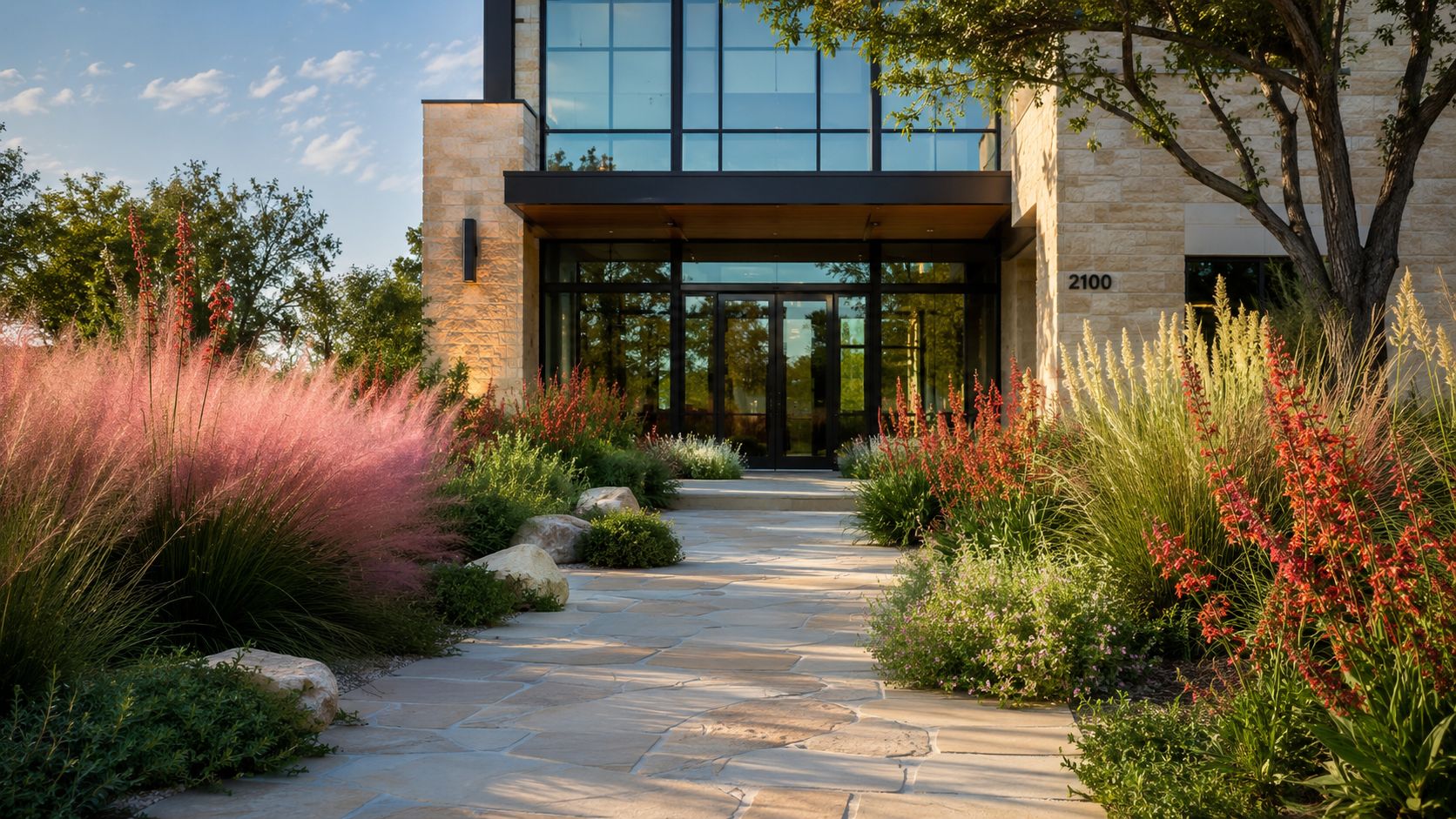
You're probably dealing with some version of the same problem most North Texas commercial properties face. The irrigation runs, the seasonal color gets swapped, the maintenance crew keeps replacing stressed plants, and the property's appearance still looks tired by late summer. Tenants notice. Visitors notice. Ownership notices the water bill.
That's why the conversation around native plants in North Texas needs to be more practical. For commercial sites, this isn't mainly about being greener. It's about building an outdoor environment that can hold its appearance under heat, reflect the property's brand, and stop draining the operating budget through constant intervention.
Table of Contents
- Beyond Curb Appeal The Business Case for Native Landscapes
- Assessing Your Commercial Site for Native Plant Success
- Strategic Water Management for Native Landscapes
- Designing with North Texas Native Plant Palettes
- Tailored Native Plant Lists for Your Commercial Property
- Planting and Maintenance Schedules for Long-Term Value
- A Resilient Investment for Your Property's Future
Beyond Curb Appeal The Business Case for Native Landscapes
A commercial outdoor space has to do more than look acceptable from the street. It has to support leasing, reinforce brand standards, and stay presentable without creating a constant stream of replacement work orders. That's where native plants North Texas properties can rely on start to separate themselves from decorative but fragile choices.
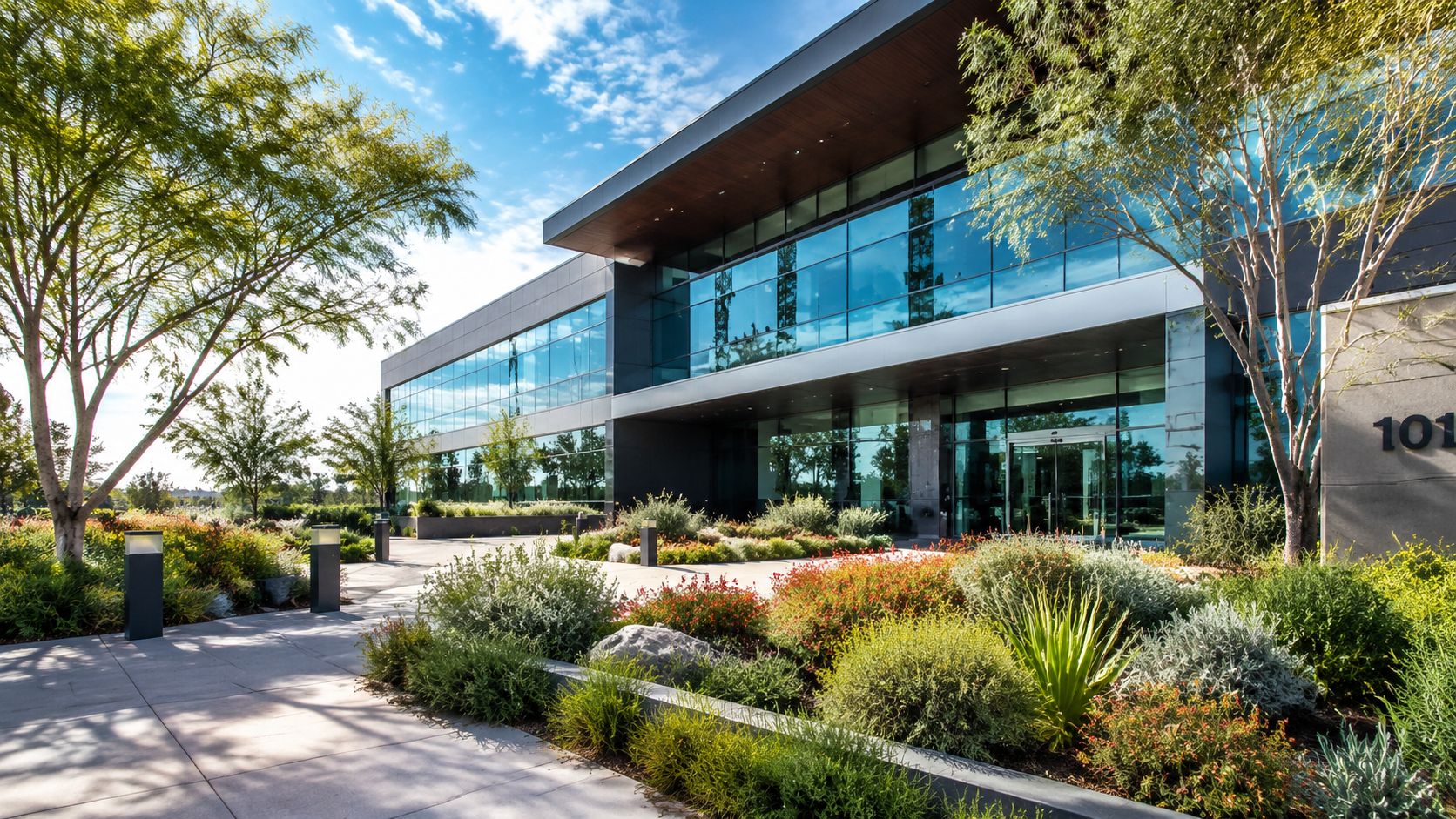
Most property managers don't need another lecture about sustainability. They need fewer dead shrubs at the entry drive, less runoff along sidewalks, and grounds that don't collapse the moment irrigation coverage gets inconsistent. Native plant design helps because it aligns plant choice with local heat, local rainfall patterns, and local soils instead of fighting them every week.
Where the ROI actually shows up
The return usually appears in four places:
- Water use pressure drops: Well-adapted plants generally need less supplemental irrigation once established than high-demand ornamentals planted in the same conditions.
- Replacement cycles slow down: A plant that belongs in a west-facing bed is less likely to scorch out and need repeated replacement.
- Maintenance gets more targeted: Crews spend less time trying to prop up the wrong material and more time on pruning, weed control, and appearance details that are important.
- The property reads as more professional: A cohesive, durable grounds signals active management. That matters for office users, retail customers, residents, and investors.
A lot of failed commercial renovations start with the wrong question. The question isn't, “What looks good in the nursery today?” It's, “What can hold this bed line, this exposure, and this irrigation reality for years?”
Practical rule: The cheapest plant on bid often becomes the most expensive plant in service if the site conditions are wrong.
What works better than cosmetic upgrades
On many sites, managers first try cosmetic fixes. More annual color. Bigger mulch refreshes. Frequent replacement of the same nonperforming plants. Those moves can improve appearance briefly, but they don't solve the operating problem.
A native planting strategy is different because it starts with performance. The plant palette gets tied to heat load, reflected glare, pedestrian pressure, drainage, and visibility. That's how such a planted space becomes a business asset instead of a recurring complaint.
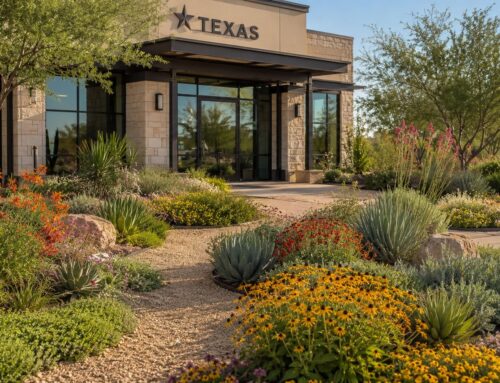
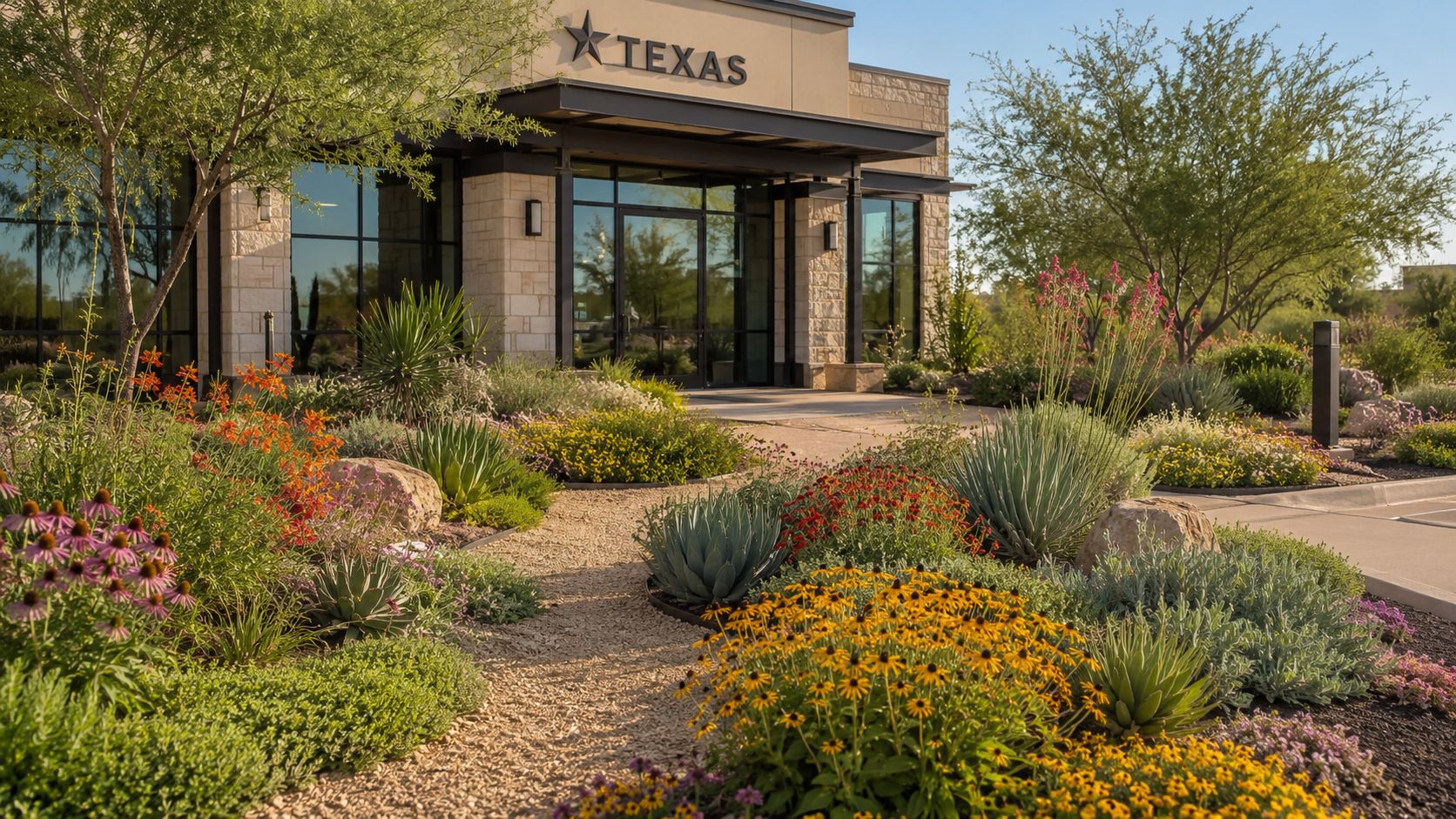
For commercial properties, the best native planting plans also avoid the “wild” look that worries ownership groups. Strong bed edges, repeated masses, clear entry framing, and a disciplined plant list keep the design polished. You can get the resilience benefits of native plants without sacrificing a corporate or upscale appearance.
Assessing Your Commercial Site for Native Plant Success
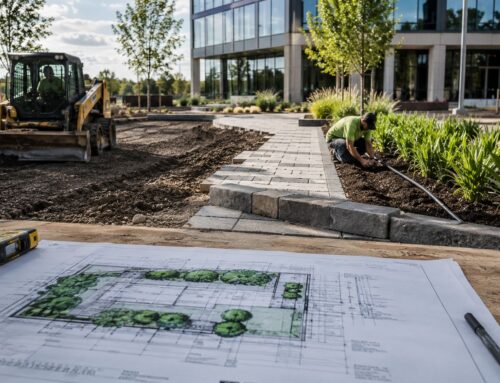
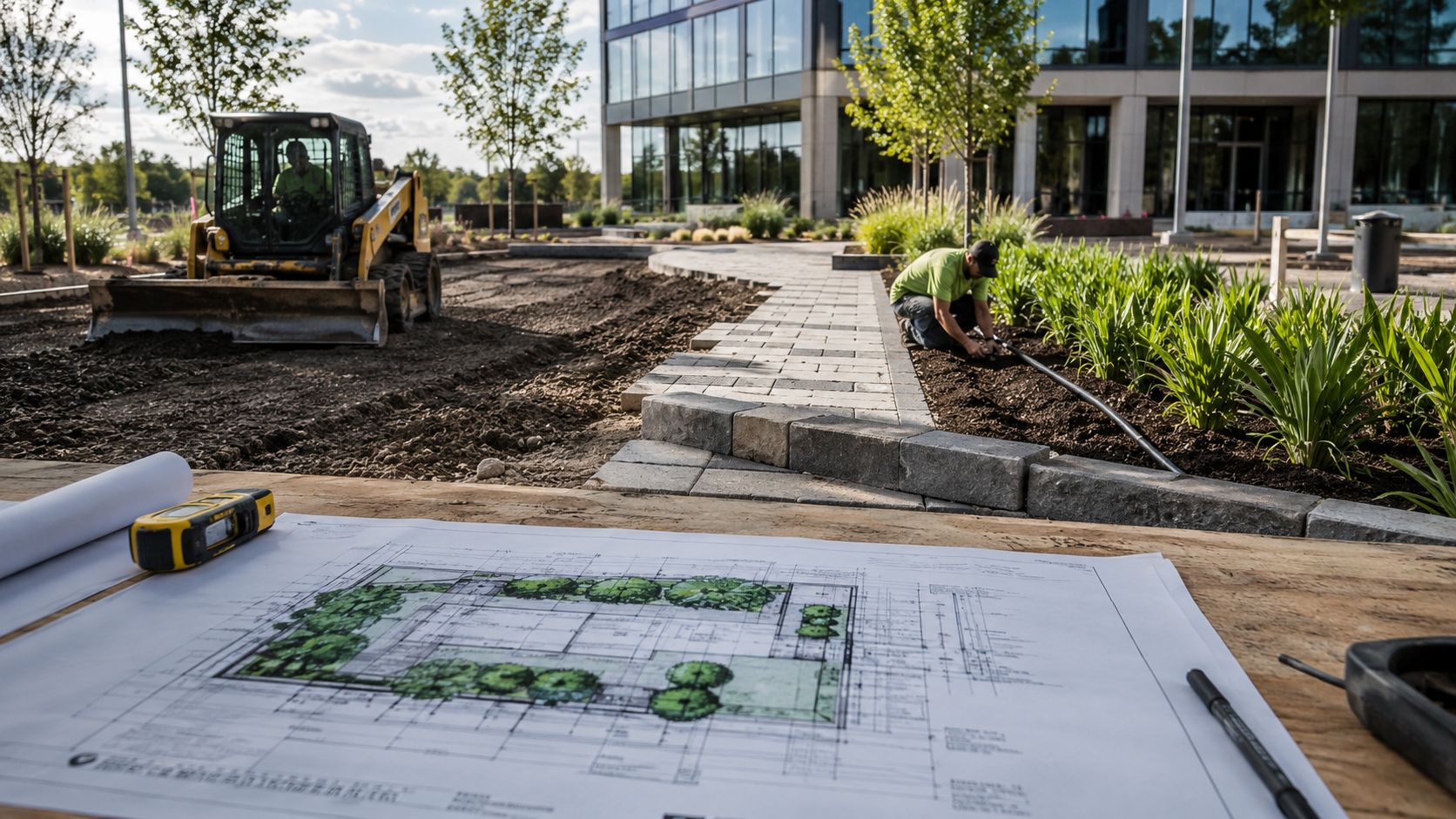
Before selecting a single plant, map the site like an operator, not a gardener. Commercial outdoor projects fail when everyone talks about “full sun” and “shade” as if those are simple categories. On an office park, retail center, or campus, actual conditions are shaped by pavement, building orientation, overhangs, wind channels, stormwater flow, and maintenance access.
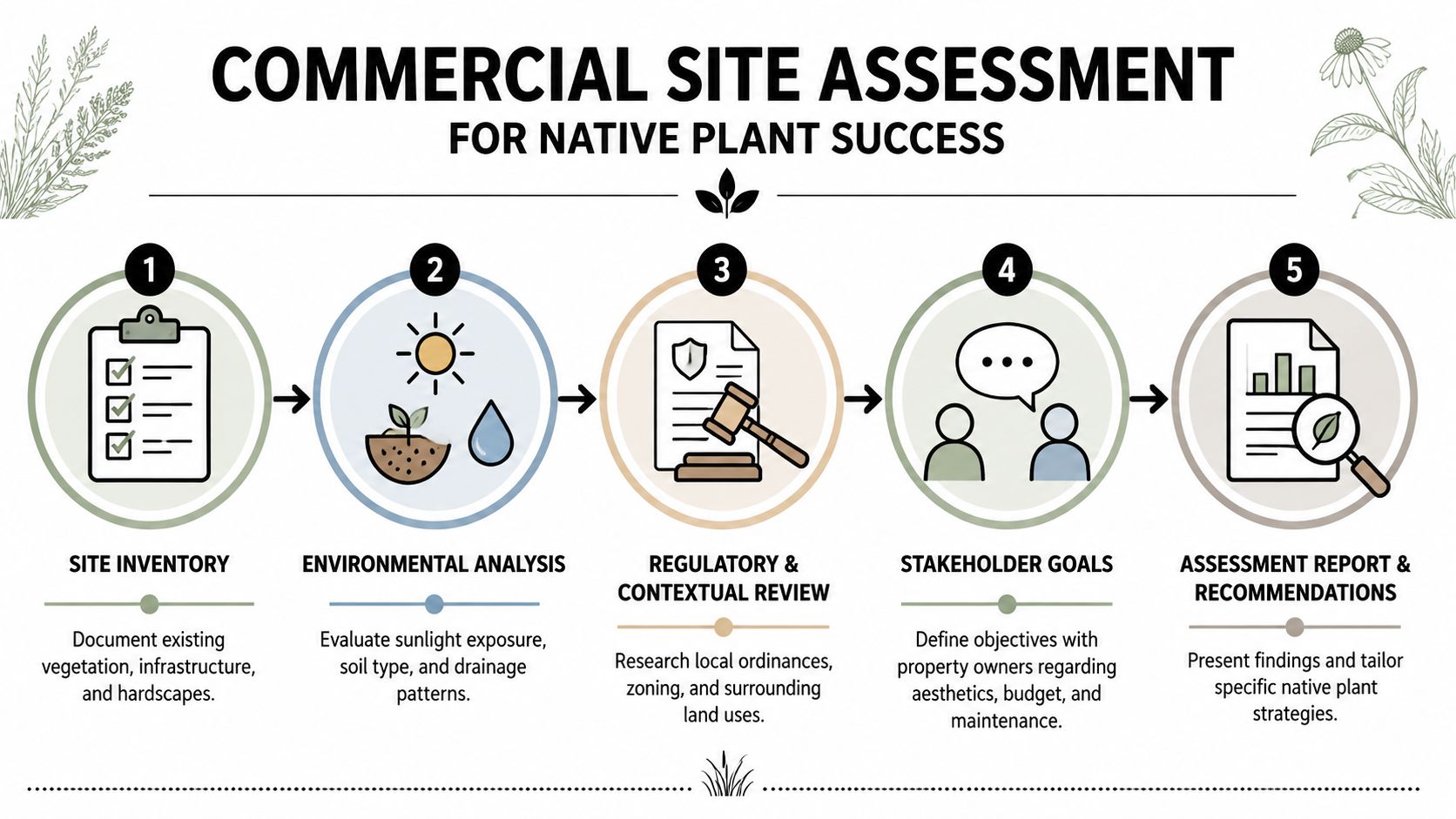
Start with a property microclimate map
Think of the site as a set of operating zones. The bed at the monument sign isn't the same environment as the courtyard behind a parking garage, even if they're on the same property.
Walk the site and mark:
- South and west exposures: These areas typically take the harshest heat load and reflected light.
- North-facing foundation beds: These can stay cooler and dimmer, especially under overhangs.
- Tree-influenced zones: Mature canopy changes both light and root competition.
- Pavement-adjacent islands: These spots deal with radiant heat, compacted soil, and irrigation drift.
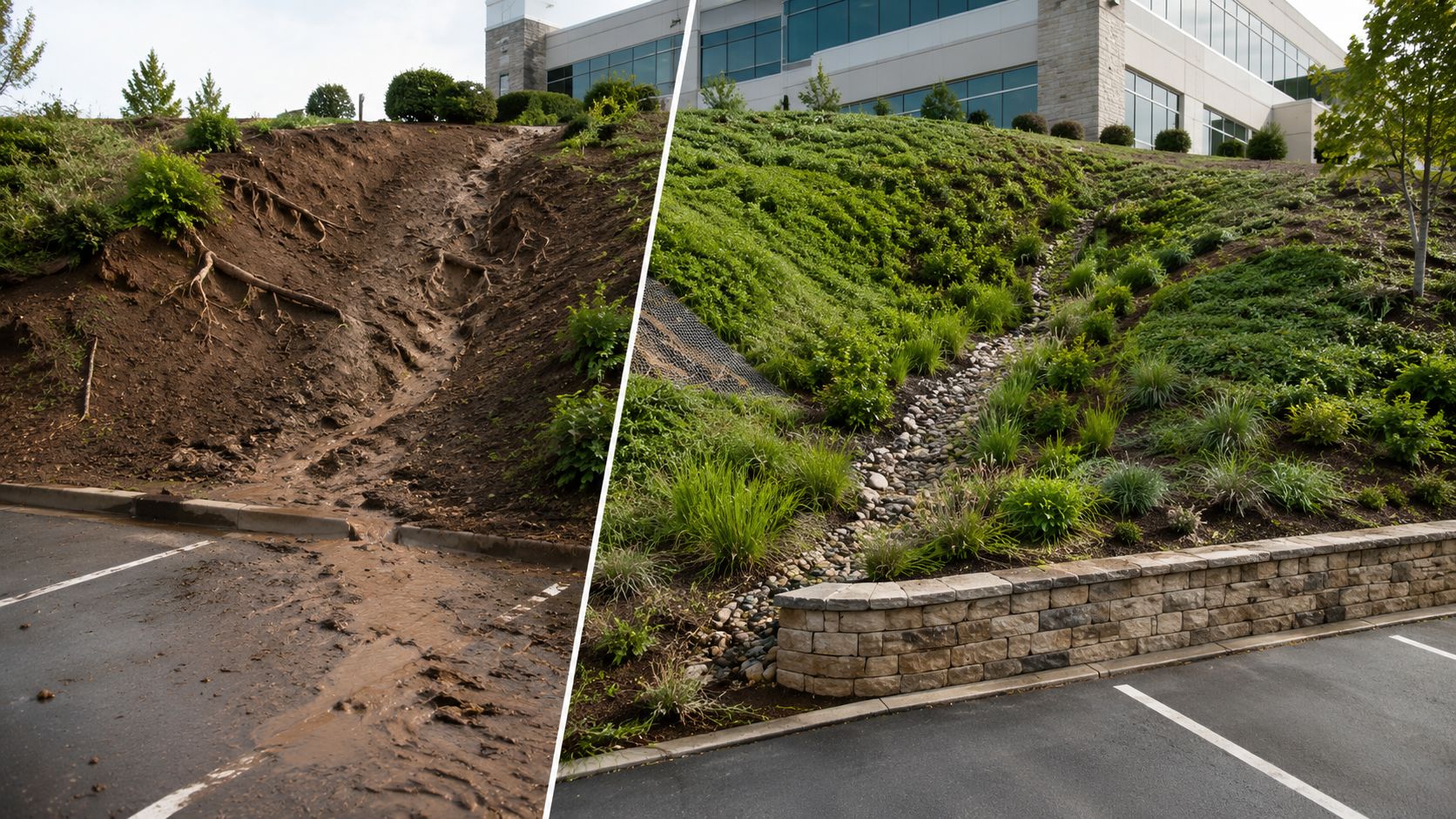
- Low spots and runoff paths: Water collects here even when the rest of the site dries out fast.
If a bed fails repeatedly, the cause is often visible during a walk at different times of day. Morning shade can turn into punishing afternoon exposure. A shaded courtyard may also have poor air circulation and shallow imported soil. Those are very different planting conditions.
Check the soil before you buy plants
North Texas sites often give you either heavy clay, disturbed construction fill, sandy loam in pockets, or some layered combination of all three. Don't assume uniform conditions across the property.
A practical field check includes:
- Texture test: Moisten a handful of soil. If it forms a slick ribbon, you're dealing with more clay. If it falls apart quickly, drainage may move faster.
- Infiltration observation: Fill a small test hole with water and watch how quickly it disappears. Slow movement points to compaction or clay issues.
- Root-zone inspection: Dig far enough to see whether you have usable topsoil or a shallow layer over rubble and construction debris.
When a plant underperforms on a commercial site, poor soil structure is often the hidden culprit, not the species itself.
Separate high-traffic from passive landscape areas
This step gets overlooked. A shaded plant that thrives in a quiet courtyard may fail along a retail walkway because people brush past it, maintenance carts clip it, or litter service disturbs the bed edge.
Break the site into use patterns:
- Entry statements: Need clean structure, visibility, and a controlled look.
- Pedestrian corridors: Need durability and predictable mature size.
- Screening zones: Can use larger masses and looser forms.
- Passive visual areas: Allow for more textural planting and habitat value.
Include constraints before design begins
Commercial sites have rules that shape plant selection long before aesthetics come into play. Sightlines at drives, fire access, signage visibility, overhead conflicts, drainage easements, and municipal requirements all affect what belongs where.
That's why a good site assessment includes more than horticulture. It also includes operations. Who maintains the property? How often are crews on site? Does the irrigation system support hydrozoning, or is everything on broad spray coverage? Those answers decide whether a native concept will work in practice or only on a rendering.
A simple site map that marks light, soil, drainage, traffic, and constraints will save more money than any last-minute plant substitution ever will.
Strategic Water Management for Native Landscapes
A property looks sharp at turnover, then July hits. Beds near the parking lot bake, shaded entries stay damp, the controller keeps running the same schedule everywhere, and water bills climb while plant quality slips. On commercial sites, that pattern is rarely a plant problem. It is usually a water-use problem.
Native plants in North Texas can cut long-term irrigation demand, but only if the system matches the planting plan. During the first season, roots are still limited to the amended backfill and immediate surrounding soil. That means new installations need consistent, targeted moisture until roots push outward. If crews under-water during establishment, managers often pay twice, once for replacement material and again for extra labor to reset the bed.
Establishment water is different from long-term water
The first objective is root development, not fast top growth. Deep, measured applications usually outperform frequent shallow cycles because they encourage plants to root down where moisture lasts longer. After establishment, irrigation should be reduced and spaced out based on exposure, soil, and plant type.
That shift has direct budget value.
Owners and property managers who plan for an establishment period usually get better survival rates and fewer warranty disputes. They also have a clear point when irrigation can be recalibrated instead of left on an installation setting for months too long. For teams reviewing system upgrades, these commercial water management and irrigation practices for Texas commercial properties are a useful reference.
Retrofits usually beat blanket watering
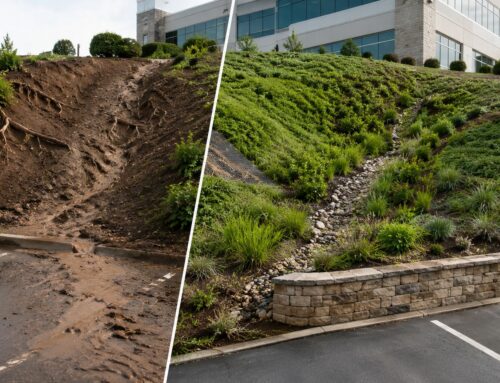
Many older commercial properties still run broad sprays against foundations, sidewalks, and bed edges. In North Texas clay, that often creates runoff before water reaches the full root zone. The result is familiar. Wet pavement, dry plants, algae on concrete, and avoidable waste.
A few targeted upgrades usually produce better returns than a full system replacement:
- Drip irrigation for shrub and perennial beds: Delivers water closer to the root zone and reduces overspray on walks, glass, and walls.
- MP rotators in turf-adjacent areas: Apply water more slowly than conventional sprays, which helps on tight soils.
- Cycle-and-soak programming: Shorter repeat cycles give heavy soils time to absorb water instead of shedding it.
- Weather-based controllers and sensors: Help maintenance teams adjust to actual conditions instead of running a fixed seasonal habit.
Precision matters more with native plantings because the goal is durability, not constant stimulation. Overwatering often creates weak growth, disease pressure, and a softer appearance that does not hold up well in high-visibility commercial settings.
Match hydrozones to actual site conditions
Grouping plants by real water use is where many commercial properties either save money or keep wasting it. A shaded courtyard, a west-facing foundation, and a parking lot island should not run on the same schedule just because they were tied to the same valve years ago.
This matters even more on sites with shade-tolerant native species. Those plants are often chosen to solve a practical commercial problem: dark building edges, tree-covered pedestrian routes, and courtyards that need a finished look without constant replacement. Yet they are commonly overwatered because they share irrigation with hotter zones nearby. The plants survive, but the bed never looks crisp, and maintenance crews spend more time correcting decline, thinning growth, and fungal issues than they should.
Use a simple review table before changing schedules:
| Irrigation question | Why it matters |
|---|---|
| Does this zone reflect heat from pavement or walls? | Hotter areas usually dry faster and need a different schedule |
| Does water stand after a short run time? | Infiltration is limiting performance |
| Are shaded native selections grouped apart from full-sun material? | Mixed exposure on one valve leads to chronic overwatering or stress |
| Is the controller adjusted by season and recent weather? | Static programs often waste water and weaken plant quality |
Well-zoned irrigation supports stronger plant performance, lower replacement costs, and a cleaner appearance across the property. This represents the return. Lower water use, fewer avoidable service calls, and planting beds that hold their form in heat, shade, and day-to-day commercial wear.
Designing with North Texas Native Plant Palettes
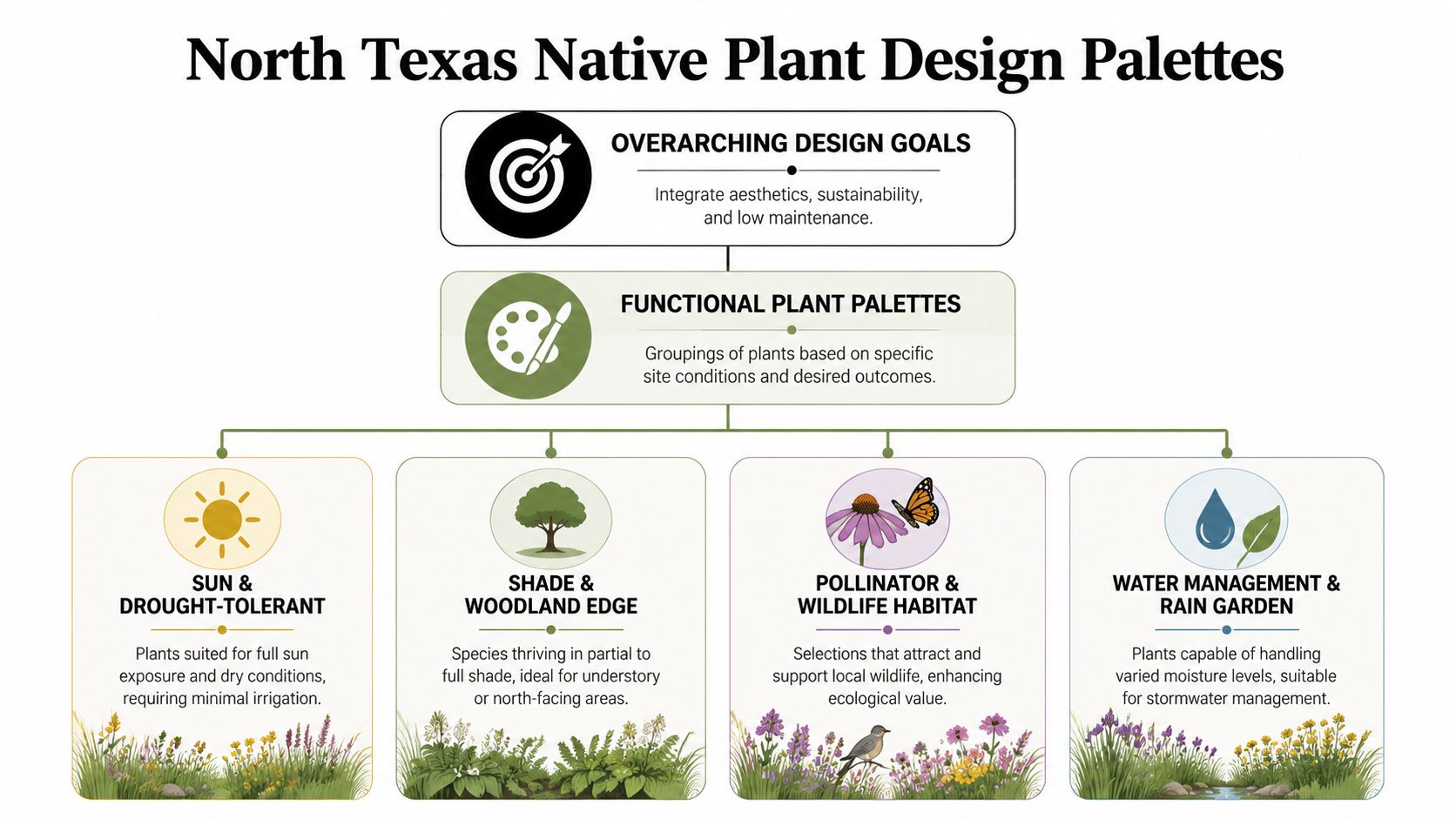
A property manager walks the site after a summer storm. The entry beds still read clean. The shaded walk to the lobby looks finished instead of thin and patchy. The frontage holds a consistent look without constant seasonal replacement. That is what a good native plant palette should deliver on a commercial property.
Building Layers That Read as Intentional
Single-height shrub beds rarely justify their upkeep. They expose too much mulch, show gaps quickly, and tend to look tired between pruning cycles.
A stronger planting composition uses layers with clear jobs:
- Low edging and groundcover to tighten bed lines and reduce bare mulch
- Perennials and accent forms to add seasonal color and movement
- Shrub masses to hold structure through most of the year
- Trees or large focal plants to scale entries, corners, and gathering areas
That structure protects appearance and budget at the same time. If one plant group has a rough stretch from heat, cold, or foot traffic, the bed still reads complete because the visual weight is spread across several layers.
Year-round appearance matters more on commercial sites than many plant lists acknowledge. Bloom is only one part of the equation. Texture, evergreen presence, branching habit, fall color, and seed heads all help beds hold their value outside peak flowering periods. Where shade from buildings or mature canopy is part of the site, drought-tolerant trees in Texas can also strengthen the overhead structure without creating a high-water planting plan below.
Solving the Commercial Shade Challenge
Shade is where many native recommendations get thin. In practice, most guidance centers on sun and drought performance, while shaded commercial zones are treated as an afterthought. Yet those are some of the most visible and troublesome areas on a property. North-facing foundations, covered pedestrian routes, courtyards, and tree-shaded parking edges all need plants that stay full, read clean, and do not demand frequent replacement.
On commercial sites, shade failures are usually slow and expensive. A poor species match may survive for months or years, but the bed loses density, color, and shape. Crews spend more time trimming around decline, replacing scattered losses, and trying to make weak material look intentional.
Three natives deserve serious consideration for these conditions:
- Turk's Cap: Reliable for shaded masses where a softer form and extended color help break up hard building lines
- Southern Wood Fern: Useful in protected beds with better soil and a cooler microclimate
- Coralberry: Good for understory structure, natural screening, and filling space under filtered light
I see the same pattern across commercial accounts. The hardest bed to keep looking polished is often the shaded one with reflected building shade, compacted soil, and limited air movement. A plant list built only around full-sun performers will miss that problem.
Palettes That Perform Better on Real Sites
The best native palettes start with use, visibility, and maintenance tolerance. Style comes after that. A corporate office entry usually benefits from repeated masses, controlled color, and clean spacing. Hospitality and multifamily sites can carry more softness near doors, seating areas, and pedestrian routes. Industrial properties often need bolder forms that read well from the drive aisle and hold up with less attention.
Use this framework during design review:
| Design goal | Better-performing native approach |
|---|---|
| Clean corporate appearance | Repeated masses, limited species count, strong structural backbone |
| Softer hospitality character | Layered flowering perennials, understory shrubs, shade-tolerant accents near walkways |
| Better performance in drainage shifts | Place species by soil moisture behavior, not bloom color |
| Longer visual interest | Combine plants with staggered bloom, foliage, berry, or form changes through the year |
Commercial native design needs discipline. Repetition, clear bed edges, mature spacing, and access for crews all affect long-term cost. A frontage planted to look loose and residential may sound attractive on paper, but it often reads messy from the street and takes more labor to keep presentable. A tighter palette usually gives owners a better return through lower replacement, cleaner appearance, and fewer corrective maintenance hours.
Tailored Native Plant Lists for Your Commercial Property
A plant list that works on one commercial site can fail on the next. The difference usually comes down to visibility, irrigation coverage, foot traffic, reflected heat, and one issue managers often underestimate: usable shade near buildings and parking structures. Shade-tolerant natives are harder to choose well, especially when the site still needs a clean, maintained appearance.
Use the list below as a budgeting and specification tool, not just a design reference.
| Property Type | Full Sun Priority | Shade-Tolerant Priority | High-Visibility Accent |
|---|---|---|---|
| Office and Corporate | Texas Sage | Turk's Cap | Red Yucca |
| Retail and Hospitality | Red Yucca | Coralberry | Turk's Cap |
| Industrial and Logistics | Texas Sage | Southern Wood Fern | Red Yucca |
| HOA and Multifamily | Texas Sage | Turk's Cap | Coralberry |
Office and Corporate Campuses
Office properties are judged up close. Tenants notice weak shrub masses, thin beds at the main entry, and plants that outgrow their space. The best native choices keep a disciplined appearance without pushing up pruning hours.
A dependable office planting list often includes:
- Texas Sage in full sun areas: Best where heat and glare are high and there is enough room for mature width.
- Turk's Cap along shaded building edges: Useful under tree canopies or on the north and east sides of buildings where many sun-loving natives thin out.
- Red Yucca at entries and signs: Strong vertical form helps break up low shrub groupings and keeps sightlines open.
For larger campuses, pair shrub masses with native trees selected for drought tolerance and long-term site fit. A practical starting point is this Texas drought-tolerant tree selection guide for commercial properties. Tree placement affects whether shaded understory planting stays attractive or turns sparse within a few seasons.
Retail and Hospitality Properties
Retail and hospitality sites have a narrower margin for error. Beds are often smaller, pedestrian traffic is heavier, and the planting has to read well from both the curb and the sidewalk. Showy plants help, but only if they stay inside the bedline and do not trap trash or obstruct storefront visibility.
Good options include:
- Red Yucca for sunny entries and medians: It holds form well and reads clearly from a distance.
- Coralberry for shaded walkways and protected edges: Better where softer texture is wanted without constant clipping.
- Turk's Cap near seating areas or storefront transitions: Useful in protected shade where color and fullness matter.
The trade-off is maintenance discipline. A plant that looks soft and welcoming can still be the wrong choice if it sprawls into walkways or needs frequent cleanup.
Industrial and Logistics Sites
Industrial sites reward restraint. Long frontages, broad pavement areas, and lower irrigation intensity favor plants that can handle heat, wind, and occasional neglect without collapsing visually.
For these properties, keep the list short:
- Texas Sage for exposed sunny runs where durability matters more than seasonal variety
- Southern Wood Fern for shaded office zones or protected side elevations
- Red Yucca where the property needs a low-input accent with good visibility from the road
Owners often improve ROI by simplifying the spec. Larger blocks of fewer species reduce replacement ordering, make crew training easier, and produce a cleaner appearance at truck-entry speed.
HOA and Multifamily Communities
HOA and multifamily properties have to satisfy residents, board members, and maintenance budgets at the same time. Repetition helps. Residents recognize recurring plant groups, and crews spend less time identifying one-off species with different pruning and irrigation needs.
A practical native mix often includes:
- Texas Sage in sunny perimeter beds and street-facing zones
- Turk's Cap in shaded courtyards or building-side beds
- Coralberry where an understory mass can connect trees, shrubs, and pedestrian areas
Shade performance matters more here than many teams expect. Courtyards, breezeways, and building shadows can make a sun-based plant list fail fast.
A good commercial plant list stays short, readable, and easy for crews to maintain consistently.
For pricing and approvals, sort candidates by property type, then narrow the list by three filters: full sun, practical shade, and visibility to tenants, customers, or residents. That approach usually produces better plant survival, fewer replacements, and a stronger year-round presentation.
Planting and Maintenance Schedules for Long-Term Value
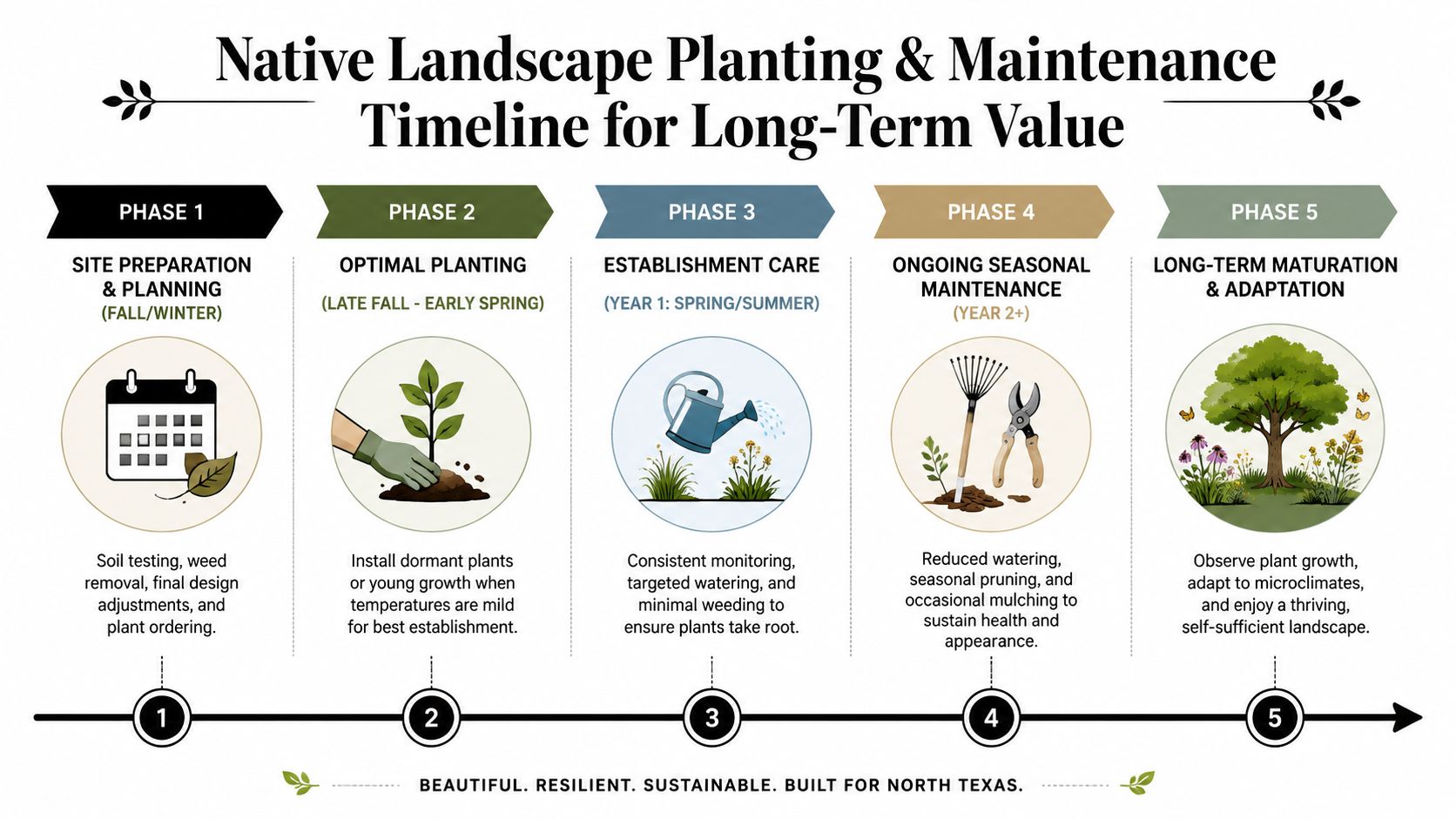
A property manager signs off on native plants to cut water use and replacement costs, then gets frustrated six months later because half the beds look uneven and the irrigation schedule still runs like a high-input annual rotation. The problem usually starts at install and gets worse in the first year. Native plantings pay back well on commercial sites, but only when planting depth, irrigation checks, mulch placement, and crew instructions are handled with discipline.
Installation Choices That Protect the Investment
For most North Texas commercial properties, fall gives the best planting window. Soil stays workable, air temperatures are less punishing, and roots get time to establish before summer stress hits. Spring installations can still succeed, but they usually demand tighter irrigation oversight and leave less margin for error on heat-sensitive sites, especially around reflective paving and west-facing building edges.
The install phase should cover four basics well:
- Correct planting depth: Keep the root flare or crown at the proper grade. Plants set too deep often decline slowly, which makes warranty disputes and replacement decisions harder.
- Targeted soil correction: Break up compaction and fix obvious drainage issues in problem areas instead of over-amending every bed and driving up cost.
- Clean mulch application: Mulch should hold moisture and limit weed pressure, not sit against stems or trunks.
- Irrigation verification on day one: Run every zone after install. Coverage gaps around signs, corners, and shaded walls show up quickly on commercial sites.
Plant selection affects maintenance costs just as much as installation quality. Managers often get better long-term performance by combining native shrubs and grasses with low-maintenance perennial selections suited to commercial properties that hold their form without constant cutting back.
A Realistic Commercial Maintenance Rhythm
The first year requires active management. After establishment, the work changes shape and usually gets less expensive.
That shift matters for ROI. Crews spend less time on rescue watering, emergency replacement, and corrective pruning when the schedule matches how native plantings mature.
| Timeframe | Priority tasks |
|---|---|
| Early establishment | Check irrigation coverage, correct settling and washouts, remove invasive weeds before they seed |
| First warm season | Watch for stress near pavement and walls, adjust run times by zone, keep mulch in place |
| Dormant or cool season | Cut back selected perennials and grasses where appearance or safety requires it, inspect edges and sightlines |
| Mature phase | Reduce irrigation where plants have established well, spot-weed, prune for structure, refresh mulch only where needed |
Commercial crews often run into trouble when they maintain native beds like tightly clipped foundation shrub areas. That approach wastes labor and can ruin plant form. Native material still needs attention, but the standard is plant health, visibility, and order, not uniform shearing.
A few practices protect both appearance and budget:
- Weed early: Small weed outbreaks are cheap to remove. Large infestations turn into repeated labor and fresh mulch expense.
- Prune for structure: Keep natural form where possible, but clear walks, entries, monument signs, and driver sightlines.
- Adjust irrigation by season and exposure: A shaded courtyard zone should not be watered like a full-sun parking lot edge.
- Replace with the original spec or an approved equivalent: Random substitutions usually create mixed growth habits and more maintenance exceptions.
Shade deserves extra attention in this schedule. On commercial properties, shaded native areas near buildings often stay wet longer, grow more slowly, and can look thin if crews apply the same pruning and watering pattern used in sunny frontage beds. Separate expectations by exposure, and the planting will hold its appearance with fewer corrections.
Low-maintenance plantings still need observation. The savings come from fewer avoidable interventions, lower replacement volume, and maintenance hours spent on planned care instead of cleanup.
A Resilient Investment for Your Property's Future
A commercial property in North Texas gets judged fast. Prospects notice the entry, tenants notice whether beds look stable through the season, and ownership notices when replacement and water bills keep climbing. Native plants earn their keep when those three pressures need to be handled at the same time.
For commercial sites, the return is practical. Fewer replacements after weather swings. More predictable irrigation demand. Better performance in difficult exposures, including the shaded edges around buildings, courtyards, and covered entries that often get the wrong plant mix. Those areas are where many properties incur ongoing costs through repeated swaps, uneven appearance, and extra crew time.
Budgets rarely allow for constant correction. Property managers need planting that supports curb appeal without creating a long list of exceptions for maintenance crews. Native planting, done professionally, supports that goal because the system is built around site fit, not short-term color alone.
The best returns usually come from a few disciplined choices:
- selecting plants for actual sun, shade, reflected heat, and drainage conditions
- setting irrigation by hydrozone and exposure instead of treating the whole site the same
- using shade-tolerant native material where buildings limit light and air movement
- keeping the palette tight enough that crews can maintain it consistently
- choosing plant groupings that read clean and intentional to tenants, visitors, and ownership
There is also a brand value component. A property that holds its appearance through heat, drought, and seasonal stress signals competent management. On retail, office, multifamily, and mixed-use sites, that matters. Clean, regionally appropriate planting can support a stronger first impression without locking the property into high-input seasonal turnover.
Native planting is not a low-effort shortcut. It is a lower-drag operating model. When assessment, design, irrigation, installation, and maintenance work together, the site asks for fewer rescue measures and gives back steadier performance over time.
If you're evaluating a renovation, a phased upgrade, or a full property repositioning, Prestonwood Commercial Landscape Services can help you plan a commercial outdoor space that fits North Texas conditions, supports your budget, and stays aligned with your property's brand over the long term.