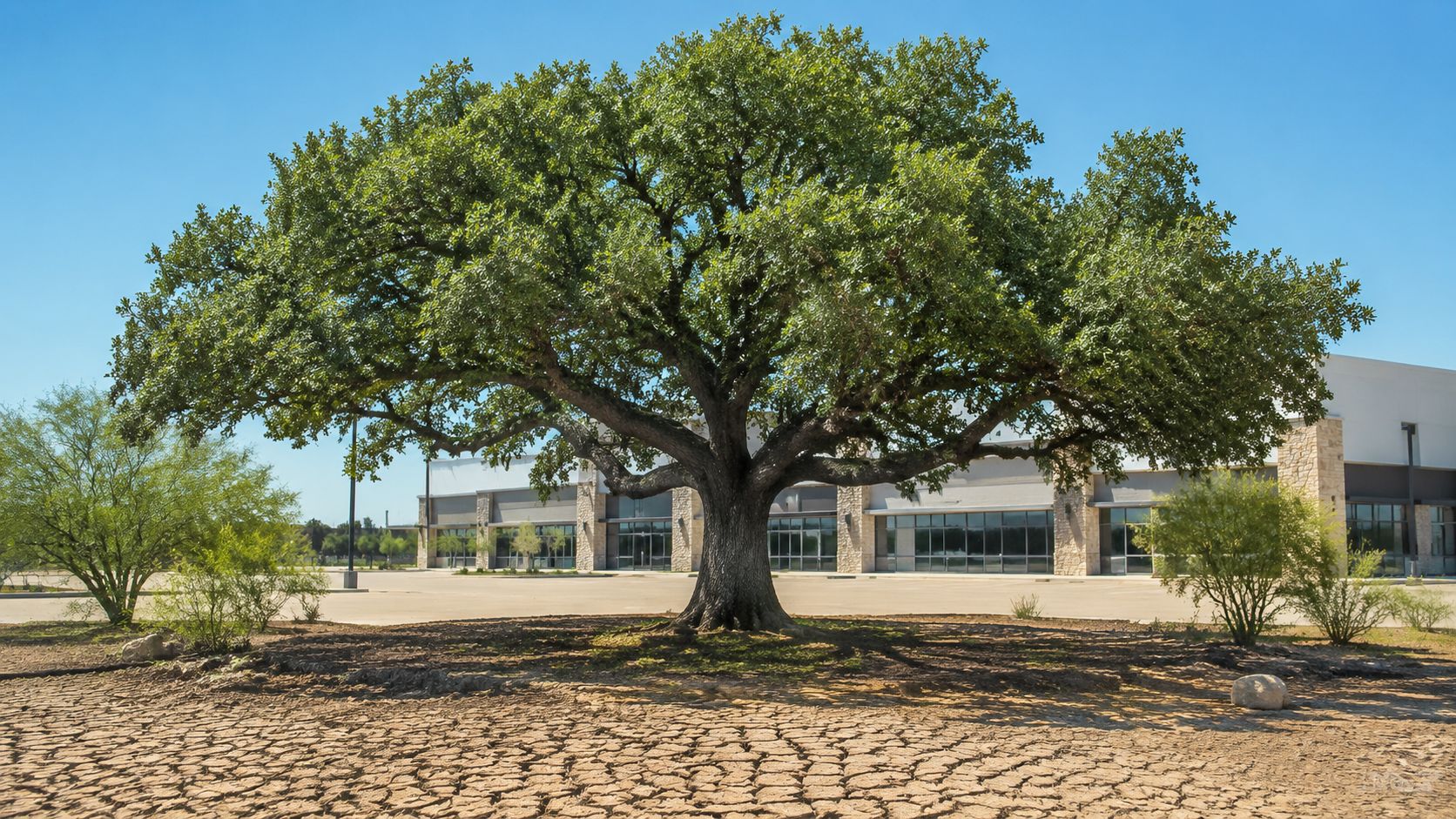
You're likely dealing with the same pressure many Texas property managers are facing right now. Water costs are under scrutiny, tenants still expect a polished arrival experience, and the trees that looked acceptable a few seasons ago now show thinning canopies, scorch, deadwood, or outright decline after another punishing summer. On top of that, city restrictions and budget reviews make replacement decisions harder, not easier.
That's where many tree plans go wrong. Teams shop from a generic drought-tolerant list, plant whatever is available, and assume the problem is solved. On commercial sites, it rarely is. A tree that survives on a ranch road or in a residential backyard may struggle in a parking-lot island, a loading-dock edge, or a narrow HOA common area surrounded by compacted soil and reflected heat.
For commercial properties, drought tolerant trees in Texas aren't just a planting choice. They're part of a long-term asset strategy. The right tree lowers replacement churn, supports shade where people walk, reduces visual fatigue across the site, and protects the brand experience of the property. The wrong tree creates root conflict, clearance problems, messy drop in high-traffic zones, and years of avoidable maintenance.
Table of Contents
- Investing in Resilient Texas Landscapes
- Smart Selection Beyond Simple Drought Tolerance
- Top Drought-Tolerant Trees for Texas Commercial Sites
- Spec Sheets Use Cases for Top Performers
- Proper Planting and Establishment for Long-Term Success
- Smart Irrigation and Lifecycle Maintenance
- Frequently Asked Questions for Property Managers
Investing in Resilient Texas Landscapes
A familiar scenario plays out every summer. A retail center or office campus enters the season with decent-looking grounds. By late heat, the medians fade first, then perimeter trees start showing stress, and suddenly the front of the property feels older, harsher, and less maintained than the building itself. The budget conversation starts with water, but the fundamental problem is usually tree performance.
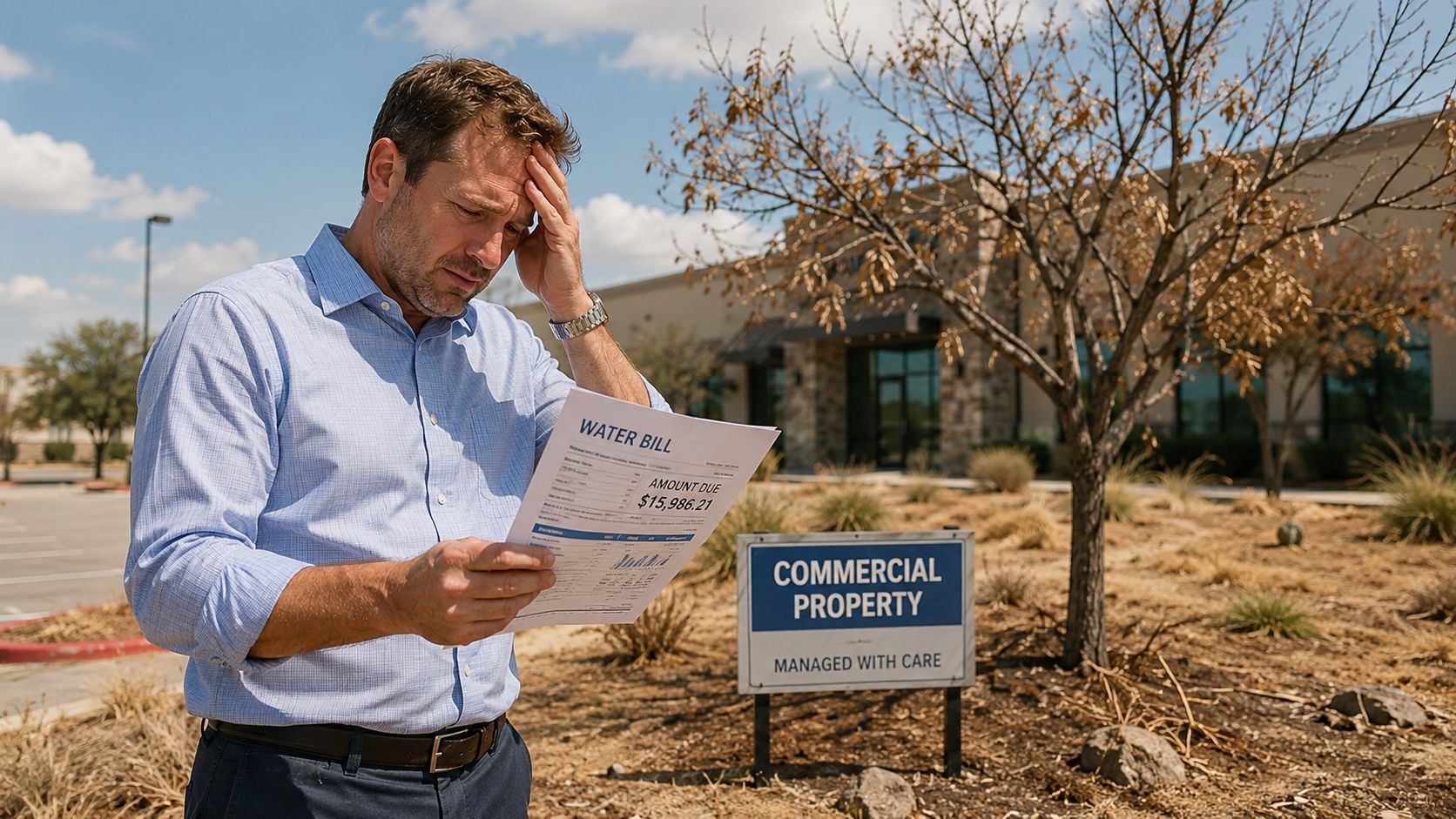
For managers overseeing large sites, trees aren't decorative extras. They're operational site assets. They frame entries, soften hardscape, create usable shade, improve first impressions, and help a property feel occupied and cared for even when the weather is working against it. That's one reason many owners now view site planning the same way they view paving, roofing, or lighting. It's a long-term performance decision, not a seasonal expense. That broader business case is part of why commercial landscaping is a strategic investment for Dallas property owners.
What resilient tree planning changes
The best commercial tree plans usually make three shifts at once:
- They reduce avoidable replacements. Fewer failed installs mean fewer emergency removals, fewer warranty disputes, and less visual inconsistency across the site.
- They place shade where it matters. Entry walks, customer parking edges, amenity lawns, and west-facing exposures need different canopy strategies.
- They account for operating reality. Crews need access. Signs need visibility. Irrigation zones aren't always ideal. Roots can't be treated as an afterthought.
Practical rule: A tree is only “low water” if it can also survive the exact way your site is built and maintained.
What owners often underestimate
The biggest hidden cost isn't always water. It's mismatch. A tree can be drought tolerant in general and still be wrong for a constrained commercial setting. When that happens, teams spend years compensating with extra pruning, pavement repair, cleanup, or replacement planting.
Strong tree planning works the other way. It accepts Texas heat as a baseline condition, not an exception. It chooses species that fit the site, stages installation around establishment risk, and treats the early years as investment protection rather than optional aftercare. That approach is what keeps an outdoor area from looking temporarily installed and helps it mature into something that carries the property instead of dragging on the maintenance budget.
Smart Selection Beyond Simple Drought Tolerance
A tree can survive a Texas drought and still fail on a commercial property.
That is the selection problem property managers run into after the ribbon cutting. The species may handle low water once established, but the site itself creates a different test. Tight islands, compacted subgrade, reflected heat off paving, shallow utility corridors, lighting clearance, and repeated maintenance traffic all change how a tree performs over 10 to 20 years. A Texas-focused commercial tree guide underscores the need to plan for ongoing water constraints, not just occasional dry years, in this Dallas grounds planning discussion.
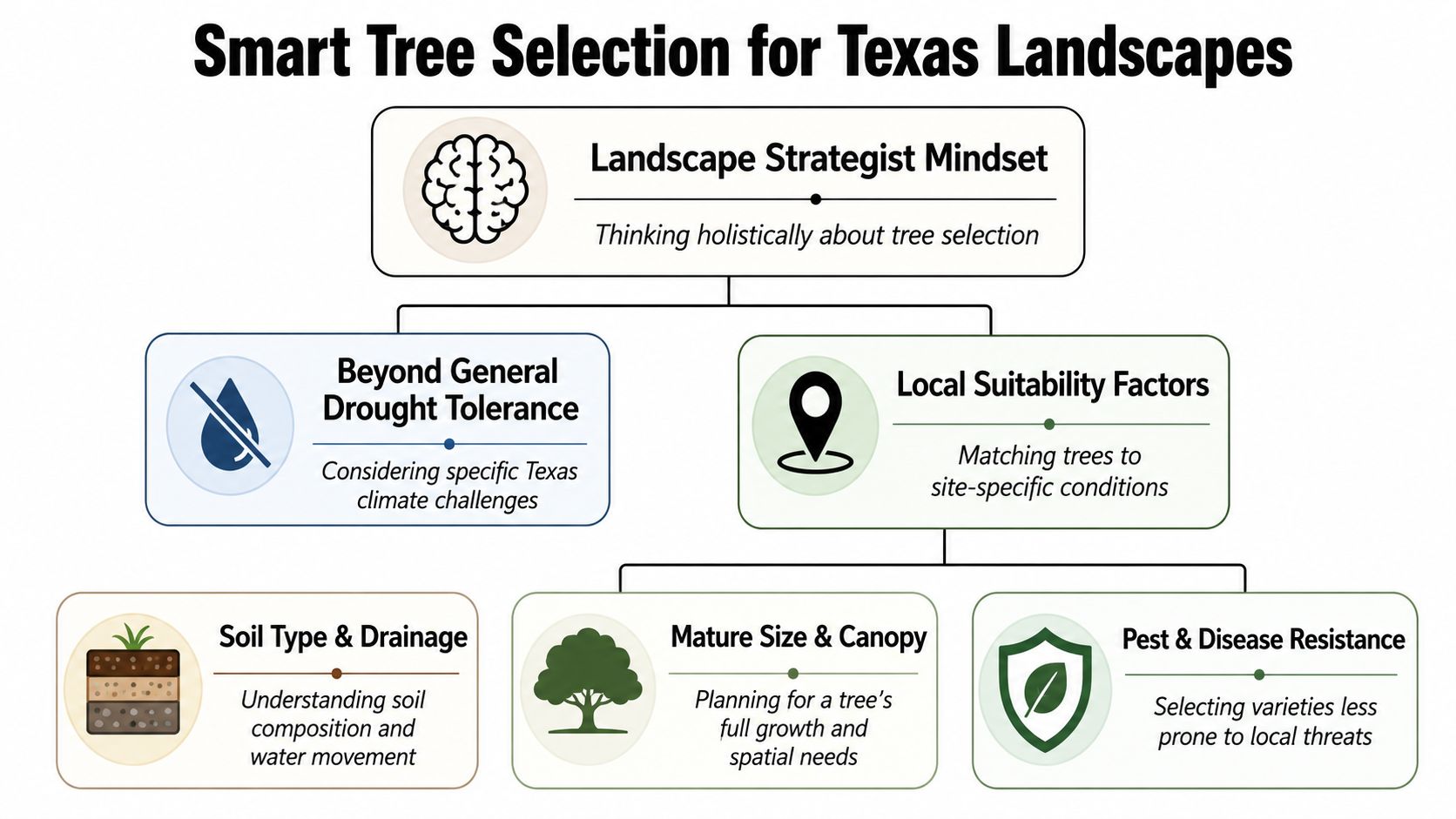
For commercial work, drought tolerance is only one filter. Site tolerance usually decides whether the tree becomes a long-term asset or a recurring expense.
A tree in open soil has room to regulate stress, add roots, and recover from bad weather. A tree in a six-foot island beside hot pavement has to do all of that with restricted soil volume and more heat load. That is why generic low-water lists often underperform on office parks, retail centers, medical campuses, and HOA entries. The issue is rarely the species alone. The issue is species fit under commercial constraints.
Use these criteria before approving a plant list:
- Rooting volume: Small cutouts and compacted soils favor trees that can stay stable and functional under restriction.
- Clearance at maturity: Canopy height and spread affect storefront visibility, pedestrian lighting, truck movement, cameras, and signs.
- Root behavior near infrastructure: Some trees tolerate paved conditions better, while others create higher risk near curbs, walks, and utility runs.
- Litter load in active areas: Pods, fruit, heavy leaf drop, and acorns carry a real cleanup cost near entries, dining patios, and patient drop-off zones.
- Maintenance reality: If pruning cycles slip or irrigation coverage is inconsistent, select trees that can tolerate that operating pattern without declining fast.
In this context, lifecycle cost becomes more useful than nursery cost.
I would rather specify a tree that costs a little more up front and stays out of the pruning, pavement-repair, and replacement budget than save on the install and spend the next decade correcting the choice. On commercial sites, the wrong tree usually shows up later as trip hazards, visibility conflicts, aggressive crown lifting, or chronic cleanup complaints. Those are operating costs, not design issues.
Many properties also benefit from xeriscape design principles, but trees need a stricter review than shrubs or groundcovers because the consequences of a mismatch are larger and more expensive to fix.
Use this framework during selection:
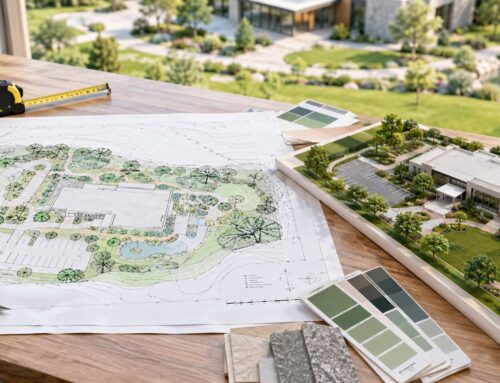
- Start with the job the tree needs to do. Parking shade, entry framing, screening, and open-area canopy each call for different structure and mature form.
- Size for maturity, not for delivery. Nursery proportions can hide future conflicts with facades, light poles, drive aisles, and sidewalks.
- Check root conflict risk early. If the tree sits close to paving or utilities, root behavior should be part of selection, not an afterthought after installation.
- Match litter profile to foot traffic. A tree that works well in a broad perimeter lawn can become a poor performer at a storefront or hospitality entry.
- Treat irrigation access as part of species fit. Trees in hard-to-water zones need more than drought tolerance. They need establishment reliability under imperfect field conditions.
A commercial tree that needs constant correction is expensive, even when the purchase price looked reasonable.
Top Drought-Tolerant Trees for Texas Commercial Sites
Native and regionally adapted trees earn their place in commercial settings when they do more than survive. They need to hold structure, fit the soil profile, and age well around infrastructure. Texas A&M's tree selection guidance identifies species such as Texas persimmon, anacua, mesquite, and honeylocust as drought tolerant, and it ties drought resistance to traits such as small leaves, deep upright crowns, multilayered canopies, thick leaf waxes, efficient stomatal control, and extensive root systems in the Texas Tree Selector.
Historical Texas evidence matters too. The Garden Club of Houston's 2017 Tough Texas Trees report documented that native trees including Texas Persimmon, Texas Ash, Texas Red Oak, and Chinquapin Oak showed resilience during record drought conditions. For commercial managers, that's useful because it confirms these aren't just theoretical low-water options. They've performed under Texas hydrological stress.
Dallas Fort Worth priorities
Dallas Fort Worth sites often combine heat, clay influence, compaction, and hardscape exposure. For that setting, these trees deserve close consideration.
Cedar elm works well where managers need an adaptable shade tree without the visual heaviness of some larger oaks. It fits office campuses, multifamily commons, and larger parking edges where root room is decent and vertical clearance matters.
Texas red oak is a strong fit for larger green spaces and broad frontage zones where a more substantial canopy can mature without creating crowding. It's more of a long-horizon tree than a tight-island tree.
Chinquapin oak is useful when the goal is durable canopy with a more restrained, site-appropriate feel than some sprawling species. It suits civic-style entries, educational campuses, and medians with real soil volume.
Honeylocust can be a smart commercial choice where filtered shade is preferable to dense shade. That matters at entries, plazas, and areas where visibility and understory performance both matter.
San Antonio priorities
San Antonio and the Edwards Plateau corridor demand attention to limestone influence, heat reflection, and irrigation realism.
Texas persimmon is one of the most practical choices for smaller commercial spaces that still need year-round structure and a Texas-native identity. It's particularly useful where managers want a tree that reads intentional rather than oversized.
Texas ash deserves attention on sites with limestone loam or caliche conditions. The Garden Club of Houston report specifically noted resilience in those soils, which makes it especially relevant in parts of the San Antonio corridor.
Mesquite can perform well in the right context, especially where the design embraces a more regional character and where broad, aggressive shade isn't the goal. It isn't a universal answer, but it can be effective on low-water sites with enough clearance planning.
Anacua is valuable in South Texas-oriented palettes where evergreen or semi-evergreen character and drought adaptation support the broader design intent.
Commercial site tree comparison
Below is a planning table for discussion during design review. Mature size varies by site, care, and cultivar, so treat it as directional rather than exact.
| Tree Species | Mature Size (H x W) | Root Profile | Water Needs (Est.) | Best Commercial Use |
|---|---|---|---|---|
| Cedar Elm | Large shade tree | Generally better in broader soil areas than tight curb cuts | Low once established | Parking edges, campuses, open lawn panels |
| Live Oak | Large, wide canopy tree | Needs room and can create future hardscape conflict if crowded | Low once established | Signature entries, large commons, broad medians |
| Mexican Plum | Small ornamental tree | Better for smaller spaces with controlled placement | Moderate during establishment, lower later | Courtyards, entry accents, HOA common areas |
| Texas Persimmon | Small to medium tree | Suited to tighter spaces when soil and drainage are right | Low once established | Islands with room, monument signs, pedestrian zones |
| Honeylocust | Medium to large shade tree | Often useful where lighter canopy is desirable | Low once established | Plazas, walkways, mixed-use areas |
| Texas Ash | Medium shade tree | Good candidate where regional soils support it | Low once established | San Antonio corridors, open commercial lawns |
| Chinquapin Oak | Large shade tree | Better for sites with long-term rooting space | Low once established | Institutional campuses, larger frontages |
| Mesquite | Medium tree | Works where informal structure suits the site | Low once established | Naturalized buffers, low-water edges |
Spec Sheets Use Cases for Top Performers
Some trees keep showing up in successful commercial work because they solve more than one problem at a time. They tolerate Texas heat, fit realistic maintenance programs, and can be matched to different property types without forcing the site to work around them.
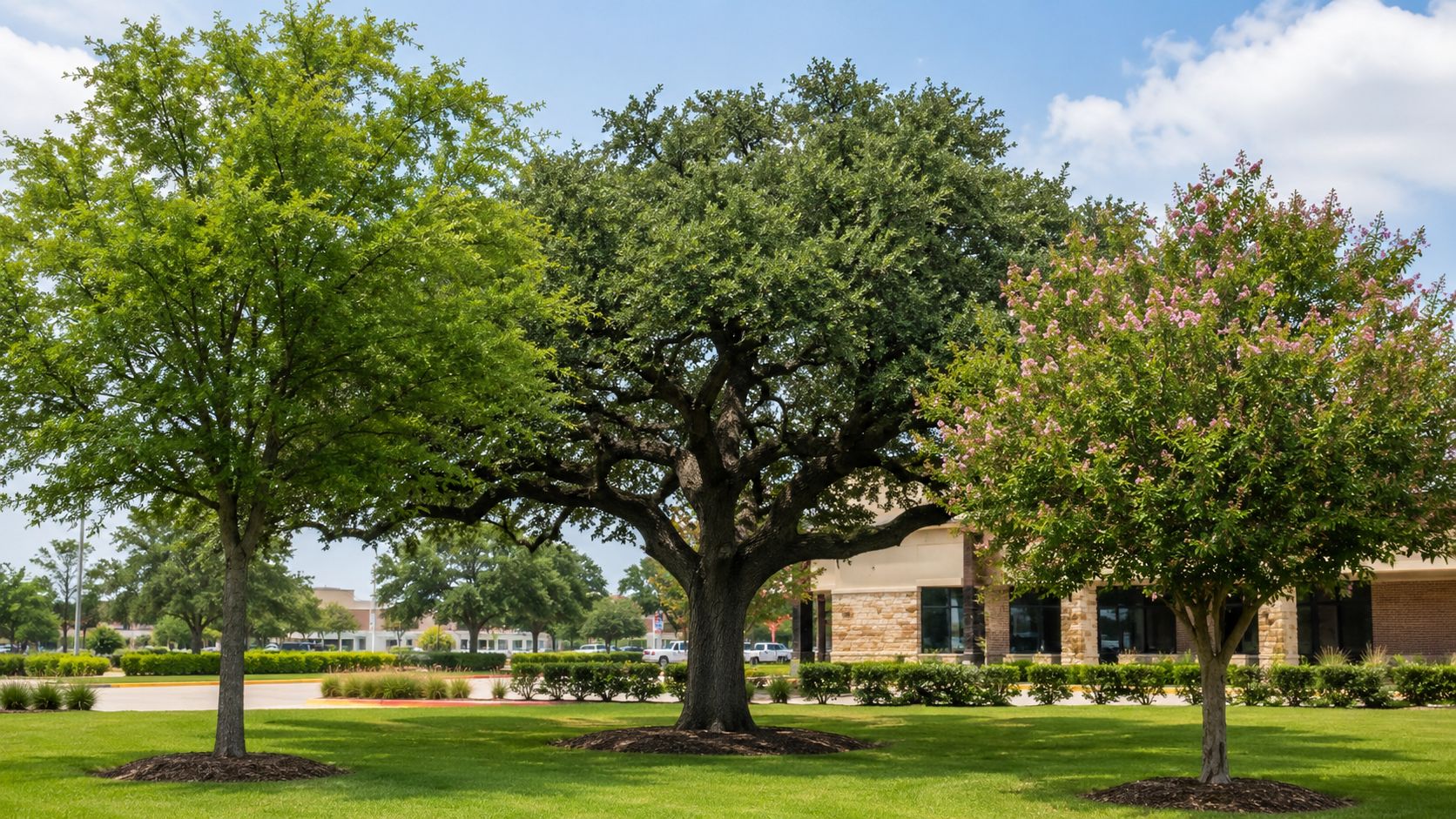
The common thread is plant physiology. Trees with small leaves, deep upright crowns, thick leaf waxes, efficient stomatal control, and extensive root systems are often better equipped for heat and periodic soil-moisture deficit. That's one reason species such as Texas persimmon, anacua, mesquite, and honeylocust keep appearing in drought-resilient Texas guidance.
Cedar elm
Where it shines: larger commercial parcels that need adaptable shade without relying on a very broad-spreading canopy.
Pros
- Handles a wide range of commercial outdoor applications.
- Reads as established and substantial without overwhelming every site.
- Useful where teams want a durable Texas shade tree with a straightforward appearance.
Trade-offs
- Not a good “plant it and forget it” choice in very restricted hardscape pockets.
- Mature clearance still needs planning around drives, lights, and façades.
- Like many shade trees, it performs best when early structure is managed rather than deferred.
Ideal use case: office campuses, educational properties, and parking perimeter zones where there's enough soil volume for long-term development.
Live oak
Where it shines: high-visibility open spaces where deep shade and long-term presence justify the footprint.
Pros
- Creates the kind of canopy that can anchor an entry sequence or central lawn.
- Works well for properties that want a distinctly Texas visual identity.
- Once mature, it can contribute major comfort value in pedestrian-heavy areas.
Trade-offs
- Needs room. That's the headline issue.
- Can become the wrong choice near pavement, curbs, and utilities when planted too tightly.
- Acorn and leaf litter can increase cleanup in traffic-heavy areas.
If a live oak is forced into a small urban opening, the site usually pays for that mismatch later.
Ideal use case: signature greens, broad entry boulevards, and campus lawns where root expansion and canopy spread won't trigger years of corrective work.
Mexican plum
Where it shines: smaller commercial settings that need ornamental character without committing to a massive shade tree.
Pros
- Fits courtyards, entry nodes, and HOA common areas where scale matters.
- Provides seasonal interest and a more refined visual layer.
- Easier to place near buildings than broad-canopy legacy trees.
Trade-offs
- It shouldn't be treated like an instant low-water plant after installation.
- Better as an accent or secondary tree than as the main shade backbone of a large site.
- Placement near intense pedestrian traffic should account for seasonal drop.
Ideal use case: healthcare courtyards, apartment amenities, smaller retail entries, and mixed planting zones where a human-scale tree works better than a dominant canopy tree.
Texas persimmon
Where it shines: constrained sites that still need durability, native character, and a composed habit.
Pros
- Strong candidate for commercial properties where space is limited.
- Its drought-adapted character aligns well with lower-input design intent.
- Useful for properties seeking native identity without oversized canopy pressure.
Trade-offs
- It won't solve broad parking-lot shade goals by itself.
- Like any small to medium tree, it needs careful placement to avoid being visually lost against large buildings.
- Soil and drainage still matter.
Ideal use case: monument signs, pedestrian nodes, smaller medians, and transition spaces between buildings and open lawn.
Proper Planting and Establishment for Long-Term Success
A drought-tolerant tree can still fail fast if the installation is careless. That's especially true in Texas heat. A 2025 ScienceDirect study on Texas forest demographics found a statistically significant decline in young tree populations, with seedlings and saplings showing the strongest reductions under hot drought conditions, and the trend was most prominent in Central Texas. For commercial managers, the takeaway is simple. The planting stage carries real risk during hot, dry periods, so establishment planning can't be casual.
What fails first on commercial installs
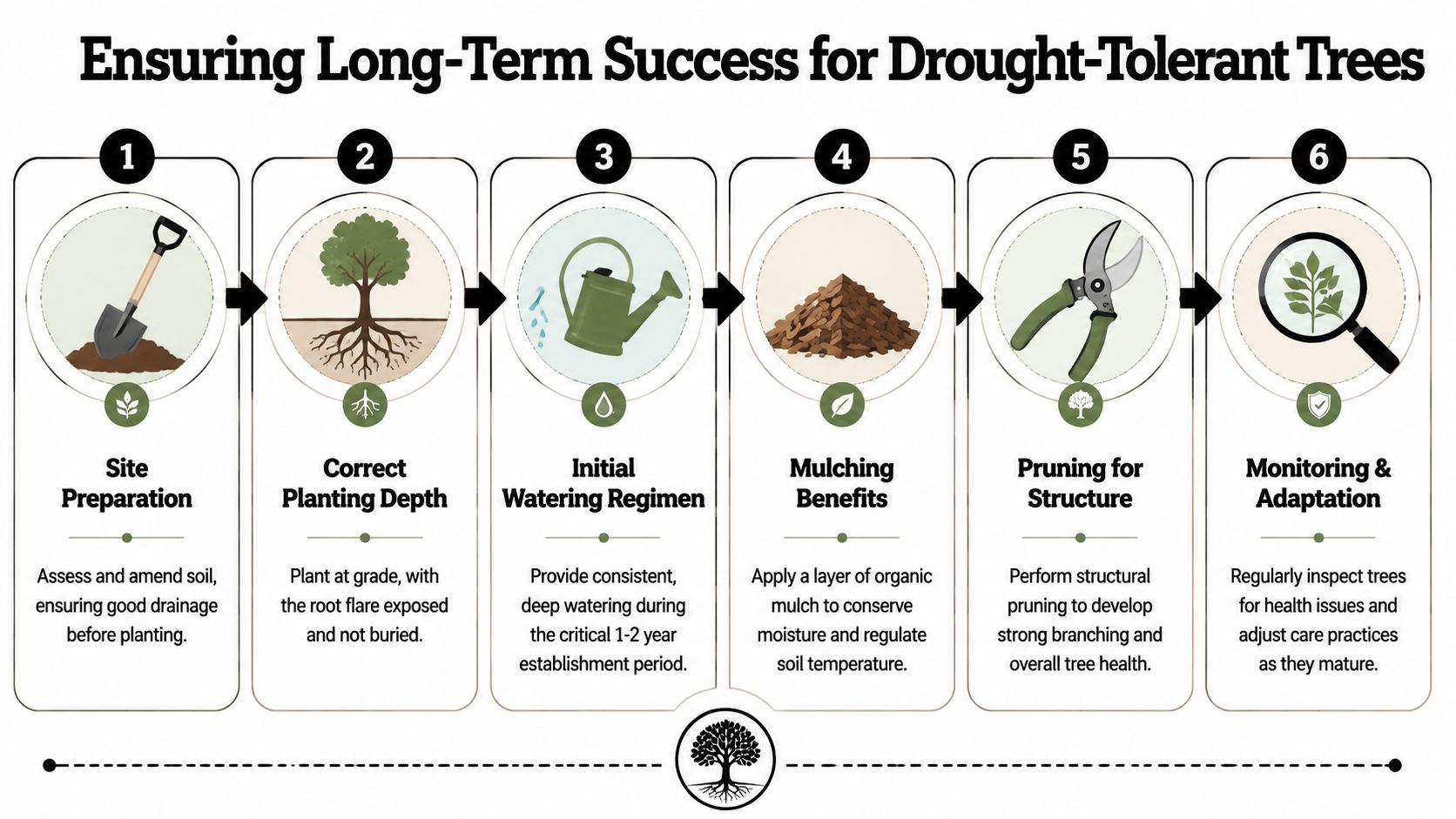
Most early failures trace back to a short list of field mistakes:
- Buried root flare: Trees planted too deep often decline slowly and expensively.
- Compacted planting zone: Roots can't establish properly when crews treat the hole like a container slot.
- Inconsistent watering: New trees don't survive Texas summer by reputation alone.
- Bad mulch practice: A mulch volcano holds moisture in the wrong place and can hide planting errors.
A useful species example comes from the Texas Trees Foundation. Its guidance for Mexican plum notes that the tree is drought tolerant once established, and that establishment typically takes about two years. During that period, new trees may need deep watering 2–3 times per week in hot Texas summers when rain is absent, and the same guidance stresses proper planting depth and avoiding mulch piled against the trunk in this Mexican plum care page.
Field practices that protect survival
On commercial installs, crews should handle drought tolerant trees in Texas with the same discipline used for major hardscape work. The details matter.
- Open the planting area properly. In compacted commercial soils, roots benefit more from lateral opportunity than from an unnecessarily deep excavation.
- Set the tree at grade. The root flare should be visible after planting, not hidden beneath soil or mulch.
- Build a wide mulch ring, not a trunk pile. Mulch should conserve moisture and moderate temperature while keeping the flare exposed.
- Water on a schedule tied to heat and rainfall. Deep watering beats shallow surface spraying.
- Inspect after installation. Irrigation coverage, settling, staking, and flare visibility should all be checked early.
Field note: The tree species may be right, but if the flare is buried and the irrigation never reaches the root ball, the install is still wrong.
That's why many managers involve certified arbor care support during the establishment window, especially on high-visibility sites or phased replacements. If your team is weighing inspection standards, staking, structural pruning, or early health review, professional arbor care should be part of the discussion, not an afterthought.
Smart Irrigation and Lifecycle Maintenance
Once trees are established, the job changes. You're no longer trying to help them survive week to week. You're managing canopy quality, clearance, and long-term asset stability with the least waste possible.
Irrigation should follow tree age and site exposure
Mature drought-tolerant trees still benefit from intentional irrigation strategy. The right approach usually means deep, infrequent watering rather than frequent shallow cycles. That encourages roots to follow moisture lower in the soil profile and reduces the habit of surface dependency.
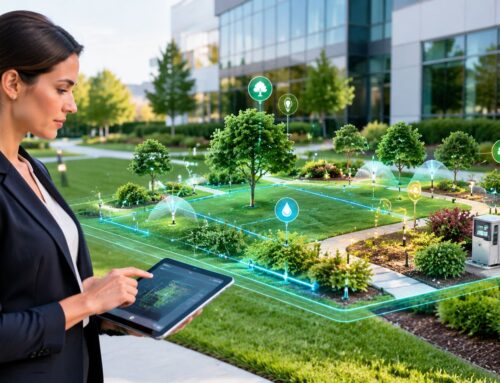
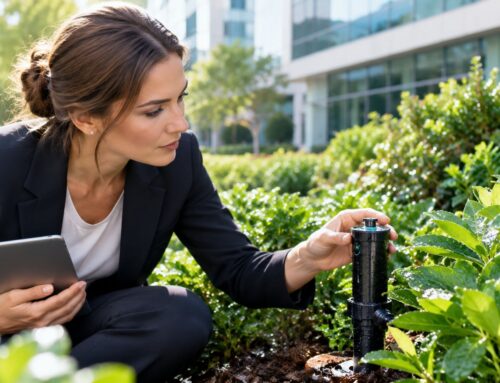
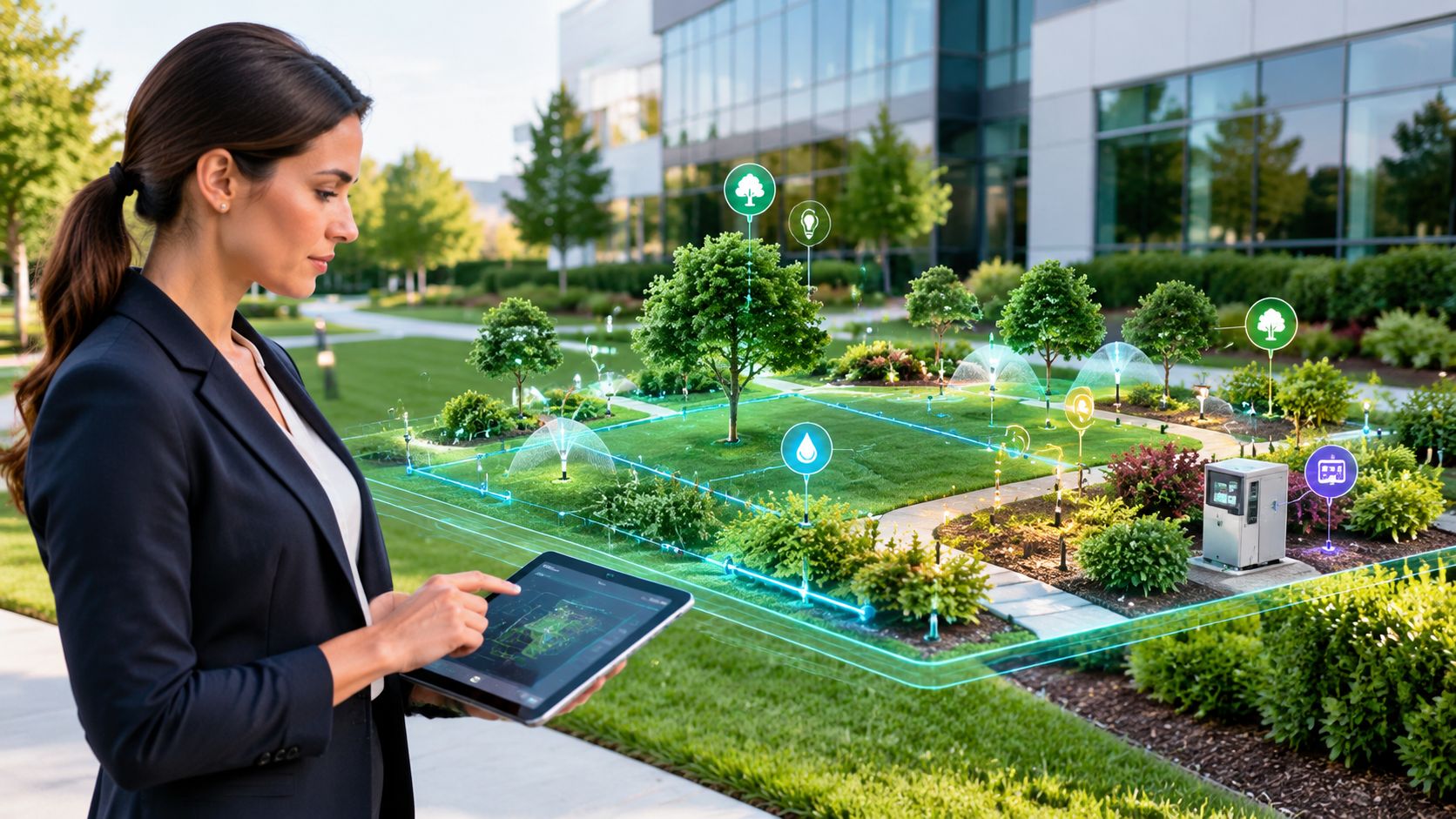
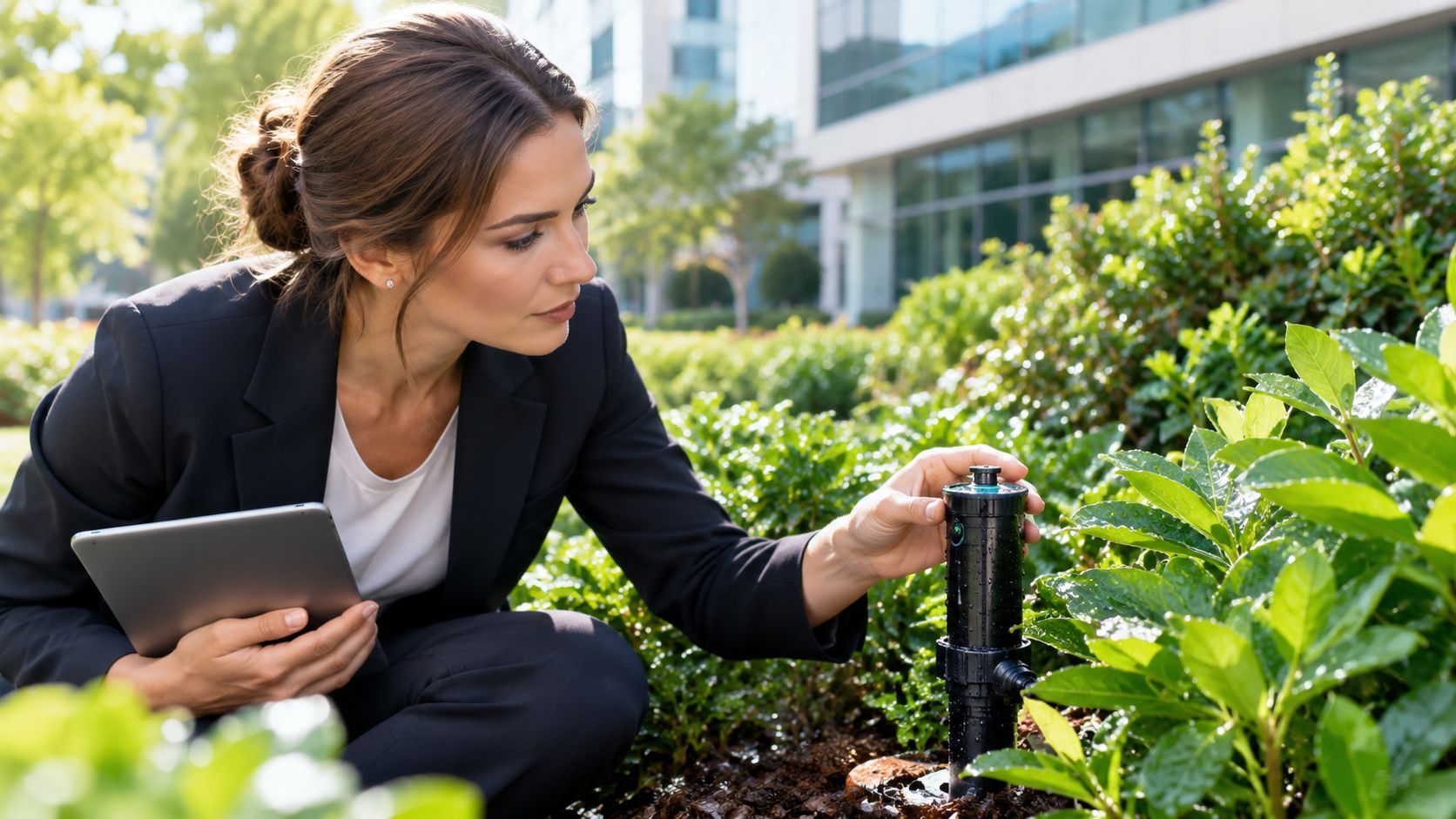
On commercial sites, this should be tied to exposure. A tree surrounded by turf, pavement, and afternoon heat doesn't experience the same moisture pattern as one in a larger planted bed. Irrigation zones need to reflect that. So do inspections. A smart controller can help, but only if heads, emitters, and runtimes match the planting condition.
Maintenance decisions that reduce surprises
A stable tree program also depends on routine non-irrigation work:
- Structural pruning: Done early and correctly, it reduces future clearance conflicts and weak branch architecture.
- Annual inspection: Look for canopy thinning, deadwood, trunk injury, grade changes, and irrigation drift.
- Soil management: Compacted commercial soils often need periodic attention if the canopy is expected to remain vigorous.
- Tool selection: For in-house teams handling light pruning or storm cleanup, practical equipment guidance matters. A buyer's guide to best 16-inch chainsaws can help crews match saw size to routine grounds maintenance without oversizing the tool for the job.
For larger portfolios, many managers also centralize irrigation review, seasonal pruning schedules, and replacement planning under one maintenance standard. That's where a provider such as Prestonwood Commercial Services may fit, alongside arborists and irrigation specialists, for sites that need coordinated commercial grounds maintenance, irrigation audits, and enhancement planning.
Frequently Asked Questions for Property Managers
Should we replace all stressed trees at once
Usually, no. A phased approach is often better for budget control, irrigation adjustment, and visual continuity. Remove hazards and clear failures first, then replace by priority zones such as entries, customer-facing frontage, and heat-exposed parking areas. That gives your team time to evaluate how each species is performing under actual site conditions before a full rollout.
Which trees belong near pavement and pedestrian routes
Favor trees with a manageable mature footprint, predictable maintenance needs, and a litter profile that won't create recurring cleanup complaints. Smaller to medium native trees often make more sense near sidewalks, monument signs, and building approaches than broad legacy canopies. Reserve large shade trees for places that have the soil volume and setback to support them.
Can drought-tolerant trees eliminate irrigation needs
No. They reduce dependence on irrigation when they're properly matched to the site and fully established, but they don't make water irrelevant. Young trees need consistent establishment care, and mature trees still need support during prolonged heat, restricted rainfall, or high-stress site conditions such as reflected pavement heat and compacted soil.
How should we phase a multi-year tree project
Start with a property-wide inventory and classify trees by function, condition, and replacement urgency. Then organize planting into groups such as signature canopy trees, parking and pedestrian support trees, and ornamental accent trees. That sequencing helps managers align capital improvements, irrigation corrections, and seasonal installation windows instead of treating every replacement as a one-off emergency.
A good multi-year tree plan doesn't just ask what to plant. It asks what the site can sustain, what the budget can support, and what the property should look like five years from now.
If you're planning a multi-year upgrade for drought tolerant trees in Texas, Prestonwood Commercial Landscape Services can support commercial properties with grounds design, installation, irrigation coordination, arbor-aware maintenance, and phased enhancement planning that fits operational realities across Dallas-Fort Worth and San Antonio.