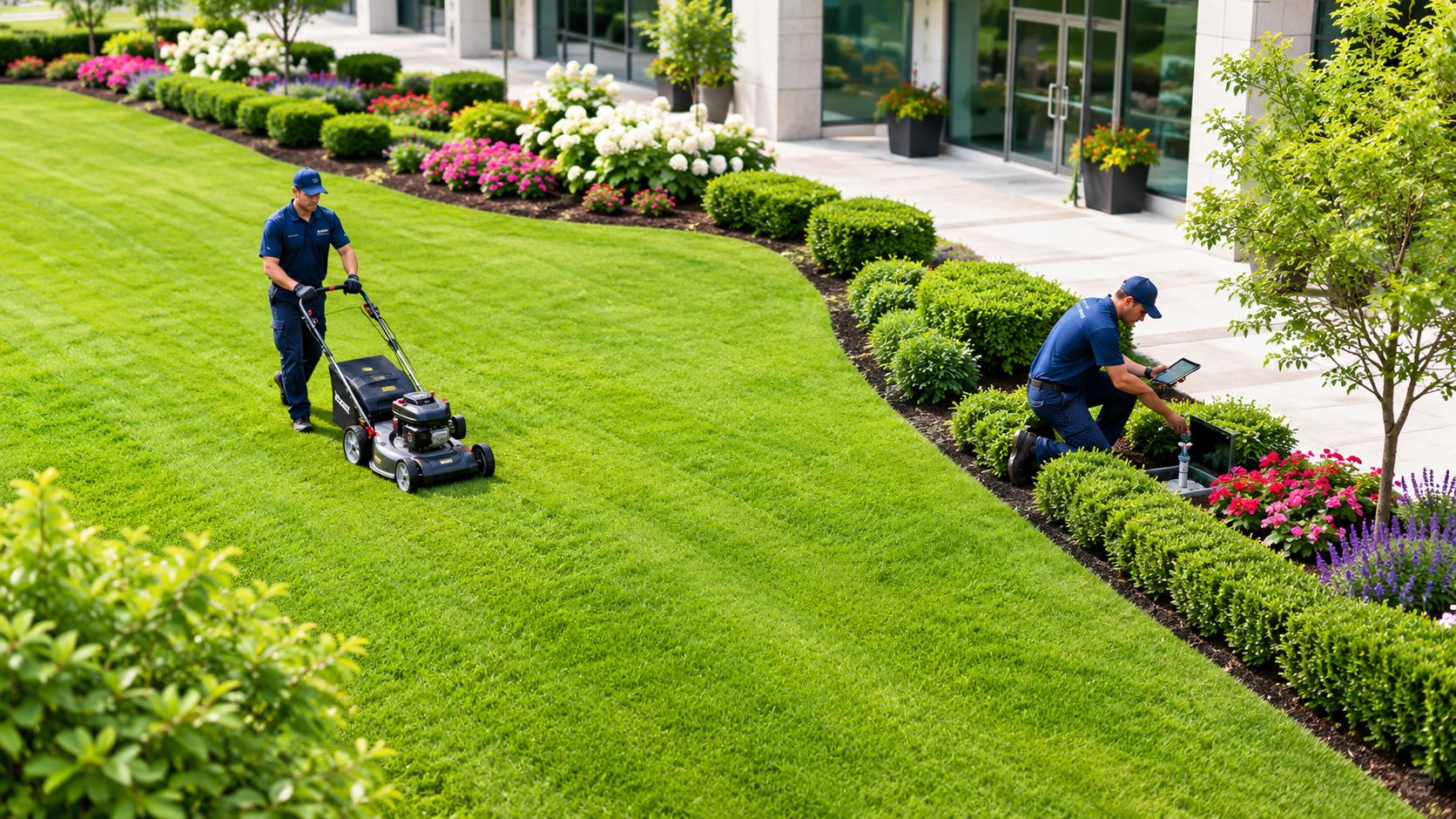
The morning after a heavy storm, a property manager walks the main entrance and finds mulch scattered across the turf, soil pushed against the curb, and irrigation overspray widening the planting beds. The maintenance crew arrives with string trimmers and edging spades, then spends hours restoring lines that a properly specified border should have protected.
That scene repeats across office parks, retail centers, HOAs, healthcare campuses, and industrial properties. Commercial edging isn't decorative trim. It controls mulch migration, separates turf from beds and pavement, improves mower efficiency, and helps manage water movement. The right material reduces recurring labor and replacement work. The wrong one becomes another maintenance liability.
This guide treats edging as site infrastructure with a lifecycle cost, not a per-foot accessory. You'll find material recommendations, installation specifications, property-type matches, procurement guidance, and practical questions to put into your next RFP.
Table of Contents
- Why Edging Is an Operations Decision, Not a Finish
- Where Commercial Landscape Edging Fits in a Property Budget
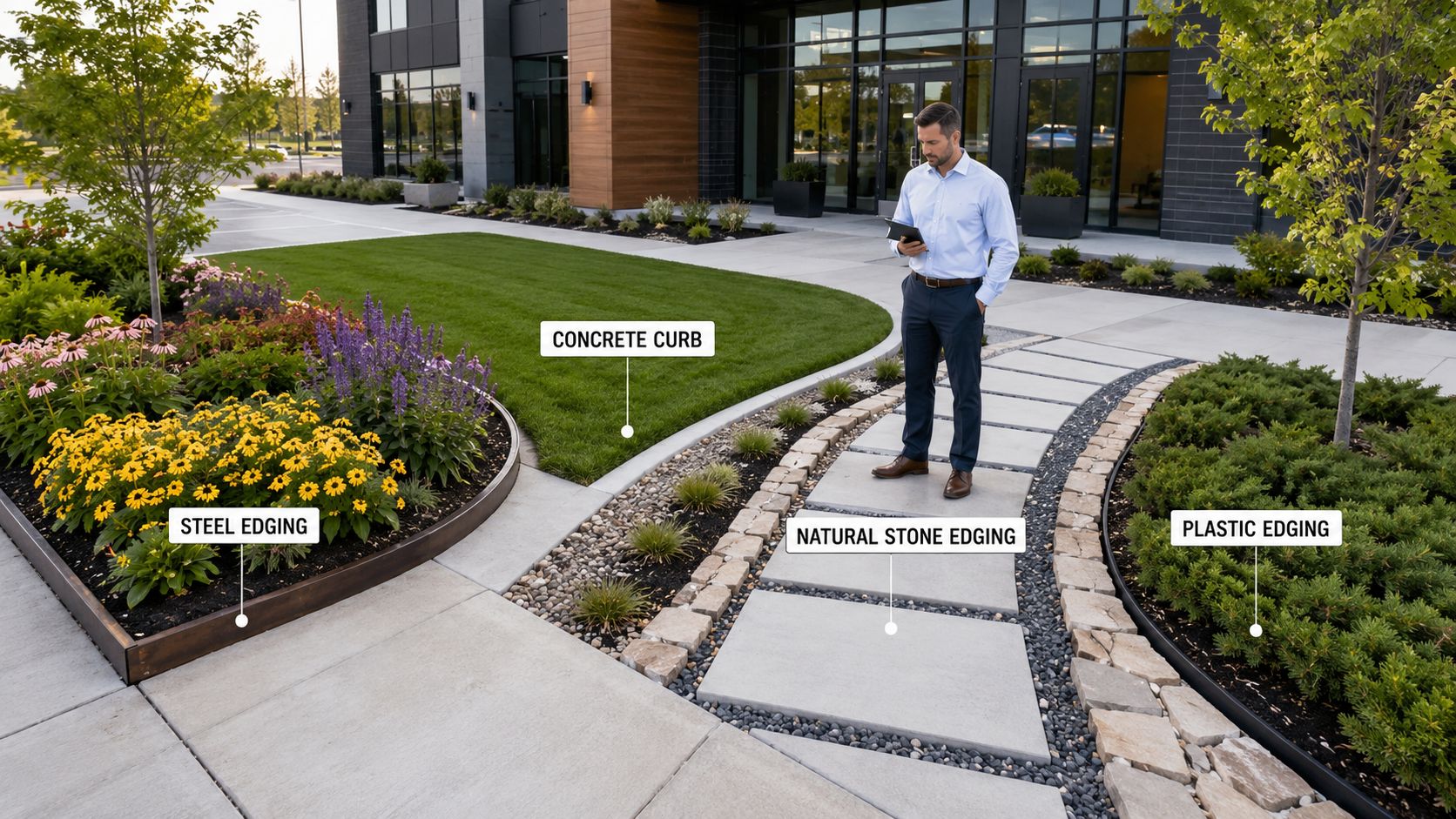
- Comparing Steel, Aluminum, Concrete, Stone, and Plastic
- Installation Methods That Hold Up Under Commercial Use
- Edging as Part of Water Management and Site Resilience
- Matching Edging to Office, Retail, Industrial, Healthcare, and HOA Sites
- Procurement, Lifecycle Cost, and the Case for Specifying by Performance
- Operational Questions Property Managers Ask After the Comparison
Why Edging Is an Operations Decision, Not a Finish
A clean bed line looks like an appearance issue until the first storm, mowing cycle, or irrigation repair exposes the operational consequences. Without a stable border, mulch moves into turf, turf roots invade planting beds, and crews repeatedly recreate the same boundary by hand.
The cost isn't limited to the material. It appears in extra trimming, rework around curbs, blower cleanup, bed reshaping, and call-backs after weather or equipment impact. A border that stays in position protects the work your team already performs.
Four outcomes a proper border controls
Mulch retention comes first. On sloped beds and exposed corners, a correctly anchored edge keeps mulch and loose soil from washing onto sidewalks, parking areas, and turf. That protects appearance while reducing cleanup and sediment movement.
Turf separation keeps grass from crossing into planting beds. When the edge sits at the correct height and finish grade, crews can mow cleanly without repeatedly cutting an irregular line by hand.
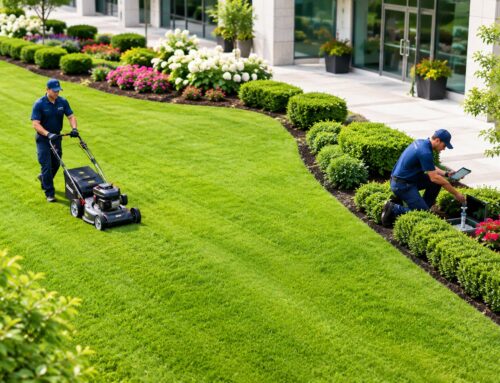
Mower efficiency depends on a predictable transition. A durable edge gives wheels and blades a consistent boundary, reducing the need for string trimming along every bed perimeter. The edge must still be installed flush or safely detailed at pedestrian routes so it doesn't create a trip hazard.
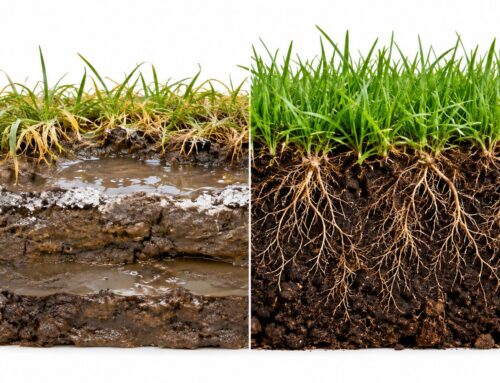
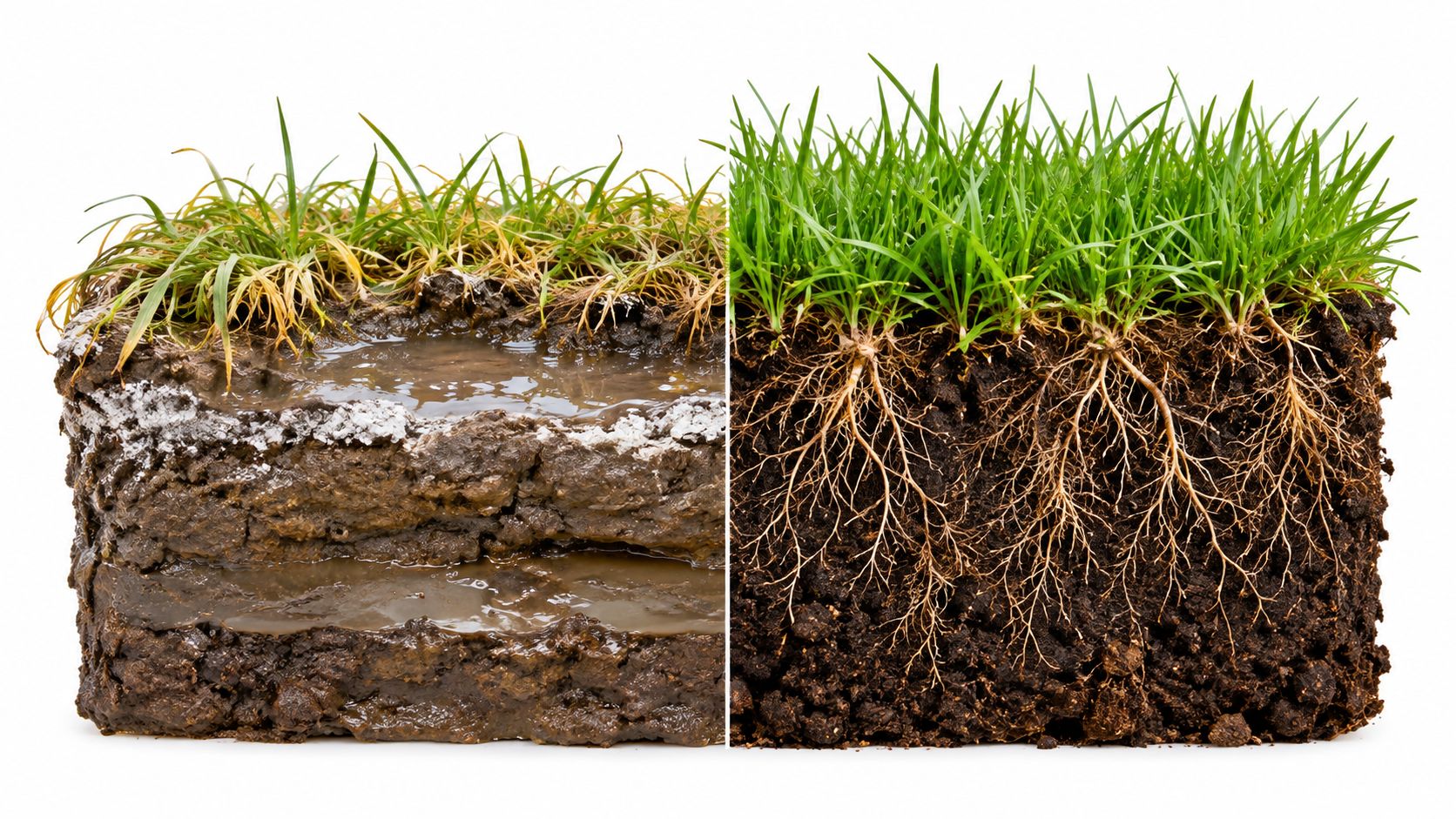
Stormwater containment matters wherever irrigation overspray, sheet flow, or heavy rain moves across a site. Edging won't replace a drainage system, but it can keep bed material in place and preserve the intended separation between planting areas and hardscape.
Field rule: If the same bed line needs repeated correction after mowing or rain, the property doesn't have a labor problem first. It has a specification or installation problem.
A property manager should review edging alongside irrigation, pavement protection, and maintenance scope. The border determines how those systems interact at the ground plane. Under-budgeting it at construction often shifts the cost into every subsequent service visit.
Where Commercial Landscape Edging Fits in a Property Budget
A failed bed line rarely appears as a single repair. It shows up as recurring hand trimming, mulch cleanup, soil migration, and recommendations to reset or replace the border. Property managers should therefore budget edging as lifecycle infrastructure tied to maintenance labor and stormwater performance, not as a decorative finish.
U.S. landscaping services generated $130.672 billion in revenue in 2022, compared with $112.671 billion in 2021 and $95.387 billion in 2019, according to Federal Reserve Economic Data on landscaping services revenue. Those figures cover the wider service economy, not edging alone. They still place edging inside a large operating category that funds repeated maintenance, installation, irrigation, and site appearance work.
The budget question is simple: what does the border cost over its service life? A low bid can fail if crews must reset it after mowing, replace sections damaged by equipment, or clear displaced soil from pavement and inlets. A higher upfront specification may reduce those visits, particularly on long commercial runs, slopes, and sites exposed to concentrated runoff.
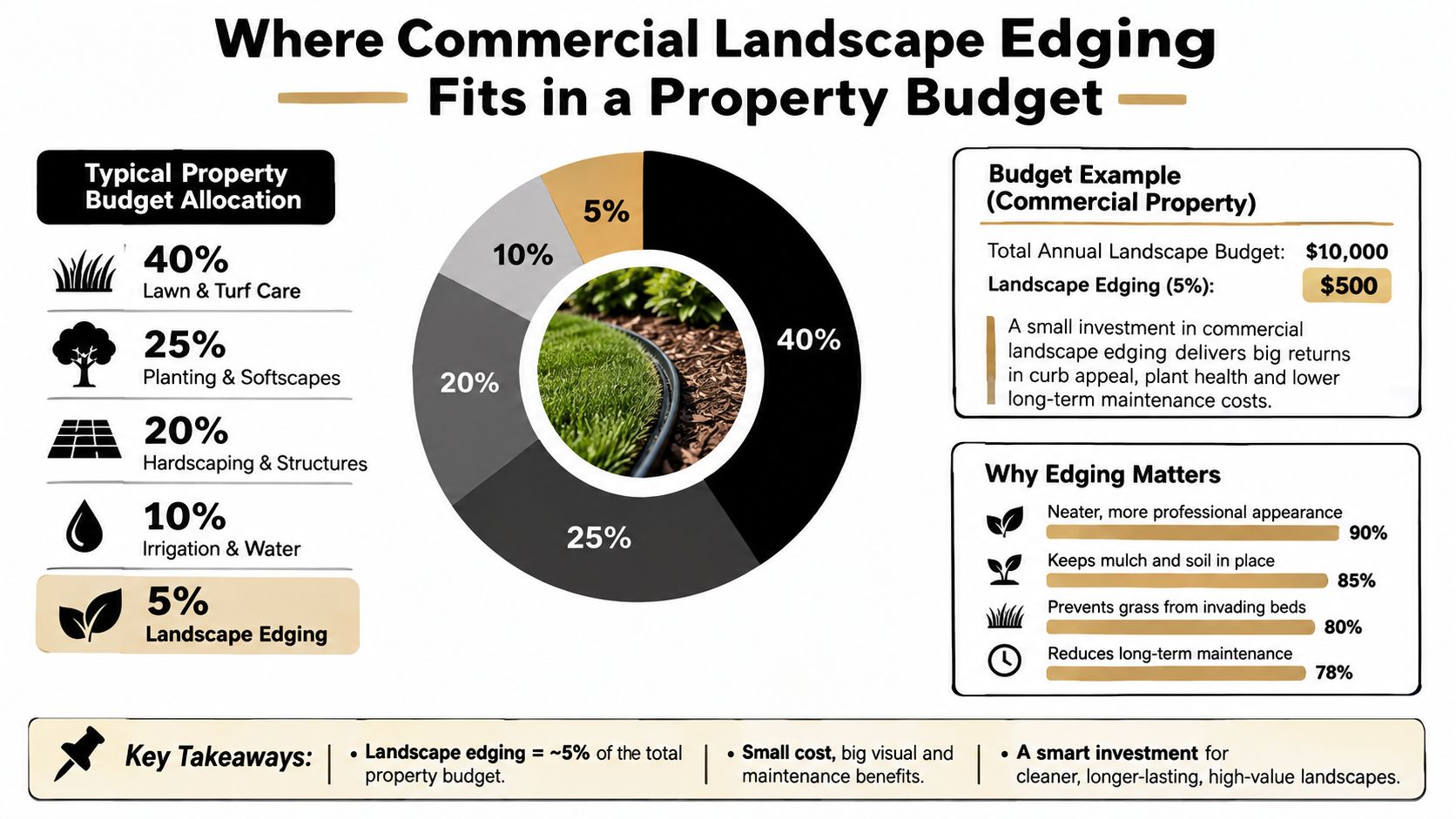
A small category with infrastructure consequences
Published market estimates describe a growing commercial edging category, but they are not a property-specific budget formula. Use them for procurement context, not for setting a site allowance. The owner's actual cost depends on linear footage, excavation, base preparation, installation access, exposure to equipment, and the maintenance cycle.
Review edging with the maintenance contractor, irrigation designer, and civil or professional. On retail and office sites, prioritize clean equipment transitions and low recurring labor. On sloped or runoff-sensitive properties, prioritize a detail that keeps bed material from reaching pavement and drainage paths. Institutional and public projects should also address recycled-content requirements before the specification is finalized.
Budgeting principle: Price the border against the maintenance cycle it must survive, not against the cheapest product on the bid sheet.
Comparing Steel, Aluminum, Concrete, Stone, and Plastic
Material selection should answer four questions: What does it cost per linear foot, how long will it last, how difficult is it to install, and what site conditions will it face? The available comparison data gives steel, aluminum, and plastic a clear durability-cost spread. Concrete and stone remain useful where the border needs to look and function like a hardscape element rather than a concealed metal strip.
| Material | Cost per Linear Foot | Expected Lifespan | Best Fit |
|---|---|---|---|
| Plastic | $1.00–$2.50 | 3–7 years | Light-duty beds, limited-impact sites |
| Aluminum | $3.50–$6.00 | 15–20 years | Curves, visible commercial beds, moderate loads |
| Steel | $6.00–$12.00 | 30+ years | Long straight runs, mower resistance, high durability |
| Concrete | Varies by design and installation | Varies by design and site | Curb-like separation, heavy-duty transitions |
| Natural stone | Varies by stone, thickness, and installation | Can last for decades when properly installed | High-visibility, architectural landscapes |
The comparison for plastic, aluminum, and steel comes from independent landscape edging material comparison data. Concrete and stone don't have a verified price or lifespan figure in the supplied data, so don't force them into a false precision model. Obtain installed bids that include excavation, base preparation, setting, joint treatment, and replacement access.
Steel is the durability benchmark
Steel is my choice for long, straight runs exposed to mower decks, carts, vehicles, or repeated contact. Its rigidity helps it hold alignment under wheel loads, and its expected lifespan gives it a strong lifecycle case when replacement access is difficult. The tradeoffs are higher initial cost, heavier handling, and corrosion risk if the finish or material isn't suited to the environment.
Steel also demands careful detailing near pedestrian routes. Avoid exposed sharp edges, confirm the finished elevation, and specify a protected or appropriate finish where salt, irrigation chemicals, or coastal exposure could accelerate corrosion.
Aluminum earns its place on curves
Aluminum is easier to shape and handle than steel, making it the practical choice for curved beds, moderate-load areas, and projects where installation speed matters. It resists rust, but it can deform if the gauge and anchoring don't match the site. It also isn't my first choice for a border beside vehicle traffic unless the specification provides adequate thickness and restraint.
Concrete creates a more architectural, curb-like transition and can work well where a hard edge needs to resist repeated contact. Natural stone suits hospitality, high-end office, and civic settings where the visible material is part of the design language. For stone selections, buyers can compare Wonder Katni marble prices, then compare the full installed assembly rather than the stone price alone.
Plastic belongs only where the site is light duty and replacement access is easy. Its low entry price, $1.00–$2.50 per linear foot with a 3–7 year expected lifespan, can become expensive when crews reset it repeatedly or when a replacement interrupts a mature outdoor area. For broader hardscape budgeting, use this hardscape installation cost guide as a separate scope reference, not as a substitute for an edging-specific bid.
Installation Methods That Hold Up Under Commercial Use
A commercial installation succeeds or fails at the anchors, joints, grade, and transitions. The three common approaches are staked metal, cast-in-place concrete, and paver restraint. Each works when the installer matches the assembly to soil movement, traffic, drainage, and maintenance equipment.
Staked metal
For steel and aluminum, start by setting the line, checking utilities and irrigation, excavating the required trench, and placing the edge at the intended finish elevation. Do not let the crew bury the top inconsistently or leave joints unsupported. Uneven exposure creates mowing issues and makes a straight run look poorly installed.
Contractor-grade aluminum commonly uses 0.050 to 0.090 inch gauge, while 3/16 inch is recommended for paver restraint, vehicular traffic zones, expansive soils, and frost-heave risk. Steel is often specified at 3/16 to 1/4 inch for long runs because it stays straighter under wheel loads. These gauge and application recommendations are documented in contractor-grade aluminum edging guidance.
Stake spacing must match the material. Aluminum generally needs anchors about 12 to 18 inches apart, while steel can often use 24 to 36 inch spacing, subject to soil and load conditions. The installer should secure ends, joints, curves, and transitions more carefully than an undisturbed straight section.
Concrete and paver restraint
Cast-in-place concrete makes sense when the border must behave like a curb or continuous structural separator. It requires sound subgrade preparation, consistent forms, controlled grades, and enough access for repair if settlement occurs. Use it where the visual mass and rigidity justify the more involved installation.
Paver restraint is a different detail. The edge sits beside or under the paver assembly and resists lateral spreading from foot traffic, carts, and maintenance equipment. A 3/16 inch aluminum profile is the appropriate benchmark for demanding paver and vehicular applications, not a lightweight residential strip.
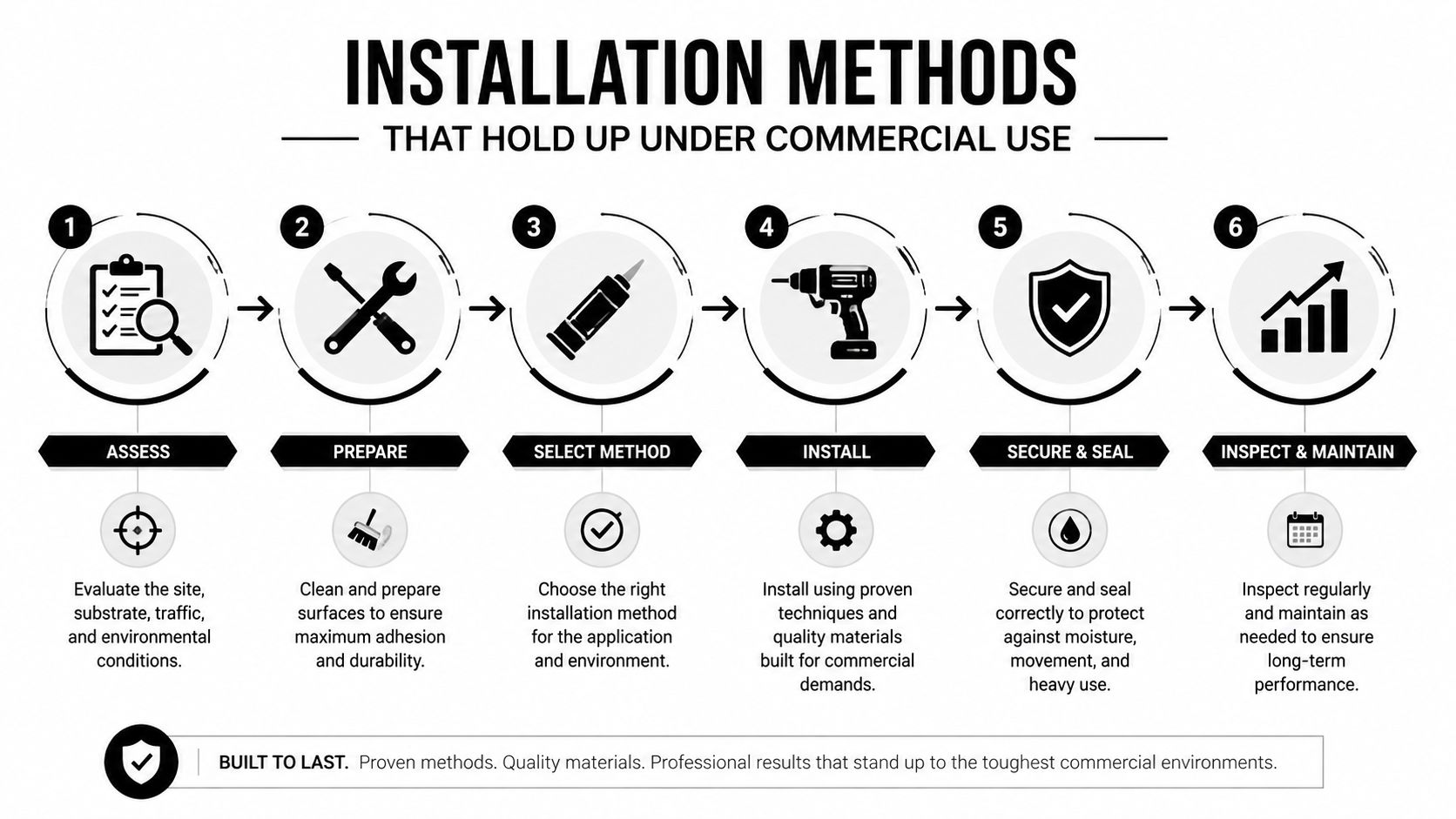
Installer requirement: Require a marked layout, product data, gauge, stake spacing, joint detail, finish elevation, and irrigation coordination before work begins.
Edging as Part of Water Management and Site Resilience
A border doesn't manage a drainage network by itself, but it influences where materials go when water crosses the site. That makes edging part of the water conversation, especially on slopes, bioswale edges, entry plazas, and beds exposed to irrigation overspray.
A properly anchored edge helps hold mulch and soil in place during sheet flow. It can reduce bed washout at transitions and keep loose material away from walks, curbs, and inlets. On a sloped property, the border should be coordinated with the drainage plan rather than installed as an uninterrupted wall that blocks intended flow.
Coordinate the edge with irrigation
Irrigation heads often reveal edging failures before a storm does. Overspray can move mulch, soften soil, and encourage turf to creep across the intended line. During layout, the installer and irrigation contractor should confirm head placement, trench paths, sleeves, and discharge patterns.
The border also protects pavement edges indirectly. Turf creeping onto pavement traps soil and moisture at the transition, while displaced mulch can obscure the edge and interfere with sweeping. Keeping the boundary defined supports cleaner maintenance and makes pavement distress easier to see.
Use edging where it supports the drainage strategy
On bioswale edges and resilient zones, select a profile that contains planting media without interrupting designed overflow. A perforated or drainage-compatible profile may be appropriate where lateral water movement is part of the assembly. On high-traffic entries, prioritize anchoring and a safe, flush transition so pedestrian movement doesn't damage the edge or create a trip point.
Broader commercial grounds guidance emphasizes smart irrigation, water budgeting, permeable surfaces, stormwater management, and climate-resilient design as owners focus more on operating performance. Review these landscape drainage solutions when the edging problem is part of a larger grade, runoff, or irrigation issue.
Water-management test: If the edge changes the path of runoff, show it on the site detail. Never let an edging crew make an unreviewed drainage decision in the field.
Matching Edging to Office, Retail, Industrial, Healthcare, and HOA Sites
The right border depends on traffic, visibility, soil movement, maintenance routines, and replacement access. A high-visibility corporate campus needs crisp geometry and discreet detailing. An industrial park needs resistance to impacts and equipment, even if the environment isn't viewed at close range.
| Property Type | Recommended Edging | Why |
|---|---|---|
| Office and corporate campus | Aluminum or architectural stone | Clean lines, controlled appearance, flexible curves |
| Retail center | Steel at exposed routes, aluminum elsewhere | Mowers, carts, customer traffic, and visible entries |
| Industrial park | Steel | Long runs, equipment contact, durability |
| Healthcare facility | Low-profile aluminum or concrete | Safe transitions, clean maintenance, controlled movement |
| Hospitality venue | Aluminum, concrete, or natural stone | Appearance, guest experience, durable circulation edges |
| HOA or POA | Aluminum for key areas, plastic only for light-duty zones | Balances reserve planning, appearance, and maintenance access |
| Education campus | Steel or reinforced aluminum | Repeated traffic, equipment exposure, and active outdoor use |
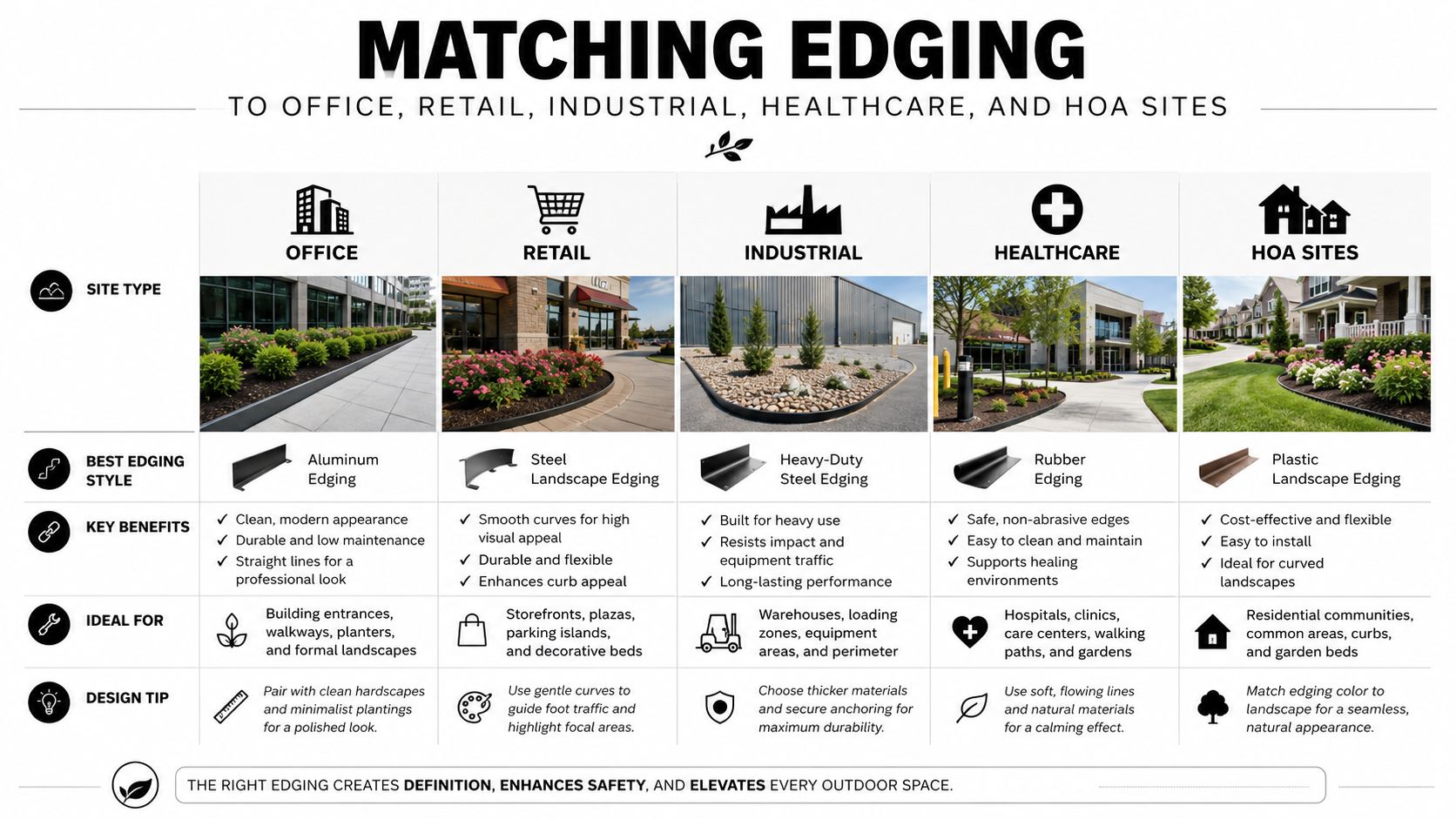
Site-specific decisions matter
At a Class-A office campus, I favor aluminum with consistent joints, a controlled finish, and enough rigidity to hold formal lines. Use stone or concrete at signature entrances where the border is meant to read as architecture. Don't install an exposed metal lip beside a highly used pedestrian route.
Retail centers need a mixed strategy. Steel belongs near loading zones, drive lanes, cart paths, and corners that mowers or vehicles routinely hit. Aluminum works well around curved storefront beds and pedestrian-facing planting areas where appearance matters.
Industrial parks should prioritize steel on long runs and vulnerable corners. The installation needs clear separation from forklifts, trailers, and maintenance access. A cheap flexible edge near equipment traffic is a predictable replacement item.
Healthcare facilities require safe transitions and disciplined maintenance. Use low-profile aluminum or concrete where the border meets walks and entrances, and coordinate the finish elevation with accessibility requirements. Hospitality sites can justify natural stone or a finished concrete edge in guest-facing zones, but service areas should use a material crews can repair without disrupting operations.
For HOAs and POAs, reserve the durable material for entrances, common areas, and high-visibility beds. Plastic can work in light-duty, low-impact areas, but the association should document its replacement expectations instead of treating it as permanent infrastructure.
Procurement, Lifecycle Cost, and the Case for Specifying by Performance
A commercial edging bid should state the required performance, not just a material name. Specify gauge, profile, finish, joint type, anchoring, elevation, soil conditions, traffic exposure, and the maintenance standard expected after installation.
The EPA's Procurement Guideline designates lawn and garden edging as a product category for recycled-content purchasing. Its Recovered Materials Advisory Notice recommends that edging made from plastic and/or rubber contain 30% to 100% recovered materials content, while also noting that agencies may purchase wood or other materials when performance specifications are met. See the EPA's guidance for landscaping products and recycled-content procurement.
That guidance gives public and institutional buyers a useful framework. Recycled content matters, but it doesn't excuse a product that fails under equipment impact, freeze-thaw movement, or repeated maintenance. The specification should require both sustainability documentation and site-appropriate performance.
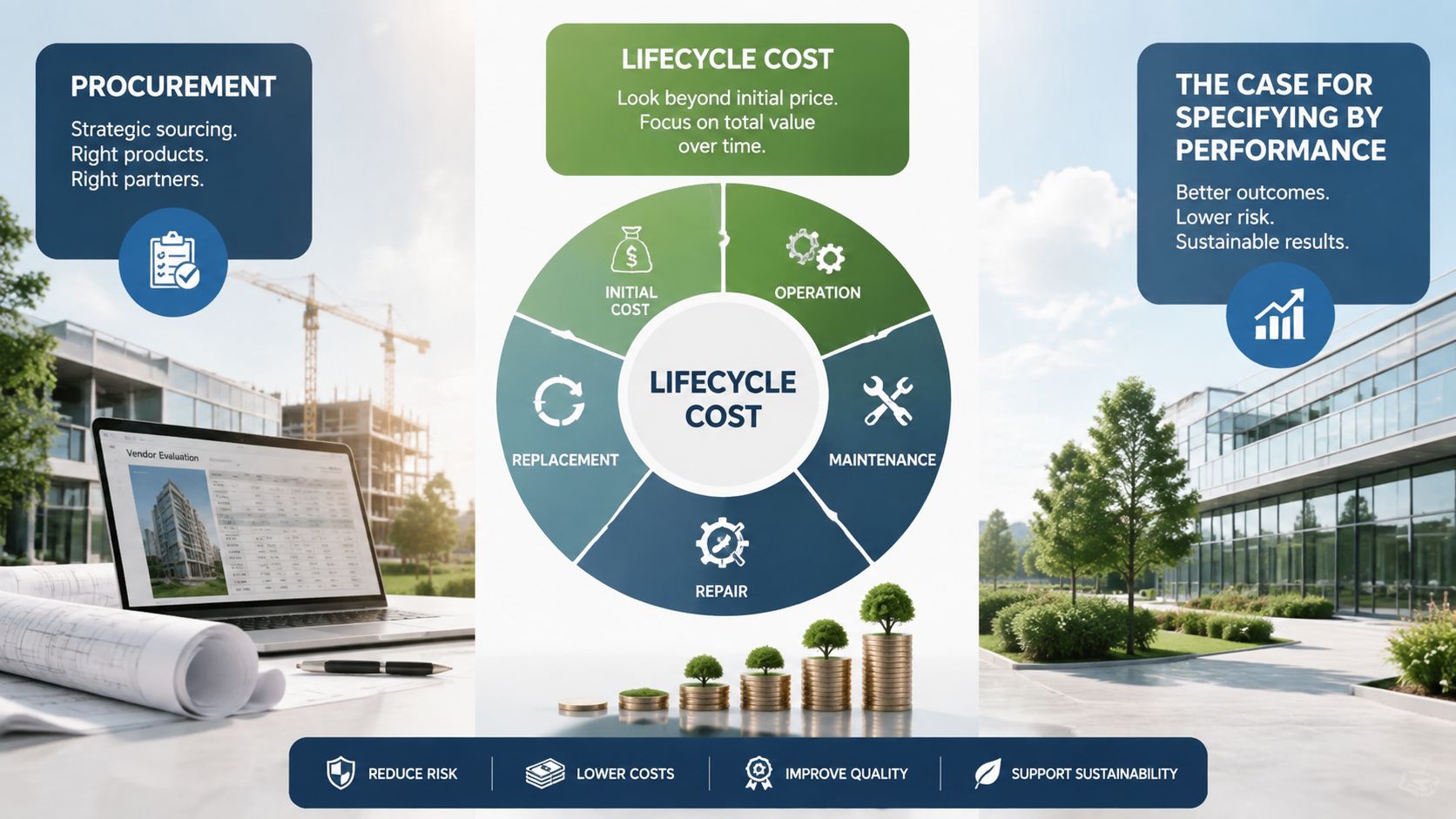
Build the cost model around replacement
Use a 3-year, 5-year, and 10-year review that includes material, installation labor, removal, disposal, replacement cycles, repair access, and maintenance labor affected by the border. The precise result depends on the site's linear footage, soil, traffic, and service contract, so the vendor should provide assumptions rather than a misleading single total.
A lower-priced plastic edge may win an initial bid and lose the lifecycle comparison if it needs frequent resetting. Steel may carry the highest material price in the supplied comparison, but it can make sense where replacement work is disruptive and long straight runs dominate. Aluminum often occupies the practical middle ground for curved or moderate-load commercial applications.
For contract language, commercial landscape contracts guidance can help frame responsibilities for installation quality, recurring maintenance, inspections, and corrective work.
Performance-based procurement: Buy the border that meets the site's maintenance, traffic, water, and service-life requirements. Treat recycled content as a procurement value, not as a replacement for performance.
Operational Questions Property Managers Ask After the Comparison
How should I think about total edging cost over a decade?
Start with installed cost, then add expected repair, removal, replacement, and maintenance labor. Compare the result across material options using the same site conditions. For a mid-size office park, also price disruption at signature entrances and the labor required to restore bed lines after mowing and storms.
When does recycled-content edging deliver equal performance?
It delivers equal performance when the product meets the project's gauge, anchoring, profile, joint, drainage, and traffic requirements. Ask for recovered-material documentation, installation instructions, and product data. Don't approve a recycled-content product solely because it satisfies a sustainability checkbox.
How should replacement fit the seasonal maintenance calendar?
Schedule replacement before the property's most demanding growth or weather period, after locating irrigation and utilities. Coordinate removal, bed restoration, and mulch replacement in one work package. A staged repair is usually easier to manage than waiting for widespread failure across every bed.
What does the maintenance crew need from the installer?
Give the crew an as-built layout, product name, gauge, profile, joint method, stake spacing, finish information, and repair procedure. Mark unusual transitions and drainage-sensitive areas. The crew should know which edges can tolerate mower contact and which require hand work.
Property managers who oversee multiple vendors should also document recurring trouble spots with photographs, inspection notes, and work-order history. A practical landscaping management guide by Facility Management Insights can support that broader workflow.
Crew standard: The installer should leave behind information that lets a maintenance supervisor repair the border correctly without guessing.
Prestonwood Commercial Landscape Services designs, installs, and maintains commercial properties with edging, irrigation, water management, and site-specific maintenance requirements in mind. Visit Prestonwood Commercial Landscape Services to discuss an edging assessment, lifecycle-focused plan, or ongoing service program for your property.