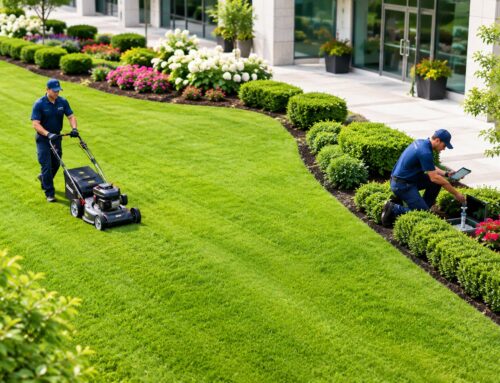
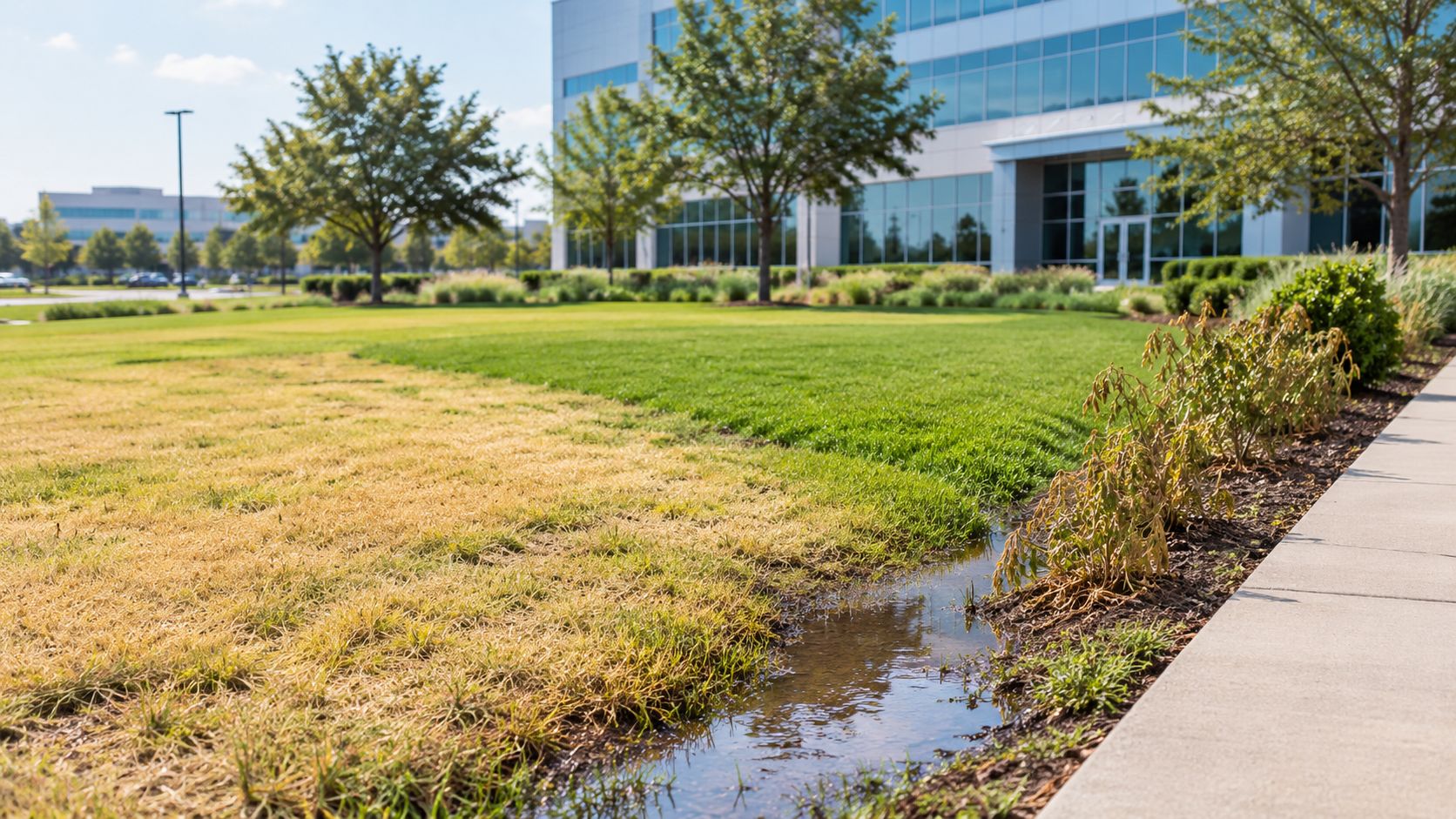
A property manager walks the site after a weekend irrigation cycle and finds yellowing turf, soft soil, and puddles beside otherwise healthy planting beds. The maintenance team suggests more fertilizer. A controller is still running on its usual schedule, so nobody suspects the water. Yet the grounds keep declining.
That pattern is common because over-irrigation damages soil before it damages plants visibly. Roots can lose oxygen, nutrients can move below the root zone, and salts can accumulate where the soil initially looks normal. By the time turf thins or shrubs wilt, the irrigation problem may already be affecting the soil's ability to support healthy growth.
Table of Contents
- The Hidden Cost of Overwatering Commercial Landscapes
- Understanding Waterlogging and Root Suffocation
- Why Salts Return After You Water More
- Signs and Symptoms of Over-Irrigation Damage
- Remediation and Prevention Strategies
- Protecting Your Landscape Investment Long-Term
The Hidden Cost of Overwatering Commercial Landscapes
A yellow lawn often triggers the wrong response. A manager sees pale turf, assumes nitrogen deficiency, and authorizes fertilizer. When the color doesn't improve, the next recommendation may be disease treatment, reseeding, or replacement planting. Meanwhile, the irrigation system continues applying more water than the soil can accept.
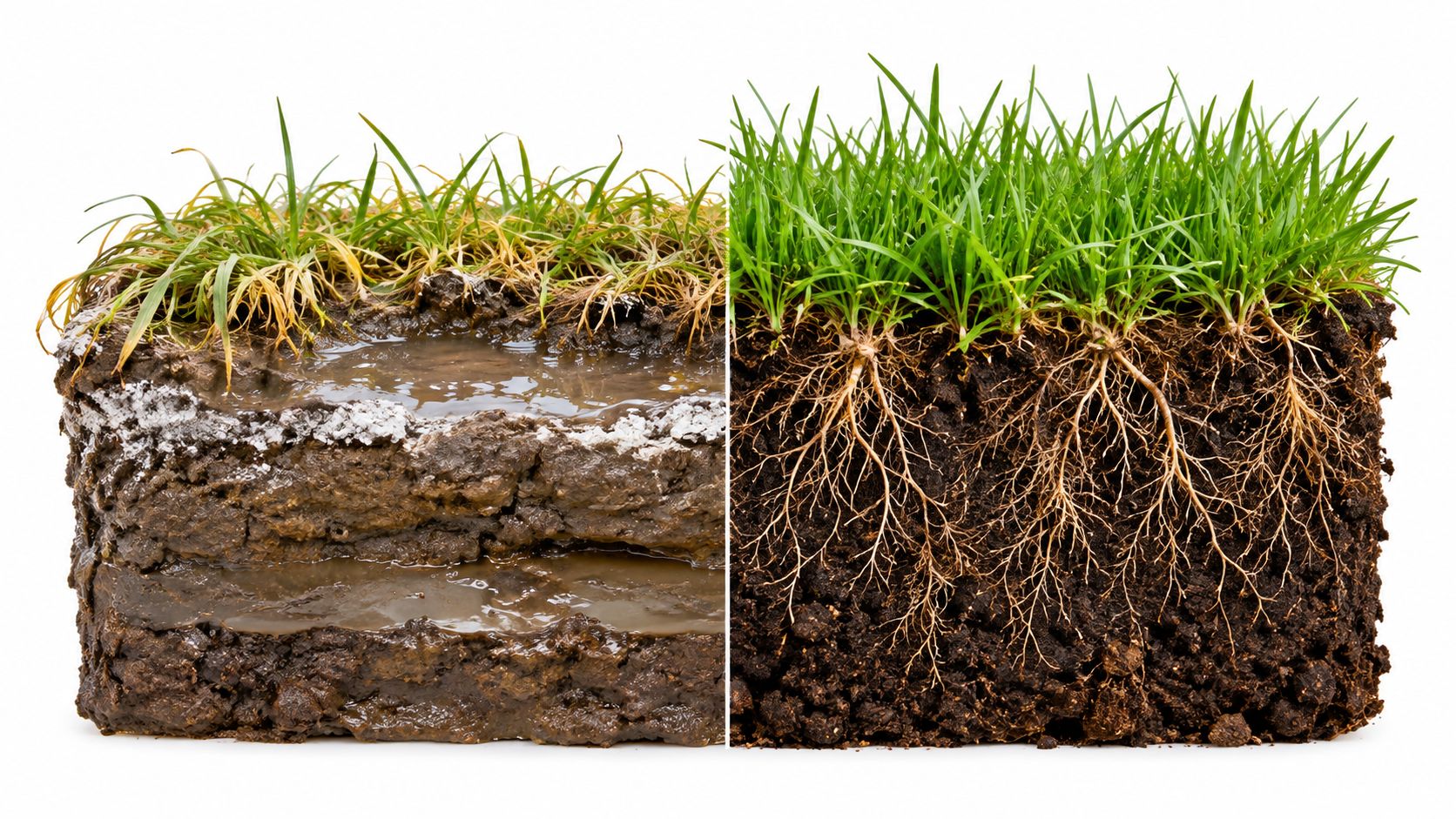
The root problem may be a saturated root zone. Water fills the spaces that normally contain air, leaving roots with less oxygen for respiration. That interferes with water uptake, nutrient transport, and root growth, so a plant can look deficient even when nutrients are present in the soil.
Why the first diagnosis is often wrong
The visual symptoms overlap:
- Yellowing foliage can reflect restricted roots rather than a simple fertilizer shortage.
- Wilting in wet soil can occur when damaged roots can't absorb water efficiently.
- Thin turf and declining ornamentals may indicate chronic saturation, poor drainage, or salt stress.
- Persistent puddles point to a delivery or infiltration problem that fertilizer won't correct.
Technical guidance from the University of Nebraska Extension on excess water and soil oxygen notes that wet conditions lasting 24–48 hours or more can reduce soil oxygen to levels harmful to plant growth, while oxygen below 10% in the soil atmosphere may inhibit growth. Those thresholds matter because roots can be under stress well before leaves turn brown.
What the damage costs a commercial site
The financial impact usually arrives in stages. First, the property pays for unnecessary fertilizer, fungicides, labor, and repeated inspections. Then the outdoor space loses uniformity. A wet strip beside a building may contrast sharply with stressed turf on a slope, making the entire site look poorly maintained.
Later, managers may face soil correction, drainage work, irrigation repairs, or plant replacement. Before approving another treatment, compare the symptoms with the system's behavior. A review of irrigation system repair costs can help frame the decision, but the practical first step is still an onsite diagnosis of water delivery, drainage, and root-zone moisture.
Practical rule: If a plant is declining while the soil remains wet, investigate oxygen, drainage, and salinity before adding fertilizer.
Understanding Waterlogging and Root Suffocation
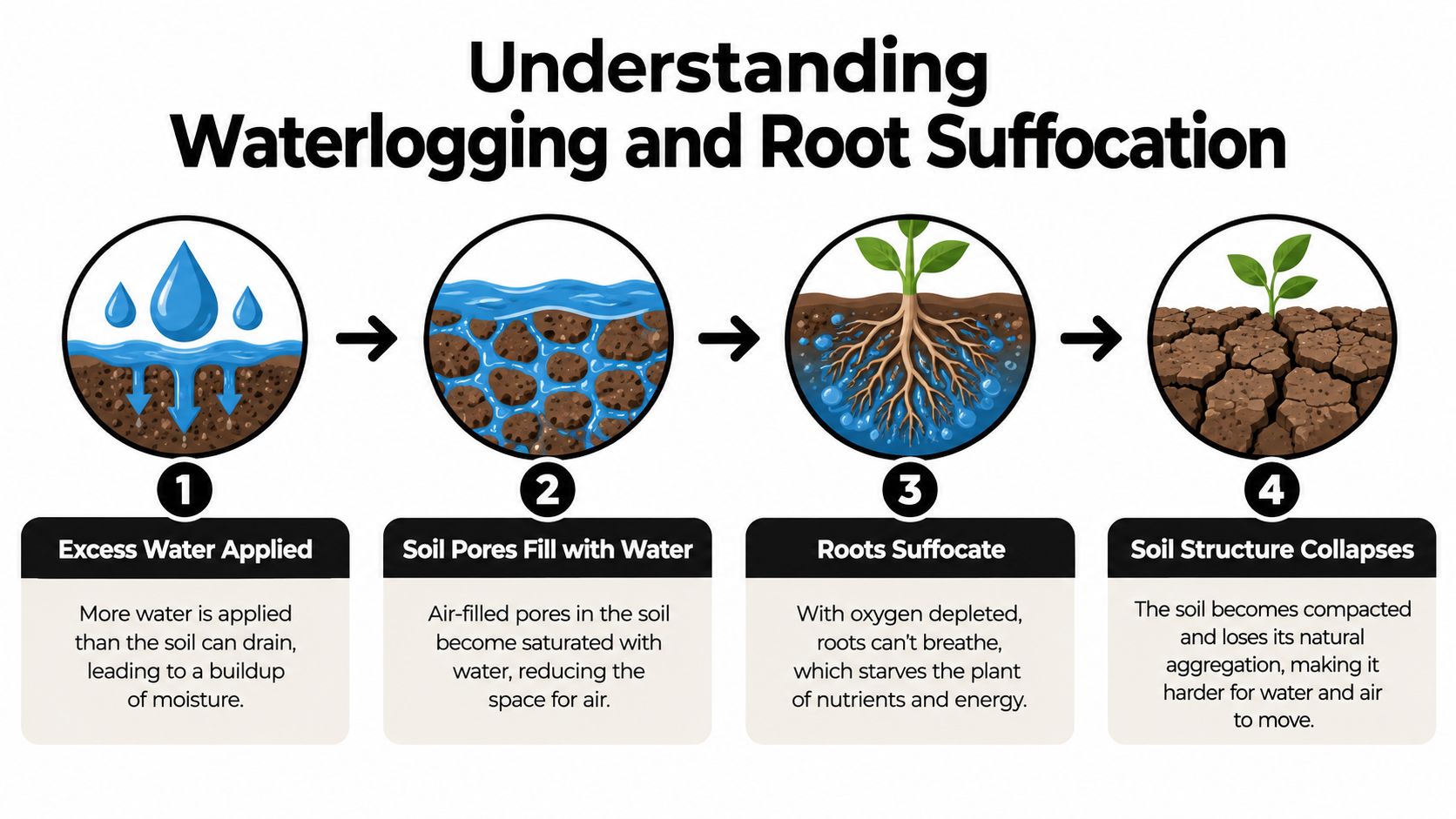
Waterlogging begins when the soil receives water faster than it can drain, infiltrate, or be used by plants. Soil contains a network of pores. Some hold water, while others hold air. Over-irrigation shifts that balance until water occupies the air-filled spaces around the roots.
Roots need oxygen to respire. When saturated soil blocks gas exchange, roots can't function normally, even though water surrounds them. The result is an unusual form of stress: the soil appears wet, but plants behave as though they can't access enough water.
What happens below the surface
The sequence is straightforward:
- Excess water enters the root zone. The application exceeds the soil's capacity to absorb and drain it.
- Air-filled pores become saturated. Oxygen movement from the atmosphere slows sharply.
- Roots lose respiratory capacity. Water uptake, nutrient movement, and root growth become less effective.
- Plant performance falls. The canopy may thin or yellow after the underlying root damage has progressed.
The FAO explanation of irrigation salinity and waterlogging identifies excessive water application and inadequate drainage as major causes of irrigated-land degradation. FAO reports that 20 to 30 million hectares of irrigated land are severely affected by salinity. It also reports that about 34 million hectares, or 11% of the world's irrigated area, have some level of salinity, with an additional 60–80 million hectares affected by waterlogging and related salinity.
The same mechanism appears on commercial grounds at a smaller scale. A compacted planting bed, a clay lens, or a low point beside a parking area can hold water long after nearby soil has dried. Finer-textured soil is especially unforgiving because water moves through it slowly.
How to inspect a wet root zone
A property manager doesn't need to excavate every bed. Start with targeted observations:
- Run one irrigation zone at a time and watch where water ponds or runs across pavement.
- Push a soil probe into wet and dry areas, comparing resistance and depth.
- Inspect roots in a small representative area. Healthy roots should show active growth rather than a consistently dark, decayed appearance.
- Record how long low areas remain wet after irrigation or rainfall.
- Compare plant symptoms with soil moisture instead of judging the irrigation schedule by the calendar.
Use soil moisture monitoring for commercial landscapes to replace assumptions with readings. A schedule that looks reasonable at the controller can still oversupply a shaded bed, a compacted lawn, or a zone with mismatched spray heads.
Why Salts Return After You Water More
A commercial planting bed can receive another irrigation cycle, still look wilted, and lose root function without showing it. That is the hidden answer to how is over irrigation damaging to soil. Repeated watering can raise the water table and move dissolved salts back toward the root zone before visible decline appears. Managers who respond only to surface dryness may worsen the underlying soil problem.
The process develops in stages. Irrigation moves water downward, but poor drainage keeps it from leaving the site efficiently. As the water table rises, dissolved salts move upward through the soil. Water then evaporates from the surface or leaves through plant transpiration, while the salts remain behind.
Why more water can worsen salinity
Leaching removes salts only when water has somewhere to go. With adequate drainage, a controlled application can carry salts below the active root zone. With poor drainage, that same application increases saturation, keeps the water table high, and creates conditions for salts to return as the soil dries.
The result is a feedback loop:
- Plants experience salt stress and lose vigor.
- A manager interprets the decline as drought or nutrient deficiency.
- Irrigation increases.
- The water table rises further.
- Evaporation leaves more salts near the roots.
Early salinity often has no obvious white crust. A shrub may look underfed, turf may lose density, and leaf margins may show stress. The hidden cause can be reduced water uptake in salty soil, not a simple lack of irrigation.
Nutrients can leave while salts build
Over-irrigation also carries mobile nutrients, especially nitrate nitrogen, below the root zone when applied water exceeds field capacity. Fertilizer efficiency falls while salts accumulate. Waterlogged roots are also less able to exclude sodium and chloride, so saturation and salinity reinforce each other as forms of soil degradation.
Commercial property managers should test rather than guess. Take soil samples from healthy and declining zones, then compare salinity, moisture, infiltration, and nutrient levels. Review irrigation water quality when recurring salt symptoms do not match the visible watering pattern. Applying water conservation irrigation methods means more than shortening runtime. It means setting applications to support drainage and avoid rebuilding the same salt problem.
Signs and Symptoms of Over-Irrigation Damage
The most useful diagnostic question is not, “Which plant looks sick?” It's, “What do the affected areas have in common?” If several plants in one irrigation zone decline together, the zone, soil, drainage pattern, or exposure may matter more than the individual species.
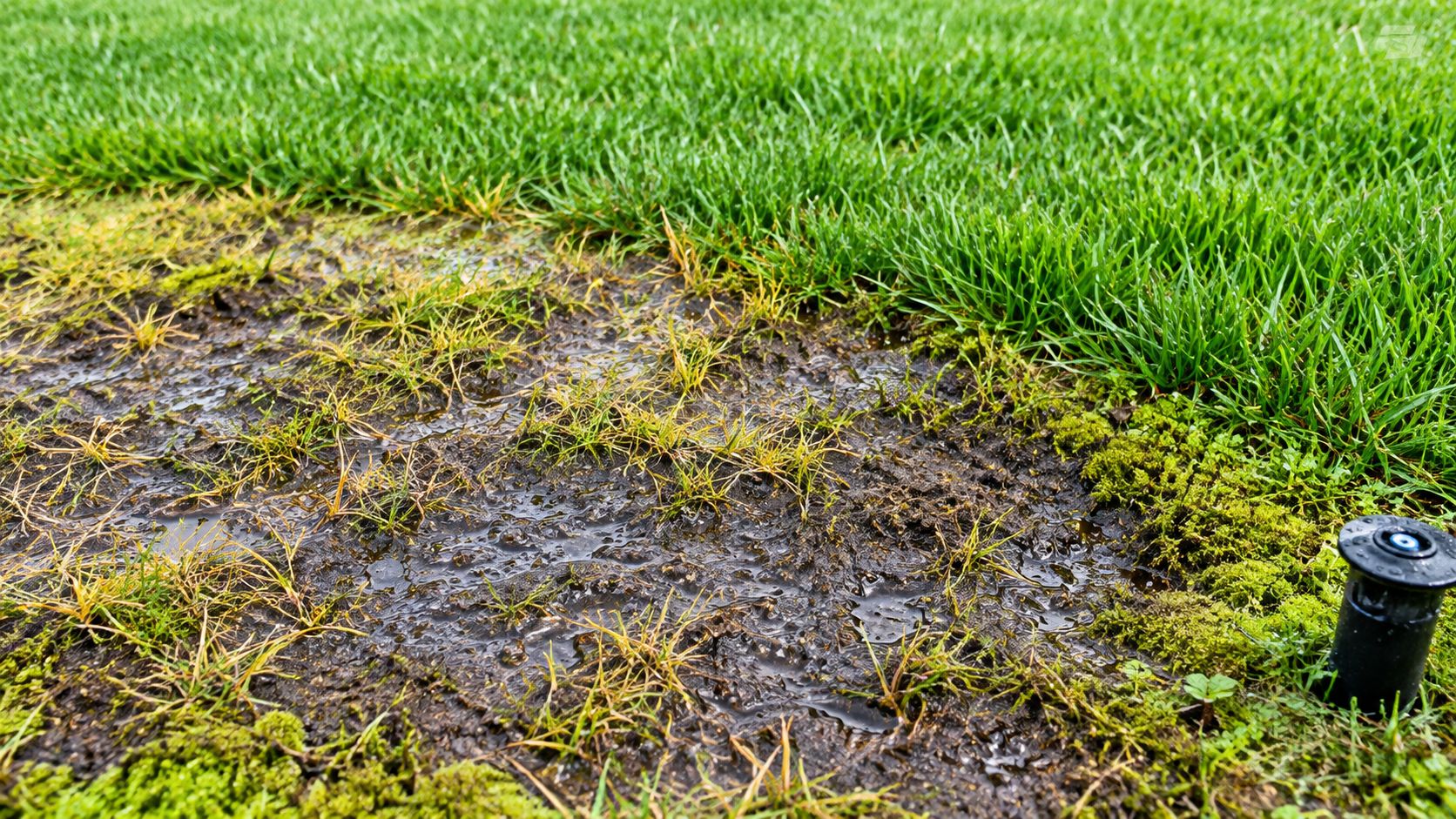
Start with the surface. Wet spots that remain after surrounding areas dry are strong evidence that water is collecting or moving poorly. Algae near pavement edges, moss in turf, muddy footprints, and recurring runoff from beds also deserve attention. These indicators don't prove one specific cause, but they show that the site is staying wet long enough to investigate.
A field checklist for managers
Walk the property during and after an irrigation cycle. Look for:
- Uneven application: One head sprays sidewalks, walls, or pavement while another misses part of the bed.
- Runoff: Water leaves the intended area before it infiltrates.
- Puddling: Depressions, compacted paths, and low planting beds hold water.
- Plant paradoxes: Foliage wilts during warm periods even though the root zone feels wet.
- Patterned decline: Symptoms follow a valve zone, slope, or drainage boundary.
- Surface changes: Mud, algae, moss, or a developing pale crust indicates repeated moisture or salt movement.
The soil itself provides useful evidence. Push a probe into the root zone and compare several locations. Soil that clings in wet globs, resists penetration, or remains saturated well after irrigation may be limiting oxygen. Don't rely on a single sample from the easiest-to-reach spot.
Confirm the cause before changing the schedule
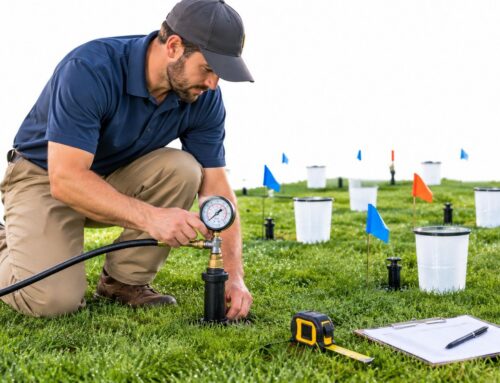
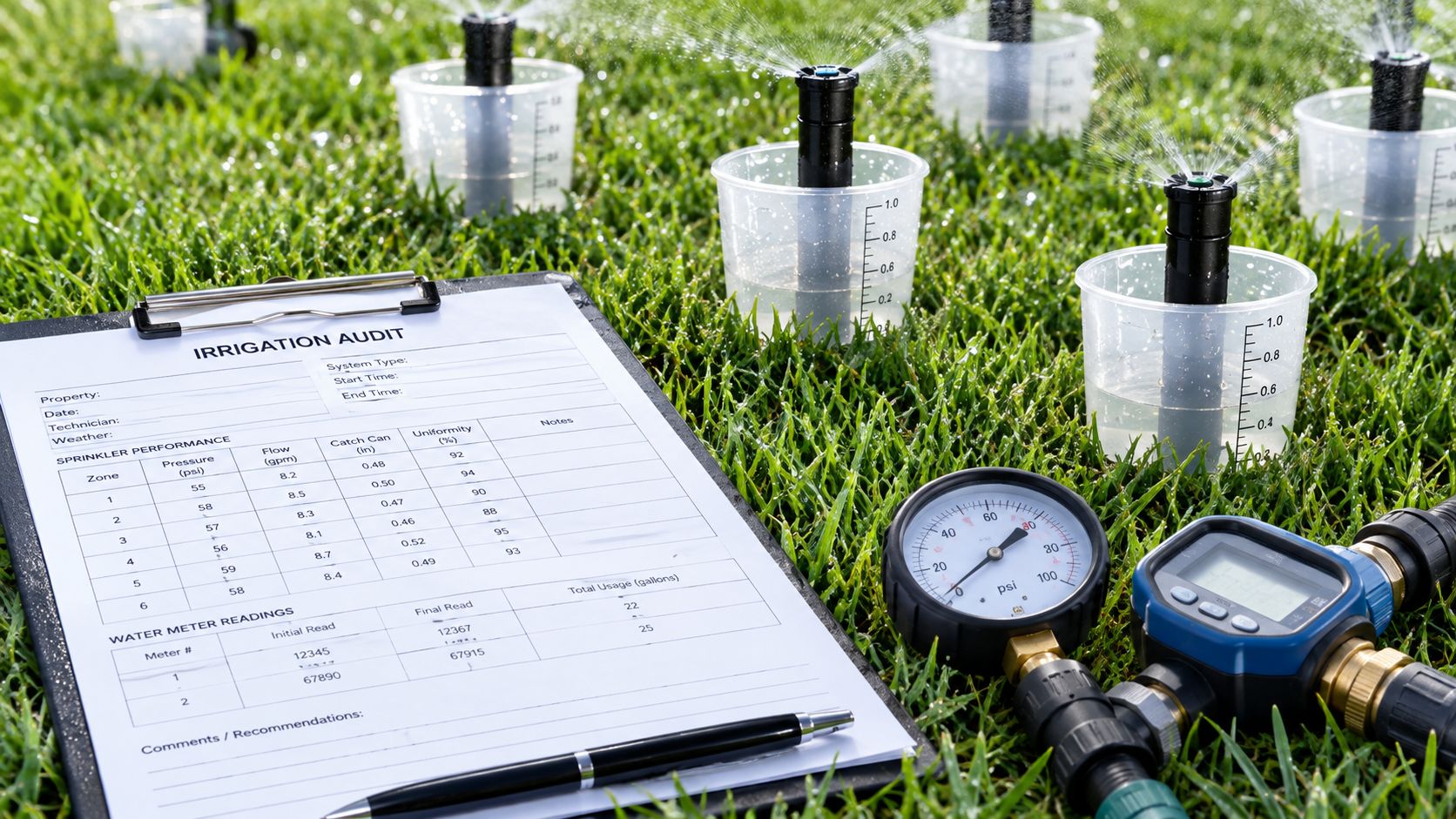
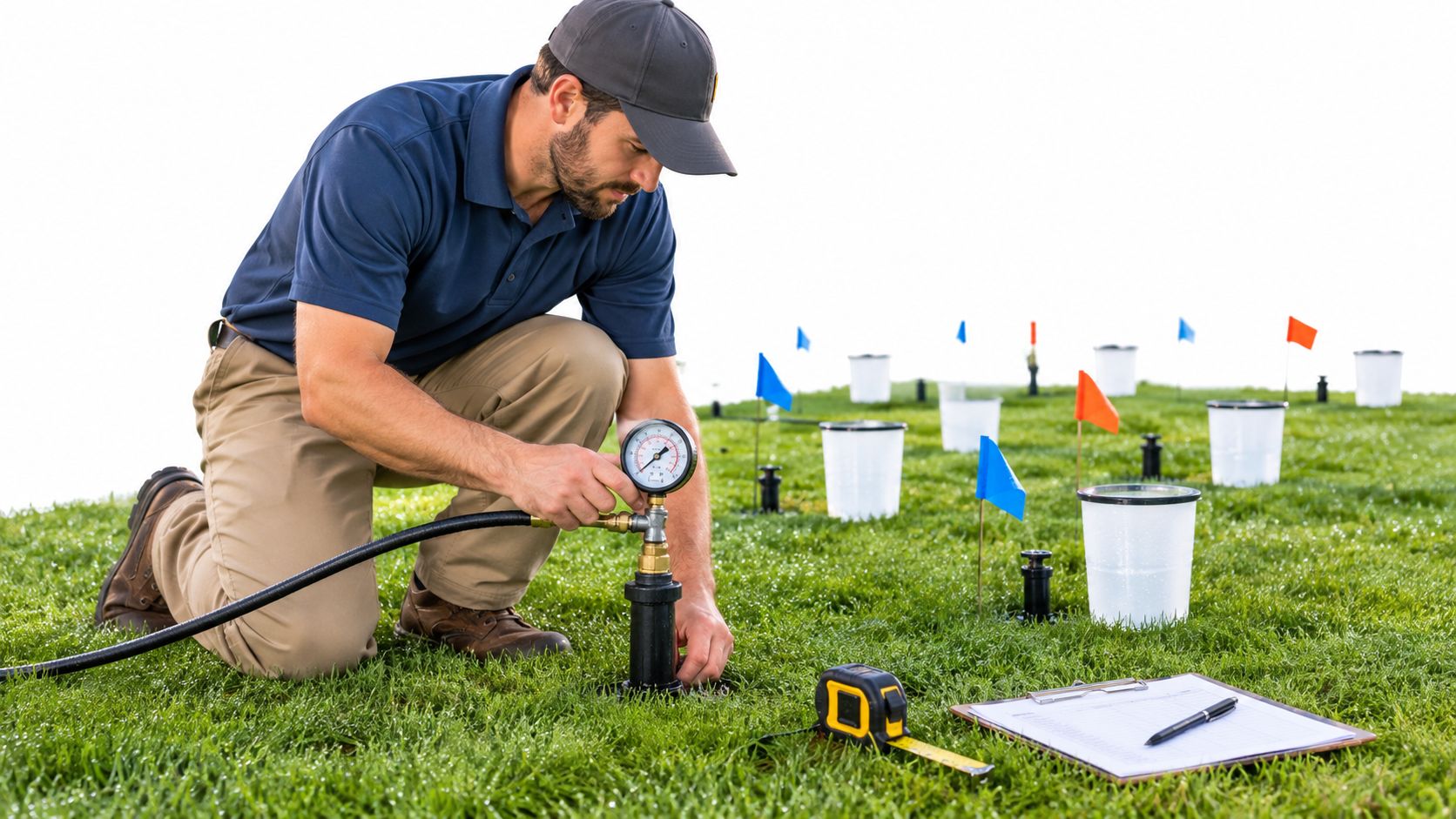
Run each zone independently. Check spray overlap, broken heads, leaking valves, clogged emitters, pressure problems, and controller settings. Measure whether the water is reaching the intended soil or only traveling across hardscape.
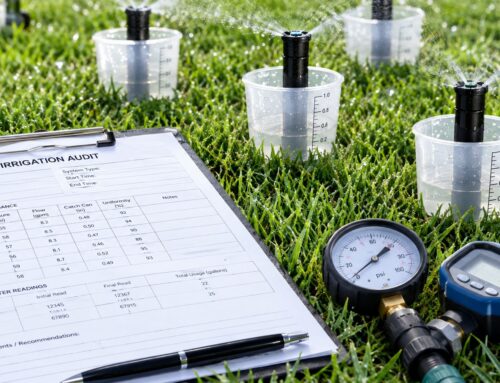
Soil testing can confirm compaction, nutrient status, and salinity. Moisture readings taken at consistent locations help separate a dry-zone problem from a wet-zone problem. Keep a simple log with the date, zone, weather, observed runoff, and soil condition. That record gives the irrigation contractor a useful pattern instead of a vague complaint that “the lawn looks bad.”
Look for patterns, not isolated symptoms. A single yellow plant may have a pest or root issue. A whole planting bed with the same decline usually points to shared site conditions.
Remediation and Prevention Strategies
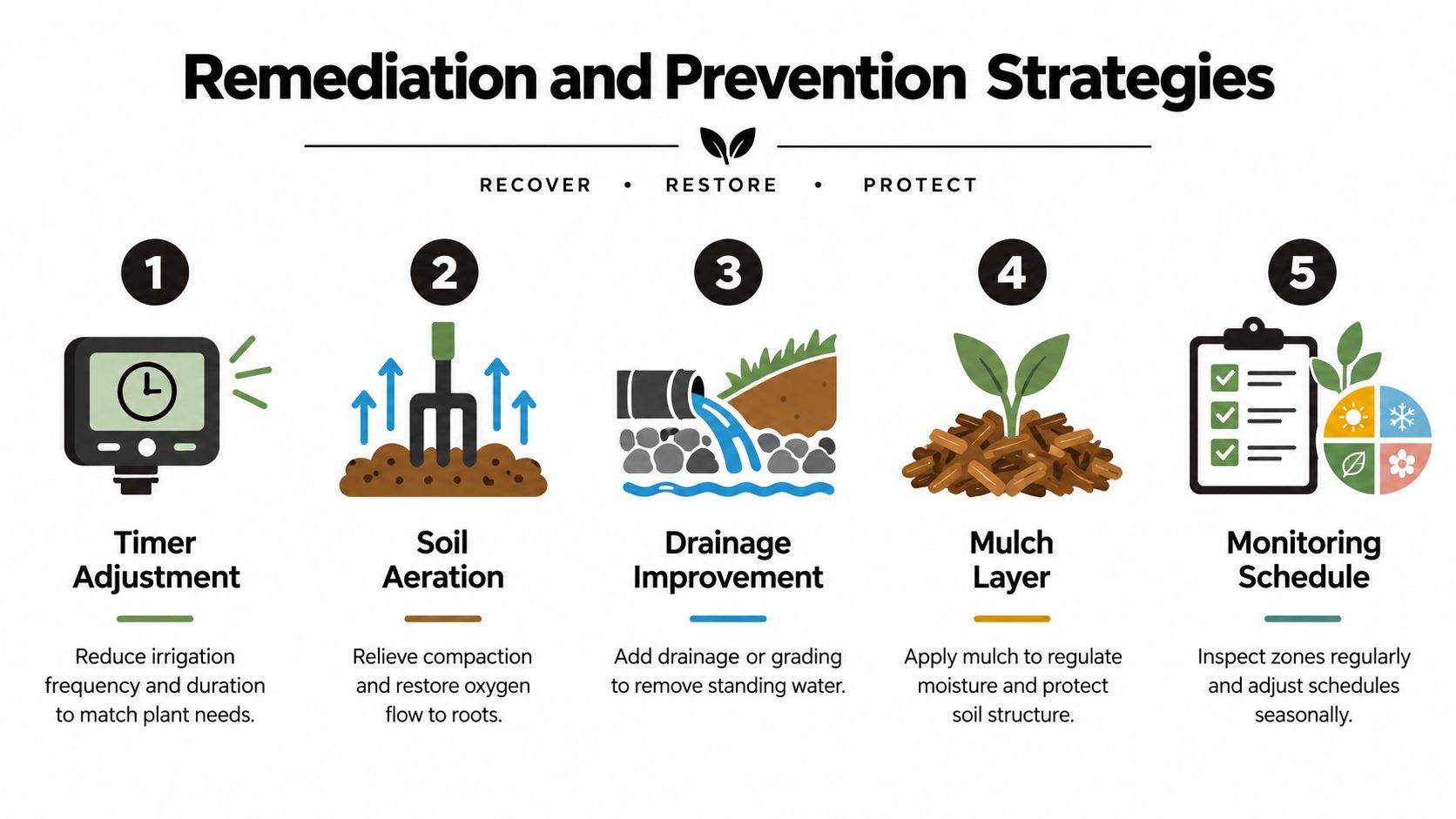
Recovery depends on the cause and severity. A controller adjustment is inexpensive and fast, but it won't solve a compacted layer or blocked drainage path. Drainage construction can address the physical problem, but it costs more and may require grading, excavation, or disruption to the grounds. Commercial managers should match the intervention to the failure, not choose the most visible symptom.
Start with the least disruptive correction
If testing shows that the system is applying more water than the property needs, adjust frequency and duration first. Separate turf, shrubs, shaded beds, sunny exposures, and plants with different moisture requirements into appropriate zones. A fixed schedule rarely reflects the different drainage and evapotranspiration behavior across a large property.
Deep, less frequent watering can encourage stronger root development when the soil drains properly. It's not a cure for standing water. Increasing the amount per cycle on a site that already stays saturated will intensify the damage.
Match the remedy to the evidence
| Observed problem | Better first response | What it won't solve |
|---|---|---|
| Overspray or broken heads | Repair heads, adjust arcs, and verify pressure | A compacted or poorly graded soil profile |
| Excessive runtime | Reprogram the controller and review zones | Salt already accumulated in the root zone |
| Compacted soil | Aerate where appropriate and reduce traffic | A high water table or blocked outlet |
| Standing water in a low area | Improve grading or install suitable drainage | Poor irrigation zoning elsewhere |
| Suspected salinity | Test soil and water, then plan controlled leaching | Leaching where drainage remains inadequate |
Organic matter may improve soil structure in suitable applications, but amendments aren't a universal fix. Adding material to the surface won't remove a perched water table or repair a failed drain. Likewise, applying sand to heavy soil without a sound design can produce an even denser layer rather than reliable drainage.
Treat salinity carefully
Controlled leaching can help move salts below the root zone, but only after confirming that drainage can carry the water away. The guidance on over-irrigation and soil damage emphasizes this trade-off. More water is not automatically more corrective. Without drainage, it can worsen saturation and leave salts behind after evaporation.
Use moisture sensors, flow meters, pressure-regulated heads, weather information, and regular zone inspections to keep the system responsive. A water audit should document where water goes, not just how long the controller runs.
Protecting Your Landscape Investment Long-Term
Proactive irrigation management costs less than treating a property after the soil has lost its function. The reason is practical. A schedule review can prevent repeated oversupply, while severe waterlogging or salinity may require drainage work, soil correction, and plant replacement across areas that are highly visible to tenants, guests, customers, or residents.
FAO notes that about 3 million hectares of land leave production worldwide each year because of salinity problems, and cites farm-level studies where paddy and wheat yields were around 50% lower on degraded soils and net incomes about 85% lower in salt-affected lands. These agricultural figures aren't a direct forecast for a commercial property, but they show the consequence of allowing salinity and waterlogging to undermine soil productivity. FAO also cites an estimate of $27.3 billion in annual global crop-production losses associated with salinization in research linking excessive irrigation and poor drainage in the Nile Delta to these problems. See the FAO material on salinity-related production losses for the underlying context.
Build a management routine
A reliable program assigns responsibility and records conditions instead of leaving the controller untouched until a plant fails.
- Inspect zones regularly: Look for leaks, runoff, clogged heads, overspray, and changes in pressure.
- Review schedules seasonally: Adjust for weather, plant establishment, shade, soil moisture, and site use.
- Sample problem areas: Compare wet and dry zones rather than relying on a single property-wide soil result.
- Track water behavior: Flow data and meter readings can reveal leaks or unusual demand.
- Protect drainage paths: Keep inlets, outlets, swales, and low areas clear of soil and debris.
Smart controllers and moisture sensors can support better decisions, but they still need accurate zones and functioning hardware. Technology won't compensate for a broken valve, poor grading, or a controller programmed for the wrong plant material.
Make water management part of the budget
Managers also need a practical way to estimate the labor, materials, and equipment involved in irrigation repairs, drainage work, and renovation. A resource such as Exayard landscaping estimating software can help organize project estimates before comparing corrective options with the cost of continued plant loss and recurring maintenance.
The strongest long-term plan combines competent irrigation audits, responsive repairs, appropriate plant zoning, and soil observation. Prestonwood Commercial Landscape Services serves commercial properties with grounds maintenance, irrigation audits and repairs, central water management, and outdoor renovation across Dallas, Fort Worth, and San Antonio. Those services address the practical chain that causes hidden soil damage, from water delivery to drainage and ongoing site monitoring.
Prestonwood Commercial Landscape Services can inspect irrigation zones, identify runoff and wet-root conditions, and recommend repairs or water-management changes that protect commercial grounds. Visit Prestonwood Commercial Landscape Services to request a property review and discuss a practical plan for healthier soil, reliable irrigation, and consistent curb appeal.