
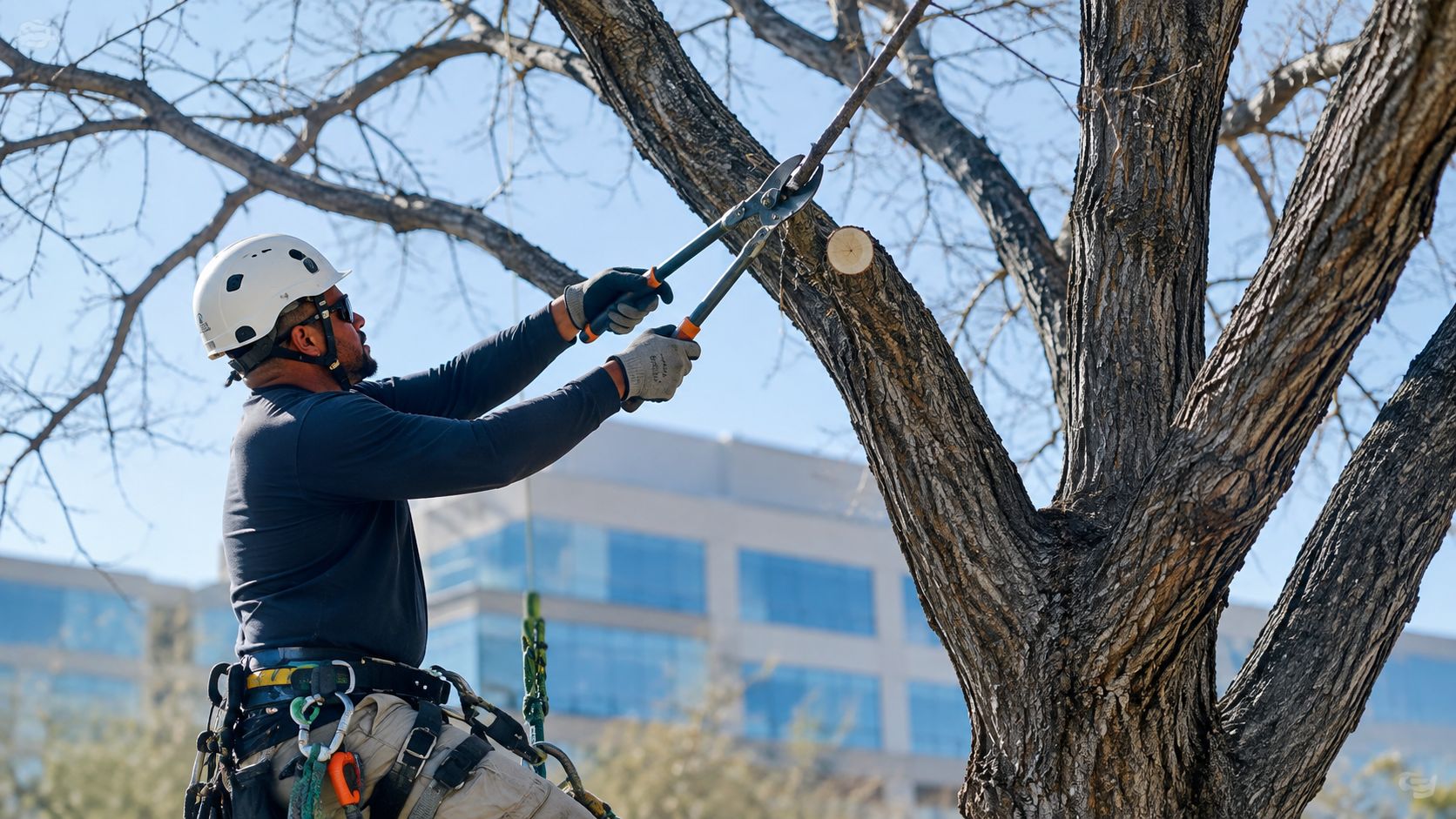
You've got crews lined up, the budget's approved, and someone wants to “just get the oaks cleaned up” before peak season hits. That's exactly how commercial properties get into trouble. With oak trees, timing isn't a preference, it's part of disease prevention, asset protection, and risk control.
For Texas properties, the best time to prune oak trees is during dormancy in winter. That aligns with extension and arborist guidance that puts the safe window in December through February, or more broadly November 15 to March 31. Iowa State Extension says the winter months, December, January, and February, are the best time to prune oak trees (Iowa State Extension). For managers responsible for curb appeal, tenant expectations, and long-term value, that's the window to use.
Table of Contents
- Why Oak Pruning Timing Matters for Commercial Properties
- Understanding Oak Wilt Risk and Disease Prevention
- The Optimal Pruning Window for Oak Trees
- Live Oak Versus Deciduous Oak Pruning Differences
- Commercial Property Pruning Scheduling Framework
- When to Hire Professional Oak Tree Services
- Safety Protocols and Legal Requirements
- Building Your Oak Tree Pruning Action Plan
Why Oak Pruning Timing Matters for Commercial Properties
A property manager trims oak limbs in spring to clean up sightlines before a leasing event, and the crew leaves fresh cuts exposed during the wrong part of the year. That's the kind of mistake that can turn a routine maintenance task into a tree-loss problem, a budget surprise, and a curb-appeal issue that lasts for years.
Practical rule: If the cut can wait until winter, make it wait.
Commercial sites feel the impact harder than residential yards. One infected tree can force more removals, more cleanup, and more tenant disruption than most managers plan for. Oak trees are often part of the property's identity, so a bad pruning schedule isn't just a horticulture error. It's an asset-management failure.
Texas properties also face a climate reality that general guides often skip. Warm-season pruning lines up with the period when oak wilt transmission risk is highest, so the wrong timing creates avoidable exposure. Davey notes oak wilt is most active from April to July (Davey Arborists). That makes the winter dormant period the commercial standard, not because it's convenient, but because it protects the canopy you're being paid to maintain.
For managers, the decision is simple. Prune during dormancy, document the work, and keep cuts out of the high-risk season. That approach protects tree health, protects tenant-facing aesthetics, and reduces the chance you'll have to explain why a healthy-looking oak started failing after a routine service call.
Understanding Oak Wilt Risk and Disease Prevention
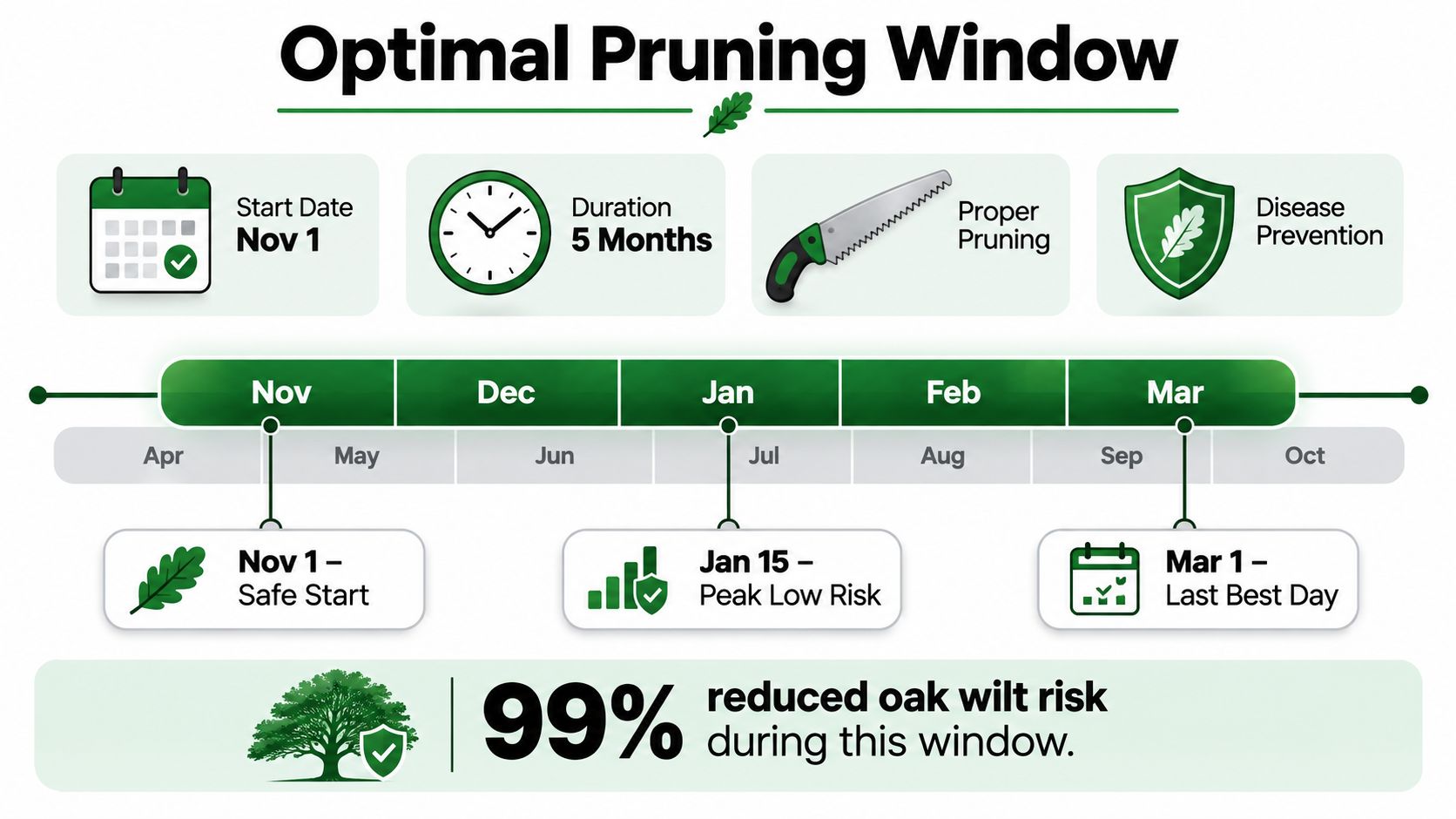
Oak wilt is the reason pruning timing matters so much. It's a fungal disease tied to insect movement, and the high-risk period tracks warm weather when those vectors are active. Davey says oak wilt is most active from April to July (Davey Arborists), which is why winter pruning has become the standard preventive practice across oak-growing regions.
Why the winter window works
The logic is straightforward. During dormancy, insect activity drops and fresh wounds are less likely to be exposed to the disease pressure that exists in the growing season. Texas oak-wilt guidance says non-safety pruning should be done before February 1 or after June 30, and it identifies the coldest winter days as among the least hazardous times because sap-feeding beetle activity is minimal then (Texas Oak Wilt Guidance).
That matters on commercial sites because the risk compounds across the property. A mixed canopy with multiple oaks gives you more opportunities for a mistimed cut, more exposure points, and more inspection work later. If one crew trims during the wrong month, the whole site can inherit the fallout.
Winter pruning isn't a stylistic preference. It's the lowest-risk operating window for oak health.
Commercial managers should treat this as a disease-prevention calendar, not a landscaping preference. Plan around the warm-season hazard, keep pruning work inside the dormant window, and make sure contractor schedules reflect that priority. For a deeper look at symptom recognition and oak fungus issues, this oak fungus reference is a useful internal resource for field teams and managers.
The Optimal Pruning Window for Oak Trees
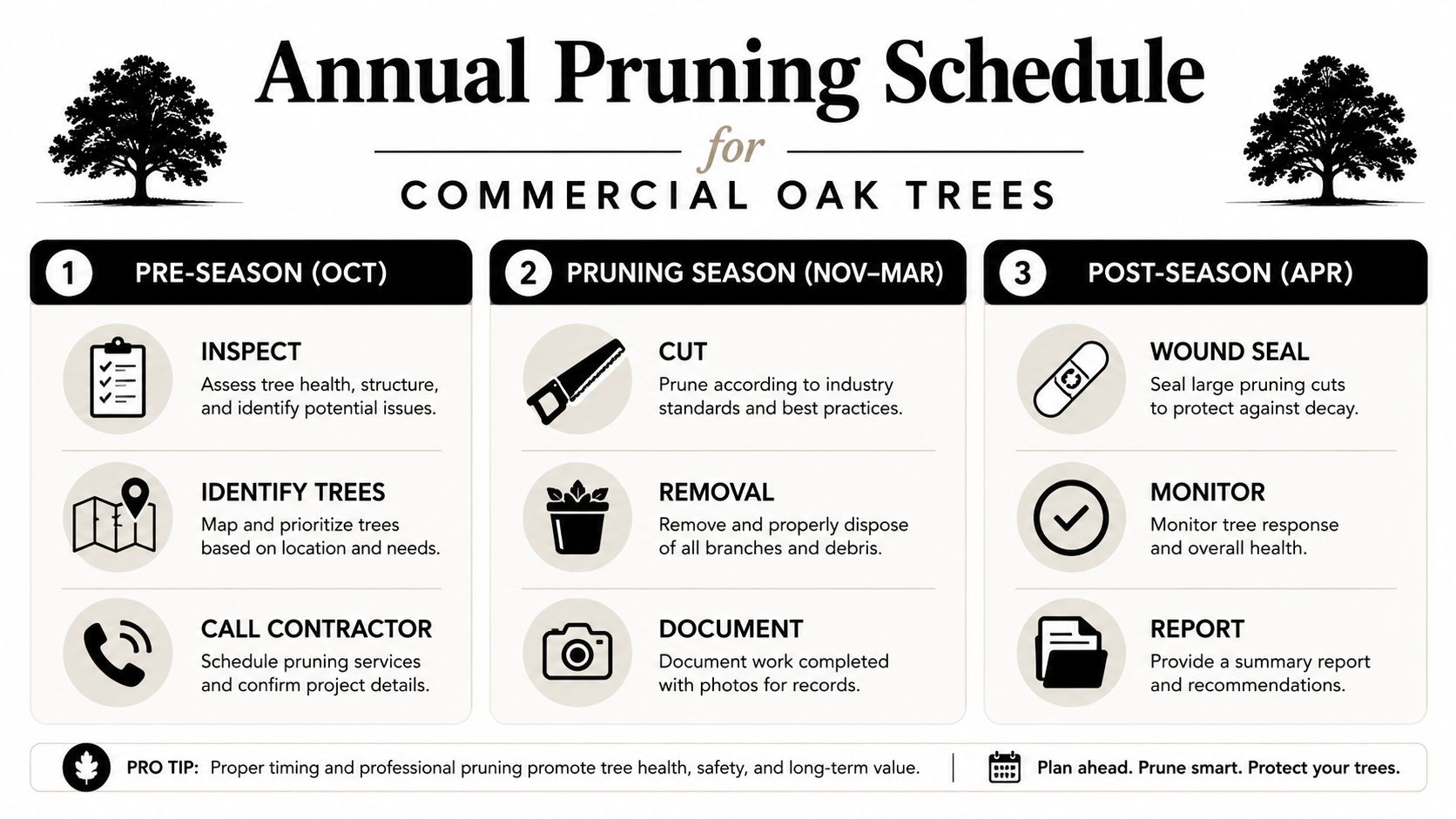
The safest planning rule is the one most extension and arborist sources repeat, prune oak trees in winter dormancy. Iowa State Extension calls December, January, and February the best months to prune oak trees (Iowa State Extension). Other guidance broadens the window to November 15 through March 31, which gives commercial managers room to schedule work without pushing into the warm season.
Use the window that gives you margin
For property managers, margin matters. A narrow schedule creates avoidable conflict with tenant events, seasonal color installs, irrigation work, and storm cleanup. A broader dormant-season plan lets you prioritize the highest-value trees first and still stay inside the safer pruning period.
Texas guidance is even more practical. It says non-safety pruning should happen before February 1 or after June 30 (Texas Oak Wilt Guidance). That gives managers a simple rule for scheduling crews in Dallas-Fort Worth and San Antonio. If the cuts aren't urgent, move them into the cold months and keep them out of the active disease window.
Regional scheduling advice that works
Dallas-Fort Worth often gives you a wider operational runway because winter stretches long enough for multi-site scheduling. San Antonio can warm earlier, so the safer move is to treat late winter as a hard stop, not a soft target. If you're managing both markets, use the strictest practical cutoff and build the work order calendar around it.
For teams that want a second reference point on pruning timing and seasonality, the Swift Trees Perth oak pruning guide reinforces the value of keeping oak pruning tied to dormant-season planning rather than convenience.
A simple operating rule
- Pre-season review: Mark all oak pruning candidates before winter starts.
- Winter execution: Cut only within the dormant window.
- Spring freeze: Stop routine pruning before warm-weather disease pressure rises.
The coldest winter days are the safest days to get the work done. Schedule them early, document them well, and don't let late requests push crews into the wrong season.
Live Oak Versus Deciduous Oak Pruning Differences
Live oaks and deciduous oaks don't behave the same way, so a one-size-fits-all pruning plan is lazy management. Live oaks hold leaves year-round, which means they stay visually active on the property and often attract more attention from tenants and visitors. Deciduous oaks drop their leaves, so their structure is easier to evaluate in winter and their pruning needs are usually more straightforward to time.
Why species matters
Live oaks on commercial sites tend to be treated like evergreen assets, and that creates pressure to “touch them up” whenever they look crowded. That's exactly where managers get into trouble. The tree may look like it needs work, but the calendar still governs disease risk. Deciduous oaks are easier to assess when dormant, which often makes winter the cleanest time to define structure, remove deadwood, and correct clearance issues.
Mixed oak settings need a sharper eye. A row of live oaks near a retail drive and a cluster of deciduous oaks near parking can't be scheduled the same way if the site has any oak wilt history. Use the dormant window for both, but be more conservative with live oaks because they stay in the conversation all year and are more likely to get pressured by aesthetics rather than biology.
What managers should actually do
If the tree is an oak, winter is the default. Species changes the details, not the core rule.
Use live oak pruning for structural correction, clearance around signage, and safety conflicts, not cosmetic tinkering. Use deciduous oak pruning for canopy shaping, deadwood removal, and branch clearance when the tree is fully dormant and easier to inspect. If you're uncertain, put the tree on the winter service list and let a qualified arborist decide whether the cut is necessary at all.
That approach keeps mixed-species properties from drifting into reactive maintenance. You're not trying to make every oak look identical. You're trying to keep every oak healthy enough to protect the site's long-term value.
Commercial Property Pruning Scheduling Framework
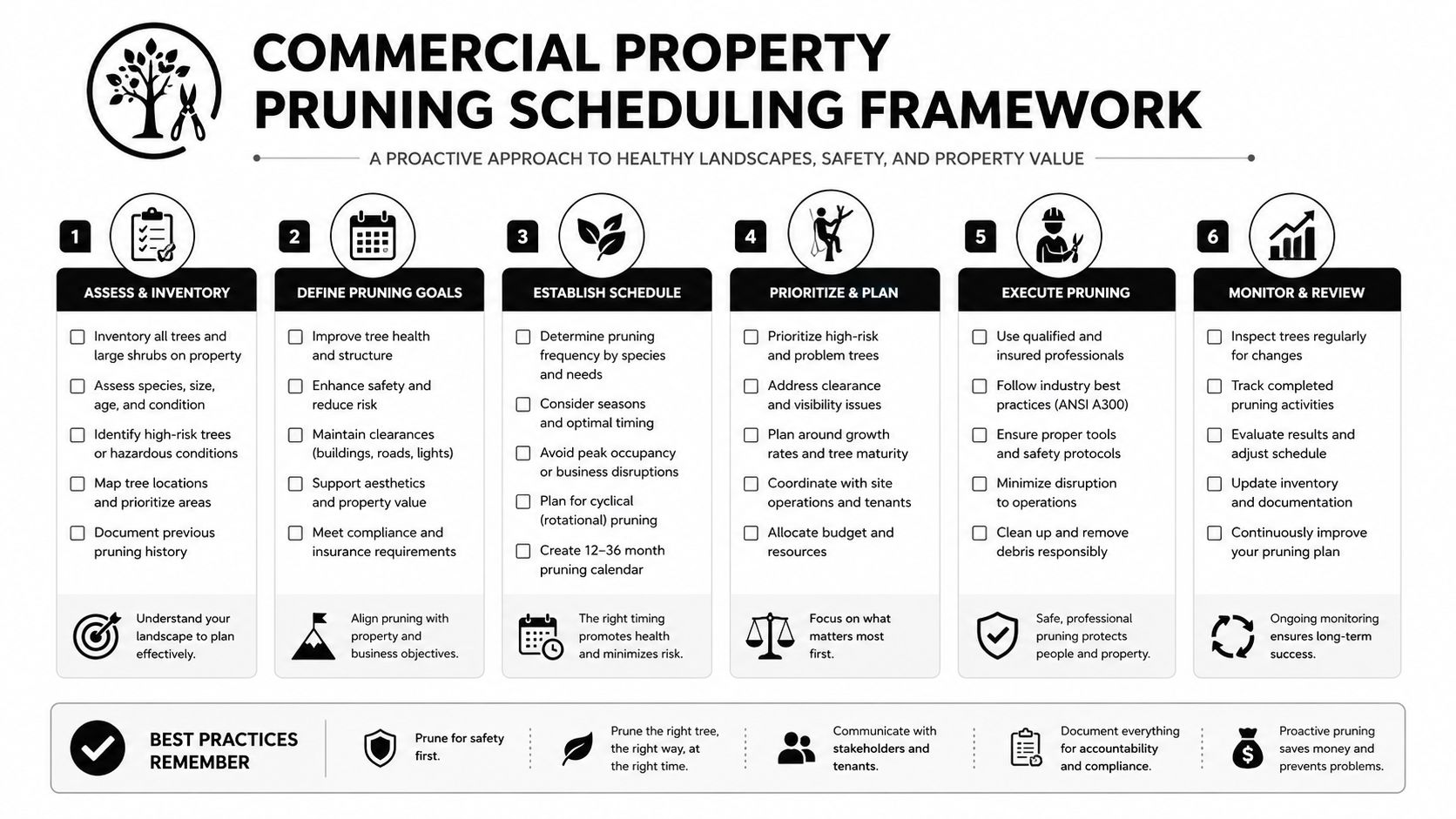
A commercial pruning program fails when it's handled tree by tree without a calendar. The better approach is site planning. Start with an inventory, sort oaks by risk, and lock the winter work into your maintenance schedule before other seasonal demands crowd it out.
Build the calendar around the property, not the request
First, identify every oak on the site and mark its location relative to drive lanes, entries, signage, and tenant patios. Second, prioritize trees with previous damage, dense canopies, or exposure to foot and vehicle traffic. Third, assign the work to the dormant window so pruning doesn't compete with irrigation repairs, color rotations, or storm response.
For managers who want scheduling systems instead of scattered reminders, the landscape scheduling software resource is a good internal reference for organizing recurring work across multiple sites.
Keep the process disciplined
A clean framework usually looks like this:
- Inspect in late fall. Flag the oaks that need work before the dormant season starts.
- Rank by urgency. Safety problems first, cosmetic pruning last.
- Book winter crews early. Good contractors get tight fast once the season turns.
- Document every cut. Keep records for site files and future risk reviews.
- Review after service. Confirm that no pruning slipped into the wrong window.
- Reset for next year. Update the list so the same mistakes don't repeat.
Use documentation as a management tool
Documentation isn't busywork. It helps you defend the timing of the work, the scope of the work, and the decisions behind it. That's especially important on commercial portfolios where multiple stakeholders, including ownership, tenants, and facility staff, may ask why certain trees were cut and others were left alone.
A disciplined framework turns oak pruning from an annual scramble into a controllable part of property operations. That's the difference between reactive maintenance and asset stewardship.
When to Hire Professional Oak Tree Services
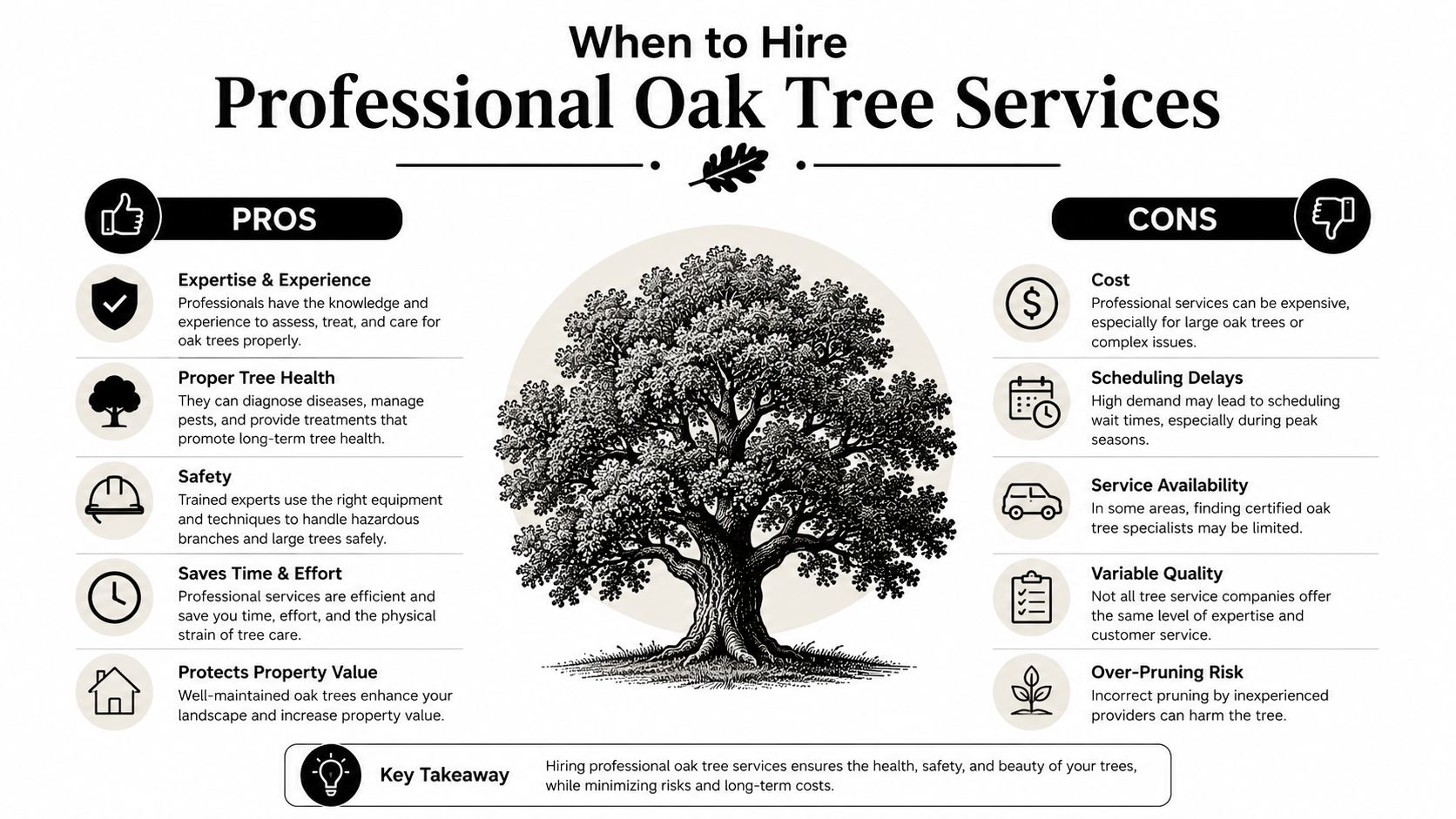
Commercial oak work isn't the place to gamble on in-house guesswork. If the tree is large, the canopy is complex, or the site has any oak wilt history, bring in a professional who understands timing, cut placement, and disease risk. The cost of doing it wrong is usually higher than the cost of doing it right.
Use clear decision criteria
Hire a professional when pruning affects tenant-facing areas, parking lots, building edges, or any space where a bad cut could create cleanup, liability, or access problems. That also applies when crews would need lifts, rigging, or traffic control. On commercial properties, those jobs aren't “basic trimming.” They're controlled operations.
For service-provider vetting, the distinction between paperwork and real protection matters. A resource on bonded vs insured explained can help non-technical managers ask better contract questions, especially when vendor risk and site liability are part of the decision.
What to ask before you sign
- Training and credentials: Ask who will perform the pruning, not just who sold the job.
- Scope definition: Require clear language on which trees, which cuts, and which dates.
- Disease awareness: Confirm that the contractor understands dormant-season oak pruning.
- Cleanup standards: Debris removal should be part of the work order, not an afterthought.
- Site coordination: The crew should be able to work around tenants, deliveries, and access controls.
A low bid is expensive if it forces you into tree removal later.
That's the commercial reality. If a contractor can't explain why the pruning window matters, or tries to treat oaks like any other ornamental tree, keep looking. For a broader view of why trained arbor care protects long-term site value, this professional arbor care overview is useful background for managers building their vendor list.
Safety Protocols and Legal Requirements
Pruning on commercial property carries a different level of responsibility than work on a single home lot. You've got traffic, tenants, service vehicles, utilities, and public exposure all in the same footprint. That means pruning timing has to line up with safety controls, not just tree biology.
Start with the site hazards
Before any cut begins, check the tree's distance from power lines, roofs, walkways, and loading zones. If the work could affect pedestrian routes or vehicle circulation, set up cones, signage, and access barriers before the crew climbs or lifts. If the oak is near utility infrastructure, don't improvise. Bring in the right utility coordination and contractor expertise.
Texas and local municipality rules can affect how tree work is performed, and commercial managers should verify any permit or right-of-way requirements before scheduling. If storm damage forces off-season work, document the reason, the date, and the corrective action taken.
Keep records and insurance in order
The vendor file should show who did the work, when it happened, and what was done. It should also confirm insurance coverage and liability language before the first branch comes down. If a contract is vague, the property manager inherits the risk.
For a general comparison on working-at-height responsibilities, the compliance guide for UK employers is a useful reminder that work at height needs formal controls, not informal assumptions.
Don't create new damage while preventing old damage
If pruning happens during an unexpected growing-season emergency, Texas guidance says the wound should be treated immediately with acrylic paint, and pruning paints or sealants shouldn't be used (Iowa DNR oak wilt prevention guidance). That's an emergency response, not a routine method. The main rule still stands. Schedule normal oak pruning in dormancy and keep the site process tight.
Building Your Oak Tree Pruning Action Plan
The rule for commercial properties is simple, prune oaks in winter and keep the work inside the dormant window. Use December through February as your safest core window, or the broader November 15 through March 31 range when scheduling needs flexibility (Iowa State Extension). Keep spring and summer off the calendar for non-safety pruning.
Make the plan now. Inventory every oak, flag the high-visibility trees, reserve winter contractor time, and lock documentation into your maintenance records. If your property has a history of oak wilt or a large number of oaks, don't wait for a problem to force the schedule.
Protect the canopy, protect the property, and keep your pruning decisions tied to disease prevention instead of convenience.
Prestonwood Commercial Landscape Services helps commercial property managers build pruning schedules that fit Texas climate realities, tenant expectations, and long-term health. If you need a partner for winter oak pruning, site coordination, and full commercial care, visit Prestonwood Commercial Landscape Services and start planning before the next pruning window closes.