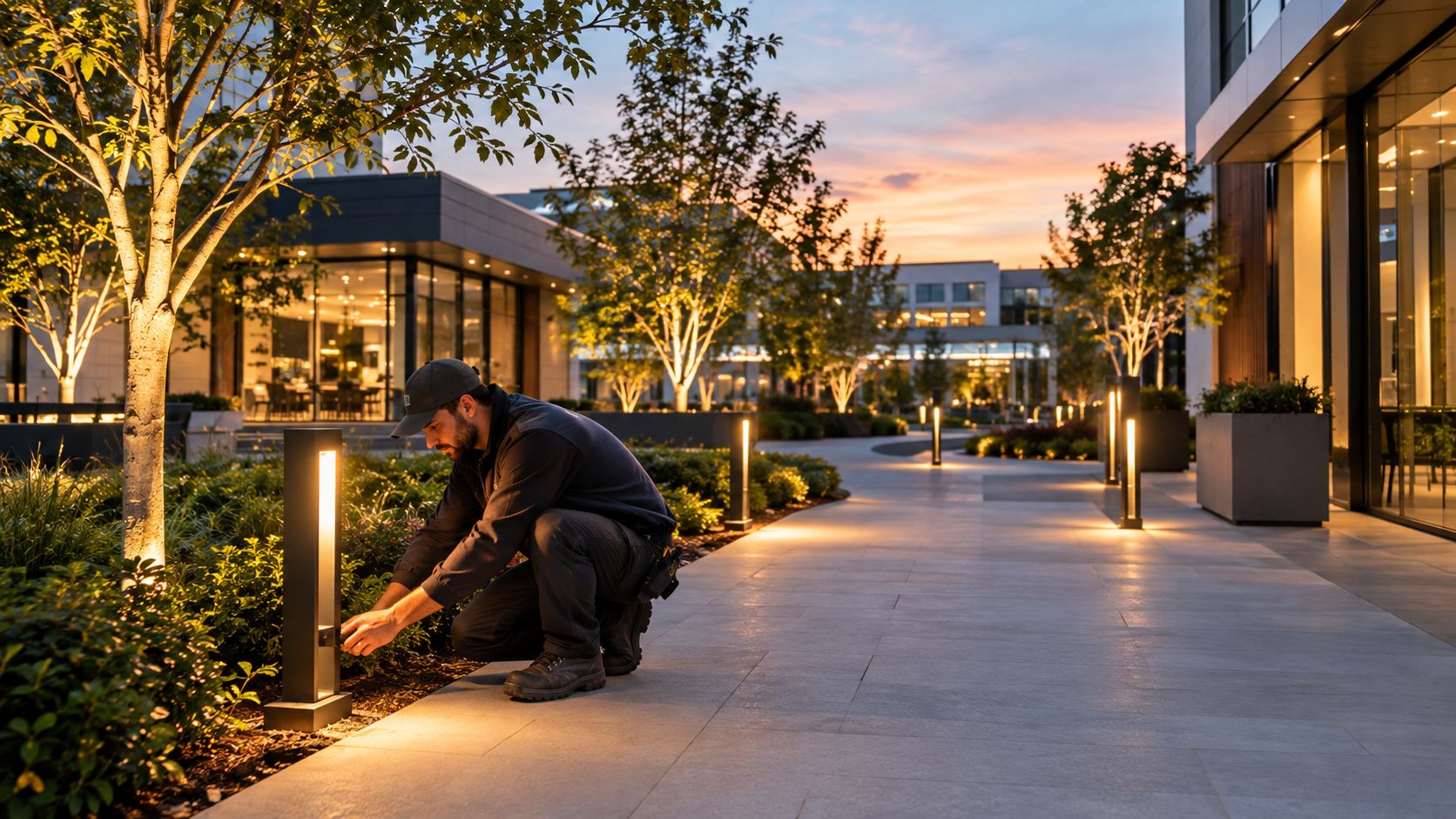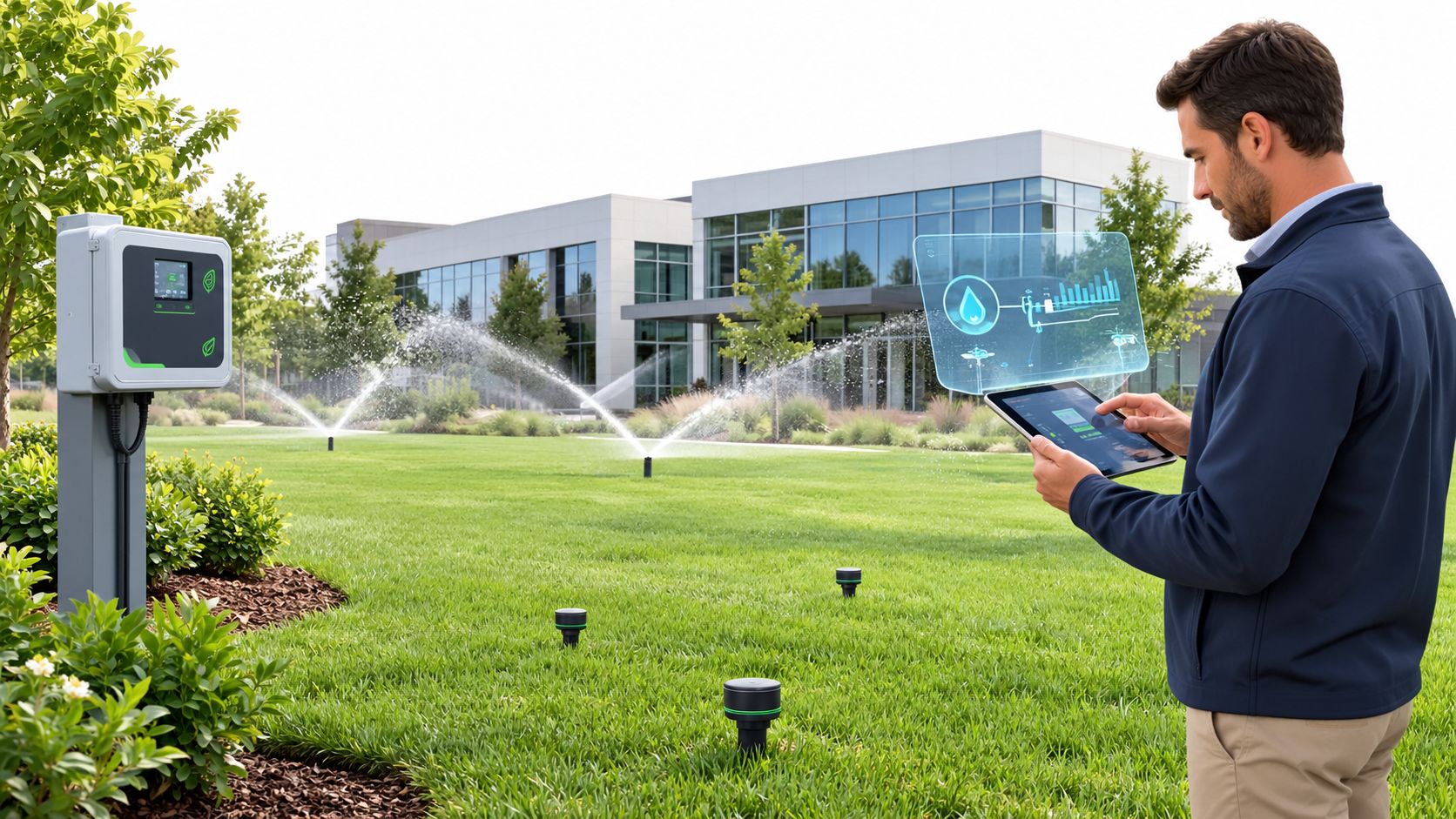

A property manager in Dallas checks the parking lot before the first tenants arrive. The turf looks uneven, one flower bed is thinning, and a controller fault has left a shaded area saturated while a sunny corner is drying out. The contractor's invoice still looks familiar, but the surroundings are already creating questions about curb appeal, water use, and whether the service team is paying attention.
That situation is common across office centers, retail properties, industrial parks, healthcare sites, hospitality venues, campuses, and HOAs. Hiring commercial landscaping contractors isn't a decision about mowing frequency. It's a risk-control decision involving labor continuity, irrigation performance, safety, tenant experience, and the cost of correcting preventable decline.
The right partner turns a written scope into consistent field performance. The wrong partner can submit a low bid that excludes irrigation repairs, limits site visits, rotates crews without notice, and leaves the property manager managing problems instead of managing the asset.
Table of Contents
- Why the Right Commercial Landscaping Contractor Matters More Than Price
- Define Your Scope and Build an RFP That Gets Comparable Bids
- How to Vet Commercial Landscaping Contractors With Confidence
- Understanding Costs Contract Terms and Water Management Realities
- Managing Performance and Keeping Your Landscape Performing Year-Round
- Your Next Steps to Hiring a Worry-Free Partner in Texas
Why the Right Commercial Landscaping Contractor Matters More Than Price
A retail center can lose its polished appearance through small service failures. Uneven turf edges, litter around parking islands, blocked sightlines, and late seasonal color may seem minor separately. Together, they tell tenants and visitors that the property is not being managed closely.
The same standard applies at office campuses and healthcare facilities. People form an impression before entering the building, and employees notice whether outdoor areas feel safe, orderly, and cared for. Grounds maintenance also affects visibility along pedestrian routes, drainage awareness, irrigation control, and protection from vehicle damage.
The market is fragmented, but the service requirement is not
The U.S. landscaping services industry is highly fragmented. One industry report estimates 114,800 firms, 911,100 workers, and approximately $130.7 billion in annual sales, with commercial properties representing 53% of industry sales. It also describes an average service business as having 8 employees and about $1 million in annual revenue. Those figures show why many contractors are specialized, mid-sized operators rather than large integrated providers. (Vertical IQ landscaping services industry profile)
That structure is not automatically a weakness. A focused local operator may understand regional plants, irrigation conditions, and property expectations better than a larger provider. The risk comes when staffing, supervision, equipment, or scheduling cannot support a busy site or a multi-property portfolio.
Texas conditions expose those gaps quickly. Dallas, Fort Worth, and San Antonio bring heat, extended dry periods, sudden weather shifts, heavy traffic, and demanding irrigation requirements. A contractor that waits for declining turf or tenant complaints is already costing the property time, water, and credibility.
Practical rule: Treat the grounds as part of the property's operating system, not as a decorative line item.
Price belongs in the decision, but the lowest monthly figure may produce the highest total cost. A bid that excludes irrigation monitoring, bed preparation, seasonal adjustments, or response expectations can move expenses into change orders and emergency work. Set the required appearance, water controls, inspection process, and performance evidence before requesting proposals.
For properties where presentation affects leasing and tenant confidence, visual documentation can support broader asset marketing. A 360° showcase for commercial real estate can present the relationship between the building, grounds, entrances, and shared outdoor spaces. The contractor must then preserve that experience after the camera leaves.
Define Your Scope and Build an RFP That Gets Comparable Bids
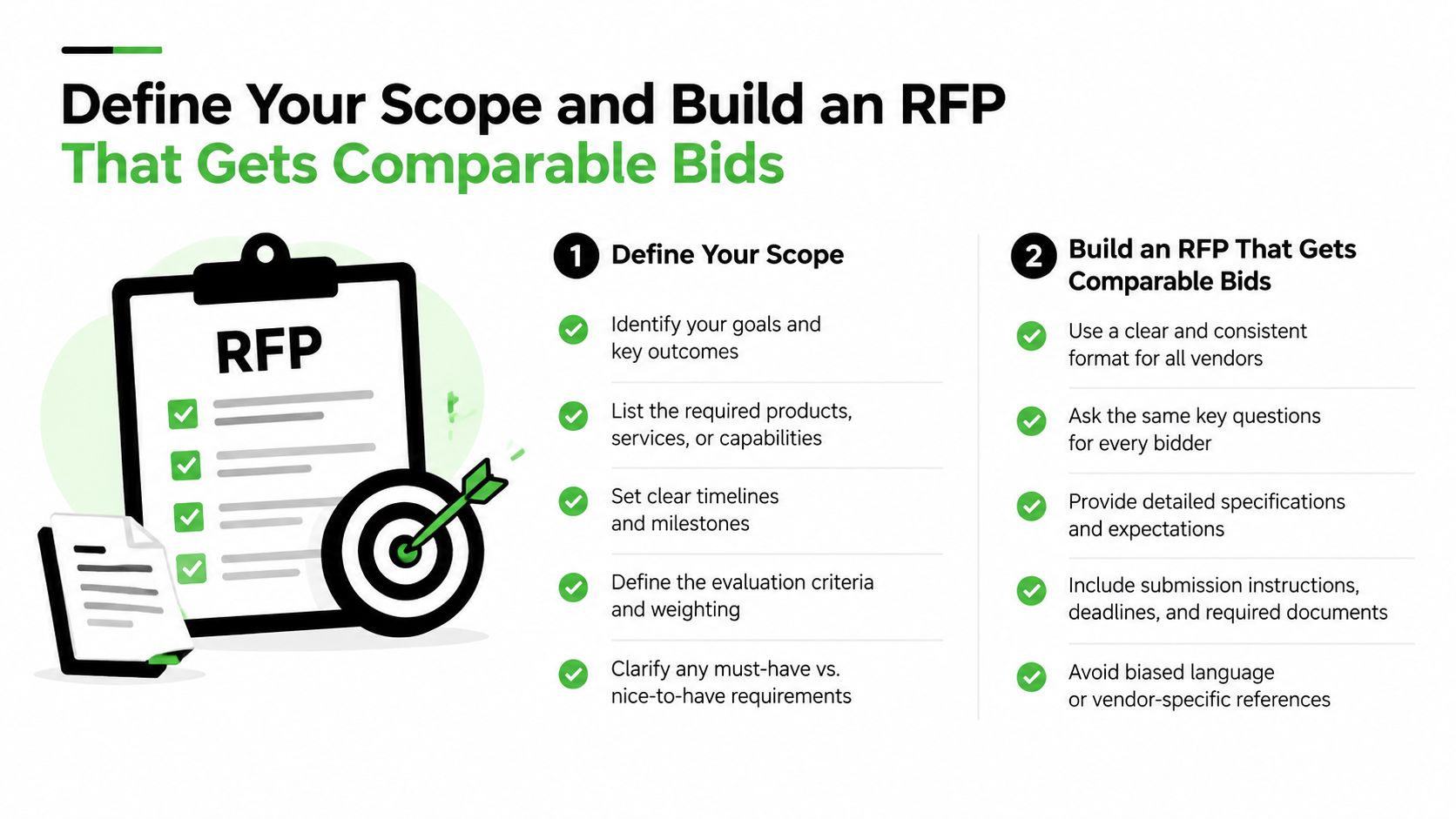
A weak RFP asks contractors to “maintain the property” and then compares proposals that mean different things by maintenance. One bidder may include irrigation inspections, another may bill them separately, and a third may assume the property manager will approve repairs only after visible damage occurs.
Start with a property-specific scope. Walk the site, mark turf zones, planting beds, trees, hardscape, drainage features, irrigation equipment, entry points, loading areas, and locations where pedestrian or vehicle traffic creates special conditions. For a portfolio, prepare one master document plus a separate site sheet for each address.
Put the recurring work in writing
Your RFP should define the expected result and the service method where it matters. Include:
- Routine maintenance: State mowing, edging, blowing, litter removal, pruning, bed care, weed control, and inspection expectations. Identify areas where noise, access, or timing affects tenants and visitors.
- Seasonal work: Describe seasonal color, bed rotations, leaf management, storm cleanup, frost response, and plant replacement responsibilities. Don't leave “seasonal enhancements” undefined.
- Irrigation: Require identification of the irrigation system's zones, controllers, valves, heads, sensors, leaks, and repair process. State whether audits, programming, meter review, and water-budget reporting are included.
- Enhancements and construction: Separate recurring maintenance from planting, drainage, hardscape, lighting, tree work, renovations, and new installation. Ask bidders to show unit pricing or a defined approval process for these items.
- Standards: Describe acceptable turf height, pruning appearance, weed tolerance, bed definition, litter condition, response to hazards, and completion documentation in observable terms.
The RFP should also include site maps, current photographs, access restrictions, service windows, contact information, insurance requirements, licensing expectations where applicable, safety requirements, invoicing instructions, and the required proposal format.
Make bids answer the same questions
Require every bidder to identify labor assumptions, assigned supervision, visit frequency, included materials, exclusions, emergency response, irrigation responsibilities, and proposed communication tools. Ask for a base price, optional services, repair rates, enhancement pricing, and assumptions about water and plant replacement.
For multi-site portfolios, request both a portfolio-level manager and a named site contact. A contractor may price the entire group attractively but still fail if no one owns consistency between locations. Give bidders enough time to inspect the property, then require them to acknowledge known deficiencies instead of hiding them inside a generic allowance.
A good RFP doesn't eliminate every change order. It makes the legitimate ones visible, comparable, and easier to approve. That protects the budget and gives the selected contractor a fair basis for staffing and service delivery.
How to Vet Commercial Landscaping Contractors With Confidence
A proposal shows how a contractor sells. A site walk, reference call, and staffing discussion show how the work will run after award. Vetting should test repeatable service, water accountability, and budget control across Texas heat and multiple properties.
Start with ownership. Meet the person assigned to manage the account, then confirm who supervises crews, handles irrigation, responds to urgent issues, and reviews completed work. If every answer points to an unnamed “operations team,” no one clearly owns the property.
Test the operating system
Reliable commercial landscaping contractors can explain how they maintain standards when crews change, weather interrupts schedules, or several sites need attention at once. Request references from comparable properties with similar traffic, access limits, irrigation demands, and occupancy patterns. A residential reference or a one-time installation tells you little about recurring commercial service.
The Bureau of Labor Statistics reported 544,470 landscaping and groundskeeping workers in the NAICS 561730 industry in May 2022, with a median hourly wage of $17.49 and an annual mean wage of $37,890. Its industry tables also show the median hourly wage rising from $14.89 in 2019 to $17.49 in 2022. Those figures make staffing stability a practical selection issue, especially when labor shortages affect crew continuity. (BLS landscaping and groundskeeping wage data)
Ask direct questions:
- How often will the same crew serve this property?
- Who covers absences, turnover, and weather delays?
- What training must crew members complete before working independently?
- How are irrigation repairs photographed, documented, and verified?
- How does a supervisor inspect completed work?
- What response time applies to leaks, storm damage, or safety concerns?
- What reports will the property manager receive, and through which platform?
- How are irrigation schedules reviewed against site conditions and the approved water budget?
A useful answer includes a workflow, named roles, and sample records. Broad assurances are difficult to price, audit, or enforce. Property managers can review what to look for in a commercial landscaping partner before conducting interviews.
Separate proof from promises
| Evaluation Criteria | Strong Signal | Warning Sign |
|---|---|---|
| Crew continuity | Named team structure, backup coverage, and supervisor ownership | Frequent rotation with no clear handoff |
| Similar properties | References for comparable traffic, size, and operating constraints | References limited to unrelated work |
| Quality control | Inspection records, photographs, work orders, or dashboard access | “We check it regularly” without evidence |
| Irrigation capability | Zone-level knowledge, repair documentation, and schedule updates | Irrigation treated as an outside specialty |
| Communication | Defined escalation path and response expectations | Property manager must chase updates |
| Proposal integrity | Clear inclusions, exclusions, assumptions, and unit pricing | Low price built on vague allowances |
Visit an active client site when possible. Check whether crews protect entrances, operate equipment safely, maintain clean edges, and leave the property ready for occupants. Then ask the current property manager what happened after a missed visit, irrigation leak, or disputed invoice. Those answers reveal how the contractor closes the RFP-to-performance loop.
Understanding Costs Contract Terms and Water Management Realities
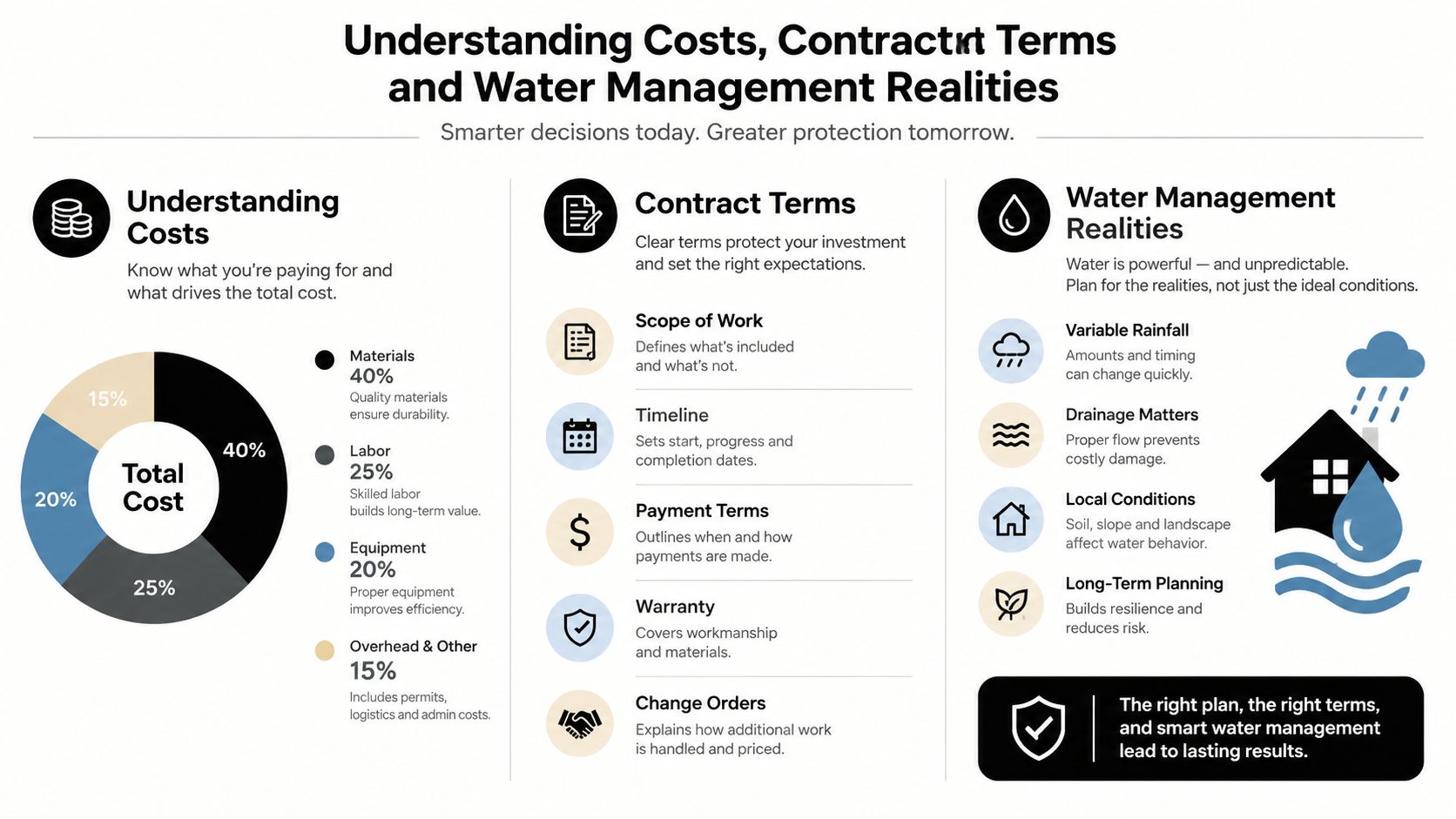
A low monthly bid can still produce a high operating cost. Access constraints, plant selection, turf condition, irrigation complexity, tree density, seasonal color, staffing, equipment, and visit frequency all shape the price. A compact retail site with difficult access may require more coordination than a larger, open industrial property.
In Texas heat, water belongs in the budget discussion from the first RFP draft. Require the contractor to establish a defensible water budget, identify abnormal use, and revise irrigation after repairs or seasonal changes. The objective is acceptable plant health and curb appeal with deliberate water use, not permanently saturated beds.
Read the contract beyond the monthly fee
Organize the agreement into four cost and responsibility layers:
- Base maintenance: List recurring labor, equipment, materials, visits, supervision, and reporting included in the fixed fee.
- Variable repairs: Explain how irrigation, plant replacement, storm cleanup, tree work, pest treatment, and other non-routine needs are diagnosed, priced, approved, and closed.
- Enhancements: Price seasonal color, mulch, soil amendments, renovations, and construction separately, with clear inclusions and exclusions.
- Water responsibility: State who pays utility charges, reviews meter data, adjusts controllers, and accepts responsibility for damage caused by delayed reporting or unauthorized changes.
Renewal language should cover notice periods, price adjustments, service expectations, termination rights, and recurring-deficiency resolution. A broad price-change clause needs a defined trigger tied to labor, materials, or scope. Otherwise, the property team cannot distinguish a justified adjustment from an unsupported increase.
Staffing pressure also affects continuity across multiple Texas sites. The verified industry survey reports 54% of contractors identified recruiting and retaining staff as their top concern, 70% said they would raise wages, and 44% planned raises of 4% or more. It also found 41% prioritizing process improvement and 38% profit-margin improvement over service expansion, which makes supervisor coverage, routing, and documented handoffs worth testing during procurement. (2026 commercial landscaping industry survey coverage)
Put irrigation control into the agreement
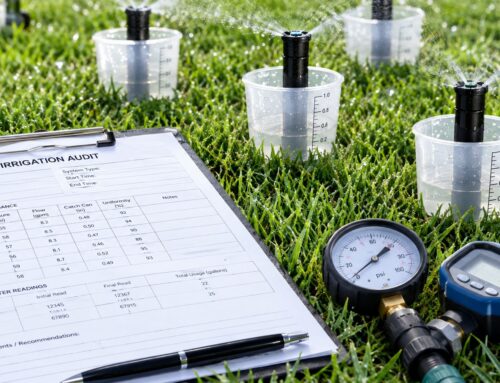
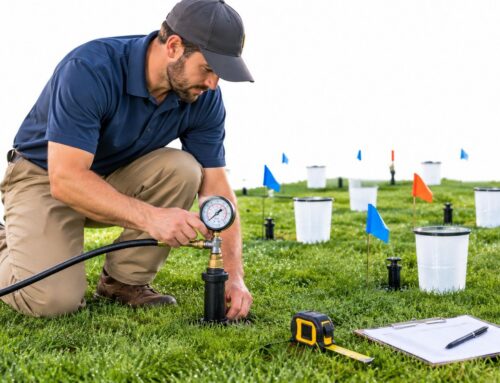
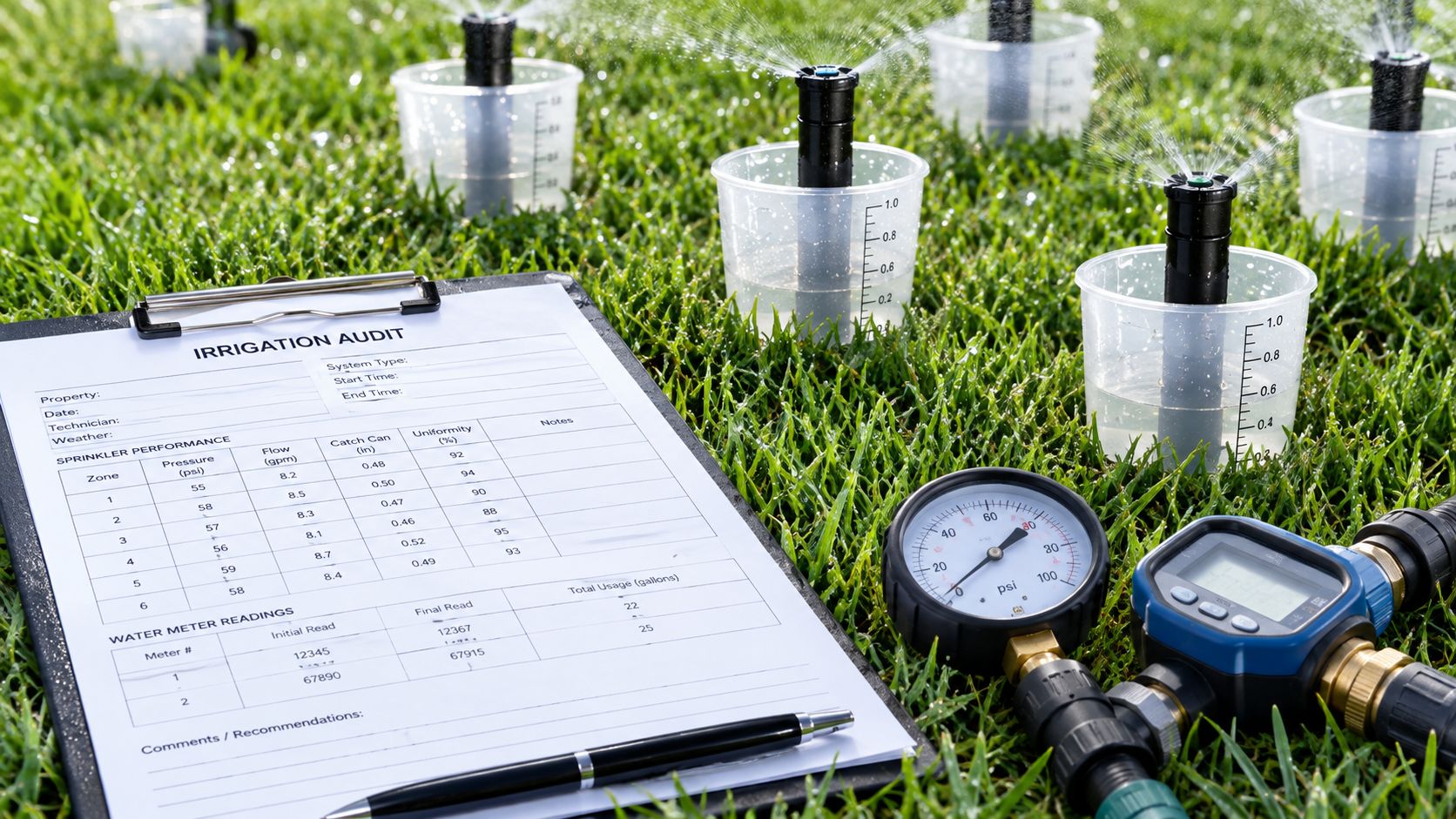
Start with a zone-by-zone irrigation audit. The contractor should compare meter or utility records for the prior 12 to 24 months, document precipitation rates, distribution uniformity, equipment condition, and controller settings, then turn those findings into a site-specific watering schedule and water budget. EPA guidance recommends a full irrigation-system audit at least every three years by a qualified auditor. (EPA WaterSense irrigation and landscape guide)
The audit must lead to operating decisions. Across 106 large water-use properties, audits produced a 10.1% seasonal reduction in the audit year and 4.8% the following year, or 14.9% over two years, under one accounting method. Another method reported average savings of 11.8% in the audit year plus 8.2% the year after. A Colorado water-agency review places large-site audits at 10% to 20% savings and large-site management at 10% to 25%, while broader contractor benchmarks often describe 10% to 25% end-use reduction. (Colorado landscape water conservation literature review)
Overwatering also creates avoidable cost and plant-health problems. One large regional program reported 6,264 acre-feet of overwatering in 2020, equal to 33% of all water used at participating sites, and 36% of sites applied more than 2 feet annually above requirements.
Write the RFP and contract as a closed performance loop: baseline records, post-repair verification, schedule updates, leak escalation, and budget-versus-actual review. For practical clauses and approval rules, review this guide to commercial site maintenance contracts.
Managing Performance and Keeping Your Landscape Performing Year-Round
Signing the agreement starts the control process, not the service standard. A property manager should be able to answer three questions at any time: what work was completed, what condition was found, and what action follows. If reporting begins only after a complaint, the property is being managed through exceptions rather than agreed standards.
During mobilization, set a practical operating rhythm. Complete a baseline site walk, record existing defects, confirm irrigation zones and controller access, identify high-visibility areas, and agree on the format for photos and service notes. This protects both sides. The contractor does not inherit responsibility for old problems, and the property manager does not mistake pre-existing damage for a service failure.
Measure conditions supervisors can verify
Use field checks that a supervisor can observe, document, and correct:
- Completion quality: Turf edges, bed definition, pruning, litter removal, blown surfaces, and entrance presentation.
- Irrigation response: Open leaks, broken heads, abnormal spray, controller faults, and schedule changes after repairs.
- Plant condition: Decline, replacement needs, pest pressure, heat stress, and seasonal color performance.
- Communication: Open work orders, promised completion dates, photographs, and unresolved items.
- Budget control: Approved enhancements, repair spending, utility records, and forecasted seasonal needs.
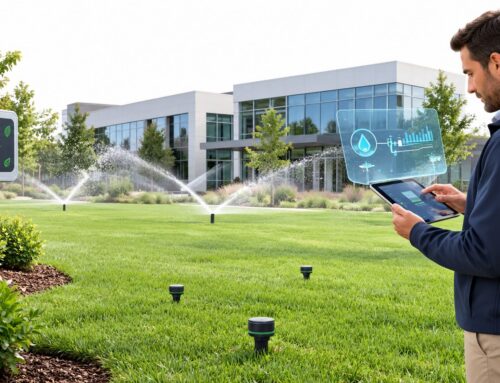
The purpose is early warning, not paperwork for its own sake. A dashboard comparing water use with budget, supported by work-order records and site photographs, can reveal a failing zone before widespread stress appears. For a broader framework, review these landscape performance metrics.
Set escalation rules before problems grow
Require the crew or supervisor to report urgent conditions the same day they find them. Define immediate-notification triggers, including active leaks, blocked visibility, unsafe branches, damaged irrigation near electrical equipment, and storm-related hazards. Routine deficiencies need an agreed correction window and documented closeout.
A monthly operating review should address open items and upcoming seasonal work. A quarterly business review can examine recurring defects, water performance, labor coverage, approved versus proposed enhancements, and recommendations for the next period. This review rhythm exposes repeated failures before renewal discussions, when correction is harder and more expensive.
Irrigation programs often fail in predictable ways. Teams skip pre- and post-use baselines, leave zone schedules unchanged after repairs, or treat audit findings as one-time fixes. Assign an owner to every adjustment, with a due date and verification record. That closes the loop between the RFP promise, field work, water use, and actual operating cost.
Severe weather can cancel a visit, and a crew member can leave without notice. The contract should make the response visible: detect the miss, communicate it, assign recovery work, and verify completion. Performance is protected by the operating system, not by assuming every visit will go as planned.
Your Next Steps to Hiring a Worry-Free Partner in Texas
A reliable hiring process connects the RFP to field performance:
- Walk the property: Record entrances, turf, beds, trees, irrigation equipment, traffic patterns, hazards, and existing defects.
- Write the scope: Separate recurring maintenance, irrigation, seasonal work, enhancements, construction, and emergency response.
- Issue a comparable RFP: Give every bidder the same assumptions, pricing categories, exclusions, service frequencies, and reporting requirements.
- Vet the operation: Meet the proposed manager, check comparable references, inspect active work, and ask how staffing changes are handled.
- Contract for control: Specify water audits, utility review, schedule updates, repair approvals, renewal terms, response expectations, and quality standards.
- Manage the loop: Use inspections, work orders, photographs, water dashboards, and recurring reviews to keep service aligned with the property's needs.
For Dallas, Fort Worth, and San Antonio properties, the right partner needs local field coverage and consistent operating controls. Prestonwood Commercial Landscape Services provides maintenance, seasonal color, irrigation audits and repairs, central water management, construction, installation, renovation, scheduling, quality control, and customer communication for commercial properties. Its branches in Dallas, Fort Worth, and San Antonio support multi-site consistency while allowing recommendations to reflect each property's conditions.
The right choice will not prevent every weather event, labor challenge, or plant replacement. It should give the property manager a clear way to identify issues early, approve the appropriate response, manage water use, and protect both presentation and budget.
Start with a site walk, not a price sheet. Ask each shortlisted contractor to show how its proposed scope becomes a staffed schedule, a documented irrigation plan, and a repeatable performance review.
Prestonwood Commercial Landscape Services builds and maintains commercial properties across Dallas–Fort Worth and San Antonio, with irrigation audits, water management, seasonal color, construction, quality control, and responsive service coordination. Visit Prestonwood Commercial Landscape Services to schedule a site walk and request a proposal for your property's scope, water priorities, and operating requirements.