The call from a tenant usually comes at the worst time. A lobby light is out, a patch of standing water is near the parking entrance, the irrigation controller is acting up, and the roof leak everyone hoped was minor is now showing up in a suite ceiling tile. A single one of these problems is typically manageable. The pressure comes from managing all of them while trying to protect the building, the budget, and the tenant experience at the same time.
That's why commercial property maintenance works best when it's treated as asset management, not cosmetic cleanup. The scale of the market shows how central it has become, with North America commercial facility maintenance estimated at $153.60 billion in 2023, projected at $159.07 billion in 2024, and forecast to reach $202.41 billion by 2030 (Grand View Research). For a property manager, that size matters because it reflects a simple truth, maintenance is a core operating discipline, not an afterthought.
Table of Contents
- Beyond Curb Appeal The Value of Strategic Maintenance
- Core Commercial Maintenance Services Explained
- Developing a Year-Round Maintenance Schedule
- Budgeting and Measuring Maintenance Success
- How to Choose the Right Maintenance Partner
- Managing Risk Water and Environmental Factors
- Sample Maintenance Checklists for Your Property Type
Beyond Curb Appeal The Value of Strategic Maintenance
A retail center manager once told me the same story in three different ways over two months. First it was a burned-out pole light near the monument sign. Then it was a drainage complaint after heavy rain. Then it was a parking lot trip hazard that turned into a formal service request. None of the items looked serious on their own, but together they showed a site being managed reactively, and the cost of that approach was already showing up in tenant frustration, service delays, and avoidable repair work.
Maintenance is part of asset performance
That is the trap with surface-level thinking. When maintenance gets reduced to mowing, sweeping, and keeping things looking presentable, the property starts drifting toward higher risk, more tenant friction, and more emergency calls. A better model treats maintenance as a system that supports asset value, tenant confidence, and operational stability at the same time.
The difference shows up in how the property performs under pressure. A well-run program helps catch small defects before they become complaints, keeps vendor response times predictable, and gives ownership a clearer view of where money is being spent. It also makes it easier to separate routine wear from a pattern that signals a bigger issue, such as recurring leaks, repeated lighting failures, or uneven pavement settling.
That matters because commercial property maintenance is not only about appearance, it is also about protecting operating budgets and reducing waste. Water conservation is part of that equation. A leaking irrigation line, an overwatered planted area, or a clogged drain can drive up utility use and create damage that is far more expensive than the original fix.
A property team that tracks those issues consistently has more control over the long-term cost picture. It can decide whether a problem calls for a quick repair, a full component replacement, or a change in service frequency. That kind of judgment protects the asset instead of just reacting to the latest complaint.
Practical rule: if a maintenance issue keeps showing up in tenant conversations, it is already affecting value, even if the repair itself is small.
Fewer surprises are the real win
Proactive property teams do more than respond faster. They prevent the repeat problems that create hidden cost and make the whole site feel less reliable. A disciplined maintenance program keeps inspection history organized, makes vendor performance easier to compare, and helps managers spot weak points before they turn into costly disruptions.
It also supports better trade-offs. A manager can weigh visible presentation against hidden risk and spend where it protects the property, not just where the issue is easiest to see. That may mean addressing drainage before repainting, fixing irrigation loss before adding more landscaping, or replacing worn lighting before a safety complaint becomes a liability issue.
A client using South Mountain Window Cleaning's maintenance insights as part of the service review process may still be thinking about appearance, but the stronger value is in what the review reveals about condition, risk, and follow-through. That is the difference between a property that only looks maintained and one that is managed with a worry-free framework.
Core Commercial Maintenance Services Explained
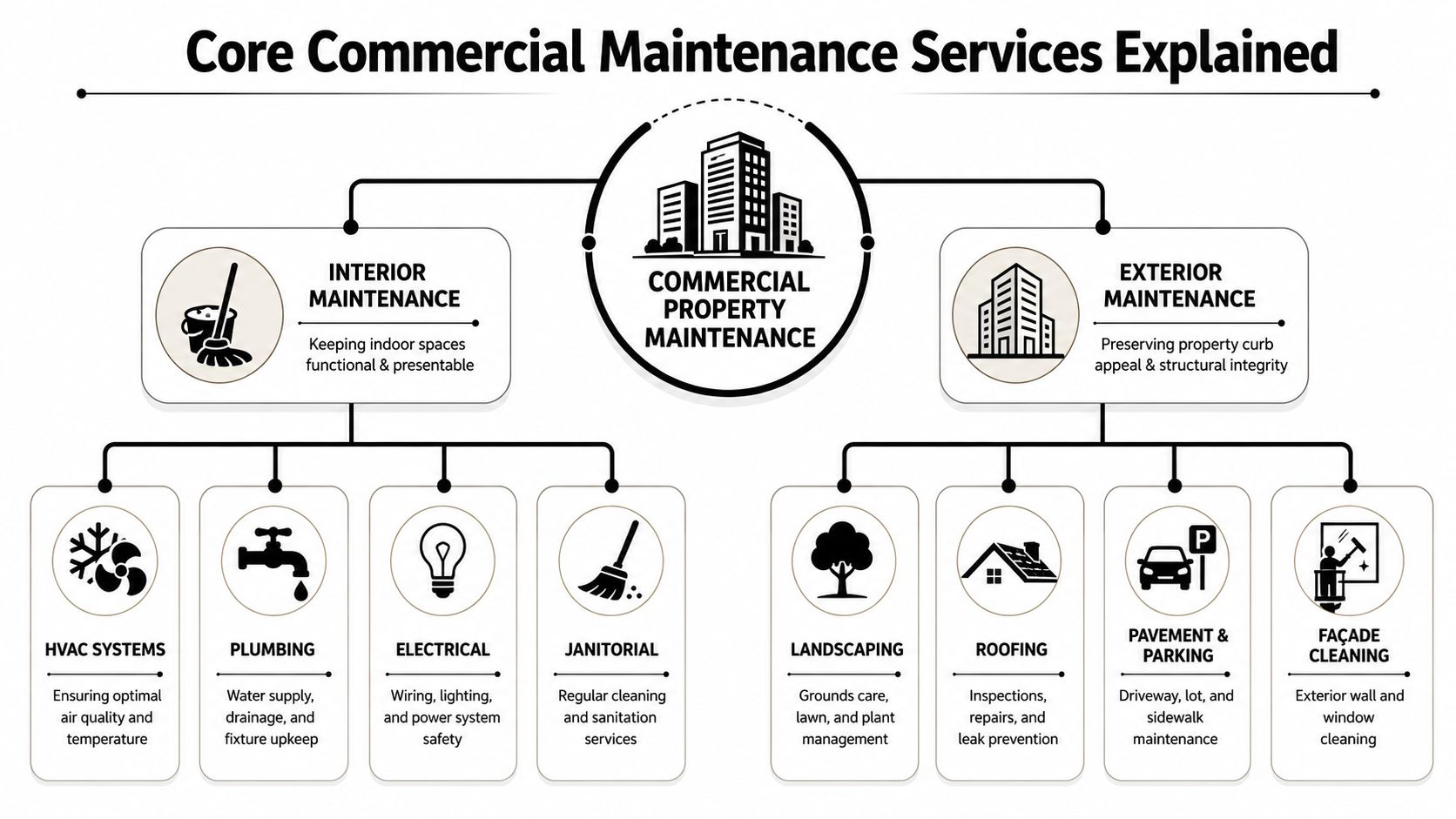
A tenant reports uneven cooling in one suite, a hallway light fails, and runoff starts pooling near the entry after a storm. Each issue looks small on its own, but together they show why a maintenance program has to cover the building and the site around it.
The point is protection, not decoration. A property that is maintained with discipline holds value better, creates fewer interruptions, and gives ownership a clearer picture of where money is being spent.
Interior systems that protect daily operations
Interior maintenance starts with the systems people notice first. HVAC, plumbing, electrical, and janitorial work affect comfort, safety, and how tenants judge the property every day. If air handlers, fixtures, or lighting are inconsistent, the property feels neglected even when the exterior still looks sharp.
These tasks work best when they are tied to specific assets and logged consistently. A filter change is one thing. A filter change recorded against a unit ID, date, and follow-up note helps a manager spot a pattern before it becomes a breakdown, and that is where long-term cost control starts.
Exterior care that preserves the site
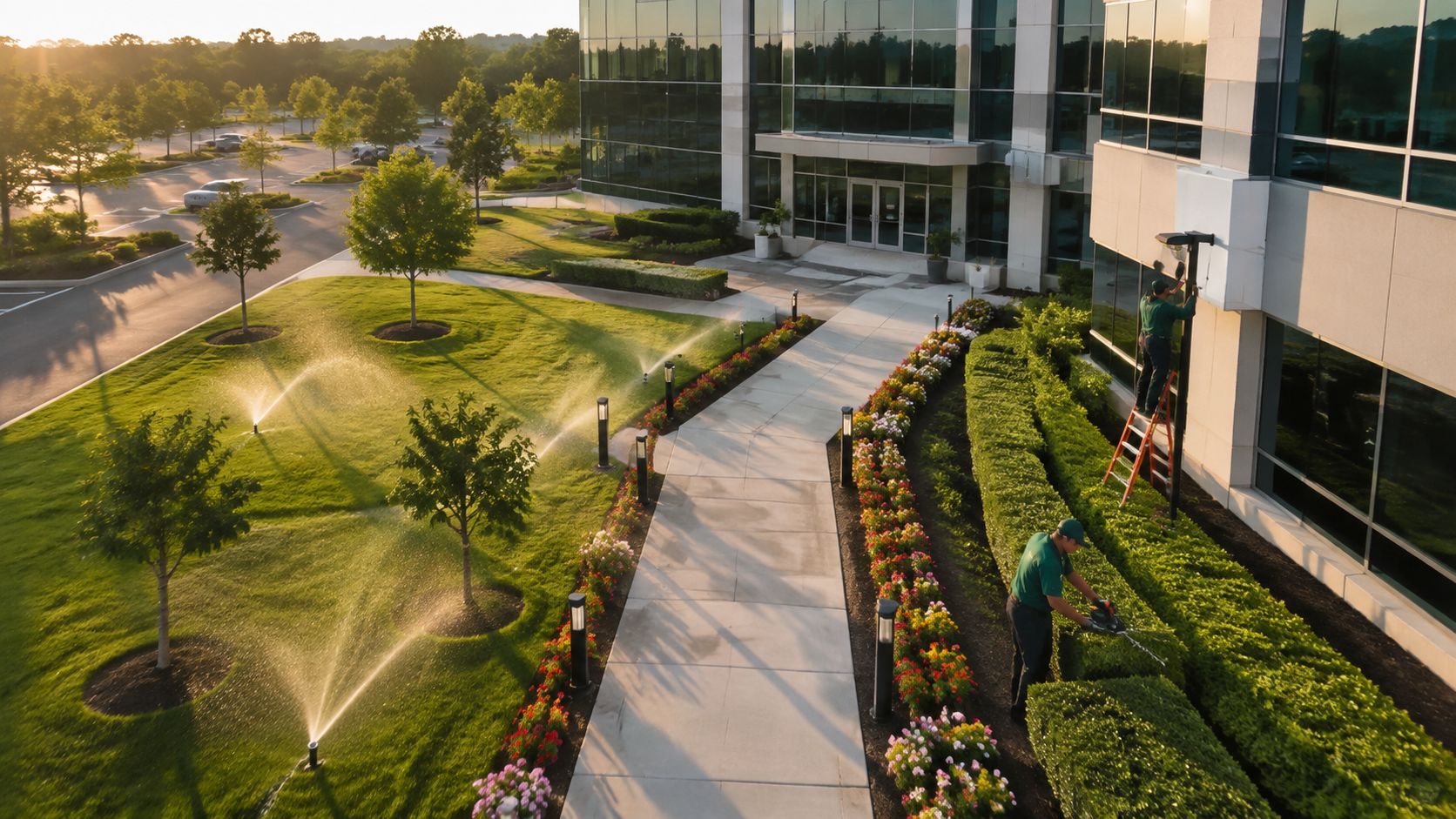
Exterior maintenance is where value often erodes slowly. Landscaping, roofing, pavement and parking, and façade cleaning all affect how the property functions and how it is perceived. Curb appeal problems often point to a safety issue, a drainage concern, or a lifecycle problem that has not been addressed yet.
For exterior scope definitions, this commercial grounds maintenance overview is a useful reference point when you are aligning service scope with site expectations. The right exterior plan should cover grounds care, plant health, water use, and visible condition without drifting into tasks that do not improve performance.
Key Elements of a Maintenance Scope
A maintenance partner should be able to explain each service in plain language, and the scope should show how each item protects the site.
- Landscaping and groundskeeping: mowing, trimming, bed care, weed management, and site presentation.
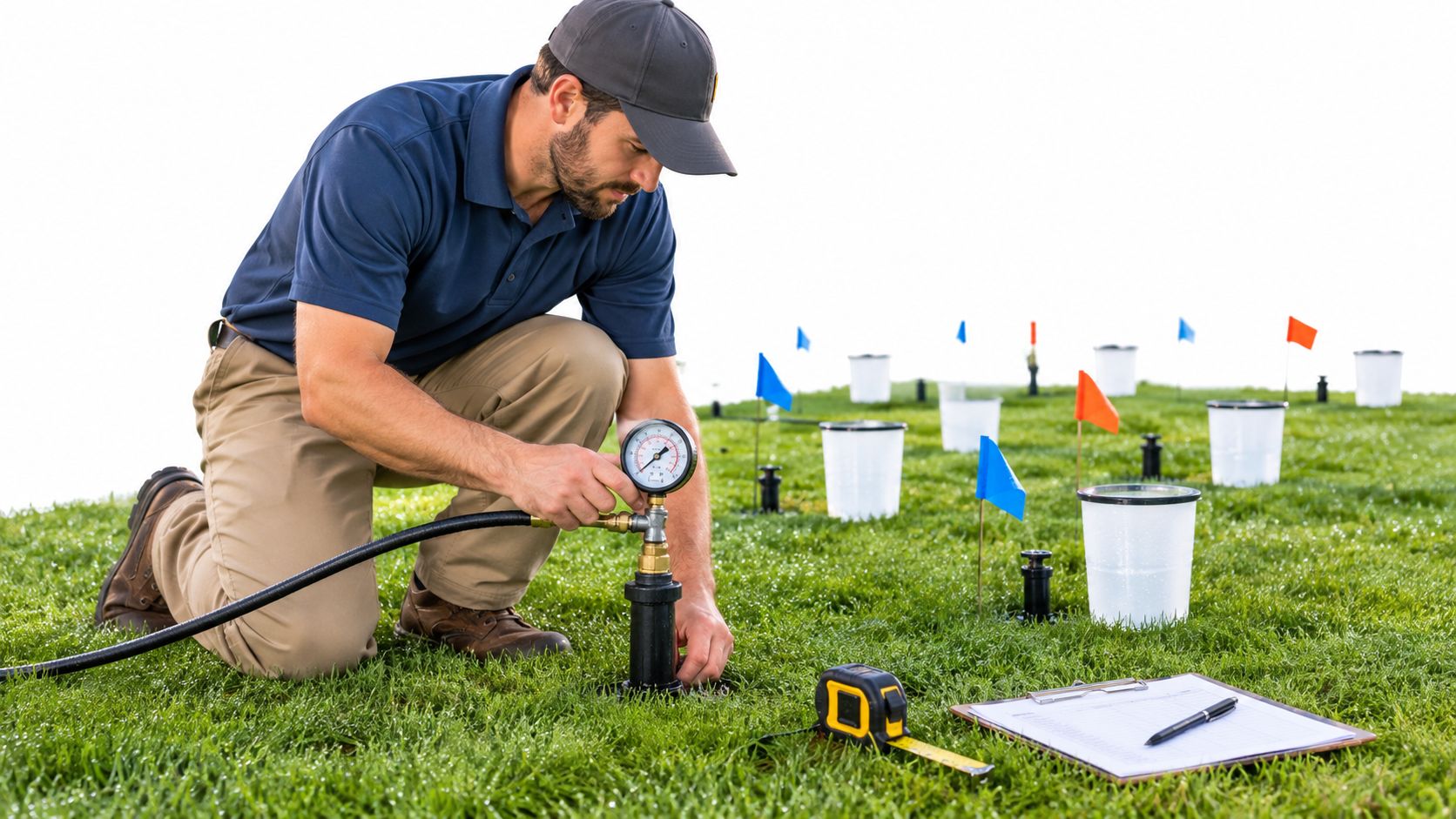
- Irrigation system management: controller checks, leak detection, broken heads, and seasonal adjustments.
- Hardscape care: sidewalks, curbs, and other surface areas that affect access and safety.
- Exterior lighting: pole lights, fixtures, timers, and visibility after dark.
- Seasonal color: planting and replacement work that keeps the site on brand.
- Proactive inspections: walkthroughs that identify small failures before they spread.
A good scope does not just list tasks. It explains what gets inspected, what gets corrected, and what gets escalated.
Pest pressure also belongs in that scope. If a provider is already coordinating site care, it should be clear how outdoor conditions are being monitored and when a specialist is brought in, much like the practical thinking in Pestless advice for Miami homes. That keeps the property manager from treating pest issues as isolated complaints instead of part of a broader risk picture.
Developing a Year-Round Maintenance Schedule
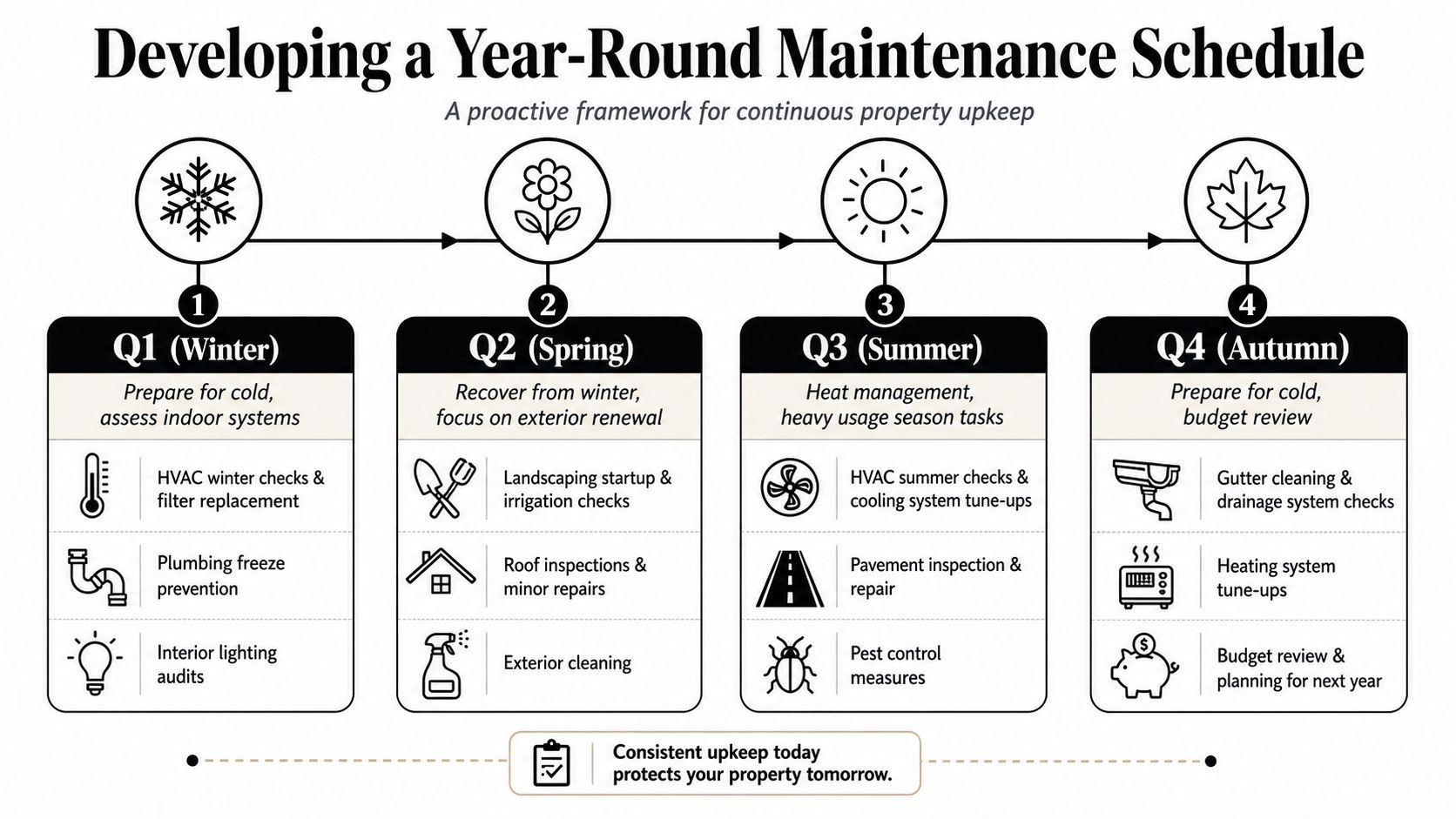
Seasonal work fails when it gets treated like a calendar reminder instead of an operating rhythm. The smartest schedules separate recurring tasks from seasonal tasks, then assign each one to the point in the year when it protects the property.
Build the calendar around risk, not habit
Winter is the right time to focus on indoor systems, freeze prevention, and lighting. Spring is when exterior renewal matters most, including landscaping startup, irrigation checks, roof inspections, and cleaning. Summer shifts attention to cooling loads, pavement wear, and pest pressure. Fall should be used for gutter cleaning, drainage checks, heating tune-ups, and next-year planning.
That's also where a scheduling system becomes useful. A tool like landscape scheduling software helps teams keep recurring service, seasonal work, and property-specific jobs visible instead of scattered across emails and spreadsheets.
Separate recurring work from inspection cycles
Some tasks need weekly or monthly attention. Others belong in quarterly or annual cycles. A common mistake is overloading the crew with vague “maintenance” tasks that don't have a timing standard, so they get pushed until the property complains.
A cleaner structure looks like this:
- Weekly work: mowing, trash pickup, irrigation walk-throughs, lighting checks.
- Monthly work: detailed inspections, documentation, and minor adjustments.
- Quarterly work: seasonal transitions, drainage checks, and repair reviews.
- Annual work: major system testing, compliance items, and budget planning.
Use trigger events, not just dates
Weather and occupancy matter as much as the calendar. After major rain, inspect drainage paths, gutters, and low spots. After leaf drop, check for blockages and standing water. After tenant complaints, inspect the area tied to the complaint immediately and document what changed.
Seasonal maintenance works when the trigger is visible, the response is fast, and the follow-up is written down.
Budgeting and Measuring Maintenance Success

A maintenance budget should do more than cap spending. It should show whether the property is being protected or slowly pushed into more expensive repairs through deferred work and weak scheduling. For commercial properties, maintenance cost per square foot gives owners a practical reference point. Industry sources cite about $1.60 to $3.20 per sq ft for office and $2.80 to $4.90 per sq ft for healthcare, while another IFMA-referenced source places average annual commercial maintenance at about $2.00 to $2.50 per sq ft (Oxmaint).
What spend should tell you
If actual spend is above those ranges, the budget should trigger a closer look at the work mix. The key question is whether the difference comes from harder use, older systems, or more complex site conditions, or whether reactive repairs, weak preventive scheduling, or an uncoordinated vendor mix are driving costs up.
The budget reads better when it is tied to performance measures. Mean Time to Repair, or MTTR, shows how fast issues are resolved, and the formula is simple, total repair time divided by number of repairs (Oxmaint). In Class A properties, industry targets are often set at under 4 hours for critical assets and under 72 hours for routine issues (Oxmaint).
KPIs that tell the truth
A maintenance dashboard should focus on the measures that change outcomes, not the ones that only fill a report.
- MTTR: shows how quickly the team restores function.
- Preventive maintenance compliance: shows whether scheduled work is getting done.
- Water usage efficiency: helps identify irrigation waste and hidden leaks before they become a budget issue.
- Repeat issue frequency: shows where the same location or asset keeps failing.
The point is to connect routine work with operating results. When preventive work stays on schedule and MTTR is controlled, the property usually spends less time in crisis mode and more time operating predictably.
South Mountain Window Cleaning's maintenance insights are worth reviewing if you want another perspective on how exterior upkeep fits into overall planning. The reporting structure matters most, because a good service partner should help you see patterns, not just close out jobs.
Use the budget as a management tool
A clean budget shows ownership where money went. A smarter budget also shows what was avoided, including emergency calls, larger repairs, and avoidable water loss. That is the inherent value of commercial property maintenance, it turns spending into a controlled system instead of a string of surprises.
How to Choose the Right Maintenance Partner
A maintenance vendor should make the property easier to manage, not harder to interpret. The right partner brings structure, clear communication, and proof that the work is being done correctly. The wrong one leaves you with invoices, vague notes, and too many surprises.
Start with proof, not promises
Insurance, local experience, and references are essential. A contractor who understands local weather patterns, site access issues, and seasonal risks will usually make better decisions on site than one who only knows how to execute a task list. For exterior and pest-adjacent risk questions, this Pestless advice for Miami homes is a useful reminder to check coverage and operational safeguards before you sign anything.
The same logic applies across commercial maintenance categories. Ask for current certificates, recent project examples, and proof that the crew assigned to your property can handle the scope you're buying.
Contracts should define the operating standard
A strong agreement does more than name a price. It should define the Scope of Work, the Service Level Agreements, the communication path, and how exceptions are handled. If the vendor finds damage, who gets notified? If a task is delayed, what happens next? If weather changes the schedule, who confirms the new plan?
A good contract usually includes:
- Scope clarity: exact tasks, service areas, and exclusions.
- Response expectations: who handles urgent issues and how fast.
- Reporting rules: what gets documented, when, and in what format.
- Escalation paths: who is contacted if a problem isn't resolved.
- Billing structure: what counts as included work versus extra work.
Partnerships work better than transactions
The best vendors act like an extension of the property team. They show up with clean documentation, a consistent crew, and a willingness to flag problems early. That doesn't mean every issue is solved instantly, but it does mean everyone knows what happened, what was done, and what still needs attention.
If a vendor can't explain the work in writing, they usually can't manage it well in the field.
Managing Risk Water and Environmental Factors
The most expensive maintenance problems often start at the edges of the site. Parking lots, sidewalks, gutters, vents, and fire-safety-adjacent items get overlooked because they're less glamorous than landscaping beds or lobby finishes, but they're usually where liability starts to build. A property can look polished and still be carrying water intrusion risk, trip hazards, or drainage failures in plain view.
Exterior risk is a management issue
Parking lot upkeep affects more than appearance, it also affects accessibility and safety. Sidewalk settling, loose edges, blocked drains, and worn surface areas can create complaints long before they trigger a bigger repair. The same is true for gutters and vents, especially after storms or seasonal debris buildup.
A practical inspection routine should be tied to actual triggers. Check drainage after heavy rain, inspect gutters after leaf drop, and walk the site after tenant complaints or contractor visits. That approach keeps the team focused on what changed instead of what merely looks busy.
For a deeper look at drainage-specific planning, landscape drainage solutions can help frame the conversation around runoff, ponding, and how water moves across a property. That matters because water that doesn't leave the site properly usually ends up inside the maintenance budget later.
Water conservation belongs in maintenance, not just sustainability
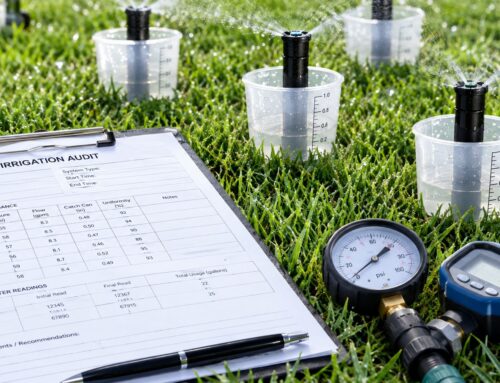
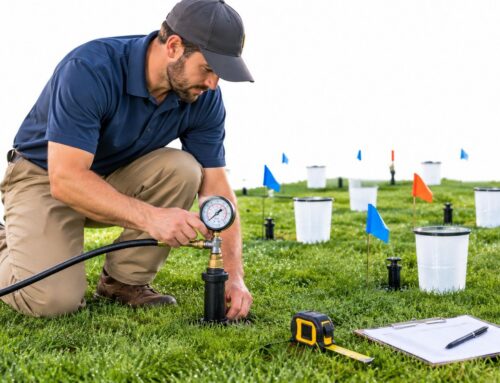
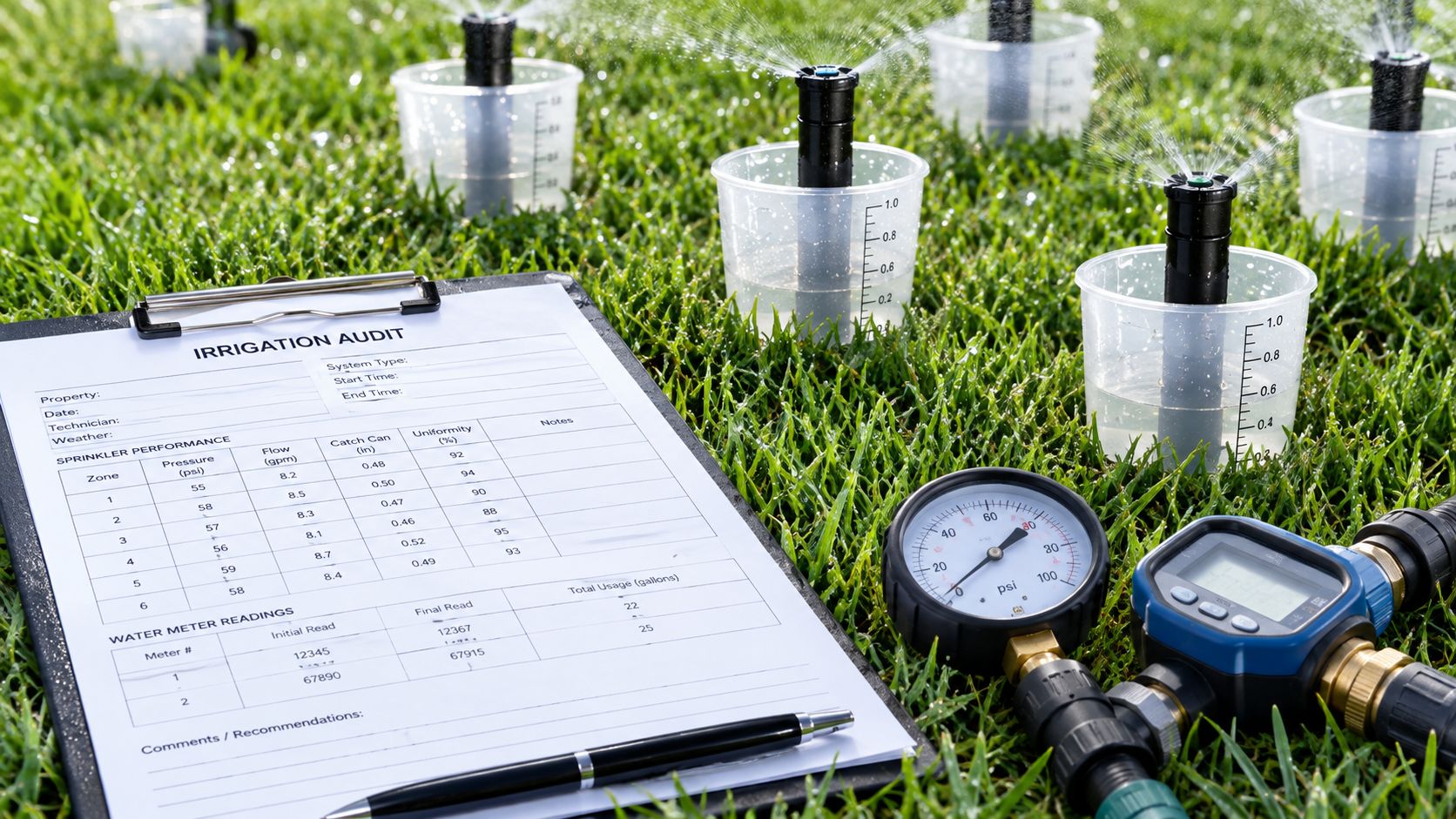
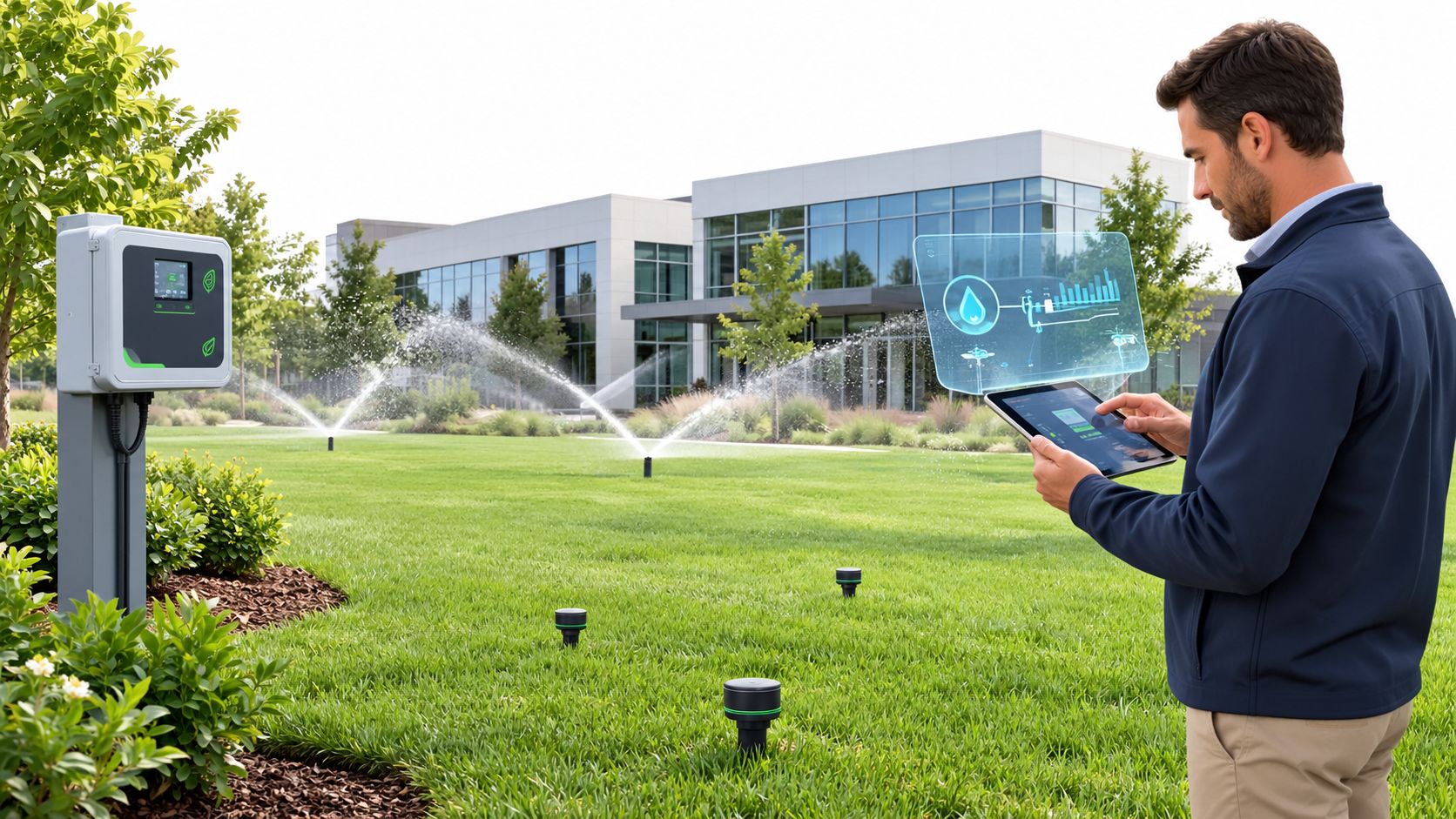
Grounds care is often treated like a visual line item, but in a tighter water environment it becomes part of operational control. Smart irrigation, drought-aware plant selection, and regular audits can reduce waste while still keeping the site presentable. The point isn't to strip a property of color or identity, it's to stop paying for water that doesn't help the asset.
Proactive maintenance supports lifecycle cost control. Irrigation systems need to be checked for leaks, controller errors, broken heads, and seasonal overwatering. Beds and turf should be reviewed for stress patterns so the team can adjust before the property starts showing brown-out or runoff problems.
Fire-safety-adjacent care needs attention too
Exterior maintenance also touches life-safety risk. Vents, access paths, and nearby surfaces around fire-safety equipment shouldn't be blocked, damaged, or neglected. If a property has a damage event, navigating business fire damage complexities is a useful reference for understanding how restoration complexity can escalate once the site is compromised.
The strongest maintenance programs treat water, access, and safety as one system, because that's how the building experiences them.
Sample Maintenance Checklists for Your Property Type
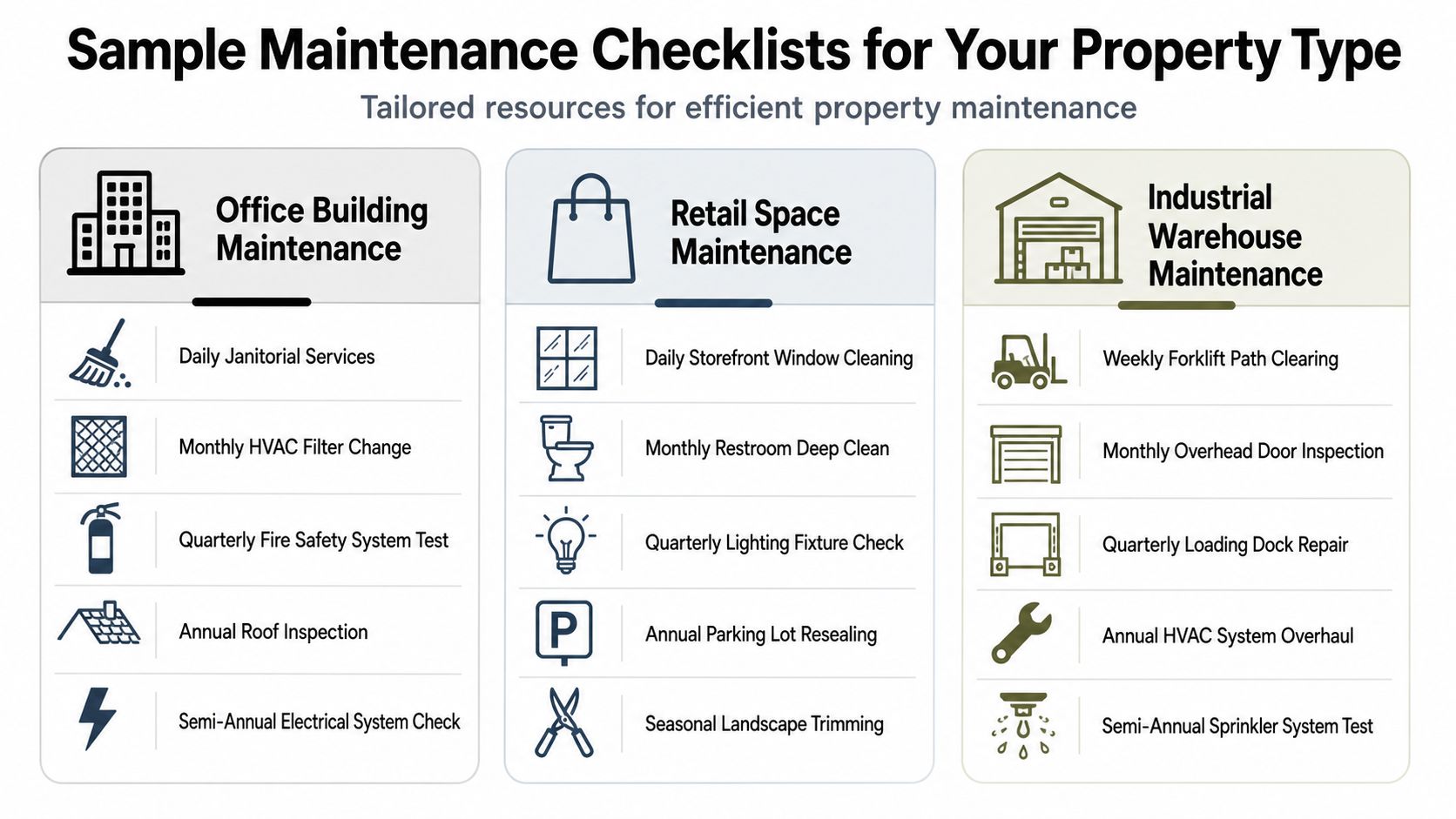
No two properties need the same checklist, because their users create different wear patterns. A retail center needs a different maintenance rhythm than a warehouse, and a healthcare facility needs more attention to reliability and cleanliness than an office campus might.
Office building maintenance
Office properties are judged on comfort, order, and how few interruptions tenants experience. A practical checklist usually includes daily janitorial services, monthly HVAC filter changes, quarterly fire safety system tests, annual roof inspections, and semi-annual electrical system checks. The goal is to keep the work invisible to tenants except when they notice the building works well.
Retail space maintenance
Retail sites depend on storefront presentation and pedestrian flow. A solid checklist should include daily storefront window cleaning, monthly restroom deep cleaning, quarterly lighting fixture checks, annual parking lot resealing, and seasonal grounds trimming. In this environment, small defects change first impressions fast, so visible upkeep has to stay consistent.
Industrial warehouse maintenance
Industrial sites care most about durability, access, and operational continuity. The checklist should cover weekly forklift path clearing, monthly overhead door inspection, quarterly loading dock repair, annual HVAC system overhaul, and semi-annual sprinkler system testing. If the floor plan is hard on equipment and traffic, the maintenance plan should match that intensity.
Healthcare and HOA priorities
Healthcare facilities need tighter attention to comfort, cleanliness, and building systems that can't drift. HOAs and POAs need consistent landscaping, drainage checks, and common-area upkeep because residents notice service gaps quickly. Both property types benefit from a written schedule that identifies who owns each task and how exceptions get handled.
The easiest way to start is to match the checklist to the site's highest-risk areas first, then fill in the rest. That keeps the plan realistic and helps the team spend time where failures would hurt most.
Prestonwood Commercial provides assistance to commercial properties for managing exterior maintenance, irrigation, seasonal color, drainage, and ongoing site care with a focus on consistency and water-conscious planning. If you want a practical partner for a more predictable maintenance program, visit Prestonwood Commercial Landscape Services and review how their services fit your property's needs.