Standard commercial work typically runs $4.50 to $12 per square foot, while complex rebuilds can reach about $40 per square foot. The scope can create a 10x or greater budget swing, so the right question isn't “What does landscaping cost?” but “What work does this site require?”
A property manager usually discovers the problem when a familiar complaint becomes impossible to ignore. The office park still functions, or the retail center still attracts tenants, but faded plantings, failing irrigation, cracked paving, standing water, and thin turf make the property look older than it is. Then three contractors submit bids that appear to describe the same renovation, yet the totals are far apart.
That difference usually reflects different assumptions, not necessarily dishonest pricing. One contractor may be replacing visible plants. Another may be rebuilding compacted soil, correcting grades, redesigning drainage, and reconfiguring irrigation before installing new material. Both may call the work a “renovation,” but they're pricing different outcomes.
Table of Contents
- Introduction Why Commercial Landscape Renovation Costs Vary So Widely
- Understanding How Landscape Renovation Cost Is Calculated
- Core Cost Drivers That Shape Your Final Budget
- Typical Price Ranges by Commercial Property Type
- Lifecycle Costs Maintenance and Water Management Savings
- Budgeting Financing and Phasing Strategies That Work
- How to Get Accurate Bids and Choose the Right Contractor
Introduction Why Commercial Landscape Renovation Costs Vary So Widely
A retail center with tired entry beds may look like a planting problem. Once demolition begins, crews may uncover compacted soil, poor drainage, outdated irrigation, damaged paving, or restricted equipment access. The visible symptoms are similar, but the required work can be entirely different.
That difference explains why two bids might show $6 versus $11 per square foot for what appears to be the same renovation. The lower figure may cover plant replacement and mulch. The higher figure may include soil correction, grading, drainage, irrigation changes, demolition, and restoration. The numbers describe different scopes, not automatically different pricing practices.
Residential examples reinforce the same pricing logic. A full backyard renovation is commonly cited at $15,000 to $50,000, while a front-yard refresh often falls between $1,500 and $5,000, according to Angi's landscaping cost guide. The spread shows how quickly a cosmetic update can become a site rebuild when the work extends below the surface.
Practical rule: Don't compare bids until you've confirmed that each contractor is pricing the same scope, site assumptions, and performance goals.
The bid also needs to be judged as lifecycle math, not only as a purchase price. A cheaper project that leaves standing water or inefficient irrigation may preserve recurring mowing, plant replacement, and repair costs. A larger initial investment can reduce those burdens while improving circulation, plant durability, and curb appeal.
That curb appeal has an operational purpose. A maintained property can support tenant perception and help managers boost property value with landscaping. The return is not limited to appearance, because water control and reduced maintenance affect the site after construction is complete.
Start by defining the desired outcome. Then match the physical work to that outcome, separate installation cost from operating cost, and request bids built on identical assumptions. This approach makes the budget easier to explain and the final choice easier to defend.
Understanding How Landscape Renovation Cost Is Calculated
Contractors generally build a commercial renovation estimate from several layers rather than one universal price. The most common starting point is cost per square foot, because it gives a manager a practical way to relate project scope to site size. Standard work commonly falls around $4.50 to $12 per square foot, while excavation-heavy or highly customized work can reach about $40 per square foot in commercial planning guidance from Prestonwood.
Start with the work category
A basic refresh may involve removing declining plants, preparing beds, adding soil amendments, installing new plants, and applying mulch. A reconstruction may add demolition, excavation, grading, drainage, new irrigation zones, rebuilt retaining elements, paving, and restoration of areas disturbed by equipment. The second project costs more because crews aren't just adding material. They're changing the site beneath the finished surface.
Some contractors also use hourly pricing for portions of the work. Bankrate cites typical landscaping pricing of $50 to $100 per hour, while higher-end contractor summaries commonly place labor alone between $50 and $120 per hour, as described in its outdoor renovation guidance. Hourly charges may apply to consultation, troubleshooting, arboriculture, irrigation diagnosis, or work whose exact duration can't be known in advance.
Read the estimate in layers
A clear proposal should distinguish the following:
- Preparation, including mobilization, protection, demolition, clearing, and disposal.
- Sitework, including excavation, grading, soil replacement, drainage, and restoration.
- Systems, including irrigation components, controls, valves, wiring, and testing.
- Visible improvements, including plants, mulch, turf, paving, walls, lighting, and finishes.
- Closeout, including cleanup, inspections, watering instructions, and warranty terms.
This layered view prevents a common mistake. A low installation number may exclude removal, unsuitable soil, irrigation changes, or repairs to surfaces damaged during access. For a separate perspective on removal and site preparation, managers can consult this local arborist cost breakdown, then ask contractors to state clearly which clearing tasks their proposals include.
The pricing logic resembles a building remodel. Repainting a room changes the finish. Rebuilding its walls changes the structure, utilities, labor sequence, and restoration work. Renovation follows the same pattern. Plant replacement is usually straightforward. Reworking the conditions that support those plants creates the nonlinear jump in renovation cost.
Core Cost Drivers That Shape Your Final Budget
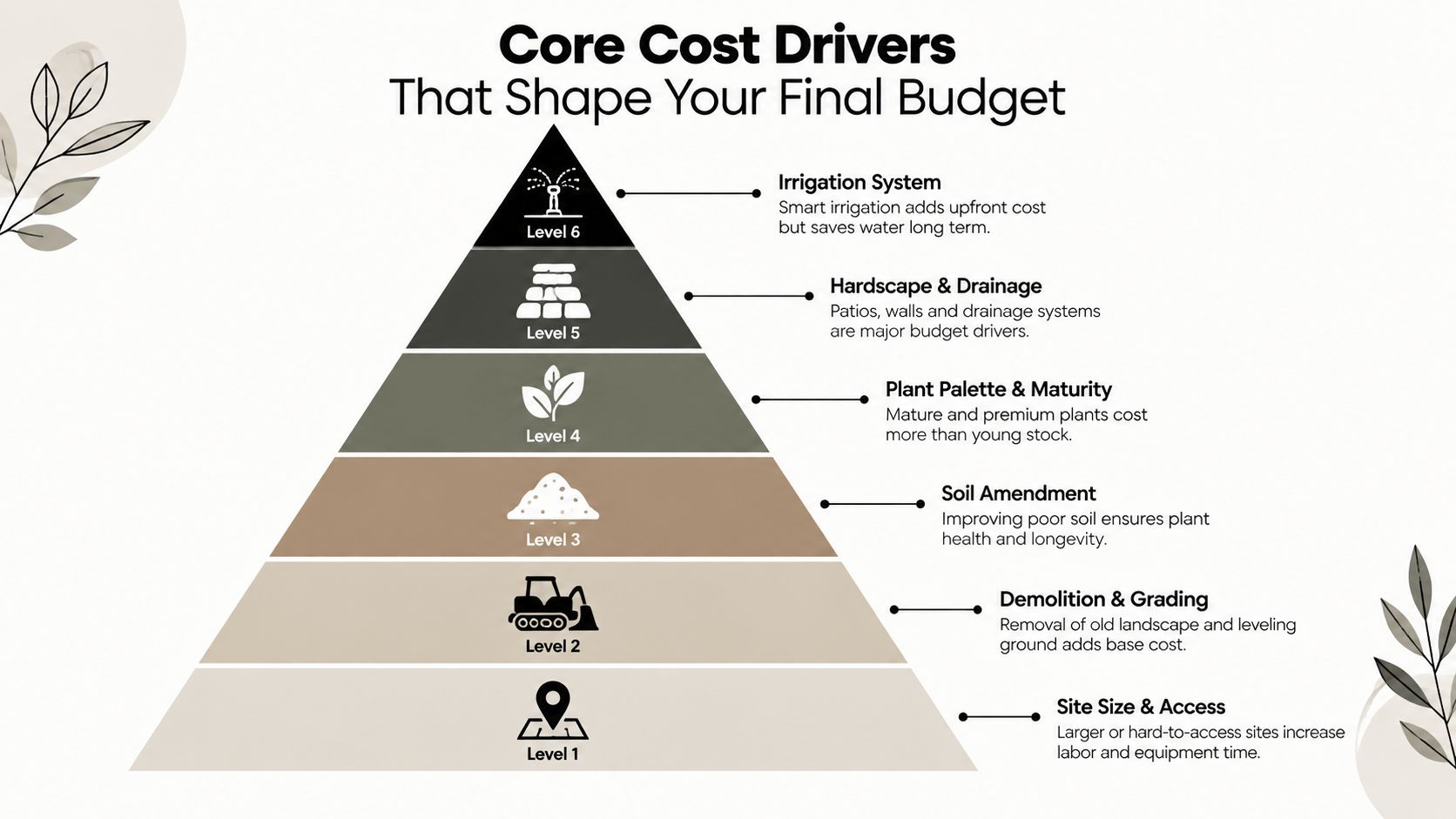
A renovation bid can change sharply even when two properties have similar square footage. The biggest question is not how much area will be planted. It is how many conditions the crew must manage to deliver a usable, attractive result without disrupting daily operations.
Rank the bid drivers before trimming scope
Access and site logistics often move a bid first. Open equipment routes let crews complete more work per shift. Narrow entrances, occupied buildings, parked vehicles, restricted work hours, and active pedestrian paths slow production and add coordination. The same planting plan can therefore carry different labor costs at different properties.
Hardscape, drainage, and structural correction usually create the next major jump. A planting bed is like replacing a room's finishes. Rebuilding a walkway, retaining element, or drainage path is closer to repairing the room's structure. Those tasks can require excavation, base preparation, compaction, specialized installation, and surface restoration.
Demolition and disposal affect the budget according to what lies below and around the visible area. Crews may remove old plant material, buried edging, damaged paving, or unsuitable materials before new work begins. Ask whether removal, hauling, disposal, and protection of nearby areas are included, rather than treating demolition as a single line item.
Soil condition influences both the installation decision and the lifecycle result. Compacted, depleted, contaminated, or poorly drained soil can shorten plant performance if it remains unchanged. A lower bid that skips testing or root-zone correction may shift spending into replacements, irrigation adjustments, and maintenance later.
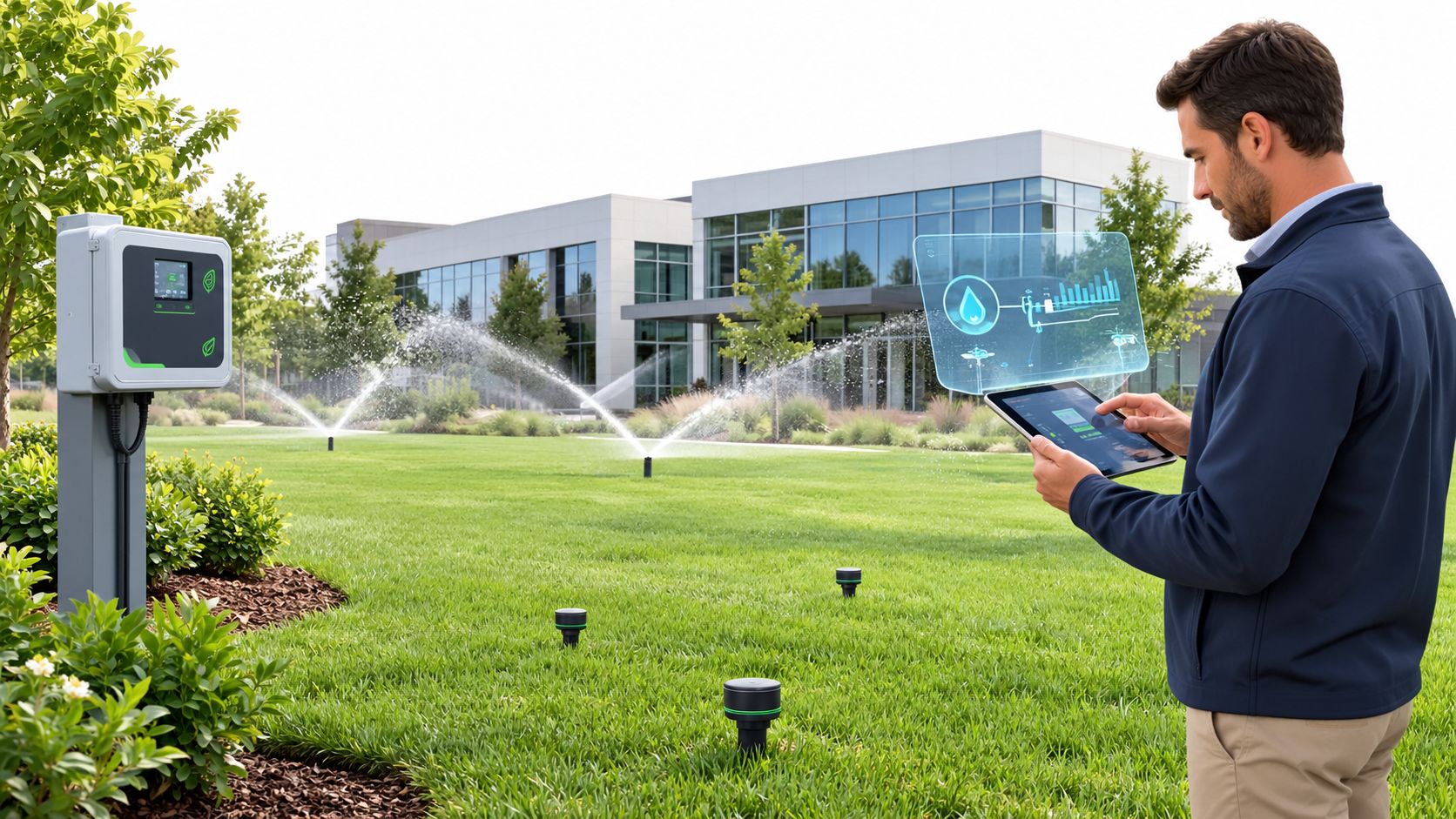
Irrigation changes add design, trenching, valves, heads, controllers, testing, and restoration. They also affect water use and plant survival, so this line should be judged by operating cost, not only installation cost. A system that distributes water correctly can reduce recurring waste and avoid preventable plant loss.
Use visible improvements as the flexible layer
Plant palette and maturity influence purchase cost, establishment risk, pruning, seasonal color, and the time required to achieve the intended appearance. Larger plants provide faster visual impact. Younger stock can reduce the initial outlay while extending the period before the property looks fully renovated.
Managers comparing assumptions can review this commercial landscape installation cost reference as a scope checklist. The useful comparison is not just the total. Check which access, removal, soil, water-management, restoration, and maintenance assumptions produced it.
Value engineering should first adjust finishes with limited operational effect. Ornamental features, plant maturity, and some decorative materials may offer room to phase or substitute. Drainage, safe circulation, soil preparation, and irrigation performance protect the investment, so cutting them can turn a smaller bid into higher lifecycle costs. A sound budget weighs the initial price against maintenance reduction, water control, and the curb appeal that supports the property's daily use and long-term value.
Typical Price Ranges by Commercial Property Type
Property type changes the renovation brief before a contractor measures a single bed. A retail center needs strong arrival zones, durable planting around parking, and work sequencing that limits disruption. An office park may emphasize consistent views from multiple buildings, pedestrian comfort, and a polished tenant experience. A healthcare campus adds sensitivity around access, safety, and uninterrupted operations.
The table below uses the standard commercial planning range as a reference. It isn't a fixed quote, because each scope may include very different amounts of demolition, grading, hardscape, soil work, and irrigation.
| Property Type | Typical Scope Example | Cost Band per Sq Ft |
|---|---|---|
| Office or retail center | Entry refresh, parking-lot islands, bed renovation, selective irrigation work | $4.50 to $12 |
| Industrial park | Durable perimeter planting, truck-route protection, drainage correction, low-maintenance zones | $4.50 to $12 |
| Hospitality property | Arrival court, pedestrian areas, planting replacement, hardscape and irrigation coordination | $4.50 to about $40 |
| Healthcare campus | Safety-focused circulation, durable planting, drainage, phased work near occupied facilities | $4.50 to about $40 |
| Corporate or education campus | Multi-zone renovation, major planting replacement, walkways, irrigation and grading | $4.50 to about $40 |
| HOA or POA common area | Entry monuments, amenity spaces, turf and bed renovation, shared irrigation systems | $4.50 to $12 |
How to interpret the bands
An entry refresh usually sits toward the standard-work side when it focuses on visible planting, mulch, seasonal color, and limited irrigation adjustments. A parking-lot island renovation can move higher when roots, compacted soil, broken curbs, drainage, or traffic protection require reconstruction.
A courtyard rebuild often involves restricted access, hand-intensive work, hardscape, seating zones, lighting coordination, and detailed restoration. Those conditions can make the unit cost higher even when the area is not large.
A full campus overhaul can combine nearly every cost driver. It may include demolition across multiple zones, soil replacement, grading, drainage, irrigation reconfiguration, large-scale planting, and phased access management. The area may be large, but the complexity is what pushes the budget toward the upper planning range.
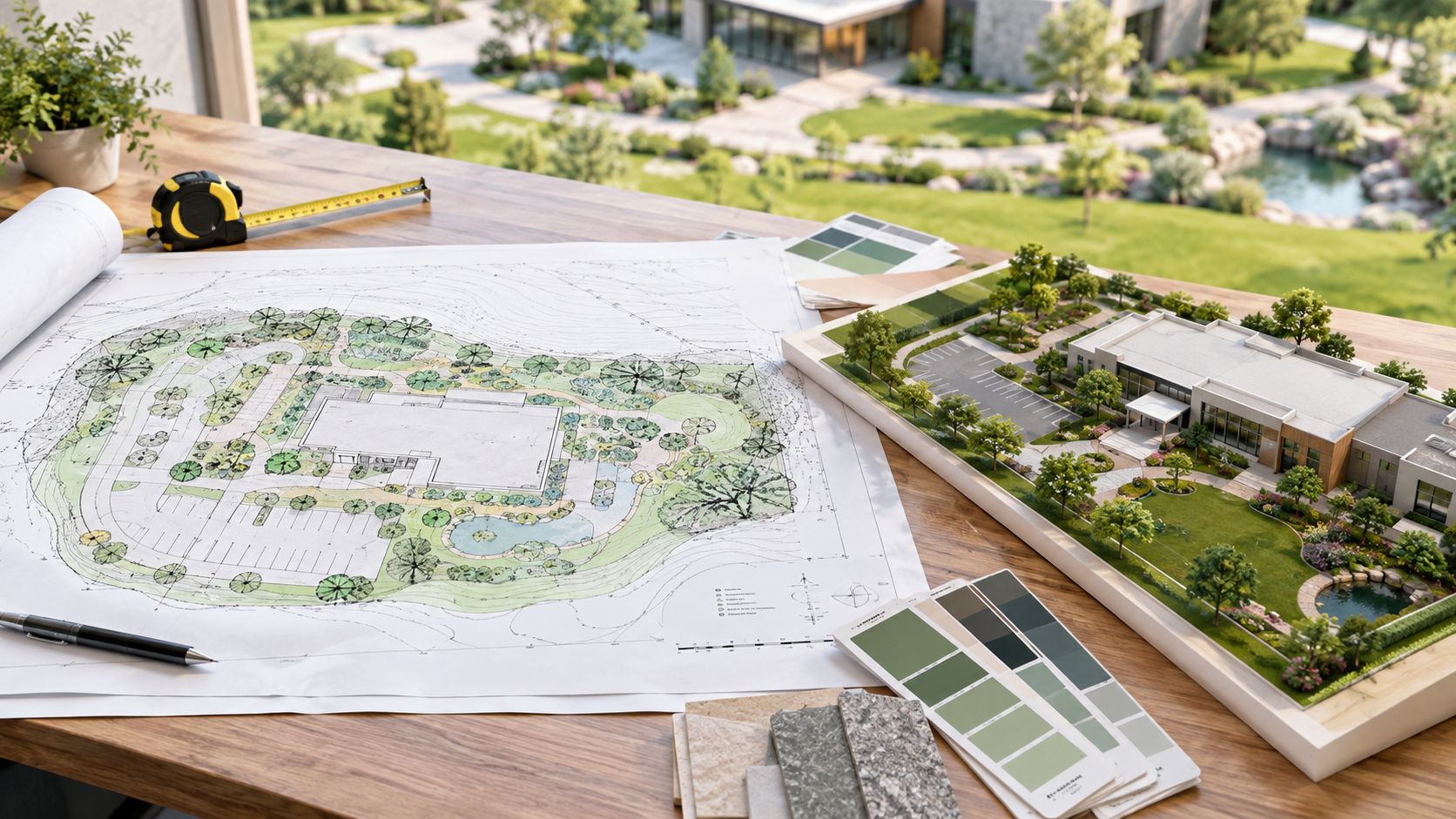
For a first internal estimate, map the property into scope zones rather than treating it as one undifferentiated square-foot total. Mark arrival areas, parking, pedestrian routes, drainage trouble spots, tenant-facing views, and low-priority back-of-house areas. This gives contractors a clearer basis for alternates and helps the manager decide whether the project should be executed as one build or as coordinated phases.
Lifecycle Costs Maintenance and Water Management Savings
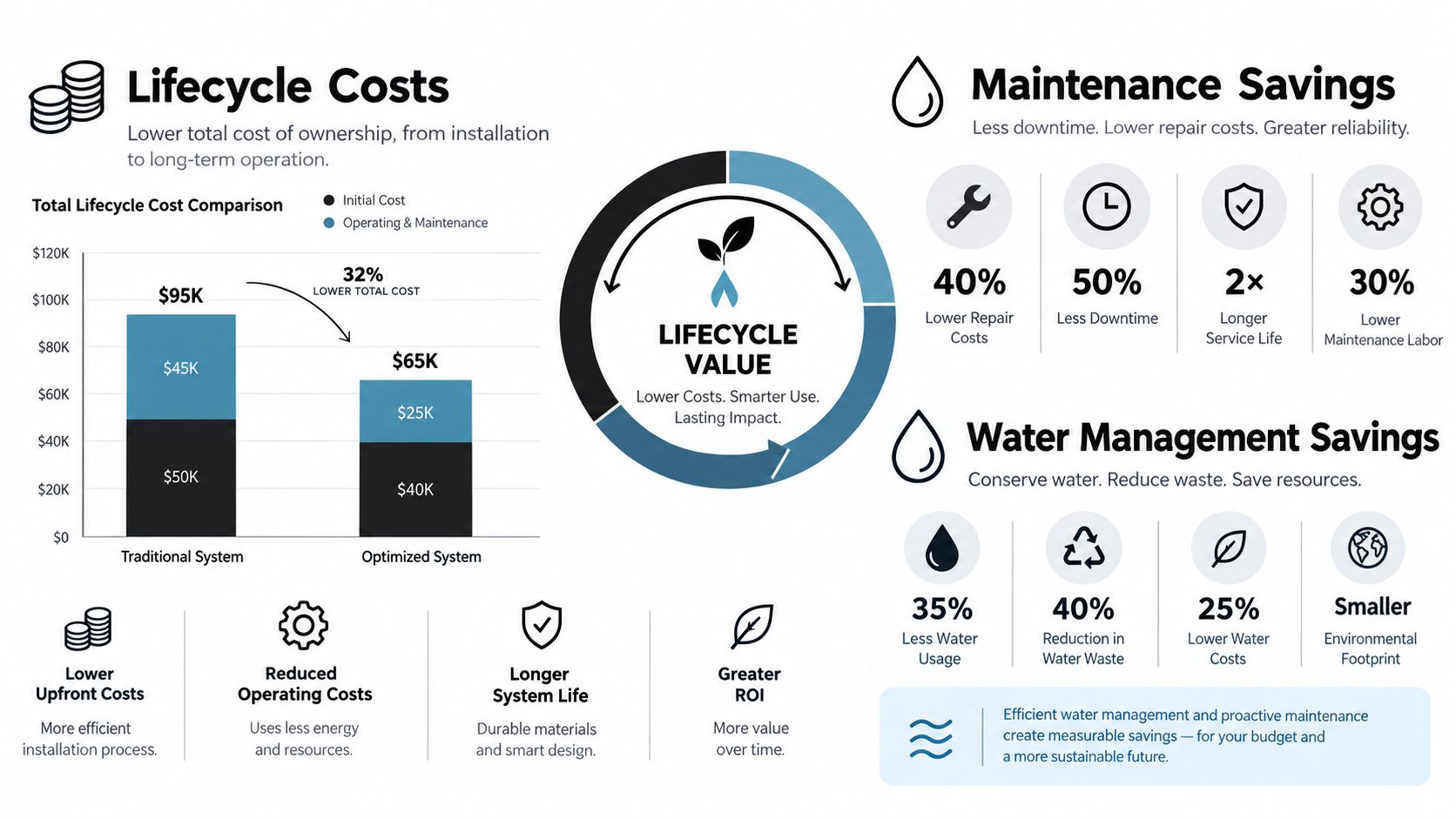
The lowest initial bid can become the most expensive option if it preserves the conditions that caused the decline. A planting plan that ignores compacted soil, an irrigation system with poor coverage, or drainage that sends water into a bed can force maintenance teams to spend more time correcting symptoms.
Lifecycle budgeting treats the renovation as a working asset. The manager considers the installation, establishment period, routine maintenance, irrigation performance, replacement needs, and appearance over time. That approach changes the bid conversation from “Which contractor is cheapest?” to “Which scope produces the required performance at an acceptable total cost?”
Maintenance is a design variable
Plant selection affects pruning, litter management, seasonal replacement, irrigation demand, and pest monitoring. A simpler, well-organized palette can be easier for crews to maintain than a crowded installation with many plant types and different care requirements.
Hardscape durability matters too. A properly prepared path or edge may require more work at installation, but premature settlement or recurring repairs can disrupt tenants and create repeated service costs. The bid should identify material specifications, base preparation, drainage interfaces, and restoration responsibilities.
Water management belongs in the renovation budget
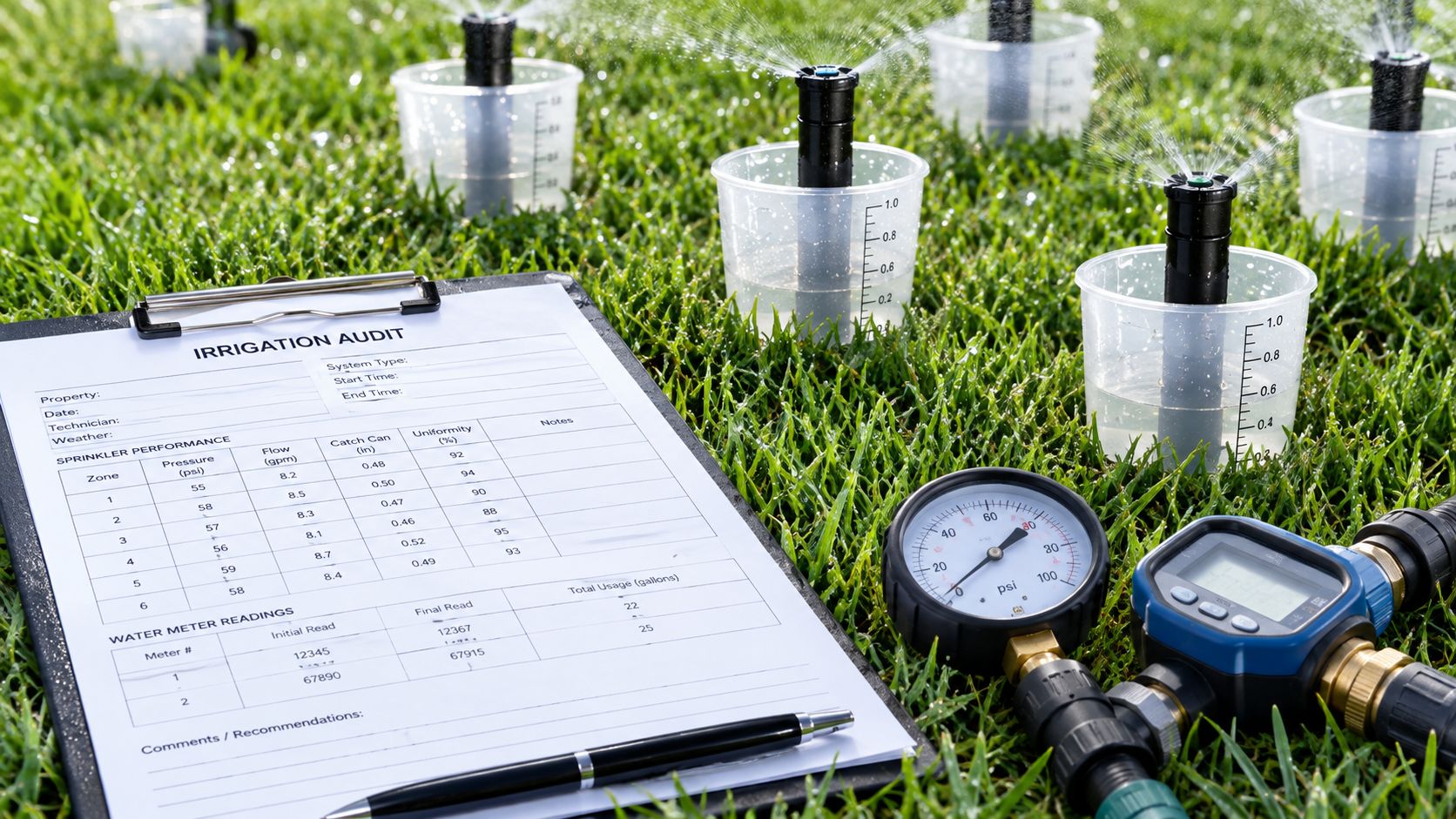
An irrigation audit can identify broken heads, mismatched application rates, poor spacing, valve problems, controller issues, and zones that water unlike conditions. A renovation may then require selective repairs, zone redesign, new controls, or central water management rather than a complete replacement.
Managers evaluating that scope can review Prestonwood's water conservation and irrigation services alongside proposals from other qualified providers. The useful comparison is not the equipment price. Ask how the proposed system will be tested, monitored, adjusted, and maintained after installation.
A landscape can look finished on turnover day and still be underperforming below the surface. Lifecycle value begins with the systems that protect the visible work.
Curb appeal also has an operating value. Consistent entries, healthy plantings, clean edges, and functioning irrigation help property teams protect the appearance expected by tenants, visitors, residents, or patients. That doesn't create a guaranteed financial return, but it can strengthen the practical case for renovating high-visibility areas before less visible zones.
Budgeting Financing and Phasing Strategies That Work
A workable budget starts with a complete plan, then separates essential infrastructure from finish choices. Without that separation, managers often approve attractive planting details while leaving drainage, irrigation, or access problems unresolved. The site looks improved briefly, but the underlying performance gap remains.
Use three internal budget layers:
- Required work: Safety corrections, drainage, grading, access, failing irrigation, and structural repairs.
- Performance upgrades: Soil improvement, water-management controls, durable plant selections, and maintenance-oriented layout changes.
- Appearance options: Premium plant maturity, decorative features, enhanced seasonal color, and nonessential finishes.

Phase by zone, not by random feature
A strong phased plan preserves the finished design's relationships. Complete the infrastructure that future phases depend on, establish access routes, and group work by logical zones such as the main entrance, parking perimeter, courtyard, or rear service area. Avoid installing isolated decorative elements that later need to be removed when drainage, paving, or irrigation is rebuilt.
Phasing can also protect daily operations. A contractor may work around tenant entrances, schedule disruptive demolition during lower-use periods, and maintain safe pedestrian routes while another zone is under construction. Bundling nearby work can reduce repeated mobilization and prevent crews from reopening completed areas.
A simple decision matrix helps:
| Condition | Immediate action | Possible deferral |
|---|---|---|
| Drainage threatens buildings or paths | Correct the water flow first | Decorative planting |
| Irrigation fails across a major zone | Repair or redesign the system | Premium plant maturity |
| Entry landscape damages first impression | Renovate the arrival zone | Low-visibility perimeter work |
| Hardscape creates a safety issue | Rebuild the affected surface | Optional visual upgrades |
| Planting is tired but functioning | Plan replacement with the next phase | Nonessential structures |
Funding may come through capital planning, reserve allocations, operating budgets, or property improvement programs, depending on ownership and governance. HOA and POA managers should connect the phasing schedule to reserve discussions, while asset managers should distinguish one-time capital work from recurring maintenance.
For a broader budgeting perspective on combining outdoor finishes and project funding, managers can review this Concrete Resurfacing Products landscaping budget resource. The practical aim is the same: approve a defined scope, protect the infrastructure, and avoid paying for the same disruption twice.
How to Get Accurate Bids and Choose the Right Contractor
Accurate bids begin with an accurate request for proposal. Give every contractor the same site plan, renovation limits, operating constraints, irrigation information, access rules, desired completion conditions, and maintenance expectations. If the property has known drainage, soil, utility, or hardscape concerns, identify them rather than forcing bidders to guess.
Ask each contractor to separate base work from alternates. A useful proposal should show:
- Demolition and disposal: What gets removed, hauled away, recycled, or left onsite?
- Soil and grading: Does the price include testing, imported soil, amendment, excavation, and finish grading?
- Irrigation: Are repairs, controller work, zone changes, testing, and restoration included?
- Plant material: Are sizes, species, quantities, substitutions, establishment care, and warranty terms stated?
- Hardscape: Are demolition, base preparation, drainage, edges, joints, and surface restoration defined?
- Schedule and access: How will the contractor protect tenants, pedestrians, vehicles, and building operations?
- Changes: What triggers a change order, and how will the contractor document it?
Normalize the bids before comparing totals. Put every scope item into the same worksheet, then mark it as included, excluded, allowance, or alternate. A proposal with a lower headline price may not be lower after you add missing demolition, soil replacement, irrigation work, cleanup, or post-installation care.
Local experience matters for properties in Dallas, Fort Worth, and San Antonio because contractors must understand regional site conditions, seasonal operating demands, water-management needs, and commercial access constraints. Review portfolios, references, communication practices, safety procedures, and who will supervise the work. Managers seeking a service partner can use this guide to compare commercial landscaping contractors.
Prestonwood Commercial Landscape Services designs, installs, and maintains commercial landscapes, including irrigation audits, central water management, and renovation work for properties such as office centers, industrial parks, hospitality sites, healthcare facilities, campuses, and HOAs. Ask for a site review that converts visible problems into a defined scope, lifecycle priorities, and comparable bid structure.
Visit Prestonwood Commercial Landscape Services to discuss your property's renovation priorities, irrigation and water-management needs, and phased construction options. Request a site assessment and a clearly separated proposal so your team can compare renovation cost against long-term maintenance, appearance, and operating performance.