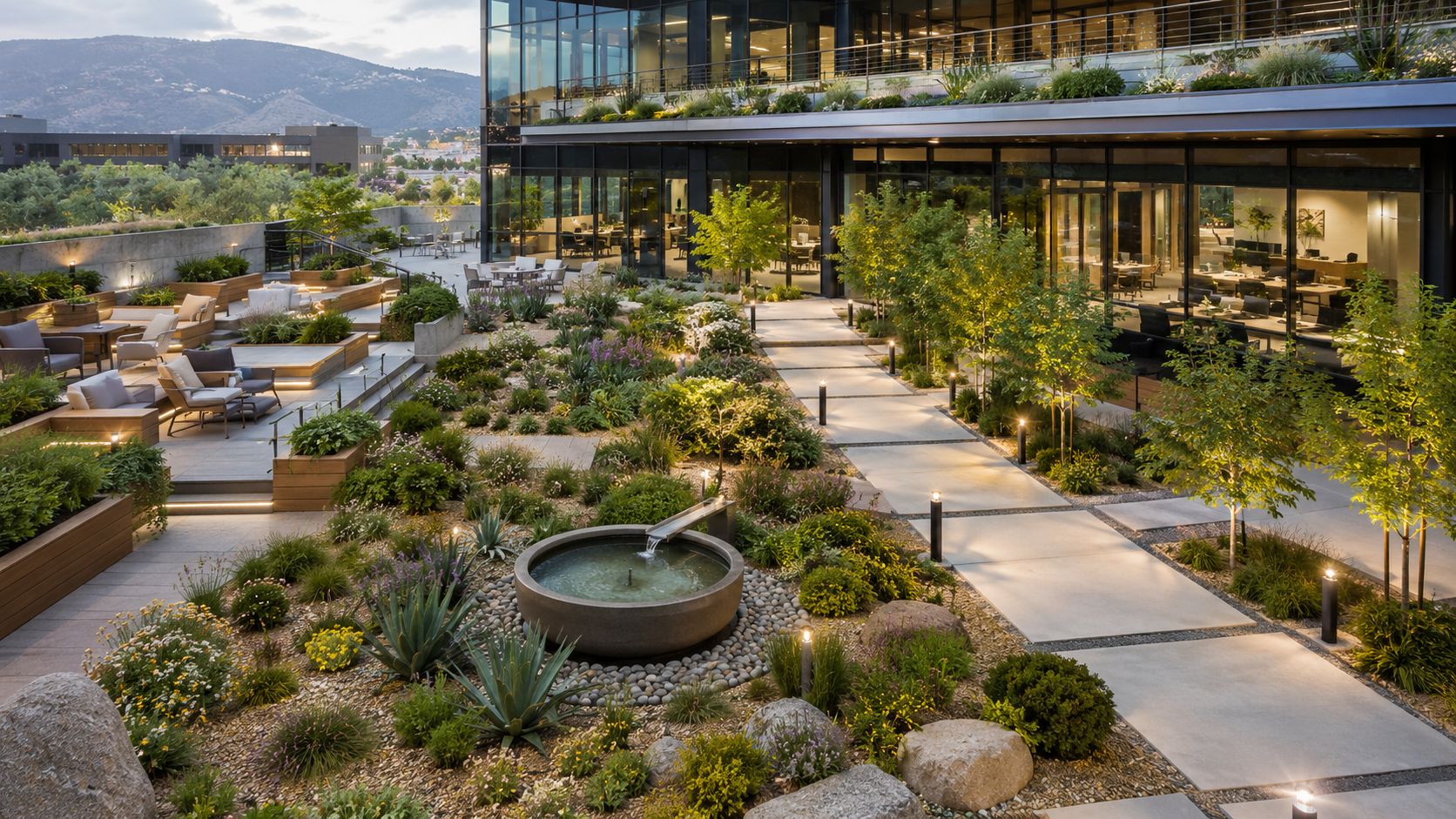
Professional landscaping isn't a cosmetic line item. At office buildings, it's tied to rent, retention, and asset value. Professionally designed outdoor environments can increase property values by 15 to 20 percent, support rental premiums averaging $2.50 per square foot, and reduce tenant turnover by nearly 30 percent, according to commercial landscaping ROI data.
That's why the best office building exterior design concepts for 2026 aren't just about flowers at the monument sign or a cleaner entry drive. Property managers in Dallas-Fort Worth and San Antonio are under pressure from every side: water costs, heat stress, tenant expectations, stormwater requirements, aging assets, and tighter operating scrutiny. The grounds have to perform.
In Texas, performance starts with fit. An outdoor environment that looks sharp in April but burns out by August, puddles after a storm, or needs constant replacement isn't helping the property. A better approach treats the site like infrastructure. Planting design, irrigation, shade, hardscape, drainage, and outdoor amenity space all work together to protect the asset and make the building easier to lease.
That's where a regional partner such as Prestonwood Commercial Services becomes useful. Prestonwood works across Dallas-Fort Worth and San Antonio on maintenance, irrigation, seasonal color, renovations, and design-build work, which is exactly the mix most office properties need when they're moving from reactive upkeep to a long-term exterior strategy.
Below are 10 practical office building landscaping ideas that go beyond curb appeal. Some cut waste. Some strengthen compliance. Some make the property more usable and more marketable. The common thread is simple: each one can earn its place in the budget.
Table of Contents
- 1. Sustainable Native Plant Landscapes
- 2. Modern Hardscape Design with Permeable Paving
- 3. Biophilic Design and Living Walls
- 4. Irrigation Audits and Smart Water Management Systems
- 5. Strategic Tree Canopy Development and Urban Forest Management
- 6. Seasonal Color Programs and Landscape Rotation
- 7. Outdoor Employee Wellness and Recreation Spaces
- 8. Pollinator Gardens and Ecological Habitat Design
- 9. Landscape Renovation and Phased Construction Programs
- 10. Central Water Management and Stormwater Management Systems
- Top 10 Office Landscaping Ideas Comparison
- Build Your High-Performance Landscape with Prestonwood
1. Sustainable Native Plant Landscapes
Native planting is one of the smartest office building landscaping ideas for Texas properties, but only when it's planned for the exact site. North Texas clay, reflected heat from paving, wind exposure, and shallow utility corridors all change what will survive. A plant list that works on a shaded campus edge in Fort Worth may fail in a sun-baked parking lot island in San Antonio.
At office properties, the best native schemes use layers. Trees create structure, shrubs handle screening, grasses soften edges, and groundcovers reduce exposed soil. That layered approach looks finished year-round and usually holds up better than plantings built around a few decorative shrubs spaced too far apart.
A good starting point is a region-specific North Texas native plant guide paired with a thoughtful native plant landscape design. For Prestonwood-style commercial work, that often means building a palette around dependable forms and then adjusting it by sun, slope, and irrigation coverage instead of forcing a one-size-fits-all “native” look onto every bed.
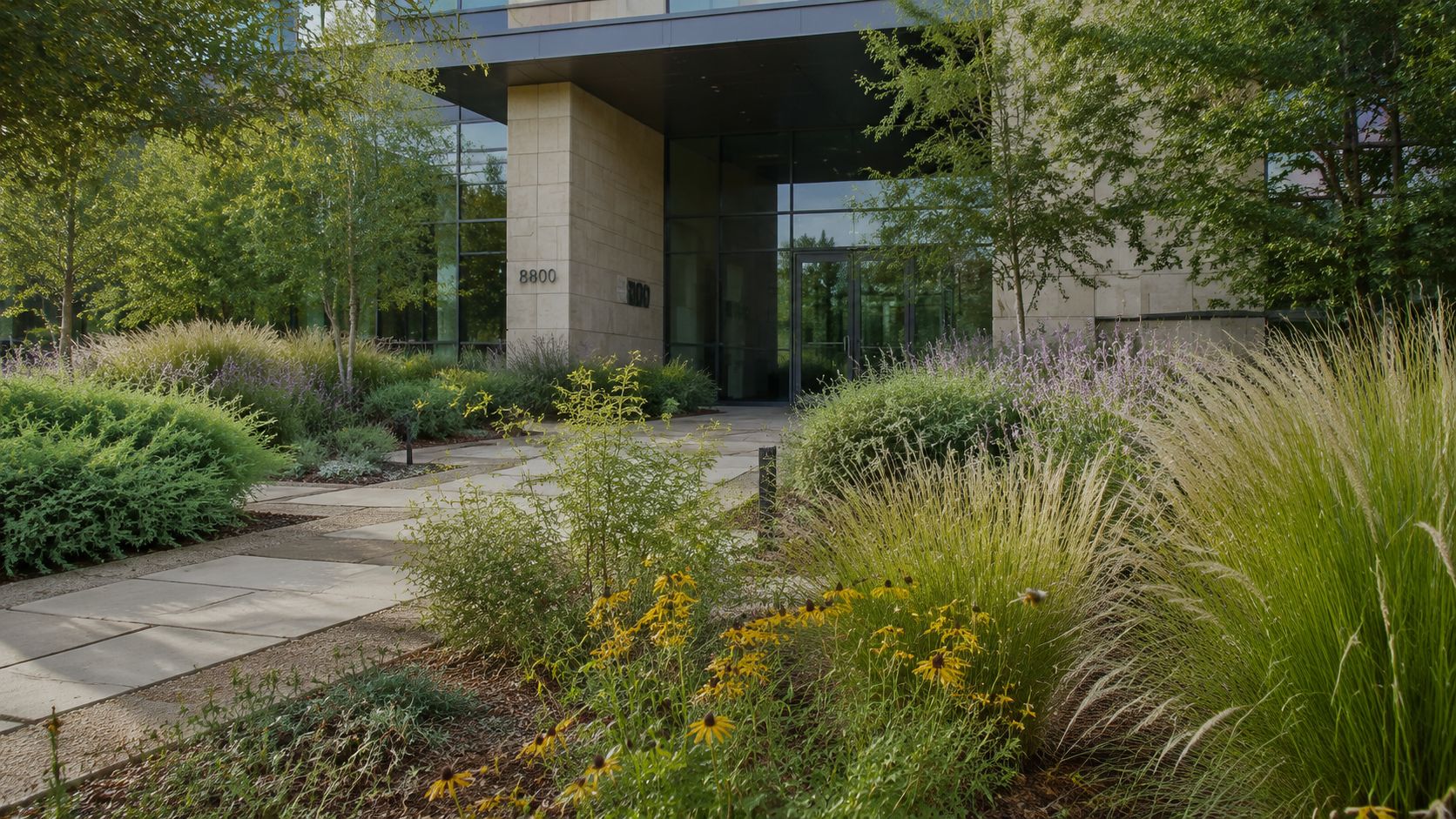
Native doesn't mean maintenance-free
Many properties err. They swap in “low-maintenance” materials, cut the establishment plan, and assume the plantings will take care of themselves. It won't. Even well-adapted plants need a strong first phase that includes mulch, root-zone watering, weed control, and corrective pruning.
In Texas heat zones, parking-lot greening needs extra caution. Recent Texas data cited in this commercial low-maintenance landscaping analysis found that standard low-maintenance turf replacements in the DFW region had a 35 percent higher mortality rate in the first two years than native grasses, leading to a 20 percent increase in lifecycle replacement costs.
Practical rule: Don't approve a native conversion without an establishment plan. The first growing seasons decide whether the install saves money or becomes a replacement project.
Three moves tend to work well:
- Match soil before species: Run soil analysis before finalizing the palette, especially on renovated office parks with imported fill.
- Separate hydrozones: Keep high-water annual beds and lower-water native zones on different irrigation schedules.
- Use natives for screening: Grasses, shrubs, and small trees can screen utilities or define outdoor rooms without relying on constant shearing.
2. Modern Hardscape Design with Permeable Paving
Hardscape sets the tone before tenants notice a single plant. If the paving feels dated, patchy, or too hot to walk across, the whole property reads older than it is. Modern hardscape solves that with cleaner geometry, stronger pedestrian flow, and materials that support drainage rather than fight it.
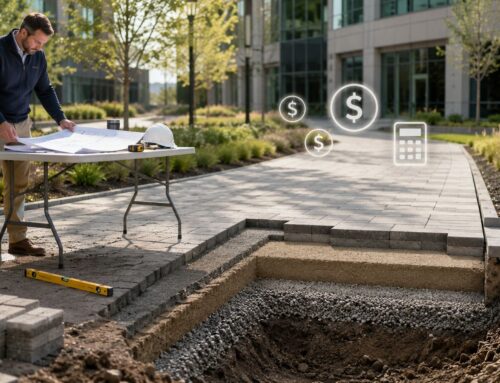
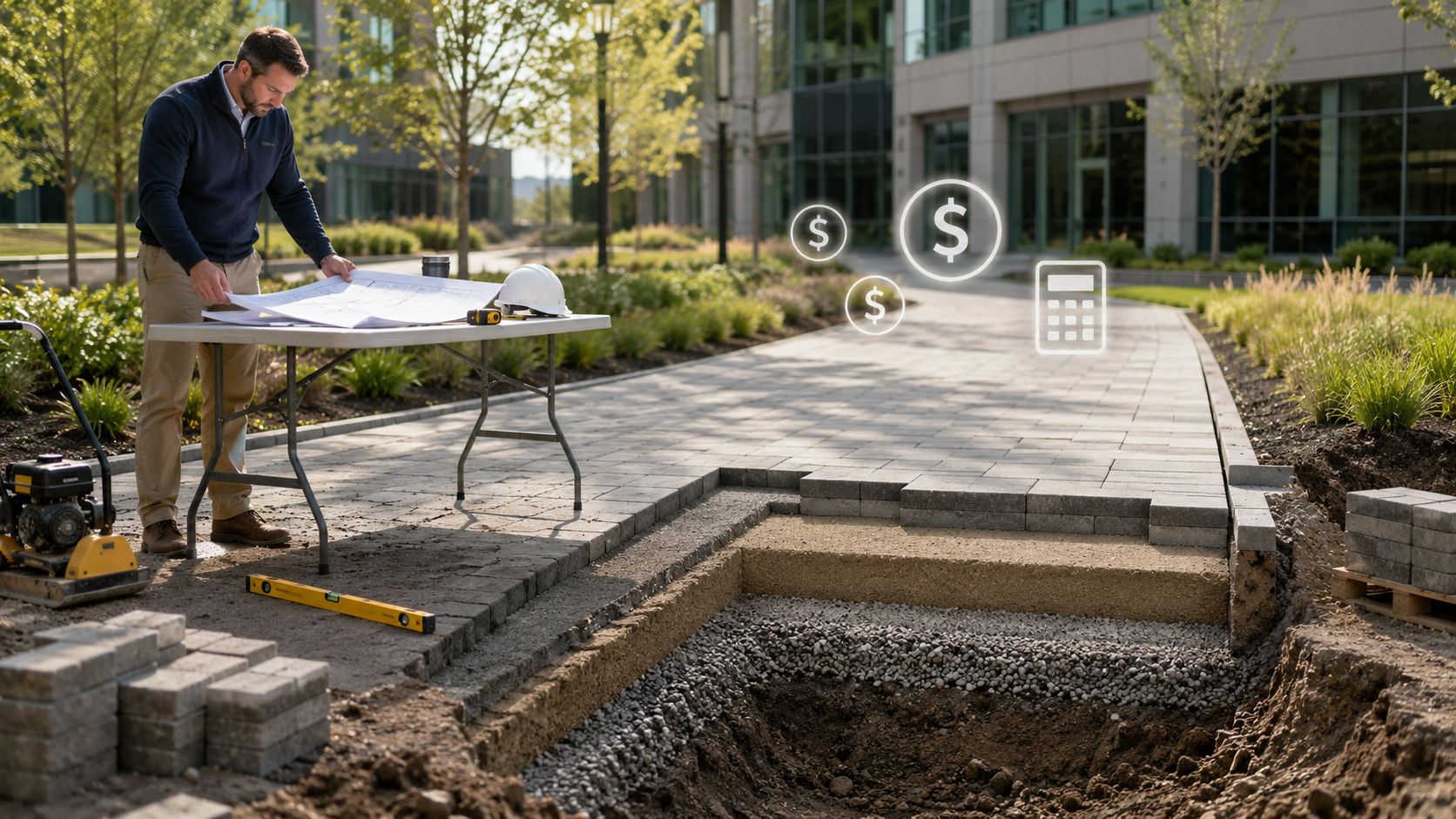
Permeable paving is especially useful where Texas properties struggle with runoff around entries, courtyards, overflow parking, and pedestrian connectors. Instead of pushing water immediately into inlets, permeable systems allow infiltration through the surface and base layers. That can reduce nuisance ponding and help properties handle small storm events more gracefully.
For teams evaluating options, Prestonwood's overview of permeable pavement for commercial sites is a useful framework. If the design also calls for crisp visual contrast at entries or plazas, materials from the broader world of commercial decorative concrete services can help create a more polished front-of-house look.
Where permeable paving works best
Permeable paving isn't the right answer everywhere. It performs best where grades are manageable, sediment loads are controlled, and maintenance crews can keep the surface from clogging. In office settings, that often means guest parking bays, walkway bands, courtyard connectors, and selected plaza zones, not every heavy-load drive aisle.
The trade-off is maintenance discipline. If nearby beds wash fines onto the surface or sweeping gets ignored, permeability drops. That's why the paving choice has to be coordinated with adjacent site design, edge restraints, inlet protection, and a real maintenance schedule.
A strong layout usually includes:
- Shade near hardscape: Trees reduce heat buildup and make outdoor paving more usable through summer.
- Defined water paths: Bioswales or planted depressions should receive overflow intentionally, not by accident.
- Lighter surface colors: Reflective finishes tend to feel less harsh at west-facing entries and open courtyards.
Permeable paving works best when the landscape contractor and civil team solve drainage together. It fails when it's treated like a decorative upgrade only.
3. Biophilic Design and Living Walls
Well-used outdoor amenity areas are tied to stronger tenant satisfaction and longer dwell times on site. For office properties, that makes biophilic design less of a style choice and more of an operating decision. The goal is to create spaces that reduce heat stress, soften hard building edges, and give employees and visitors a reason to stay on the property instead of leaving it.
Living walls fit that strategy when they solve a specific site problem. They work well at entry sequences, courtyard perimeters, parking structure transitions, and blank façades where ground-level planting area is limited. On older Texas office assets, a vertical planted feature can refresh the property's identity without a major rebuild of the site.
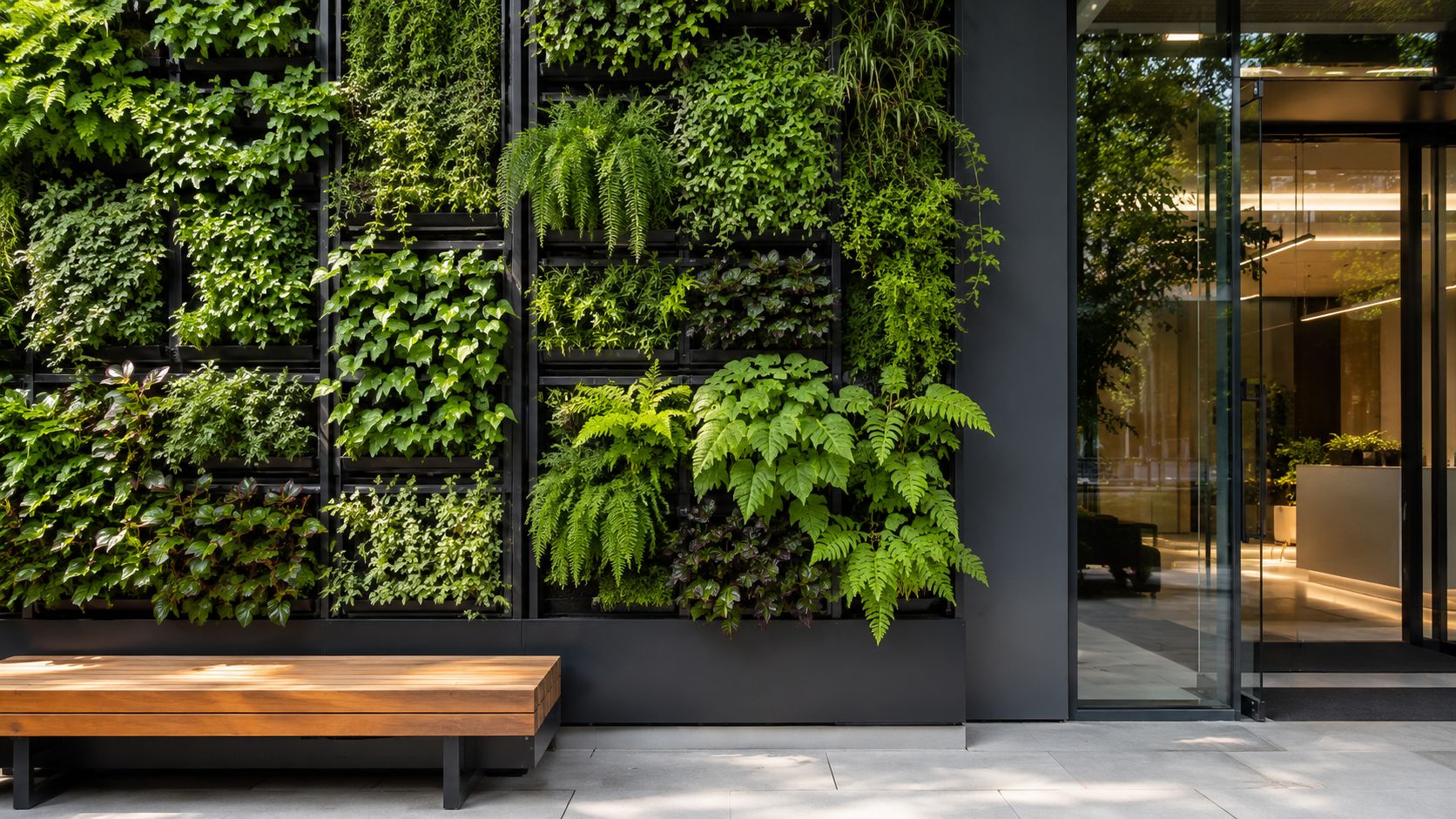
Use biophilia where people pause
Placement determines whether the investment pays back. A green wall hidden along a service drive rarely changes tenant perception. A planted vertical feature beside shaded seating, an outdoor meeting area, or a front entry can improve first impressions, support employee wellness, and make common areas more usable through more of the year.
Texas conditions add real constraints. West and south exposures bring higher heat load. Wind can dry panels fast, and access for replacement or pruning needs to be planned before installation, not after. In most commercial applications, modular wall systems tied to weather-based irrigation controls and monitoring are easier to maintain than custom trellis concepts that look good on opening day but become expensive to keep alive.
There is a trade-off. Living walls create visual impact in a small footprint, but they usually carry higher installation and maintenance costs than conventional bed plantings. Property managers should use them where visibility, leasing value, or employee use justifies the spend. At low-traffic back-of-house locations, the same budget often performs better in shade structures, seating, or ground-level planting improvements.
This category also connects to retention and rent performance. A 2025 Urban Land Institute finding cited in this outdoor office amenity article reported that commercial properties with high-quality, Wi-Fi-enabled outdoor collaboration zones saw a 12 percent higher tenant retention rate and could command up to $2.50 more per square foot in rent compared to peers without those amenities.
Prestonwood's strongest work in this area tends to pair planted features with the basics that determine whether people use the space. Shade, power access, durable seating, clear walking paths, and maintenance access matter as much as the planting itself. That is how an outdoor area starts producing business value instead of serving as decoration alone.
4. Irrigation Audits and Smart Water Management Systems
Texas office properties can lose thousands of gallons before anyone sees a problem on site. In practice, irrigation waste usually starts with ordinary issues. A tilted head near a curb, a valve that does not close fully, a controller still running spring times in August, or a zone that waters turf and shrubs together.
That is why an audit should come before any controller upgrade. The point is to establish a usable baseline. Property managers need to know what each zone serves, whether pressure is within range, where water is missing the root zone, and where runoff is creating both waste and liability. On older office parks, I often see systems that were modified in pieces over several tenant cycles and never fully reset after signage work, sidewalk changes, or bed reconfiguration.
Smart controls earn their keep only after the field hardware is corrected. A weather-based controller will reduce waste, but it cannot fix bad spacing, leaking valves, or overspray onto paving. Prestonwood's weather-based irrigation services address the scheduling side well because they tie runtimes to actual site conditions instead of fixed calendar settings.
What a useful audit should uncover
A useful audit should document a few problem types clearly, with maps and repair priorities.
- Zone conflicts: Turf, annual color, and drought-tolerant shrubs need different application rates and run times.
- Coverage gaps: Corners, narrow medians, perimeter strips, and sign beds often show weak distribution first.
- Pressure problems: High pressure creates misting and drift. Low pressure leaves dry spots and uneven coverage.
- Runoff risk: Slopes and compacted clay soils usually need cycle-and-soak programming, especially in North Texas.
- Control errors: Seasonal adjustments, start times, and rain sensor settings are often misconfigured or ignored.
The business case is straightforward. Lower water use cuts operating expense. Better scheduling reduces plant loss and emergency replacements. Cleaner irrigation performance also helps properties stay aligned with local watering restrictions and broader stormwater compliance goals, especially when overspray and runoff are reaching walks, curbs, and inlets.
There is a trade-off. Smart water management systems require upfront diagnostic work, controller upgrades, and periodic recalibration. But on most office sites with aging equipment or inconsistent records, that spend performs better than adding more water during summer stress. The properties that get the strongest ROI treat irrigation as a managed asset, not a set-and-forget utility.
For property managers, the practical move is simple. Audit before peak heat, correct the mechanical issues first, then review data monthly through the irrigation season. That is how water management starts producing measurable savings instead of recurring surprises on the grounds budget.
5. Strategic Tree Canopy Development and Urban Forest Management
Mature shade trees can change how an office property performs day to day. They lower surface temperatures in parking rows, reduce heat load near west-facing glass, make walks to the building more tolerable, and give older sites the visual weight that newer developments often lack.
That value is measurable, not just aesthetic. In North America, the office building segment held 24.3 percent of the commercial facility grounds management market in 2023, within an overall market estimated at USD 54.9 billion, according to commercial facility landscaping market analysis. The same source notes that aesthetic value and functional shade have each been shown to increase rental rates by approximately 7 percent. For property managers, canopy planning belongs in the same ROI conversation as water savings, stormwater control, and tenant experience.
Tree programs fail for predictable reasons in Texas. Species are selected for fast installation impact instead of long-term tolerance. Planting pits are too small. Parking lot islands bake roots. Crews over-prune lower branches to satisfy visibility concerns, then leave structural defects higher in the crown untouched. A few years later, the property carries the cost through decline, storm breakage, and expensive removals.
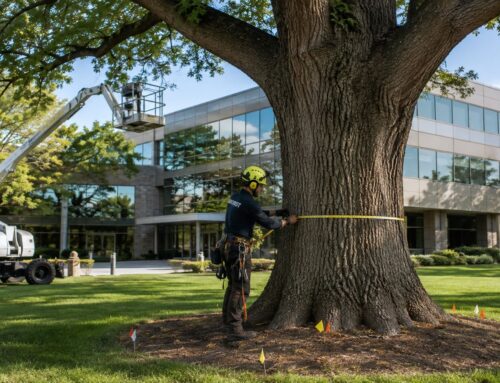
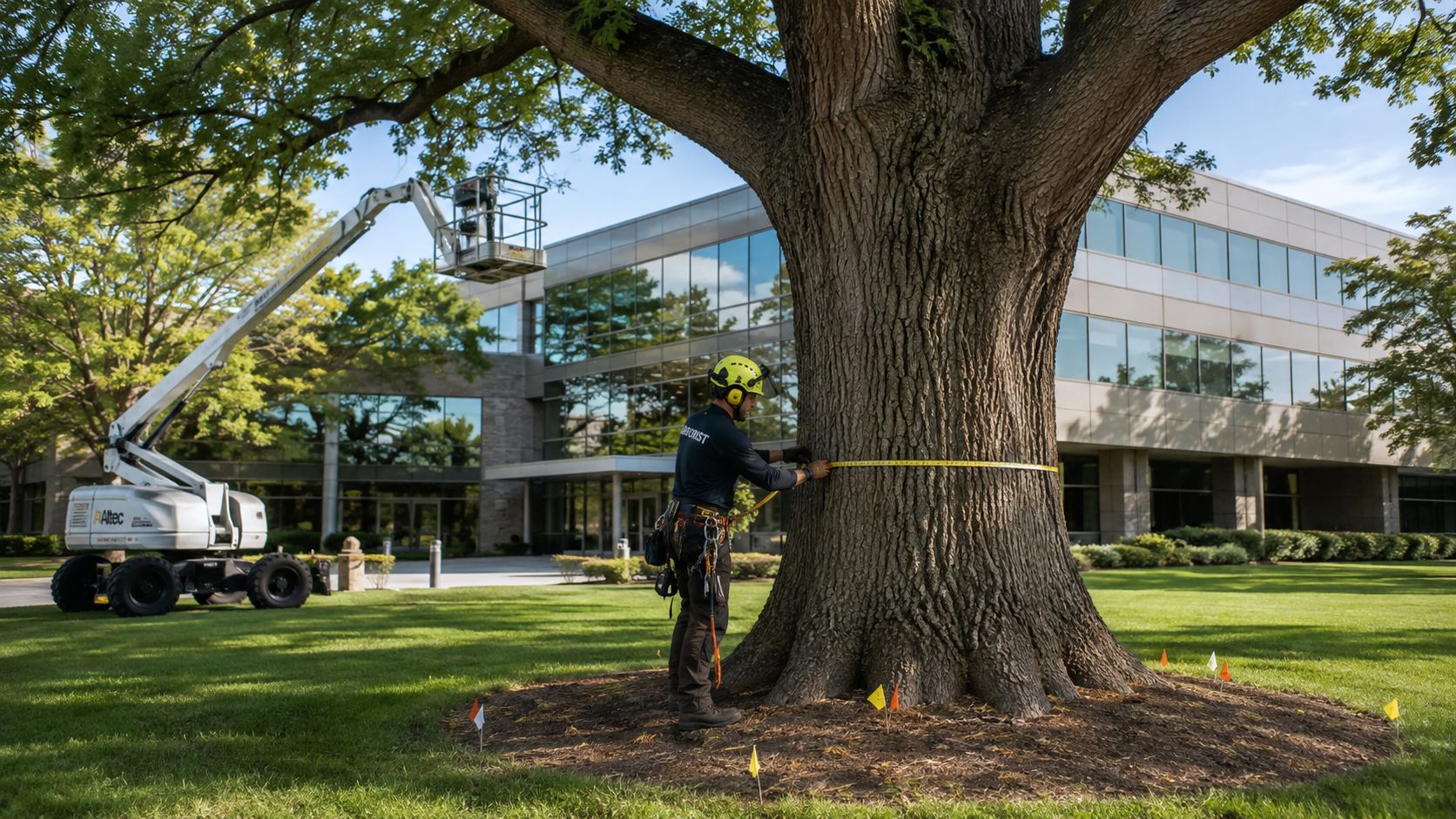
Good urban forest management starts with a 10 to 20 year site strategy. Map where shade will improve pedestrian comfort first, then where it will cut heat on paving and building edges. After that, review conflicts with lights, signage, fire lanes, overhead lines, and storefront visibility. I have seen more than one office park pay twice for the same tree, once to install it and again to remove it after it outgrew the space.
For Texas office properties, a practical canopy plan usually includes:
- Large-maturing trees in high-value shade zones: Main entries, sidewalks, courtyards, and employee break areas produce the clearest comfort and tenant-use gains.
- Species diversity: Avoid overloading the site with one tree type. A mixed canopy reduces the risk of losing whole blocks of shade to pests, disease, or weather stress.
- Early structural pruning: Correct weak branch angles and competing leaders while trees are young, when cuts are smaller and recovery is faster.
- Soil volume and root space: Trees in narrow islands or compacted clay rarely reach their intended form without soil remediation or expanded rooting area.
- Succession planting: Phase in replacements before aging rows decline, especially on legacy campuses with monocultures from one development cycle.
There is a trade-off. Bigger-caliper trees give faster visual results, but they cost more to buy, transport, stake, and irrigate through establishment. Smaller stock often catches up if the soil, spacing, and aftercare are handled correctly. Prestonwood typically sees better long-term performance when clients invest in the planting environment first, then match tree size to the budget and the site's maintenance capacity.
Canopy planning also supports compliance goals. Trees slow runoff, improve soil infiltration when beds are designed correctly, and help office campuses meet broader stormwater management objectives. That does not replace engineered drainage, but it does strengthen site performance while adding a visible amenity tenants readily notice.
For property managers, the smart move is to inventory existing trees, identify high-risk or short-lived placements, and build a phased replacement schedule before failures create gaps. That approach protects shade, spreads capital cost over time, and keeps the property from slipping backward just as the canopy should be delivering its highest return.
6. Seasonal Color Programs and Landscape Rotation
At office properties, people form an opinion before they ever reach the lobby. Seasonal color helps shape that first impression, but only when it is treated as a targeted operating program instead of a decorative add-on.
The strongest results come from concentration, not coverage. Entry monuments, main doors, leasing paths, front plaza planters, and a few high-visibility gathering areas usually carry the job. Spreading annual color across the full site drives up replacement labor, irrigation demand, and seasonal change-out cost without giving visitors many more moments that register.
In Texas, timing and plant selection decide whether these displays look sharp or struggle by mid-cycle. Spring rotations can fade fast if they are installed too early ahead of heat. Summer beds need varieties that can handle reflected pavement temperatures, uneven wind exposure, and irrigation limitations. Fall color often performs well because it lines up with cooler nights, leasing traffic, and year-end property walks.
A profitable program starts with fixed structure. Evergreen shrubs, perennial massing, decorative containers, and clean bed lines should carry the appearance between rotations. Seasonal color then works as the accent, not the entire visual system. That reduces risk if a freeze hits, a vendor delay pushes install dates, or a property manager needs to trim quarterly maintenance spend.
Prestonwood commonly advises clients to align rotations with property calendars. That includes broker events, tenant appreciation weeks, budget cycles, and periods when vacancy needs extra visual support. The return is usually indirect but real. Fresh entry color supports the broader perception that the property is managed closely, which helps leasing teams defend asking rates and gives existing tenants fewer visual cues that the asset is slipping.
A few operating rules keep these programs from turning into high-cost disappointments:
- Limit color to priority zones: Put the budget where cars stop, pedestrians pause, and visitors take in the building frontage.
- Choose for Texas performance first: Heat tolerance, irrigation needs, and replacement availability matter more than a short-lived color pop.
- Build rotations around maintenance capacity: If crews cannot deadhead, feed, scout for pests, and reset irrigation after each install, reduce bed area.
- Use containers where flexibility helps: Pots at entries can deliver seasonal change with less bed disruption and faster swaps.
- Review cost per display, not just total spend: A small, well-kept program often outperforms a larger one that looks tired after two weeks.
There is also a business case beyond appearance. Seasonal displays can support employee morale, improve the arrival experience for clients, and add polish to outdoor break areas without a major capital project. For managers thinking about how these moments connect to amenity design, this roundup of practical outdoor living space ideas is a useful reference.
For portfolio managers, standardization matters. Soil prep, plant spacing, approved palettes, and rotation dates should be documented across properties so quality stays consistent and purchasing stays predictable. That is the difference between a color program that strengthens asset value and one that burns budget every quarter.
7. Outdoor Employee Wellness and Recreation Spaces
Outdoor amenity space has moved from “nice to have” to leasing tool. Tenants want places where employees can step out for lunch, take a call, reset between meetings, or work outside without feeling like they're sitting in a leftover patch of concrete beside the parking lot.
The best wellness spaces aren't elaborate. They're comfortable, shaded, easy to reach, and designed for routine use. That can mean a courtyard with movable seating, a loop walk under trees, a pergola with power access, or a quiet garden edge near a building entrance.
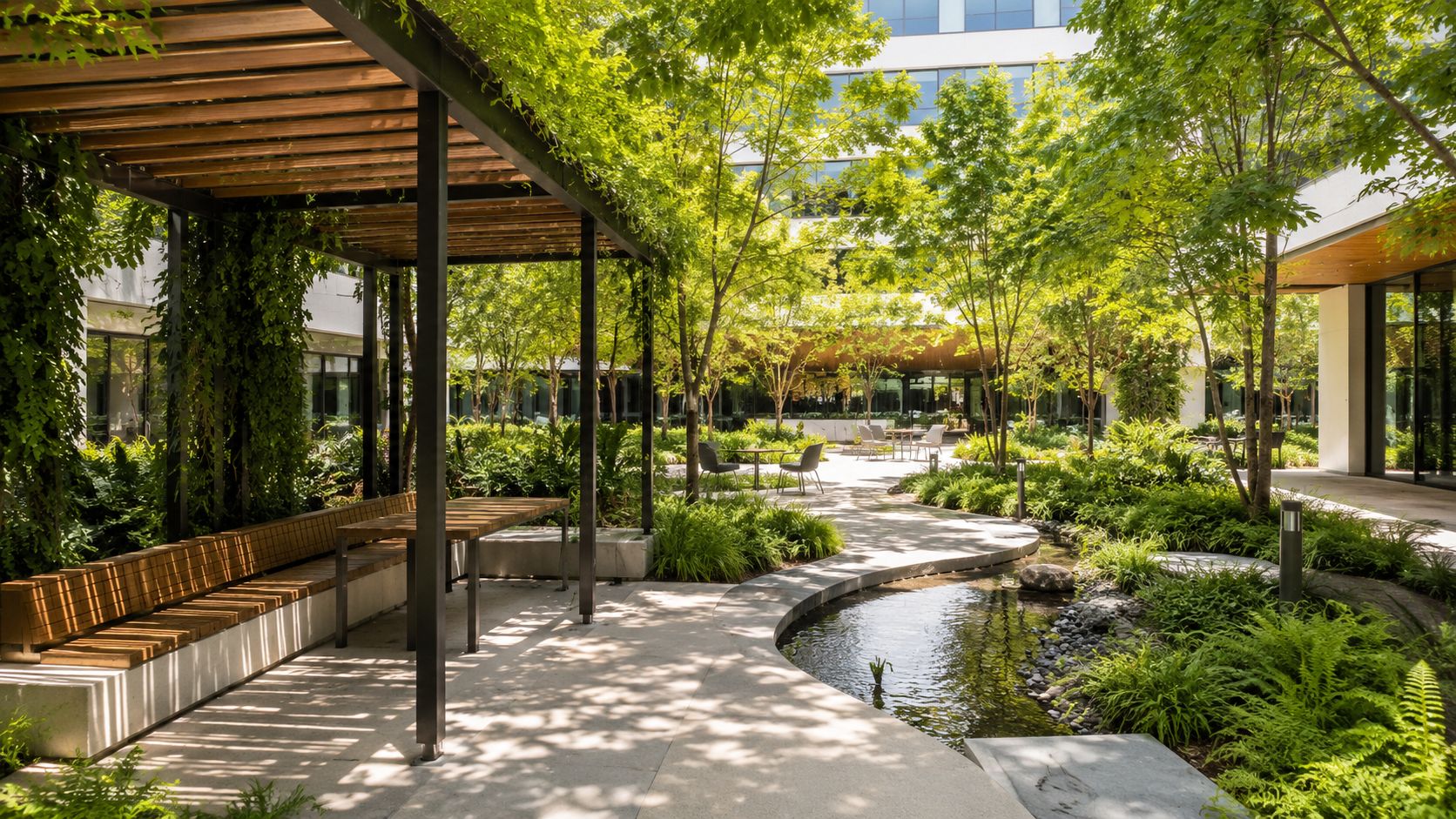
Design for use, not brochure photos
Properties often overbuild the visual feature and underbuild the comfort. A sculptural plaza without shade won't get used in a Texas summer. A lawn panel with no seating or power may photograph well and still stay empty all week.
That's why practical details matter more than grand gestures:
- Put shade first: Trees, pergolas, or canopies should lead the concept.
- Support multiple uses: Casual lunches, solo breaks, and small team meetings all need different seating options.
- Keep access simple: If people have to cross service drives or sit beside noisy equipment, usage drops.
I've seen the most durable results come from spaces that borrow ideas from hospitality but stay grounded in maintenance reality. Durable furnishings, clean paving, accessible paths, and planting that doesn't overgrow circulation routes will outperform flashy features that require constant repair. If you want inspiration for programmed outdoor environments, some practical outdoor living space ideas translate surprisingly well to office courtyards when scaled for commercial use.
A wellness space earns its budget when tenants use it on an ordinary Tuesday, not just during a broker tour.
8. Pollinator Gardens and Ecological Habitat Design
Pollinator gardens can do real work at office buildings if they're designed as intentional habitat, not as a loose mix of flowering plants. Done right, they support biodiversity, bring seasonal movement to the site, and signal environmental stewardship without looking unmanaged.
These areas fit well along campus edges, detention transitions, courtyard margins, and low-traffic perimeter zones. They're less successful right at formal front doors unless the design is tightly controlled. The visual language needs to match the building.
How to keep habitat areas intentional
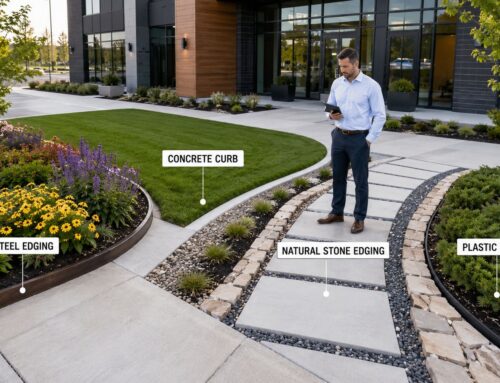
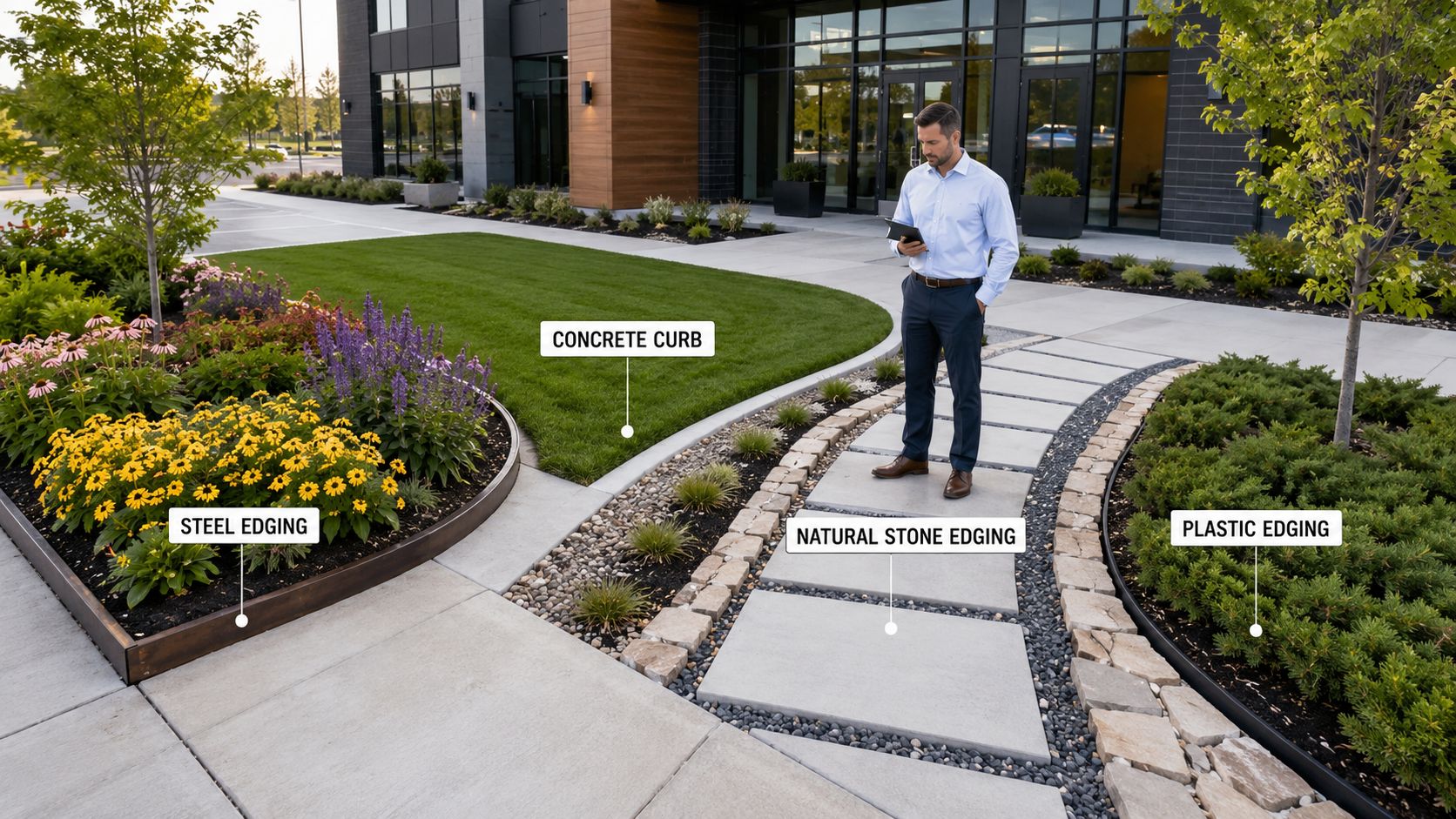
The biggest challenge with pollinator zones is perception. Tenants may support ecological planting in theory, but if the area reads as neglected, the concept backfires. Strong edges fix that. Mown borders, crisp steel edging, clear paths, and grouped masses make habitat planting look deliberate.
For Texas office properties, use bloom succession so there's visual interest across seasons. Include host plants where appropriate, avoid broad pesticide use in designated habitat areas, and place interpretive signage where it helps explain the purpose without overdoing it.
A few practical moves help:
- Group by species: Pollinators forage more efficiently in drifts than in scattered one-offs.
- Include water access: Shallow water sources can support the habitat function if they're maintained.
- Protect visibility: Keep taller species away from key sightlines, entries, and security-sensitive edges.
This approach also works well in places where traditional turf struggles. Instead of pouring more irrigation into a difficult slope or peripheral island, properties can convert that ground into a managed ecological zone that supports the brand and reduces the sense of wasted space.
9. Landscape Renovation and Phased Construction Programs
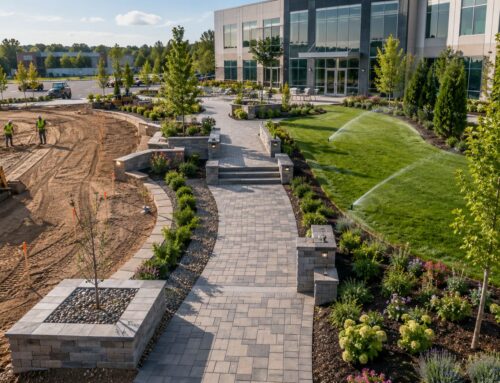
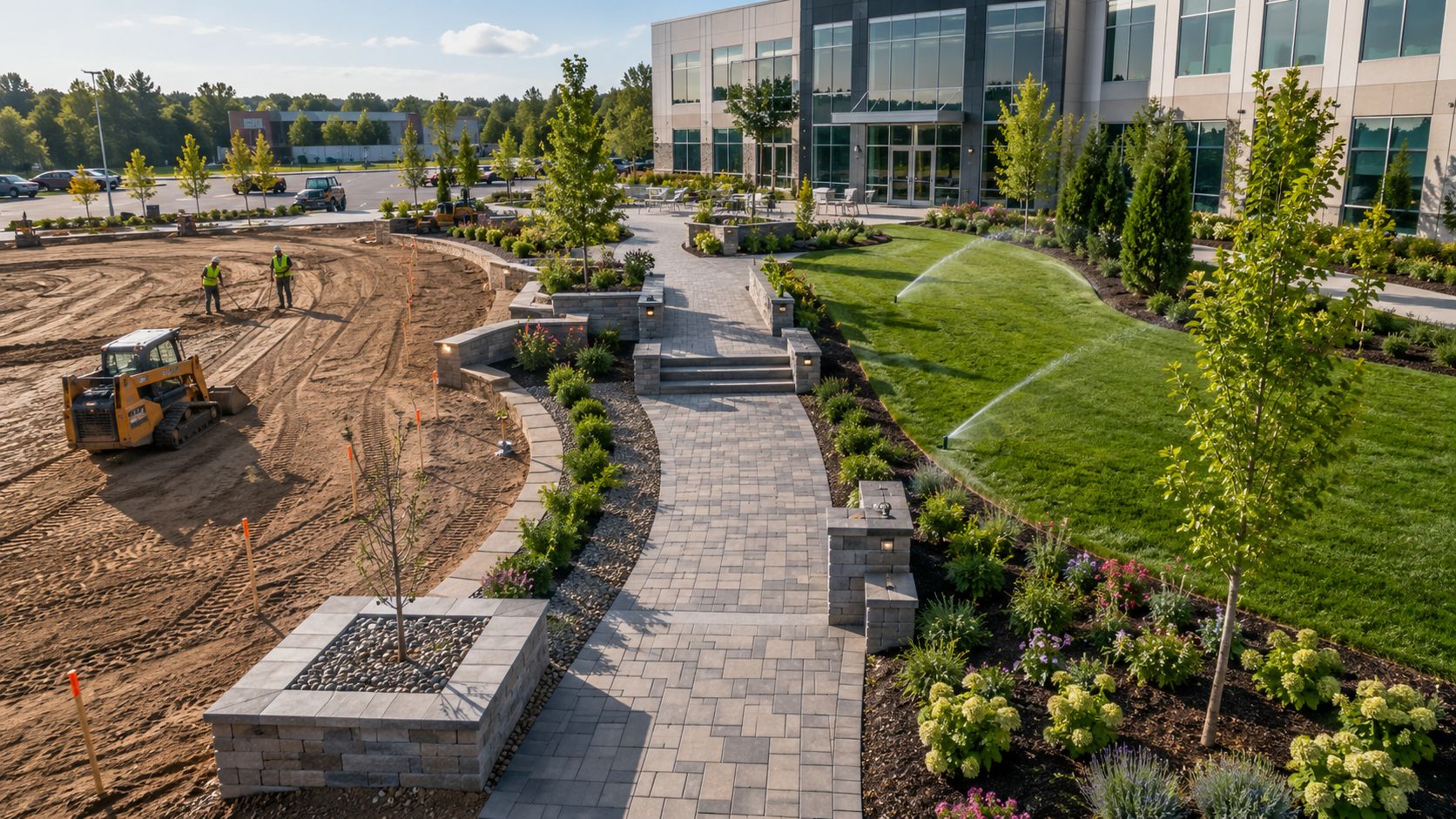
Deferred exterior upgrades usually cost more than planned upgrades. On older office properties, irrigation failures, dead planting, uneven curb appeal, and access conflicts tend to stack up at the same time. A phased construction program gives property managers a way to fix the highest-impact problems first without shutting down the site or overwhelming the capital budget.
That approach works especially well in active office parks, medical office campuses, and mixed office-retail properties across Texas, where heat, water pressure, and year-round use expose weak points quickly. Instead of treating the entire grounds package as one project, managers can sequence visible improvements, infrastructure replacement, and tenant-facing amenities in an order that protects operations and improves appearance early.
Start with a master plan, then phase by ROI and disruption
The first phase should usually focus on areas that influence leasing tours, daily arrival experience, and maintenance cost. Main entries, monument signage, front foundation beds, parking lot islands near primary access points, and shaded gathering areas often produce the fastest return. They change first impressions while also giving teams a chance to correct irrigation coverage, soil problems, and plant selection issues that drive repeat replacement costs.
Later phases can address lower-visibility zones and below-grade work such as controller upgrades, drainage corrections, root barrier installation, and bed reconstruction. That sequencing matters. If crews rebuild a secondary courtyard before resolving water delivery or grading in the front of the property, the site still reads tired where tenants and prospects notice it most.
A phased renovation program works best with a few ground rules:
- Build the full site plan first: Phase 1 should not create rework in Phase 2 or Phase 3.
- Price alternates early: Property managers need clear options if budgets tighten mid-year.
- Coordinate utilities before demolition: Older office sites in Texas often have undocumented sleeves, valves, and lighting runs.
- Communicate access changes clearly: Tenant notices should cover parking impacts, noise windows, and delivery reroutes.
- Match maintenance to the new improvements: Fresh installation fails fast if the service team inherits it without updated specifications.
Trade-offs quickly move from theory to practice. Replacing every bed and hardscape feature at once may look efficient on paper, but on an occupied property it often creates avoidable friction with tenants, deliveries, and ADA access. A phased plan usually delivers better control of cash flow, fewer operational complaints, and a cleaner punch list at the end of each stage.
Prestonwood's mix of maintenance, renovation, and construction services is relevant because phased office work usually crosses all three scopes. In practice, that reduces handoff problems. The team that installs a new entry sequence can also maintain it to the original specifications, track irrigation performance through the first Texas summer, and adjust plant replacements before early losses turn into a visible decline.
10. Central Water Management and Stormwater Management Systems
Water failures on Texas office sites rarely stay isolated. A clogged inlet can turn into sidewalk ponding, irrigation waste, dead plantings in low areas, and tenant complaints after the same storm.
Central water management makes the most sense on larger campuses and multi-building properties with several controllers, detention features, drain inlets, and underground conveyance. The objective is to manage the site as one water system. That means connecting irrigation scheduling, grading, runoff control, and detention maintenance instead of treating each problem as a separate work order.
For property managers, the payoff is measurable. Lower water use reduces utility spend. Better runoff control helps with municipal requirements and post-storm safety. Fewer wet spots, washouts, and failed beds also protect the appearance tenants see at entries, parking fields, and shared outdoor areas.
Stormwater infrastructure should look intentional
Bioswales, rain gardens, detention pond edges, and reuse components need the same level of design discipline as front entries and amenity spaces. Clean grading, defined edges, durable overflow routes, and plantings that can handle both flood cycles and summer heat keep these areas looking maintained instead of forgotten. On office properties, poorly kept drainage features read as deferred maintenance.
The budget trade-off is usually practical. If a site keeps dealing with puddling, erosion, dead material in low spots, or runoff that undermines paving, redirecting part of the annual grounds budget into water-flow corrections often produces a better return than another round of cosmetic replacements. It cuts rework and reduces storm-related complaints.
Prestonwood sees this pattern often on North Texas properties where older irrigation systems and original drainage layouts no longer fit added paving, changed traffic patterns, or later building expansions. In those cases, the stronger investment is usually correcting water movement across the site before adding decorative upgrades.
Key implementation points:
- Base the design on actual flow paths: Review grades, inlets, ponding areas, and overflow routes during and after storm events. Plans matter, but field observation usually finds the trouble spots that drawings miss.
- Use plants that tolerate fluctuating moisture: Stormwater zones in Texas can swing from saturated soil to extended drought and reflected heat. Species selection has to survive both conditions.
- Set maintenance standards before installation: Inlet cleaning, sediment removal, mulching, pruning for visibility, and inspection of check dams or forebays need assigned responsibility and a defined schedule.
- Coordinate irrigation with drainage design: Overspray into swales and low areas can keep soils too wet and cause a well-built stormwater feature to fail between rain events.
- Check local requirements early: Municipal review may affect detention volume, water-quality treatment, and discharge details, especially during redevelopment or major site work.
Done well, central water management improves day-to-day operations as much as storm response. It helps control operating costs, supports compliance, protects paving and planting investments, and keeps the property looking orderly after heavy rain.
Top 10 Office Landscaping Ideas Comparison
The strongest office-site improvements do more than clean up appearance. They change operating costs, reduce compliance risk, and make the property easier to lease and retain.
For Texas property managers, the best choice usually depends on what is hurting performance today. On one site, that is excess irrigation spend. On another, it is heat around entries and parking areas. On a larger campus, it may be runoff control, phased renovation, and outdoor amenities that support tenant satisfaction at the same time. Prestonwood often approaches these projects by weighing payback period, maintenance burden, and disruption to daily operations before setting scope.
| Item | Implementation complexity | Resource requirements | Expected outcomes | Ideal use cases | Key advantages | Key limitations |
|---|---|---|---|---|---|---|
| Sustainable Native Plant Landscapes | Moderate, site analysis and staged establishment | Moderate initial cost, low ongoing water/fertilizer/labor | Lower irrigation demand, reduced maintenance, native habitat support | Commercial campuses seeking conservation and low-maintenance grounds | Lower long-term costs, ecological benefits, rebate potential | Establishment period, narrower visual palette, higher upfront cost |
| Modern Hardscape Design with Permeable Paving | High, specialized design/installation and drainage integration | Higher capital cost, specialized contractors, periodic maintenance | Reduced runoff, cooler surfaces, contemporary appearance | Parking areas, plazas, high‑traffic sites needing stormwater control | Stormwater mitigation, heat-island reduction, durable modern finish | Higher installation cost, maintenance to preserve permeability, durability concerns under heavy loads |
| Biophilic Design and Living Walls | High, structural assessment, irrigation and plant system integration | Significant initial and ongoing maintenance, irrigation/lighting systems | Better occupant experience, stronger visual identity, added cooling and shading | Entrances, lobbies, facades, wellness-focused campuses | Wellness and branding value, standout appearance | High maintenance and irrigation costs, structural limits, plant selection sensitivity |
| Irrigation Audits and Smart Water Management Systems | Low–Moderate, audits, controller/sensor installation and programming | Moderate tech investment, sensors, staff training, periodic calibration | Lower water bills, fewer overwatering issues, easier system oversight | Any commercial property seeking immediate water savings and efficiency | Fast measurable conservation, remote monitoring, leak detection | Technology and installation costs, training needs, sensor maintenance |
| Strategic Tree Canopy Development & Urban Forest Management | Moderate–High, long-term planning and coordination with utilities | Planting costs, long-term arborist care, periodic pruning | Lower cooling load, better shade coverage, stormwater interception, stronger property image | Campus-scale properties, parking shade, long-term value investments | Long-term energy and comfort benefits, added asset value, habitat creation | Long establishment period, ongoing pruning and monitoring, utility conflicts |
| Seasonal Color Programs & Landscape Rotation | Moderate, year-round planning and coordinated logistics | Recurring plant/material and labor costs, seasonal sourcing | Consistent curb appeal, marketing value, tenant satisfaction | Retail centers, hospitality venues, high-visibility office properties | Strong visual impact, scalable budgets, leasing support | Continuous labor and costs, seasonal supply variability, coordination to avoid gaps |
| Outdoor Employee Wellness & Recreation Spaces | Moderate, accessibility, safety and site infrastructure design | Investment in hardscape, shade, irrigation, ongoing maintenance and programming | Better tenant experience, stronger amenity value, improved day-to-day use of outdoor areas | Corporate campuses, tech offices, firms prioritizing amenities | Supports wellness, retention, and brand perception | Maintenance, liability, wear issues, need for programming and oversight |
| Pollinator Gardens & Ecological Habitat Design | Moderate, specialist plant selection and seasonal planning | Native plants, habitat features, occasional maintenance and outreach | Enhanced biodiversity, pollinator support, visible sustainability commitment | Campuses seeking sustainability credentials, educational sites | Supports pollinators, can reduce chemical inputs, adds CSR value | Requires specialist knowledge, less formal appearance, careful bloom sequencing |
| Landscape Renovation & Phased Construction Programs | High, master planning, phased scheduling, contractor coordination | Significant multi-year capital, infrastructure upgrades, tenant coordination | Modernized exterior areas, stronger marketability, reduced disruption when phased well | Aging multi-tenant properties, large campuses needing full updates | Spreads cost, targets the highest-priority upgrades first, improves leasing position | Extended timelines, complex coordination, temporary access restrictions |
| Central Water & Stormwater Management Systems | High, engineering, permitting, multi-site coordination | Large upfront infrastructure, space for basins/cisterns, ongoing maintenance | Runoff control, irrigation reuse, regulatory compliance, possible fee reduction | Large campuses, industrial parks, multi-property developments | Broad water-management benefits, flood mitigation, compliance support | High capital and space needs, routine sediment and vegetation maintenance, permitting coordination |
Use this comparison as a budgeting tool, not just a design checklist. The right outdoor investment is the one that solves a current operational problem and still performs under Texas heat, water pressure, and tenant expectations.
Build Your High-Performance Landscape with Prestonwood
The strongest office building landscaping ideas share one trait. They perform beyond appearance. They help the property lease better, operate more efficiently, and hold up under real Texas conditions.
That matters because landscaping decisions compound over time. A poor tree plan creates heat and replacement issues for years. A weak irrigation layout keeps wasting water until someone finally audits it. A decorative courtyard without shade never becomes an amenity. On the other hand, a site with the right canopy, durable hardscape, efficient water use, and usable outdoor space gets easier to manage and easier to market.
For property managers, the practical path is usually not “do everything at once.” It's to decide what the property needs most right now. For one office park, that may be irrigation modernization and a native plant refresh that cuts replacement headaches. For another, it may be a phased renovation that upgrades tired entries and improves the front-of-house image before major leasing activity. On a larger campus, it may be central water management, canopy planning, and outdoor collaboration zones that make the site more attractive to current tenants.
Texas conditions make regional judgment especially important. Dallas-Fort Worth and San Antonio properties deal with intense summer heat, water-use scrutiny, variable soils, and high expectations for appearance. Strategies that look good on paper can fail quickly if they don't account for reflected heat, drainage bottlenecks, root-zone stress, or maintenance capacity. That's why property managers benefit from a grounds care partner that understands local plant performance, irrigation tuning, renovation sequencing, and how to keep active commercial sites looking consistent during change.
Prestonwood Commercial Services fits that role for many North Texas and San Antonio properties because the company handles the full cycle: design, installation, maintenance, irrigation audits and repairs, seasonal color, central water management, and renovation work. That breadth is useful. Office grounds don't fail in one department only. Most problems sit at the intersection of design choices, deferred maintenance, water management, and site operations.
The business case is already clear. Office grounds are tied to rent, retention, and value. The next step is applying that logic to your own site with priorities that match the asset. Start with the areas that affect leasing, comfort, and operating waste the most. Then build a phased plan that improves both appearance and performance.
If you're evaluating outdoor upgrades for an office building, corporate campus, retail center, or mixed commercial property, it's worth getting a professional site assessment before another season passes. A good assessment should identify what to keep, what to renovate, what to phase, and where the outdoor environment can do more work for the property than it's doing today.
If you want a practical plan for your site, contact Prestonwood Commercial Landscape Services to discuss a grounds assessment for your office property in Dallas-Fort Worth or San Antonio.