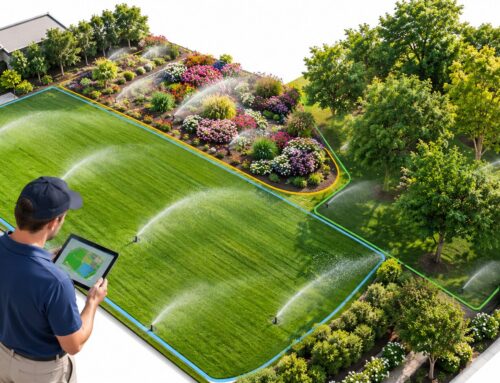
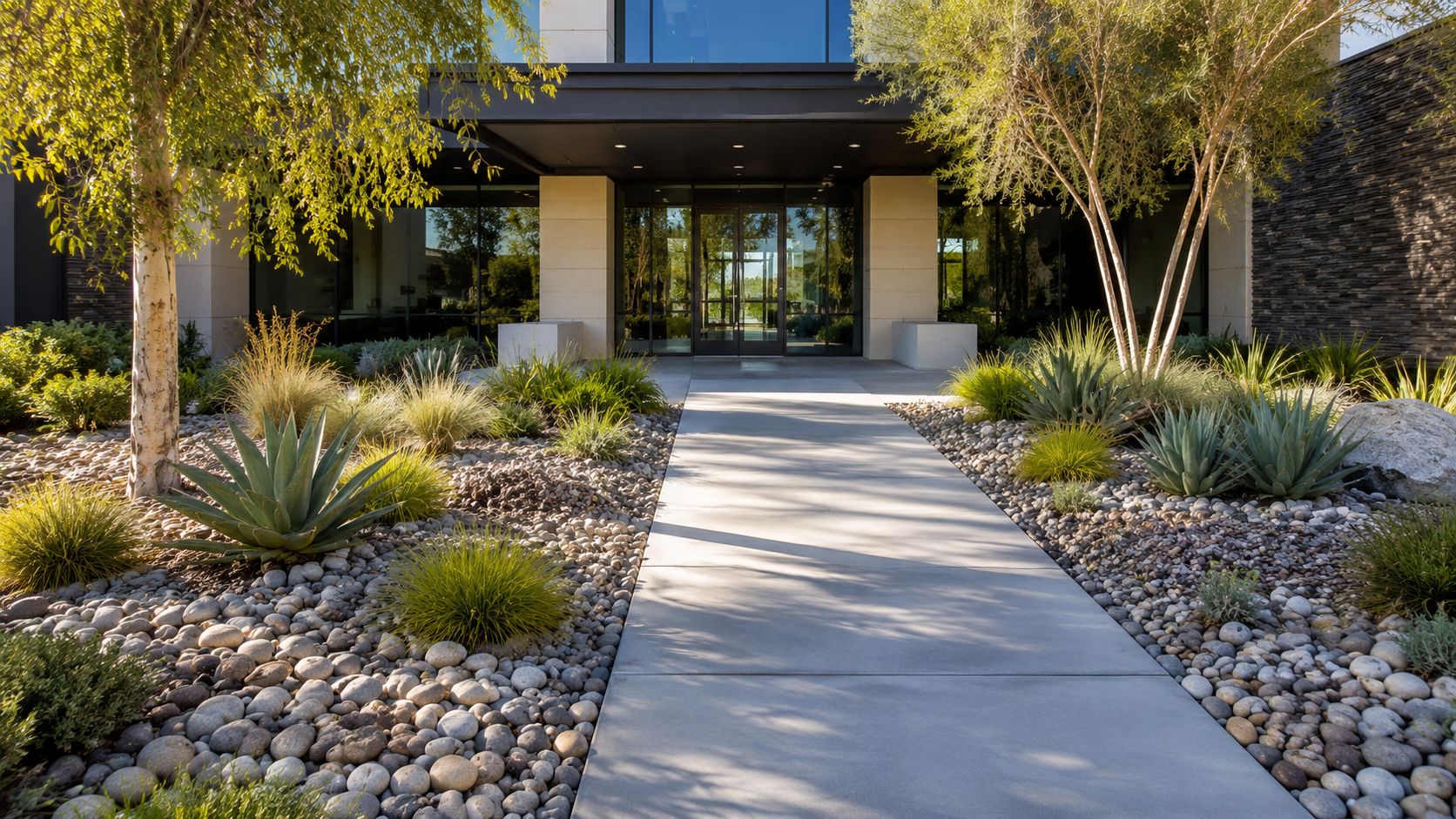
If you're managing an office park, retail center, HOA entry, or medical campus, you've probably had the same conversation more than once. The mulch looks good right after install, then weather, foot traffic, cleanup crews, and seasonal turnover start wearing it down. Before long, you're budgeting another refresh, answering curb appeal complaints, and trying to decide whether repeating the same cycle still makes sense.
That's where river rock mulch enters the discussion. Not as a design trend, but as a budget and operations decision. On the right commercial site, it can stabilize appearance, reduce replacement frequency, and solve drainage problems that organic mulch won't handle well. On the wrong site, it can trap debris, radiate heat, and create a maintenance issue that is visually distinct from the old one.
I've seen property teams make both mistakes. Some reject rock too quickly because the upfront cost feels heavy. Others install it too broadly and assume it's maintenance-free. Neither approach is strategic. If you're evaluating alternatives to repeated mulch turnover, resources on site-clearing and surface-prep methods, such as Booms Up Civil's mulching services, can help frame the difference between clearing vegetation and choosing a long-term ground cover system. Those are related decisions, but they aren't the same one.
Table of Contents
- Why Property Managers Reconsider Ground Cover
- What Is River Rock Mulch Exactly
- The Business Case for River Rock on Commercial Sites
- The Downsides of River Rock You Can't Ignore
- Where to Use River Rock for Maximum Impact
- Budgeting for River Rock Installation and Upkeep
- Smart Alternatives and Hybrid Landscape Strategies
Why Property Managers Reconsider Ground Cover
The trigger usually isn't aesthetics alone. It's operational fatigue.
A property manager starts with one complaint. Beds near the entrance look thin. Then the porter blows bark into the parking lot. Then stormwater cuts channels through a slope bed. Then the annual grounds budget gets squeezed, but the site still needs to look finished for tenants, visitors, and ownership. At that point, ground cover stops being a decorative line item and becomes an asset management problem.
Organic mulch still has a legitimate place in commercial properties. It supports planting beds well in many situations, and it's often the right choice around shrubs, perennials, and tree zones that benefit from a softer, soil-building surface. The issue is that some properties use it in locations where it performs poorly from day one. High-wind corners, splash zones, steep grades, narrow side yards, and drainage swales usually expose the limits fast.
What property managers are really trying to solve
In practice, the questions sound like this:
- Can we stop redoing the same visible beds every season
- Can we make the entrance look consistent between maintenance visits
- Can we reduce cleanup labor in hard-to-reach areas
- Can this material survive runoff without migrating into pavement
Those are fair questions. River rock mulch appeals because it doesn't decompose like organic mulch. That changes the budget conversation. Instead of planning around periodic replacement of the material itself, managers can evaluate a longer-life surface and shift attention to containment, weed control, and cleaning.
Field reality: Most commercial landscape problems aren't caused by choosing the wrong material category. They're caused by using one material everywhere, regardless of traffic, heat, runoff, and maintenance access.
That's why river rock should be evaluated strategically, not emotionally. It isn't a universal upgrade. It's a targeted solution that works best when the site has stable edges, a defined purpose, and a crew that understands how to maintain mineral ground cover instead of assuming it will take care of itself.
What Is River Rock Mulch Exactly
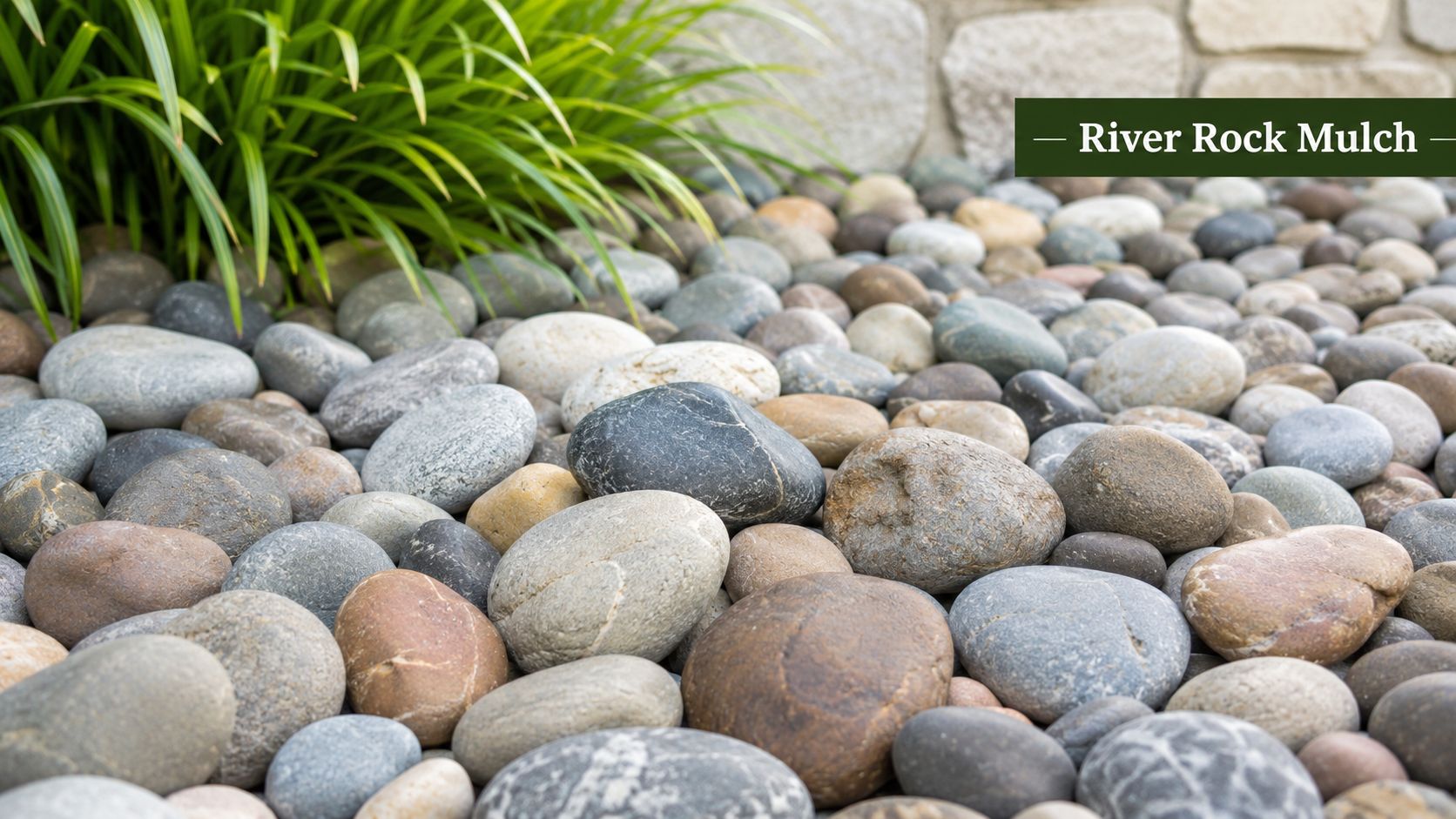
River rock mulch is a mineral ground cover made from naturally rounded stone, usually installed in beds, borders, dry creek features, and drainage-focused planting areas. The stones are shaped by long-term water movement, which gives them the smooth surface and mixed color range property managers recognize from commercial entries and sign areas. In practice, the material is selected less for its origin and more for what it does on site: hold a finished appearance, resist breakdown, and tolerate conditions that quickly wear out organic cover.
How the material is defined in practice
The rounded profile is the key distinction. It gives river rock a cleaner, more polished look than crushed stone, which is why it often fits retail fronts, office campuses, and properties with modern architecture. It also means the material does not knit together tightly under foot traffic or runoff. That trade-off matters.
On a contained, mostly flat bed, rounded stone can perform well for years. On a slope, at a downspout outlet, or anywhere pedestrians cut through planting areas, the same smooth shape can shift, scatter, and expose fabric or soil below.
Why size drives performance
Commercial specifications usually focus on stone size because size affects coverage, stability, cleanup effort, and visual scale. A product data sheet from TCC Materials lists NorthRock River Rock as 1½-inch stone, packaged in ½ cubic foot bags, with coverage of up to 3 square feet at 2 inches depth in the TCC Materials product data sheet.
That kind of specification matters for budgeting. As stone size and installed depth increase, material volume, delivered weight, labor time, and edge restraint requirements all rise with it. Those costs are easy to underestimate during planning, especially on larger commercial sites where a bed can look modest on paper and still consume a surprising amount of tonnage.
| Consideration | Smaller river rock | Larger river rock |
|---|---|---|
| Surface look | Tighter, more uniform finish | Stronger visual texture |
| Stability | More prone to scatter | Usually stays put better |
| Drainage behavior | Less open space between stones | More open space for water movement |
| Maintenance visibility | Debris can hide more easily | Debris is easier to see and remove |
A few practical guidelines help avoid specification mistakes:
- Use smaller stone in tightly defined beds: It can produce a cleaner finish, but it tends to move more easily into pavement edges and turf.
- Use larger stone where water is part of the equation: Bigger rock usually handles wash and splash better.
- Match the stone scale to the building: Fine material can look too light against large façades, while oversized cobble can make small planting areas look clumsy.
- Budget for edge control from the start: River rock performs better when the perimeter is built to contain it.
River rock mulch is not a single product category with one standard look or one standard cost profile. For commercial use, it is a family of stone sizes and finishes that should be specified based on maintenance access, drainage conditions, visual goals, and how much long-term movement a property can tolerate.
The Business Case for River Rock on Commercial Sites
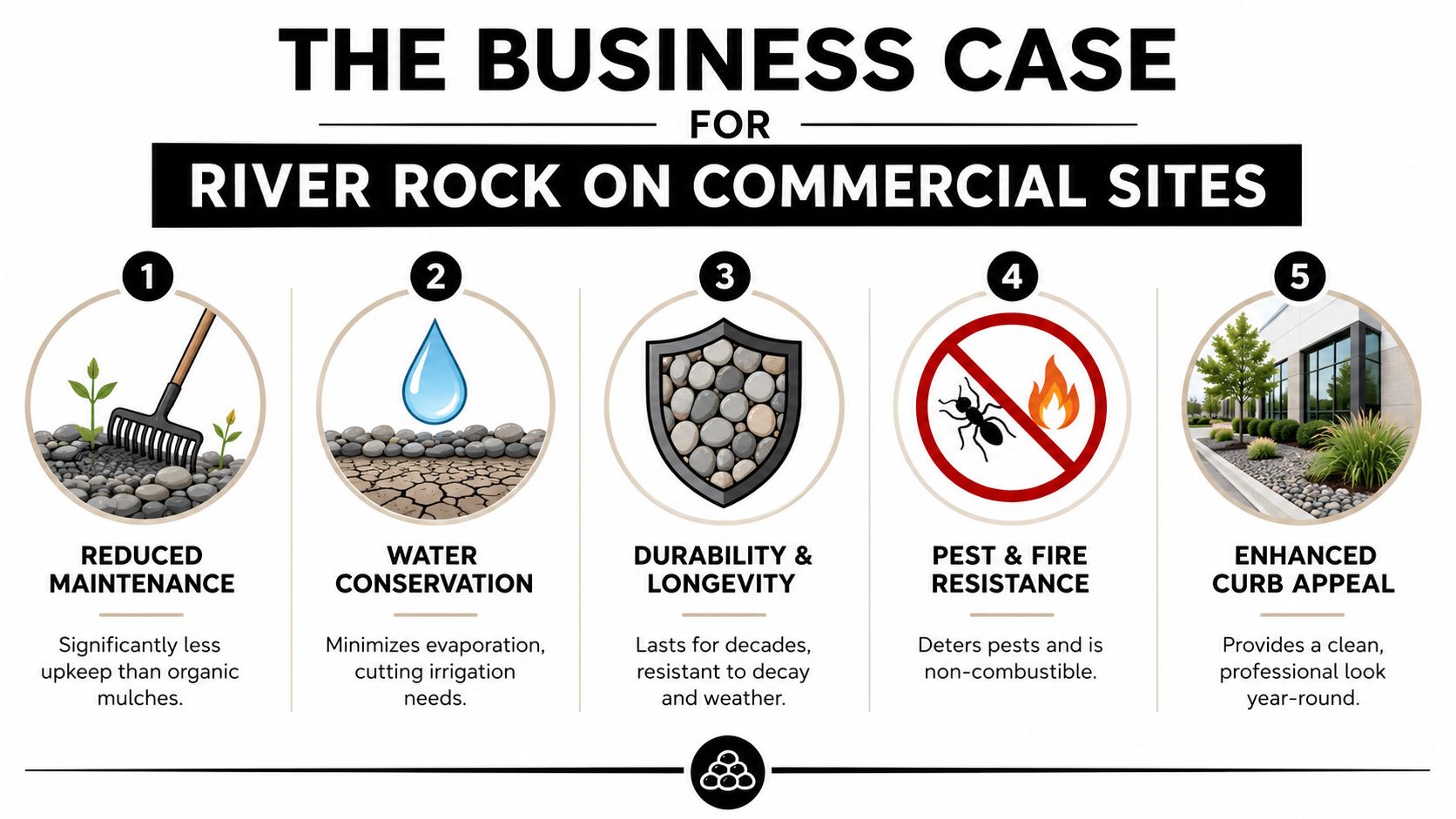
A property manager usually revisits ground cover after the same pattern repeats for a few budget cycles. Beds near entries wash out, bark gets replaced again, and the site still looks uneven between service visits. River rock can solve part of that problem, but the business case only holds when the stone is placed where long service life offsets higher installation cost and more selective maintenance.
Where the ROI can come from
On commercial sites, river rock earns its keep in areas that repeatedly fail with organic mulch. I see the best returns in splash zones, drain inlets, slope transitions, building edges, monument signage beds, and other places where washout, erosion, or frequent material replacement drives labor back onto the property.
The value is usually tied to four practical outcomes:
- Lower replacement cycles: The stone does not rot or disappear into the soil, so budgeting is less exposed to routine material refreshes.
- Better hold in runoff-prone areas: River rock often stays functional where bark shifts, floats, or thins out after storms and irrigation events.
- More stable appearance between visits: A contained bed can hold a consistent finish across seasons, which matters on office, retail, multifamily, and medical properties where curb appeal affects perception.
- Less organic buildup at the surface: The material itself does not decompose, which changes the long-term cost profile of the bed.
That said, long life is not the same as low total cost. River rock improves ROI when it replaces chronic rework. It loses ground fast when it is installed broadly in places that collect litter, leaf drop, or foot traffic.
What commercial teams often underestimate
The primary selling point is maintenance predictability, not maintenance elimination.
That distinction matters in budget meetings. Finance teams often accept a higher upfront number if operations can show fewer reset cycles, fewer washout complaints, and a cleaner appearance in high-visibility zones. They push back, rightly, when stone is presented as a one-time fix for every bed on a property.
A better framework is to compare lifecycle behavior, not just install price:
| Cost driver | Organic mulch | River rock mulch |
|---|---|---|
| Material replacement | Recurs as mulch breaks down | Less frequent, but spot replenishment can still occur |
| Cleanup labor | Moderate | Moderate to high in debris-prone areas |
| Weed pressure | Ongoing | Ongoing once fines and debris build up |
| Edge maintenance | Important | Required for cost control |
| Appearance stability | More seasonal variation | More consistent if crews maintain it |
Climate and irrigation also change the math. In hot exposures, rock can increase reflected heat around plantings and building edges. On overwatered properties, it can hide saturated soil until plants start declining, which is one reason managers should train crews to catch early signs of overwatering in planted beds before a stone installation masks the problem.
A sound recommendation is simple. Use river rock where it reduces recurring failure costs, preserves a clean finish in important sightlines, and fits the site's maintenance capacity. Avoid treating it as a blanket substitute for every mulched bed.
The Downsides of River Rock You Can't Ignore
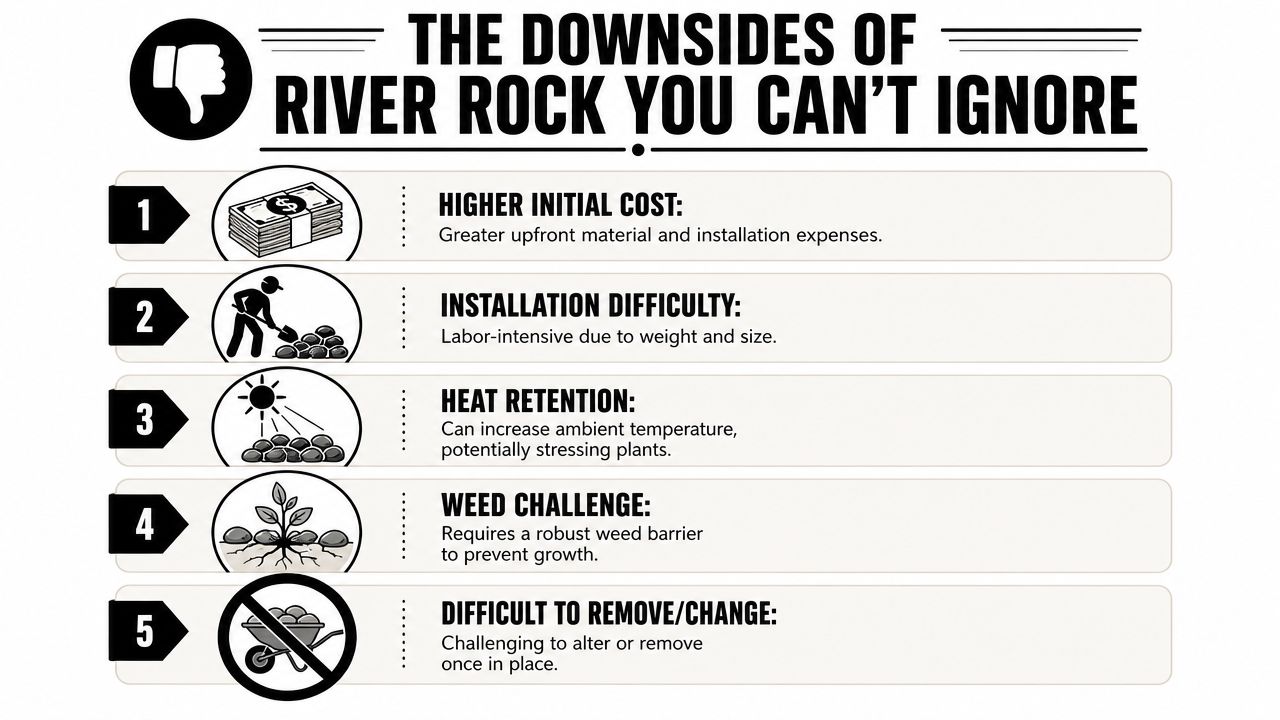
The hardest part of advising on river rock mulch is correcting the myth that rock equals no maintenance. It doesn't. It just changes the maintenance profile, and in some climates it introduces risks that organic mulch doesn't.
Low maintenance is not no maintenance
Once leaves, dust, and organic debris settle into the rock, the bed starts behaving differently than it did on installation day. Debris fills voids. Weed seeds find a place to germinate. The clean surface that looked sharp in the handoff photo begins to look tired unless crews blow it, vacuum it, or hand-clean problem zones.
Many commercial disappointments arise when a proper maintenance plan is absent. The installation may be fine. The maintenance plan is what's missing.
Common trouble spots include:
- Beds without strong edging: Rock migrates into sidewalks, turf, and curb lines.
- Tree-heavy properties: Leaves and seed drop build organic matter between stones.
- Service corridors and narrow strips: Maintenance crews may not have easy access to clean them well.
- Trash-prone retail sites: Cups, wrappers, and cigarette litter are harder to remove from rock than from open pavement.
Heat and plant stress are real site risks
In hot climates, rock can intensify surface heat, and fabric or plastic choices under the rock can affect plant respiration and drainage, according to this discussion of river rock, mulch, and low-maintenance landscaping tradeoffs. That issue deserves more attention than it usually gets in vendor proposals.
If you manage property in Texas or another hot market, this isn't an abstract design concern. Heat reflected off rock near storefront glazing, pedestrian edges, and shallow-rooted ornamentals can make a bed look stressed even when irrigation is technically running. Teams often respond by watering more, which can create a separate problem. If you're troubleshooting whether stressed beds are suffering from irrigation volume, schedule, or site conditions, guides on signs of overwatering can help separate water issues from material-related heat stress.
Some of the worst river rock installations aren't failures because the rock moved. They're failures because the bed became hotter than the surrounding planting could comfortably handle.
It gets harder to change later
River rock is heavy. That sounds obvious, but the long-term design consequence is easy to miss. Once it's installed across a large area, renovation becomes slower and more expensive. Adding plants, reworking irrigation, correcting grade, or changing the bed layout takes more labor because the surface material has to be moved, stored, and reset.
That's why broad “rock everything” decisions tend to age poorly. Properties evolve. Tenants change. Signage changes. Visibility priorities shift. A material that looks permanent can become an obstacle when the outdoor setting has to adapt.
A quick reality check helps:
| Question | If the answer is yes | Risk level |
|---|---|---|
| Will this bed need seasonal redesigns | Rock will slow changes | High |
| Is the area exposed to hard afternoon sun | Heat buildup becomes more likely | High |
| Does the site drop leaves or debris constantly | Cleaning demand rises | High |
| Is the bed tightly contained and low traffic | Rock is easier to manage | Lower |
Where to Use River Rock for Maximum Impact
River rock delivers its best value when the property uses it where its physical behavior matches the job. Commercial sites often get better results from selective placement than from broad conversion.
Best fit applications
The strongest applications are usually functional first, decorative second.
For erosion control and drainage, river rock is often specified as a clean, uniformly graded, washed aggregate rather than a mixed decorative stone. A Lake Whatcom HIP specification defines river rock cobble as 3 to 8 inches in diameter, with all fines screened out within 1/4-inch tolerance and the material washed, as shown in the native landscaping specification from Lake Whatcom HIP. That detail matters because fines clog void spaces. When crews use washed, graded material, the rock bed is better able to preserve drainage capacity.
That makes river rock a smart choice in places like:
- Dry creek beds and swales: Water has to move through the space without carrying lightweight mulch away.
- Slope toes and outlet zones: Heavier, washed stone helps manage runoff concentration.
- Foundation splash strips: The bed can reduce soil splash and present a tidy perimeter.
- Monument sign and entry accent beds: Rock provides a controlled, finished look where irrigation overspray and foot traffic need to be limited.
Areas where I would be cautious
River rock is far less convincing in broad, exposed planting beds filled with heat-sensitive plant material. It can also disappoint in spaces with constant leaf drop, litter accumulation, or frequent bed redesigns.
I'm cautious in these conditions:
- Large sun-baked parking lot islands
- Beds around thirsty seasonal color
- Tree canopies that shed heavily
- Zones where pedestrians cut through outdoor areas
- Beds expected to change often with leasing activity
A better approach is to align the material with irrigation and runoff planning. Rock can support infiltration in designated zones, but it shouldn't be used as a blanket fix for every water-related issue on site. The surface needs to support the planting strategy, not fight it.
The highest-performing commercial rock installations usually occupy the awkward places. The places where bark washes out, mowers can't work cleanly, or runoff keeps undoing softer materials.
Budgeting for River Rock Installation and Upkeep
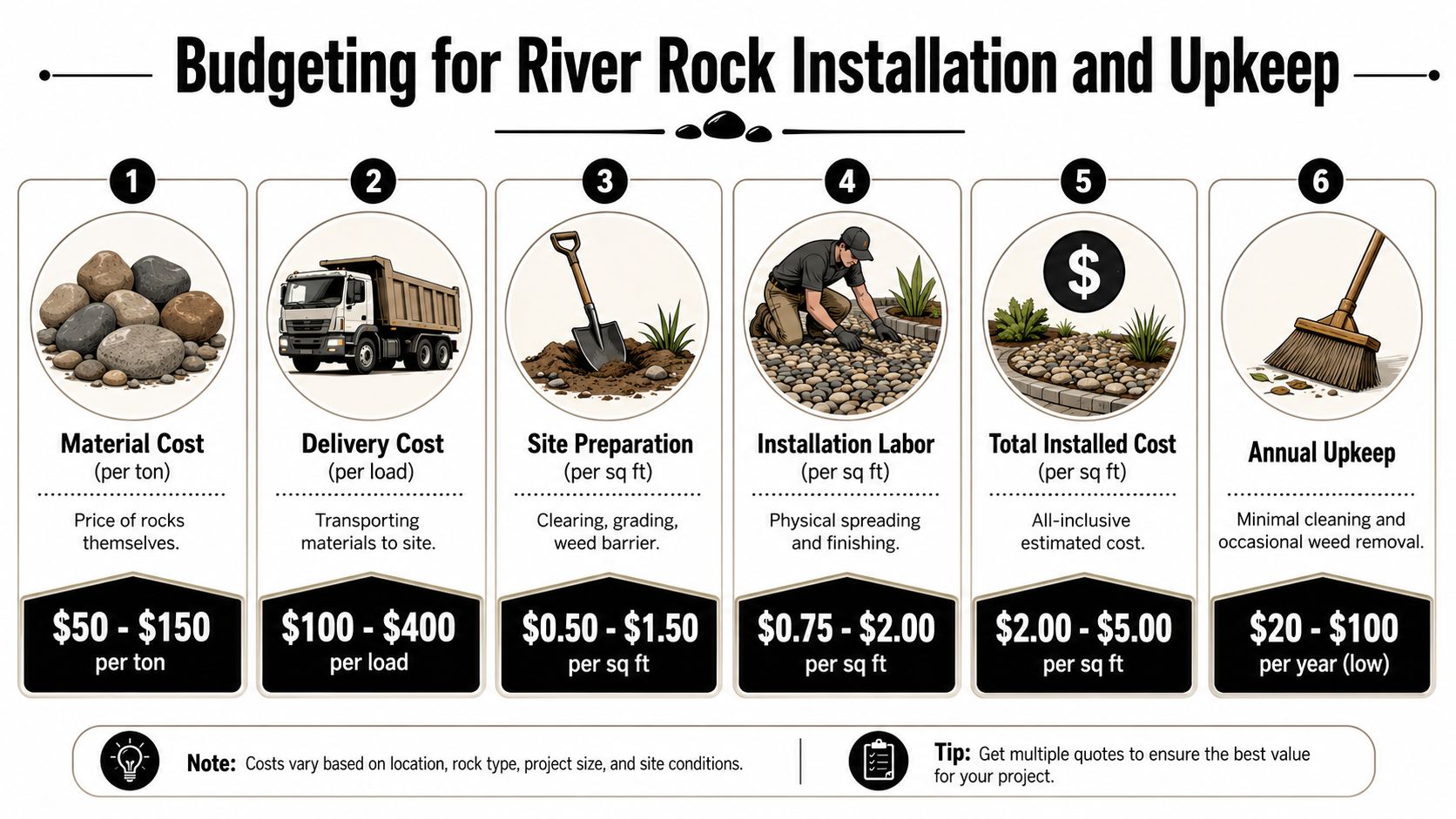
A budget problem usually shows up after installation, not at bid time. A property manager approves rock to cut mulch replacement costs, then gets hit with freight, bed prep, containment work, and cleanup labor that were never carried in the original number.
How to estimate material quantity
The first cost driver is volume. River rock gets expensive fast when bed depth is guessed instead of tied to the job the material needs to do.
Use a simple estimating process:
- Measure the bed area in square feet.
- Set the target depth based on function and stone size.
- Convert square footage and depth into cubic yards.
- Convert cubic yards into tons using supplier ticket weights before requesting pricing.
That extra step saves money. On commercial sites, under-ordering can stall crews and extend equipment rental. Over-ordering leaves a pile of material you paid to deliver, unload, and often haul away later.
I also recommend checking access before finalizing quantity. A truck can deliver bulk rock cheaply to an open area, but the cost changes if crews have to move it by skid steer, track buggy, or wheelbarrow through occupied tenant space.
What belongs in the real budget
Rock price is only part of the installed cost. The full budget needs to cover everything required to keep the bed stable, clean, and serviceable over time.
Include these items:
- Removal and prep: Existing mulch, weeds, contaminated soil, and uneven grades need to be addressed before stone goes down.
- Base and separation decisions: Fabric can reduce mixing in some areas, but it can also complicate later plant replacements and trap debris near the surface.
- Edging and containment: Beds next to turf, walks, or curbs need a defined edge or the stone will migrate.
- Delivery and placement labor: Distance from truck access to final bed location can change installed cost more than the material itself.
- Irrigation adjustments: Heads often need to be raised, redirected, or protected so spray patterns do not create algae, staining, or constant splash.
- Maintenance labor: Crews still have to remove leaves, pick out trash, control weeds in settled organic matter, and reset displaced rock.
On sites with drainage complaints or chronic overspray, budgeting should connect to broader water management and irrigation planning for Texas commercial properties. River rock will not fix bad grades, poor runoff control, or irrigation schedules that keep the bed wet.
How to think about lifecycle cost
The right question is not whether rock costs more than mulch on day one. The better question is whether rock lowers total ownership cost in that specific zone over three to seven years.
That answer changes by site condition.
If a bed keeps losing organic mulch to runoff, blower drift, or splash at the building edge, river rock can produce a solid return because replacement cycles drop and the appearance holds longer. If the same property has heavy leaf drop, seasonal flower changeouts, or frequent tenant-driven bed revisions, maintenance hours can eat into that benefit quickly.
I look at lifecycle cost through three lenses:
| Cost lens | What to evaluate |
|---|---|
| Installation cost | Prep, containment, access, delivery, and irrigation corrections |
| Annual maintenance cost | Debris removal, weed control, stone redistribution, and detail labor |
| Replacement or redesign risk | How likely the area is to be reworked for leasing, utilities, or planting changes |
A short decision table helps clarify where the money usually goes:
| Site condition | River rock budget logic |
|---|---|
| Repeated mulch washout | Often a strong long-term value |
| Stable entry or monument bed | Often a strong long-term value |
| High leaf litter and trash accumulation | Maintenance cost rises fast |
| Frequent seasonal redesign | Flexibility drops, labor rises |
For commercial properties, that is the main budgeting exercise. Compare installed cost, annual labor, and the likelihood that the bed will need to change before the stone pays for itself.
Smart Alternatives and Hybrid Landscape Strategies
The smartest commercial grounds rarely treat this as an all-or-nothing decision. A hybrid plan usually produces the best return.
The strongest approach is usually mixed
Use river rock where permanence, drainage performance, and edge definition matter most. Keep organic mulch where soil health, planting flexibility, and cooler root conditions are more important. That split approach lets the property benefit from each material's strengths instead of forcing one product to handle every condition on site.
Other mineral options can also fit specific zones better. Decomposed granite may work better where a more compacted, walkable surface is needed. Larger cobble can be stronger in stormwater features. In drought-conscious designs, broader planning concepts like xeriscape landscaping often lead to more disciplined material zoning instead of defaulting to one blanket surface treatment.
Material choice should follow zone function
A strong commercial plan often looks something like this:
- Use river rock in drainage and splash zones
- Use organic mulch in planted shrub and perennial beds
- Reserve accent stone for entries, signage, and contained visual focal points
- Avoid broad rock coverage in heat-stressed, debris-heavy areas
That's where a contractor with both construction and maintenance experience adds value. Prestonwood Commercial Grounds Services handles commercial grounds installation and maintenance, which makes it one practical option for property teams that want a site-by-site recommendation instead of a one-material sales pitch.
The best decision is the one that matches your maintenance reality, climate exposure, irrigation behavior, and brand standard for the property. River rock mulch can absolutely be part of that answer. It just shouldn't be the automatic answer.
If you're weighing river rock against mulch, or trying to fix areas where your current ground cover keeps failing, Prestonwood Commercial Landscape Services can help you evaluate the site by function, appearance, irrigation, and long-term maintenance demands so the material choice supports the property's budget instead of creating another recurring problem.