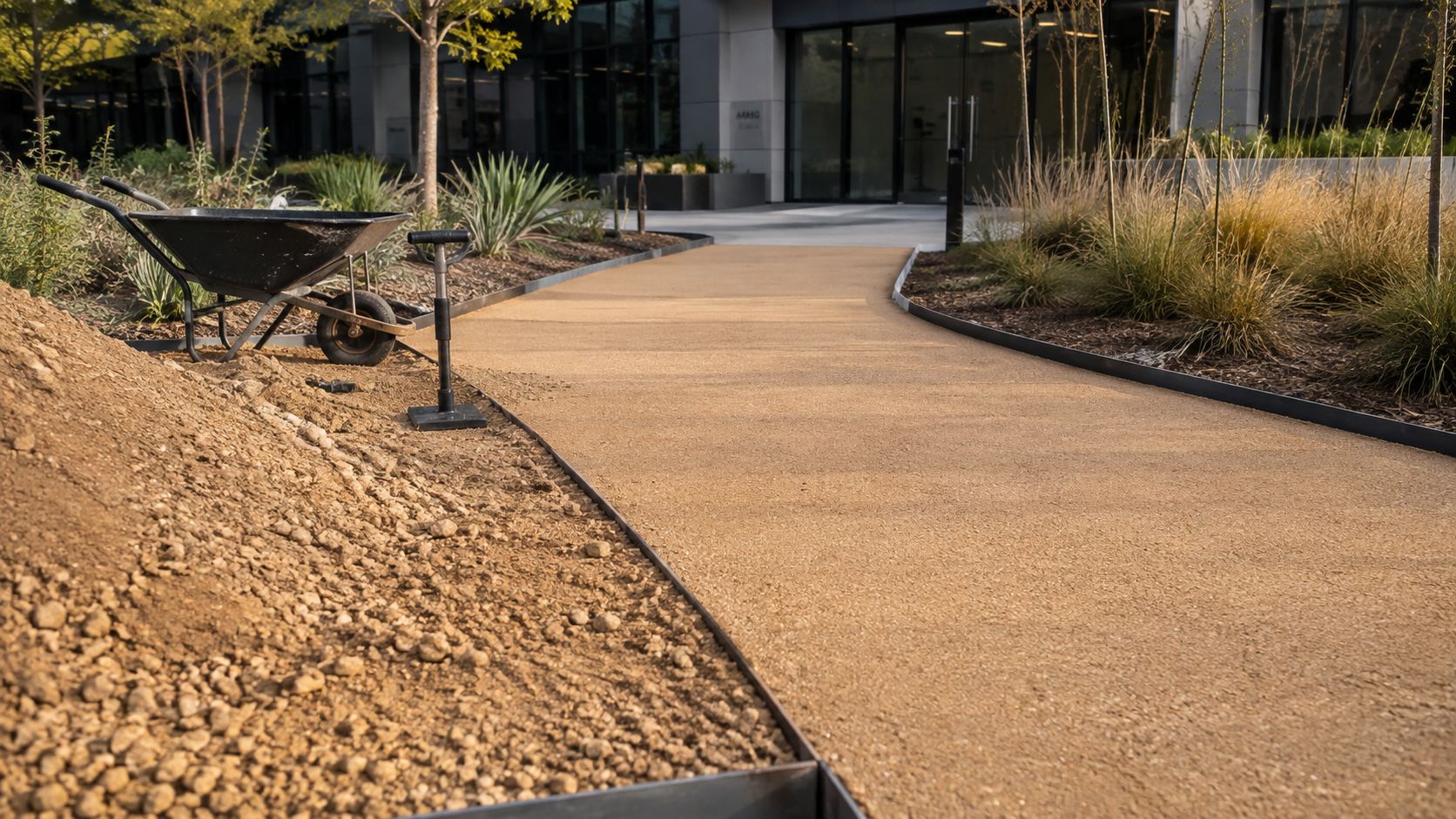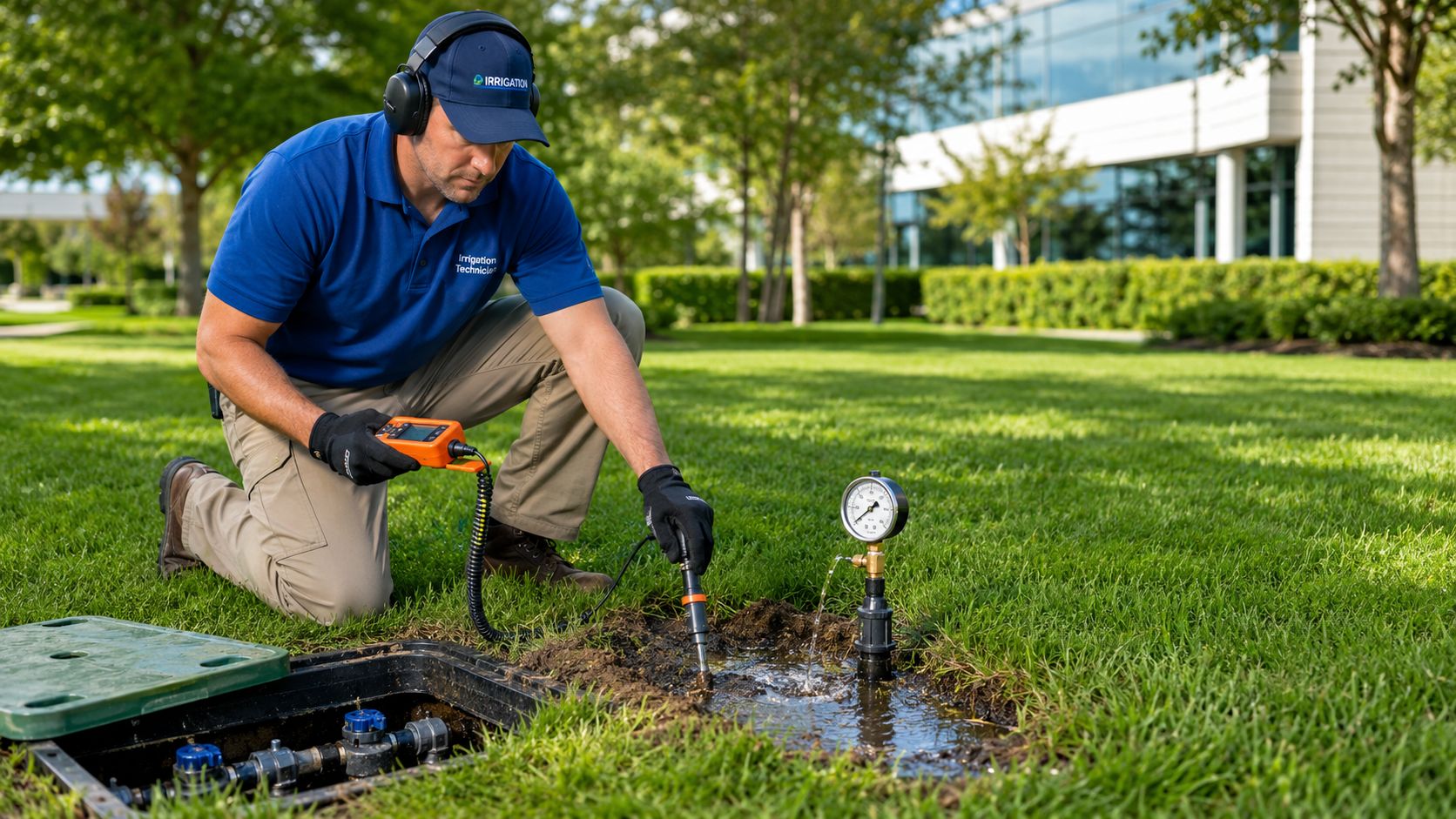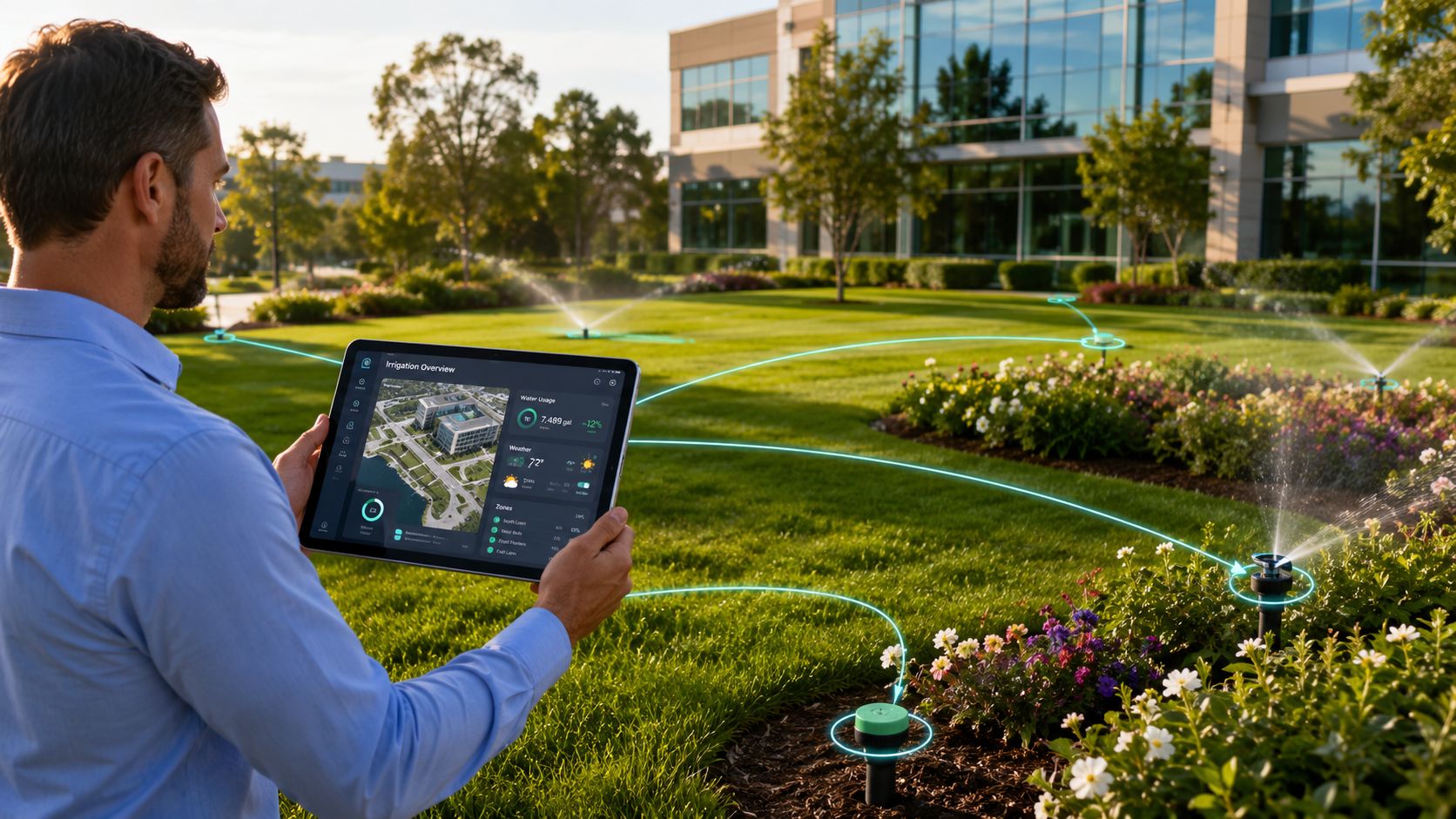

A property manager can feel the tension immediately. The front drive needs to look sharp for tenants and guests, the irrigation bill needs to stay under control, and the grounds crew can't keep disrupting daily operations just to fix problems that should've been prevented in the first place. The strongest business property ideas solve all three pressures at once, because outdoor space is not just decoration, it's part of brand perception, tenant experience, resilience, and operating discipline.
That's especially true in a large, fragmented market. The U.S. landscaping services industry reached $176.7 billion in revenue in 2026, with about 556,000 businesses operating in the sector, and revenue rose 0.9% in 2026 alone (EPA commercial buildings and irrigation landscape guide). In a market that big, property managers need vendors who can support office, retail, industrial, healthcare, education, hospitality, and HOA sites without turning every visit into a custom scramble.
The ideas below focus on what holds up in the field, recurring maintenance, water use, service visibility, account strategy, specialization, measurable commitments, partnerships, analytics, local concentration, and expansion channels. The best versions don't just look polished. They reduce rework, lower water risk, and make site standards easier to maintain across portfolios.
Table of Contents
- 1. Integrated Asset Management and Preventive Maintenance Programs
- 2. Sustainability and Water Conservation as a Competitive Differentiator
- 3. Technology-Enabled Remote Monitoring and Real-Time Communication Platforms
- 4. Consultative Selling and Strategic Account Management
- 5. Specialized Vertical Market Expertise and Customized Solutions
- 6. Performance-Based Service Contracts and Outcome Guarantees
- 7. Strategic Partnerships and Ecosystem Integration
- 8. Data Analytics and Predictive Intelligence for Client Recommendations
- 9. Local Market Dominance and Geographic Clustering Strategy
- 10. White-Label and Reseller Channel Partnerships for Market Expansion
- 10-Point Business Landscape Comparison
- Choose the Idea That Fits the Property
1. Integrated Asset Management and Preventive Maintenance Programs
A contract works better when it treats the site like an asset system instead of a set of weekly tasks. Quarterly audits, irrigation checks, seasonal planning, and plant health reviews catch small failures before they show up as dead turf, broken heads, or uneven curb appeal. That matters on corporate campuses, industrial parks, and healthcare sites where a missed issue can affect both appearance and operations.
The practical upside is predictability. A preventive program gives property managers a schedule, a paper trail, and fewer emergency calls when weather shifts or a zone fails. It also creates room to tier service levels, so a basic, standard, or premium plan can match the site's risk profile instead of forcing every property into the same box.
A useful internal starting point is a documented checklist like this commercial landscape maintenance checklist, because a checklist makes expectations visible before anyone steps on site. That's not just administrative polish. It helps the manager, the vendor, and the tenant all understand what “healthy landscape” really means.
Practical rule: if a landscape issue regularly turns into a tenant complaint, it belongs in a preventive workflow, not a reactive ticket.
Good programs usually include a few habits that are easy to audit:
- Mobile inspection notes: crews document problems in real time, so the manager sees what changed and when.
- Seasonal benchmarks: each property gets a spring, summer, and fall standard instead of one generic service rhythm.
- Manager training: site staff learn what to watch for, which reduces noise and duplicate calls.
- KPIs tied to condition: plant health, irrigation function, and response times get measured consistently.
The trade-off is discipline. Preventive service requires better communication and tighter follow-through than a basic mow-and-blow contract. But for multi-site owners, that discipline usually pays back in fewer surprises and a property that feels managed, not improvised.
2. Sustainability and Water Conservation as a Competitive Differentiator
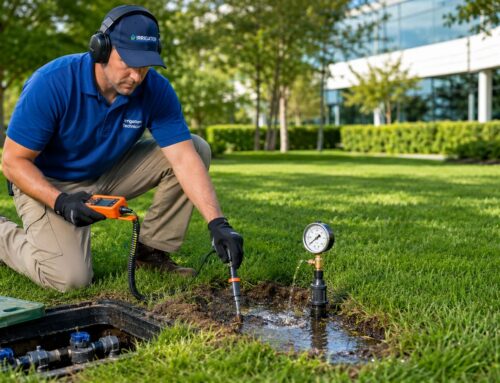
Water-smart landscaping is no longer a side topic, it's a commercial operating issue. The EPA estimates that residential outdoor water use exceeds 9 billion gallons per day, mostly for grounds irrigation, and that up to 50% of that outdoor water can be wasted through evaporation, wind, or runoff (EPA water conservation practices for landscape irrigation). Even though that figure starts with residential use, the lesson carries into commercial sites because irrigation waste shows up in utility bills, compliance pressure, and avoidable plant stress.
For property managers, the best water-conservation ideas are usually the least theatrical. Native or climate-appropriate planting, hydrozoning, mulch, soil improvement, and smart controller upgrades can reduce irrigation demand without making a site look barren. The EPA also estimates that water-smart design can reduce outdoor water use by 20% to 50%, and that replacing a standard clock timer with a WaterSense-labeled controller can cut irrigation water use by 15% (EPA water conservation practices for landscape irrigation).
The commercial trade-off is straightforward. High-water turf and ornamental features may look dramatic on day one, but they often cost more to maintain, stress more during heat, and complicate long-term site management. That's why sustainable design should be framed as a brand and operations decision, not just an environmental one.
A landscape that's easier to irrigate is usually easier to defend in budget season too.
A few practical moves work especially well:
- Start with a water audit: identify which zones drive the most waste before replacing plant material.
- Match plant choice to exposure: sunny medians, shaded entries, and service corridors should not share the same palette.
- Use mulch and soil improvement: both help plants hold moisture and reduce irrigation demand.
- Treat upgrades as reporting tools: water trends help justify future capital planning.

On office parks, retail centers, and healthcare campuses, water efficiency can also support the brand story. It signals that the property is managed with discipline, not just styled for first impressions.
3. Technology-Enabled Remote Monitoring and Real-Time Communication Platforms
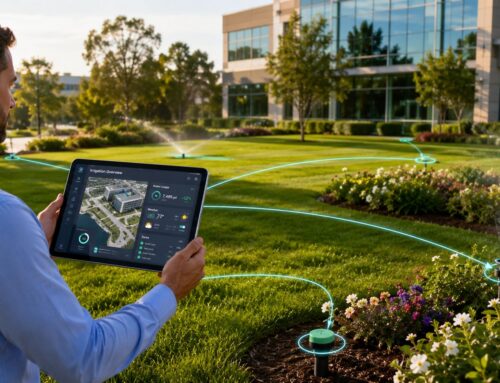
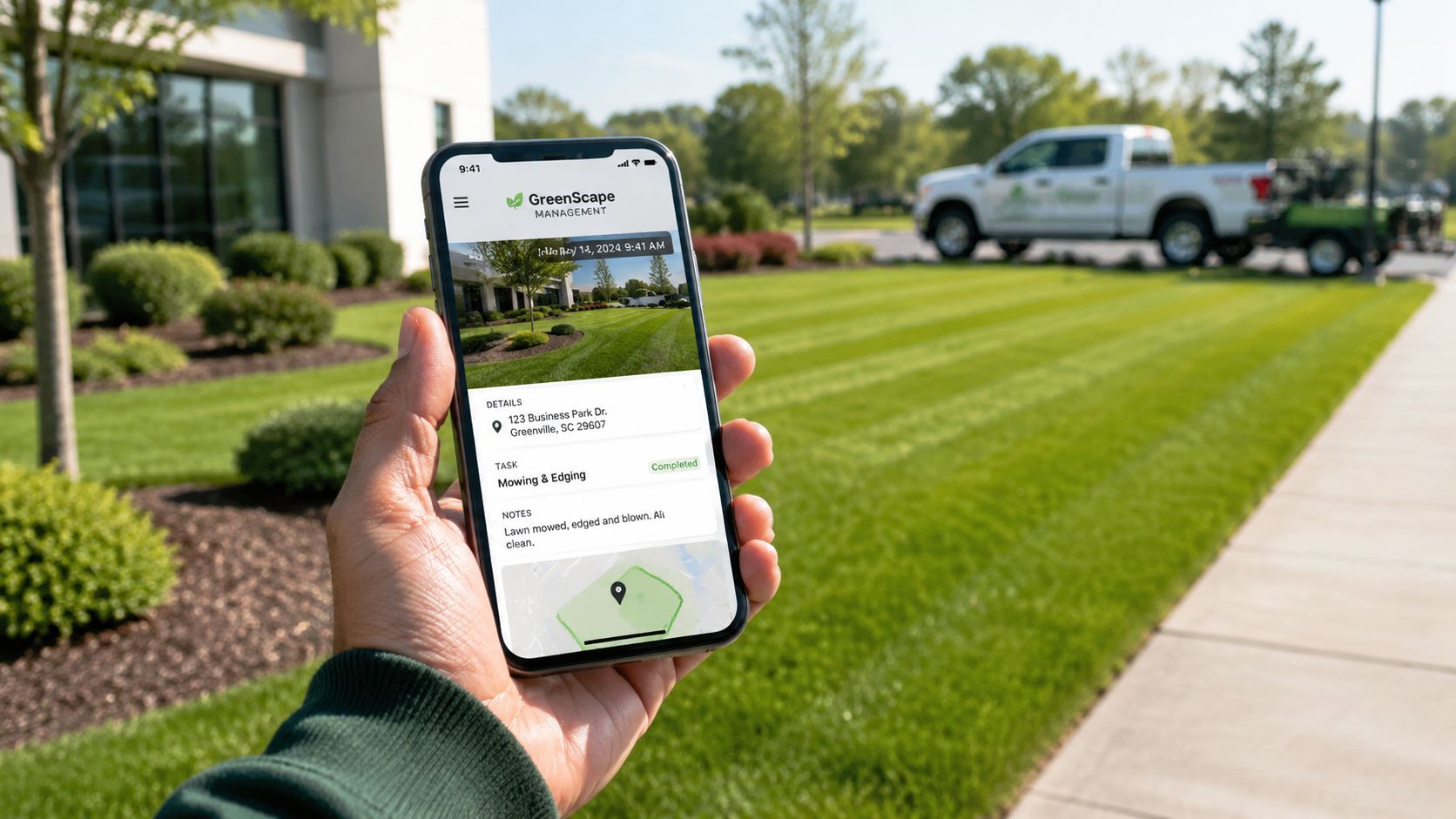
Technology matters most when it saves the manager from chasing updates. A good management platform gives crews a way to log work orders, attach photos, and flag irrigation issues before the tenant notices them. It also gives the property manager a clearer view of what happened, what's still open, and what needs approval.
That visibility becomes more valuable as portfolios grow. Survey data in the landscaping industry shows 73% of professionals consider digital transformation important, but only 14% plan to invest in new technology in 2025, while 52% cite rising material costs and 51% cite staffing challenges as their biggest risks (Roto-Logic consulting trends coverage). The gap tells you something important. Many teams know technology matters, but they still struggle to implement it well.
For a property manager, the practical question isn't whether a platform looks modern. It's whether it reduces missed work, makes communication cleaner, and shortens the distance between field observation and decision. That's why mobile photo updates, GPS-tracked crews, and service history portals usually beat flashy features that nobody uses.
A realistic rollout should stay small at first.
- Start with core functions: work orders and photo documentation before full automation.
- Train crews thoroughly: adoption fails fast if the field team treats the app like extra paperwork.
- Set response expectations: service level agreements should define how quickly issues get acknowledged.
- Use client-facing portals carefully: keep the information useful, not overloaded.
If the manager still has to call for basic status updates, the platform isn't doing its job.
On retail centers and office campuses, same-day updates help protect tenant trust. On HOAs, automated irrigation alerts reduce avoidable conflict. On healthcare and industrial sites, documented response trails matter because they make operational accountability easier to prove.
4. Consultative Selling and Strategic Account Management
The best landscaping vendors don't behave like order takers. They ask better questions, connect service choices to property goals, and help the manager justify decisions before problems get expensive. That's the heart of strategic account management, and it's one of the strongest business landscaping ideas for long-term retention.
This approach fits properties where the outdoor environment affects more than curb appeal. On a corporate campus, the account manager can become part of the facilities conversation. On an industrial park, quarterly reviews can focus on risk points, irrigation issues, and changes in site use. On healthcare property, the discussion may lean toward patient experience, safety, and predictable access.
The value is in the relationship structure. Regular business reviews create a place to discuss what changed, what needs attention next, and which small improvements could reduce future friction. That works better than waiting for the next complaint to drive the conversation.
Practical rule: if the account manager only shows up when renewal is near, the relationship is already too weak.
A strong account program usually includes:
- A real CRM process: not just contact storage, but notes on preferences, site history, and opportunities.
- Monthly touchpoints: enough contact to stay current without turning every call into a sales pitch.
- Standard review decks: managers should see condition, service notes, and recommendations in the same format.
- ROI documentation: past recommendations should be tied back to actual outcomes when possible.
The trade-off is time. Consultative management takes more preparation than transactional service, and it requires people who can speak both operations and client language. But once it's in place, it often reduces churn because the vendor becomes part of the property strategy, not just a vendor on the invoice.
This is especially useful for office complexes and healthcare sites where tenant expectations shift quickly. The account manager who understands those changes can guide planting, timing, and service cadence before the property starts slipping.
5. Specialized Vertical Market Expertise and Customized Solutions
Generalists can maintain a property. Specialists can support a property's real use case. That difference matters in commercial landscaping, because a healthcare campus, a hospitality entryway, and an industrial yard don't need the same plant palette, routing logic, or risk controls.
The strongest vertical strategies are usually narrow on purpose. A team might focus on healthcare, corporate campuses, industrial properties, hospitality, or education. Each of those categories carries different expectations, from patient movement and safe circulation to brand presentation and outdoor durability.
In healthcare, for example, grounds teams have to think about access, cleanliness, and how outdoor design supports a calm environment. In hospitality, the front approach and arrival sequence can shape first impressions before a guest ever reaches the lobby. In education, the grounds design has to balance safety, visibility, and long-term wear.
The commercial advantage is simple. A specialist can talk to the property team in the language of that sector instead of sounding generic. That usually helps with bidding, renewal conversations, and design decisions because the manager sees the vendor as someone who understands the site, not just the plants.
The more specific the property type, the more expensive generic advice becomes.
A practical specialization strategy often looks like this:
- Pick two or three verticals: build depth before trying to serve every market.
- Create sector-specific case studies: show how service decisions change by use case.
- Build customized service standards: a hospital campus and a retail center shouldn't share the same playbook.
- Form design relationships: architects and designers can reinforce the right standards early.
The downside is focus. Specialization can limit flexibility if the local market shifts. But for firms that want to justify premium pricing or win difficult accounts, vertical expertise usually creates more credibility than broad claims ever will.
6. Performance-Based Service Contracts and Outcome Guarantees
Many contracts still reward activity instead of results. Crews show up, tasks get completed, and the manager hopes the site looks right when the dust settles. Performance-based contracts change that by tying service to outcomes the property can evaluate.
That might mean plant survival targets on new installs, irrigation uptime expectations, seasonal color standards, or response time commitments for urgent issues. The key is to make the promise measurable enough that both sides know what success looks like.
This model works well when the vendor has confidence in its process. If the contractor understands soil prep, irrigation tuning, and seasonal planning, it can offer guarantees without relying on vague language. That can be a strong differentiator in competitive bids, especially when owners are skeptical of the usual “we'll take care of it” pitch.
The trade-off is risk. The contractor has to define the baseline condition, agree on what counts as a failure, and keep enough margin to absorb the occasional penalty. That's why performance guarantees should start with core services, not every edge case at once.
A simple structure helps:
- Define one outcome clearly: for example, plant condition, not just visit frequency.
- Document the baseline: both sides need the same starting point.
- Build the response path: if the standard slips, who fixes it and how quickly?
- Keep the language plain: complicated guarantees create disputes, not confidence.
Performance contracts work best when the manager can verify the result without needing a translator.
This approach is especially useful for seasonal color programs and irrigation maintenance because those are easy for tenants and ownership teams to see. It also encourages cleaner internal systems, since a company can't guarantee outcomes it doesn't track. The result is less hand-waving and more accountability, which is exactly what many properties need.
7. Strategic Partnerships and Ecosystem Integration
No provider wins on every service line alone. The better model is usually an ecosystem, with irrigation specialists, pest control partners, hardscape contractors, design firms, and property management platforms all connected around one client experience. That reduces handoff friction and helps the property manager avoid juggling multiple disconnected vendors.
For office, retail, and industrial sites, this matters because site design issues often overlap with other property systems. A drainage problem can affect hardscape. A pest issue can affect plant health. An irrigation failure can expose a broader maintenance gap. Coordinated partners are better at seeing the whole site instead of protecting their own silo.
Integration with property management workflows is especially useful. A vendor that understands tools used by PMCs can fit into the manager's cadence instead of forcing another process on top. That makes scheduling cleaner and reduces confusion about who owns what.
The upside is convenience and better coordination. The trade-off is control. Partnerships only work if roles are clear, response expectations are aligned, and the client still has a single point of contact.
A practical partnership framework usually includes:
- Clear scopes: each partner should know where their responsibility starts and ends.
- Referral rules: everyone should understand how leads and service requests move.
- Joint reviews: regular check-ins keep service standards aligned.
- Co-marketing only where it helps: the client should gain clarity, not extra noise.
Good partnerships make the manager's life easier. Bad ones just move the confusion around.
On large campuses and multi-site portfolios, ecosystem integration can be the difference between reactive problem-solving and coordinated property care. It also gives the vendor more resilience, because no single service line has to carry the entire relationship.
8. Data Analytics and Predictive Intelligence for Client Recommendations
Data is useful when it helps a manager make a decision, not when it fills a dashboard with numbers nobody reads. In service, the best analytics usually answer a practical question, what needs attention now, what will likely fail next, and what should be budgeted before a problem turns visible.
That makes data valuable for more than operations. It can support replacement planning, irrigation forecasting, seasonal color decisions, and benchmarking across similar properties. A manager running an industrial park, for example, cares less about abstract reporting and more about whether maintenance patterns suggest future wear or budget pressure.
The big advantage of analytics is timing. If a provider can identify issues early, the property team has more options and fewer emergency costs. The weak version of analytics is just a recap after the fact. The strong version changes what gets done next.
The best way to start is small and focused.
- Choose a few metrics: plant condition, irrigation anomalies, and open work orders are enough to start.
- Use a consistent format: if reports change every month, nobody can compare them.
- Build site history over time: trends matter more than isolated snapshots.
- Turn findings into recommendations: managers need actions, not just observations.
The market context supports this shift. Commercial grounds maintenance was estimated at $41.6 billion in 2026 with 6.1% CAGR growth, and one market estimate pegs the global commercial grounds maintenance market at $97.14 billion by 2033 (Research and Markets commercial grounds maintenance report). That scale suggests ongoing investment in scheduling software, quality control, and preventive workflows.
The takeaway is practical. Data should help the manager spend less reactively and plan more deliberately. If it doesn't do that, it's just reporting theater.
9. Local Market Dominance and Geographic Clustering Strategy
Some firms try to spread everywhere. Others win by becoming the obvious choice in a defined area. Geographic clustering is often the smarter move, because concentrated routes, local supplier relationships, and stronger brand recognition all make service easier to deliver consistently.
This matters most in metro areas with dense commercial demand, like Dallas, Fort Worth, and San Antonio. A company with local branches and nearby crews can respond faster, coordinate better, and keep standards more consistent across multiple properties. That kind of proximity is hard for a scattered competitor to match.
The benefit isn't just speed. Local dominance makes it easier to build relationships with property managers, community associations, and nearby vendors. It can also support stronger recruiting because workers see a clearer path inside a company that feels established in their market.
The trade-off is that local concentration requires discipline. A firm has to know its core geography, manage routes carefully, and build enough brand awareness that clients recognize the name before the bid arrives.
A smart clustering strategy often looks like this:
- Focus on a few core markets: depth beats a thin presence everywhere.
- Strengthen local supplier ties: consistent sourcing supports faster issue resolution.
- Build community visibility: local sponsorships and relationships still matter.
- Track branch performance separately: each market should be managed as a real operating unit.
A strong local footprint is a service strategy, not just a marketing slogan.
This approach works especially well for companies that serve office, retail, industrial, healthcare, and HOA properties in the same region. The more similar the climate, vendor network, and client expectations, the more clustering helps execution. It's a practical answer to a fragmented market.
10. White-Label and Reseller Channel Partnerships for Market Expansion
Not every growth path needs direct-to-client selling. White-label and reseller partnerships let a company expand through property management firms, facility management companies, or larger regional operators that already own the relationship. That can open new business without forcing the vendor to build every lead from scratch.
This model is useful when a company has strong field execution but limited brand reach outside its home market. It also works for firms that want to serve larger accounts as a behind-the-scenes delivery partner. The client gets coverage, the partner gets fulfillment, and the business gets access to work that would otherwise stay out of reach.
The operational challenge is consistency. A white-label provider has to match the partner's service expectations, communication style, and quality standards every time. If the work slips, the reputation damage hits both parties, not just the field crew.
That's why channel partnerships need structure:
- Standard service packages: keep scope and deliverables predictable.
- Clear SLAs: response times and service standards should be written down.
- Brand-safe communication: the partner's reputation depends on clean execution.
- Quality control checks: the white-label provider can't assume the client won't notice.
The upside is expansion without the full cost of direct acquisition. The downside is less visibility, because the end client may never know who's doing the work. For some firms, that's a fair exchange if it creates reliable growth and steadier workload.
This model is especially relevant for regional companies that want to scale into adjacent markets or support larger national accounts without overextending their sales team. It can be a disciplined way to grow when the core operation is already stable.
10-Point Business Landscape Comparison
| Strategy | Implementation complexity | Resource requirements | Expected outcomes | Ideal use cases | Key advantages |
|---|---|---|---|---|---|
| Integrated Asset Management & Preventive Maintenance Programs | Medium–High (systems, audits, process change) | Technology, inspection teams, asset tracking, training | Fewer emergencies, longer asset life, predictable budgets | Corporate campuses, industrial parks, healthcare grounds | Proactive risk reduction, lifecycle value, accountability |
| Sustainability & Water Conservation as a Competitive Differentiator | Medium (design + installation + behavior change) | Sustainable designers, smart irrigation, sensors, higher upfront capital | 20–50% water savings, ESG alignment, rebates | Drought-prone regions, corporate ESG programs, campuses | Lower operating costs, reputation boost, regulatory compliance |
| Technology-Enabled Remote Monitoring & Real-Time Communication Platforms | High (integration, change management) | Software platforms, mobile devices, licenses, crew training | Faster response, greater transparency, efficiency gains | Large portfolios, retail centers, HOAs, enterprise clients | Real-time visibility, dispute reduction, improved accountability |
| Consultative Selling & Strategic Account Management | Medium (cultural shift, hiring) | Experienced account managers, CRM, reporting tools, training | Higher retention, premium pricing, cross-sell growth | Key accounts, long-term partnerships, executive-level clients | Deep client relationships, higher lifetime value, competitive moat |
| Specialized Vertical Market Expertise & Customized Solutions | Medium (research, certifications) | Vertical training, certifications, tailored processes | Premium pricing, industry credibility, targeted referrals | Healthcare, hospitality, education, industrial sectors | Differentiation by niche, quality improvements, referral networks |
| Performance-Based Service Contracts & Outcome Guarantees | High (measurement, legal risk) | Measurement systems, rigorous QA, financial reserves, legal support | Client confidence, outcome certainty, potential premium fees | High-value installations, risk-averse clients, sustainability targets | Risk-sharing, strong sales differentiator, drives operational excellence |
| Strategic Partnerships & Ecosystem Integration | Medium (partner selection, coordination) | Partner management, integration processes, joint marketing | Broader service offering, referral leads, bundled solutions | Turnkey projects, clients needing multi-vendor coordination | One-stop-shop capability, expanded reach without heavy investment |
| Data Analytics & Predictive Intelligence for Client Recommendations | High (data collection & analytics) | Data platforms, sensors, analysts, dashboards, training | Evidence-based recommendations, upsell opportunities, forecasting | Large portfolios, clients needing ROI justification, executive buyers | Data-driven differentiation, predictive insights, stronger business cases |
| Local Market Dominance & Geographic Clustering Strategy | Medium–High (branch & ops scale) | Regional branches, local management, capital investment | Operational efficiencies, higher market share, faster response | Multi-branch regional firms, dense metropolitan markets | Scale economics, brand recognition, resource pooling |
| White-Label & Reseller Channel Partnerships for Market Expansion | Medium (standardization & contracts) | Standardized service protocols, partner onboarding, SLAs | Rapid geographic expansion, stable revenue, lower CAC | Firms seeking expansion without direct acquisition costs | Scalable growth, partner-driven revenue, reduced sales burden |
Choose the Idea That Fits the Property
The right concept depends on the site's biggest constraint, not the trendiest headline. If risk and budget control matter most, preventive maintenance and asset management should come first. If the property is under water pressure or sustainability scrutiny, start with conservation and smarter irrigation. If the manager needs more visibility, technology-enabled communication will usually deliver faster wins than a design refresh.
Specialized vertical expertise makes more sense when the property has sector-specific requirements, like healthcare, hospitality, or education. Performance-based contracts fit owners who want measurable outcomes and clearer accountability. Partnerships help when the site needs coordinated delivery across multiple service lines. Analytics supports better capital planning and timing, while local clustering and reseller channels are stronger fit-for-purpose growth strategies for firms that already have operational depth.
The best next step is simple. Start with a documented property assessment, choose one improvement that can be measured, set a timeline, define the KPI, and review the result before expanding the scope. That keeps the conversation grounded in actual site performance instead of assumptions.
For Dallas–Fort Worth and San Antonio properties, Prestonwood Commercial Landscape Services is a relevant option for design, installation, maintenance, seasonal color, irrigation audits and repairs, central water management, and landscape renovation. Their model fits the kind of commercial work where curb appeal, water control, and reliable execution all have to hold together at once.
If you want a partner that understands commercial property demands across Dallas–Fort Worth and San Antonio, visit Prestonwood Commercial Landscape Services and review how their design, maintenance, irrigation, and renovation services can support your site goals. If you're weighing curb appeal against water use and long-term upkeep, their team can help you build a plan that's practical, measurable, and easier to manage across your portfolio.