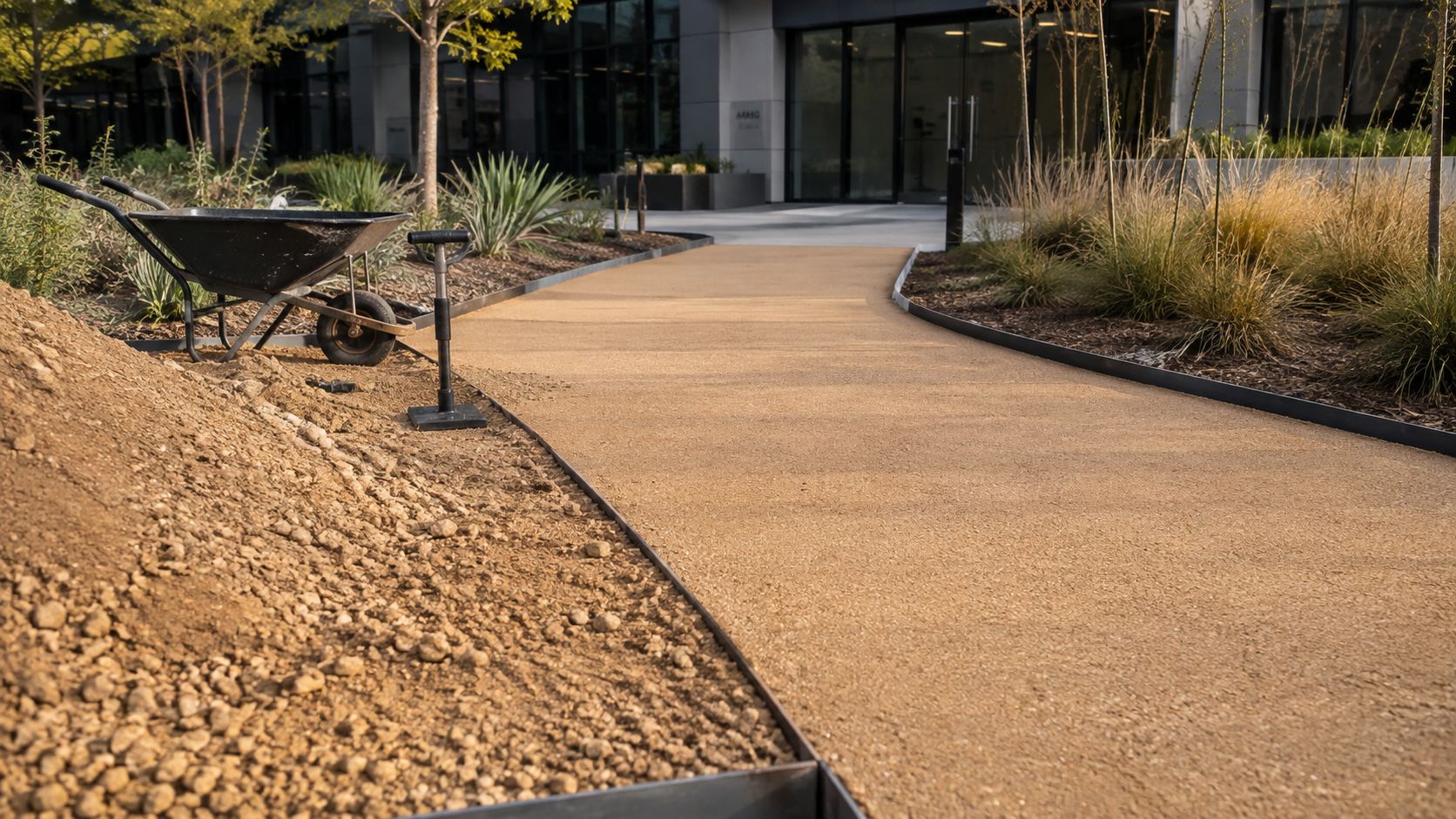
Commercial decomposed granite hardscape typically costs about $3 to $9 or more per square foot installed, while raw material commonly runs near $40 to $80 per ton. That ton price is only a small slice of the finished project because preparation, delivery, edging, drainage, labor, and compaction determine what the property pays.
I've quoted enough DG work across DFW and San Antonio to know where low bids go wrong. The material is affordable, but the surface system isn't automatically cheap. A contractor who prices only the granite will miss the subgrade, the truck access, the edge restraint, and the maintenance burden that shows up after the first serious rain.
For commercial properties, the right question isn't, “What's the cost of decomposed granite?” It's, “Which DG system matches this site's traffic, slope, drainage, appearance standards, and maintenance capacity?”
Table of Contents
- What Property Managers Should Expect to Pay for Decomposed Granite
- What Decomposed Granite Actually Is and Why the Fines Matter
- Decomposed Granite Pricing by the Ton, Yard, and Square Foot
- Natural Stabilized and Resin Coated DG Compared
- Factors That Quietly Drive the Installed Price
- Professional Installation Versus a DIY Crew
- Commercial Specifications ADA Drainage and Durability
- Matching DG to the Site and Choosing Alternatives When Needed
What Property Managers Should Expect to Pay for Decomposed Granite
Use $3 to $9 or more per square foot installed as the first commercial budgeting anchor for DG hardscape work. That range reflects the difference between a basic natural surface and a more engineered stabilized or resin-bound installation, as documented in current decomposed granite cost guidance.
Raw material looks dramatically cheaper. Loose DG is commonly listed around $40 to $80 per ton, with a national average near $60 per ton, while volume pricing often falls around $40 to $255 per cubic yard, depending on grading, stabilization, and added treatments. Those figures come from major-market DG pricing references, but they don't represent a finished commercial surface.
Build the budget from the surface area
A 5,000-square-foot plaza priced at $5 per square foot installed lands near $25,000. At $8 per square foot, with stabilization and resin coating, the same plaza moves past $40,000. Both examples use only the verified installed rates, and the difference comes from the system, not from granite alone.
A mid-size commercial project can consume substantial bulk material. The ton price feels inexpensive until the estimator adds delivery, staging, grading, compaction, edge restraint, and site access. One ton covers roughly 64 square feet at a three-inch depth, according to installed DG cost guidance.
| Project Size | Typical Use | Installed Cost per Sq Ft | Total Budget Range |
|---|---|---|---|
| Small pedestrian zone | Courtyard path or garden connection | $3 to $9+ | Depends on scope and access |
| Mid-size commercial area | Plaza, retail perimeter, or campus walkway | $3 to $9+ | Depends on area, depth, and system |
| Large hardscape zone | Multiple paths, plaza, or landscape corridors | $3 to $9+ | Delivery and preparation become more important |
For a more detailed regional budgeting framework, compare the commercial landscape installation cost guide. Your final number should track foot traffic, slope, drainage exposure, and the owner's willingness to refresh the surface, not the lowest material quote.
What Decomposed Granite Actually Is and Why the Fines Matter
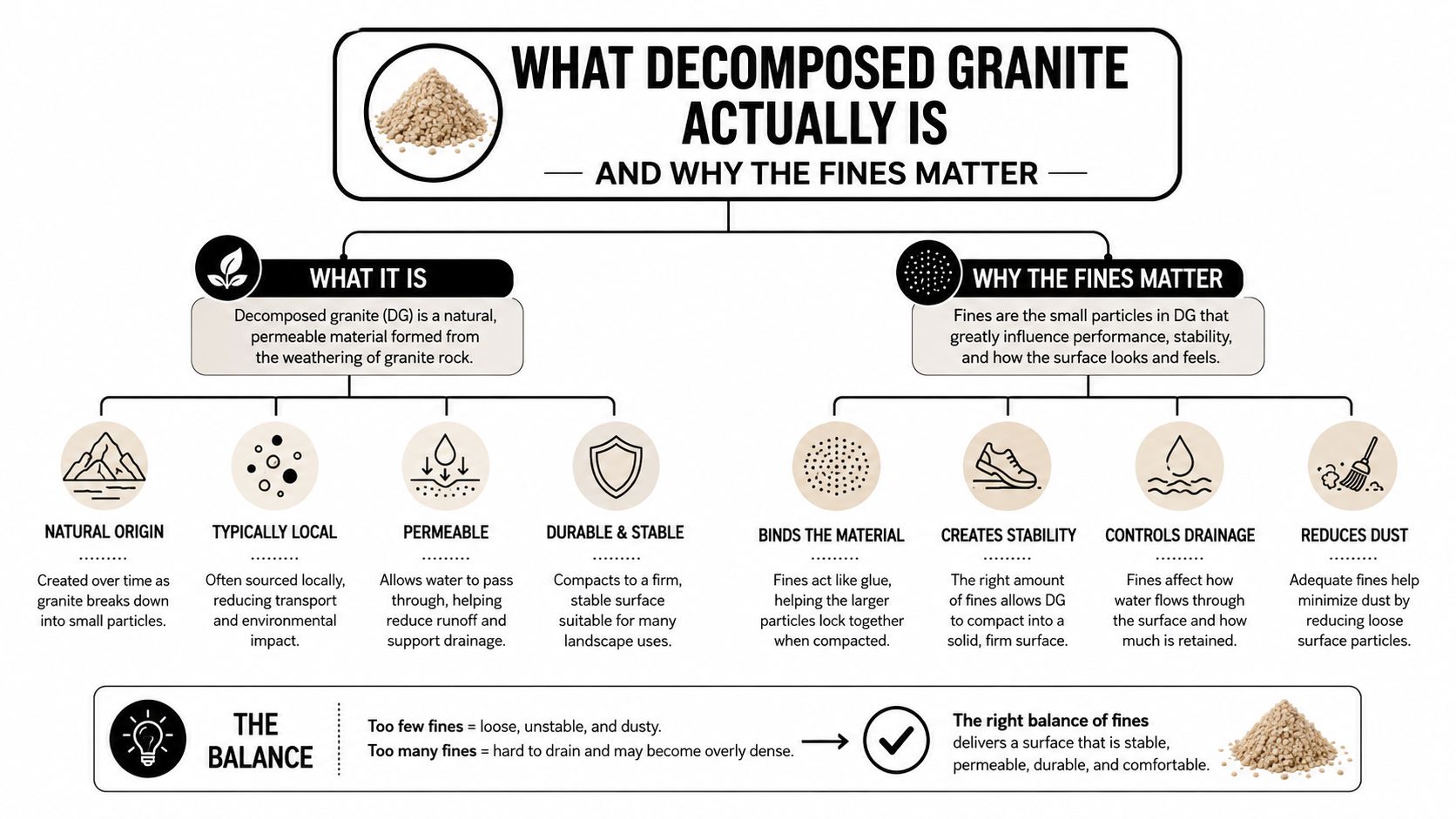
Decomposed granite, or DG, is weathered granite bedrock reduced to a blend of fine dust, sand-like particles, and small angular gravel. The material sits between loose decorative rock and rigid paving. It can be shaped into paths and plazas, then compacted into a firm surface when the particle blend is properly graded.
Think of the difference between ground coffee and coarse kosher salt. A coffee-like DG blend contains enough fines to fill the voids between larger particles. That lets the surface pack tightly. A grittier blend behaves more like coarse salt. It drains readily, but it can migrate under shoes, carts, tires, and stormwater unless the installer provides strong edging and proper grading.
Fines determine how the surface behaves
The fines act as the material's natural binding component. Too few fines, and the surface stays loose, develops tracks, and spreads into planting beds. Too many fines, and saturated areas can soften or become muddy, especially where the base drains poorly.
That balance affects commercial performance in practical ways:
- Wheelchair rollability: A well-graded, compacted surface offers a firmer travel path than loose gravel.
- Slip resistance: Angular particles provide texture, but loose material can reduce footing stability.
- Water movement: Coarser blends typically allow more rapid drainage, while dense fines-heavy blends can hold moisture longer.
- Stabilization: A binder locks particles together when natural compaction alone isn't enough for the site.
A stabilized DG specification doesn't identify one universal product. It describes a family of systems that use a binding additive to reduce migration and improve surface cohesion. Quarry source matters just as much. Two suppliers can offer similar-looking DG with different color, hardness, and fines content, so two bids using the same broad label may perform very differently.
Decomposed Granite Pricing by the Ton, Yard, and Square Foot
Commercial DG quotes use three units, and each serves a different estimating purpose. Price per ton supports material purchasing, price per cubic yard helps calculate delivered volume, and price per square foot gives property managers a practical way to compare finished surfaces across paths, plazas, and drives.
Current references place natural or loose DG around $40 to $100 per cubic yard, stabilized DG around $100 to $225 per cubic yard, and resin-coated DG as high as $250 to $350 per cubic yard. Current DG pricing comparisons show why the specified product must be identified before comparing bids. A low material price can suit a lightly used courtyard, while a higher-grade system may cost less to maintain on a busy commercial route.
| DG Type | Price per Ton | Price per Cubic Yard | 2 in Path per Sq Ft | 3 in Plaza per Sq Ft | 4 in Drive per Sq Ft |
|---|---|---|---|---|---|
| Natural or loose | $40 to $80 | $40 to $100 | Material quantity varies | Material quantity varies | Material quantity varies |
| Stabilized | $100 to $185 | $100 to $225 | Material quantity varies | Material quantity varies | Material quantity varies |
| Resin-coated or resin-bound | $150 to $225+ | $250 to $350 | Material quantity varies | Material quantity varies | Material quantity varies |
The table shows available market ranges for the material categories. It leaves the square-foot columns without fixed conversion values because coverage changes with grading, compaction, specified depth, and bulk density. Those variables matter on commercial properties. A shallow decorative path and a deeper service drive may use different quantities even across the same measured area.
Read the quote in the right order
Start with the area, confirm the specified depth, then identify the DG system. Greater depth increases delivered material and the labor required for proper compaction. One ton covers roughly 64 square feet at three inches deep, so depth can shift the budget before base work, drainage corrections, or edging enter the estimate.
A usable commercial estimate should identify:
- Finished area: The plaza, path, drive, or corridor receiving DG.
- Specified depth: The compacted DG thickness, listed separately from the structural base.
- Product category: Natural, stabilized, or resin-bound.
- Delivery scope: Truck access, staging location, and any short-load condition.
- Installation scope: Excavation, base preparation, edging, grading, watering, and compaction.
The per-ton price rarely controls the final commercial total. Delivery minimums, restricted access, multiple mobilizations, and weekend work can outweigh a modest difference between bulk material quotes. For high-traffic routes or erosion-prone slopes, paying for the appropriate system and base preparation is usually cheaper than repeated top-ups and repairs within two seasons.
Natural Stabilized and Resin Coated DG Compared
Commercial buyers generally choose among loose natural DG, stabilized DG, and resin-coated or resin-bound DG. The correct choice depends on what the surface must tolerate, not how attractive the material looks in a sample pile.
Natural DG is the lowest-commitment option. It works well in decorative corridors, lightly used garden paths, and areas where a crew can rake or top up the surface without disrupting operations. It also has the highest exposure to migration, tracking, rutting, and erosion.
Stabilized DG adds a binder to the fines and aggregate. That improves cohesion and makes the surface more appropriate for primary pedestrian routes, carts, and locations where loose particles would create a maintenance problem. It still needs a competent base, correct drainage, and disciplined compaction. “Stabilized” is a category, not a single performance rating.
Resin-bound or resin-coated DG occupies the premium end. Current pricing references place natural DG around $40 to $80 per ton, stabilized DG around $100 to $185 per ton, and resin-coated or resin-bound products around $150 to $225 per ton or more. Those tiers and their lifecycle implications are discussed in recent DG price comparisons.
| Product Type | Installed Cost / Sq Ft | Traffic Rating | Best Commercial Application |
|---|---|---|---|
| Loose natural DG | Lower end of the $3 to $9+ range | Foot traffic and limited carts | Low-use paths, landscape corridors, and decorative zones |
| Stabilized DG | Middle to upper portion of the $3 to $9+ range | Regular foot traffic and carts | Retail perimeters, office paths, and moderate-use plazas |
| Resin-coated or resin-bound DG | Upper end of the $3 to $9+ range | High pedestrian use and selected light-duty access | Healthcare entries, high-visibility plazas, and premium retail approaches |
Natural DG usually wins on initial price but creates more frequent touch-up work. Stabilized DG earns its premium on slopes, ADA-oriented paths, and routes where property staff can't tolerate constant migration. Resin-bound systems justify their premium where appearance, firm rolling, and low particle movement matter more than easy patching.
Resin systems aren't maintenance-free. UV exposure, hot tires, and localized damage can complicate repairs, and a patch may remain visible. For broad commercial plazas, use the hardscape installation cost guide to compare the DG system against rigid paving before approving the premium.
Factors That Quietly Drive the Installed Price
The cheapest DG bid usually omits a condition that another estimator has priced correctly. Subgrade preparation is the first major divider. Grass, roots, organic soil, soft clay, and old mulch can't support a stable commercial surface. Removing those materials, correcting low areas, importing base, and compacting the foundation can move the project toward the upper end of the installed range.
Depth creates the next jump. A decorative two-inch layer requires less aggregate than a deeper pedestrian or service surface, while heavy-use areas need more structural support below the finish. More depth means more material handling, more lifts, more watering, and more passes with a plate compactor or roller.
The scope items that change the bid
- Base correction: Soft spots and poor drainage need excavation or aggregate replacement before DG goes down.
- Edge restraint: Steel edging, bender board, concrete curbs, and stone borders carry different material and labor costs.
- Geotextile fabric: Fabric may separate the DG from unstable soil, but it must suit the site and shouldn't replace proper grading.
- Weed control: Existing vegetation needs removal and a plan for preventing regrowth through the finished surface.
- Compaction: Crews need suitable equipment and enough working room to compact evenly at transitions and along edges.
- Access: Tight gates, occupied parking areas, loading zones, and long material-handling routes add labor.
Delivery often surprises property managers because the truck's route matters as much as the quarry distance. A supplier may need to stage material outside the work zone, use smaller loads, or schedule around tenants and visitors. Fuel costs, aggregate availability, and hauling distance also affect regional pricing.
DFW and San Antonio benefit from active aggregate supply, but neither market eliminates site-specific freight or access costs. A local quote can be favorable when the supplier is close and the truck can dump near the work area. The same material can become expensive when crews must move it across an occupied campus.
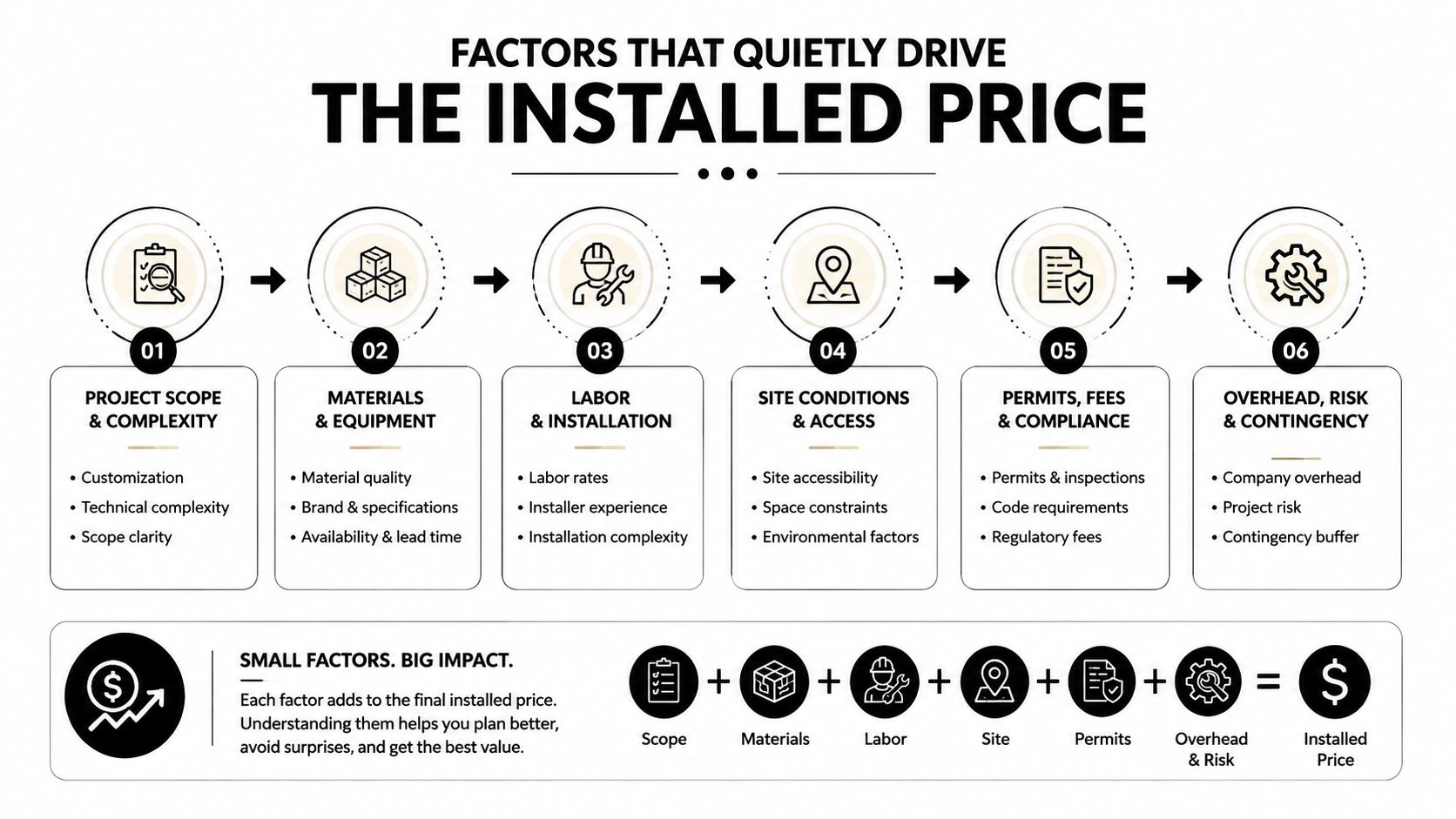
Estimator's rule: If a bid doesn't state excavation, base preparation, edging, depth, and compaction, it isn't a comparable bid.
Ask each bidder to separate material, delivery, preparation, installation, and restoration. That format exposes price driver before a low number turns into a change order.
Professional Installation Versus a DIY Crew
A property team can spread DG. That doesn't mean it can build a commercial surface that remains stable through traffic and weather. Professional installation includes mobilization, laser grading, controlled lifts, mechanical compaction, edge detailing, cleanup, and a defined responsibility for correcting failures.
An in-house crew may appear cheaper because payroll is already committed. The calculation changes once staff lose productive work hours, equipment must be rented, material arrives in the wrong place, and the surface needs rework. Bagged product also makes little financial sense for a substantial commercial area compared with coordinated bulk delivery.
| Cost / Risk Line Item | Professional Install | DIY Crew |
|---|---|---|
| Mobilization | Included in the contractor scope | Staff time and equipment transport |
| Grading | Laser or machine-assisted grading | Manual layout and available tools |
| Compaction | Plate compactor or roller selected for the surface | Rental equipment and operator learning curve |
| Edging | Installed to the specified line and grade | Purchased and installed by site staff |
| Warranty or correction | Defined contractor responsibility | Property absorbs callbacks and repairs |
| Schedule impact | Coordinated around site operations | Staff pulled from regular duties |
| Failure exposure | Reduced through preparation and inspection | Migration, rutting, weeds, and drainage errors remain with the owner |
The main skill threshold is compaction and grade control. A crew can make a surface look finished while leaving soft spots, a poor crown, or an edge that sits too low. Those defects become obvious after rain and concentrated traffic.
DIY is defensible for a small, low-traffic decorative zone where appearance matters more than precise rolling performance. It isn't a sound choice for an ADA-accessible path, a sloped route, a public entry, or a surface that serves carts and regular commercial traffic. The apparent savings disappear quickly when the owner pays twice for excavation and reconstruction.
Commercial Specifications ADA Drainage and Durability
Commercial DG specifications should begin with use and drainage, not color. A healthcare entry, office courtyard, retail walkway, and HOA trail may all look suitable for DG, but they impose different demands on firmness, maintenance, and access.
Stabilized DG can provide a firmer, more cohesive pedestrian surface than loose material, but it doesn't automatically solve every accessibility requirement. Designers and property managers still need to coordinate the path surface with applicable accessibility provisions, detectable warning treatments, transitions, cross slopes, and edge conditions.
Put performance requirements in writing
A commercial bid should identify:
- Compaction requirement: State the required testing or acceptance method instead of saying “compact thoroughly.”
- Finished depth: Separate the DG layer from the structural base thickness.
- Drainage intent: Show where runoff goes and prevent roof or pavement discharge from cutting across the surface.
- Edge restraint: Identify steel, concrete, stone, or another approved containment method.
- Geotextile use: Specify whether separation fabric is required over the existing subgrade.
- Transitions: Detail joints at concrete and asphalt so abrupt lips don't create trip hazards.
Slope deserves special attention. Loose DG can migrate when water travels across the surface, and even stabilized products need proper collection and discharge. Resin-coated products are especially dependent on a controlled grade, with practical specifications often limiting cross slope to 1 to 2 percent where rolling performance and surface behavior are priorities. That figure should be verified against the project's governing design requirements.

An office courtyard may tolerate natural or stabilized DG if staff can correct minor migration. A healthcare entry generally deserves a firmer, cleaner system with carefully detailed transitions. Retail paths need resistance to concentrated pedestrian flow and cart movement. HOA trails can use natural DG where slopes are modest and maintenance crews can refresh thin areas.
For projects where water infiltration is a central design goal, compare DG with permeable pavement installation options. Don't promise a load rating, freeze-thaw result, or maintenance interval unless the selected product and site design provide documented requirements.
Matching DG to the Site and Choosing Alternatives When Needed
The best DG decision matches traffic, slope, drainage, and maintenance capacity to the product. A low-use HOA meditation garden doesn't need the same surface as a healthcare entrance, and using the premium system everywhere wastes capital.
For a quiet garden or outdoor corridor, natural DG can provide the right appearance at the lowest upfront cost. A busy retail perimeter usually deserves stabilized DG because repeated walking, carts, and edge activity punish loose fines. A healthcare entry should favor a firm, low-migration system when the design, budget, and maintenance plan support it.
| Site Use | Recommended DG or Alternative | Key Justification |
|---|---|---|
| HOA meditation garden | Natural DG at a modest finished depth | Low traffic and easy visual maintenance |
| Retail perimeter | Stabilized DG | Better containment for recurring pedestrian and cart activity |
| Healthcare entry | Resin-bound DG or rigid paving | Cleaner rolling surface and reduced fines migration |
| Office courtyard | Stabilized DG | Balanced appearance, drainage, and upkeep |
| Fire access lane | Pavers or engineered rigid surface | DG isn't the honest choice for repeated heavy loading |
| Stormwater-focused site | Permeable concrete or porous asphalt | Better fit when infiltration credits or engineered drainage matter |
| High wheelchair use | Broom-finished concrete or an engineered accessible surface | Consistent rolling and transition control |
A practical rule is simple. For a light-pedestrian area under 2,000 square feet, stabilized DG is often hard to beat on cost and appearance. Over that area, on slopes above 5 percent, or anywhere a fire lane is required, start with a rigid or engineered alternative and reserve DG for edges, tree wells, and utility corridors. These thresholds are project decision rules, not universal code limits, so the civil and accessibility design still controls.
Property managers should also price the maintenance plan. Natural DG may win the bid comparison but lose the operating comparison if crews must repeatedly rake, top off, and clean migrated fines. Stabilized DG costs more upfront, yet it can better match a site with limited maintenance labor and high visibility.
The right estimate names the product, depth, base, edge, drainage treatment, compaction standard, and repair responsibility. That level of detail prevents an inexpensive surface from becoming an expensive rebuild.
Prestonwood Commercial Services can estimate DG hardscape scopes, coordinate site preparation and installation, and help match natural, stabilized, or resin-bound surfaces to commercial traffic and maintenance demands across DFW and San Antonio. Visit Prestonwood Commercial Landscape Services to request a project conversation and compare the installed cost against the lifecycle cost before approving a bid.