A property manager can usually tell when irrigation is failing long before the utility statement arrives. Turf stays wet after an event, a slope turns brown despite repeated watering, and separate controller boxes keep following old schedules while the water district tightens restrictions. The problem isn't always a lack of technology. More often, the site lacks one operating view that connects schedules, field conditions, alerts, maintenance records, and the people responsible for acting on them.
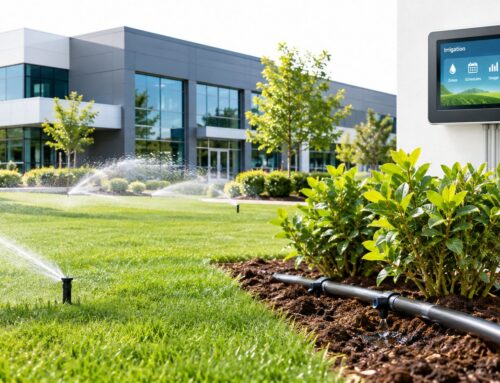
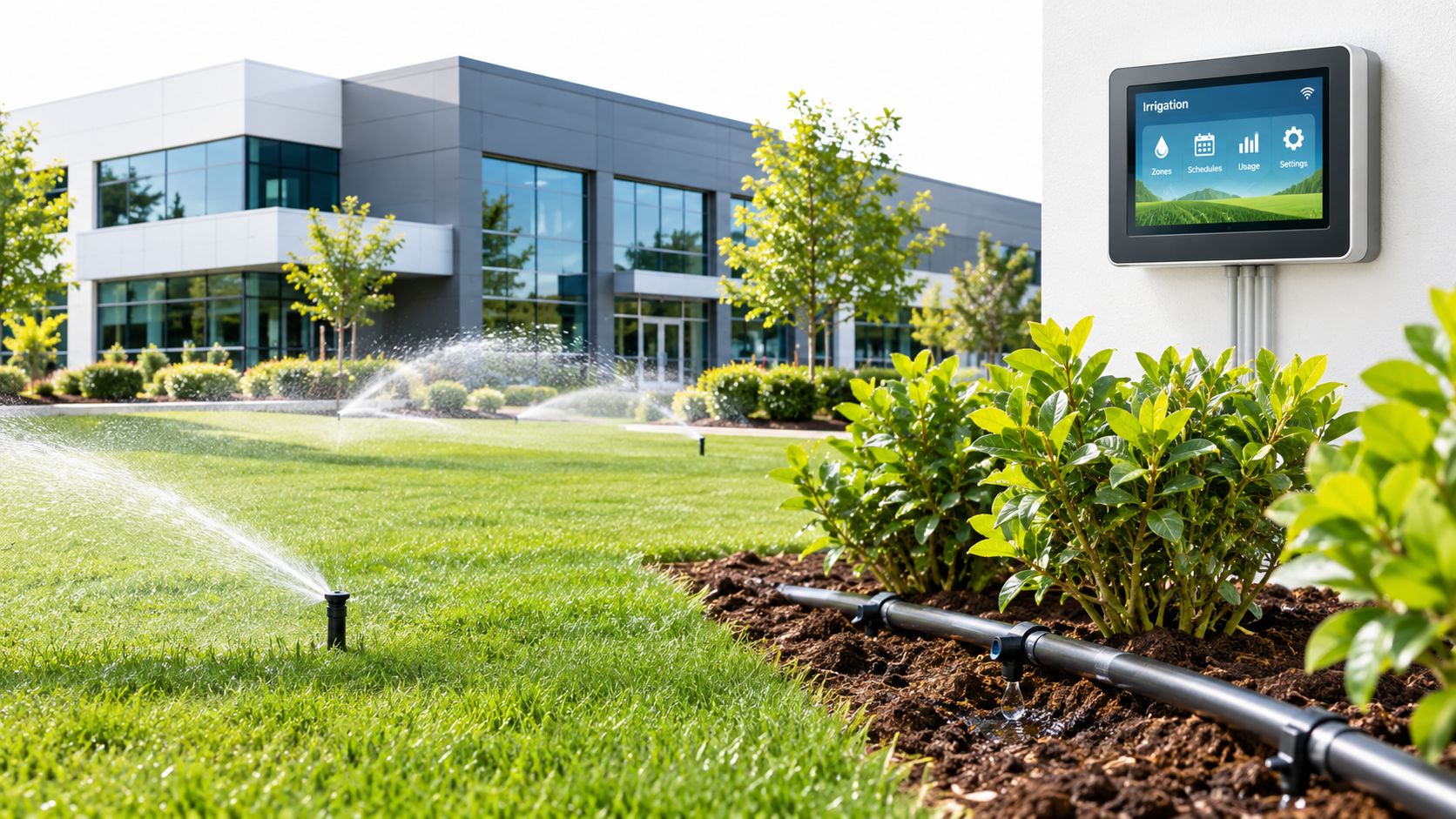
Central water control supplies that connective layer. Used properly, it isn't a gadget purchase or a cloud dashboard added to a controller. It's a disciplined way to manage commercial irrigation, combining centralized scheduling with flow information, environmental inputs, field verification, and documented decisions.
Table of Contents
- When a 40-Acre Property Starts Drinking Itself Dry
- What Central Water Control Actually Means
- The Components That Make a Central System Work
- Water Savings, Compliance, and Remote Management
- How Central Water Control Fits the Rest of the Landscape
- Implementation Considerations Before You Buy
- Choosing a Vendor or Service Partner
- Governance, Audits, and Questions Property Managers Ask
When a 40-Acre Property Starts Drinking Itself Dry
On Monday morning, a property manager arrives at a mixed-use campus covering 40 acres and finds three problems competing for attention. The mainline has failed on the east side, the athletic turf is still wet after a weekend concert, and the local water district has issued a drought-stage notice. The maintenance team is already spending time opening valve boxes and checking isolated timers, while ownership wants the site to preserve its appearance.
The clues point to separate failures. A broken lateral on the east slope is allowing water to escape. One controller is still using a Memorial Day schedule even though weather and terrain demands have changed. The municipal bill is rising, but no one can quickly connect that increase to a particular zone, valve, or runtime. Each standalone timer is doing exactly what it was programmed to do, yet none of the timers can coordinate the property as a whole.
That leaves the manager with unpleasant choices:
- Restrictions versus curb appeal: Reduce watering without understanding plant demand, or risk violating local rules and damaging visible yard areas.
- Event recovery versus waste: Restore turf quickly after heavy use, or continue watering areas that are already saturated.
- Labor versus diagnosis: Send technicians on repeated cabinet and valve-box checks, or spend that time correcting pressure, coverage, and equipment failures.
A central system changes the operating picture. It can provide one shutoff authority, consolidate schedules, receive flow and weather information, and flag unusual water movement while the problem is active. It won't repair a cracked lateral or replace a failed valve, but it can help the team identify where the investigation should start.
Operational rule: Central control is valuable when it shortens the path from an abnormal reading to a verified field response.
The Central Water Commission's history illustrates why coordinated water management became a formal state function. Established in 1945, the CWC was assigned responsibility for coordinating water-resource schemes, evaluating major projects, and collecting and publishing hydrological and water-utilization statistics through its national water-planning work. Commercial operations run on a smaller scale, but the principle is similar. Reliable decisions require shared information, defined authority, and consistent follow-through.
What Central Water Control Actually Means
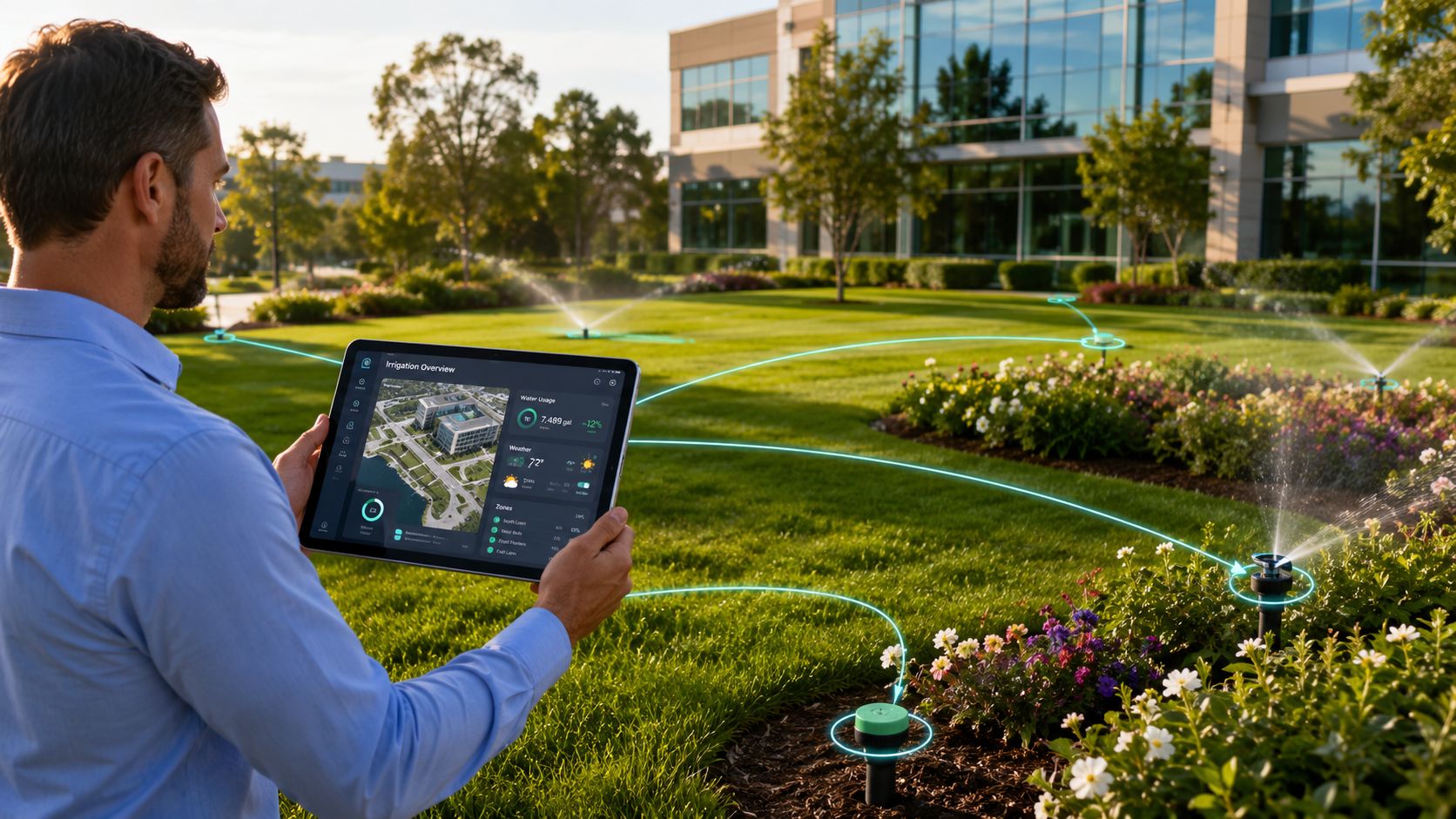
Central water control is a networked operating layer that coordinates irrigation controllers across one or more sites. Unlike a standalone timer, it doesn't rely only on a local clock and a fixed program. A central processing layer, server, or cloud platform gathers information from field equipment, applies scheduling rules, and gives operators one place to review and change irrigation activity.
A simple way to understand the system is to follow the information path.
The field controller
At the property, controllers operate valves and communicate with local irrigation hardware. They still perform the immediate work of opening and closing zones, but they no longer have to function as isolated boxes. A central architecture can manage multiple locations, areas, irrigation classes, and communication channels from one interface. One commercial specification reviewed by the U.S. Environmental Protection Agency describes support for up to 16 locations or areas, 7 special areas, 7 irrigation classes, and channel structures capable of addressing up to 24 satellite stations per channel in its controller background material.
The sensor tier
Sensors add operating context. Flow meters indicate whether water is moving as expected. Rain and freeze sensors can suspend irrigation during unsuitable conditions. Soil-moisture probes show what is happening in the root zone, while weather stations or external weather feeds support evapotranspiration, or ET, scheduling.
The sensor doesn't make the decision by itself. It supplies evidence that the platform uses to adjust, suspend, or alert.
The communication path
Cellular service, Ethernet, Wi-Fi, hardwired links, or radio communication move schedule updates and telemetry between the field and the central platform. The right path depends on cabinet location, signal quality, available site infrastructure, cybersecurity requirements, and the consequences of losing communication.
The dashboard
The dashboard is where operations become visible. A manager should be able to see active zones, scheduled runtimes, alarm conditions, weather inputs, flow behavior, user changes, and communication status without visiting every controller cabinet.
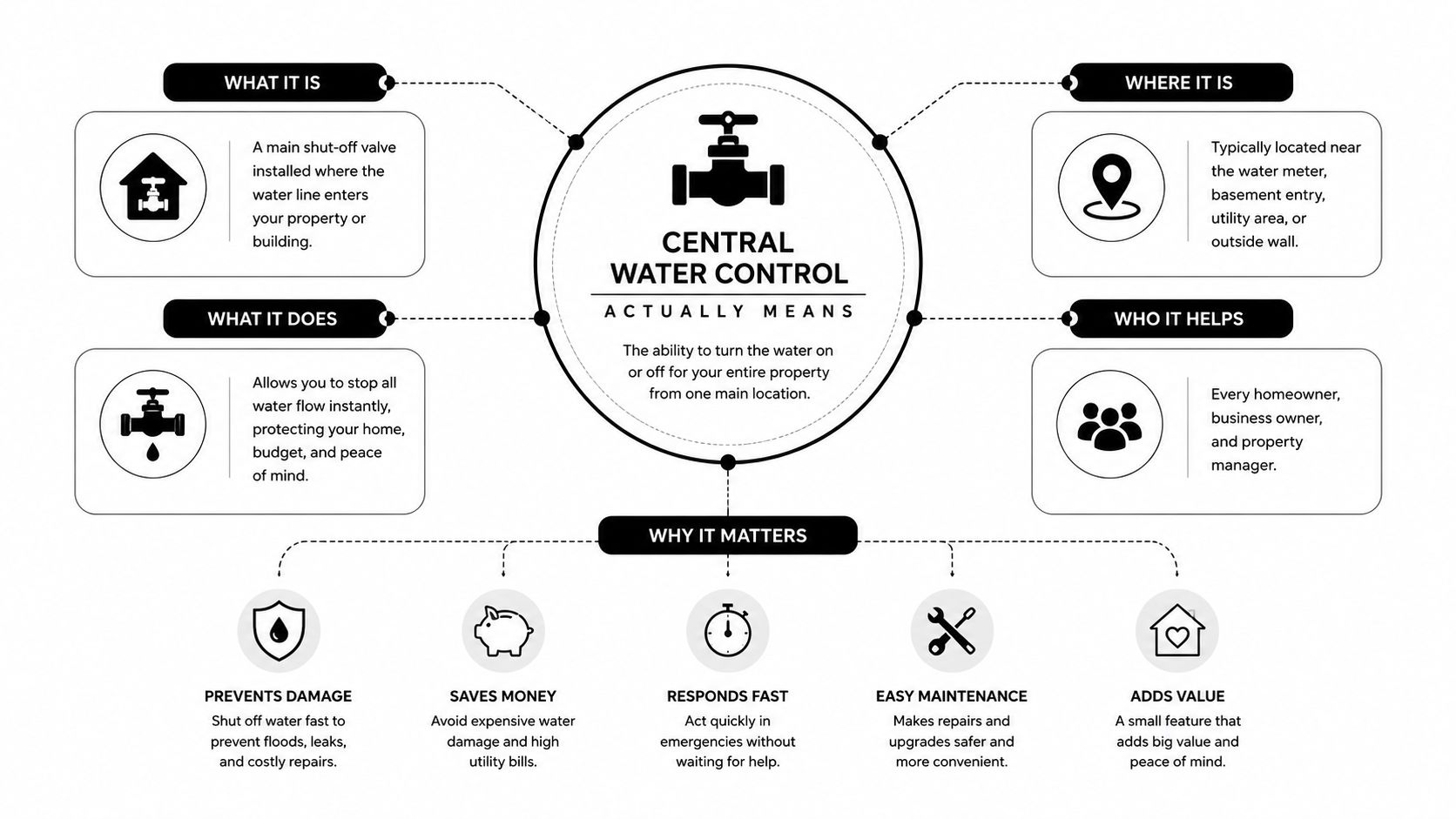
The distinction matters because centralized control isn't just remote access. It creates a common operating picture. That picture only helps if someone reviews it, verifies anomalies in the field, and records why schedules changed.
The Components That Make a Central System Work
A useful system hierarchy starts with decisions, not brands. The controller, sensors, communications, and software each affect what the team can see, how quickly it can respond, and how much field work remains necessary.
Start with the controller tier
A commercial two-wire controller can reduce the amount of field wiring required across a distributed property, while a decoder-based system can address individual field devices along a shared path. Existing valve types, wire condition, cabinet locations, expansion plans, and service capability should guide the choice. Replacing controllers without confirming compatibility can turn a modernization project into a partial rebuild.
The sensor mix deserves equal attention. Rain and freeze sensors answer a narrow question, whether irrigation should pause under particular conditions. Soil-moisture probes answer a root-zone question, while ET-fed weather data estimates atmospheric demand. The USDA defines irrigation water management as controlling the volume, frequency, and application rate of water, and recommends using ET, soil-moisture monitoring, or computerized scheduling that reflects local climate and soil and crop characteristics in its irrigation water management standard.
Put leak visibility ahead of premium features
On a commercial site, master valves, flow sensors, and a pressure transducer at the point of connection often create more practical visibility than a premium interface alone. A master valve can isolate the irrigation network. Flow sensors can identify abnormal movement during a programmed cycle. Pressure data can help separate a supply problem from a zone design or equipment problem.
Communication determines whether those signals reach the operator. Cellular is often practical for remote cabinets, Ethernet may work well where building connectivity is dependable, and hardwired links can offer stability where construction supports them. None is automatically superior. Test signal strength and failover behavior at the cabinet, not just in the management office.
Make the dashboard answer Monday's questions
A useful dashboard should show:
- What ran: Scheduled and completed zones, runtimes, and exceptions.
- What changed: User edits, automatic weather adjustments, and suspended cycles.
- What looks abnormal: High flow, no flow, communication loss, pressure changes, or sensor faults.
- Who acted: Alert recipients, acknowledgments, repairs, and schedule changes.
- What needs field attention: Zones converted into work orders instead of forgotten notifications.
For properties considering root-zone data, soil moisture monitoring for commercial landscapes should be evaluated as part of the central architecture, including sensor placement, calibration, and how readings will influence runtimes.
| Decision Layer | Component Options | Cost Impact | Visibility Gain |
|---|---|---|---|
| Controller | Commercial two-wire, decoder-based, conventional wired | Depends on retrofit complexity and field compatibility | Central scheduling and zone-level control |
| Sensor mix | Flow, pressure, rain, freeze, soil moisture, ET weather data | Increases with sensor count and installation effort | Shows demand, delivery, and abnormal conditions |
| Communication | Cellular, Ethernet, Wi-Fi, hardwired, radio | Includes infrastructure and recurring service considerations | Determines reporting continuity and remote access |
| Software | Basic scheduling, alerts, audit logs, grouped zones, CMMS integration | Varies by license and service model | Converts telemetry into decisions and records |
Water Savings, Compliance, and Remote Management
The strongest business case for central water control combines water management, compliance, and response time. A platform can adjust irrigation with local ET information, suspend cycles after rainfall, use soil-moisture thresholds, and alert staff when a zone operates outside expected conditions. It doesn't guarantee savings, because design defects and poor maintenance can overwhelm a better schedule.
The evidence shows why buyers should avoid universal savings promises. A meta-analysis summarized in commercial audit guidance reported average savings of about 38% for soil-moisture sensors, 21% for rain sensors, and 15% for weather-based controllers, with outcomes varying by site conditions and implementation quality in the commercial and industrial audit guidance. Those figures are useful benchmarks, not promises for every office park, HOA, or retail center.
Savings depend on the starting condition
A weather-based program can prevent fixed-calendar watering during cool or wet periods. Soil sensors can stop unnecessary cycles when the root zone already contains adequate moisture. But an incorrect sensor threshold may leave plants stressed, and an ET schedule can't correct a clogged nozzle, excessive pressure, poor head spacing, or a valve that never closes.
The practical value appears when the platform supports a broader audit. Commercial guidance recommends measuring water entering and leaving the facility, compiling records, and using the findings to build a conservation program. That approach helps a manager distinguish schedule waste from hydraulic waste.
Compliance becomes documentable
A central record can show programmed watering days, runtimes, weather suspensions, repairs, operator activity, and exceptions. That documentation supports conversations with ownership, maintenance contractors, and water authorities. It also helps teams respond quickly when restrictions change.
For managers dealing with drought rules, resources on protecting your property during restrictions can complement irrigation-specific planning by broadening the discussion to property protection and operational compliance.
Remote access also reduces unnecessary drive-bys. Staff can isolate a zone for an event, pause irrigation before a repair, or review an alarm from another site. The field visit still matters, but it starts with better information.
| Outcome | Typical result | Key condition |
|---|---|---|
| Water efficiency | Reduced unnecessary irrigation and better alignment with demand | Accurate ET or soil data and calibrated schedules |
| Leak response | Earlier identification of abnormal flow or no-flow conditions | Correctly installed sensors and defined alert thresholds |
| Compliance | Clearer records of runtimes, suspensions, and changes | User permissions and consistent activity logging |
| Remote management | Fewer routine trips to isolated cabinets | Reliable communication and an assigned responder |
| Labor allocation | More targeted site visits | Alerts must become work orders and verified repairs |
A practical overview of connected irrigation principles is available in this guide to smart water management. The central lesson is simple. The dashboard can identify a problem, but the operating team still has to confirm the cause.
How Central Water Control Fits the Rest of the Landscape
Central water control works best between departments. The irrigation audit establishes the baseline, the control platform applies and records decisions, and the maintenance team verifies whether the area responds as expected. Treating the controller as a replacement for any one of those functions creates blind spots.
The audit should document precipitation rates, pressure, coverage, runoff, valve performance, and zone-specific runtime recommendations. Those findings become useful only when the team loads them into the system and revisits them after repairs, renovations, or planting changes.
Seasonal work changes the water requirement
Seasonal color, new trees, renovated beds, and recently installed turf don't belong in the same permanent program as established planting areas. A centralized schedule can isolate temporary zones, provide more frequent establishment watering, and return those zones to standard programming after the agreed establishment period.
That transition needs ownership. A controller can't determine whether a shrub is drought-stressed, newly planted, or receiving water from a failed sensor. The horticulture and irrigation teams must document the reason for each adjustment.
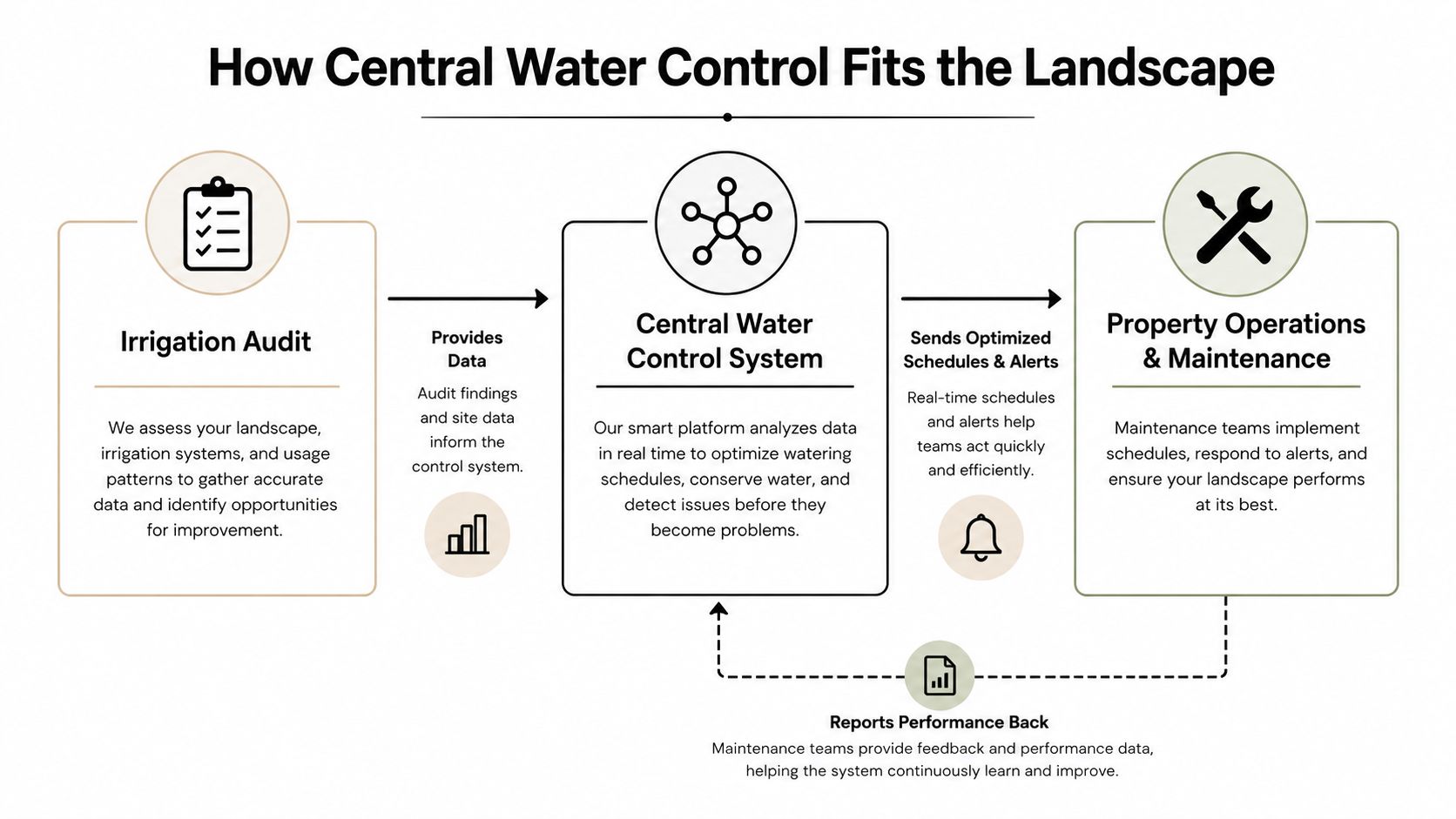
During routine service, technicians should compare field conditions with platform data. A dry area may indicate a blocked emitter, low pressure, a failed valve, or an incorrect runtime. A constantly wet area may signal poor coverage overlap, a leaking head, or a pressure problem. Each observation should become a work order with a cause, action, and completion note.
The system should tell the maintenance team where to look. It shouldn't tell them what they found without a field check.
Quarterly walk-throughs provide the governance link. Technicians can test representative zones, inspect heads and filters, verify pressure, confirm sensor status, and compare actual conditions with the dashboard. That routine keeps water data connected to plant health, vendor performance, and property standards.
Implementation Considerations Before You Buy
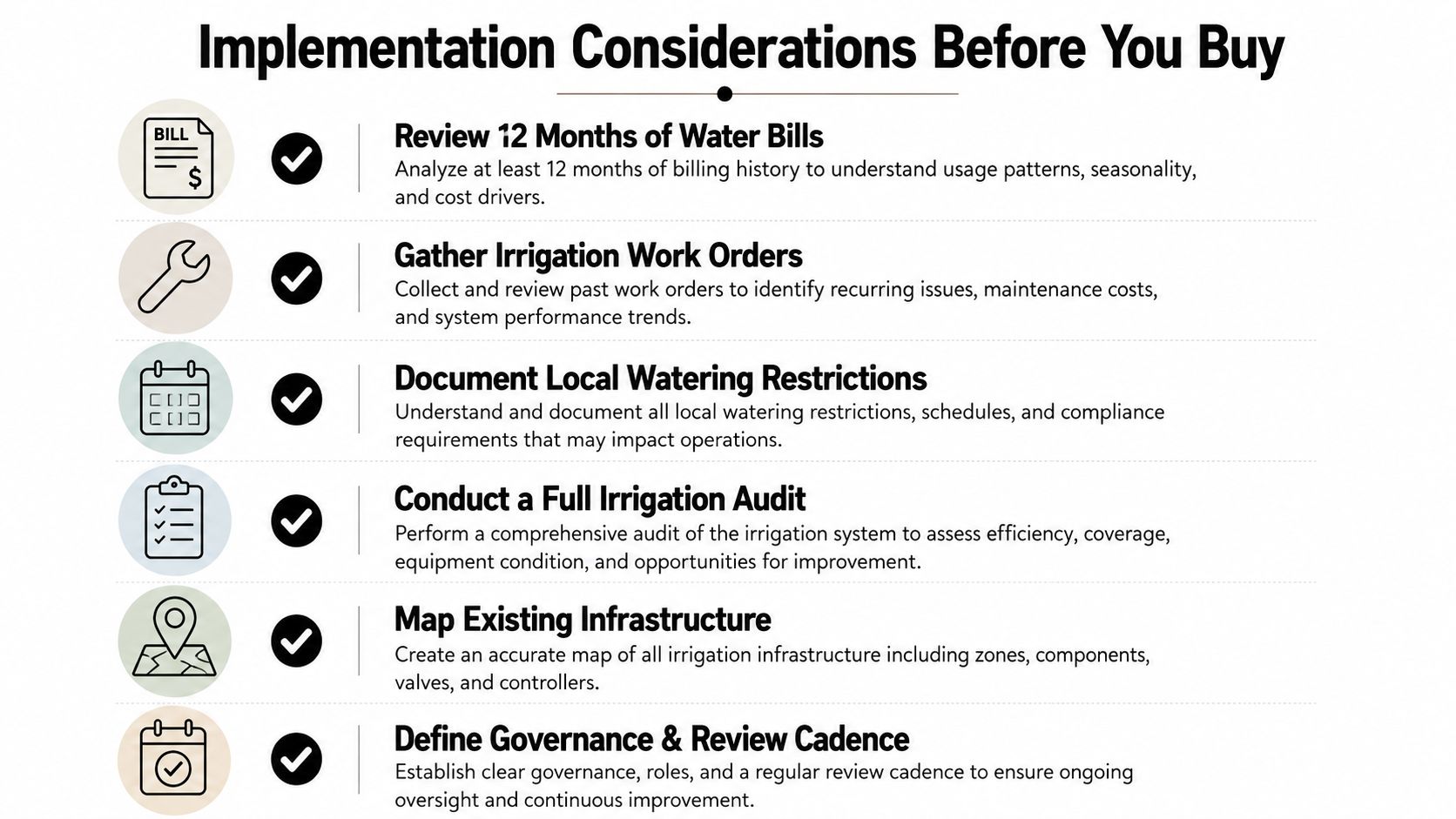
Start with evidence, not a vendor demonstration. Pull a full year of water bills, irrigation work orders, restriction notices, repair records, and schedule history. Then conduct an irrigation audit so the proposed system begins with known hydraulic and horticultural conditions rather than inherited assumptions.
Build the property map
Document every controller, valve, master valve, flow sensor, backflow device, point of connection, communication cabinet, and zone boundary. Record source pressure, head pressure, available flow, and ownership boundaries. Mark event areas, new plantings, slopes, high-visibility turf, and locations where a leak would create safety or access problems.
The CWC's project oversight role shows why centralized information matters at a much larger scale. Its work includes monitoring physical and financial progress on selected irrigation projects, demonstrating how coordinated oversight helps manage targets, cost exposure, and completion risk in the irrigation planning report. A commercial property needs the same habit in a smaller form, map the assets before asking software to manage them.
Confirm communications and authority
Cellular may suit a remote retail center, while Ethernet or Wi-Fi may work near a building with dependable coverage. Test every cabinet. Confirm that the chosen controller supports existing valves, decoders, and sensors, and define what happens if power or communication fails.
Set permissions before installation:
- Schedule authority: Identify who can create or change programs.
- Alert ownership: Assign a primary responder and a backup.
- Emergency shutdown: Document who can stop irrigation and how the decision is recorded.
- Review cadence: Set monthly bill reviews and quarterly field audits.
- Data ownership: Require export access, audit logs, and clear retention terms.
Roll out in controlled phases
A practical sequence is inventory and audit, controller and communication upgrades, sensor installation, schedule calibration, and ongoing reporting. Require training, as-built documentation, warranty terms, spare-parts expectations, and an exit path if the service relationship changes.
Before installation, define measures such as water use per irrigated area, leak detections, compliance exceptions, and labor hours. Review those measures quarterly rather than accepting a one-time commissioning report. For budgeting, an explanation of commercial irrigation system repair costs can help separate repair needs from technology investment.
Choosing a Vendor or Service Partner
Vendor selection should match the property's operating model, not just the controller's feature sheet. A technically capable platform becomes a liability if no qualified technician can respond when a master valve fails, a sensor drifts, or a cabinet loses communication.
Start with support. Ask who handles alarms, how field emergencies are escalated, where replacement parts come from, and whether the service team can work on the installed hydraulic equipment. A low-cost platform with slow support may create more exposure than a higher-cost system with dependable local response.
Open architecture matters for long-term control. Confirm whether the platform accepts third-party flow, rain, pressure, and soil sensors. Proprietary add-ons may simplify initial setup, but they can limit future choices and increase replacement complexity.
Telemetry also requires a balanced review. Cellular communication may be convenient but carries recurring service considerations. Wi-Fi and Ethernet can use existing infrastructure but depend on coverage, network administration, and cybersecurity practices. HOAs and mixed-use properties should define who controls credentials and resident or tenant-related information.
| Criterion | What to Evaluate | Why It Matters |
|---|---|---|
| Field support | Technician availability, escalation path, parts access | Determines how quickly alerts become repairs |
| Open architecture | Third-party sensors, export tools, valve compatibility | Preserves flexibility and reduces lock-in |
| Telemetry | Cellular, Wi-Fi, Ethernet, hardwired reliability | Affects continuity, fees, and security exposure |
| Service wrap | Monitoring, audits, pressure checks, calibration | Determines whether savings work survives installation |
| Management model | In-house staff or managed service | Aligns responsibility with available labor and skill |
| Documentation | As-builts, training, logs, warranty, exit terms | Protects continuity when personnel or vendors change |
Smaller retail centers may benefit from outsourced monitoring when they lack an irrigation lead. Larger portfolios may prefer in-house ownership once telemetry shows where labor is being spent. A hybrid arrangement can work when the property team owns decisions and a service partner handles audits, calibration, and field response.
The key question isn't which vendor has the longest feature list. It's whether the partner can connect data, irrigation knowledge, and accountable service.
Governance, Audits, and Questions Property Managers Ask
A central platform pays off only when someone governs it. A dashboard may show a clean schedule while a zone check finds a broken head, leaking valve, poor pressure, or sensor that is no longer reporting accurately.
Quarterly walk-throughs should combine visual inspection with runtime verification. Technicians can test representative zones, review flow behavior, inspect filters and heads, verify pressure at the connection, and confirm that alerts match field conditions. Monthly bill reviews provide another control by comparing utility use with controller reports and maintenance records.
Make calibration and change logs routine
Soil and ET sensors require calibration and review, particularly after renovation or sensor relocation. Each schedule change should include a brief reason in the change log, such as seasonal color establishment, a repaired lateral, a new restriction, or a corrected pressure issue.
Commercial audit guidance recommends comparing programmed run days and runtimes with local watering rules, verifying schedules by zone, and checking whether large-property variances apply, as described in the EPA's commercial, industrial, and institutional water-user guidance. These checks keep automation from concealing noncompliance.
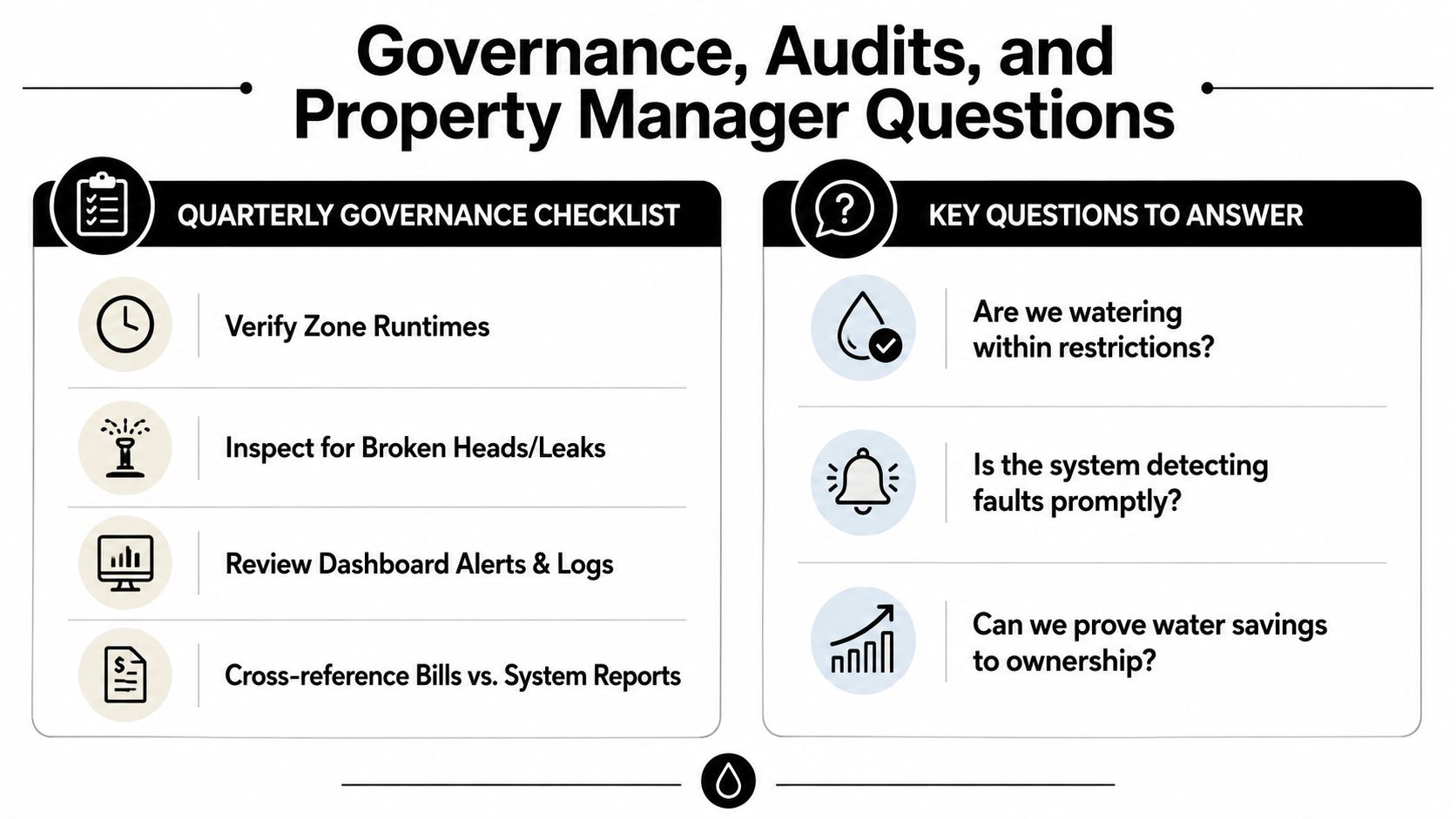
Before signing, managers should ask how payback is measured, what happens during power or internet loss, how the system responds to drought restrictions, who owns the data, and whether it connects with the existing CMMS. The contract should assign alert review, field verification, and responsibility for documenting operational improvements.
Management test: If nobody owns the alert, the alert is only another source of noise.
Central water control works when it becomes part of the property's maintenance rhythm. Prestonwood Commercial Services can support commercial properties with irrigation audits, repairs, central water management, sensor integration, and ongoing property maintenance. Visit Prestonwood Commercial Services to discuss a site audit, infrastructure review, and operating plan based on verified water use rather than a controller-only purchase.