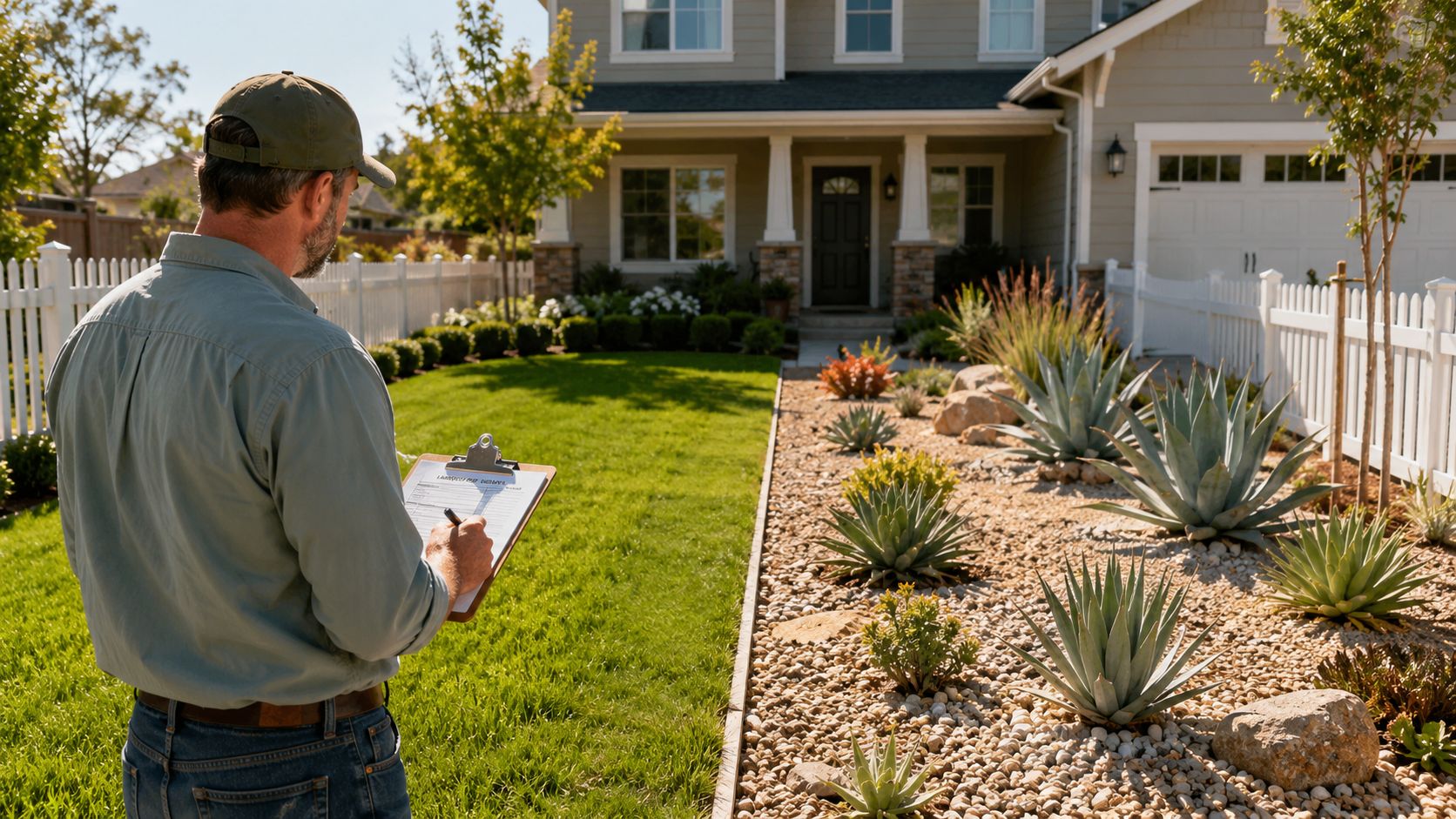
A board meeting usually reaches the same point. One homeowner wants to refresh a tired front yard, another has let turf slip past the community standard, and someone asks why the association is strict about private lots but slow to fix a declining common area bed at the entrance. That's where HOA landscaping rules stop being a simple checklist and start becoming an operations issue.
Good rules protect curb appeal, reduce avoidable conflict, and give contractors, managers, and homeowners the same playbook. Bad rules do the opposite. They create vague standards, inconsistent enforcement, approval bottlenecks, and resentment on both sides. The strongest associations treat landscaping standards like a field manual. Clear enough to enforce, flexible enough to adapt, and practical enough that people can follow them.
Table of Contents
- The Foundation Your HOA's Governing Documents
- What HOA Landscaping Rules Actually Cover
- The Approval Workflow for Landscape Changes
- Enforcement Violations and How to Respond
- Modernizing Rules for Water Conservation
- Proactive Management and Reducing HOA Liability
- Frequently Asked Questions About HOA Landscaping
- Can a homeowner replace mulch or seasonal flowers without approval
- What if my landscape contractor violates the rules
- Are artificial turf installations usually allowed
- How should I handle a property-line landscape dispute with a neighbor
- What's the best way for a board to track recurring landscape issues
The Foundation Your HOA's Governing Documents
Every HOA outdoor area dispute should start in the same place. The documents.
Landscaping standards are created through the association's governing documents, including CC&Rs, bylaws, and architectural guidelines, and those documents also need to spell out a correction process with written notice and a reasonable deadline before fines or legal action can follow, according to National HOA Authority's overview of HOA landscaping standards. If the board can't point to written authority, enforcement gets weak fast.
Think of these documents as the community's rulebook for its physical appearance. The CC&Rs usually establish the board's authority. Bylaws govern how the association operates. Architectural standards handle the field-level details, such as what homeowners may plant, remove, edge, fence, or install where the work is visible from the street or neighboring lots.
Where boards and homeowners should look first
The cleanest review process starts with a document hierarchy:
- CC&Rs first. Confirm the association has authority over exterior maintenance, approval rights, and enforcement.
- Architectural guidelines second. Look for specifics on plant materials, turf expectations, tree removal, mulch, edging, hardscape, and irrigation.
- Rules and resolutions third. Check whether the board adopted later clarifications, seasonal policies, or forms.
A lot of frustration comes from people reading only one layer. Homeowners often read the design guideline but miss the enforcement language in the declaration. Boards sometimes lean on past practice when the written standard is vague. That's where inconsistency starts.
Practical rule: If a landscape standard matters enough to enforce, it needs to be written in plain language and tied to a visible condition someone can verify from the field.
For board members who need a clearer handle on how these documents fit together, this breakdown of governing documents is essential for HOA board members. It's a useful reference because it helps separate legal authority from day-to-day operating rules.
What strong language looks like
The best standards are observable. “Maintain lawn in neat condition” is weak. It invites argument. “Keep turf within the approved height range, control weeds, maintain edging, and replace dead plant material within the community standard” is much more usable because a manager or committee member can inspect it without guessing intent.
Boards should also avoid burying key exterior design rules across multiple PDFs, old meeting packets, and outdated application forms. Consolidation matters. If the ARC, management company, contractor, and resident all use different versions of the rules, nobody is really using a standard.
A final point that gets missed. Good documents don't exist to be restrictive for the sake of it. They exist to make decisions predictable. When a homeowner knows what's allowed before buying plants or hiring a contractor, and when the board follows the same written process every time, violations drop and relationships improve.
What HOA Landscaping Rules Actually Cover
Some communities say they have landscaping rules, but what they really have is a short sentence about “keeping lots attractive.” That isn't a standard. It's a vague preference. Effective HOA landscaping rules define maintenance, materials, boundaries, and approvals in terms people can apply on the ground.
The most common rule categories
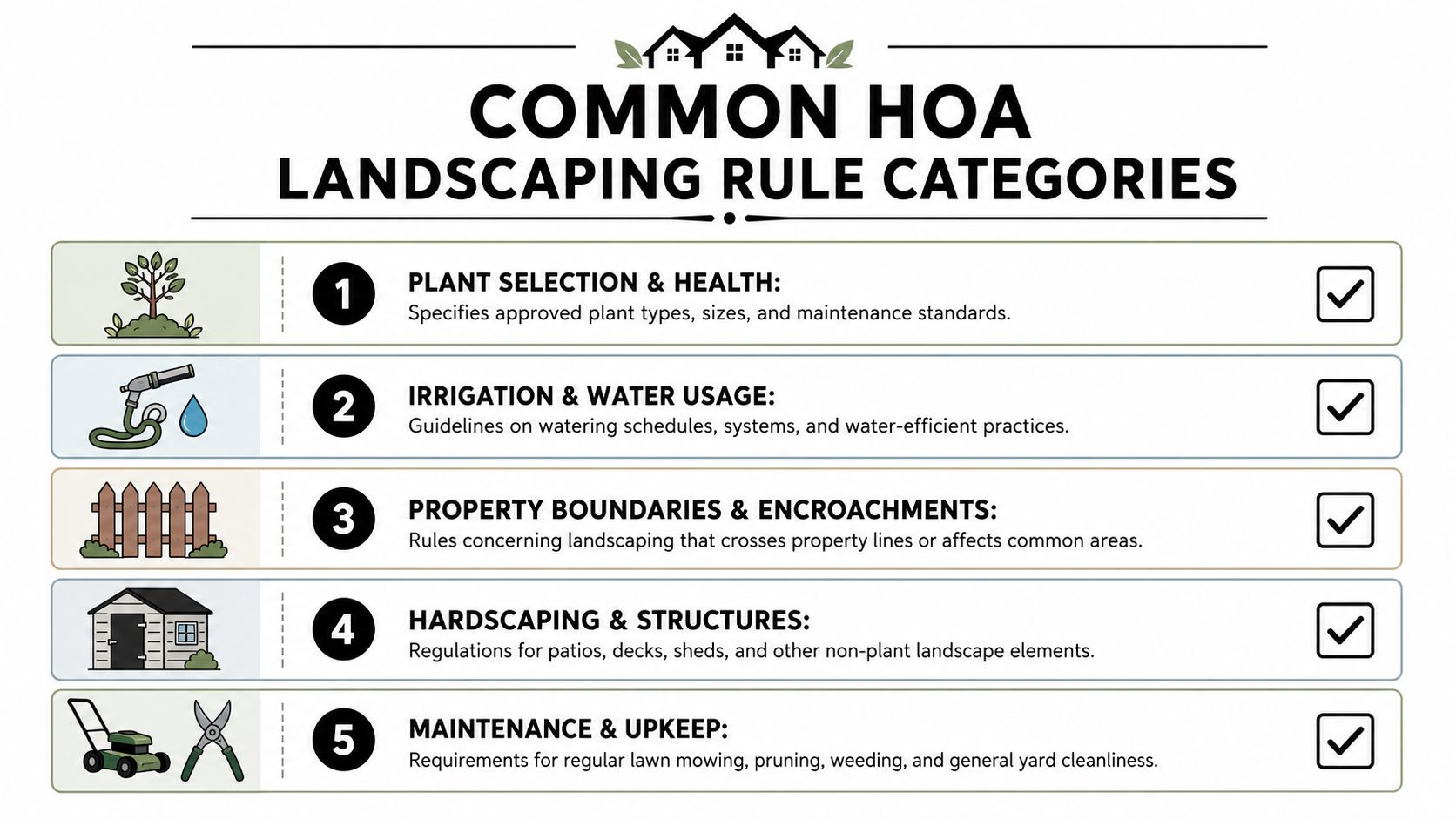
Technical standards often get very specific. Turf is commonly required to stay between 2.5 and 4 inches, rules may call for bi-weekly edging, and many communities specify annual or bi-annual mulching. Irrigation language often includes monthly inspections and time-of-day watering restrictions designed to reduce evaporation by up to 40%, as described in Varello Landscaping's guide to HOA landscaping guidelines and regulations.
In practice, most associations regulate five categories:
- Turf and mowing: Height range, mowing frequency, weed tolerance, bare spot repair, and whether dormant turf is acceptable.
- Trees and shrubs: Approved species, minimum planting size, pruning responsibility, visibility triangles near sidewalks or intersections, and rules for removal.
- Mulch and bed appearance: Approved mulch color, refresh timing, bed edge style, and standards for dead material removal.
- Irrigation: Allowed watering windows, leak repair obligations, rain sensor expectations, and whether spray heads may overshoot pavement.
- Hardscape and accents: Stone borders, decorative gravel, pavers, retaining walls, outdoor lighting, raised planters, and similar items.
Some boards also regulate seasonal color, vegetable gardens, pollinator plantings, or decorative objects. That's fine if the language is clear and applied consistently. It becomes a problem when a board tries to regulate visible outcomes without defining the materials and maintenance practices that produce those outcomes.
What works and what creates conflict
A useful rule identifies the object, the condition, and the responsible party. For example:
| Rule area | Strong standard | Weak standard |
|---|---|---|
| Lawn care | Turf must be maintained within the community height standard and free of unmanaged weeds | Lawn must look nice |
| Mulch | Use approved mulch type and refresh when coverage no longer protects the bed surface uniformly | Keep beds neat |
| Tree pruning | Maintain clearance and prune according to species needs without damaging structure | Trim trees regularly |
What doesn't work is mixing taste with enforcement. If one reviewer likes naturalized beds and another prefers clipped shrubs, homeowners won't know how to comply. The rule should control the result, not the personality of the reviewer.
A board can enforce what it can describe, photograph, and compare against a written standard. It can't enforce personal preference well for long.
Boards also need to separate homeowner-maintained areas from association-maintained common areas. If those lines blur, arguments over responsibility follow quickly. Clear maps, lot exhibits, and maintenance responsibility charts save a lot of trouble later.
The Approval Workflow for Landscape Changes
The approval process is where good rules either prove themselves or break down. Homeowners don't get frustrated because they have to submit plans. They get frustrated when they can't tell what requires approval, what documents are needed, or how long review will take.
A recurring issue is the blurry line between minor and major work. Goodwin & Company's discussion of HOA landscaping guidelines for homeowners notes that many associations require ARC approval for hardscape or plant list changes, yet don't define a threshold for “minor” updates. That's why a homeowner replacing mulch may face the same uncertainty as someone removing a tree.
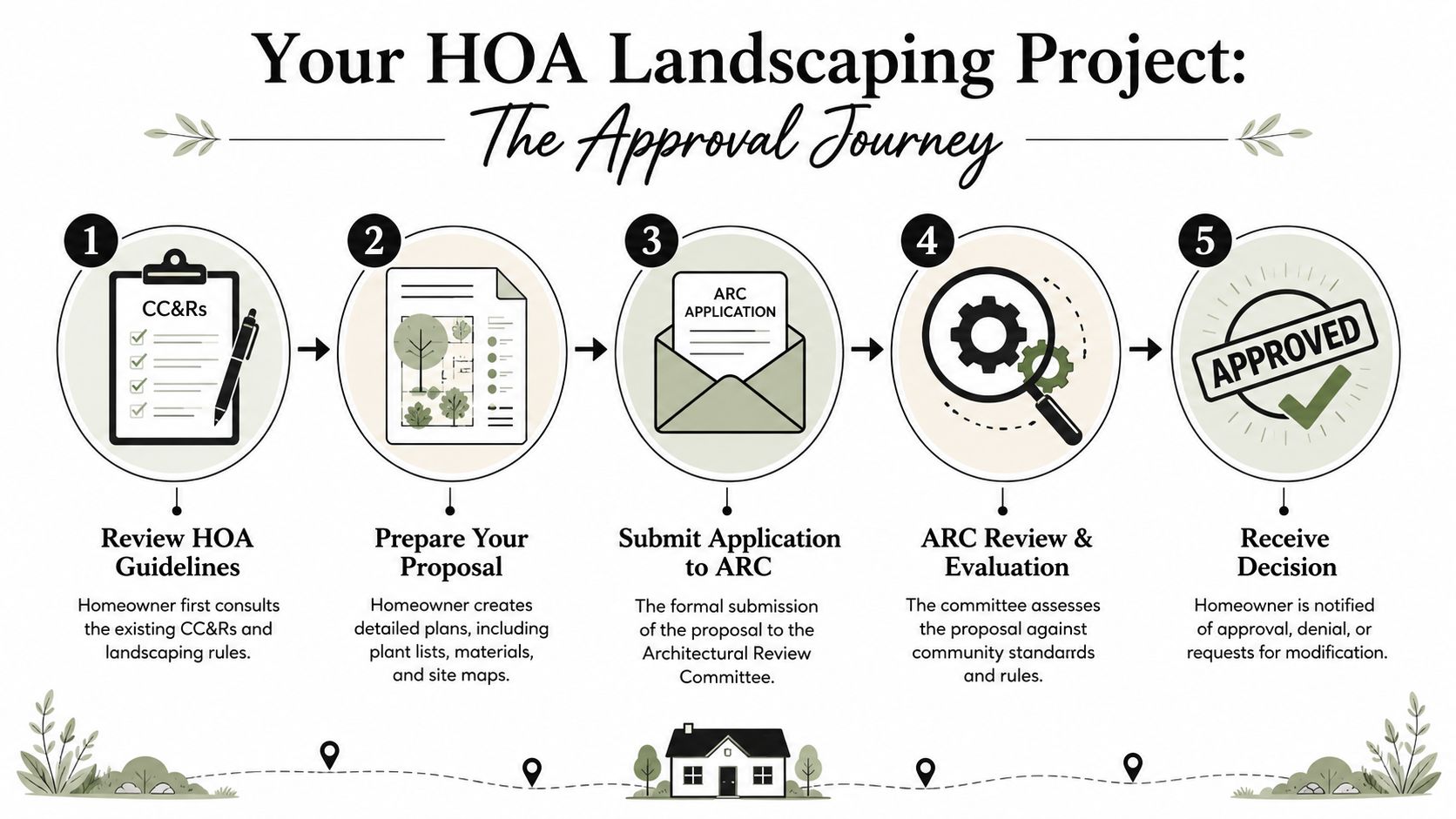
A workable approval sequence
A board that wants fewer disputes should use a short, repeatable sequence.
- Review the applicable standard. The homeowner checks the approved plant palette, hardscape rules, and lot-specific limitations.
- Prepare a complete submission. That usually means a sketch, plant list, material samples or descriptions, and a site map showing location.
- Submit before purchase or installation. This matters. Once a contractor has ordered material, the homeowner is emotionally and financially committed.
- ARC review against written criteria. The committee should evaluate consistency, drainage, visibility, irrigation impact, and maintenance burden.
- Respond in writing. Approval, denial, or request for revision should cite the standard involved.
For homeowners planning boundary features along with yard improvements, Tips for Florida HOA fence applications is a good companion reference because fence requests often fail for the same reason outdoor project requests do. Incomplete plans, missing dimensions, and unclear material descriptions.
Boards that manage larger portfolios or need vendor coordination often benefit from a more formal service workflow. This guide to commercial landscaping services for HOAs and property managers shows the operational side of that process well.
Drawing the line between minor and major changes
The cleanest fix is to classify projects by impact, not by cost.
Minor work usually keeps the approved design intent intact. Examples include refreshing mulch with the same approved material, replacing dead shrubs with the same approved species, or planting seasonal flowers in an existing bed if the guideline allows it.
Major work changes layout, palette, grade, drainage, visibility, or hardscape. Removing turf for stone, installing edging that changes bed shape, taking out a tree, swapping one plant family for another, or adding pavers should all trigger formal review.
Boards should publish that distinction in a one-page matrix. If they don't, every small project becomes a debate, and ARC time gets wasted on routine upkeep.
Enforcement Violations and How to Respond
Landscaping is the most visible part of compliance, so it becomes the most frequently cited. Landscaping and lawn care violations account for approximately 28% of all HOA citations nationwide, making them the most common enforcement category according to Fix My HOA Violation's HOA statistics summary. That volume isn't surprising. Grass grows fast, shrubs outpace sightlines, and unapproved changes are visible from the street.
How a typical violation unfolds
Most enforcement cases follow a familiar pattern.
A manager, inspector, or board member observes a condition that doesn't meet the standard. That might be overgrown turf, dead plant material, a missing tree, unapproved stone, or neglected edging. The association documents the condition, checks the governing language, and sends written notice describing the issue and the cure deadline.
If the homeowner corrects it, the file closes. If the homeowner needs more time and communicates early, many boards will grant a short extension if the request is reasonable and the property isn't creating a safety or drainage problem.
If nothing happens, the matter escalates. That's where fines, hearing rights, self-help remedies if allowed by the documents, or legal follow-up may enter the picture. Boards should never skip steps because they're irritated. Procedure matters just as much as the violation itself.
Field note: Associations win more compliance with clear photos, a direct citation to the rule, and a realistic cure date than they do with aggressive language.
How homeowners should answer a notice
The worst response is silence. The second worst is arguing about fairness without addressing the written standard.
A better response looks like this:
- Confirm the exact issue: Ask which rule applies if the notice isn't specific.
- Document the condition: Take your own photos the day you receive the letter.
- Correct what's obvious: If the lawn is too long or beds are full of weeds, handle the simple items immediately.
- Request clarification in writing: If the dispute involves plant type, ownership boundary, or prior approval history, create a paper trail.
- Propose a timeline: If work requires a contractor or replacement material, give the board a realistic completion date.
Homeowners also need to know when a violation notice is really an approval problem in disguise. If the issue is an unapproved change, the path forward may be removal, retroactive application, or a revised plan that brings the installation into compliance.
Modernizing Rules for Water Conservation
A community can't keep writing outdoor appearance standards as if every region has unlimited water and every homeowner wants the same turf-heavy front yard. That approach is getting harder to justify operationally and, in some places, legally.
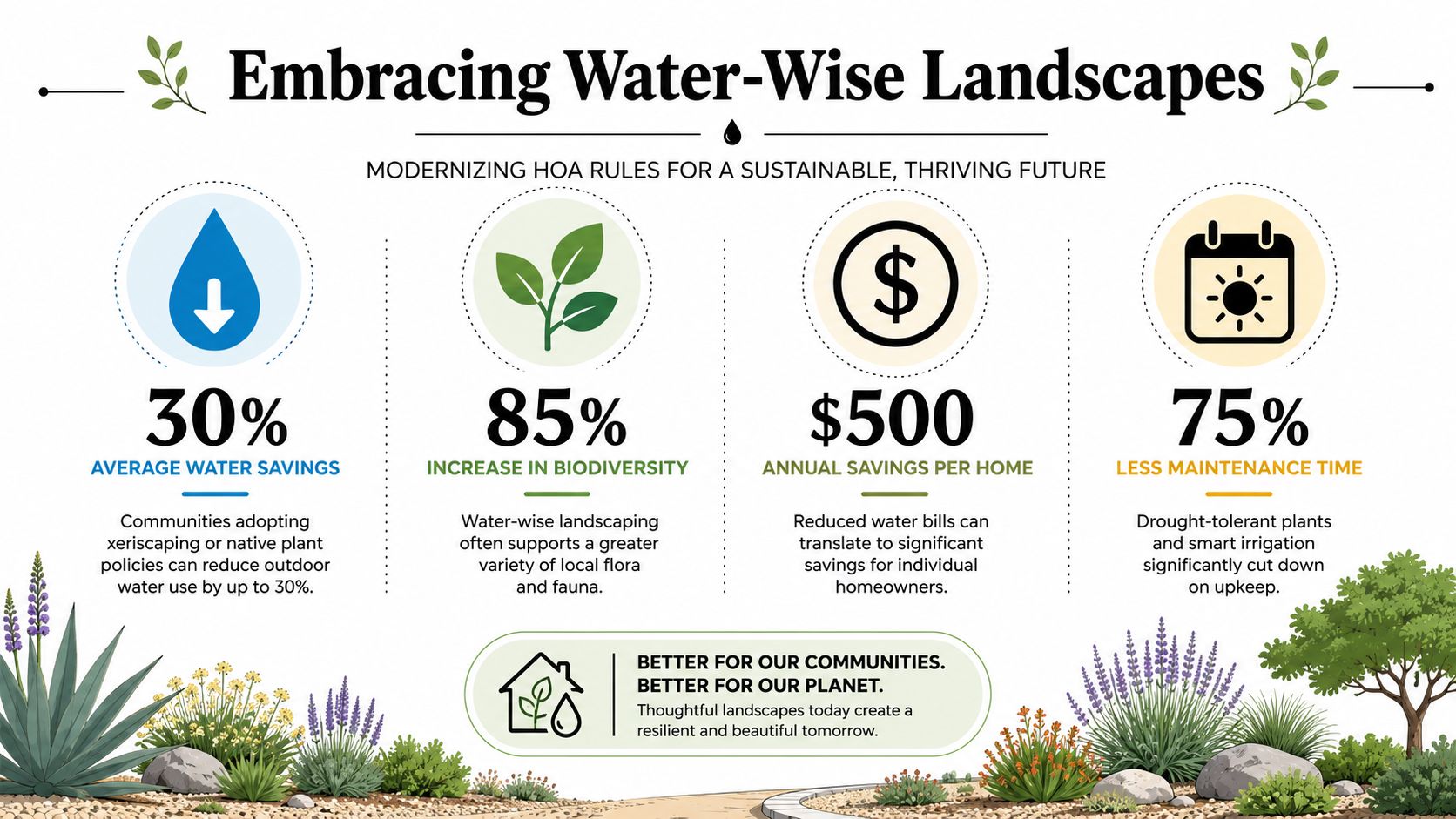
Research tied to HOA outdoor space policy has found that guidelines promoting drought-tolerant plantings, water-wise design, and xeriscape adoption can reduce peak-season water use by up to 24%, and Colorado's SB23-178, effective August 7, 2023, prohibits HOAs from banning nonvegetative turf, xeriscape, or drought-tolerant outdoor designs for certain homes while setting guardrails around hardscape and drought-tolerant planting allowances, as described in this AGU publication on water conservation and HOA landscaping policy.
Why older standards are becoming harder to defend
Boards used to assume uniform green turf was the safest path. It looked orderly, matched long-standing expectations, and was easy to judge from the street. The problem is that rigid turf-first rules can conflict with local water goals, new state law, and homeowner demand for lower-water alternatives that still look finished.
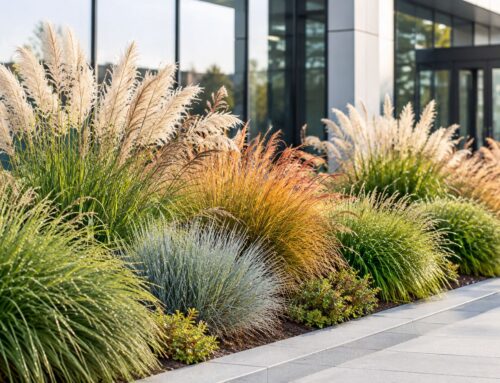
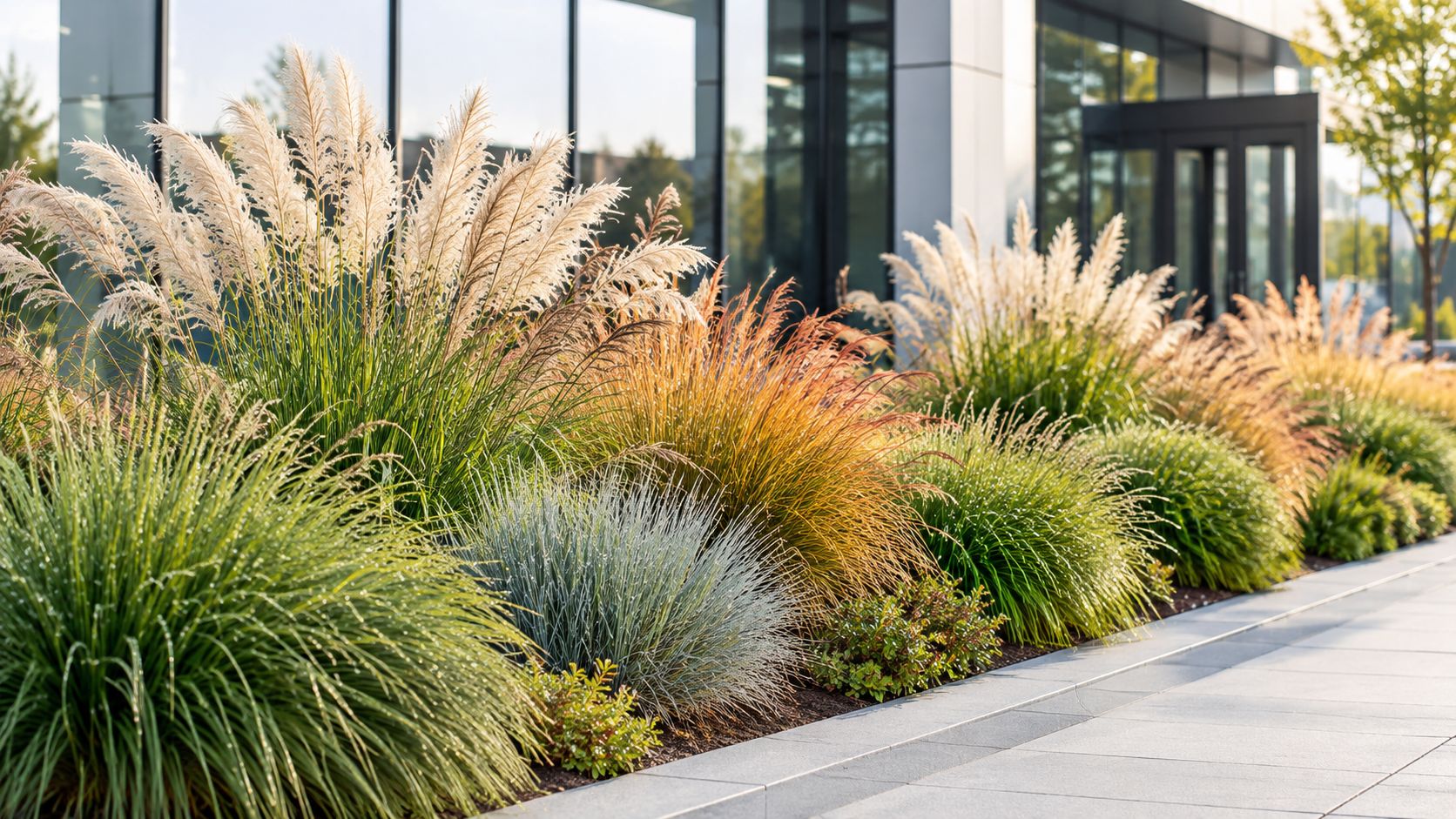
That doesn't mean every front yard should become gravel. It means the board should stop regulating beauty through one outdoor design style only. Water-wise communities still need structure. They just use a different plant palette and stronger design guidance.
A useful irrigation and conservation reference for boards reviewing their current approach is this overview of water conservation and irrigation practices. It's especially helpful when the association wants standards that support appearance and water discipline at the same time.
How to write water-wise rules that still look organized
The strongest updates usually include:
- Approved drought-tolerant palettes: Publish a plant list by sun exposure, size, and mature spread.
- Defined design ratios: Require visible plant coverage, layering, and intentional spacing so xeriscape doesn't turn into sparse groundcover plus rock.
- Irrigation expectations: Specify smart controller use, maintenance checks, and repair responsibility.
- Pre-approved templates: Offer a few front-yard concepts residents can choose from without redesigning the whole review process.
- Maintenance language: Clarify that drought-tolerant doesn't mean unmanaged. Weeding, pruning, and replacement standards still apply.
Water-wise rules work best when the board approves complete design types, not just isolated plant names.
That approach reduces fear on both sides. Homeowners know what will pass. Boards know the result will still look cohesive from the street.
Proactive Management and Reducing HOA Liability
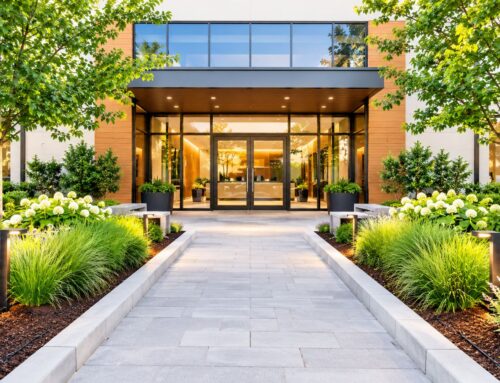
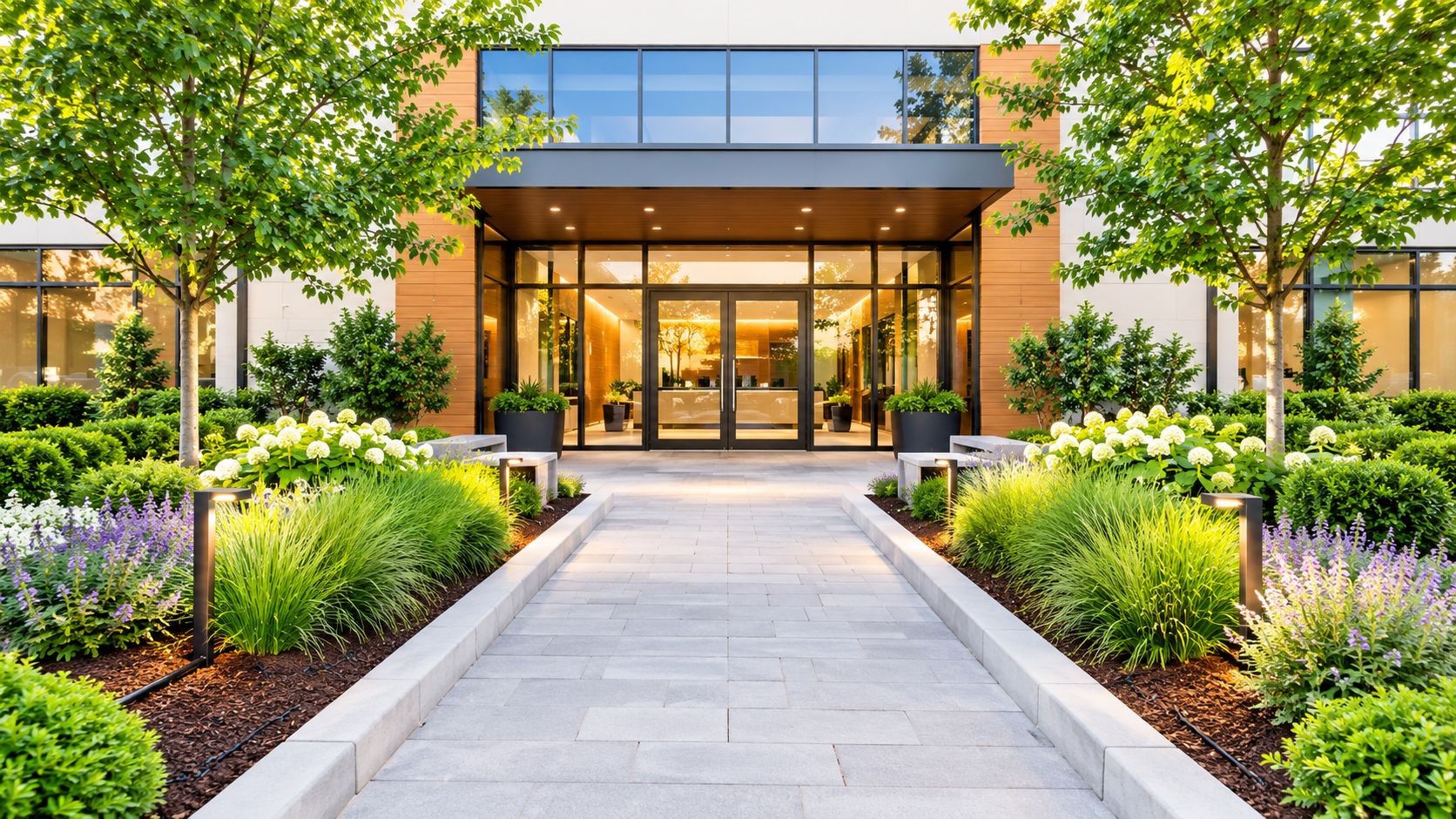
Most articles stop at homeowner obligations. That's only half the picture. If the association expects owners to maintain visible outdoor areas to a standard, the board needs to hold itself to the same discipline in common areas, medians, entries, trails, and shared irrigation zones.
Boards have duties too
A neglected common area creates more than aesthetic problems. It undercuts enforcement credibility. It can also expose the association to claims from homeowners who believe board neglect is harming the value or use of their property.
That issue is often overlooked, but this HOA dispute discussion on common area maintenance failures highlights the practical reality. Homeowners who believe the HOA is neglecting its duties may need to review governing documents, document conditions with photos over time, and obtain expert estimates to support a claim of negligence and reduced property value.
From a board perspective, the lesson is simple. Don't wait for complaints to become evidence.
A practical governance routine
Boards that manage landscaping well usually follow a recurring routine rather than reacting site by site.
| Governance task | Why it matters |
|---|---|
| Seasonal site audits | Catch irrigation failures, dead material, erosion, and visibility issues before residents complain |
| Contractor scope review | Confirms the vendor is maintaining to the written standard, not personal preference |
| Rule updates | Removes vague language and aligns the policy with current conditions and law |
| Resident communication | Reduces surprise enforcement and improves application quality |
Associations that outsource maintenance should also inspect the contractor's work against the HOA's actual standards. A vendor may mow, edge, prune, and mulch on schedule, yet still miss the community's specific appearance targets if the scope is vague. That's why boards need inspection sheets, photo documentation, and clear acceptance criteria.
For boards reviewing service expectations and risk reduction through maintenance quality, this guide on HOA landscape maintenance and community value protection is a practical reference.
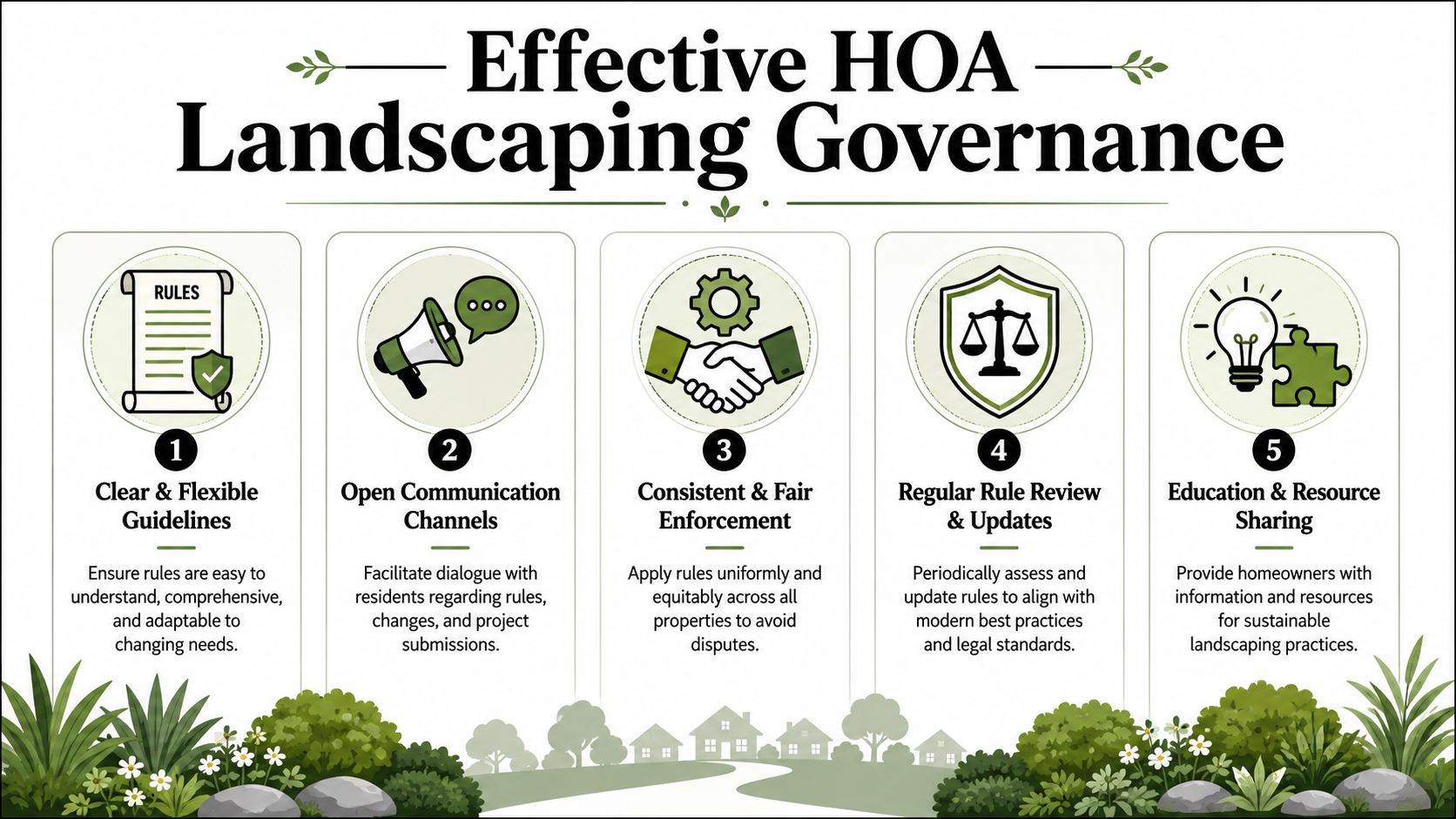
The larger point is governance, not just gardening. A proactive board writes clearer rules, enforces them evenly, maintains common areas visibly, and documents decisions well. That combination reduces disputes more effectively than harsher penalties ever will.
Frequently Asked Questions About HOA Landscaping
Can a homeowner replace mulch or seasonal flowers without approval
It depends on the written standard. In many communities, that should count as routine maintenance if the homeowner is using the same approved material and staying within an existing bed. Trouble starts when the rules don't define the boundary between maintenance and design change. Boards should publish a short list of work that's automatically allowed and a second list that always needs ARC review.
What if my landscape contractor violates the rules
The homeowner is usually still responsible for the work done on the lot. If a contractor installs unapproved stone, removes a plant that required approval, or damages common property, notify the board quickly, document what happened, and work with the contractor on correction. Don't assume “my contractor did it” will end the issue.
Are artificial turf installations usually allowed
Some communities allow them, some restrict them, and some require case-by-case review. The answer should come from the governing documents and current architectural standards, especially if synthetic turf affects drainage, appearance, or adjacency to common areas.
How should I handle a property-line landscape dispute with a neighbor
Start with the survey, lot exhibit, and maintenance responsibility language. If the issue involves a shared tree, root impact, or encroachment, document the condition with photos and bring the governing language into the conversation early. Most of these disputes get worse when both sides argue about memory instead of written boundaries.
What's the best way for a board to track recurring landscape issues
Use a consistent inspection and reporting system. The key is repeatable documentation, not just occasional photos in email threads. For boards or managers refining that process, Runera's facilities management reporting guide is a useful operational reference for organizing issue tracking, follow-up, and accountability across recurring property tasks.
If your association needs a grounds care partner that understands maintenance standards, irrigation efficiency, renovation planning, and the day-to-day realities of HOA operations, Prestonwood Commercial Landscape Services can help you build a cleaner scope, stronger curb appeal, and a more predictable maintenance program.