Texas property managers usually feel ornamental grass problems before they ever name them. The water bill creeps up, the turf still looks tired by midsummer, and the entry beds start asking for more labor than they're worth. That's where ornamental grasses Texas designs earn their place, not as filler, but as a reliable structure plant that can hold up in heat, drought, and large commercial footprints.
For many sites, the advantage is simple. Texas guidance describes ornamental grasses as clumping bunchgrasses, and that growth habit fits commercial properties because it gives you definition without the constant edging and containment turf-style spreaders need. In medians, entryways, and big beds, clumping grasses can do more with less, especially when the goal is long-term form rather than weekly perfection. Texas guidance also points to a low-input rhythm, with ornamental grasses generally needing only one nitrogen application when growth resumes in spring, which makes them a sensible choice for properties built around efficiency. native plant guidance for North Texas landscapes
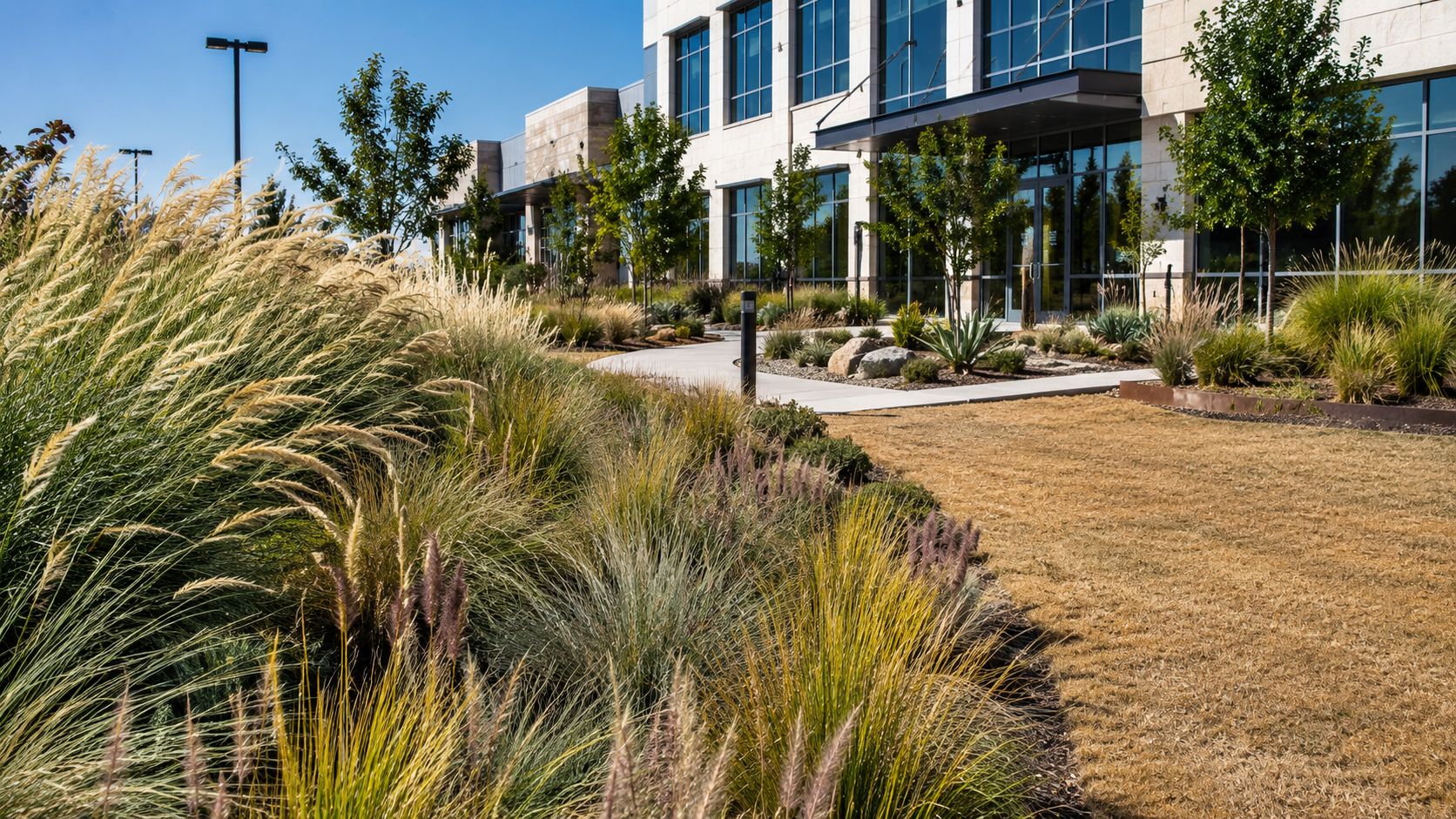
Table of Contents
- Why Ornamental Grasses Are a Smart Choice for Texas Properties
- Top Ornamental Grasses for Dallas-Fort Worth and San Antonio
- Proper Installation for a Thriving Landscape
- A Seasonal Maintenance and Pruning Calendar
- Smart Water Management and Winter Care
- Calculating the ROI of Ornamental Grasses
- The Foundation of a Worry-Free Texas Landscape
Why Ornamental Grasses Are a Smart Choice for Texas Properties
A property manager in North Texas once described the same pattern many sites face. The parking lot islands looked thin by August, the annual color was expensive to chase, and the irrigation crew kept getting called back to adjust beds that were never going to behave like turf. Ornamental grasses solve that kind of problem because they're built for structure, not constant rescue. They keep their form through heat, and when the rest of the site looks stressed, they still read as intentional.
Texas horticulture guidance is useful here because it explains why these plants work so well in commercial settings. They're bunchgrasses, which means they grow in clumps instead of running aggressively through the bed. That matters on a site where you want clear sightlines, neat bed edges, and lower containment work over time. A clumping grass gives you a durable accent in an entry bed or median without turning into a maintenance issue.
The practical payoff is also operational. Clumping grasses are easier to place around hardscape, signs, and curb lines because they don't fight the planting layout. They also align with the low-input approach Texas gardens need, especially where water, heat, and visibility all work against traditional turf.
Practical rule: if a planting has to look good from the road, survive summer, and stay manageable for years, a clumping ornamental grass is often a better fit than another patch of thirsty lawn.
Top Ornamental Grasses for Dallas-Fort Worth and San Antonio
The best palette depends on the job the plant has to do. Some grasses need to screen utilities, some need to fill broad beds with texture, and some need to sharpen a border or soften a walkway. Texas commercial properties work best when the plant list is organized by function first and by beauty second, because that's how the site gets maintained.
Tall Grasses for Screening and Structure
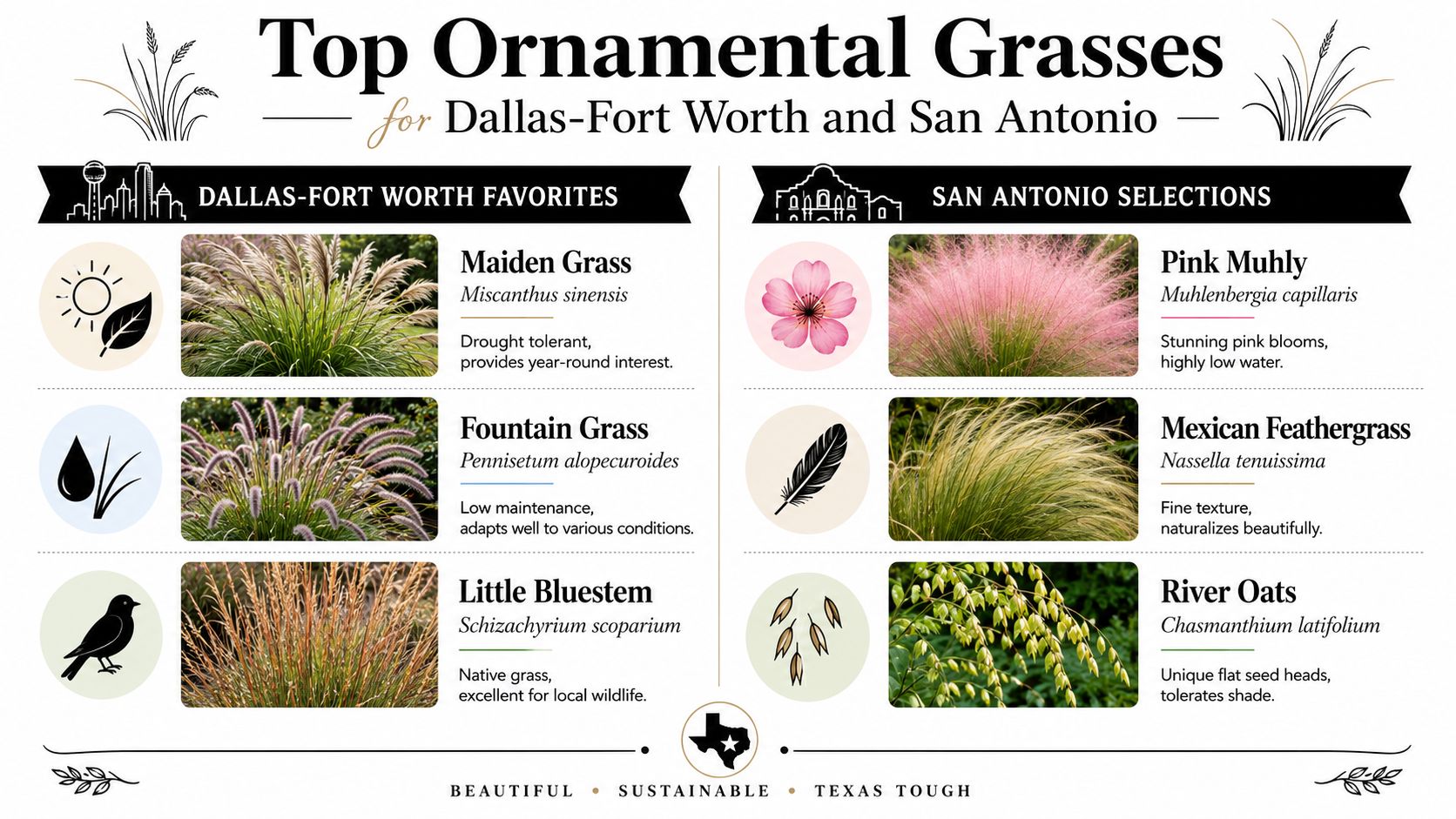
For taller massing, maiden grass and other upright forms are often used where a property needs visual weight near buildings or along service areas. Miscanthus sinensis brings height and a clean vertical line, which makes it useful for screening utility equipment or breaking up a long foundation run. In the right location, it gives you a strong winter silhouette without asking for a formal hedge routine.
A second option in this category is fountain grass, especially where softer movement matters. Pennisetum alopecuroides tends to read as relaxed but still intentional, so it works well near retail entries and courtyard edges where the design needs flow instead of stiffness. It's a good fit for spaces that need to feel maintained, not rigid.
Mid-Size Grasses for Mass Plantings
For broader beds, Little Bluestem is one of the most useful choices in Texas because it handles the local climate as a native grass and brings seasonal texture without looking overworked. Schizachyrium scoparium is a strong candidate for sites that want a native look with better staying power than high-color annuals.
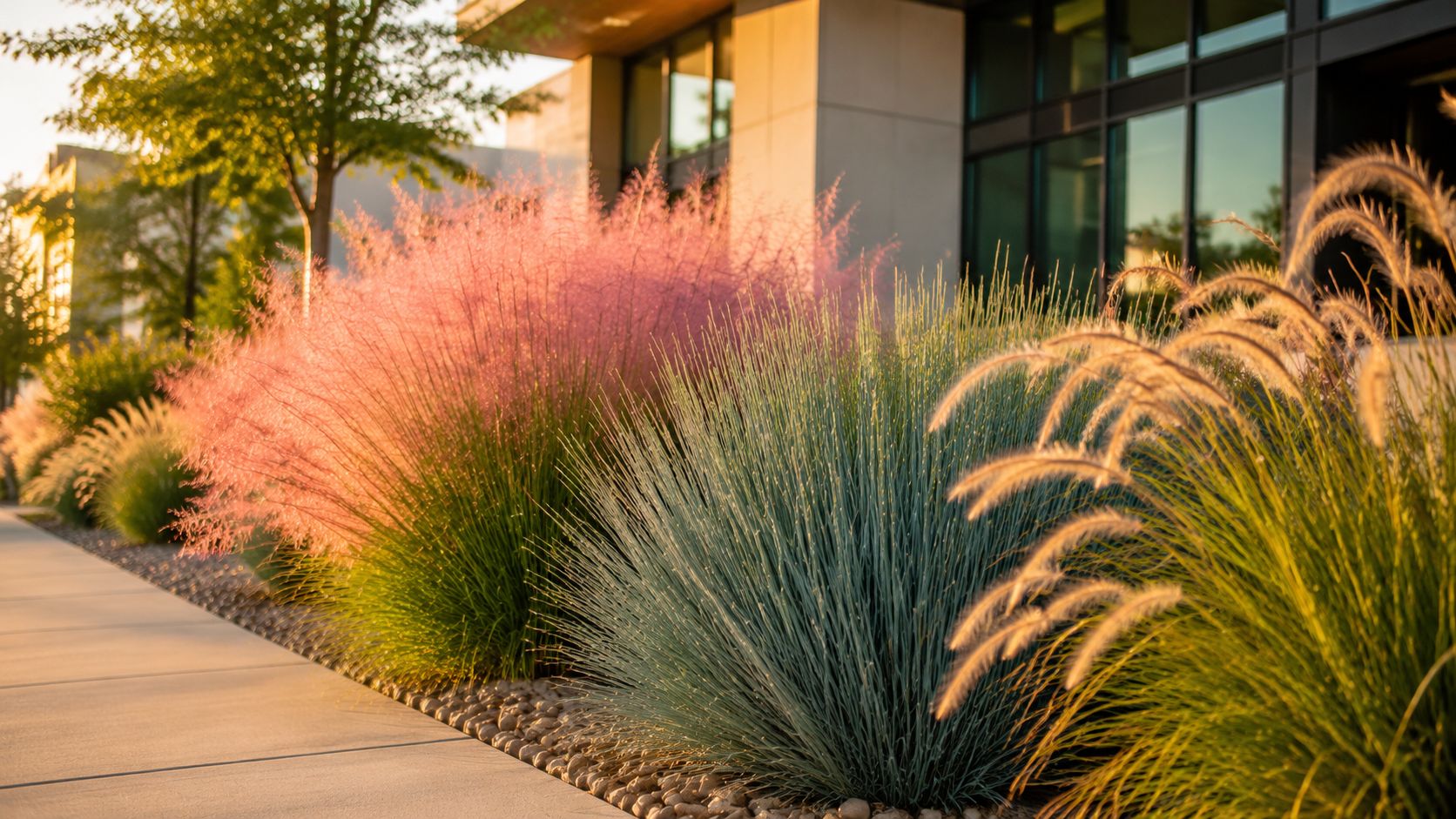
Pink Muhly is another favorite where the site wants a softer, more ornamental finish. Muhlenbergia capillaris gives a memorable fall display and can turn a large planting bed into a focal point without requiring a complicated plant palette. It's especially effective where there's enough sun for the plant to show its color cleanly.
Low-Growing Grasses for Borders and Accents
For edges and transitional spaces, Mexican feathergrass is often used for its fine texture. Nassella tenuissima works best where the goal is movement and delicacy rather than mass. It can make a narrow strip feel finished, especially along walkways or near decorative stone.
River Oats is a good choice where there's a little more shade or where the design wants a broader, looser texture. Chasmanthium latifolium stands out because of its flat seed heads, which give it a different look than the more familiar fountain-style grasses.
Proper Installation for a Thriving Landscape
Good grass installations start before the first plant goes in the ground. The site has to drain well, the soil has to be prepared thoroughly, and the planting depth has to respect the root ball instead of burying it. Texas extension guidance consistently stresses full sun, well-drained soil, and low fertility, and that combination should shape the install plan, not just the plant selection. Texas A&M ornamental grass guidance
Start With Drainage, Then Match the Plant
Heavy clay is the enemy of a clean ornamental grass install because it holds water too long and weakens the root zone. In practice, that means the crew needs to break up compacted soil, check low spots, and avoid turning the bed into a water trap. If the site stays wet after irrigation or rain, the plant will not behave like a low-maintenance feature no matter how tough the species looks on paper.
If the bed drains slowly on install day, it will still drain slowly next summer.
Planting Season and First-Season Water
Texas Extension material says central Texans can plant ornamental grasses in fall or spring, and that timing matters because it gives roots a better start before peak heat arrives. The first season still requires supplemental watering, even though established clumps become much more drought tolerant later. That early watering should be consistent enough to build roots, not so generous that the planting sits wet.
A clean establishment routine usually works better than aggressive fertilization. Keep the bed lightly managed, monitor the root zone, and let the plant invest in structure before asking it to fill space. When the install is done right, the payoff is a plant that settles in, hardens off, and asks for far less intervention later.
A Seasonal Maintenance and Pruning Calendar
The maintenance schedule for ornamental grasses is refreshingly simple once crews stop treating them like turf. Texas guidance points to a multi-year rhythm built around dormancy, regrowth, and occasional division, not a weekly mowing cycle. That's one reason these plants fit commercial sites so well. seasonal landscape cleanup guidance
Late Winter to Early Spring
The annual cutback should happen after the first freeze or before new spring growth appears. Texas A&M-linked guidance uses that timing because the standing foliage protects the crown through cold weather, then clears out just as the plant wants to push fresh growth. In practical terms, crews should cut the clump down cleanly and avoid shaving live tissue once green shoots are emerging.
Spring and Summer
Spring is the right moment for light housekeeping, not heavy intervention. If a property needs fertilizer, the Texas guidance in the brief points to only a minimal nitrogen approach as growth resumes, which fits ornamental grasses better than a broad feeding program. Once established, they usually need water only during droughts, so summer maintenance is mostly about inspection, not constant correction.
Fall and Winter
Fall is when ornamental grasses earn their visual value. Seed heads, movement, and dried texture can carry a property through the shoulder season with far less support than annual color beds. In winter, leaving the foliage standing also helps protect the crown and keeps the planting from looking stripped too early.
Warm-season grasses should be divided every 3 to 5 years to stay vigorous, while cooler-condition types need division more often, about every 2 years according to the Texas Extension note in the brief. That interval is useful for scheduling crews because it turns maintenance into a planned refresh, not a crisis response.
Crew rule: if the grass is still full, upright, and blooming on schedule, leave it alone. Divide it when the clump tells you it's crowded, not when the calendar gets nervous.
Smart Water Management and Winter Care
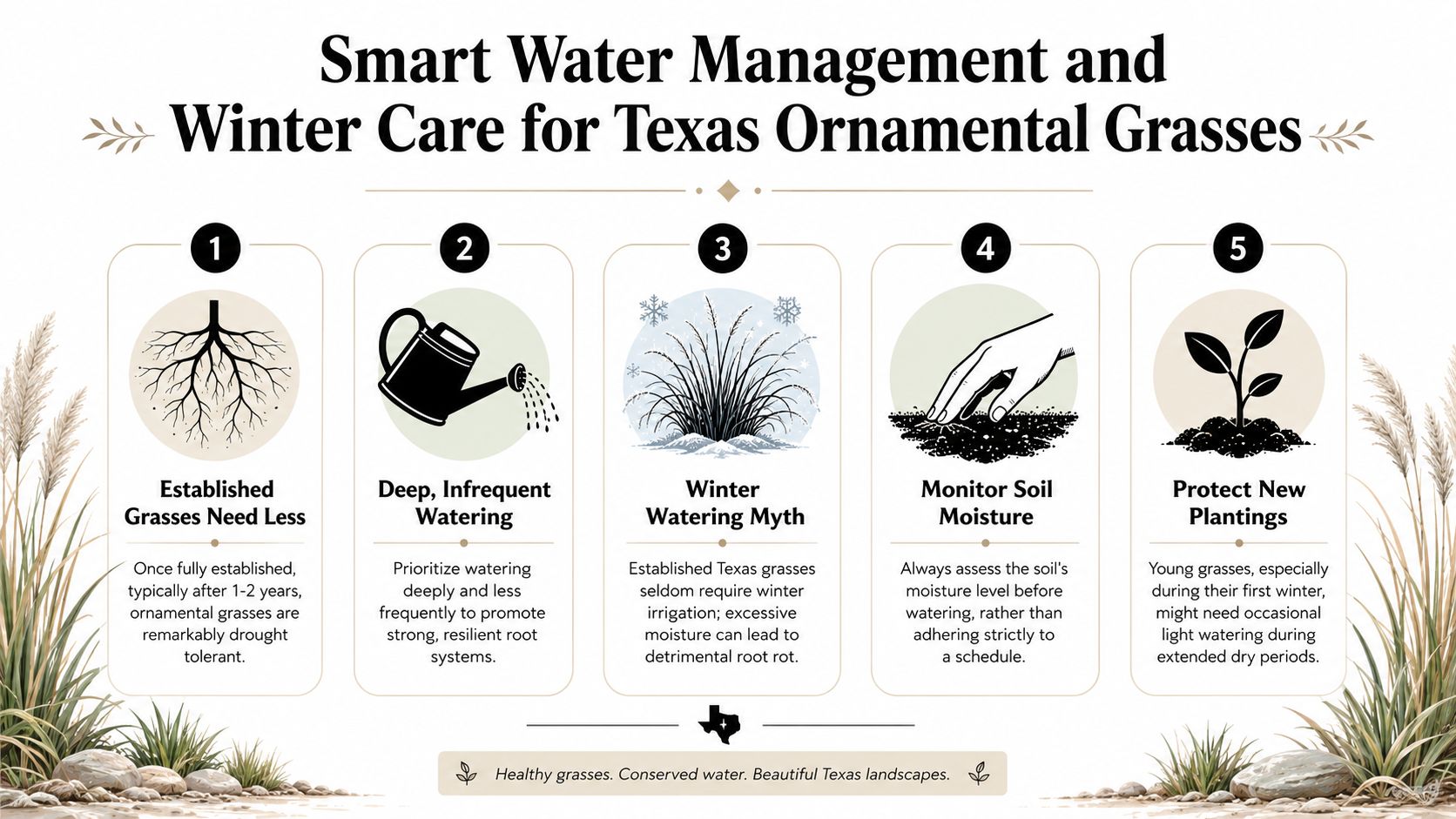
Winter is where many commercial irrigation programs go wrong. Controllers stay on summer timing, crews assume dormant grass needs no attention, and heavy clay sites hold enough moisture to create root problems. Ornamental grasses do not want a saturated root zone in January, especially on Texas properties with automated systems, reclaimed water, or mixed exposure across the site. For a deeper look at system design, see our guide to water conservation and irrigation. For expert advice for water-wise projects, the same winter rule applies, water less often, and only after the site has been checked.
Don't Confuse Dormancy With Neglect
Established ornamental grasses are drought tolerant, but that does not mean every plant in every bed should be handled the same way. The brief's Texas sources consistently point to well-drained soil and warn that overwatering can lead to weak growth and root rot, especially in clay. In winter, the controller should be adjusted to reflect slower plant use, cooler temperatures, and the fact that the soil may already be holding enough moisture.
Read the Site Before You Turn the Valve On
The better approach is field-based. Check the soil under the canopy, inspect medians that collect runoff, and watch which zones dry first after a cold stretch. A bed on the south side of a building will not need the same water timing as a shaded median or a low spot near a curb cut. That kind of detail keeps ornamental grasses healthy and keeps irrigation crews from watering by routine.
Protect New Plantings Differently
Newly installed grasses are the exception. The brief notes that the first season still needs supplemental watering, and young plants may need occasional light watering during extended dry periods in winter. That is not a reason to keep mature beds on a spring schedule. It is a reason to separate new installs from established zones in the irrigation plan.
Calculating the ROI of Ornamental Grasses
The financial case for ornamental grasses is strongest when you look at total site management, not just plant purchase price. Turf and annual flower beds can look good fast, but they also pull resources every season through mowing, replanting, irrigation, and cleanup. Ornamental grasses reduce that cycle because they're perennial, structurally useful, and far less dependent on weekly labor.
Where the Savings Usually Show Up
The first place is water. Texas environments face heat and drought pressure, and grasses that stay attractive with less irrigation are easier to defend in budget meetings. The second place is labor, because clumping grasses don't need mowing or constant edging the way turf does. The third is replacement cost, since a healthy perennial planting lasts longer than a seasonal display that has to be rebuilt every year.
A useful way to think about it is by job, not by species. If a bed has to deliver screening, texture, and curb appeal with less service demand, ornamental grasses usually beat a high-input alternative on operating efficiency. The plant itself is only part of the value. The bigger gain is that crews spend less time correcting the grounds and more time maintaining the rest of the property.
A Practical Budget Lens
For stakeholders, that means ornamental grasses are easier to justify as a long-term capital decision. They support a cleaner maintenance plan, reduce plant churn, and hold design value through multiple seasons. That combination matters on office, retail, hospitality, and campus sites where visual consistency has to survive weather and staffing swings.
The Foundation of a Worry-Free Texas Landscape
Ornamental grasses work in Texas because they solve more than one problem at once. They bring texture, movement, and four-season presence to a site, but they also fit the realities of commercial maintenance in hot, water-limited conditions. Their clumping habit, drought tolerance, and predictable pruning rhythm make them easier to manage than many traditional choices.
The bigger value is operational. When a property manager can rely on plants that hold form, need less intervention, and tolerate Texas stress better than turf-heavy designs, the whole outdoor space becomes easier to budget and easier to defend. That's the genuine appeal of ornamental grasses Texas properties can depend on, especially when irrigation, labor, and curb appeal all have to line up.
If you want a plan built around lower maintenance and stronger site performance, Prestonwood Commercial Landscape Services can help you make the switch with design, installation, irrigation expertise, and ongoing care. Visit Prestonwood Commercial Landscape Services to talk through a commercial planting plan that fits your property, your budget, and the way Texas outdoor areas perform.