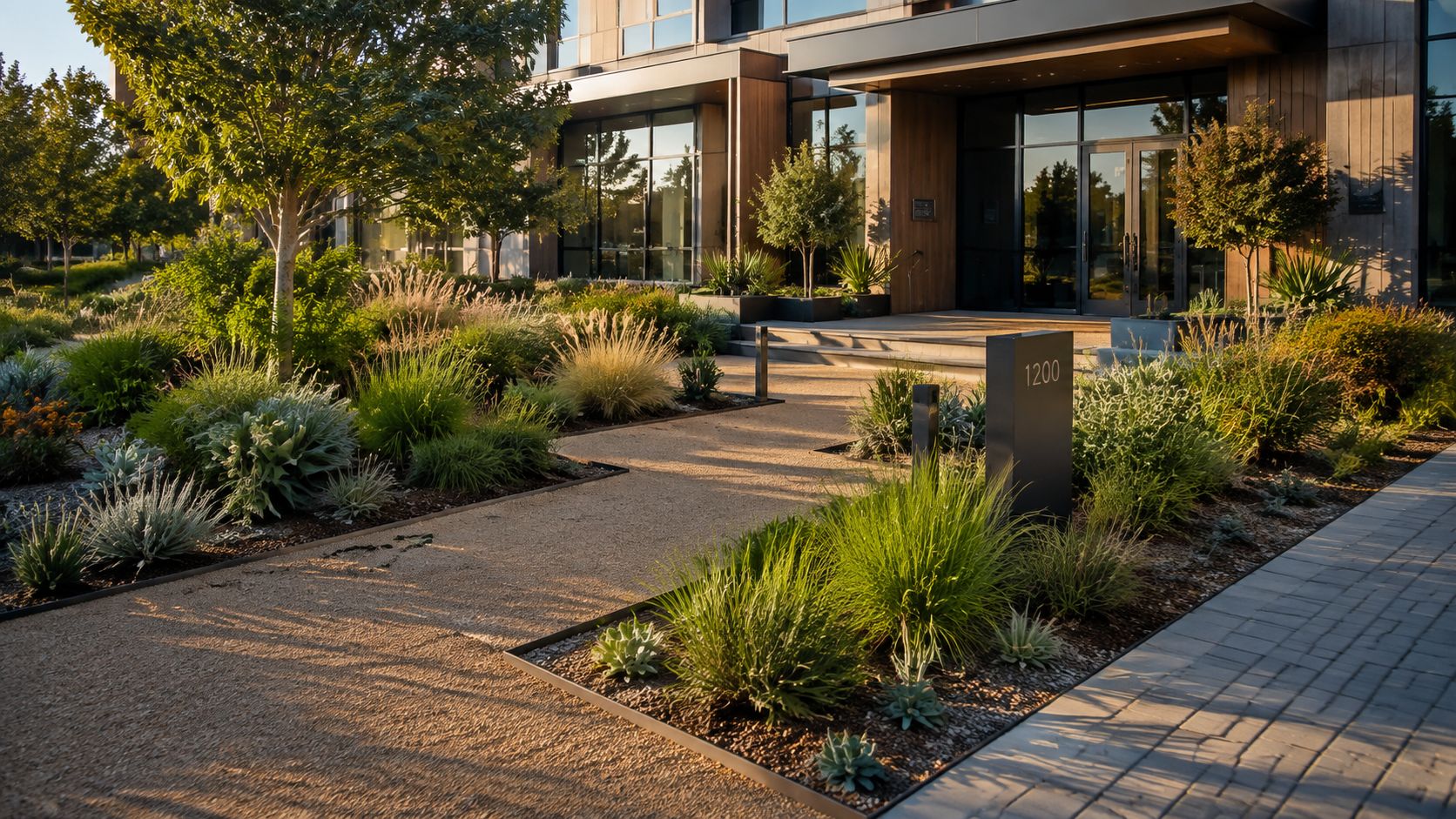
74% of property managers require low-input vegetation in maintenance contracts, making low-maintenance commercial landscaping an operational requirement rather than an aesthetic preference. The most reliable approach combines site-specific plant selection, efficient irrigation, durable ground covers, and layouts that preserve visibility, access, and safety.
The pressure usually becomes obvious during a routine property walk. Turf is struggling beside a hot parking lot, irrigation overspray is reaching the sidewalk, shrubs are narrowing a pedestrian route, and the maintenance crew is spending more time correcting preventable problems than improving the site. The grounds may still look acceptable from the road, but its operating cost and risk profile are moving in the wrong direction.
Low maintenance doesn't mean neglected, bare, or visually unappealing. It means the property is designed so plants, irrigation, soil, hardscape, and maintenance routines work together instead of creating recurring emergencies.
Table of Contents
- Why Low Maintenance Landscaping Is an Operations Strategy
- Assessing Your Commercial Site for Low-Maintenance Success
- Plant Palettes and Hardscape Choices That Actually Work
- Irrigation Strategies That Reduce Water Waste and Maintenance
- Mulch, Ground Covers, and Soil Management for Long-Term Results
- Building a Seasonal Maintenance Plan That Stays Simple
- Understanding True Lifecycle Costs and When to Call Professionals
Why Low Maintenance Landscaping Is an Operations Strategy
Property managers often inherit outdoor spaces that were designed around installation-day appearance rather than long-term performance. Dense turf, incompatible plant groupings, generic irrigation schedules, and shrubs planted too close to entrances can look polished at handover. Over time, they create mowing demand, irrigation waste, pruning conflicts, plant replacement, and safety concerns.
The shift toward low-input vegetation reflects a broader operating reality. A 2024 Urban Land Institute survey found that 74% of property managers require low-input vegetation in maintenance contracts, according to the commercial landscape guidance summarized by KD Landscape's discussion of low-maintenance plants for commercial properties. Property teams increasingly evaluate grounds through the same lens they use for lighting, roofing, and building systems. The question is whether the asset performs reliably at a reasonable lifecycle cost.
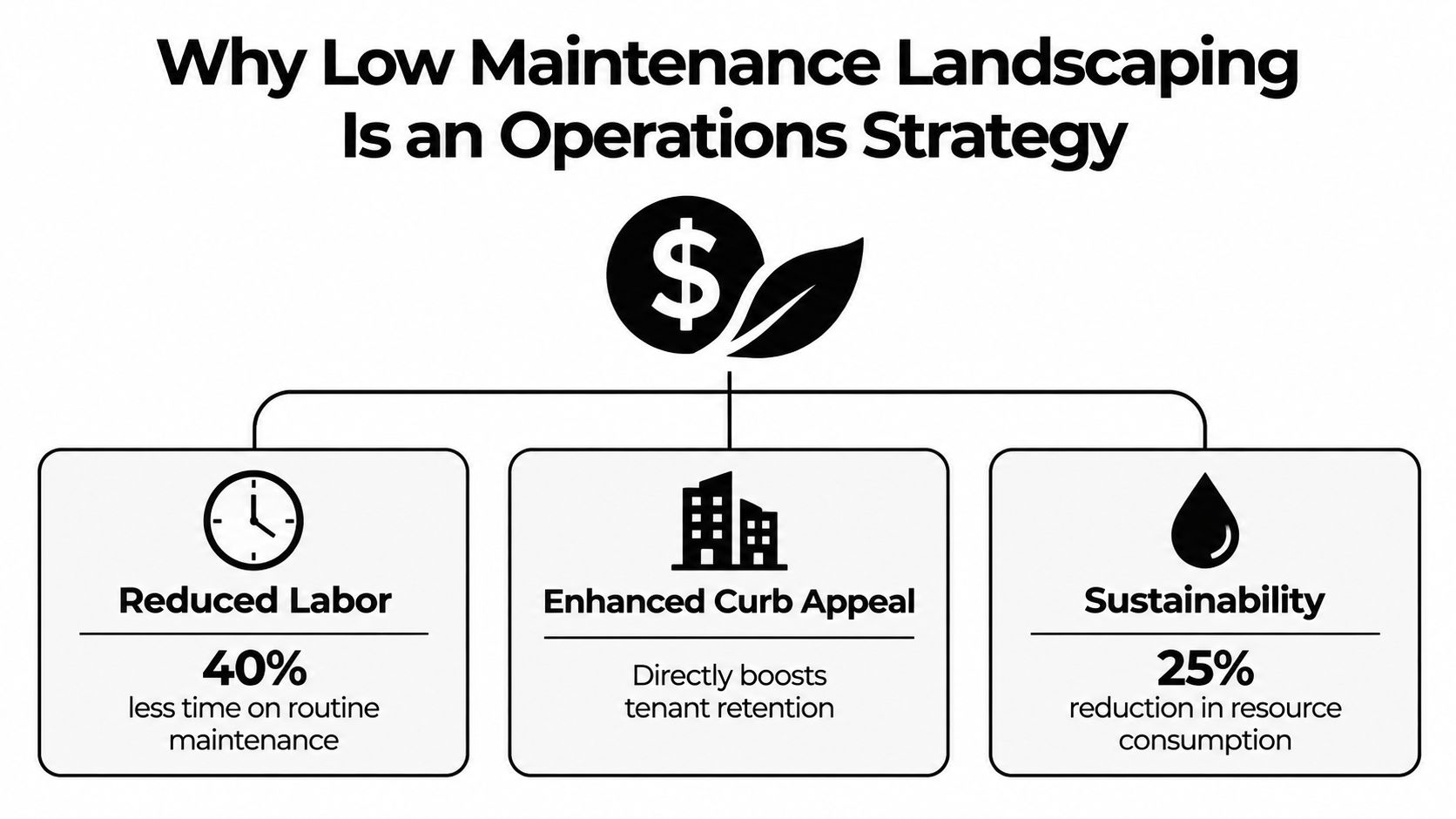
Water is a controllable operating expense
The U.S. EPA's commercial landscaping guidance says outdoor water use at commercial and institutional facilities typically ranges from 5% to 30% of total site water use. The same guidance gives land-use examples averaging about 7% for hospitals, 22% for office buildings, and up to 30% for schools.
Those figures make irrigation more than a horticultural concern. A properly designed xeriscape or water-wise garden can reduce supplemental irrigation by more than 50% compared with a traditional turf-dominated lawn, as the EPA explains in the same guidance. Reducing irrigated turf, separating plants into appropriate hydrozones, and correcting overspray can lower waste while keeping the property presentable.
Labor and liability belong in the same conversation
A plant that needs frequent shearing near a driveway isn't low maintenance if its growth repeatedly affects sight lines. A bed that looks attractive but hides a hydrant, narrows an accessible route, or obstructs a building entrance transfers maintenance savings into operational risk.
Practical rule: Specify plants for their mature behavior, not their appearance in the container at installation.
The strongest design reduces repetitive work without asking staff to overlook hazards. That means clear access to utilities, controlled growth near windows and signs, stable edges beside walkways, and maintenance standards that define what “finished” looks like. Low-maintenance commercial landscaping succeeds when it protects curb appeal, water performance, labor capacity, and safe movement across the site.
Assessing Your Commercial Site for Low-Maintenance Success
Plant selection should come after a disciplined site assessment. A nursery tag can't tell you whether a shrub will survive reflected heat from a parking structure, tolerate compacted soil, or remain below a required sight line at maturity.
Start by walking the property at different times of day. Record sun exposure, shade cast by buildings, wind corridors, heat pockets, drainage paths, and areas where runoff carries soil or mulch. Large commercial sites often contain several microclimates within the same property, so one plant palette rarely fits every bed.
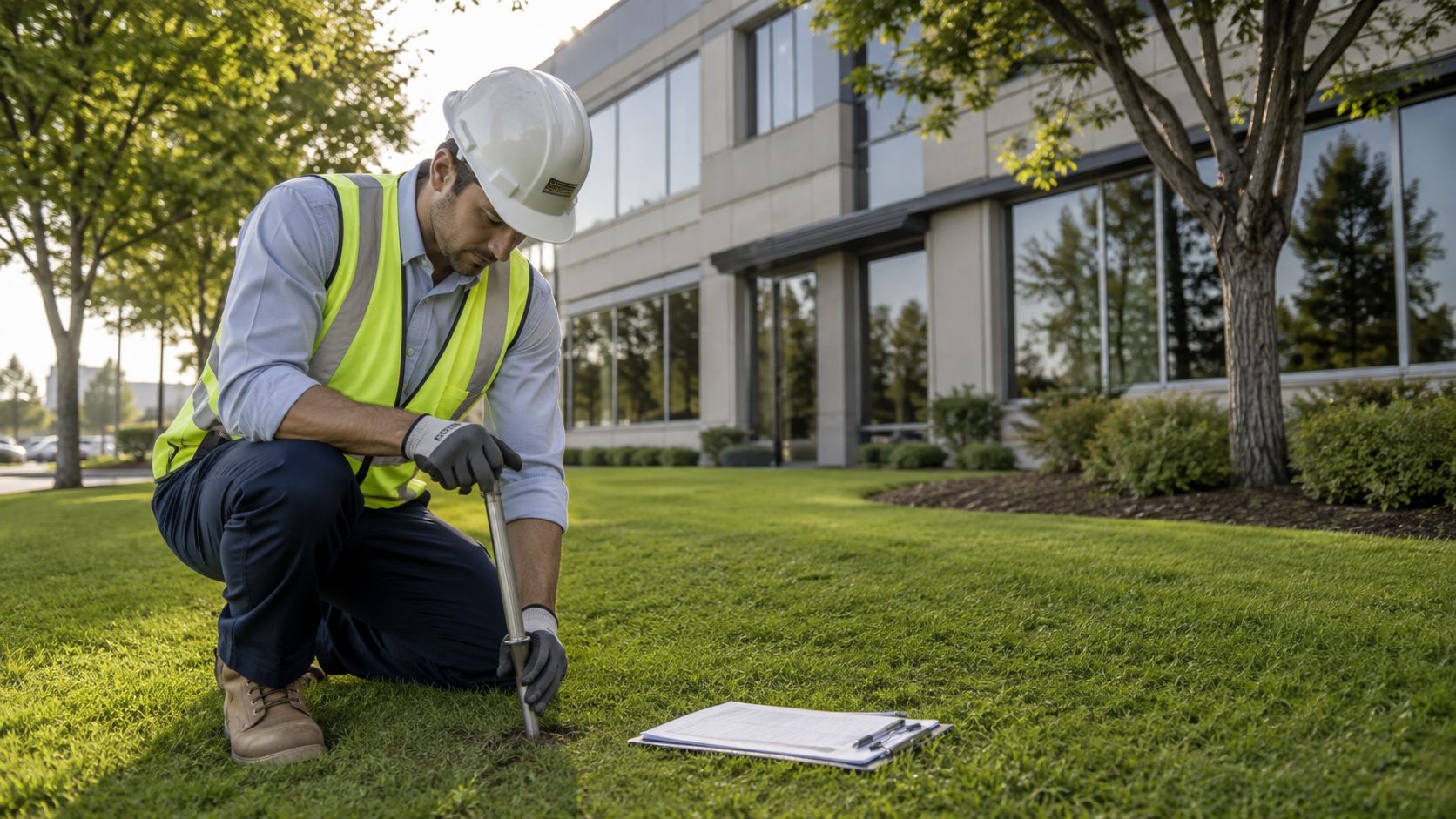
Build a site baseline before design
A practical assessment should answer four questions:
- What is the soil doing? Check compaction, drainage, texture, organic matter, and existing root-zone conditions. A wet pocket may need drainage correction, while a dry raised bed may require different planting and irrigation.
- Where does water move? Follow downspouts, paved runoff, low spots, and eroding slopes. Plants that need consistent moisture shouldn't be installed where water disappears quickly.
- Where do people and vehicles move? Map pedestrian desire lines, loading zones, fire lanes, parking aisles, delivery paths, and areas where vehicles routinely encroach on beds. These are wear zones, not ordinary planting areas.
- What infrastructure limits the design? Locate irrigation lines, valve boxes, underground utilities, overhead obstructions, foundations, windows, hydrants, signs, and lighting. Root growth and mature canopy spread matter around each one.
Treat visibility as a design constraint
At entrances and intersections, preserve clear visibility triangles rather than filling every open space with vegetation. Low plants can define an edge without blocking a driver or pedestrian's view. Taller shrubs and ornamental grasses belong where their mature height won't conceal people, vehicles, signs, windows, or emergency equipment.
Sun exposure also changes maintenance demand. A shade plant placed in reflected full sun will require replacement or extra irrigation. A sun-loving species in a shaded corridor may become thin, weak, and visually untidy. Document the existing conditions, then match each planting zone to plants that can perform there without constant correction.
Plant Palettes and Hardscape Choices That Actually Work
A commercial plant palette should be judged on more than drought tolerance. The useful questions are whether a plant stays within its assigned space, tolerates the site's soil and traffic conditions, and maintains safe visibility at maturity.
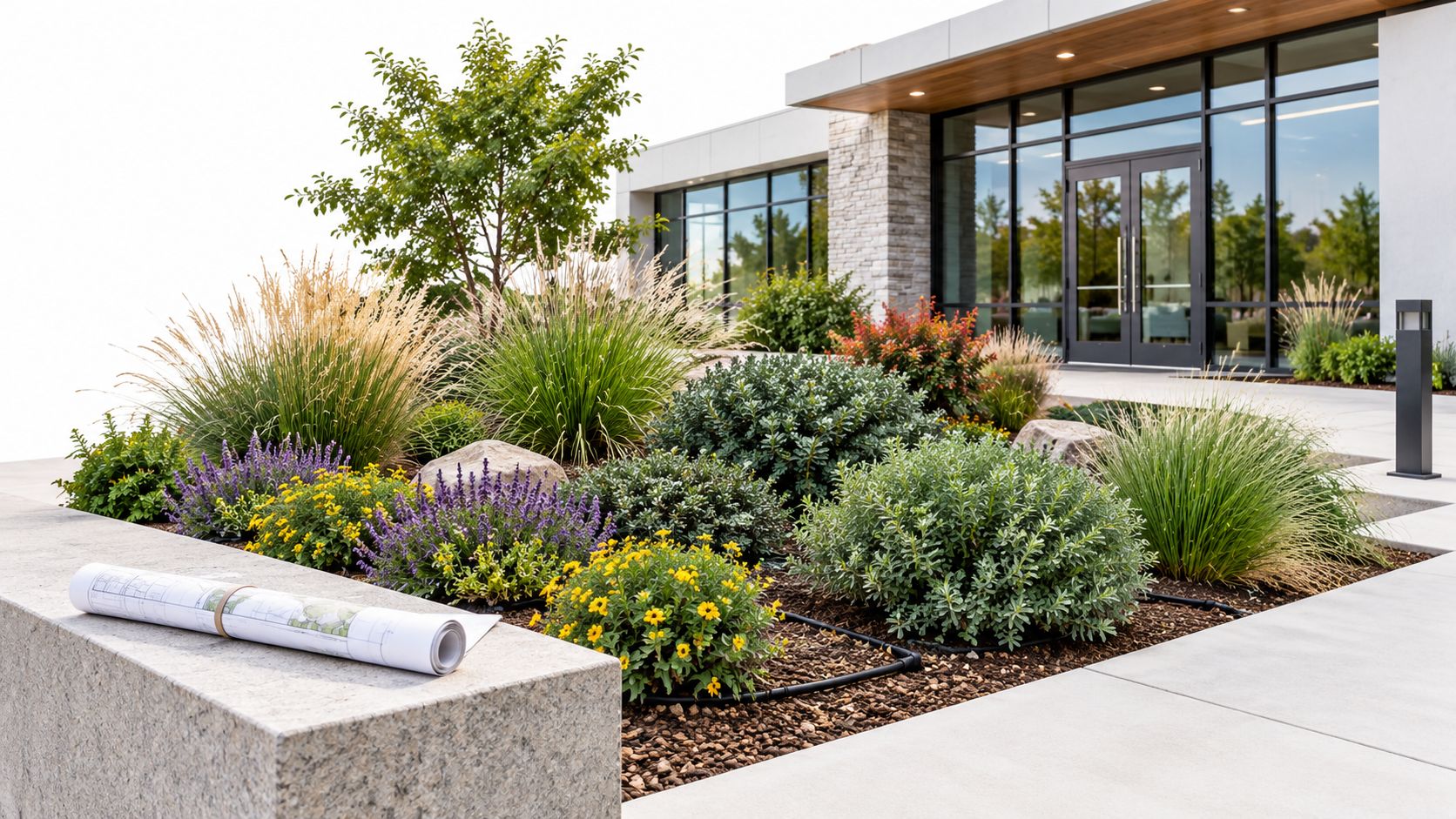
For Dallas-Fort Worth and San Antonio properties, designers commonly consider drought-tolerant shrubs, ornamental grasses, succulents, and regionally adapted perennials. The exact choice still depends on sun, drainage, soil, irrigation availability, and exposure. A plant that performs well in a sunny median may fail beside a shaded office entrance.
Match the plant to the risk zone
Foundation beds need plants that stay below windows, signs, and building access points or can be maintained without repeated hard pruning. Medians need durable selections that tolerate heat, reflected light, and occasional traffic encroachment. Perimeter beds can support taller material when it won't obstruct security views or hide damaged fencing.
Before approving a palette, review mature height and spread against every nearby walkway, hydrant, entrance, intersection, and service area. Commercial guidance stresses that vegetation shouldn't block windows, walkways, hydrants, or entrances, and that mature size, soil, exposure, irrigation, and traffic must shape the decision. The practical reference The Green Advantage turf perfection is useful for thinking about how turf, trees, and planting beds perform as connected maintenance systems. For perennial options, this guide to low-maintenance perennial plants can help organize selections by site conditions and maintenance expectations.
| Plant Category | Established Water Needs | Maintenance Level | Safety Suitability | Best Application Zone |
|---|---|---|---|---|
| Low-growing perennials | Low to moderate, based on species and exposure | Low once established | Strong near edges when mature spread is controlled | Walkway borders and entry beds |
| Ornamental grasses | Low to moderate after establishment | Seasonal cutback and inspection | Useful when placed outside sight lines | Medians and broad planting beds |
| Drought-tolerant shrubs | Low to moderate with proper zoning | Periodic pruning for clearance | Good when mature size is respected | Foundations and perimeter beds |
| Succulents | Low in suitable drainage | Low, with occasional replacement checks | Suitable for defined beds away from pedestrian pinch points | Accents and high-visibility dry beds |
| Turf alternatives and hardscape | Little or no irrigation for hardscape | Edge and surface maintenance | Strong in traffic zones when surfaces remain stable | Walkways, service edges, and gathering areas |
Use hardscape where plants create recurring conflict
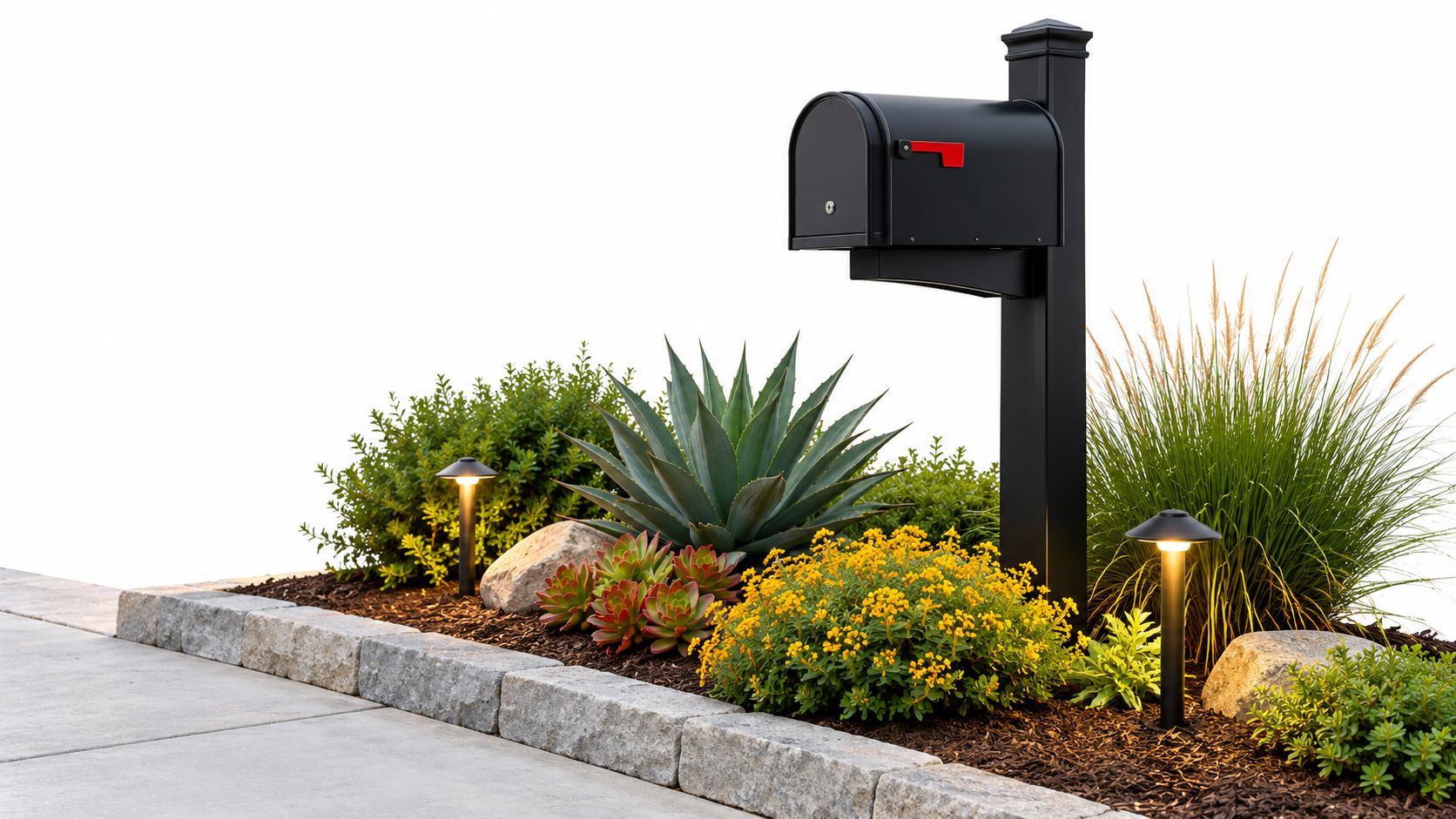
Permeable pavers can provide a defined, durable surface where pedestrian movement is predictable. Decomposed granite can work in appropriate applications, but it needs stable edging and periodic surface correction. Mulch remains useful in planting beds, though it can migrate onto sidewalks and become a housekeeping issue on slopes.
The right design often combines materials instead of choosing a single replacement for turf. A restrained planting bed, a durable edge, and a clear walking route usually outperform an overfilled outdoor area that requires constant reshaping.
Irrigation Strategies That Reduce Water Waste and Maintenance
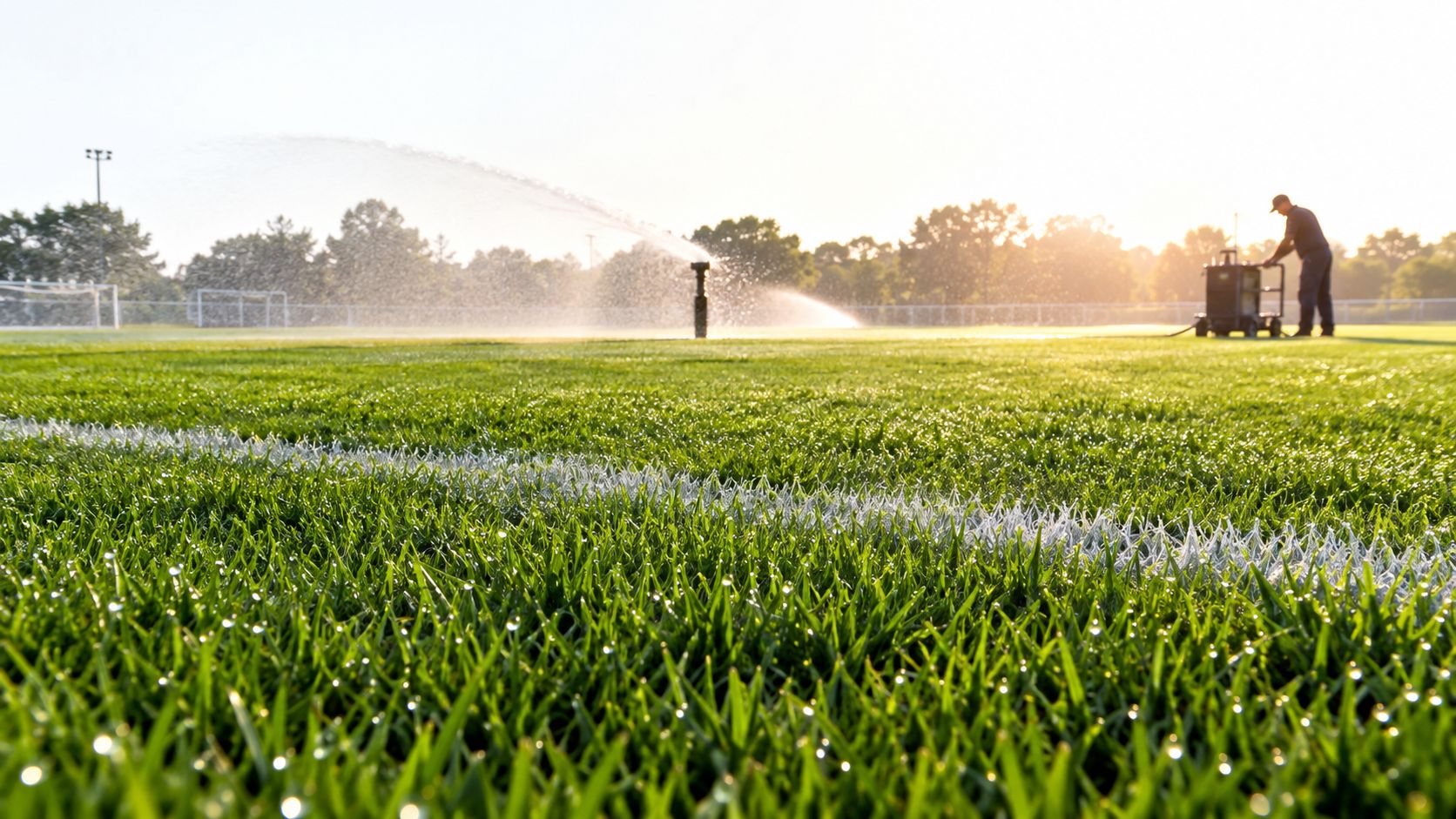
Irrigation problems rarely announce themselves as irrigation problems. A brown patch may reflect poor head coverage, compacted soil, a blocked nozzle, a broken lateral, or a schedule that applies water at the wrong time. A wet sidewalk may signal pressure issues, poor zoning, overspray, or runoff from a clay soil.
Begin with a baseline of meter readings and controller settings. Then walk every zone while it operates. Check head coverage, broken components, pressure, runoff, overspray, valve function, and actual plant needs. Record run times and compare monthly irrigation trends so leaks and controller drift become visible instead of remaining buried in a utility bill.
Audit the system by zone
The Irrigation Association's 106-property analysis of irrigation efficiency found that seasonal water use per commercial acre fell 14.9% over three years. Properties saved 10.1% in the year of the audit and 4.8% the following year, showing why an audit should lead to documented follow-up rather than a one-time adjustment.
The EPA recommends measuring irrigation flow, reviewing zone schedules, and auditing systems every three years, as described in its commercial landscaping guidance. Use those inspections to verify that the controller still reflects current plantings, heads, pressure, and seasonal requirements.
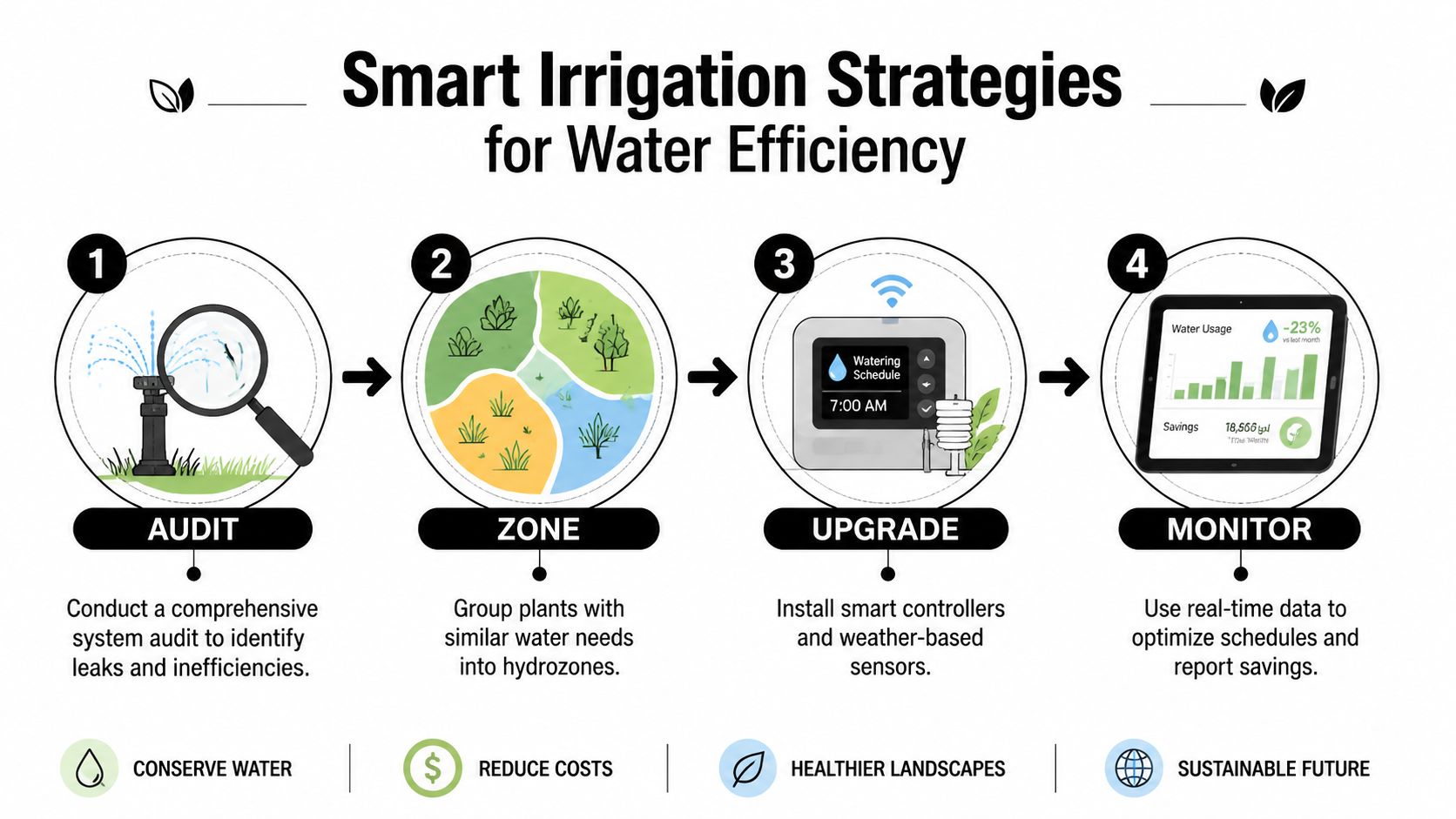
Program for plant needs, not convenience
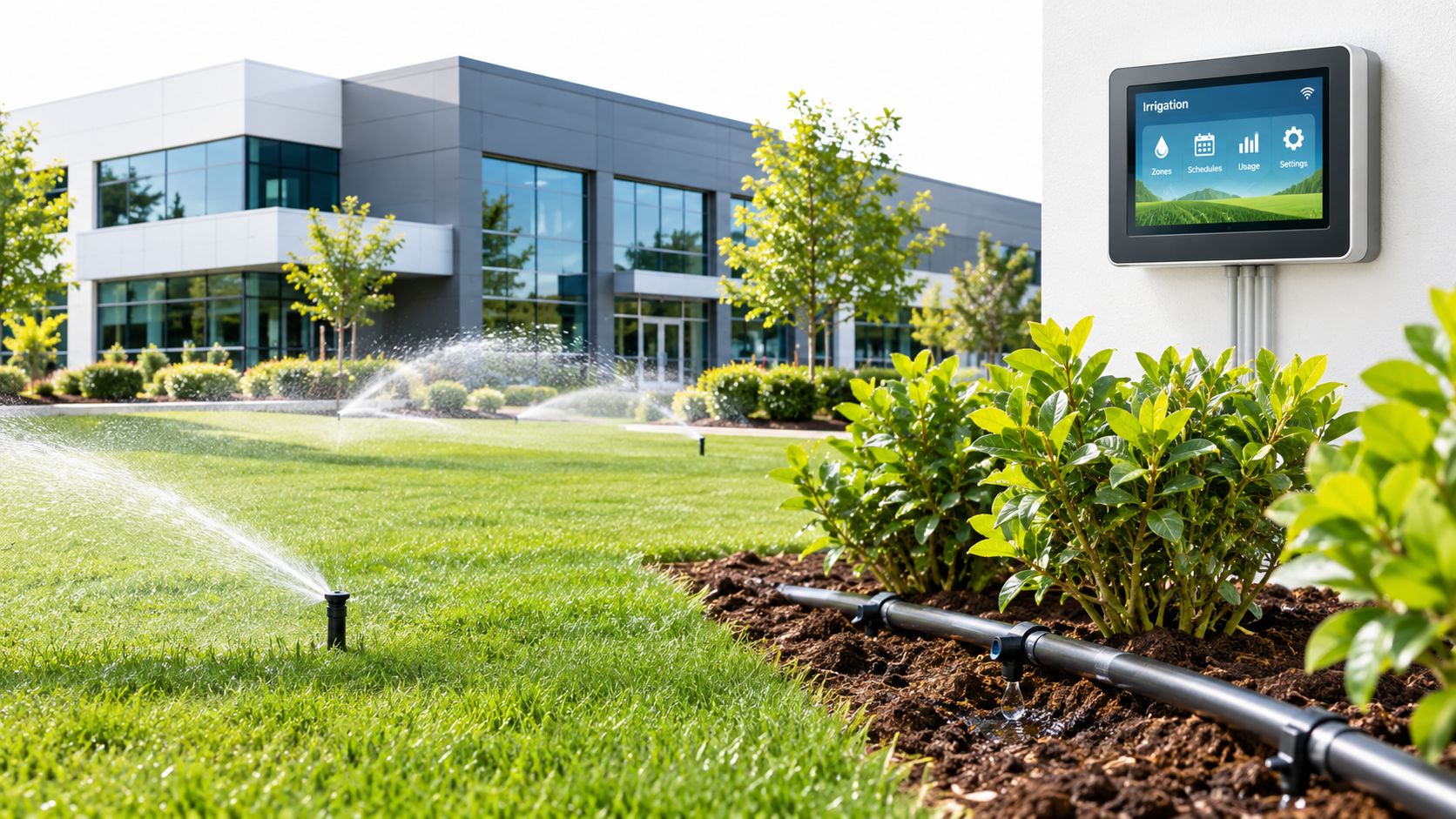
Group plants with similar water requirements into hydrozones. Keep turf separate from shrubs, perennials, and dry-adapted accents so one schedule doesn't overwater some plants to protect others. Drip irrigation can serve many beds where emitters are accessible and maintained, while overhead irrigation remains useful for turf and certain broad areas.
On clay soils or sloped sites, use cycle-and-soak programming. Shorter applications with soak periods allow water to infiltrate instead of running onto pavement. Pressure regulation can reduce misting, and seasonal schedule changes prevent cool-weather overwatering.
Properties facing tighter restrictions should design for limited irrigation from the start. Water-conservation irrigation guidance provides a useful reference for pairing system management with plant selection. An outdoor space that depends on large areas of irrigated turf will become harder to operate when watering windows narrow, while hydrozoned beds and resilient plantings give managers more control.
Mulch, Ground Covers, and Soil Management for Long-Term Results
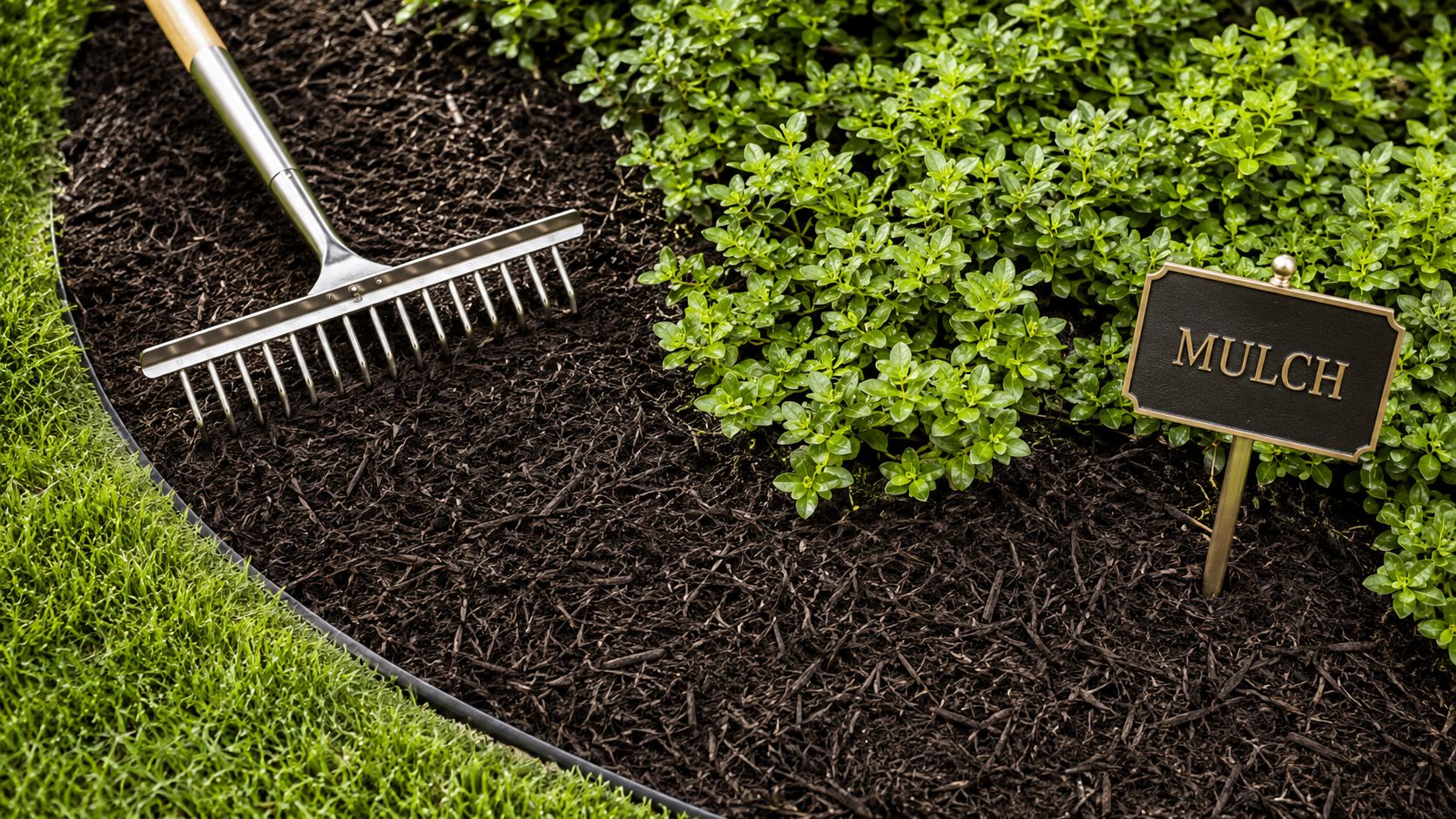
Mulch earns its place in commercial beds because it addresses several maintenance problems at once. It suppresses weeds, reduces evaporation, protects soil from temperature swings, and helps keep beds visually uniform. It won't compensate for poor drainage, incompatible plants, or a broken irrigation system.
A landscape-maintenance review reports that a properly applied 75 mm bark mulch layer achieved about 85% weed control over a three-year period, with deeper mulches generally outperforming shallow applications, as documented in the HortScience research article on mulch performance. The result depends on consistent coverage, not just spreading a thin decorative layer at installation.
Install the root-zone protection correctly
Keep mulch away from trunks and plant crowns. Contact with stems can retain excess moisture and create plant-health problems, while thin or uneven coverage leaves gaps for weeds. Re-top the blanket as it decomposes, but don't keep adding material without checking the existing depth.
Living ground covers can reduce exposed soil where conditions suit them. Creeping thyme, sedum, and native grasses may work in appropriate sun and drainage conditions, though establishment still requires weed control and irrigation management. The right ground cover strategy depends on whether the priority is erosion control, visual continuity, foot-traffic resistance, or reduced bare soil.
Choose the surface for the maintenance pattern
Organic mulch is easy to refresh but can move during heavy rain and requires replenishment. Decomposed granite and river rock don't decompose, yet they can shift, collect debris, or become difficult to correct without stable edging and access for cleanup. On slopes, use suitable living cover, terracing, or retaining structures instead of expecting mulch alone to control erosion.
Good soil preparation remains the hidden cost saver. Relieving compaction, improving the root zone, and correcting drainage before planting gives vegetation a better chance to establish without repeated fertilization, irrigation increases, and replacement.
Building a Seasonal Maintenance Plan That Stays Simple
A low-input outdoor space still needs attention. The difference is that planned inspections catch small issues before they become safety, irrigation, or appearance problems.
Spring sets the operating baseline
Clear winter debris, inspect bed edges, test irrigation zones, repair damaged heads, and confirm that controller programs match current plantings. Remove dead or broken growth where it affects clearance, but avoid pruning just to impose uniformity on plants that perform well in their natural form.
Check mulch coverage after storms and construction activity. Spring is also the right time to identify plants that have outgrown windows, signs, walkways, hydrants, or entrances, then decide whether selective pruning, relocation, or replacement is the better long-term solution.
Summer requires observation, not constant intervention
Walk the property during operating hours. Look for wilting, runoff, overspray, blocked visibility, pest symptoms, damaged edging, and pedestrian shortcuts through beds. Adjust irrigation by hydrozone and season rather than increasing every station when one area shows stress.
Coordinate mowing, pruning, and blowing with tenant activity, deliveries, and peak pedestrian periods. A technically correct maintenance visit can still create complaints or hazards if crews leave wet pavement, obstruct an entrance, or work beside active loading traffic without a clear plan.
Fall and winter protect next season
Remove failing seasonal color when it becomes untidy, clear leaves from drains and turf, inspect tree limbs over routes, and prepare irrigation components for local weather conditions. Year-round, assign a documented visual inspection to someone who can report defects quickly.
A simple quarterly calendar should identify the responsible person, the inspection route, the acceptable condition, and the escalation point. Property staff can report leaks, blocked access, broken branches, and obvious weed growth. Irrigation diagnosis, pruning near utilities, disease identification, and complex seasonal color work belong with trained professionals.
Understanding True Lifecycle Costs and When to Call Professionals
The cheapest installation is rarely the cheapest outdoor space to operate. A proper review includes irrigation repairs, plant replacement, mulch or aggregate replenishment, equipment wear, labor hours, emergency cleanup, and the cost of correcting visibility or access problems after installation.
Water restrictions are changing the calculation in drought-prone markets. Recent commercial grounds maintenance coverage describes selective mowing, cycle-and-soak irrigation, and limited watering opportunities in some markets. It also reports that California has restricted potable-water irrigation of nonfunctional turf at commercial, industrial, and institutional properties, with compliance deadlines extending into 2028, as discussed in this drought-management overview.
Compare proposals by operating outcome
Ask each contractor to explain:
- Plant maturity: What will each selection look like at full size, and what clearance will remain around routes, signs, windows, hydrants, and entrances?
- Irrigation logic: Which hydrozones exist, how will flow and coverage be verified, and how will schedule changes be documented?
- Surface performance: Where will mulch, turf, pavers, decomposed granite, or rock be used, and who will correct migration or settlement?
- Maintenance scope: Which tasks are routine, which require specialist judgment, and what condition counts as acceptable?
- Compliance and access: How will the design preserve visibility, emergency access, pedestrian movement, and property-specific requirements?
A higher upfront redesign cost can make sense when it removes a large irrigated turf area, resolves chronic drainage, or eliminates repeated pruning conflicts. The decision should be based on expected operating behavior, not on installation price alone.
Know when professional help is warranted
Call a qualified service for complex irrigation repairs, central water-management adjustments, major hardscape renovation, disease diagnosis, tree work near buildings or utilities, and seasonal color programs that require coordinated installation. In-house staff can handle observations and basic reporting, but they shouldn't be expected to diagnose hydraulic faults or make horticultural decisions that affect safety.
Low maintenance means designed efficiency, not neglect. The best outdoor design uses durable materials and appropriate plants, but it also gives crews clear standards, keeps critical sight lines open, and makes water performance measurable.
Prestonwood Commercial Landscape Services provides commercial maintenance, design and renovation, seasonal color, tree care, irrigation audits and repairs, and central water management for properties across Dallas-Fort Worth and San Antonio. To build a safer, more resilient low-maintenance plan, visit Prestonwood Commercial Landscape Services and request a site-focused consultation.