A lot of school campuses reach the same point before anyone calls an outdoor environment architect. Turf is worn down to dirt along the routes students use. A courtyard exists on the site plan but not in campus life. Shrubs have outgrown their purpose, irrigation is patchy, and staff members are spending money every season just to keep the place looking passable.
That's usually when the conversation shifts from beautification to operations. The question isn't how to make the campus prettier. It's how to make the grounds work harder. Good school grounds design reduces supervision problems, supports safer movement, lowers water demand, and gives students outdoor spaces that earn their footprint.
For boards, superintendents, and facilities directors, that makes the outdoor environment a capital asset with a lifecycle cost, a maintenance profile, and a return. It affects student experience, campus identity, and day-to-day labor. It also affects whether the grounds stay functional five years from now or slide back into deferred maintenance.
Table of Contents
- Transforming Campuses from Afterthoughts to Assets
- The Strategic Goals of Modern School Landscapes
- Foundation First A Guide to Site Assessment
- Designing for Safety Accessibility and Engagement
- Smart Plant Palettes and Outdoor Learning Zones
- Irrigation and Long-Term Maintenance Implications
- Budgeting Phasing and Real-World Campus Examples
Transforming Campuses from Afterthoughts to Assets
Many school grounds still get treated like leftover space. The building gets the attention, the parking lot gets the budget, and the exterior areas in between become a patchwork of reactive fixes. That approach always gets expensive. You pay for repeated replacements, more hand labor, and outdoor spaces that never fully support how the campus operates.
School outdoor space planning has deeper roots than many decision-makers realize. The professionalization of the field in the United States took a major step in 1900, when Harvard established the first master's programme in garden and site planning, as noted in this history of landscape architecture education. That shift mattered because these spaces began to be treated as designed environments with institutional purpose, not just decorative grounds.
That's still the right lens for schools. A campus site should help staff supervise students, direct movement, manage water, frame entrances, and create places for gathering and learning. If it doesn't do those jobs, it's not neutral. It's underperforming.
A practical starting point for many boards is understanding landscape design principles in plain terms before they review proposals or approve a master plan. The strongest school projects don't begin with a plant list. They begin with function.
A school campus rarely has a landscaping problem alone. It usually has a circulation problem, a visibility problem, a water problem, or a maintenance problem that shows up in the landscape first.
When schools start viewing the grounds as part of the educational environment, the budget conversation changes. The goal stops being cosmetic improvement. The goal becomes lower lifecycle cost, fewer operational headaches, and a campus that supports the institution every day.
The Strategic Goals of Modern School Landscapes
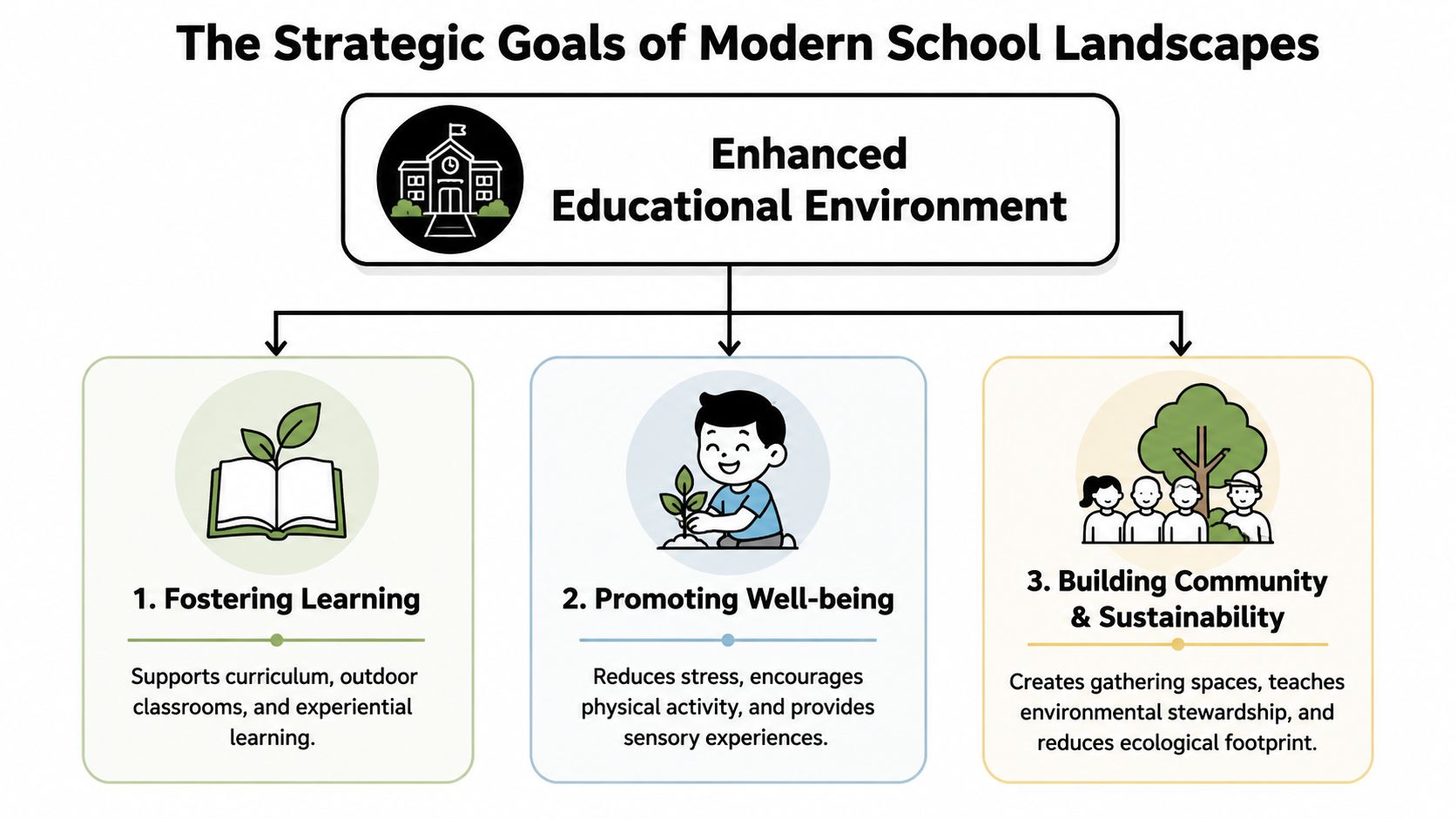
A school can spend heavily on new paving, planting, and shade structures, then still end up with a campus that costs too much to irrigate, creates supervision problems, and looks tired within a few years. The better approach is to set strategic goals before anyone starts choosing materials or amenities. On school sites, the grounds need to perform as an asset, with returns measured in lower operating costs, safer circulation, better student comfort, and fewer water-related failures.
Why licensed design matters
School sites ask a lot from one piece of property. They need to support arrival and dismissal, emergency vehicle access, ADA-compliant routes, drainage, recreation, outdoor gathering, and a maintenance program the district can sustain year after year.
That requires professional judgment, not just decoration.
As of the mid-2020s, the U.S. Bureau of Labor Statistics profile for landscape architects reports a median annual wage of $79,660 and notes that states require licensure for these professionals. For a school board, that matters because the work affects public safety, accessibility, grading, water use, and long-term site performance. A licensed design professional is there to make trade-offs visible before they become expensive field problems.
Where the return actually shows up
The return on school grounds design usually appears in four places, and those benefits often hit different budgets at different times.
| Strategic goal | What it looks like on campus | Why it matters long term |
|---|---|---|
| Safety and supervision | Clear sightlines, legible routes, fewer hidden corners | Reduces avoidable risk and makes staff oversight easier |
| Student well-being | Shade, seating, calm zones, inviting outdoor areas | Increases daily use and improves comfort during breaks and outdoor programs |
| Environmental performance | Better infiltration, less wasteful irrigation, resilient plantings | Lowers water waste, helps control drainage issues, and reduces replacement cycles |
| Institutional image | Strong entries, coherent identity, cared-for grounds | Shapes how families, staff, and visitors judge the school's quality and stewardship |
Some gains are immediate. A corrected drop-off layout or a clearer main entry improves daily operations on day one.
Other gains are slower and often more valuable. Hydrozoned irrigation, durable materials, and planting plans matched to the site rarely draw applause at ribbon-cutting, but they pay back through lower labor demand, fewer seasonal losses, and less money spent correcting preventable problems. On many campuses, that is where the primary ROI sits.
Practical rule: If a proposed feature looks impressive on opening day but adds specialized maintenance that the district will not consistently fund, it is a poor capital investment.
Student well-being belongs in the same conversation as lifecycle cost. Shade trees placed in the right locations can improve comfort at lunch areas and waiting zones while reducing heat stress on paved surfaces. Calm outdoor spaces can support informal learning, decompression, and social use without requiring every area to function as a formal teaching garden. Those choices improve the student experience, but they also help the campus work harder without adding complicated programming.
Water performance is another strategic goal that schools often undervalue early and pay for later. Poor grading, overscaled turf, and inefficient irrigation layouts drive up utility costs and maintenance hours, then create avoidable failures during drought restrictions or heavy rain. A school site designed around water conservation and controlled runoff usually costs less to own over time.
That is the fundamental shift in modern school grounds design. The site is part of the school's operating strategy, capital planning, and risk management. If it is planned well, it does more than look good. It protects budgets, supports students, and keeps performing long after the opening photos are done.
Foundation First A Guide to Site Assessment
A school can approve a beautiful site plan and still inherit years of avoidable cost if the existing grounds were never read correctly. The assessment phase is where districts protect capital dollars, reduce maintenance exposure, and decide which improvements will keep paying back after installation.
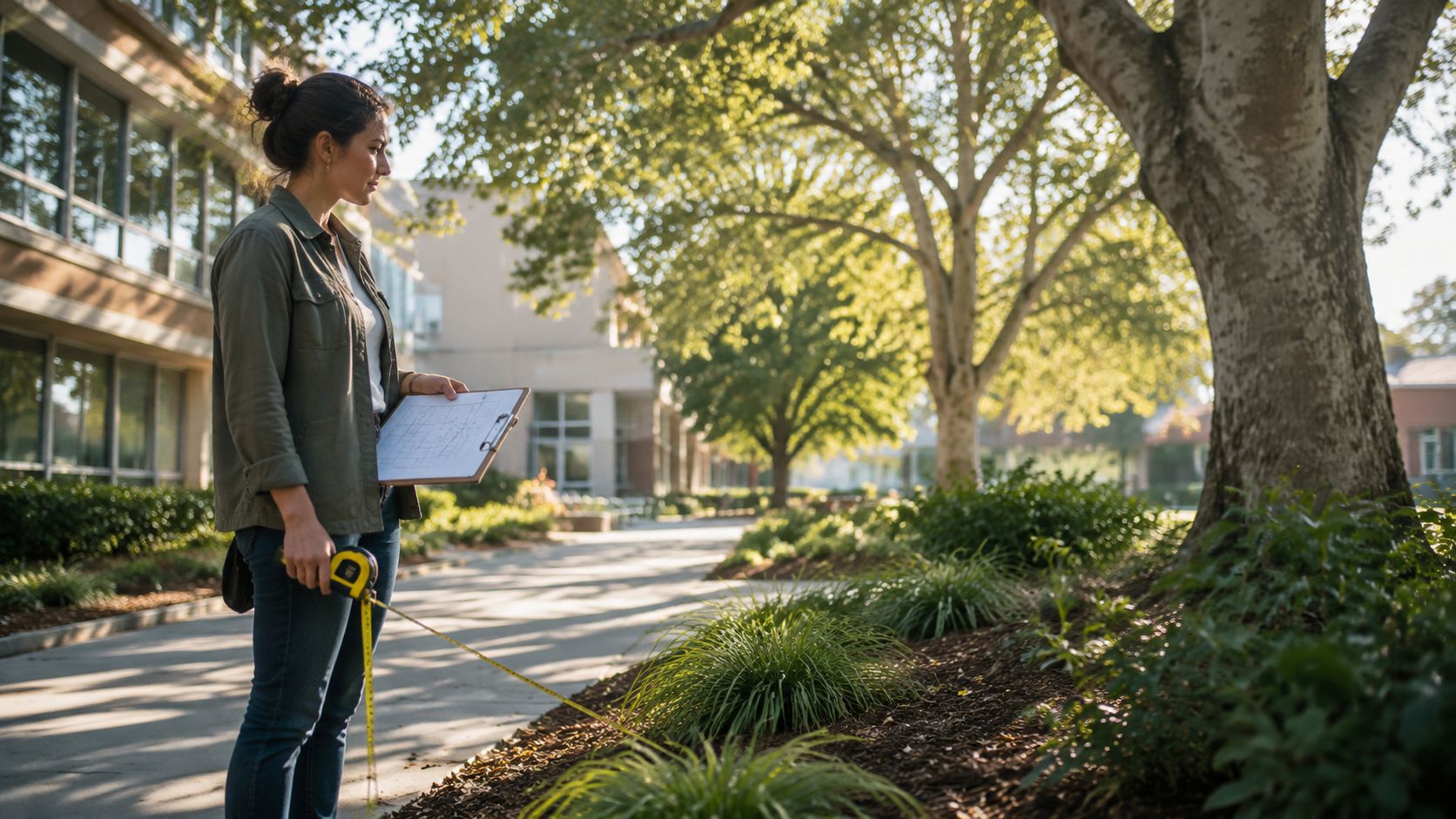
Read how students and staff already use the site
Start with observation, not preference. Walk the campus during arrival, passing periods, recess, athletic use, and dismissal. Wear patterns, gate congestion, informal shortcuts, and crowding near entries show how the property functions under real school operations. Those patterns matter because circulation problems become liability issues, maintenance burdens, and future change orders if they are ignored.
For schools, outdoor space should be organized around visibility, circulation, and stormwater control, with wide unobstructed routes and planting that supports supervision. That approach also affects perimeter planning, especially for campuses reviewing gates, service access, and control points. Teams working through those edge conditions often benefit from understanding commercial fence requirements before the plan advances.
During assessment, document questions like these:
- Where do desire lines form? Repeated shortcuts usually mean the current path network is inconvenient or incomplete.
- Where do adults lose visual control? Dense planting, tight corners, and grade shifts can weaken supervision.
- Where do routes conflict? Student travel, parent pickup, deliveries, and maintenance access should not compete for the same narrow corridor.
Audit water movement before choosing plants
Water issues are expensive when they are missed early. A bed that fails every summer or pavement that settles at the edge often points to grading, drainage, or irrigation layout problems, not poor plant selection. If runoff crosses play areas, if overspray hits walks and entries, or if low spots stay saturated after a storm, the district is looking at future repair cost as much as horticultural trouble.
A useful site review includes:
- Sun and shade mapping across different times of day and different seasons.
- Soil and compaction review in lawn areas, play edges, and planting zones.
- Standing water observations after irrigation cycles and rainfall.
- Runoff paths toward buildings, sidewalks, play spaces, and foundations.
The plant palette should fit site conditions. It should not be used to cover unresolved grading or drainage failures.
Inventory what should stay and what should go
Every campus has assets worth keeping and liabilities that drain the budget. Mature canopy trees in the right locations can save years of growth time, improve comfort, and reduce heat loading in heavily used outdoor areas. Other elements only look serviceable until the maintenance team explains the labor attached to them. Oversized shrubs at entries, decorative edges that slow mowing, and aging irrigation zones with constant leaks rarely deliver good return.
A disciplined inventory separates nostalgia from performance.
| Keep and integrate | Remove or redesign |
|---|---|
| Healthy canopy trees in useful locations | Planting that blocks sightlines |
| Hardscape that still supports circulation | Dead-end paths and awkward cut-throughs |
| Beds with workable soil volume | Areas that constantly erode or pond |
| Utilities and sleeves that support expansion | Features that require frequent patchwork repair |
Maintenance access should be part of the same review. If crews need to drag hoses across walkways, trim in tight corners every week, or bring specialty equipment to maintain simple areas, ownership costs will rise long after construction is complete.
Good assessment work is not flashy. It is where schools decide whether a new capital project will lower water use, reduce recurring repairs, and support student use for the long haul.
Designing for Safety Accessibility and Engagement
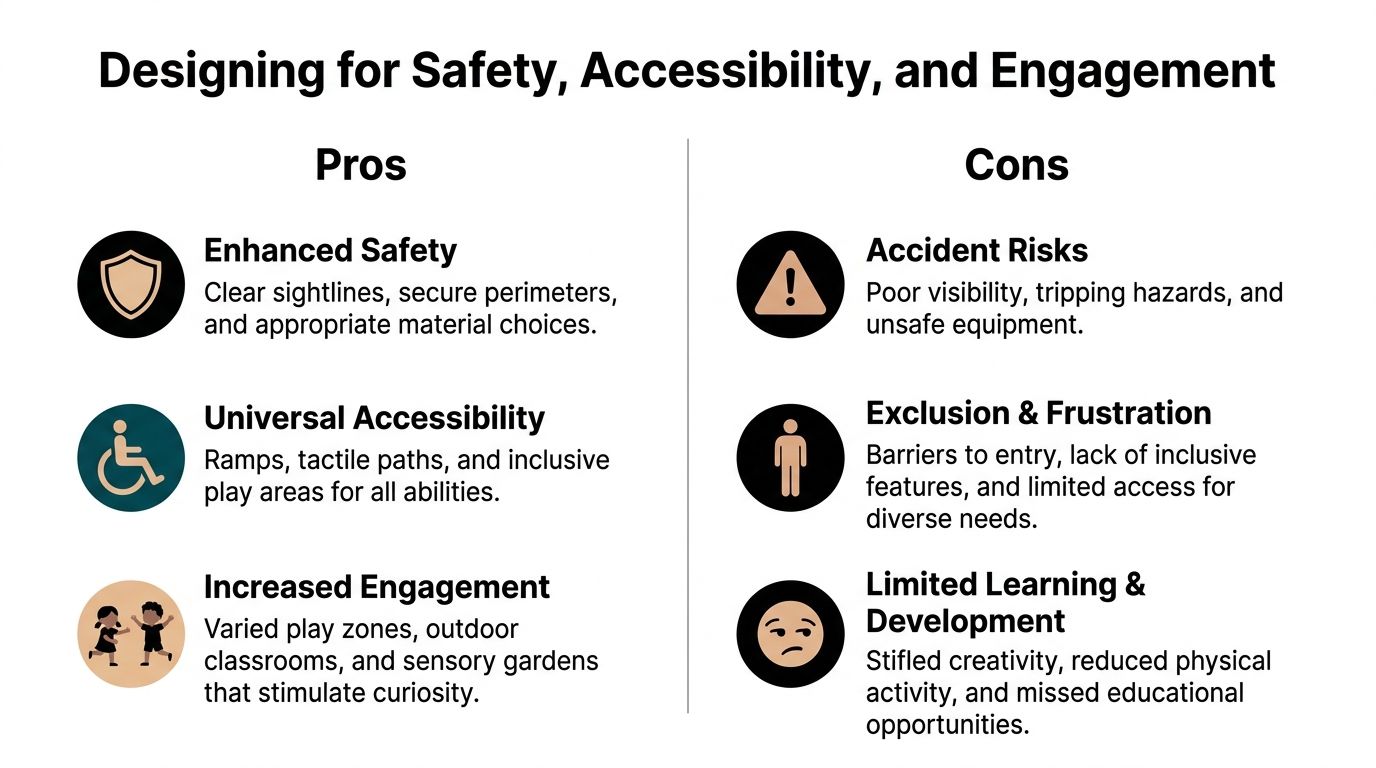
On school grounds, safety and accessibility aren't items to check after the design is done. They shape the plan from the first sketch. If the grounds introduce hidden areas, awkward level changes, slippery surfaces, or inaccessible seating and play opportunities, the campus will never function as well as it should.
Protect sightlines and movement first
Clear visibility remains one of the strongest design tools on any school site. Administrative staff, teachers, and campus supervisors need to read outdoor space quickly. That means preserving long views across courtyards, keeping shrub masses low where supervision matters, and placing trees so trunks and canopies frame space without creating blind spots.
Perimeter design matters too. Schools need boundaries that define access without making the property feel punitive. Gates, planting, lighting, and fencing should work together. When campuses are reviewing edge conditions and security zones, it helps to understand the operational side of understanding commercial fence requirements, especially where student safety, maintenance access, and visibility all intersect.
Accessibility has to be built into the layout
Accessible school exterior space design isn't limited to ramps. It includes route width, cross-slope, material stability, edge conditions, seating access, and whether students with different mobility or sensory needs can use the space with dignity.
The most common failures are basic:
- Loose or shifting surfaces that look natural but don't hold up under mobility devices.
- Decorative level changes that interrupt movement between buildings and outdoor spaces.
- Token seating areas that technically exist but aren't easy to reach or use.
- Program spaces without overlap between active, quiet, shaded, and social uses.
A well-designed route should feel normal to everyone on campus, not like a special detour.
Engagement comes from defined choices
Students use outdoor space more positively when the campus offers choices. One large empty lawn rarely carries all the social and behavioral needs of a school. The better approach is to create distinct but connected zones.
Consider this mix:
- Active space for informal play and movement.
- Small-group space with clustered seating for conversation, tutoring, or waiting between activities.
- Quiet space for decompression, reading, or one-on-one support.
- Flexible instructional space that can host a class without disrupting circulation.
Good engagement doesn't come from filling a site with features. It comes from making each area legible, usable, and easy to supervise.
Material selection affects this more than people expect. Non-slip paving near entries, durable seat walls, and planting that can tolerate incidental student traffic all reduce friction between design intent and real use. If a space requires constant enforcement to stay intact, the design is probably fighting the campus rather than serving it.
Smart Plant Palettes and Outdoor Learning Zones
A school can install an attractive planting scheme at opening and still inherit years of avoidable cost. I see that most often when plant selection is driven by first-year appearance instead of replacement cycles, irrigation demand, pruning labor, and how staff will use the space for instruction.
The better approach is to treat planting as infrastructure with educational upside.
What performs better over time
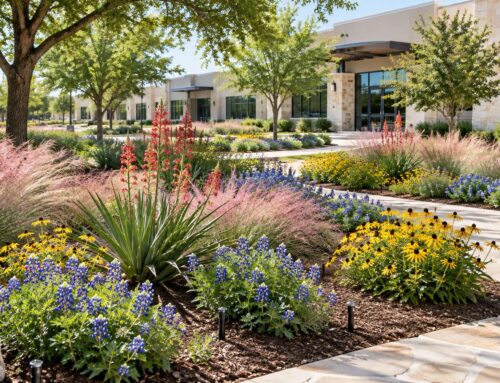
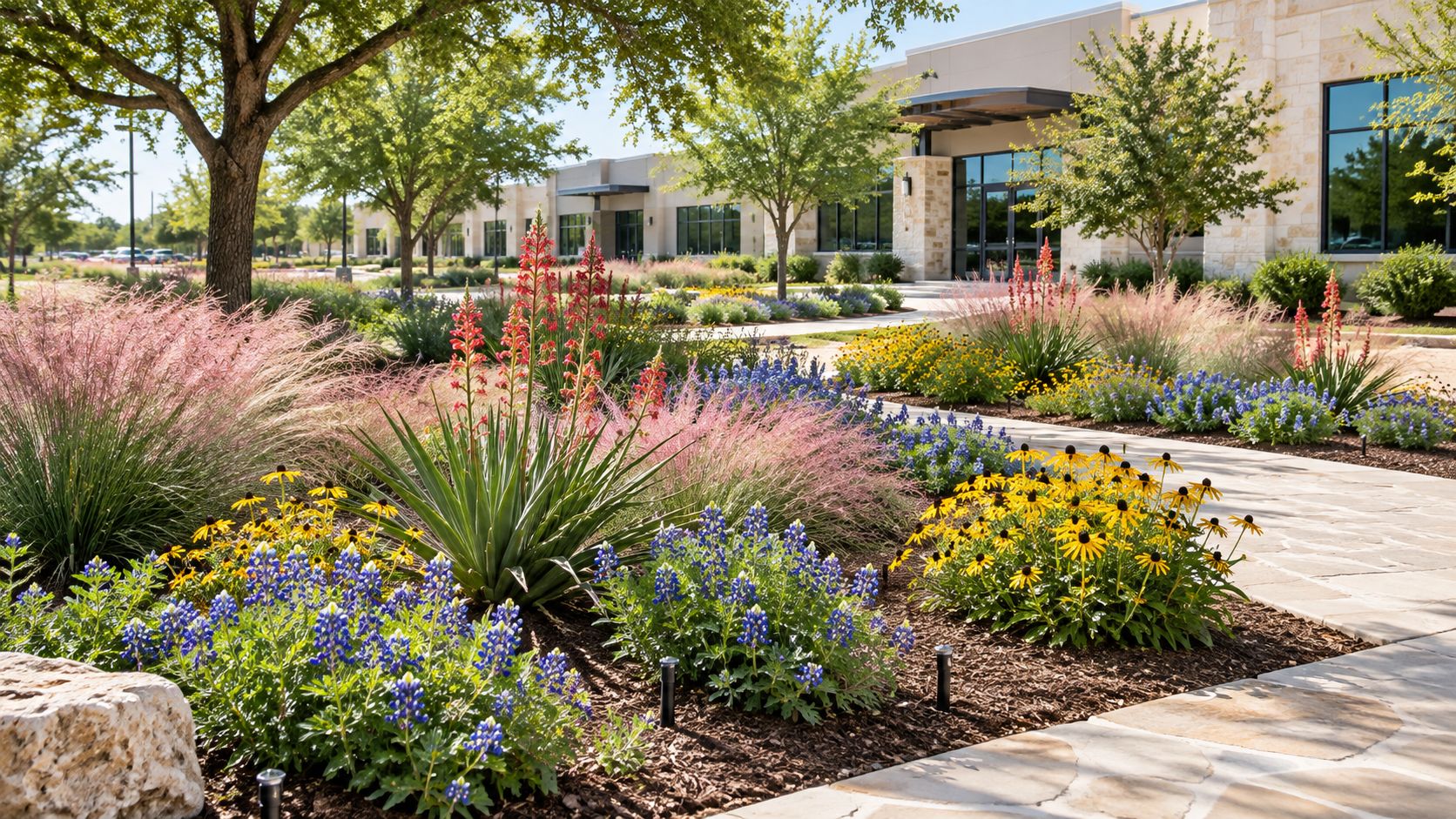
On school campuses, the plant palette should earn its keep. That means choosing species that hold their form, tolerate the local climate, recover from incidental student traffic, and do not require constant seasonal change-outs to look cared for. Native and climate-adapted mixes usually perform better on those terms than ornamental displays designed for a short visual peak.
That choice affects more than maintenance hours. It shapes water use, summer shade, litter cleanup, root conflicts near walks, and how the campus reads in October, January, and May, not just at ribbon-cutting.
A practical comparison looks like this:
| Planting approach | Common outcome on schools |
|---|---|
| High-color seasonal emphasis | Strong first impression, higher replacement cost and labor demand |
| Climate-adapted shrubs and perennials | More consistent appearance, lower water and fertilizer input |
| Native or regionally appropriate trees | Better long-term canopy structure, habitat value, and teaching potential |
| Mixed evergreen and deciduous layers | More reliable year-round presence than short bloom cycles |
Trees deserve careful scrutiny because they deliver some of the best long-term return on a campus. The right species can lower heat load in outdoor gathering areas, improve comfort at pickup zones, and reduce pressure to add expensive shade structures later. The wrong species can create pavement heave, messy fruit drop, frequent pruning calls, and years of water stress. For campuses balancing canopy growth with conservation goals, this guide to drought-tolerant trees in Texas is a useful starting point.
Outdoor learning zones should work on ordinary school days
The most successful outdoor learning areas are part of the daily campus pattern. Students pass them on the way to class. Teachers can use them without advance setup. Grounds crews can maintain them without dragging hoses across walks or opening locked gates.
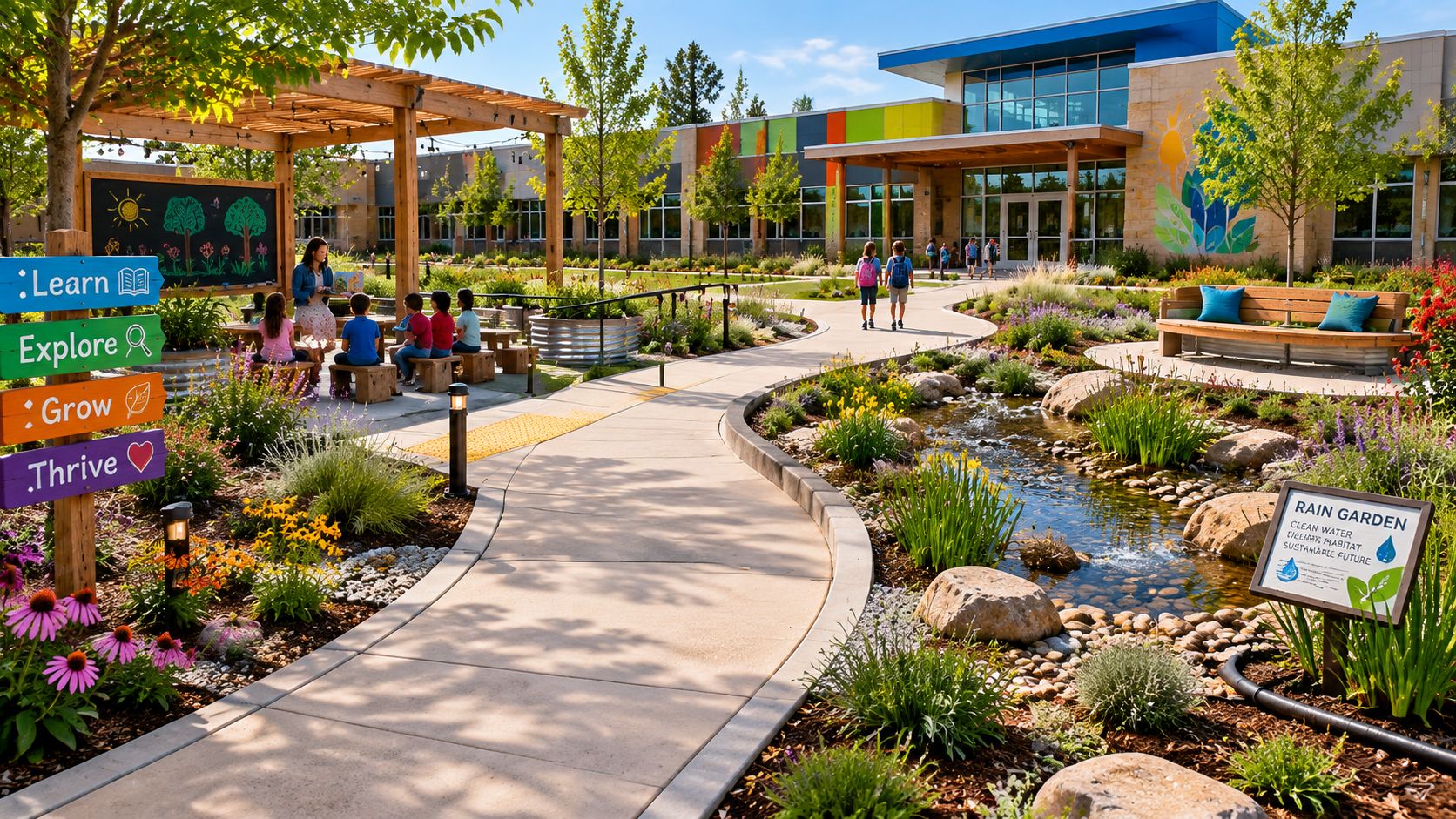
That changes the design brief. A teaching garden near classrooms with clear edges, durable seating, and simple planting beds will usually outperform a larger showcase area hidden at the edge of the site. Visibility matters. So does supervision. So does the practical question every facilities director eventually asks: who is going to maintain this in year four?
Useful learning zones often include:
- Sensory planting areas with texture, fragrance, and visible seasonal change
- Pollinator habitat beds that support science observation without becoming overgrown
- Edible or demonstration gardens where staff support, soil quality, and water access are already planned
- Shade-based study areas under canopy trees or adjacent to covered seating
- Seasonal teaching beds that make dormancy, flowering, fruiting, and leaf drop easy to observe
The return on these spaces comes from repeated use, not novelty. A modest outdoor classroom that gets used twice a week delivers more value than an elaborate garden that looks good in photos and sits empty because access, shade, and upkeep were not resolved.
Keep the detailing straightforward. Durable edging, plants with a predictable mature size, and layouts that allow easy mulching and pruning protect the school's investment and keep the space useful long after the initial enthusiasm wears off.
Irrigation and Long-Term Maintenance Implications
A campus often looks polished at ribbon cutting and starts costing more than expected by year three. The pattern is familiar. Planting survives, but water bills climb, turf declines in patches, crews spend too much time on edging and corrective pruning, and small irrigation failures turn into replacement costs. That is rarely a maintenance problem alone. It is usually a design and operations problem that showed up later.
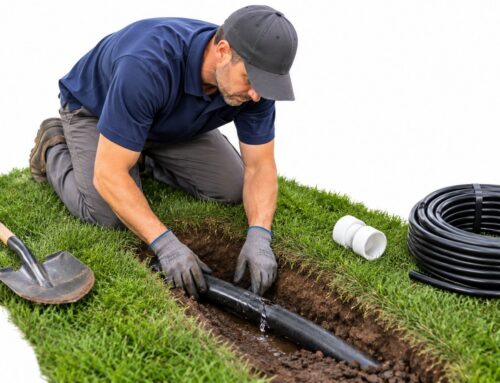
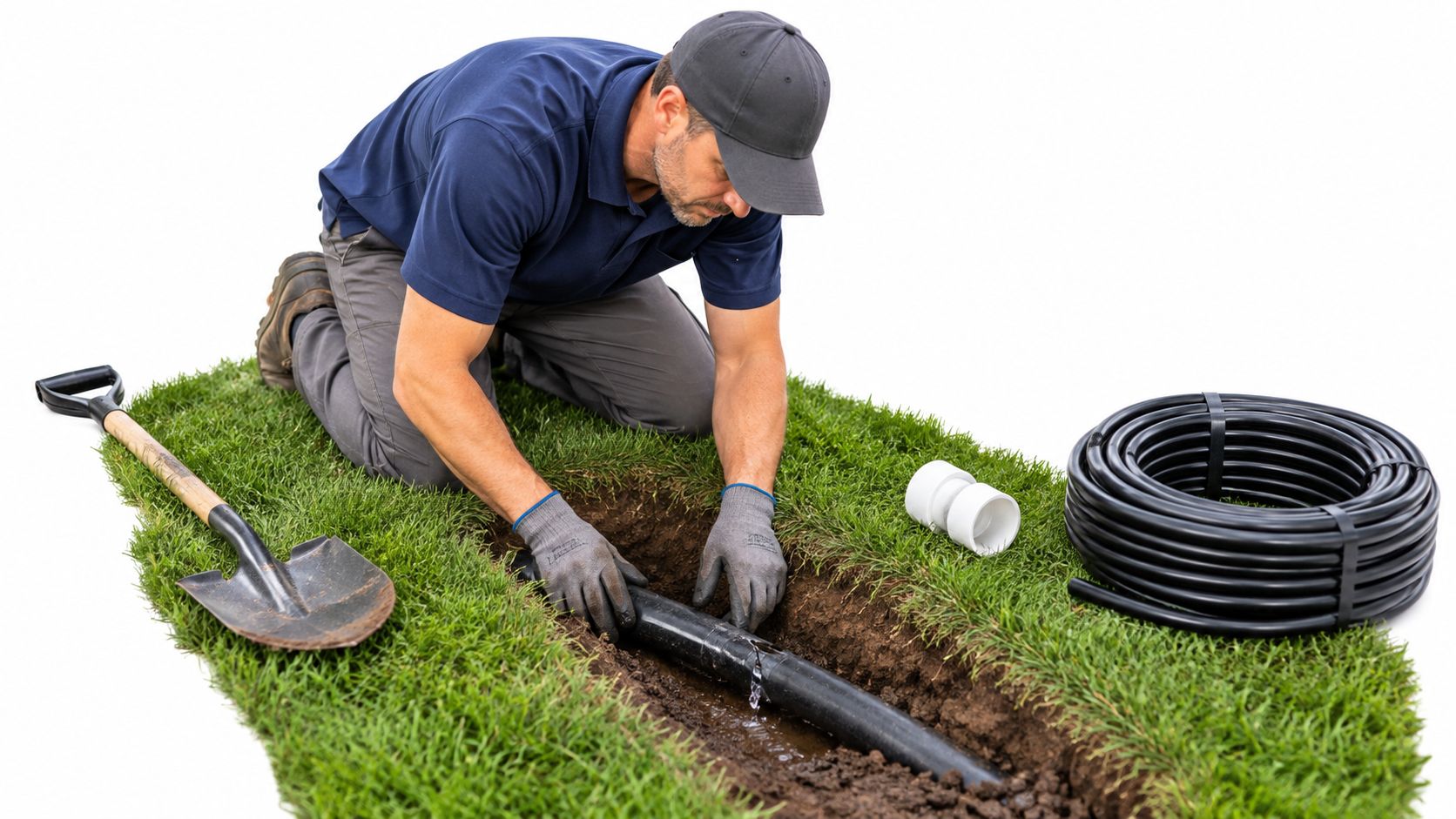
Irrigation has a direct effect on lifecycle cost, risk, and campus performance. A system that applies the right amount of water to the right zone protects plant health, reduces runoff, and cuts waste the district pays for every month. For schools trying to improve long-term water use and system reliability, this overview of water management and irrigation in Texas commercial landscaping gives a useful starting point.
Irrigation design decides operating cost
The first question is not equipment brand. It is zoning. If annual color, drought-tolerant shrubs, and tree root zones share one schedule, someone will compensate for the driest area and overwater everything else. Hydrozoning fixes that by grouping material with similar demand and exposure. It is one of the simplest ways to protect both plant quality and operating budget.
Good school irrigation plans usually include a few consistent decisions:
- Separate schedules by hydrozone and sun exposure so courtyards, entries, play areas, and open turf are not treated the same.
- Drip irrigation in beds where targeted application reduces overspray on walks and buildings.
- Even precipitation in turf areas so crews are not chasing dry bands and saturated corners.
- Smart controls and routine auditing to adjust for weather, breaks, and seasonal changes before waste becomes visible.
Those choices matter because schools own these systems for a long time. A cheaper layout at installation can produce years of higher water use, more service calls, and more frequent plant replacement. Boards should evaluate irrigation the same way they evaluate roofing or paving. Initial cost matters, but so do service life, efficiency, and the cost of avoidable failure.
Maintenance needs should shape the design
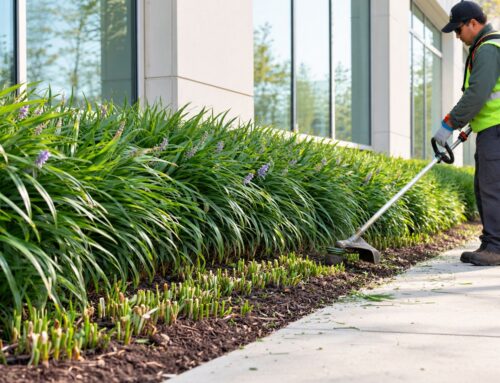
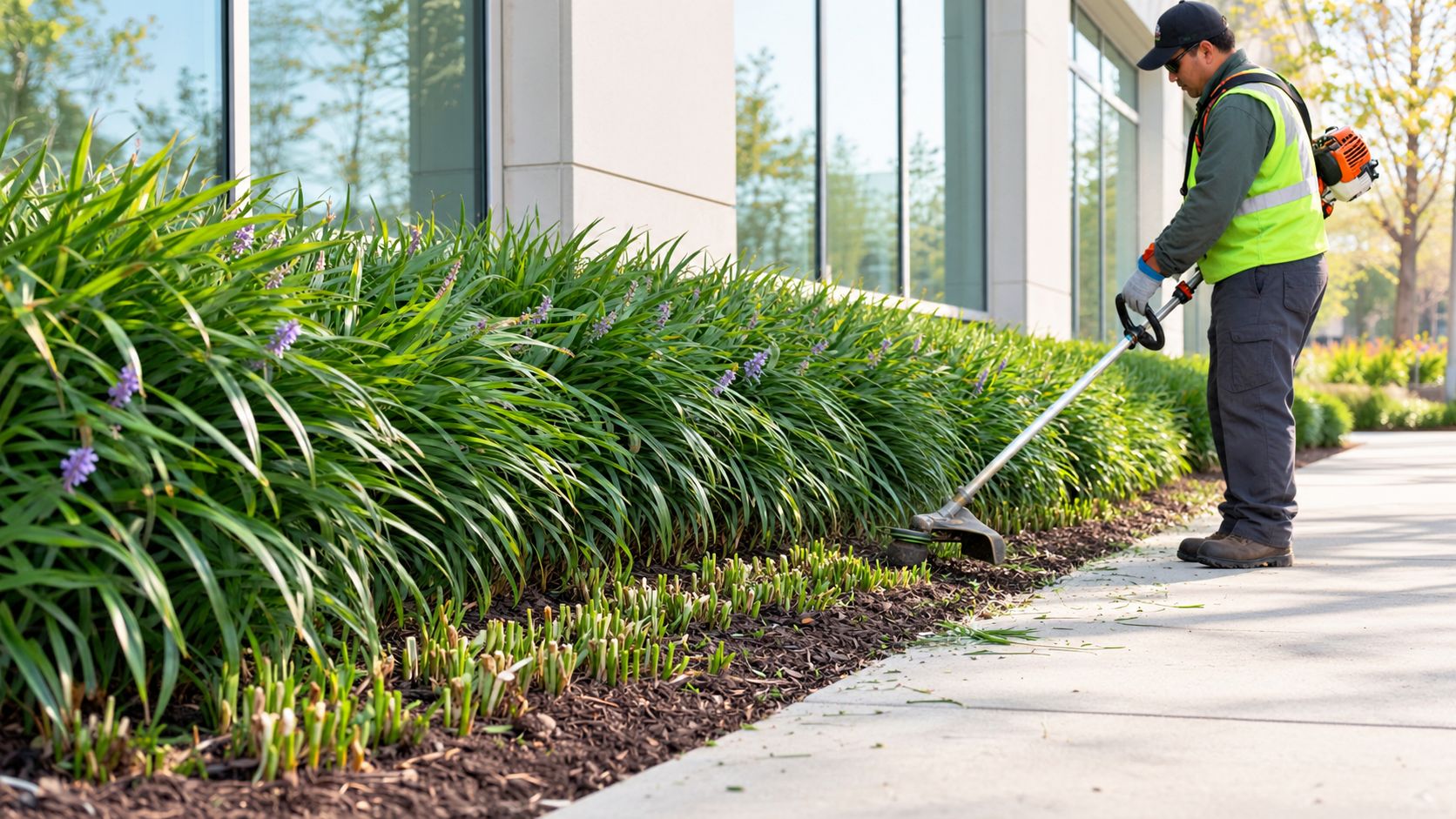
Maintenance labor is one of the biggest drivers of total grounds cost. Schools feel it every week. Beds that are too narrow to mulch efficiently, shrubs that outgrow their space, and decorative edges that interrupt mowing all add recurring labor without adding much student value.
The strongest school sites are usually the easiest to care for.
That means specifying plants by mature size, leaving room for air movement and sightlines, and using details crews can maintain with standard equipment. Broad bed masses hold moisture better and resist foot traffic more effectively than thin strips along walks. Simple transitions at pavement edges reduce trimming time. Soil preparation and mulch depth also matter because they affect weed pressure, establishment rates, and irrigation demand during the first few growing seasons.
One practical option for schools that want design, installation, irrigation coordination, and ongoing care under one operational umbrella is Prestonwood Commercial Grounds Services. The point is not branding. It is project delivery. On institutional campuses, long-term performance improves when maintenance realities are built into design decisions rather than addressed after handoff.
Maintenance plans should be written to match the grounds that were built, not copied from a generic campus checklist.
A useful maintenance plan is specific. It defines seasonal pruning intent, irrigation inspection intervals, turf performance expectations, replacement standards, and who monitors plant establishment after installation. Without that level of clarity, a school can approve a good-looking project and still miss the staffing, water management, and upkeep required to protect the investment.
The return on this work shows up over time. Lower water waste, fewer replacements, safer sightlines, and less corrective labor free up budget for other campus needs while keeping the site attractive and functional for students, staff, and families.
Budgeting Phasing and Real-World Campus Examples
A school board approves a campus upgrade, then practical constraints emerge. Summer construction windows are short. Bond dollars are finite. Staff still need safe arrival routes on the first day of school. That is why phasing matters. A campus plan should protect daily operations while improving the parts of the site that create the highest cost, risk, or maintenance burden.
The best first investments usually fix problems that keep draining budget year after year. Poor drainage kills plant material and damages pavement. Confusing circulation creates supervision problems and liability concerns. Aging irrigation wastes water and drives up utility costs. Entry walks, shade structures, and learning gardens matter, but schools usually see a stronger return when early phases reduce recurring repairs, water loss, and safety exposure.
A practical sequence often looks like this:
- Phase one corrects the issues with the highest operational impact, such as failing pedestrian routes, weak sightlines, drainage failures, and irrigation systems that no longer match the site.
- Phase two improves the spaces students and families use every day, including primary entries, commons areas, shaded seating, and gathering zones.
- Phase three adds program spaces that support instruction and campus identity, such as gardens, courtyards, and outdoor teaching areas.
That order helps a district tie each expenditure to a measurable outcome. Fewer slip hazards. Lower water use. Less emergency repair work. Better supervision at arrival and dismissal.
Phasing only works if the full campus vision is resolved early. Without that discipline, schools end up funding isolated projects that do not connect well. One grant adds a garden. A later capital cycle replaces front entry planting. Facilities staff adjust irrigation to solve an immediate problem, and the system no longer supports the next improvement phase. Costs rise because earlier work was not planned to support later work.
Schools planning multi-year exterior improvements often benefit from design-build commercial site projects from concept to long-term success because design intent, construction decisions, and maintenance requirements stay aligned across phases. That continuity reduces change orders, avoids rework, and gives facilities teams a clearer path for long-term care.
The visual difference is often obvious in completed campus work.

Good school grounds earn their keep. They direct movement clearly, tolerate heavy use, conserve water, and present a campus that feels orderly and well managed. The return is not cosmetic. It shows up in fewer recurring site failures, more predictable maintenance costs, stronger first impressions, and outdoor spaces students can use safely every day.
If your district is evaluating a renovation, expansion, or full campus master plan, Prestonwood Commercial Site Services can help assess existing conditions, align design choices with maintenance budgets, and build school grounds that support safety, water conservation, and long-term operational value.