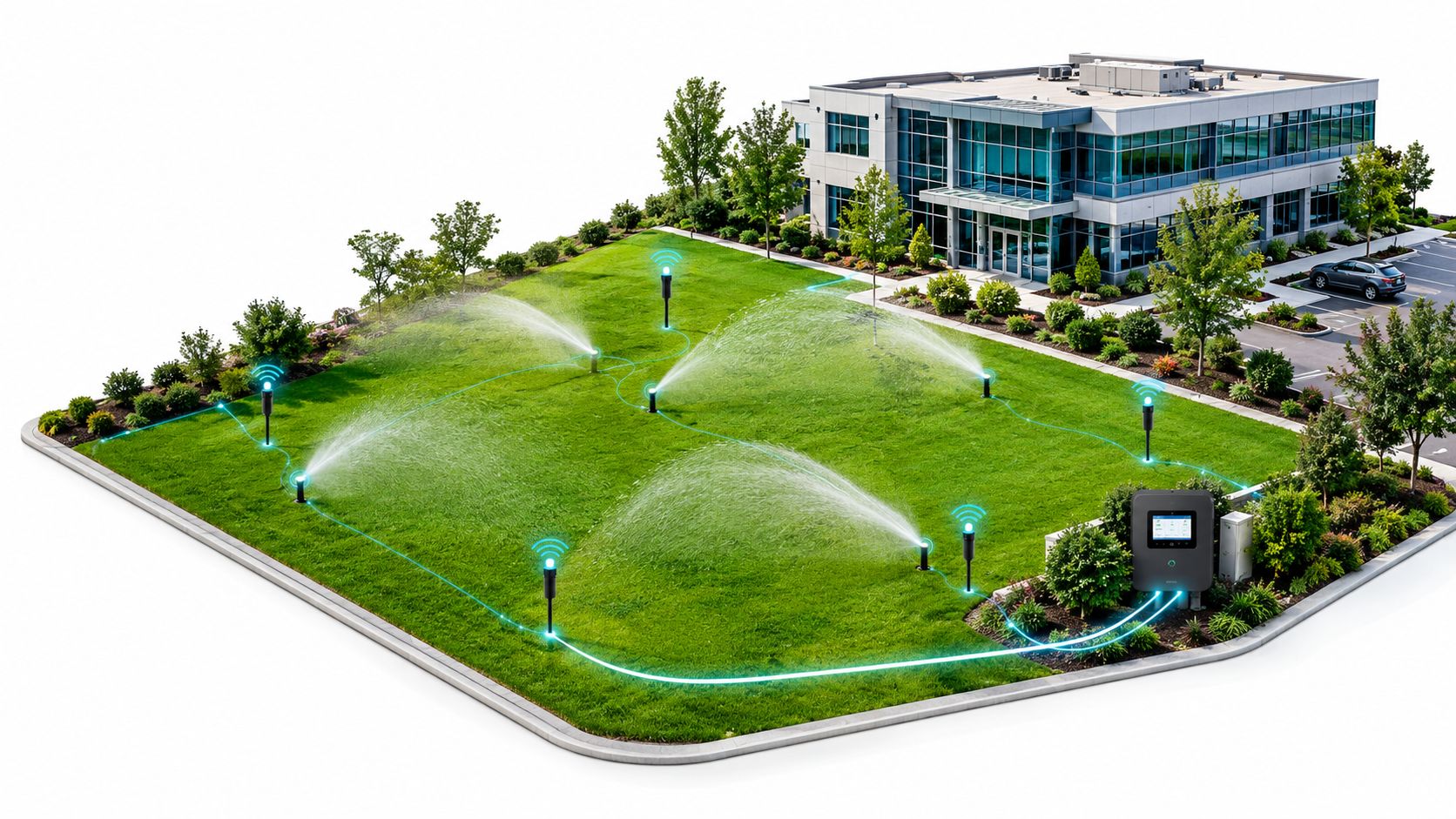
A smart irrigation system can sit on top of nearly 28 million sprinkler systems already installed in the U.S., yet fewer than 10% use smart controllers, which means most commercial grounds still water on a schedule instead of on conditions ASCE engineering review. That gap matters for facility directors because the biggest savings usually come from replacing waste at scale, not from buying a flashy controller and hoping the rest of the system takes care of itself.
For commercial portfolios, the core question isn't whether the technology exists. It's whether the site has the right hydraulics, the right zoning, and the right maintenance discipline to turn smarter scheduling into lower utility spend and fewer outdoor irrigation failures.
Table of Contents
- The Evolution and Current State of Smart Irrigation
- Core Components of a Commercial Smart Irrigation System
- Comparing Soil Moisture and Weather-Based Controllers
- Measuring ROI and Real-World Water Savings
- Integration with Central Water Management Strategies
- Avoiding Common Implementation and ROI Pitfalls
- Selecting the Right Partner and Planning Your Upgrade
The Evolution and Current State of Smart Irrigation
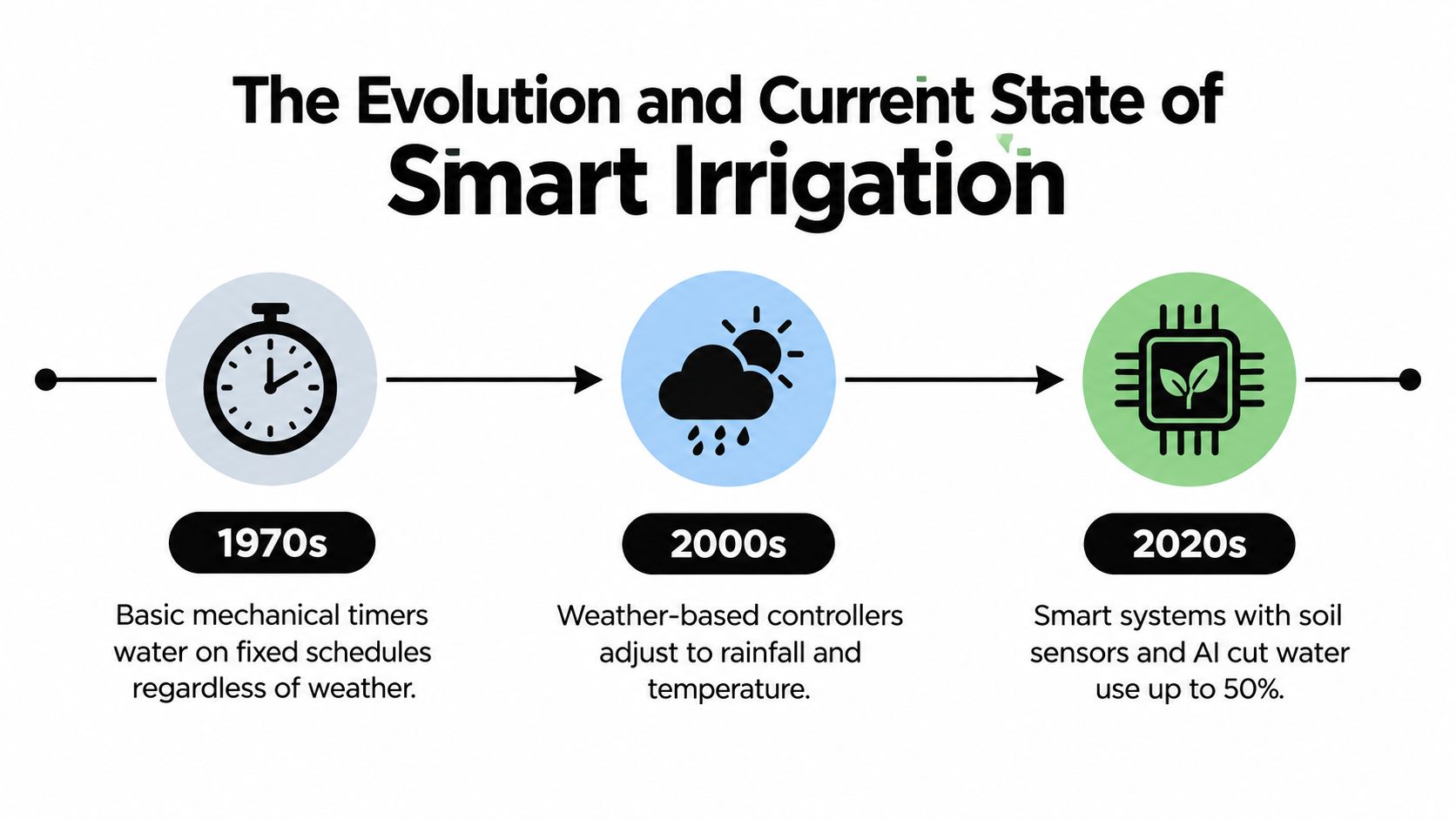
Commercial irrigation moved from manual operation to automatic timers in the 1960s, then to smart controllers promoted in the late 1990s. The technology is mature, but adoption across existing commercial properties remains uneven. For large portfolios, that history matters because replacing a controller is only one part of the work. Wiring, valves, pressure, flow capacity, and hydraulic zoning determine whether the upgrade produces useful savings.
Why the adoption gap matters on real properties
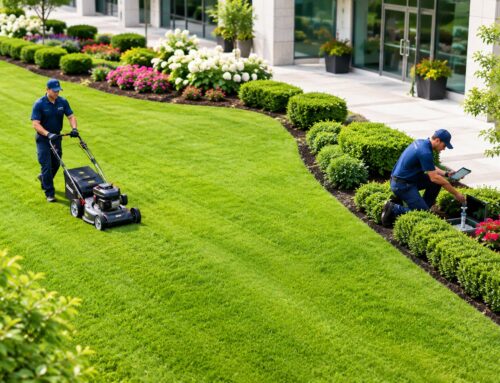
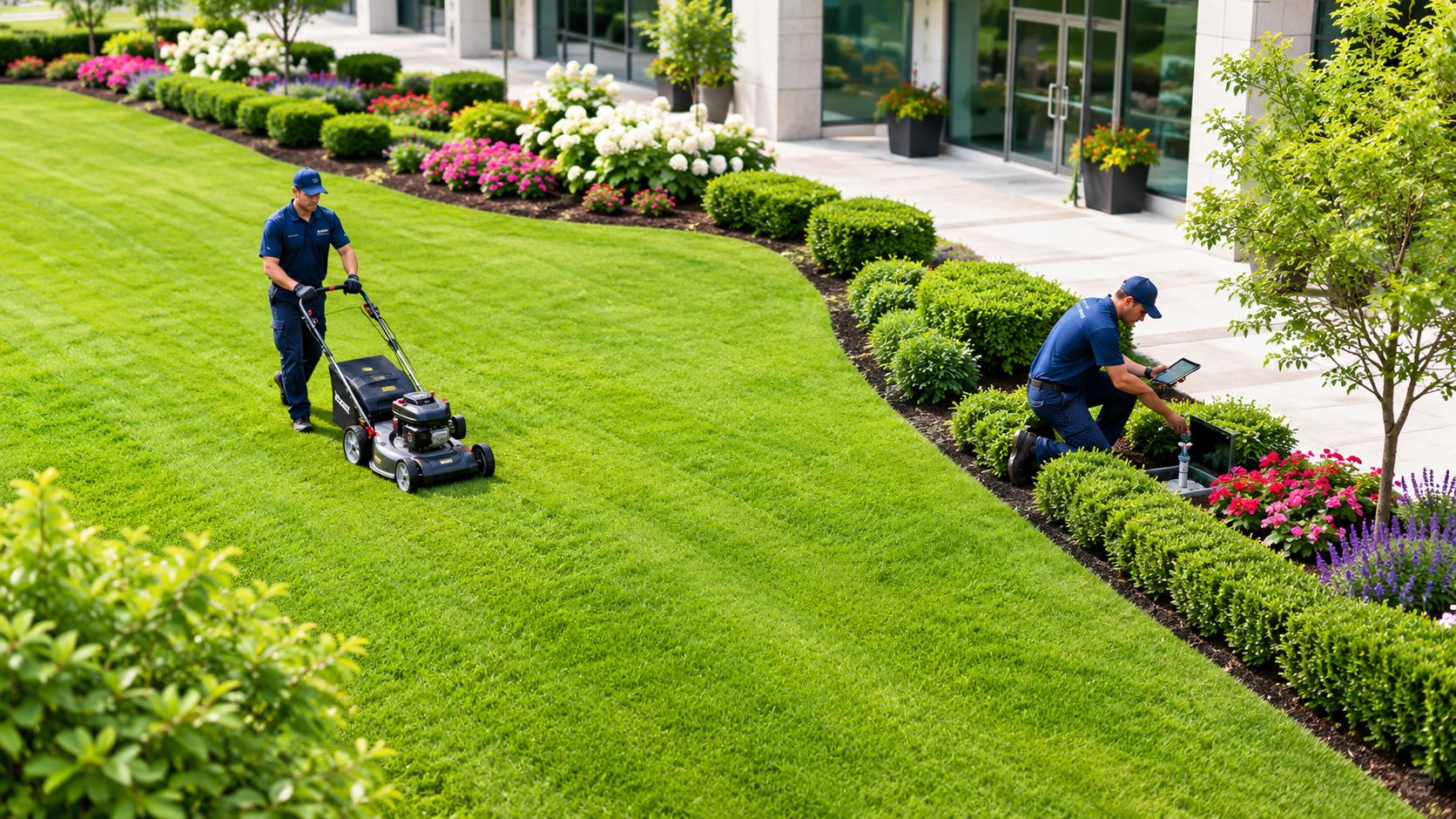
On retrofit walkthroughs, the first issue is often a controller box running a fixed July schedule in October. That schedule may continue watering through rainfall, cooler conditions, or reduced plant demand. The hidden cost is not limited to the water bill. Crews spend time correcting complaints, repairing runoff damage, investigating wet areas, and manually adjusting sites that should have been managed centrally.
WaterSense-labeled smart controllers grew from over 700 in 2020 to nearly 1,000 by 2022, showing that the product category has expanded while many existing systems still rely on basic timers ASCE engineering review. That combination creates a practical retrofit opportunity, but it does not guarantee a positive return.
A smart controller can adjust schedules to weather or field conditions, yet it cannot correct mismatched spray heads, leaking valves, poor pressure, or zones that combine turf with planting beds. Those defects can erase expected savings and increase service calls. Portfolio managers should therefore evaluate the controller alongside site hydraulics, zone design, labor requirements, and the cost of ongoing calibration.
Practical rule: If irrigation depends on someone remembering seasonal adjustments, the schedule is already creating avoidable operating cost.
Vendor support and replacement parts also affect long-term value. Mature technology may be readily available, while installation quality, programming discipline, and technician familiarity vary by provider. The system should be judged as an operating tool that protects water budgets and property condition, not as a one-time hardware purchase.
Core Components of a Commercial Smart Irrigation System
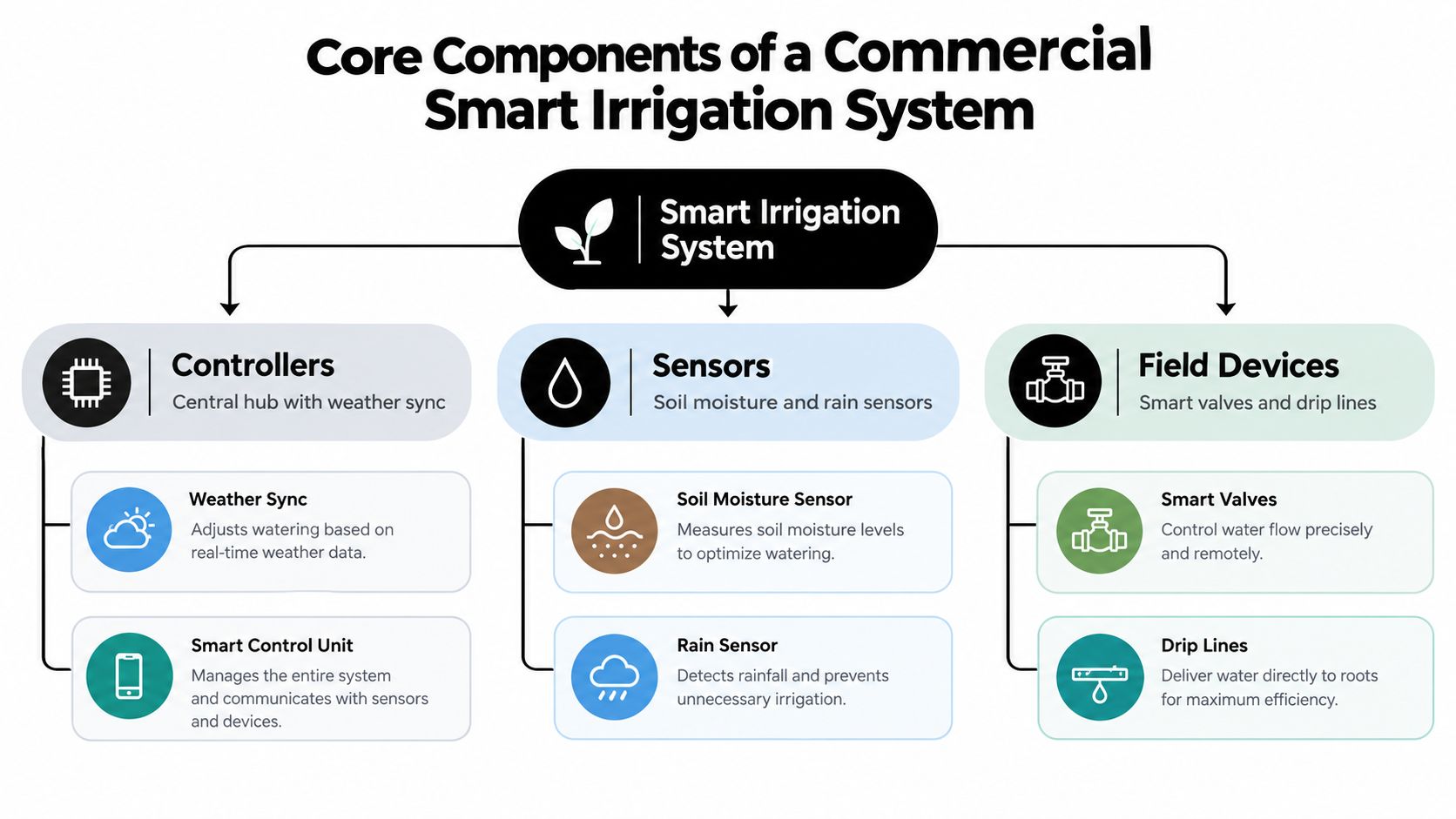
A commercial smart irrigation system has three moving parts that have to work together cleanly. If one layer is weak, the whole system still waters poorly, just with better software on top.
Sensors
Sensors collect the site data the controller needs to make a decision. Soil moisture sensors watch the root zone directly, rain sensors stop irrigation during precipitation, and freeze-related inputs protect equipment and plants when conditions turn risky. In practice, sensor placement is where many projects succeed or fail, because a sensor in the wrong soil type or the wrong exposure can make bad decisions look automated.
Controllers
The controller is the brain. It receives sensor input, compares that input against programmed thresholds or weather logic, and decides whether to run a zone, delay it, or skip it entirely. For a commercial site, that means the controller should reflect how the property is built, with the right zone grouping, the right run times, and the right seasonal expectations.
Telemetry and remote management
Telemetry links the field hardware to a central management view. That matters on multi-building campuses and regional portfolios because managers can see alerts, revise schedules, and verify performance without physically standing at every controller box. If your team is also building a service funnel, a resource like lawn service lead generation can help connect operational visibility with customer acquisition, though it's a separate function from irrigation itself.
A simple field example makes the architecture easier to trust. If a rain sensor detects an unexpected downpour, the controller should stop the affected zone instead of letting the cycle finish just because a clock said it was time. That's the difference between scheduled watering and condition-based watering.
Comparing Soil Moisture and Weather-Based Controllers
Controller type affects operating cost as much as brand. Two systems can both carry a “smart” label yet make very different decisions across a commercial portfolio. Treating them as interchangeable can leave facilities teams paying for sensors, connectivity, and service visits without correcting poor hydraulic zoning or inefficient runtimes.
Soil moisture logic versus weather prediction
Soil-moisture controllers use a threshold loop. If the root zone remains wet enough, irrigation is delayed or skipped. Once moisture falls below the configured setpoint, the controller permits watering. This approach suits high-value turf, sensitive planting beds, uneven soils, and areas where runoff or overspray is already visible.
Weather-based, or evapotranspiration, controllers use local climate data to estimate water loss and adjust runtimes. They fit broad, mixed-use properties where managers need consistent scheduling across many zones as temperature, wind, and rainfall change. Their efficiency depends on accurate zone information and seasonal tuning, not just on installing a weather station.
EPA materials note that WaterSense-labeled soil moisture sensors can reduce outdoor water use, while GSA findings report typical savings of 20% to 40% compared with conventional timer systems GSA findings. These figures describe potential, not a guaranteed project result. A poorly divided system can still overwater, even with advanced control logic.
| Feature | Soil Moisture Controllers | Weather-Based (ET) Controllers |
|---|---|---|
| Decision logic | Stops watering when soil is already wet enough | Adjusts runtime based on climate data |
| Best fit | High-value turf, sensitive planting areas, uneven soils | Broad commercial properties, multi-zone portfolios |
| Main strength | Direct root-zone feedback | Site-wide scheduling efficiency |
| Main risk | Poor sensor placement or shallow installation | Bad baseline zone data or weak seasonal tuning |
| Maintenance focus | Calibration, placement, sensor checks | Weather settings, seasonal updates, runtime reviews |
Operational insight: The simpler option on a proposal may demand more field discipline, especially where one sensor represents several soil types or exposure conditions.
Before approving hardware, review our guide to translating root-zone moisture data into irrigation decisions. Use that material to pressure-test whether a vendor is designing around your site or merely swapping hardware. Ask how the system will separate turf, shrubs, slopes, and high-use areas, then price the ongoing calibration and verification work. Those hidden service costs often determine whether water savings become a credible return or an expensive dashboard.
Measuring ROI and Real-World Water Savings
The ROI case becomes clearer when water use is measured against the operating burden of a managed property. A smart irrigation system can lower utility costs, reduce unnecessary pump and piping demand, and limit the maintenance problems caused by overwatering. For large portfolios, the larger opportunity often comes from consistent control across hydraulic zones, not from a single efficient controller.
What the verified data supports
The U.S. Department of Energy cites typical water-use reductions of 15% to 40% from advanced irrigation controls, including a 372,000-square-foot Dallas office complex that saved 12.5 million gallons in its first year, a 40% reduction DOE advanced irrigation controls.
Those figures describe potential, not a guaranteed project result. Commercial savings usually come from repeated corrections across many zones and sites. Broken heads, overspray, excessive runtimes, and poorly separated turf and planting areas can keep wasting water even after a controller upgrade. If the hydraulic design is wrong, smarter scheduling only manages a flawed distribution system more efficiently.
What owners should expect, and what they shouldn't
A smart system usually produces its strongest improvement where the existing baseline is weak. Frequent manual overrides, limited seasonal adjustment, and inconsistent zone programming create more recoverable waste than a property already maintained close to its practical water requirement.
Labor also belongs in the ROI calculation. Include the cost of commissioning, zone mapping, sensor checks, seasonal programming, alert review, and field verification. A lower water bill can be offset when staff must repeatedly correct bad zone data or respond to false alarms.
Budgeting rule: If you cannot show the current waste, you cannot credibly forecast the payback.
For a plain-language view of the operational trade-offs, see our breakdown of how water conservation upgrades change the operating cost picture. Use it to connect water consumption with service frequency, equipment condition, and long-term property value.
The strongest business case combines lower water use with fewer emergency callbacks, more consistent plant performance, and less reactive maintenance across the portfolio. That case is more credible than promising that software alone will solve distribution, hydraulic, or maintenance problems.
Integration with Central Water Management Strategies
A smart irrigation system becomes much more valuable when it's tied into central water management. On a single site, the benefit is convenience. On a portfolio, the benefit is control.
From scattered controllers to one operating view
Central management lets facility teams see multiple controllers in one dashboard, which is useful when sites sit in different neighborhoods, use different contractors, or have inconsistent seasonal staffing. Recent market coverage points toward IoT, LPWAN, cloud control, and machine learning as the direction the category is moving, and that direction makes sense for large commercial properties because irrigation is no longer just a field task, it's a data task.
Leak detection, flow monitoring, and compliance reporting matter more than ever. A central platform can surface abnormal water use faster than a weekly walk-through, and that can stop a failed valve or broken line from becoming a prolonged waste event. On properties facing municipal watering rules, centralized reporting also makes it easier to document when schedules changed and why.
What facility teams should ask for
A central water strategy should answer three questions without manual digging:
- What changed? Schedule edits, weather overrides, alerts, and valve events should be visible.
- Where is the waste? Abnormal flow, repeated alarms, or zones that never stabilize should stand out.
- Who owns the response? Someone needs responsibility for the next step, whether that's a vendor, in-house staff, or both.
For directors comparing service models, central water control guidance is a practical starting point for thinking about how connected irrigation fits into broader facility oversight. The point isn't to buy software for its own sake, it's to reduce blind spots across the whole property group.
A central dashboard doesn't make a bad irrigation design good. It does make the bad design easier to find quickly.
Avoiding Common Implementation and ROI Pitfalls
The controller is rarely the first fix a large commercial property needs. Broken heads, uneven pressure, poor hydrozoning, and chronic overspray can cause waste long before software enters the conversation. A smart controller will automate those conditions with greater precision, but it will not repair the hydraulic system.
Why audits come first
The irrigation review reports that moving from flood or furrow methods to pressurized drip or micro-sprinkler systems can produce total water savings of 25% to 60% commercial irrigation review. That finding provides useful context for capital planning, but it does not describe the return from replacing a controller alone. Buyers often overestimate how quickly software will pay back when the underlying equipment and hydraulic zoning remain unchanged.
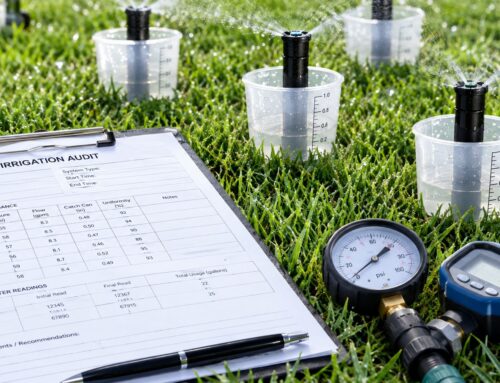
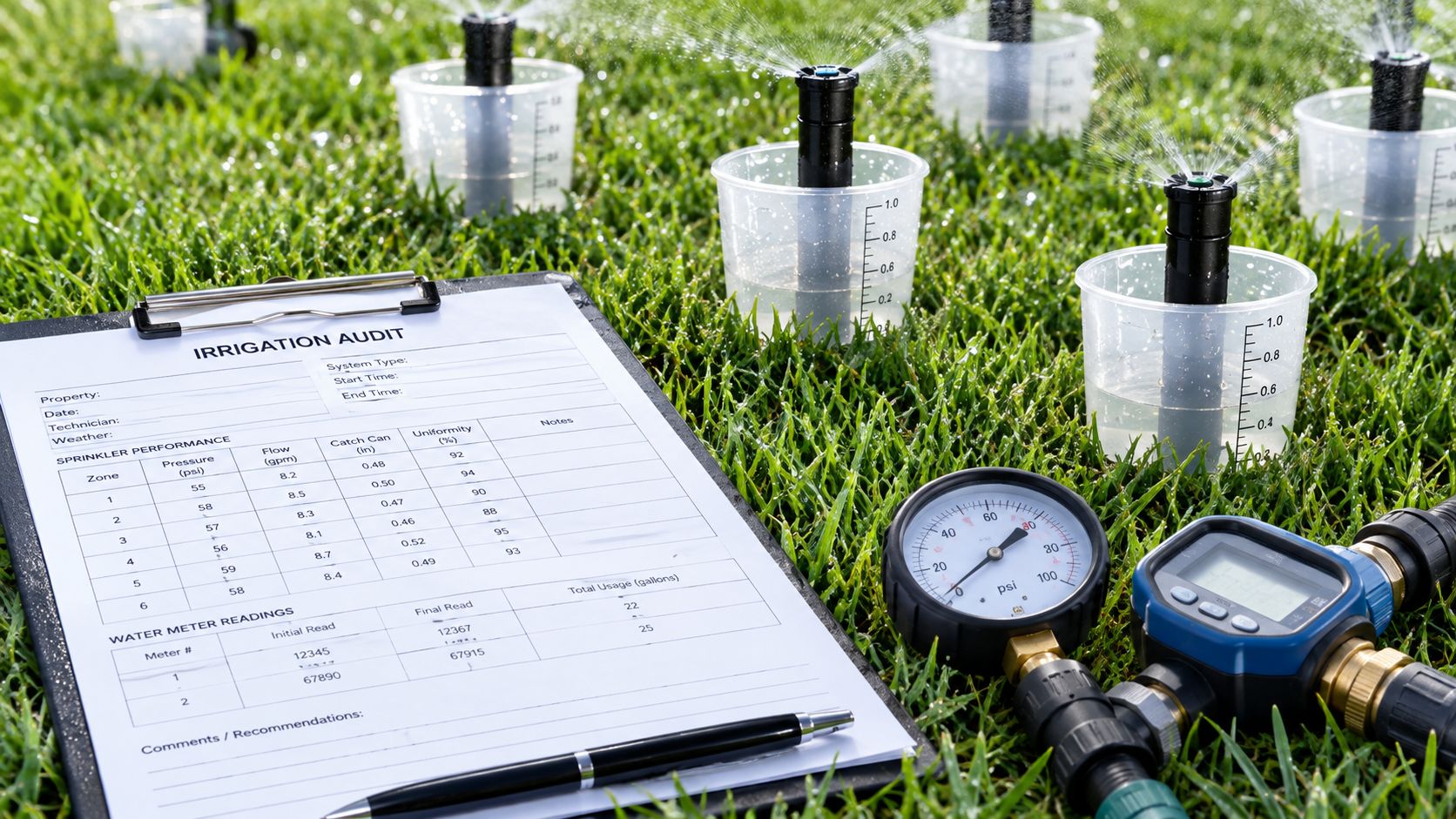
A commercial audit should precede any retrofit budget. Inspect pressure across zones, identify mismatched precipitation rates, locate leaks, and confirm that the plant material in each zone has similar water requirements. On a multi-property portfolio, documenting these conditions also helps directors prioritize repairs instead of applying the same upgrade to every site.
The hidden costs facility teams should plan for
Equipment is only part of the investment. Labor continues after installation. Staff or contractors must calibrate sensors, verify zone performance, adjust schedules as seasons change, and respond to field failures. If those tasks are excluded from the operating plan, a complex controller can sit on top of conventional performance while the expected payback slips.
A practical rollout starts with the audit, followed by repairs, zoning corrections, controller programming, and staff training. This order reduces rework and keeps the capital case tied to measurable operating improvements. For large portfolios, assign ownership for recurring checks and include that labor in the ROI model from the beginning.
A vendor discussing software without addressing pressure, zoning, and field repairs has not finished the proposal.
Selecting the Right Partner and Planning Your Upgrade
A commercial upgrade works best when the vendor understands both plants and plumbing. On large properties, irrigation is part horticulture, part mechanical system, and part operations management.
What to ask before you sign
The strongest proposals usually answer a few practical questions upfront. Ask how the team handles telemetry integration, how often it revisits seasonal settings, and who is responsible for calibration after install. If the answer is vague, that's a warning sign.
You should also ask how the vendor documents baseline conditions before work begins. A proper scope should show the current irrigation problems, the proposed fixes, and the maintenance assumptions behind the expected outcome. Without that, the payback discussion is mostly guesswork.
A realistic upgrade sequence
- Site audit and hydraulic assessment. Find leaks, pressure issues, overspray, and zone conflicts first.
- Repair and reconfigure. Fix broken equipment and correct the layout before adding intelligence.
- Install and program. Set controllers, sensors, and remote access around actual site conditions.
- Train staff. Make sure in-house teams know how to read alerts, adjust schedules, and escalate problems.
- Review seasonally. Treat the system as living infrastructure, not a one-time install.
For commercial owners who want one partner to handle outdoor area service, irrigation audits, central water management, and ongoing maintenance, Prestonwood Commercial Services is one option to evaluate alongside other qualified vendors. The right partner should reduce guesswork, not add a new layer of it.
Choose the upgrade path that fits the property you manage, not the one described in a sales brochure. If you're ready to evaluate a commercial irrigation retrofit, request a site review from Prestonwood Commercial Landscape Services and compare the findings against your current water bill, zone layout, and maintenance workload.