The EPA estimates that landscape irrigation represents nearly one-third of all residential water use, reaching nearly 9 billion gallons per day, and that as much as 50% of residential outdoor water can be lost through evaporation, wind, or runoff. (EPA WaterSense outdoor guidance) For a Texas commercial property, that's more than a conservation statistic. It's a warning that irrigation architecture, programming, and field maintenance directly affect operating costs, plant health, tenant experience, and drought resilience.
A commercial irrigation system rarely fails because a controller lacks enough features. It fails because the design ignores pressure differences, zones plants incorrectly, applies water unevenly, or gives maintenance crews no clear rules for responding to leaks and changing site conditions. The most reliable irrigation design treats hardware, calculations, commissioning, and governance as one operating system.
Table of Contents
- The Business Case for Efficient Irrigation Systems
- Site Analysis and Hydrologic Calculations
- Component Selection and Smart Control Integration
- Avoiding the Water-Saving Paradox
- Regulatory Compliance and Contractor Selection
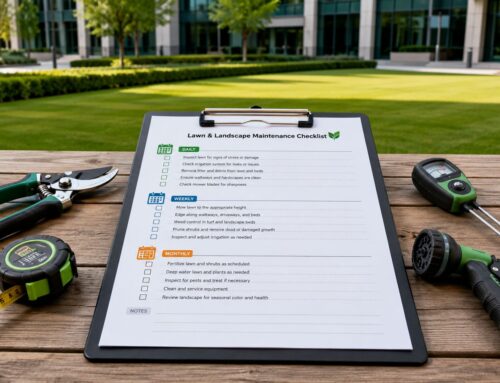
- Commissioning and Maintenance Checklists
The Business Case for Efficient Irrigation Systems
Water is a controllable operating expense. On a Texas commercial property, poor irrigation design can wet pavement, oversaturate low areas, miss dry turf, and prompt crews to extend runtimes. Each cycle repeats the loss. Plant stress then creates repair work, replacements, tenant complaints, and avoidable service calls.
For high-traffic retail centers, office campuses, healthcare sites, and homeowner communities, irrigation performance also affects daily operations. Overspray can leave walkways slippery, stain hardscape, move mulch, and increase cleaning demands near entrances. Uneven coverage forces managers to choose between dry planting and excess water, while damaged turf or stressed ornamentals weaken the property's appearance.
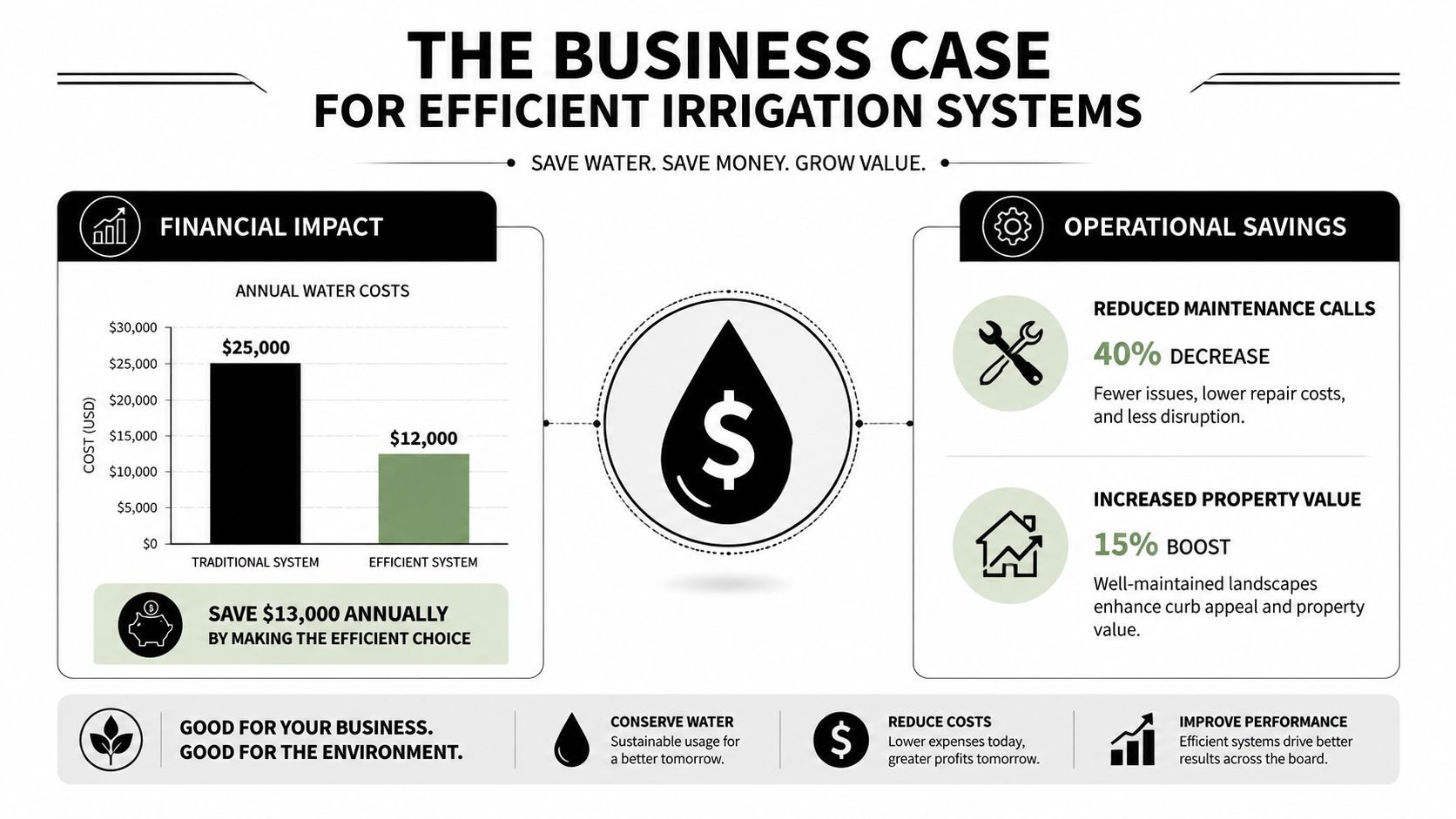
Heat, irregular rainfall, water restrictions, and varied site exposure make a single schedule unreliable across a Texas property. Sunny medians, shaded building edges, narrow planting strips, and compacted soil beside pedestrian routes require different operating responses. Zone separation, matched application, pressure control, and disciplined scheduling protect the grounds while giving maintenance staff clear limits for runtime changes.
The business case therefore includes governance, not just equipment. A system should have assigned inspection responsibilities, documented adjustment rules, and a process for responding to broken heads, leaks, pressure changes, weather shifts, and recurring dry spots. Without those controls, efficient hardware can still produce waste because crews compensate for defects by increasing runtimes.
Design quality protects more than the water bill
Managers should evaluate water delivery by its effects on the entire property. Runoff can erode soil and mulch, while persistent overspray can damage surfaces and create slip exposure. Underwatered plants reduce curb appeal, and repeated service calls consume labor that could support other site needs.
A measurable system gives the property team a stronger operating basis than visual checks or complaint-driven maintenance. Dedicated irrigation meters, pressure verification, and water budgets help identify abnormal use and support documented corrections. These practices align with commercial water-conservation irrigation guidance while leaving room for site-specific scheduling and maintenance standards.
Design review should compare installation cost with recurring labor, cleaning, repairs, plant replacement, and water-use risk. A home sprinkler cost calculator can organize preliminary cost questions, but commercial work requires a site-specific hydraulic plan, material specification, commissioning record, and lifecycle review. The goal is an irrigation asset that crews can inspect, adjust, and document before small failures become operating problems.
Site Analysis and Hydrologic Calculations
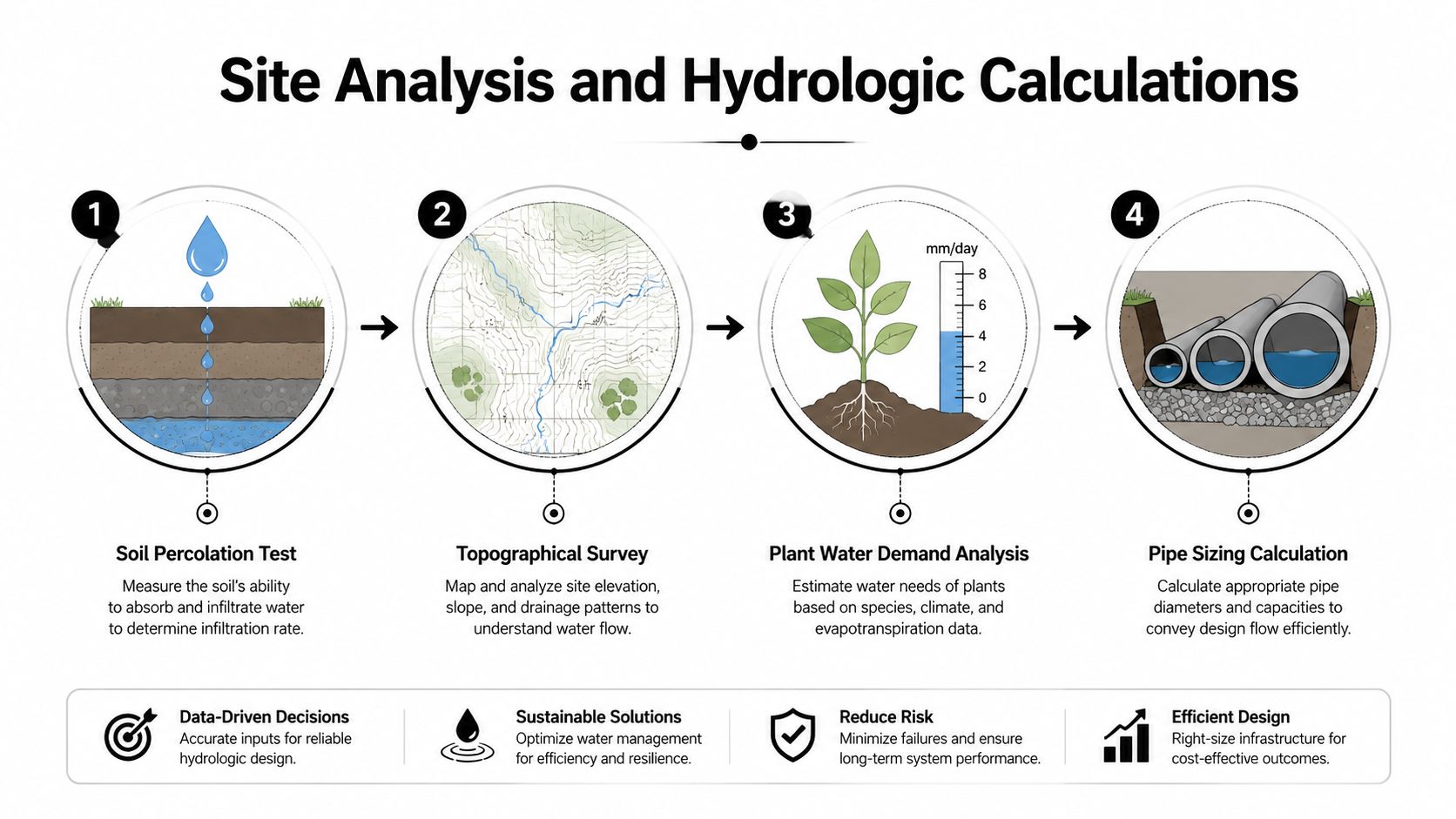
Pipe placement comes after site analysis. Before selecting heads or drawing zones, document the water source, available pressure, flow capacity, soil conditions, slopes, drainage patterns, exposure, existing vegetation, hardscape, and areas where pedestrians or vehicles constrain spray.
A useful workflow starts with hydrozoning, the practice of grouping plants with similar water requirements. Turf should generally be separated from shrub beds, seasonal color, trees, and low-water plantings when their demand or application method differs. Sun and shade create additional distinctions. A south-facing median may dry quickly, while a shaded planting bed beside a building may retain moisture longer.
Build the water-demand model
Reference evapotranspiration, or ETo, provides the weather-based starting point for estimating atmospheric water loss. ETo changes with season, climate, and site exposure, so a schedule based on one fixed runtime can't represent actual demand throughout the year. Industry guidance connects irrigation requirements to ETo, plant coefficients, and distribution non-uniformity. When distribution is poor, the runtime multiplier rises, requiring more applied water to keep dry areas alive. (Irrigation Association technical guidance)
The calculation should therefore answer four practical questions:
- What is the atmospheric demand? Use the relevant ETo information for the site and season.
- What are the plants asking for? Apply plant coefficients that reflect turf, shrubs, trees, or other planting categories.
- How efficiently does the zone apply water? Account for precipitation rate, pressure, head spacing, and distribution uniformity.
- How should the controller deliver the runtime? Divide watering into appropriate cycles where soil infiltration, slope, or runoff requires it.
The final runtime isn't a number chosen because it worked last summer. It's the result of matching weather demand and plant need to actual system performance.
Let field conditions change the plan
Pressure variation often separates a clean drawing from a system that performs in the field. Zones at higher elevations may behave differently from low points. Long lateral runs, undersized pipe, elevation changes, clogged filters, and partially closed valves can alter precipitation and coverage. A commercial design should show how these conditions are handled, not hide them behind average assumptions.
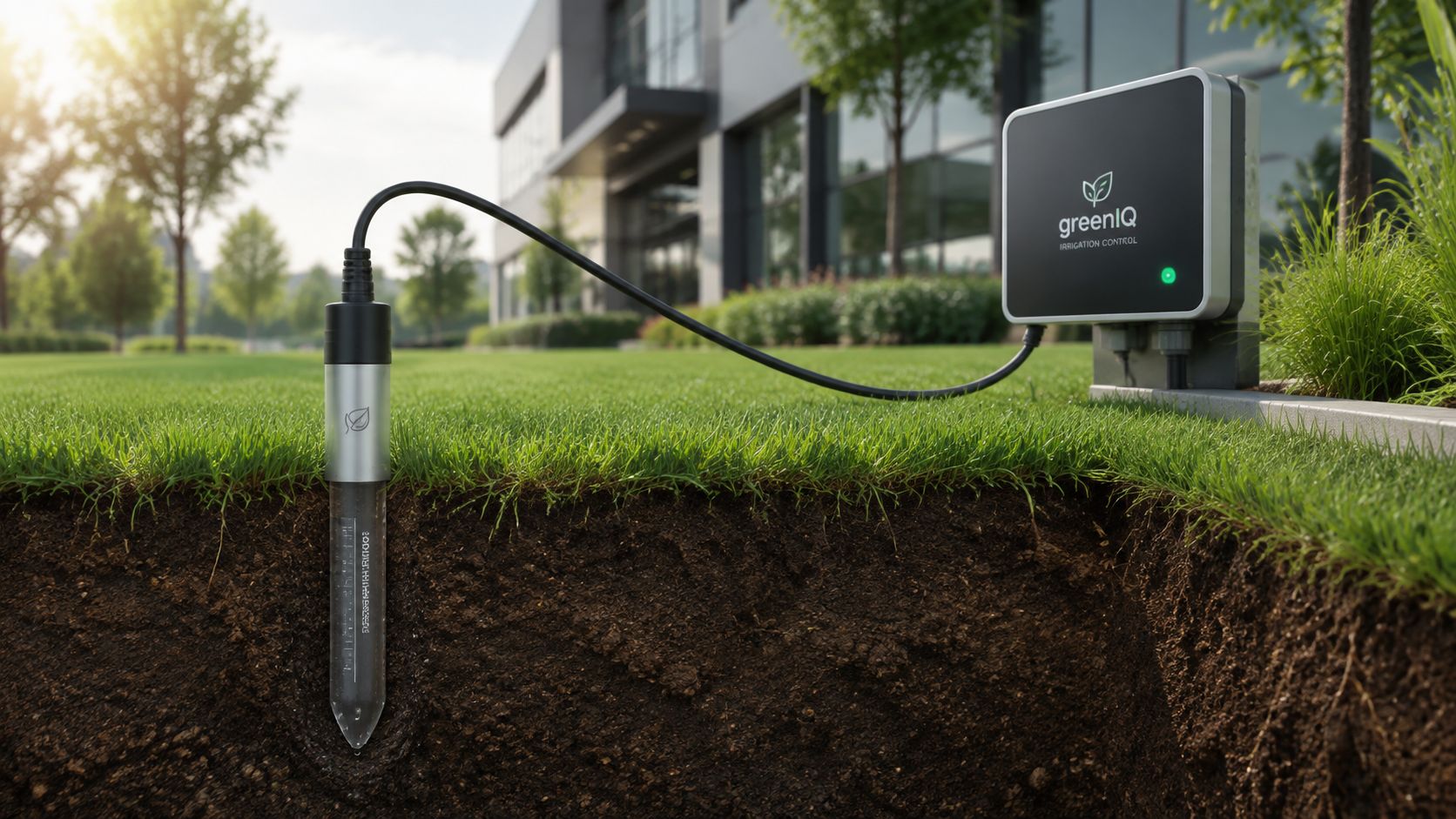
Soil matters just as much. Compacted areas near loading zones and sidewalks may accept water slowly. Sloped turf may need cycle-and-soak programming. Sandy or highly drained areas may need a different scheduling approach from heavier soils. A soil-moisture monitoring program can add useful field information, but sensors still need appropriate placement and interpretation.
Catch-can testing later confirms whether the hydraulic assumptions were reasonable. At the design stage, the priority is to create zones that can be tested meaningfully, with consistent sprinkler types and precipitation characteristics rather than mixed applications that obscure the results.
Component Selection and Smart Control Integration
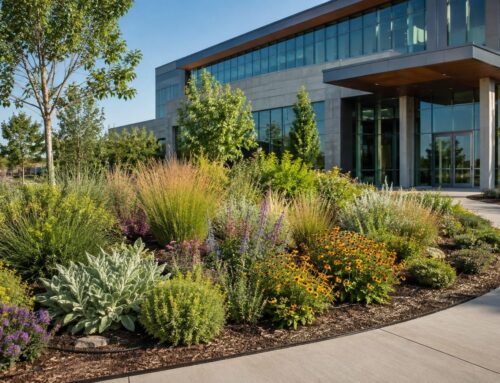
A component earns its place through hydraulic compatibility, serviceability, and lifecycle performance, not a feature list. Fixed sprays suit compact planting strips and small turf areas where spacing and pressure can be controlled. Rotors or rotating nozzles fit broader turf zones when their slower application rate supports infiltration. Drip irrigation can serve shrub beds, trees, and individual plantings, provided the design includes filtration, pressure regulation, flushing, and emitter inspection.
The most common selection error is combining devices with different application rates on one zone. Even fully functioning heads can then produce uneven watering. A controller cannot correct inconsistent precipitation caused by incompatible heads or poor grouping.
| Component Type | Best Application | Efficiency Rating | Maintenance Level |
|---|---|---|---|
| Fixed sprays | Compact turf, narrow strips, and precise small areas | Depends on spacing, wind exposure, and pressure control | Moderate |
| Rotors or rotating nozzles | Larger turf zones and areas where slower application helps infiltration | Generally favorable when matched and correctly spaced | Moderate |
| Drip irrigation | Shrub beds, trees, and targeted ornamental planting | High potential when filtered, regulated, and inspected | High |
| Weather-based controller | Sites with changing weather demand and multiple hydrozones | High potential when site data and schedules are accurate | Moderate |
| Flow monitoring and central management | Large commercial landscapes requiring operational oversight | Depends on response protocols and alarm review | Moderate to high |
Smart controls need operating rules
Water-saving controls produce results only when the operating process remains accurate. A controller can adjust a properly designed system, but it cannot repair a broken lateral, compensate for clogged emitters, or recognize an unapproved zone change. Equipment upgrades without schedule ownership and field verification leave the property exposed to waste, runoff, and service complaints.
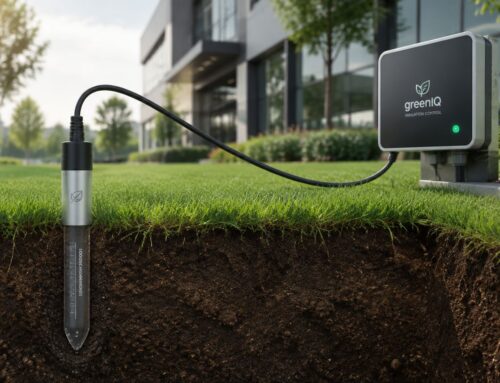
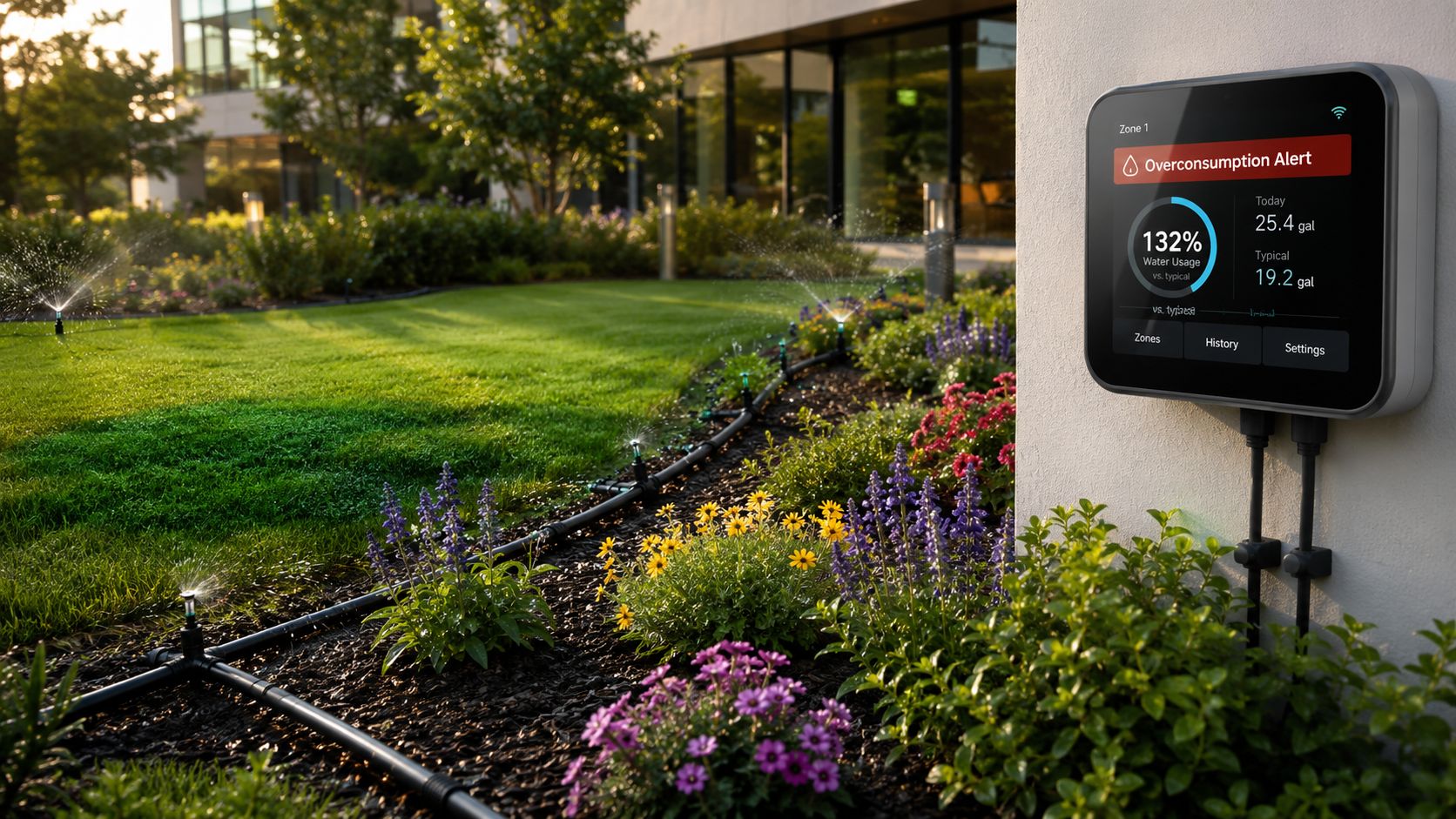
Commercial teams should assign responsibility for controller data, alarm review, and schedule approval. A weather-based setup needs accurate zone types, exposure settings, precipitation rates, and seasonal adjustments. Soil sensors require calibration, inspection, and suitable placement. Flow alerts need a response window, escalation path, and documented resolution. Central management has value only when someone reviews alarms and closes each issue.
A weather-based irrigation approach works best when paired with field audits and a written schedule-management policy. The policy should prohibit unauthorized runtime increases, require documentation after repairs, and identify the person who approves programming changes. For high-traffic commercial sites, it should also define inspection timing around loading areas, sidewalks, tenant access, and other locations where damaged equipment or runoff creates operational risk. That governance keeps efficient hardware from becoming a reason to water more.
Avoiding the Water-Saving Paradox
Efficient hardware can reduce waste, but it can also create a false sense of completion. A property manager replaces old heads, installs a smart controller, and then allows crews to expand irrigated planting areas or increase runtimes because the system is now considered efficient. The hardware improves while total demand stays flat or rises.
A 2025 review found evidence that water-saving irrigation can either conserve water or increase overall depletion when users expand irrigated areas or intensify watering after upgrades. The outcome depends on behavior and system governance, not equipment alone. (2025 review of water-saving irrigation and rebound effects)
Make conservation a contract requirement
The design intent should appear in the maintenance agreement, not remain in the construction drawings. A commercial contract can define inspection responsibilities, controller access, alarm response, seasonal review, repair documentation, and approval requirements for runtime changes. Without those provisions, the property may have an advanced control platform but no accountable operating process.
A practical governance framework includes:
- Defined authority: Name who can modify schedules, seasonal adjustments, zone assignments, and sensor settings.
- Change records: Require the technician to document the reason for every material programming change.
- Alarm response: Establish who reviews high-flow, leak, pressure, or communication alerts and how the issue is closed.
- Area controls: Prevent outdoor design expansions from being connected to existing zones without hydraulic review.
- Water budgets: Compare actual use with an approved expectation and investigate unexplained deviations.
- Staff training: Teach crews how to identify overspray, runoff, broken heads, clogged emitters, and controller overrides.
Operational rule: If a smart controller can change watering automatically, the property also needs a human process for checking whether the change makes sense.
High-traffic properties need stricter controls because irrigation problems become visible and consequential quickly. A wet sidewalk near a medical facility creates a safety concern. A leaking valve at a retail center can affect customer access. A dry median at a hotel or corporate campus can trigger complaints even when other zones are healthy. Governance keeps those local issues from turning into unmanaged system-wide watering changes.
Regulatory Compliance and Contractor Selection
Texas commercial irrigation projects must satisfy design, water-management, safety, and local administrative requirements. Municipal utilities, water districts, property owners, and project authorities may set different rules for backflow protection, permits, water budgets, meters, inspections, and controller operation. Confirm those requirements before construction, because a failed inspection or unexplained water bill is expensive to correct after turnover.
Dedicated irrigation meters, pressure verification, and water budgets provide practical management controls. A dedicated meter separates irrigation demand from indoor consumption. Pressure verification confirms that the installed system can operate within its design assumptions. A water budget gives the property team a reference for investigating abnormal use and holding the service provider accountable.
Procure verification, not just installation
A low bid may cover pipe, valves, heads, and labor while leaving performance gaps for the owner to manage. Commercial bid documents should require bidders to explain how they will verify field conditions, document installed components, test the system, program the controller, and transfer operating knowledge to the maintenance team.
Ask for specific answers:
- Hydraulic assumptions: What pressure, flow, elevation, and pipe conditions support the proposed zone layout?
- Zone logic: How are turf, shrubs, trees, shade, slopes, and high-exposure areas separated?
- Testing: Will the contractor perform pressure checks and catch-can testing after installation?
- Documentation: Will the property receive as-builts, valve maps, controller credentials, zone descriptions, and programmed settings?
- Maintenance handoff: Who trains the crew, and which inspection tasks are included after turnover?
- Compliance ownership: Who confirms permit, backflow, meter, and local utility requirements?
Require the contractor to identify who owns each post-installation decision. On a high-traffic property, a wet walkway, damaged valve box, or dry public-facing planting area can create complaints and safety concerns before the next scheduled service visit. The bid and service agreement should therefore define response procedures, documentation requirements, and approval limits for schedule changes.
The installer or service partner should compare the completed work with the design assumptions and record deviations before the property relies on the system. That record helps maintenance staff distinguish a construction issue from a programming or repair issue.
Recent industry coverage reports that water scarcity and regulation are accelerating adoption of smart controllers, soil and weather sensors, and other sustainability measures, while emphasizing that results depend on correct design, calibration, and ongoing management rather than installation alone. (Landscape Management coverage of irrigation trends) Include those management responsibilities in the scope, not as an optional service after installation.
Commissioning and Maintenance Checklists
Commissioning is the point where the property proves that the installed system can deliver the design intent. It shouldn't be treated as a ceremonial controller walkthrough. The commissioning record should show what was tested, what failed, what was corrected, and what the maintenance team must monitor.
Start with a zone-by-zone inspection. Confirm that heads are installed at the correct height, nozzles match the plan, valves are labeled, drip zones have filtration and pressure regulation, and spray doesn't reach buildings, pedestrian paths, parking areas, or streets. Verify that the controller's zone names and runtimes match the as-built drawings.
Commissioning checklist
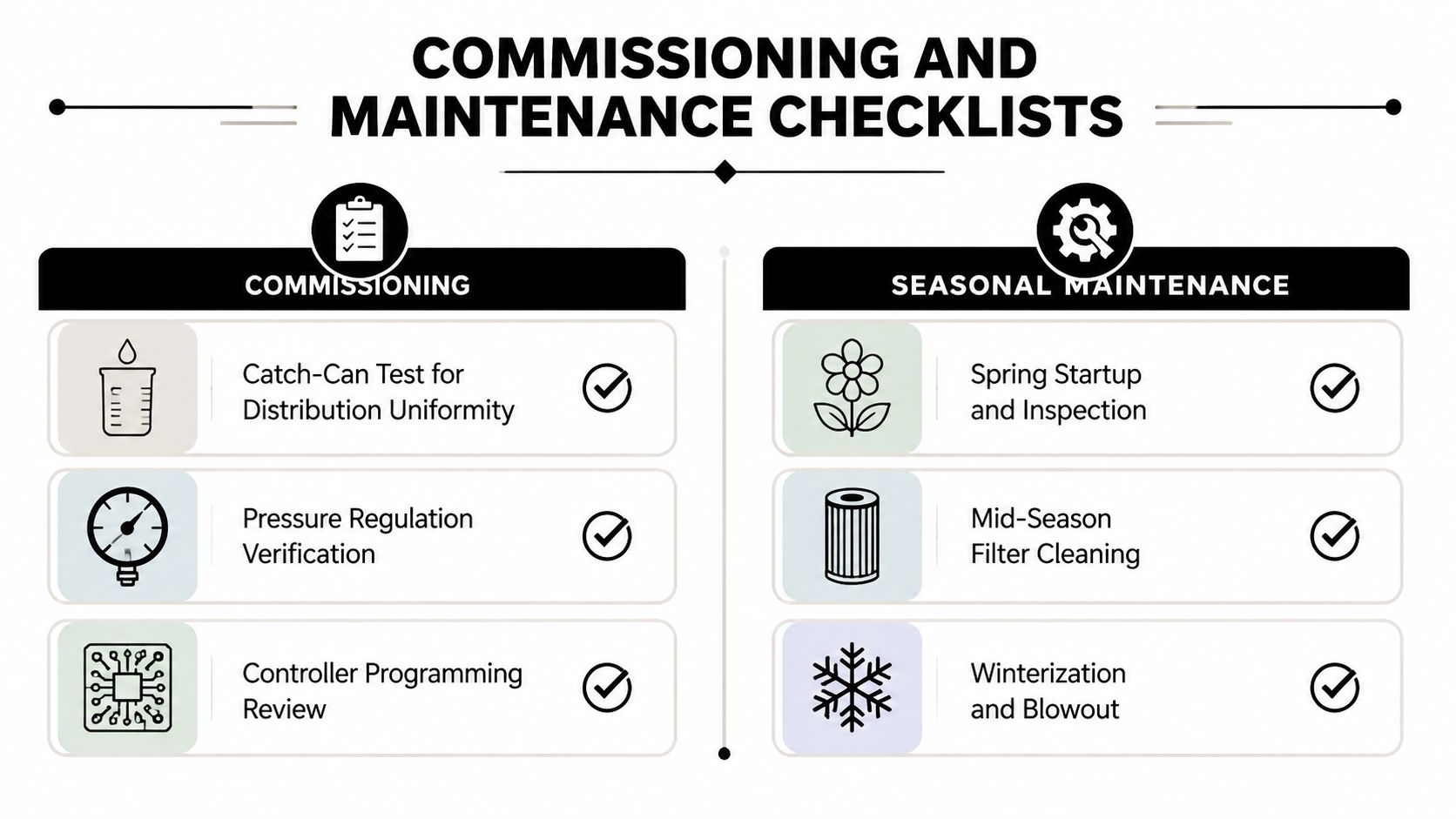
- Catch-can test: Measure distribution uniformity across representative sprinkler zones. Benchmark guidance treats a lower-quarter distribution uniformity of about 65% as a minimum threshold for sprinkler zones. Systems below that level generally require longer runtimes, increasing runoff, deep percolation, and pumping costs. (Distribution-uniformity benchmark guidance)
- Pressure verification: Record operating pressure at representative heads and confirm that regulators, valves, and filters perform under flow.
- Controller review: Check zone assignments, plant categories, seasonal settings, sensor connections, start times, and water-budget parameters.
- Leak inspection: Run each zone long enough to identify valve-box leaks, broken fittings, damaged lateral lines, and abnormal flow.
- Coverage correction: Reposition tilted heads, replace mismatched nozzles, adjust arcs, and address overspray before accepting the system.
- Handoff documentation: Provide maps, equipment schedules, test results, programming notes, and an escalation contact for operational issues.
Maintenance keeps the result intact
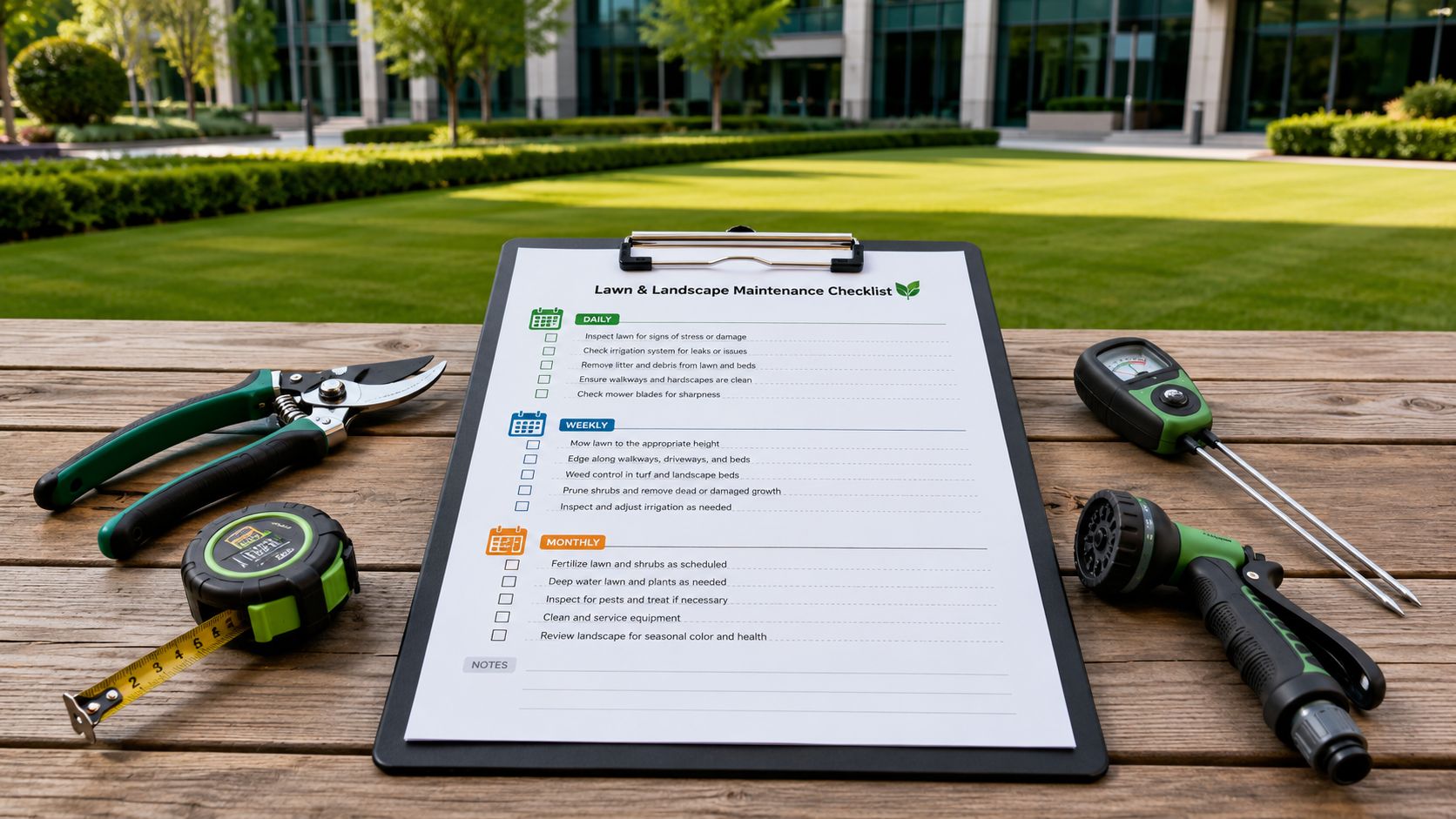
A maintenance program should combine routine observation with scheduled technical checks. At every service visit, crews should look for clogged or tilted heads, leaking valves, broken risers, blocked drip emitters, runoff, plant changes, and controller overrides. They should record repairs and note whether the correction changes the zone's runtime or classification.
Seasonal work deserves its own written procedure. Review schedules as weather and plant demand change. Inspect sensors and clean filters. Confirm that newly planted areas haven't been added to mature grounds zones without adjustment. Before cold weather, follow the site's winterization requirements for exposed equipment and any necessary blowout procedures.
Commissioning is an acceptance test. Maintenance is the performance warranty you create through repetition.
Property managers should review water-use records against the site's budget and operating history, then investigate unexplained changes rather than accepting higher demand. A digital platform can make that review easier, but a spreadsheet and disciplined inspection log can also work if someone owns the process. Teams that are also working to start finding local customers should keep operational records separate from marketing workflows, so service accountability remains clear.
For Texas commercial properties, Prestonwood Commercial Landscape Services provides irrigation audits, repairs, central water management, and ongoing maintenance for properties that need design intent carried into daily operations. Visit Prestonwood Commercial Landscape Services to discuss a site-specific irrigation assessment, commissioning review, or maintenance program designed for high-traffic commercial landscapes.