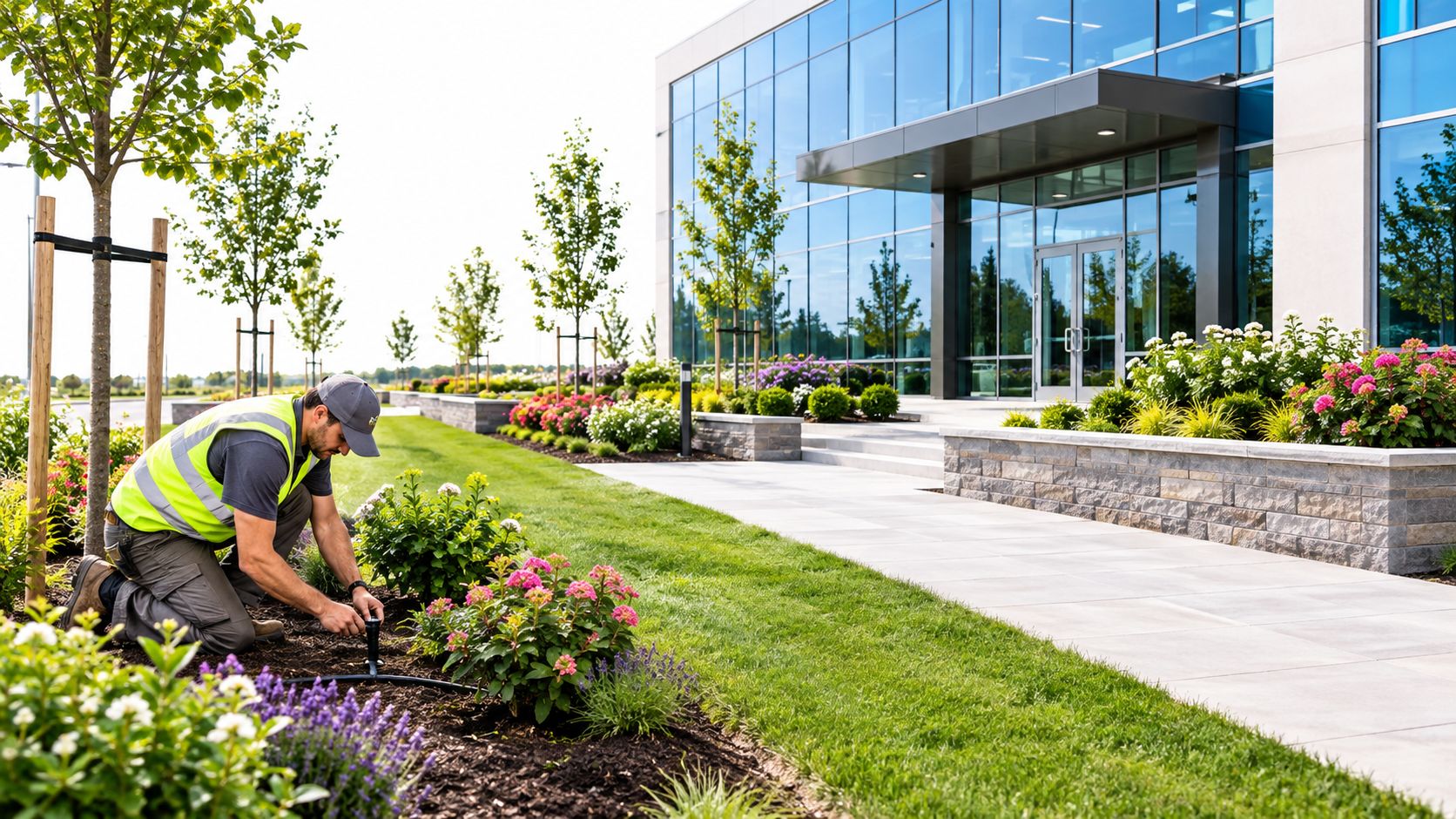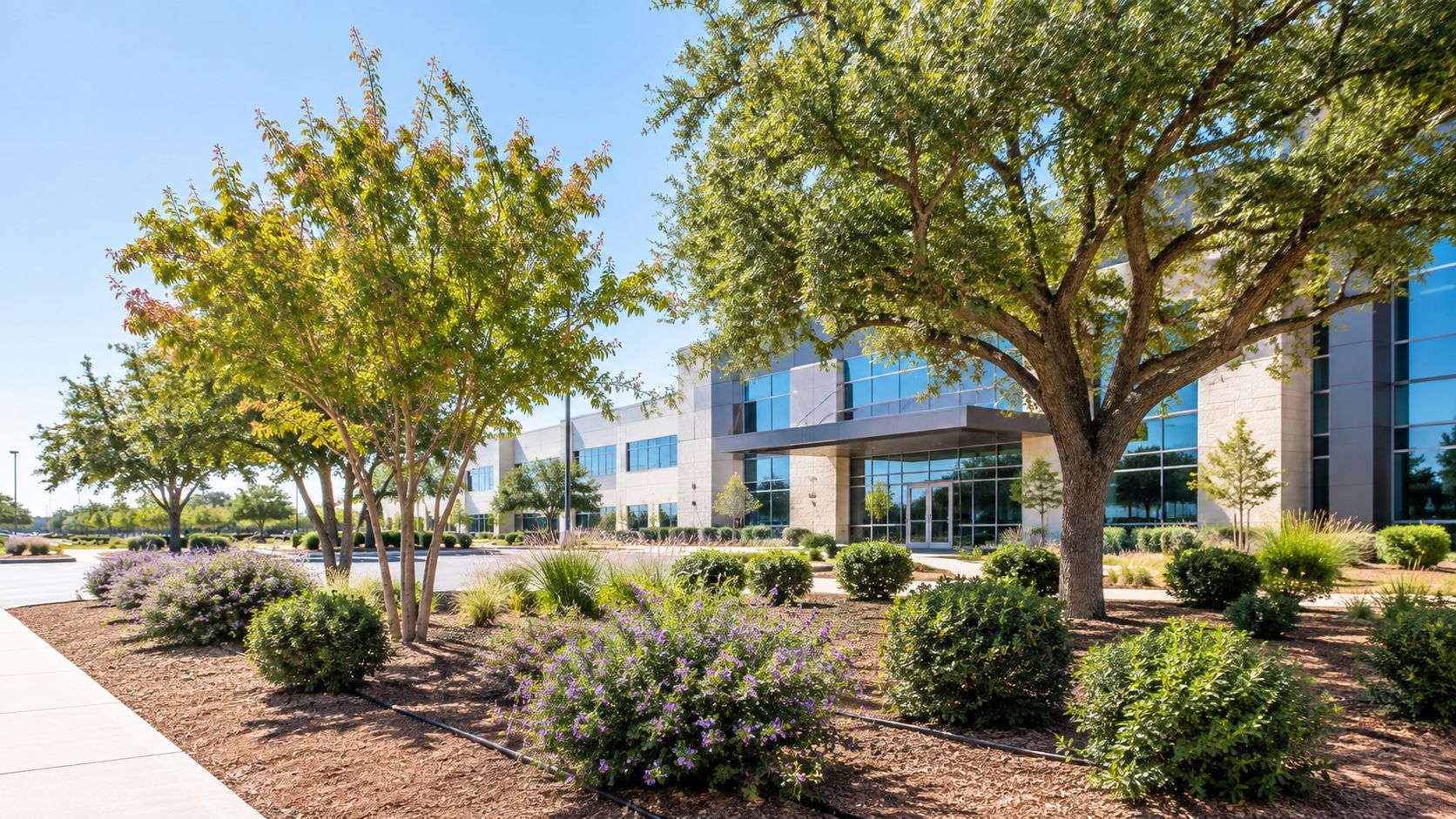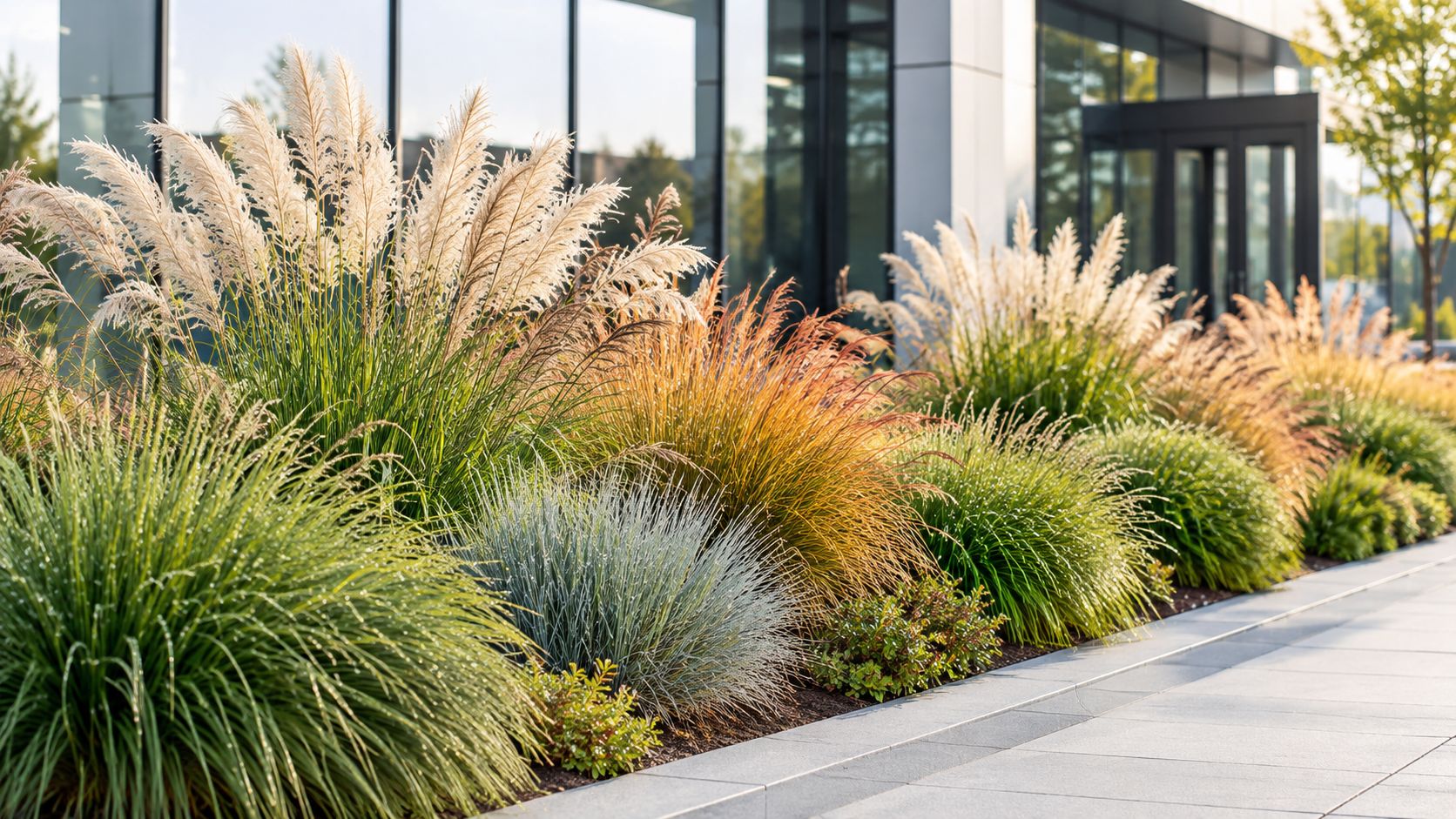

A site walk can leave a property manager with the wrong conclusion. The turf looks acceptable from the drive aisle, beds appear tidy, and the crew has already left. A closer inspection may reveal a misaligned sprinkler head, declining shrubs, worn turf at a pedestrian route, loose edging, debris near a drain, or work completed without a usable record.
A reliable quality control checklist turns those impressions into repeatable checks, photo evidence, assigned ownership, and deadlines. The eight checkpoints below follow a commercial inspection workflow, from baseline documentation and irrigation performance through plant health, turf, seasonal color, hardscape safety, crew execution, and client communication. Adjust the frequency to site traffic, public exposure, weather, plant material, safety risk, and contract scope.
That approach fits the operating needs of office and retail centers, healthcare properties, industrial parks, hospitality venues, HOAs, and campuses. It also reflects how Prestonwood Commercial Landscape Services approaches standardized, responsive care across Dallas–Fort Worth and San Antonio, where consistent site standards and water management matter as much as appearance.
Table of Contents
- 1. Pre-Service Site Inspection and Documentation
- 2. Irrigation System Functionality Testing and Calibration
- 3. Plant Health and Disease Monitoring
- 4. Turf Quality and Density Assessment
- 5. Seasonal Color Program Quality and Installation Verification
- 6. Hardscape Integrity and Safety Compliance Inspection
- 7. Crew Performance and Maintenance Execution Consistency
- 8. Client Communication and Service Delivery Verification
- 8-Point Landscape Quality Control Comparison
- Make Inspection Findings Drive the Next Action
1. Pre-Service Site Inspection and Documentation
A supervisor arrives before service and finds a cracked paver, a leaking irrigation line, or a damaged fixture that no one recorded. Without a baseline, the team may spend time debating responsibility instead of assigning the right repair. Start each inspection with the contract, site map, prior open issues, and the property's maintained-asset list.
Record the condition of turf, trees, shrubs, seasonal beds, irrigation components, sidewalks, curbs, drainage points, walls, and other contract items. Include pre-existing defects, access restrictions, safety concerns, and client requests. For context on documenting conditions before service, use this guide to preparing your home for pest treatment.
A dated photograph with a precise location note protects both parties. It also gives the supervisor a reliable comparison after maintenance, severe weather, repairs, or seasonal changes. The University of Georgia's quality-control guidance describes written records that identify completed work, remaining tasks, and the date of the quality-control visit. Its categories, including turf mowing, tree care, perennial beds, annual beds, and trash or hardscape areas, help turn an inspection into an auditable record.
Build a baseline the next inspector can understand
Use consistent photo angles, distances, and lighting. Note weather, recent maintenance, visible irrigation operation, and each client concern. A mobile form should attach photos, location details, notes, signatures, and assigned actions while the inspector remains on site. Cloud storage lets branch managers, account managers, and clients retrieve the same record without depending on one person's phone.
Practical rule: A photograph without a location, date, and action note has limited operational value.
Tailor the record to the property. At an office park, capture turf transitions and high-traffic shortcuts. At a retail center, document hardscape before severe weather. At a healthcare facility, verify accessible pathways and clear walking surfaces. Prestonwood Commercial Services can use the same documented process across commercial properties, with site standards and water management recorded consistently.
Close the inspection with a client-facing summary that separates routine work, recommendations, repairs, and pre-existing conditions. Assign an owner and follow-up date to every corrective item.
2. Irrigation System Functionality Testing and Calibration
A green lawn does not prove that irrigation is working. Test the controller, valves, zones, heads, nozzles, pressure, leaks, coverage, runoff, and overspray. A zone may run on schedule while leaving a planting bed dry, wetting pavement, or applying excessive water beside a building.
Use water-agency guidance to define observable checks. The Arizona Department of Water Resources recommends practices such as weekly station checks, leak detection, seasonal controller adjustment, separate turf and shrub zones, and verification that runoff stays away from pavement and buildings. The Arizona Department of Water Resources landscape water-use checklist can guide commercial teams outside Arizona because the inspection points apply across many irrigation systems.
Operate every zone during the inspection. Watch for clogged or tilted heads, broken bodies, blocked sprays, uneven arcs, leaking valves, pressure issues, and heads shifted by mowing or construction. Compare controller settings with current weather and plant requirements. Record the setting tested, the adjustment made, and who completed it.
Separate findings from calibration decisions
“Irrigation checked” is not an adequate finding. Record the zone, component, defect, corrective action, assigned owner, and follow-up requirement. Pressure gauges and flow meters can support the inspection, but field observation remains necessary. A gauge may show acceptable pressure while a damaged nozzle leaves a dry strip beside a parking lot.
Use an irrigation audit report for complex properties when zone-specific findings and repair recommendations need a consistent record. Schedule seasonal commissioning and winterization according to local weather and site exposure. Heat waves, unusual rainfall, or a reported dry area should trigger an exception review instead of automatic adherence to the normal program. Recheck completed repairs during the next scheduled inspection and close the item only after coverage is verified.
3. Plant Health and Disease Monitoring
Plant health problems often start without obvious signs. Wilted leaves, thinning canopies, unusual color, insect activity, and weak new growth can indicate irrigation stress, root damage, disease, poor soil, compaction, or an unsuitable planting location. Inspectors should record the first visible change before it spreads or becomes confused with routine seasonal variation.
Build each scouting route around the plant inventory and site exposure. Check specimen trees, foundation beds, shaded areas, new installations, seasonal color, and plants beside heat-reflecting glass or pavement. Compare current observations with earlier photographs to separate a new condition from a recurring site issue.
Record the plant or area, visible symptom, likely contributing factor, photograph, recommended response, responsible person, and escalation deadline. Crews do not need to identify every disease, but they must recognize abnormal conditions and report them promptly. Photograph the leaf, branch, trunk, soil surface, or pest evidence. A clear image gives the horticulture manager a workable starting point, while “plant looks bad” does not.
Use monitoring to support measured treatment
Integrated pest management depends on confirming the problem before treatment. Check whether insects, disease, irrigation, weather, soil, pruning, or mechanical damage best explains the symptom. If the diagnosis remains uncertain, request review from a qualified plant-health professional or university Extension resource rather than treating the entire property on assumption.
Maintain a plant health profile for each managed area. Include species, location, installation history, recurring symptoms, previous treatments, and client sensitivities. Large specimen trees may require an arborist review within the property's risk and care program. Prestonwood's plant health care services can support specialized follow-through when routine scouting identifies conditions beyond normal crew response.
Set inspection frequency by risk. Review new installations, stressed plants, and recurring problem areas during every scheduled visit. Recheck treatment decisions and open findings at the next inspection, documenting whether symptoms improved, persisted, or required escalation.

4. Turf Quality and Density Assessment
Turf quality is more than color. Inspect density, uniformity, texture, mowing quality, recovery from traffic, bare areas, weed pressure, thatch, soil exposure, and the relationship between turf performance and irrigation coverage. A lawn can be freshly mowed and still be declining beneath the surface.
Walk turf by zone, not only from the building entrance. Inspect shaded strips, slopes, loading areas, pedestrian shortcuts, curb edges, tree-root competition, and places where vehicles or event traffic cross the lawn. Note whether a thin area is a maintenance problem, a drainage problem, a compaction problem, or a design problem that needs a different treatment.
The right assessment also respects seasonal expectations. Dormant turf shouldn't be scored by the same visual standard as actively growing turf. A useful report explains what changed, where it changed, and which maintenance event or environmental condition may be involved.
Set standards by use and exposure
A corporate entry lawn may require a tighter appearance standard than a low-use perimeter. A healthcare property may prioritize clean, stable routes and consistent presentation around patient-facing areas. An industrial park may need a practical standard that accounts for equipment movement, dust, and recurring traffic.
Inspectors can use a consistent visual rating supported by photographs, soil observations, and maintenance notes. Digital color tools may add objectivity, but they don't replace a site walk. When turf declines, consider aeration, overseeding, resodding, irrigation correction, soil improvement, drainage work, or traffic management in the correct sequence.
For ongoing commercial care, commercial lawn care should be tied to documented zones and seasonal performance, not only mowing completion. Record conditions before and after major maintenance so the team can tell whether the intervention addressed the cause or merely improved the appearance temporarily.

5. Seasonal Color Program Quality and Installation Verification
Seasonal color succeeds or fails during installation. Before the crew leaves, inspect delivered plant material, variety, quantity, spacing, root condition, bed preparation, planting depth, irrigation access, and finished presentation. A display may match the approved design yet perform poorly when stressed plants arrive or the bed was prepared incorrectly.
Verify the completed work against the approved plan and invoice. Walk each bed from the customer approach, parking area, building entrance, and primary sightlines. Record gaps, uneven spacing, mixed varieties, crushed stems, exposed root balls, poor alignment, disturbed edging, and soil or mulch touching plant crowns. Photograph defects with enough surrounding context for the crew to locate them.
The first days after installation require a separate follow-up. Confirm prompt watering, check establishment, and document stress or plant loss. Schedule a two-week review to identify weak material, missed irrigation, or installation defects before the display becomes visibly uneven. Assign each correction, owner, and due date in the service record.
Protect the intended visual window
Retail and hospitality properties depend on a strong entrance presentation, so the program should reflect arrival patterns, peak visibility, replacement access, and maintenance labor. A corporate campus may favor lasting uniformity, while an HOA or healthcare site may need a transition plan that prevents a bare period between displays.
Record varieties, installation dates, bloom timing, replacement needs, deadheading, fertilization, and client observations. Use that history to improve future planning while allowing for seasonal variation. The inspection standard should define what “established,” “uniform,” and “ready for presentation” mean at that property, and specify inspection frequency during installation and establishment.
Installation standard: Don't approve seasonal color from the truck. Walk the completed bed from the same sightlines the public uses.
6. Hardscape Integrity and Safety Compliance Inspection
Quality control includes every surface people use to enter, move through, and occupy the property. Inspect sidewalks, pavers, curbs, steps, retaining walls, edging, drains, accessible routes, loading interfaces, and transitions between turf and hardscape.
Look for trip edges, settlement, rocking pavers, cracks, ponding, displaced covers, exposed roots, erosion, loose wall components, blocked drains, and slippery buildup. Record the exact location and show the defect in relation to a recognizable building feature or sign. A close-up alone may not tell the repair team where to work.
Safety findings need a different response from aesthetic findings. A faded stain can enter a planned maintenance queue. A raised walkway edge, unstable cover, or blocked accessible route may require immediate escalation, temporary marking, barricading, or another safeguard while a qualified repair party evaluates the condition.
Connect inspection to standards and ownership
Commercial checklist templates commonly reference ANSI Z133 and OSHA general-industry requirements for safety, while quality plans may connect soil, sod, pruning, and tree work to ASTM and TCIA standards. A facilities landscape checklist from PopProbe also illustrates the value of recording location, date, preparer, client details, irrigation concerns, pest presence, and signatures.
Don't label a route “ADA compliant” based on appearance alone. Verify the relevant conditions with appropriate tools and qualified personnel, especially where slope, drainage, transitions, or accessibility are in question. Hardscape inspections should also identify pressure washing, drain clearing, masonry review, warranty documentation, and insurance records that need follow-up.
7. Crew Performance and Maintenance Execution Consistency
A checklist should evaluate how work was performed, not just what the property looked like afterward. Inspect mowing lines, edging, pruning cuts, bed cleanup, blowing practices, mulch placement, equipment handling, chemical safety, personal protective equipment, and protection of vehicles, buildings, pedestrians, and plant material.
Supervisors learn more by observing work in progress than by arriving after the crew has packed up. Watch whether employees follow the site plan, protect irrigation components, manage clippings, close gates, secure equipment, and respond to changing site conditions. A finished photo may show a clean bed, but it won't reveal whether a crew repeatedly scalps the same edge or blows debris into a drain.
Make the standard visible to the crew
Use a daily work checklist for assigned tasks and a visual standards guide for techniques that produce recurring defects. Photos of acceptable mowing edges, pruning cuts, bed cleanup, and finished hardscape give new employees a reference they can use in the field.
- Verify qualifications: Keep pesticide, equipment, and safety training records current and assign renewal responsibility before credentials expire.
- Review equipment condition: Check blades, guards, hoses, spreaders, and irrigation tools so preventable equipment defects don't become site defects.
- Inspect during service: Schedule supervisor visits while work is underway, then provide immediate coaching when technique or sequence needs correction.
- Close the feedback loop: Share positive work as well as deficiencies so crews understand the complete standard, not only the exceptions.
GPS and time records can support accountability, but they shouldn't become a substitute for quality observation. A crew that arrives on time and completes every listed task can still miss irrigation coverage, damage a tree, or leave a safety issue. Prestonwood's emphasis on trained teams, technology, scheduling, and communication reflects the operating discipline required across Dallas–Fort Worth and San Antonio properties.
8. Client Communication and Service Delivery Verification
The inspection isn't complete until the client understands what happened and what comes next. Send a service report that distinguishes completed routine work, observed conditions, recommended work, urgent safety issues, and items awaiting approval or a specialist.
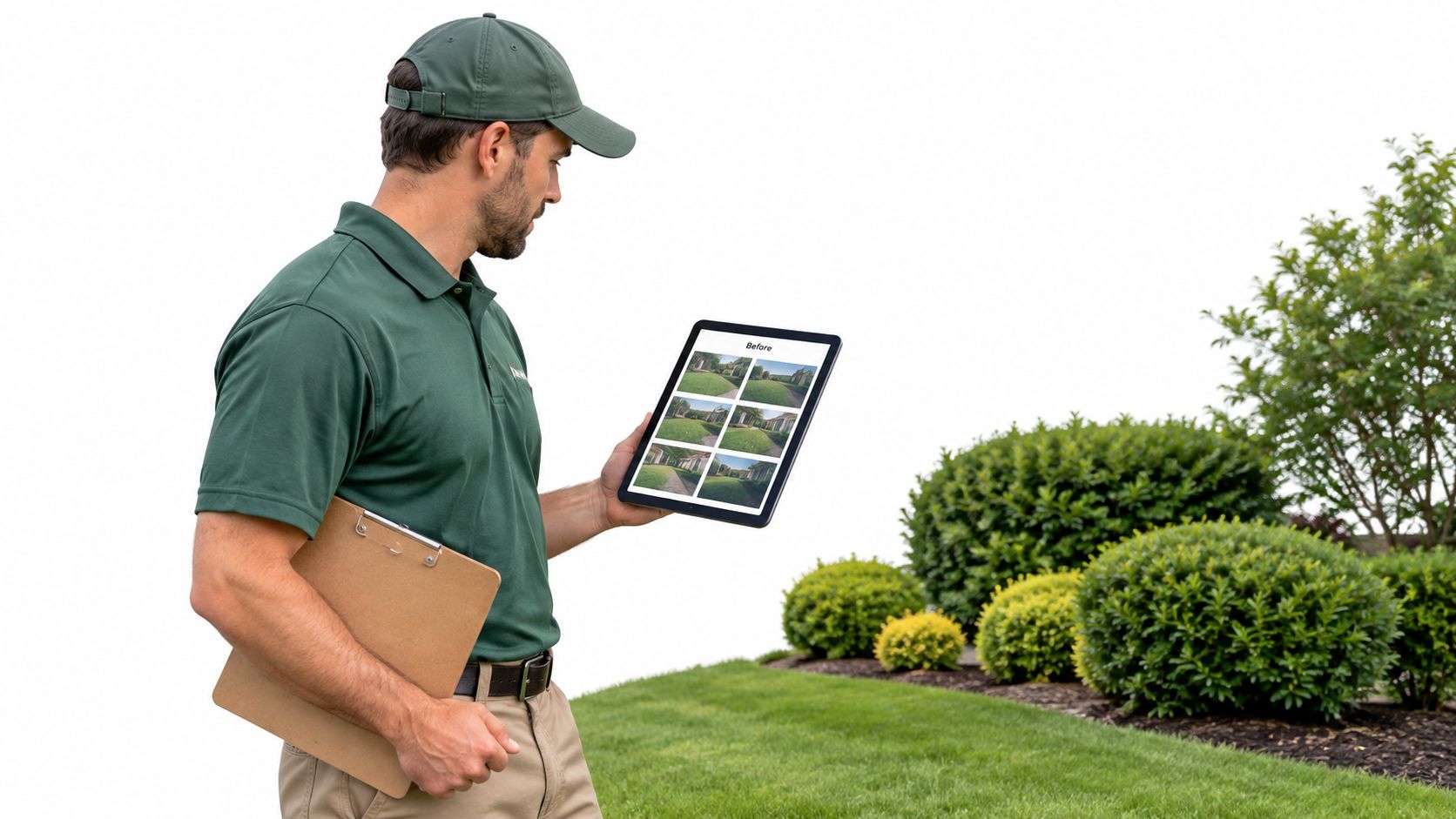
Before-and-after photographs are useful when they answer a question. Show the same planting bed after seasonal color installation, the corrected irrigation component, the cleared walkway, or the repaired turf area. Add a short note explaining the action, remaining limitation, and next review date.
Report decisions, not just activity
A monthly maintenance summary should tell a property manager what changed, what needs attention, and what the team recommends for the next service period. A seasonal forecast can help a corporate campus, retail center, or HOA plan for irrigation adjustments, color transitions, storm response, or budget requests.
Use a client portal or shared digital record when several stakeholders need access. Assign every recommendation a status such as awaiting approval, scheduled, completed, deferred, or declined. If a delay affects appearance, safety, water performance, or plant health, explain the reason and the interim protection.
Landscape business software guidance can help teams compare digital workflows, but the platform matters less than disciplined use. A simple system with clear ownership beats an advanced system that crews don't update.
Request feedback after recurring service concerns and document the response. Client communication should confirm whether the issue was resolved, not merely prove that someone sent an email.
8-Point Landscape Quality Control Comparison
| Service / Checkpoint | Implementation complexity | Resource requirements | Expected outcomes | Ideal use cases | Key advantages |
|---|---|---|---|---|---|
| Pre-Service Site Inspection and Documentation | Moderate–High; time‑intensive for large sites and standardized processes | Trained inspectors, GPS‑tagged cameras, mobile app, cloud storage | Baseline records, dispute protection, informed scopes | New contracts, multisite onboarding, warranty validation | Clear accountability; objective before/after evidence; proactive issue ID |
| Irrigation System Functionality Testing and Calibration | High; requires live-cycle testing and technical calibration | Flow/pressure meters, certified technicians, smart controller access | Reduced water use, uniform coverage, early leak detection | Water‑sensitive regions, corporate campuses, retrofit audits | Water savings; compliance with conservation rules; extended equipment life |
| Plant Health and Disease Monitoring | Moderate; ongoing scouting with diagnostic complexity | Horticulturists/technicians, scouting tools, diagnostic labs/apps | Early disease/pest detection, targeted treatments, reduced loss | High‑value plantings, campuses, warranty-covered landscapes | Prevents plant loss; minimizes chemical use; supports IPM |
| Turf Quality and Density Assessment | Moderate; seasonal variability requires regular reassessment | Turf meters/apps, soil test kits, trained evaluators | Data‑driven turf programs, improved density/color, ROI tracking | High‑traffic lawns, retail entrances, post-construction recovery | Objective performance metrics; targeted interventions; curb appeal |
| Seasonal Color Program Quality and Installation Verification | Moderate–High; tight timing and establishment monitoring | Plant inventory, soil prep/testing, trained installation crews | Higher establishment rates, design fidelity, sustained visual impact | Retail/hospitality peak seasons, holiday displays, community entrances | Ensures design intent; improves survival; strengthens brand image |
| Hardscape Integrity and Safety Compliance Inspection | Moderate; technical and regulatory (ADA) assessments required | Digital levels, moisture/infrared tools, masonry specialists | Reduced liability, maintained ADA compliance, prioritized repairs | High pedestrian‑traffic sites, healthcare, retail centers | Liability mitigation; early structural issue detection; safety assurance |
| Crew Performance and Maintenance Execution Consistency | Moderate; supervisory overhead and standardization effort | Supervisors, training programs, performance tracking tools/apps | Consistent service quality, fewer reworks, better safety compliance | Multi‑location operations, large contracts, brand‑sensitive clients | Consistency across sites; improved safety and staff competency |
| Client Communication and Service Delivery Verification | Low–Moderate; process and platform setup plus reporting time | CRM/client portal, photo library, staff time for reporting | Greater client trust, fewer disputes, upsell opportunities | Managed services, multi‑property accounts, contract renewals | Transparency; improved retention; documented recommendations |
Make Inspection Findings Drive the Next Action
The checklist becomes valuable when it creates an operating rhythm. A supervisor should be able to open the latest inspection, see the evidence, identify unresolved defects, confirm the responsible party, and understand what changed since the prior visit. If the form only produces a score, it may describe the site without improving it.
Build a printable master checklist around the property and the decisions that follow each observation. Include these fields:
- Property and zone: Name the site, building, area, irrigation zone, or hardscape segment.
- Inspector and date: Record who performed the inspection and when.
- Weather and recent service: Note conditions that could explain stress, runoff, delay, or changed appearance.
- Finding: Describe the observable condition, using specific language rather than “needs attention.”
- Priority: Separate urgent safety or operational risks from routine appearance work.
- Photo reference: Match each significant finding to a dated photograph.
- Responsible party: Assign the crew, supervisor, irrigation technician, client, contractor, or specialist.
- Due date: Set a realistic deadline based on risk and contract scope.
- Completion status: Use clear states such as open, scheduled, completed, verified, deferred, or declined.
- Client communication: Record the report date, approval request, decision, and final outcome.
A practical frequency plan might include daily or weekly execution checks for crews, weekly or bi-weekly plant scouting, monthly turf review during the growing season, quarterly hardscape and supervisor inspections, seasonal irrigation commissioning and winterization, and a review after significant weather. These intervals are starting points, not universal rules. Increase inspection frequency for high-traffic routes, public-facing entrances, vulnerable plantings, drought conditions, active construction, recurring defects, or properties with strict safety requirements. Reduce or combine checks only when the contract scope and risk profile support it.
The strongest quality control programs also track recurring defects, response time, repeat service calls, and closed-loop fixes. Existing checklist models emphasize work records, follow-up visits, photos, issue logs, and sign-offs, while many appearance-focused forms stop at pass or fail. The University of Georgia's quality-control checklist supports the more useful model, where inspection leads to corrective action and reinspection.
Use this corrective-action loop every time:
- Record evidence with a precise location, description, and photograph.
- Assign priority and ownership so the issue doesn't remain a shared concern with no owner.
- Apply a temporary safeguard when a hazard could affect pedestrians, vehicles, staff, or visitors.
- Set the deadline according to risk, approval needs, materials, and trade responsibility.
- Verify completion through a return inspection, not an assumption.
- Communicate the result and document any approved deferral or remaining limitation.
For properties that need a structured partner, Prestonwood Commercial Landscape Services offers commercial maintenance, irrigation audits and repairs, central water management, seasonal color, and construction and renovation across Dallas–Fort Worth and San Antonio. Those services can support a quality-control workflow that connects field standards, water performance, corrective action, and responsive client communication.
Prestonwood Commercial Landscape Services provides commercial maintenance, irrigation audits and repairs, central water management, seasonal color, and construction for properties across Dallas–Fort Worth and San Antonio. Visit Prestonwood Commercial Landscape Services to discuss a documented inspection workflow built around your property's zones, risks, service scope, and follow-up needs.