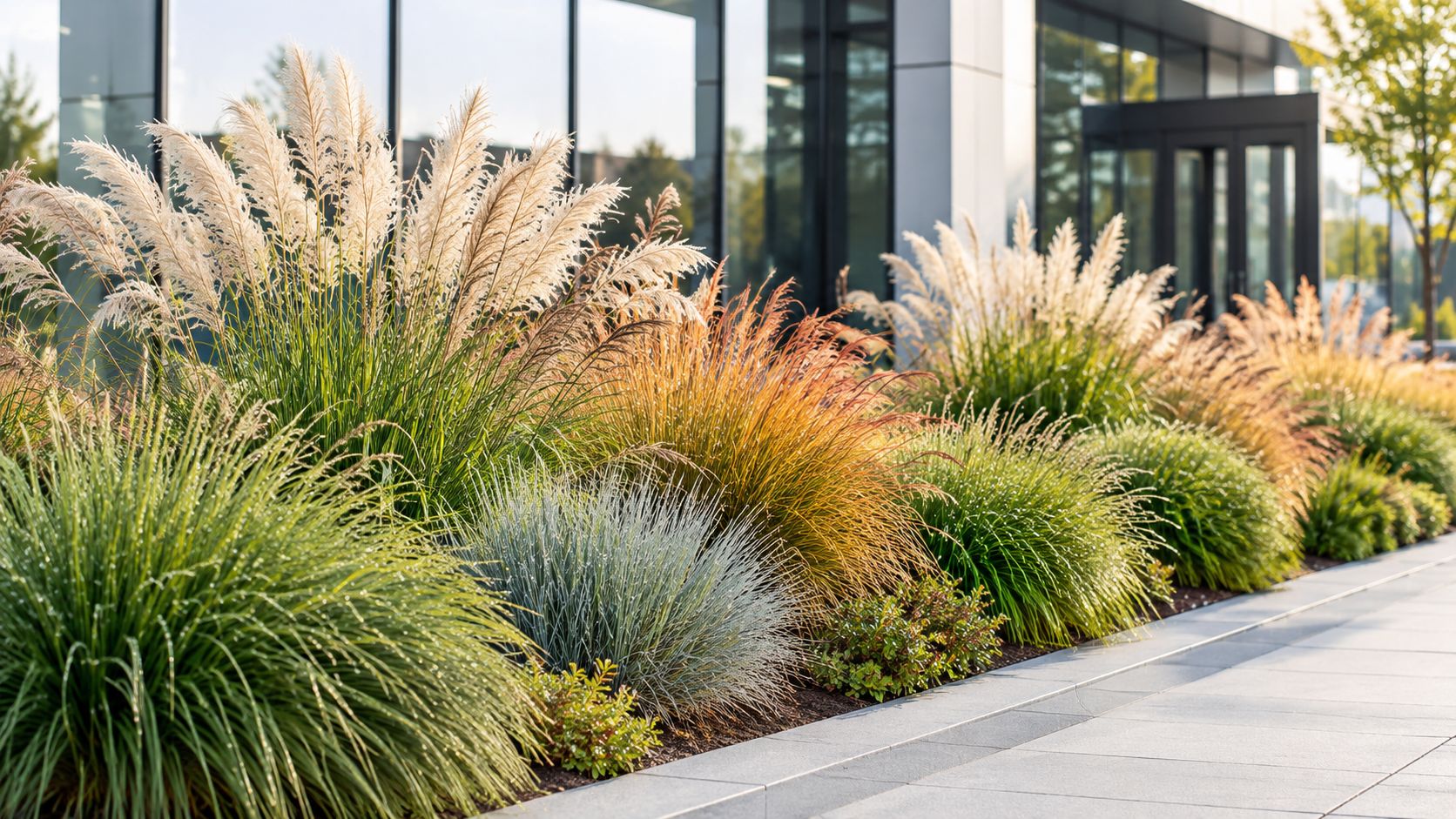
More than 60% of the ornamental grasses in a long-running Chicago Botanic Garden trial received high overall ratings, but “non-invasive” still depends on the site, cultivar, and supplier. For commercial settings, start by screening candidates against regional invasive lists and confirming whether the plant is a sterile cultivar, a near-sterile selection, or the species form.
The popular advice, “just choose a clumping grass,” is useful but incomplete. A grass that stays contained in one location may seed beyond a managed bed elsewhere, especially when climate, irrigation, soil, nearby cultivars, and maintenance practices change. On a large commercial property, the question isn't which ornamental grasses are safe. It's safe where, planted at what density, beside which cultivars, and under whose maintenance program?
That distinction matters in North Texas and San Antonio. A grass may look drought-tolerant on a plant list yet need periodic irrigation in a reflected-heat parking island. A cultivar may be marketed as low-spreading while the delivered material is seed-grown species stock. A dense mass planting can also create a different risk profile from an isolated specimen because neighboring plants may affect flowering and seed production.
Table of Contents
- Why Non Invasive Is a Risk Question, Not a Label
- Three Filters for Choosing Commercial Specimen Grasses
- Reliable Non Invasive Grasses Worth Specifying
- Clump Forming Versus Running Grasses Compared
- Design Use Cases for High Traffic Commercial Sites
- Regional Picks for DFW and San Antonio
- Procurement and Long Term Risk Checklist
Why Non Invasive Is a Risk Question, Not a Label
The phrase non-invasive ornamental grasses sounds like a product category. In practice, it's a screening decision. The Chicago Botanic Garden's ornamental grass evaluation found that more than 60% of tested grasses received high overall ratings, demonstrating that many selections can perform well in garden conditions when matched to the site. The same evaluation warns that some popular ornamental grasses have escaped cultivation and appear on invasive plant lists in states such as Illinois and Alabama.
That combination is the point. Strong visual performance doesn't automatically mean low ecological or maintenance risk. A plant can provide excellent structure, texture, and seasonal interest while still creating problems if it self-seeds, spreads beyond bed lines, or becomes difficult to remove from adjacent turf and naturalized areas.
The cultivar changes the liability
Commercial buyers should distinguish among three procurement descriptions:
- Sterile cultivar: The plant has been selected or produced so it doesn't produce viable seed, subject to accurate cultivar identity and supplier documentation.
- Near-sterile cultivar: Fertility is reduced, but the plant shouldn't be treated as risk-free without regional verification.
- Species form: The plant is sold under the botanical species rather than a documented low-fertility selection. Its behavior may vary more widely across sites.
The difference affects long-term liability. Extension guidance from the University of Florida identifies clump-forming grasses as the safest non-invasive choice for commercial settings because they expand through short, non-running rhizomes or fibrous roots instead of aggressive stolons. It also recommends checking each candidate against regional invasive lists because status can differ by state or climate zone.
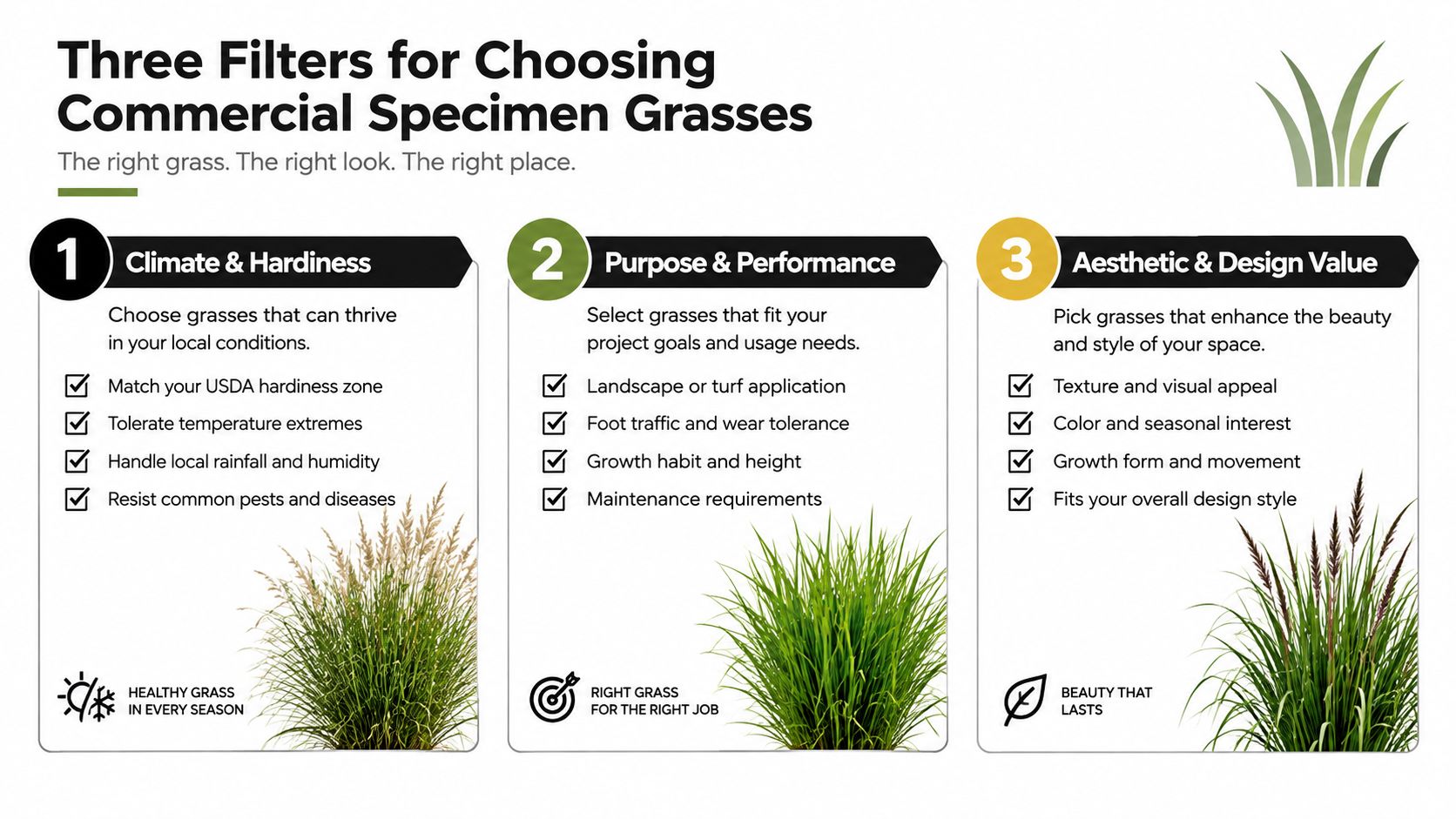
Three filters protect the property
A defensible specification applies three filters before installation:
- Growth habit: Identify whether the grass forms a contained clump, uses short rhizomes, or sends out true runners.
- Maintenance load: Account for cutbacks, edging, division, seed-head removal, debris, and access around vehicles and pedestrian areas.
- Drought behavior: Separate true low-water performance from simple drought tolerance after establishment.
The supplier's paperwork belongs in that decision. Ask for the exact cultivar name, propagation method, fertility description, mature habit, and regional invasive-screening record. “Ornamental grass” isn't enough information for a parking island, bioswale, healthcare campus, or hotel courtyard.
Three Filters for Choosing Commercial Specimen Grasses
A commercial grass should pass the growth-habit test before its flowers or foliage make the design board. Clump-forming plants create more predictable bed boundaries, while short-rhizome plants may still expand gradually. True runners require a more restrictive application, stronger containment, or documented low fertility.
The second filter is maintenance. A grass beside a parking stall behaves differently from one in an open corporate meadow. Edging, leaf and seed-head cleanup, irrigation overspray, sightline pruning, and access for mowers all affect lifecycle cost. A beautiful plant that regularly leans into a sidewalk or drops debris into storm drains can become a recurring service issue.
Filter one is boundary behavior
For a North Texas slope, a well-selected Muhlenbergia capillaris can provide a contained, fibrous-rooted mass with seasonal movement. A generic Pennisetum may look similar in a nursery container but require more scrutiny around fertility, reseeding, and the identity of the supplied material. The correct comparison isn't only flower color. It's how each plant behaves beside turf, pavement, drainage structures, and neighboring beds.
Use running grasses only when the design and maintenance plan can contain them. A hardscape edge on all sides may reduce boundary risk, but it doesn't remove the need to check seed fertility and regional status.
Filter two is serviceability
Specify the maintenance action, not just the plant. State whether the crew will cut back in late winter, remove spent heads, divide mature clumps, or edge the bed during routine visits. In parking islands, leave enough room for crews to work without stepping into traffic lanes or damaging irrigation.
Filter three is summer water behavior
Drought-tolerant doesn't mean permanently water-free. The Chicago Botanic Garden study of ornamental grasses in low-input systems recorded average ground coverage ranging from 40.4% to 70.1% in living walls and 39.8% to 65.9% on green roofs. The spread between entries shows why cultivar selection matters under constrained growing conditions.
For commercial work, review root-zone preparation, irrigation type, reflected heat, soil drainage, and the plant's likely summer dormancy response together. A grass that holds structure with reduced irrigation may be more valuable than one that stays lush only under a demanding watering schedule.
Reliable Non Invasive Grasses Worth Specifying
The safest plant list is short enough for a superintendent to understand and specific enough for a supplier to fulfill. The Chicago Botanic Garden's hardy ornamental grass recommendations highlight Panicum virgatum selections such as ‘Northwind' for upright architecture and screening, Calamagrostis x acutiflora ‘Karl Foerster' for vertical form, Bouteloua gracilis ‘Blonde Ambition' for fine texture, and Schizachyrium scoparium cultivars for drought-adapted performance.
Muhlenbergia capillaris, including ‘Regal Mist', works well as a soft architectural mass in full-sun entries, medians, and broad bed edges. It needs drainage and can lodge when placed in shade or pushed with excessive irrigation. Schizachyrium scoparium cultivars suit prairie-style corporate grounds, although over-amended soil can encourage weak, floppy growth.
Bouteloua gracilis ‘Blonde Ambition' offers a smaller-scale native texture for parking islands and dry margins. Calamagrostis x acutiflora ‘Karl Foerster' provides a strong upright silhouette where screening and sign visibility matter, but it shouldn't be treated as a zero-irrigation plant during establishment.
Nassella tenuissima has attractive movement but deserves special caution near irrigated turf and natural areas because reseeding can create follow-up work. For projects that require a lower fertility risk, ask whether a documented alternative is available instead of accepting the species form by default.
| Grass / Cultivar | Mature Size | Drought Tolerance | Best Commercial Use | Key Trade-off |
|---|---|---|---|---|
| Muhlenbergia capillaris / ‘Regal Mist' | Medium, mounding | Good after establishment | Entries, medians, broad borders | Can lodge in shade or with excess irrigation |
| Schizachyrium scoparium cultivars | Medium to tall, upright clump | Strong after establishment | Corporate campuses and prairie-style masses | May flop in rich, heavily amended soil |
| Bouteloua gracilis ‘Blonde Ambition' | Small to medium | Strong after establishment | Parking islands, dry edges, bioswale margins | Smaller stature limits screening |
| Calamagrostis x acutiflora ‘Karl Foerster' | Tall, narrow upright form | Moderate, site-dependent | Signage zones and vertical screening | Needs attention to irrigation and mature width |
| Panicum virgatum ‘Northwind' | Tall, upright clump | Good after establishment | Screening and structured massing | Verify cultivar identity and available container size |
| Nassella tenuissima | Fine-textured, medium clump | Good after establishment | Courtyards and decorative borders | Reseeding risk requires monitoring |
For a Texas-specific palette, compare these selections with ornamental grass recommendations for Texas commercial landscapes, then confirm the delivered material rather than relying on a catalog photograph.
Clump Forming Versus Running Grasses Compared
Clump-forming grasses generally give commercial managers a more predictable boundary. Running types can fill large areas quickly, but they transfer more responsibility to bed design, supplier documentation, and follow-up maintenance. The University of Florida's extension guidance supports screening candidates by growth habit and checking regional invasive lists before specification.
The table below is a planning tool, not a substitute for cultivar-level verification. Actual performance depends on irrigation, soil, shade, fertility, and maintenance access.
| Attribute | Clump-Forming, Muhlenbergia, Schizachyrium, Nassella | Running, Miscanthus, Phalaris |
|---|---|---|
| Boundary predictability | Usually high, especially with fibrous roots and short rhizomes | Lower, with greater potential for bed-edge movement |
| Rhizome spread under drip and spray irrigation | Typically contained, but inspect mature clumps | Can accelerate where moisture reaches beyond the intended bed |
| Annual maintenance hours per 1,000 square feet | Must be calculated from the site contract, usually centered on cutback, edging, and occasional division | Must include containment, removal of runners, and possible replacement work |
| Visual screening height at maturity | Ranges from low texture to tall upright forms, depending on cultivar | Often useful for broad screens and large masses |
| Seed-fertility risk to neighboring natural areas | Varies by species and cultivar, with reseeding concerns for some selections | Varies widely, and species-level identity requires scrutiny |
| Best application | Entries, medians, courtyards, and defined campus beds | Large contained acreage or erosion-control applications with documented safeguards |
Running grasses can earn their place in a large erosion-control planting or a broad campus meadow where rapid infill matters more than tight bed boundaries. They're a poor fit beside open drainage corridors, fragmented maintenance zones, or natural areas when the supplier can't document the cultivar and fertility status.
A commercial rule of thumb is simple: choose running grasses only when the bed is hardscaped on all sides or when sterile-cultivar documentation is on file.
Design Use Cases for High Traffic Commercial Sites
The right grass depends on what the property asks it to do. An entrance bed needs a stable silhouette. A parking island needs heat tolerance and service access. A hospitality courtyard needs texture without creating an obstacle for guests or staff.
Entrance monuments
Use Muhlenbergia capillaris for a rounded seasonal mass or Calamagrostis x acutiflora ‘Karl Foerster' where a narrow upright form supports signage. Keep spacing based on the plant's mature width, not the container size, and make the bed broad enough that the grass reads as a designed field instead of a line of isolated pom-poms.
Do not place tall forms directly across driver sightlines. Install the first-year irrigation needed to establish the root system, then taper only after the plants show consistent growth and the soil profile supports it.
Parking islands and bioswale edges
Bouteloua gracilis ‘Blonde Ambition' suits dry, exposed margins where a lower profile is useful. Sporobolus wrightii can provide a taller native presence, but its mature scale demands careful placement around headlights, pedestrian crossings, and drainage inlets.
Use a coarse-textured mulch or stone finish that keeps crowns clear and prevents irrigation from wetting foliage unnecessarily. In bioswales, confirm drainage behavior before planting. A drought-adapted grass still needs a root zone that drains between saturation events.

Corporate campus masses
Schizachyrium scoparium cultivars create a prairie character with fine texture and seasonal structure. Group plants in generous drifts rather than narrow rows, and avoid excessive fertility that encourages weak stems. The maintenance plan should include late-winter cutback, litter removal, and inspections for plants leaning into walks.
Hospitality courtyards
Pennisetum alopecuroides ‘Hameln' offers a soft texture where guests pass close to planting. It still requires cultivar and fertility verification, especially when a low-spread specification is important. Keep crowns outside the main pedestrian clearance zone, provide enough bed depth for the clumps to develop, and avoid placing the planting where fallen foliage will block drains or collect against building walls.
Regional Picks for DFW and San Antonio
North Texas and San Antonio reward grasses that tolerate heat, alkaline soils, irregular irrigation, and reflected light. They also punish generic plant lists. A grass that performs in an open prairie bed may struggle beside a concrete wall, under tree shade, or next to over-irrigated St. Augustine.
For DFW properties, Muhlenbergia lindheimeri provides a strong native architectural form and works well where a taller vertical accent is needed. Muhlenbergia capillaris delivers seasonal color and movement in full sun. Big muhly hybrids can offer a middle ground between the two, but the exact hybrid and supplier identity should appear in the specification.
Schizachyrium scoparium ‘The Blues' and ‘Standing Ovation' fit prairie-style corporate campuses and broad naturalistic beds. Their color and structure support a four-season design, but rich soil and excessive irrigation can produce flopping. The solution is usually better soil restraint and placement, not more staking.
Match the grass to the microclimate
Along heavily paved corridors, reflected heat can intensify stress even when the regional climate is suitable. On I-35W-facing sites and similar concrete-dominated settings, inspect foliage scorch, irrigation coverage, soil crusting, and crown temperature before expanding a planting palette.
Shady courtyard pockets call for a different list. Chasmanthium latifolium, commonly called inland sea oats, can provide texture in lower-light areas, but it shouldn't be treated as interchangeable with a full-sun muhly. San Antonio medians may benefit from Bouteloua curtipendula, or sideoats grama, where low-water character matters and the mature height fits the sightline plan.
Mexican feathergrass deserves careful review where reseeding is a concern. Select an alternative with a clearer containment profile when the bed borders irrigated turf, open drainage, or unmanaged land.
For more regionally focused plant planning, review native plants for North Texas landscapes and then validate the final choices against local invasive lists and the project's irrigation design.
First-year irrigation should be planned around establishment rather than a permanent high-water schedule. October through early March can offer useful planting conditions in these markets, but the installation still needs monitoring through warm, dry intervals and adjustment for soil type, exposure, and root-zone depth.
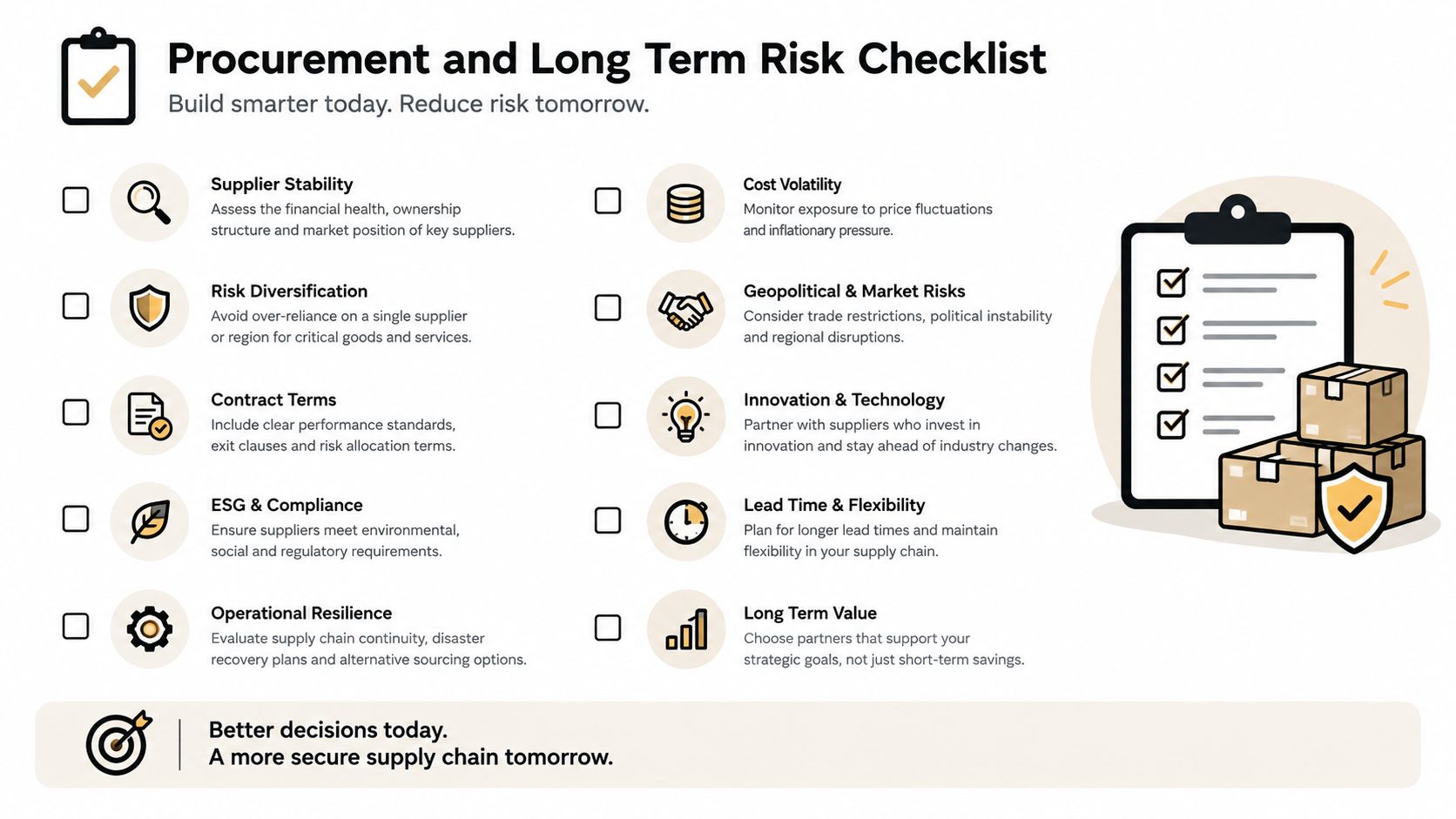
Procurement and Long Term Risk Checklist
A low-risk grass specification begins before the plant reaches the jobsite. Put the botanical name, cultivar, container size, propagation method, fertility description, and regional screening requirement in writing. An order that says only “ornamental muhly” or “fountain grass” gives the supplier too much room to substitute material that looks similar but behaves differently.
Verify what arrives
Ask whether Miscanthus sinensis ‘Morning Light' or Pennisetum alopecuroides ‘Hameln' is tissue-cultured or seed-grown stock. A named cultivar does not, by itself, document uniform fertility or habit. For bunch grasses sourced outside Texas, require applicable plant-health and provenance records before installation.
Request a written statement that the cultivar has been screened against Texas invasive plant resources and USDA NRCS state lists. Regional screening does not remove all risk, but it documents the basis for the purchase and gives the property team a record to revisit if performance changes.
Write the maintenance risk into the contract
A strong commercial property contract should connect plant performance to the service response. Include:
- Establishment survival: Define the warranty period, irrigation responsibility, and replacement standard.
- Spread response: Require removal or replacement when a grass breaks its intended clump or reseeds into adjacent beds.
- Substitution control: Prohibit unapproved species-form substitutions for named cultivars.
- Inspection records: Require notes on fertility, lodging, irrigation coverage, and unwanted seedlings.
- Lifecycle review: Schedule a formal evaluation before the planting becomes difficult or expensive to correct.
The third-year inspection can reveal problems that were not visible at installation. Nassella tenuissima may reseed into irrigated turf, Muhlenbergia capillaris may lodge under shaded drip, and Schizachyrium scoparium may flop in over-amended beds. Respond specifically: choose a less reseeding-prone alternative or increase monitoring, correct the light and irrigation mismatch, reduce fertility, and revise the soil and drainage plan.
Budget beyond installation
A five-year maintenance budget should include division cycles for Sporobolus heterolepis, top-dressing and crown inspection around Muhlenbergia rings, cutback access, and the procurement cost difference between documented sterile material and species-form stock. A cheaper initial plant can become more expensive if it requires repeated edging, seedling removal, or replacement.
For properties requiring coordinated plant selection, irrigation oversight, and recurring maintenance, commercial property contracts should assign these responsibilities clearly. The target is a planting that remains contained, serviceable, and appropriate for the site's water supply and spread-risk profile, not just one that looks good at turnover.
Prestonwood Commercial Property Services designs, installs, and maintains commercial planting systems across Dallas–Fort Worth and San Antonio, including ornamental grass selection, irrigation audits, water management, and ongoing bed care. Visit Prestonwood Commercial Property Services to discuss a site-specific grass palette and maintenance plan that manages curb appeal, water demand, spread, and lifecycle cost.