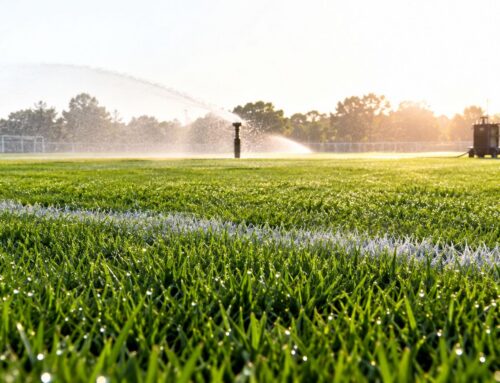
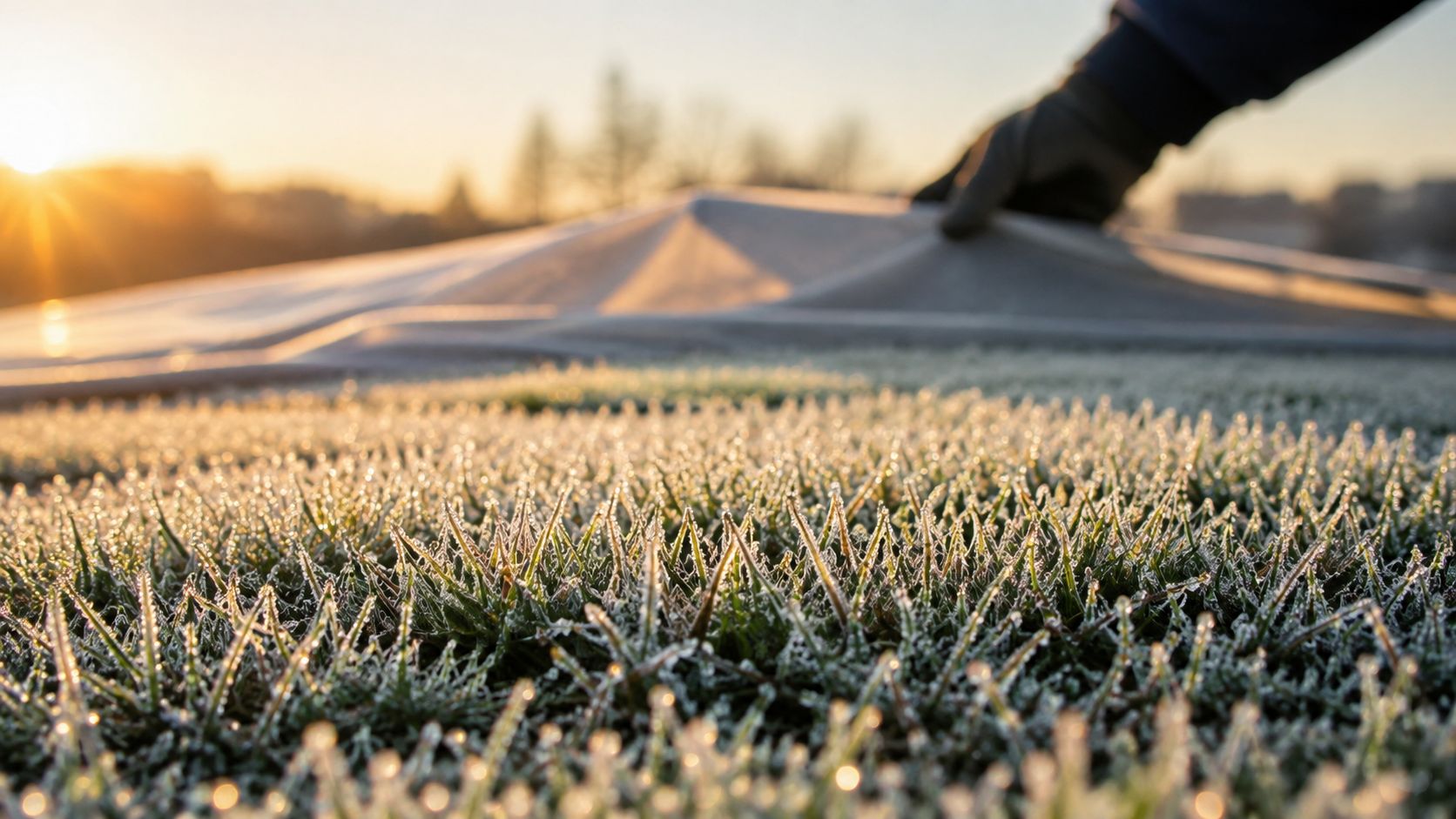
The first call usually comes before sunrise. A manager gets to the site, sees the turf glittering white, and has to decide in minutes whether crews can mow, whether carts stay parked, whether tenants need a warning, and whether the day's schedule gets rewritten around a thin layer of ice on the grass.
That's the part most weather apps miss. Frost on grass is a surface event, not just an air-temperature problem, and the decisions around it need to happen at the surface level too. If you manage commercial property in Texas, you already know the hard part isn't identifying cold weather, it's protecting turf, people, and schedules at the same time.
Table of Contents
- Why Frost on Grass Demands Immediate Attention
- Identifying Frost Conditions Before Damage Occurs
- Immediate Actions to Protect Turf and Ensure Safety
- Seasonal Prevention Strategies That Reduce Frost Impact
- Post-Frost Recovery and Maintenance Protocols
- Tenant Communication Procedures That Reduce Liability
Why Frost on Grass Demands Immediate Attention
The worst frost mornings usually look harmless at first. The parking lots may be clear, the roads may be fine, and a thermometer on the truck dash can suggest the site is only cool, not frozen. Then the turf crew steps onto the lawn, the blades crunch underfoot, and you know the property is already in the wrong condition for traffic.
That's because frost forms when the ground temperature falls below freezing and below the dew point, and the ground can cool faster than nearby pavement. The UK Met Office notes that frost can form on grass even when roads stay frost-free because different surfaces lose heat at different rates, and UMass Amherst points out that ground temperatures can be 4°F to 8°F lower than standard screen-height air readings, so grass can freeze even when a thermometer reads 36°F (Met Office frost formation guidance).
The operational mistake most teams make
They wait for the air reading to drop farther. That delay is expensive, because by the time the air feels “cold enough,” the turf may already be frozen. A frost layer is the signal that the surface has crossed the line most likely to affect mowing, cart traffic, irrigation timing, and tenant safety.
Practical rule: if the turf surface is frosted, treat the site as operationally frozen even when the air reading looks borderline.
That mindset matters for liability too. A field guide to workplace safety topics, like the safety topics guide by Learniverse, is useful here because frost response is really a coordination problem, not just a landscaping issue. Crews need a simple rule set, tenants need a clear message, and the property needs a documented response.
The practical takeaway is simple. Frost on grass is not a cosmetic morning nuisance. It's a threshold event that should trigger traffic control, schedule changes, and a recovery plan before damage spreads across the day.
Identifying Frost Conditions Before Damage Occurs
A proper frost check starts before anyone steps onto the lawn. Start with the night that just passed. Clear skies, light winds, and calm surface conditions set up radiative cooling, the process that lets grass blades lose long-wave heat overnight and drop below freezing even when the air nearby feels less severe (Weather Guys frost explanation).
Use surface clues, not just app readings
If the sky stayed open and the wind laid down, assume the turf may have cooled harder than the thermometer suggests. Frost forms when a surface cools below freezing and ice deposits directly on it, which is why a visual inspection matters as much as the weather report. Grass can also frost from dew that freezes later, so one property can show more than one frost pattern in the same morning.
The safe diagnostic sequence is straightforward:
- Check the surface first. If the blades are white, stiff, or coated, the turf is likely frozen.
- Compare multiple zones. Low pockets, shaded corridors, and areas near building edges cool differently.
- Use the air reading as supporting data, not the full picture. A standard screen-height reading can miss what the grass is experiencing.
The most reliable habit is to pair what you see with where the site traps cold. I've seen frosted turf around building shadows while exposed pavement stayed workable, and I've seen the reverse near heat-retaining hardscape. That is why the first round of inspection should always include turf edges, shaded runs, and any area with poor overnight exposure.
Trust the frost, not the thermometer
If the grass is visibly frosted, treat the site as frozen. That is the point where mowing, cart traffic, irrigation timing, and tenant access decisions need to change at once. For turf-specific guidance, see our internal guide on St. Augustine grass yellowing causes and fixes, since frost injury often gets confused with other cold-weather discoloration.
A surface check gives you the call you need. The manager who reads the turf first, then checks the air reading, avoids the mistake of sending crews or tenants into conditions the site cannot handle.
Immediate Actions to Protect Turf and Ensure Safety
The first hour after confirmation matters more than the rest of the day. Research on turf traffic during frost shows that even one pass of a golf cart across frost-covered creeping bentgrass can create visible damage, and seven passes caused significantly more injury that lasted for more than two weeks. The USGA also reports that when morning soil temperatures were below 32°F, traffic and rolling produced unacceptable injury levels whether or not frost was visible (USGA frost traffic research).
What the crew should do immediately
The response has to be fast and boring, because the best frost protocol is the one nobody improvises.
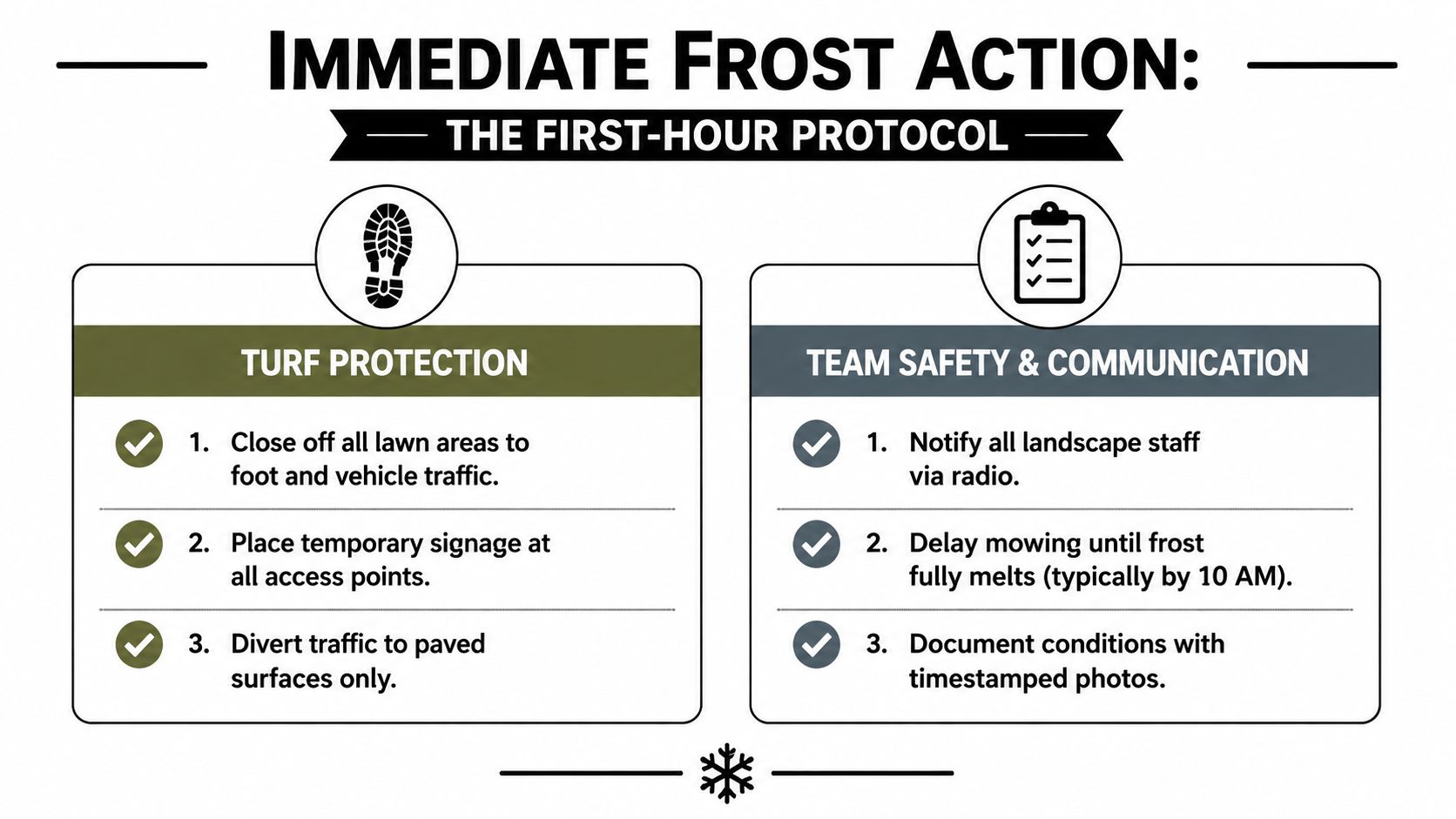
- Close turf access at once. Keep foot traffic, carts, and maintenance vehicles off frosted grass.
- Put signage at every entry point. Don't assume tenants will notice the condition on their own.
- Move traffic to hard surfaces only. Paved routes protect the turf and reduce the chance of unseen bruising.
- Delay mowing until the frost has fully melted. Blade traffic on frozen grass is a self-inflicted injury.
- Use radio or phone alerts for every field crew. If one crew misses the message, the whole protocol weakens.
The trade-off is schedule pressure. Morning service windows shrink, and teams feel that squeeze immediately. Still, the cost of pushing through a frost delay is usually higher than the inconvenience of a late start, because the damage can last well beyond the morning.
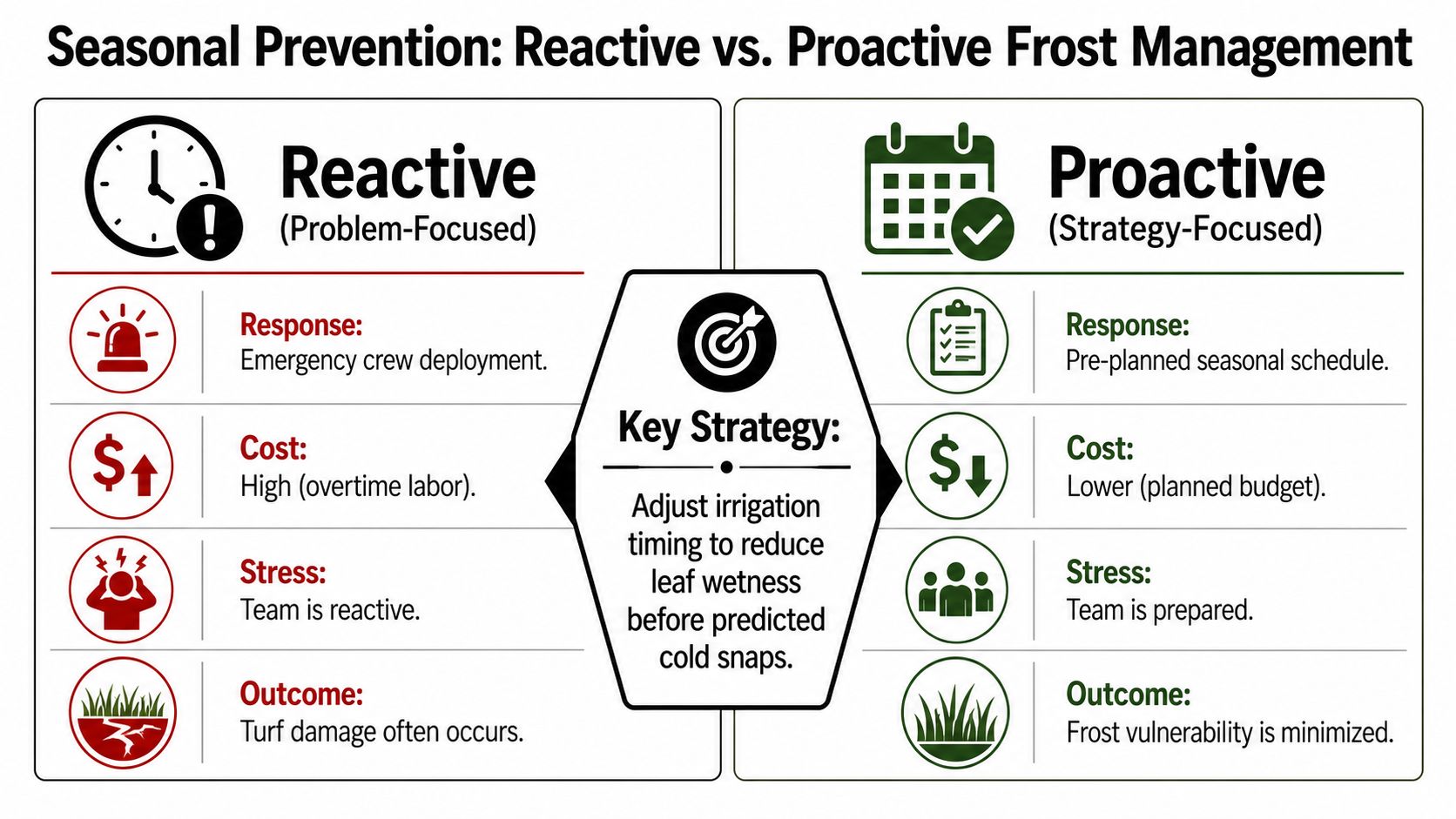
The reactive version of frost management is familiar. A crew shows up, sees the ice, waits for a decision, and burns time while everyone asks who's in charge. The proactive version is cleaner. Seasonal instructions are already in place, irrigation timing has been adjusted to avoid unnecessary leaf wetness before cold snaps, and the field team knows exactly when to stand down.
Keep the communication short and operational
A useful internal message sounds like this, “Frost is present on turf. No mowing, no carts, no foot traffic until cleared.” Short messages outperform long explanations in the morning because crews need action, not a weather lecture.
The point isn't to slow work down for the sake of caution. The point is to avoid a known injury threshold. If a property manager treats frost as a controllable condition instead of a nuisance, the site stays safer, the turf stays healthier, and the day usually gets back on track faster.
Seasonal Prevention Strategies That Reduce Frost Impact
The first frost problem usually starts before sunrise, when crews are already under pressure to make a call. The properties that handle it well are the ones that build their response into the season, not the ones that wait for a cold morning and then improvise. On a Texas portfolio, that means treating frost as an operations issue, not just a turf issue.
Start with irrigation timing and moisture discipline
If the leaf surface is wet, it freezes faster and stays cold longer. That makes irrigation timing one of the easiest controls to tighten before a cold front arrives. When the turf does not need overnight water, hold the cycle, and if a site has a habit of holding moisture before dawn, adjust the schedule before the next cold snap.
This is also where crews need clear direction. A well-run property does not leave overnight watering, frozen turf checks, and morning access decisions to individual judgment. The team should know which zones are allowed to stay dry, which areas get extra caution, and who makes the call when weather shifts late.
Use site design to fight microclimates
Property layout changes frost behavior more than many managers expect. Tree cover, building walls, wind channels, and shaded corridors all create pockets that cool faster than the rest of the site. Low spots and sheltered corners should be treated as frost-prone by default, especially where traffic, guest access, or tenant visibility is highest.
That information matters during scheduling. If the north side of a site clears later than the front entrance, the route plan should reflect that difference. If one courtyard consistently holds frost longer, it needs a separate morning protocol, not the same blanket instruction used everywhere else.
Don't overlook routine maintenance choices
Some of the strongest frost controls are small operational choices made long before a cold front arrives.
- Adjust mowing heights carefully. Cutting turf too low before a cold event leaves less leaf surface to carry the plant through stress.
- Target irrigation repairs early. Broken heads and uneven coverage create wet and dry patches that behave differently when temperatures drop.
- Use resilient species where redesign is possible. Frost-prone sites need turf that fits the exposure, not a plant choice made only for appearance.
Best investment order: correct irrigation timing first, then fix exposure problems, then replace turf where repeat damage keeps proving the site is the wrong fit.
The payoff shows up in recovery planning too. The properties that recover cleanly after frost are usually the ones that already have a simple sequence in place, assess the site after thaw, clean up only what needs it, make selective repairs, and return watering support in a controlled way. That sequence pairs well with the recovery guidance in our internal guide on comprehensive site care, because frost response works best when seasonal maintenance and morning decision-making are tied together.
My view is that weak prevention plans usually fail for a simple reason. They assume every property can be protected the same way, even when the coldest pockets keep proving otherwise. The better approach is more direct, tighten the water schedule, plan around the site's exposure, and be honest about where repeated frost means the turf choice needs to change.
Post-Frost Recovery and Maintenance Protocols
Frost recovery needs restraint. The biggest mistake after a freeze is treating every browned blade as a crisis and every patch of flattened turf as permanent injury. Wait for the surface to thaw, then assess what happened, because cold stress can look worse in the first light than it really is.
Separate cosmetic stress from lasting damage
Healthy turf can look matted or slightly discolored after a frost and still recover on its own. What needs intervention is the turf that stays flattened, discolored, or brittle after thawing and normal rebound time. That's where documentation helps, because a timestamped photo set gives you a clean record for vendor conversations, warranty questions, or insurance discussions if they come up.
For the first recovery pass, keep the work light. Avoid aggressive cultivation while the turf is still stressed, and don't reopen traffic too soon. Once the surface has thawed, the site can usually return to normal circulation gradually, but the pace should be driven by how the grass responds, not by the clock.
Use a simple recovery sequence
A practical in-house protocol looks like this:
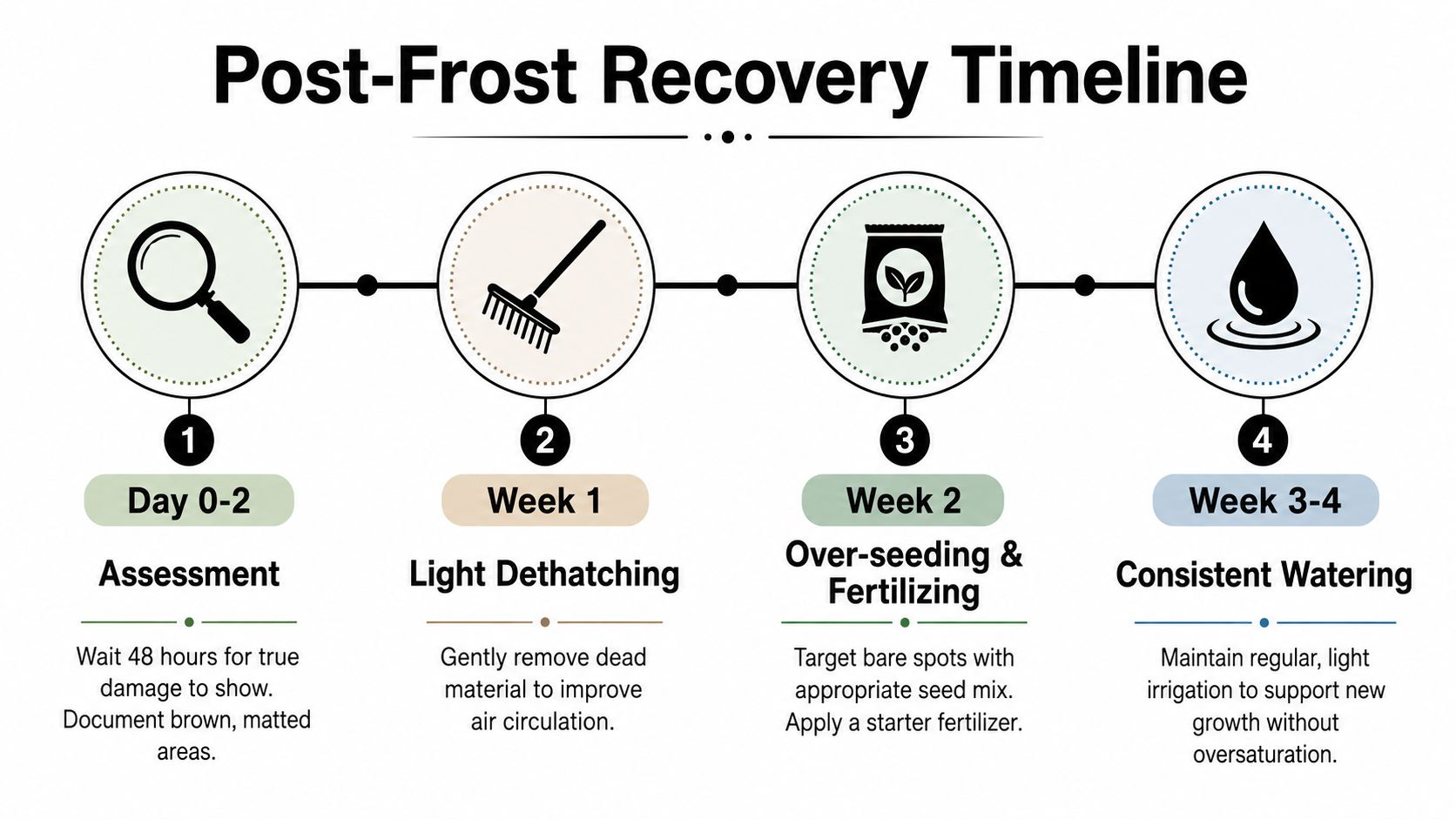
- Assess after thaw. Don't judge damage while frost is still present.
- Record the affected zones. Photos and location notes keep decisions grounded.
- Remove only loose debris or dead material. Heavy work adds stress.
- Support recovery with normal watering discipline. Avoid overcorrecting with extra water.
- Escalate if the turf doesn't rebound. Persistent thinning or brittle tissue deserves a closer look.
The internal guide on commercial landscaping insurance is a good reminder that documentation isn't just administrative, it protects the property when there's a question about cause, timing, or responsibility.
Know when to bring in outside help
Specialists are worth calling when damage doesn't match the surface story. If the turf looks minor at first but declines after thaw, or if the same frozen pocket keeps failing after each cold event, the problem may be deeper than one bad morning. Soil condition, drainage, irrigation distribution, and exposure all matter, and an outside review can save you from treating the symptom while the cause stays in place.
The calmest recovery programs are the ones that resist overreaction. Frozen turf doesn't need drama, it needs observation, restraint, and a clear point at which the manager decides whether the site is recovering as expected.
Tenant Communication Procedures That Reduce Liability
Tenants notice frost fast, especially when it changes access or delays service. They also notice silence. The strongest communication plans send a short warning before the property becomes a bottleneck, then a clean follow-up once crews have confirmed the turf is safe again.
Say what is closed, what is delayed, and why
A useful frost notice doesn't need a long explanation. It needs three things, the condition, the restriction, and the timing expectation. For example, a morning alert can tell tenants that turf areas are closed until frost clears, mowing is delayed, and access is limited to paved paths.
That style of communication reduces friction because it frames the decision as a safety and turf-protection measure, not a service failure. It also creates a paper trail if someone later questions why a crew wasn't on the grass at 7 a.m. or why carts were rerouted.
Match the channel to the audience
Office tenants may respond best to email and lobby notices. Retail and hospitality teams may need a quicker phone or text alert if customers or guests are likely to enter the site early. For internal staff, radio and supervisor calls keep the message from getting diluted before the first crew roll-out.
If you want a broader legal frame for why this matters, the premises liability attorney guidance in Texas from Law Office of Bryan Fagan, PLLC is a useful reference on how property conditions can intersect with safety and responsibility. Frost events don't automatically create liability, but poor communication and poor control can turn a manageable condition into a defensible complaint.
Keep the record clean
Document the alert, the closure time, and the reopen time. Save photos of the frosted areas and the signage used, especially if the site has mixed pedestrian and vehicle traffic. That record matters when a tenant says they “weren't told,” because your team can point to a clear timeline instead of relying on memory.
A concise update after the event works well too. Let tenants know when turf access resumes and which areas stayed closed longest. That kind of consistency builds trust, because people can see the property team is managing conditions instead of reacting late.
If you need a commercial partner that understands how frost, scheduling, and property standards collide on real sites, Prestonwood Commercial Landscape Services can help you build a practical response plan and keep your grounds ready for the next cold snap. Visit Prestonwood Commercial Landscape Services to discuss maintenance support that keeps your property protected, professional, and easier to manage through winter weather.