High-efficiency spray nozzles can use about 10% less water than standard spray nozzles, and the EPA estimates that replacing standard nozzles could save the average household about 2,400 gallons per year. That sounds straightforward until you walk a Texas commercial property and see what really happens, pressure drift, mismatched arcs, poor controller settings, and a retrofit that looks good on paper but misses the savings in the field. The nozzle is only part of the system, and on commercial sites the system is what either holds the line on water use or wastes it.
Table of Contents
- Why High Efficiency Sprinkler Nozzles Matter for Commercial Properties
- Performance Metrics That Separate High Efficiency From Standard Nozzles
- Benefits for Commercial Irrigation Operations and Budgets
- Selecting the Right Nozzle for Your Site Conditions
- Retrofit Planning and Installation Best Practices
- Maintenance Realities and Long-Term Performance Considerations
- Calculating ROI and Planning Your Next Steps
Why High Efficiency Sprinkler Nozzles Matter for Commercial Properties
Commercial properties lose a lot of water in places that never show up on a simple parts list. The EPA's WaterSense program estimated that nearly 26 million irrigation systems in the U.S., about 90% of systems, could be retrofitted with spray sprinkler nozzles, which shows how much of the commercial market still runs on outdated spray hardware EPA WaterSense nozzle estimate. For a facility manager, that points to a large pool of existing systems where the easiest savings are often still sitting in the heads already installed.
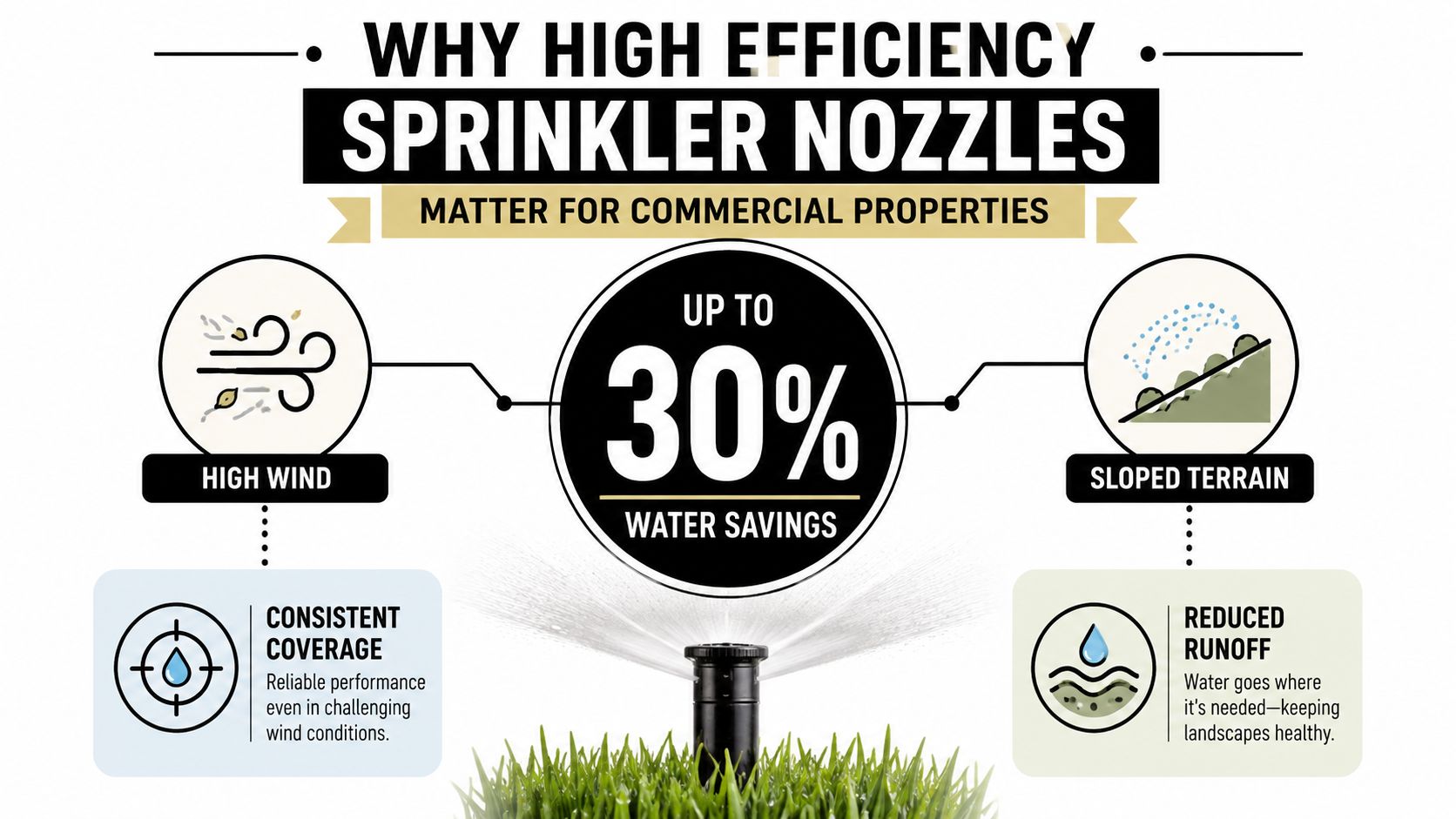
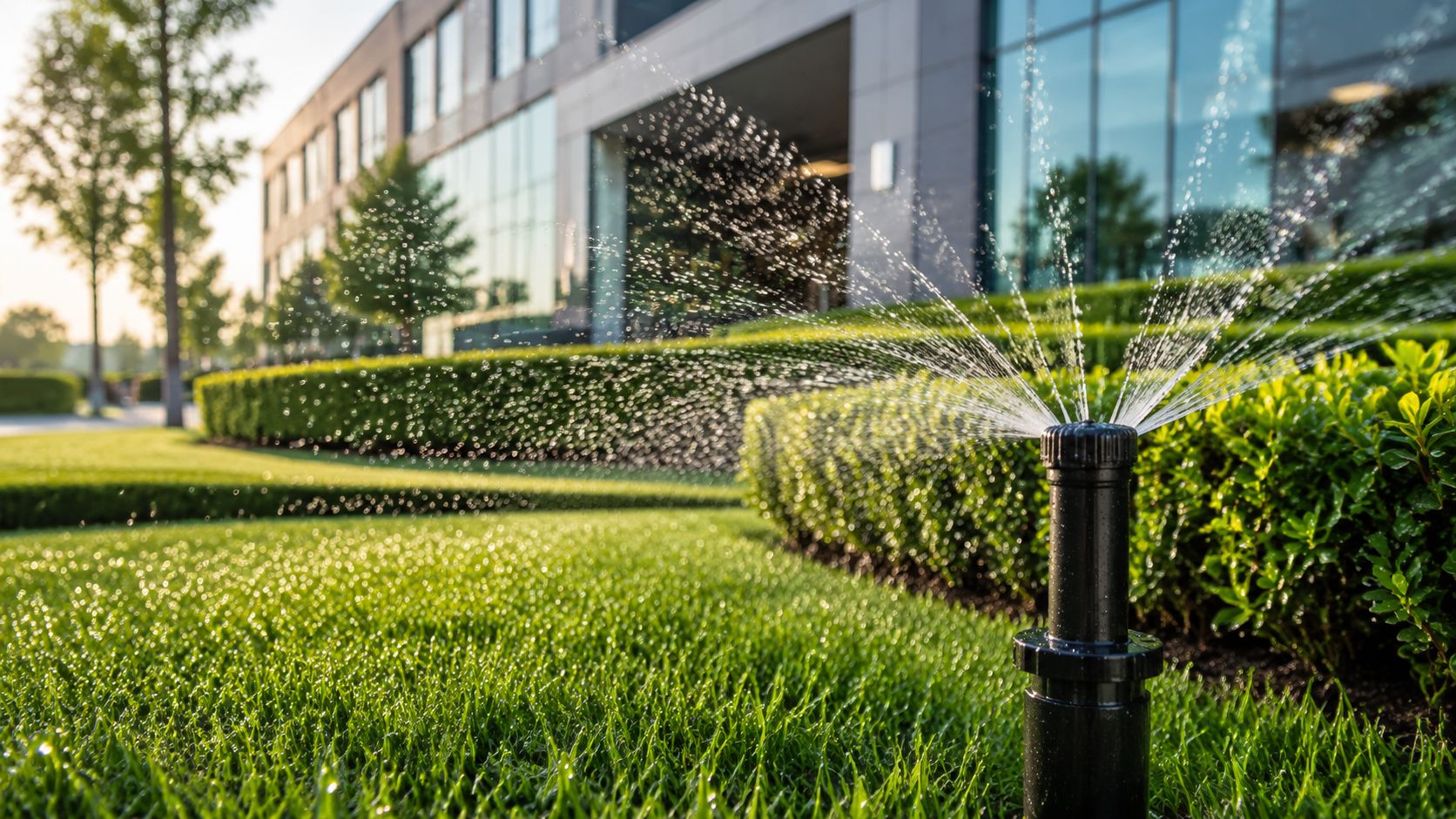
High efficiency sprinkler nozzles are built to put water down more slowly and more evenly than standard sprays. That helps reduce runoff and gives the soil more time to take in the application before it leaves the root zone. On commercial turf, narrow planting beds, medians, and curb-adjacent strips, that difference shows up fast in puddling, pavement overspray, and tenant complaints.
The retrofit only pays off when the rest of the zone is set up to support it. Pressure still has to be regulated, arc selection has to match the actual shape of the planting area, and controller runtime has to be reset after the swap. If those pieces stay unchanged, the new nozzle may look better on paper than it performs in the field.
A nozzle change should be treated as a system change. The nozzle, pressure, spacing, and runtime all have to work together, or the water savings stay theoretical.
Texas sites make that clear because heat, wind, sloped hardscape, and mixed-use edges expose weak irrigation design quickly. For a practical view of how local commercial sites deal with water use and irrigation pressure, this Texas water management and irrigation overview is worth reading alongside a retrofit plan.
The same logic applies to service operations. Good key last mile delivery features matter because sequence, timing, and accountability control the result. Irrigation retrofits work the same way, the details decide whether the site saves water or just changes hardware.
Performance Metrics That Separate High Efficiency From Standard Nozzles
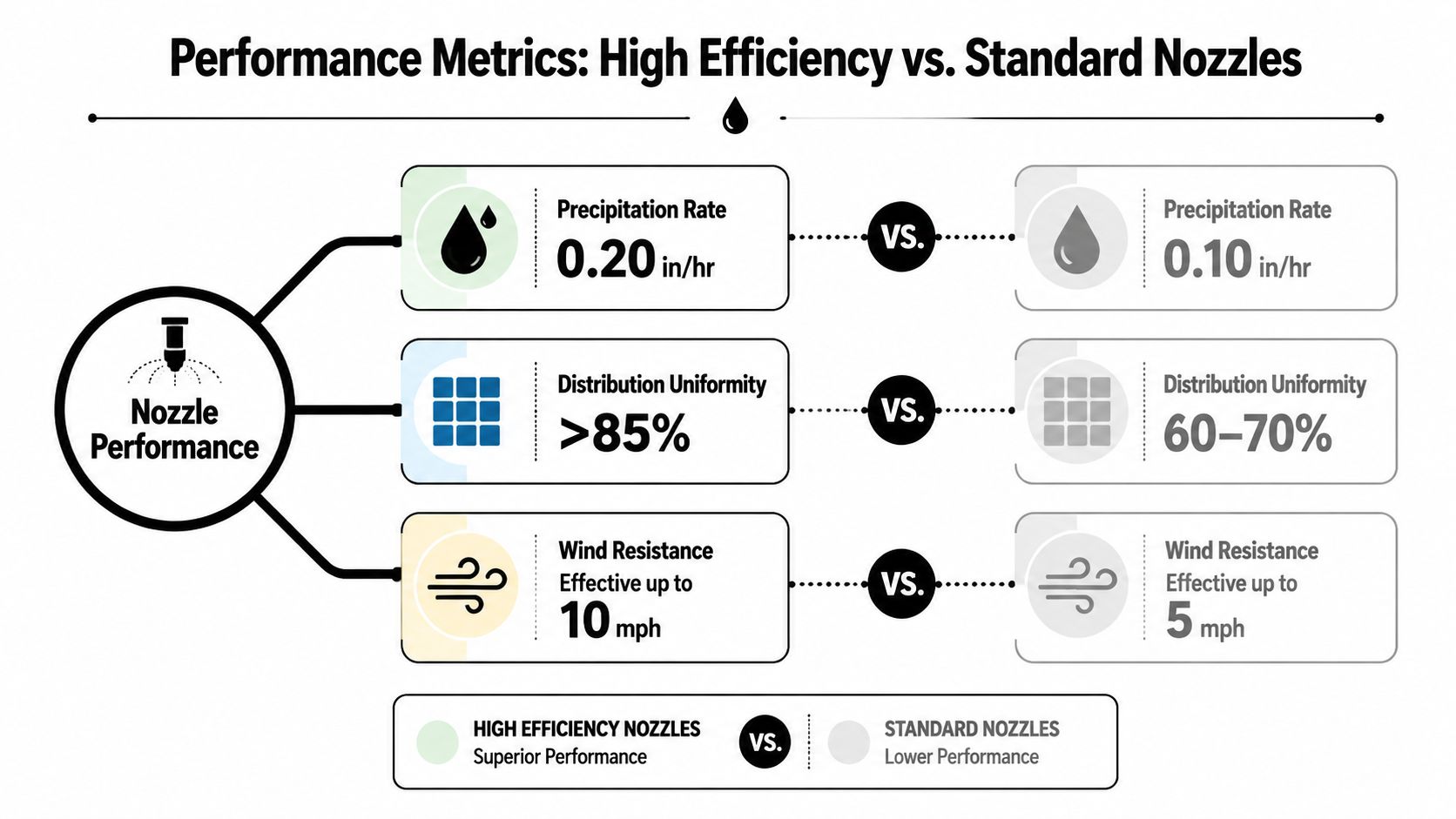
The quickest way to judge high efficiency sprinkler nozzles is to look past the sales pitch and check three field metrics, precipitation rate, distribution uniformity, and wind behavior. Those numbers show why one zone stays tight while another keeps going blotchy even after the same amount of water leaves the system.
Precipitation Rate
Precipitation rate is how fast a nozzle applies water to the ground. For high-efficiency spray nozzles, the EPA WaterSense benchmark puts the target at 1.2 in/hr or less EPA WaterSense specification update. In the field, that slower delivery gives compacted turf, narrow beds, and other tight plant areas more time to take in water before it runs off.
Commercial sites expose the limitation fast because soil intake is rarely uniform. Parking lot islands, medians, and builder-grade soils often absorb water unevenly, so a fast spray pattern can outrun the soil. A slower nozzle is not the answer in every zone, but it usually gives you a better chance of keeping water where the roots can use it.
Distribution Uniformity
Distribution uniformity shows whether the zone gets water evenly or whether one part gets saturated while another stays dry. EPA WaterSense uses the DULQ threshold at 0.65 for high-efficiency spray nozzle performance EPA WaterSense specification update. In practical terms, that is the line between a zone that looks balanced and a zone where one edge keeps forcing extra runtime just to cover the weak spots.
Commercial managers see the result first in tenant-facing areas. Dry corners bring complaints, but the usual reaction is to add time on the controller, which makes the wetter portions of the zone worse. Better uniformity lets you correct the dry areas without turning the rest of the bed into runoff.
Wind Resistance
Wind resistance does not show up as a single easy lab number, but it matters most on exposed Texas sites where spray crosses open turf or hardscape. High-efficiency nozzles use larger droplets and tighter pattern control, which helps the water reach the target instead of drifting away. That difference shows up when a zone looks fine in calm morning air and falls apart once the afternoon wind starts moving.
Pressure still shapes that outcome. If the zone is overpressurized, even a better nozzle can mist, drift, and lose the pattern control you paid for. That is why a retrofit has to be matched to the site, including the nozzle type, the pressure setting, and the actual spray layout. For a practical view of how spray, rotor, and other layouts fit on the same property, this sprinkler system types guide is a useful reference.
Field note: If a proposal leaves out pressure, arc matching, and precipitation rate, it is not an irrigation design discussion. It is a parts list.
Benefits for Commercial Irrigation Operations and Budgets
The business case for high efficiency sprinkler nozzles starts with water use, but it does not stop there. Water savings matter because they reduce waste on the meter, yet the value shows up in better application, less stress on turf, less runoff along hard edges, and fewer irrigation complaints to chase down. Property managers notice that combination quickly because it affects both operating cost and how the site is perceived.
EPA WaterSense estimated that replacing standard nozzles could save the average household about 2,400 gallons per year EPA WaterSense nozzle estimate. Commercial properties do not follow the same pattern as a house, but the direction is the same, less water leaves the meter when the system is tuned for the new nozzles. The opportunity is larger on sites with many spray zones, because each retrofit adds up across the number of heads already in the ground.
What ownership teams usually respond to
- Operating cost control: Lower water use is easier to justify than a broad sustainability claim.
- Property appearance: More even moisture means fewer dry spots, less runoff, and fewer tenant complaints.
- Risk reduction: Better coverage helps on slopes and near pavement where runoff leaves visible damage.
- Compliance readiness: Properties under watering restrictions or appearance standards are better positioned when the irrigation system is already efficient.
The retrofit question is usually not whether the nozzle technology works. It is whether the site is prepared for it. High-efficiency nozzles can save water, but they also slow the application rate. That means runtimes often need to be longer after the swap, and the controller cannot stay on the old schedule if the goal is actual savings.
Pressure regulation is where a lot of retrofit value gets lost. If the zone is still overpressurized, the new nozzle can mist, drift, or throw an uneven pattern, and the savings that looked good on paper start to disappear in the field. Controller recalibration matters for the same reason. The system has to match the new precipitation rate, or the property ends up paying for the retrofit and still running inefficient schedules.
I have seen properties where the turf looked healthier after the change because runoff dropped and coverage improved. I have also seen properties where only the nozzle cap changed, and the water bill barely moved. The difference was usually pressure regulation, controller tuning, and arc selection, not the nozzle brand.
If budget pressure is the main concern, separate the one-time retrofit cost from the recurring irrigation bill. The upgrade happens once. The water use repeats every billing cycle. That makes it easier to compare a controlled improvement against the steady cost of waste.
Selecting the Right Nozzle for Your Site Conditions
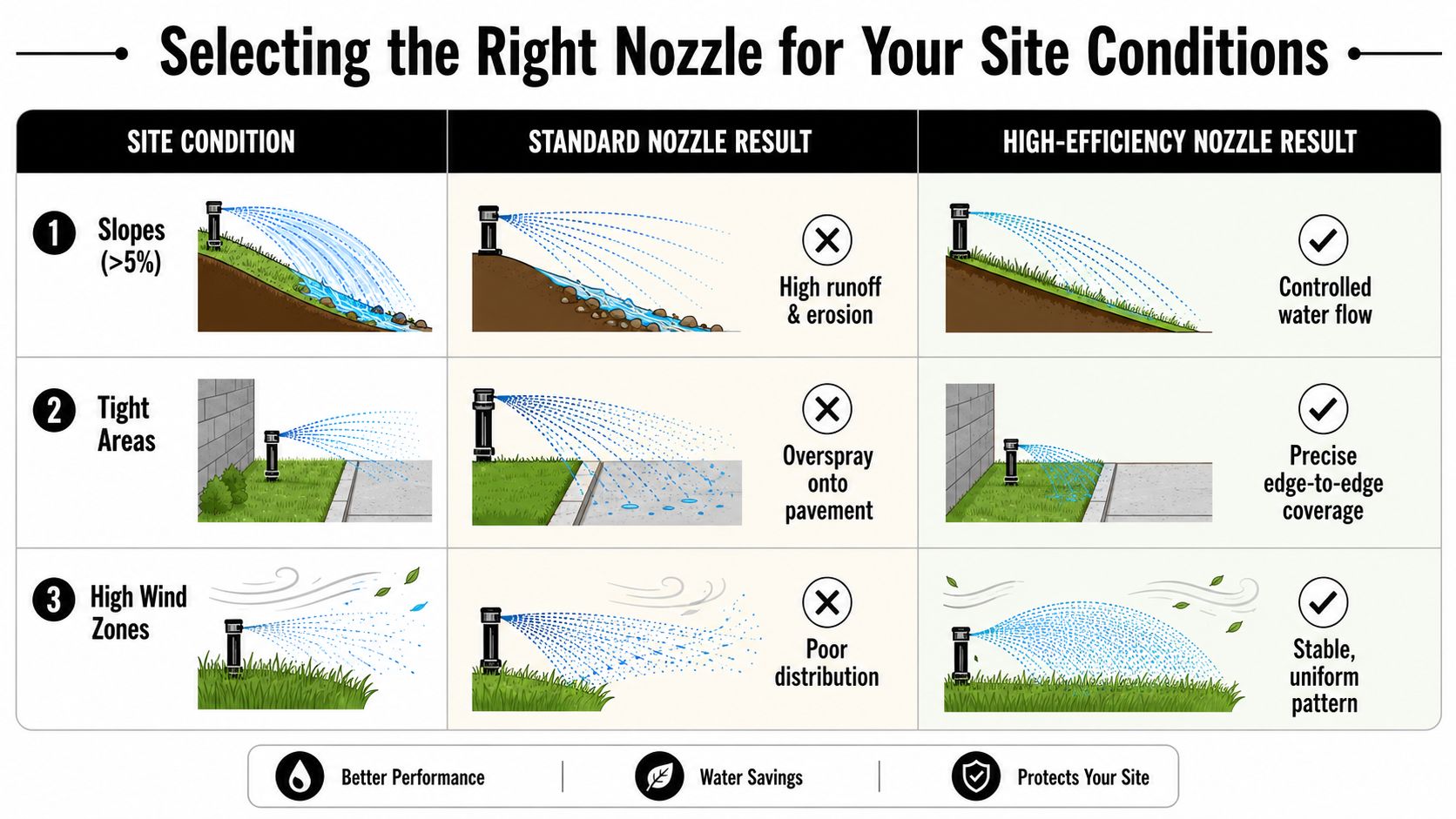
The nozzle choice has to start with the site, not the catalog. A loading dock edge, a windy frontage strip, a shaded courtyard, and a sloped median do not call for the same nozzle, even if they sit on the same property. The common mistake is asking for one product across the whole site when the site itself is mixed.
Match the arc to the space
High-efficiency nozzles only perform well when the arc fits the target area. A corner head should not behave like a full circle, and a narrow bed should not be forced to accept the same pattern as a broad turf panel. Matched precipitation matters too, because mixed arcs in one zone can create uneven application even when every head is a “high-efficiency” model.
Pressure-regulating spray bodies matter in many retrofits. Product families like Rain Bird's HE-VAN line are designed around an operating range of 15 to 30 psi with an optimum pressure at 30 psi, while Hunter's Pro High-Efficiency Nozzles recommend 30 psi and pair with pressure-regulating bodies Hunter Pro High-Efficiency Nozzles. If pressure runs too high, misting and pattern distortion can erase the efficiency gain.
Pick the nozzle type for the job
There are places where a high-efficiency spray nozzle is the right answer, and places where it is not. Tight ornamental strips, small beds, and many commercial perimeter zones often benefit because the slower application reduces runoff and overspray. Larger or more complex areas may need a rotary alternative or a different irrigation method entirely, especially where geometry and wind make spray coverage unreliable.
A nozzle that looks efficient on paper can still fail in the field if the spacing is wrong or the pressure is out of range.
Commercial managers should review each zone by slope, exposure, plant material, and bed width before approving a wholesale swap. If a site has a lot of irregular edges, mixed hardscape, or persistent wind exposure, the best answer may be a mix of nozzle families rather than a single product line.
A useful comparison comes from contractor proposals that spell out pressure, arc, and expected application behavior zone by zone. For operational planning on bigger projects, a practical investment guide for landscaping companies can also help teams think through equipment logistics and work sequencing without overcommitting to one-size-fits-all assumptions.
Retrofit Planning and Installation Best Practices
The cleanest retrofits start with an irrigation audit, not a box of replacement nozzles. A good audit tells you which zones are over-pressurized, which heads are misaligned, and which spray patterns already fight the site geometry. Without that baseline, the retrofit becomes guesswork.
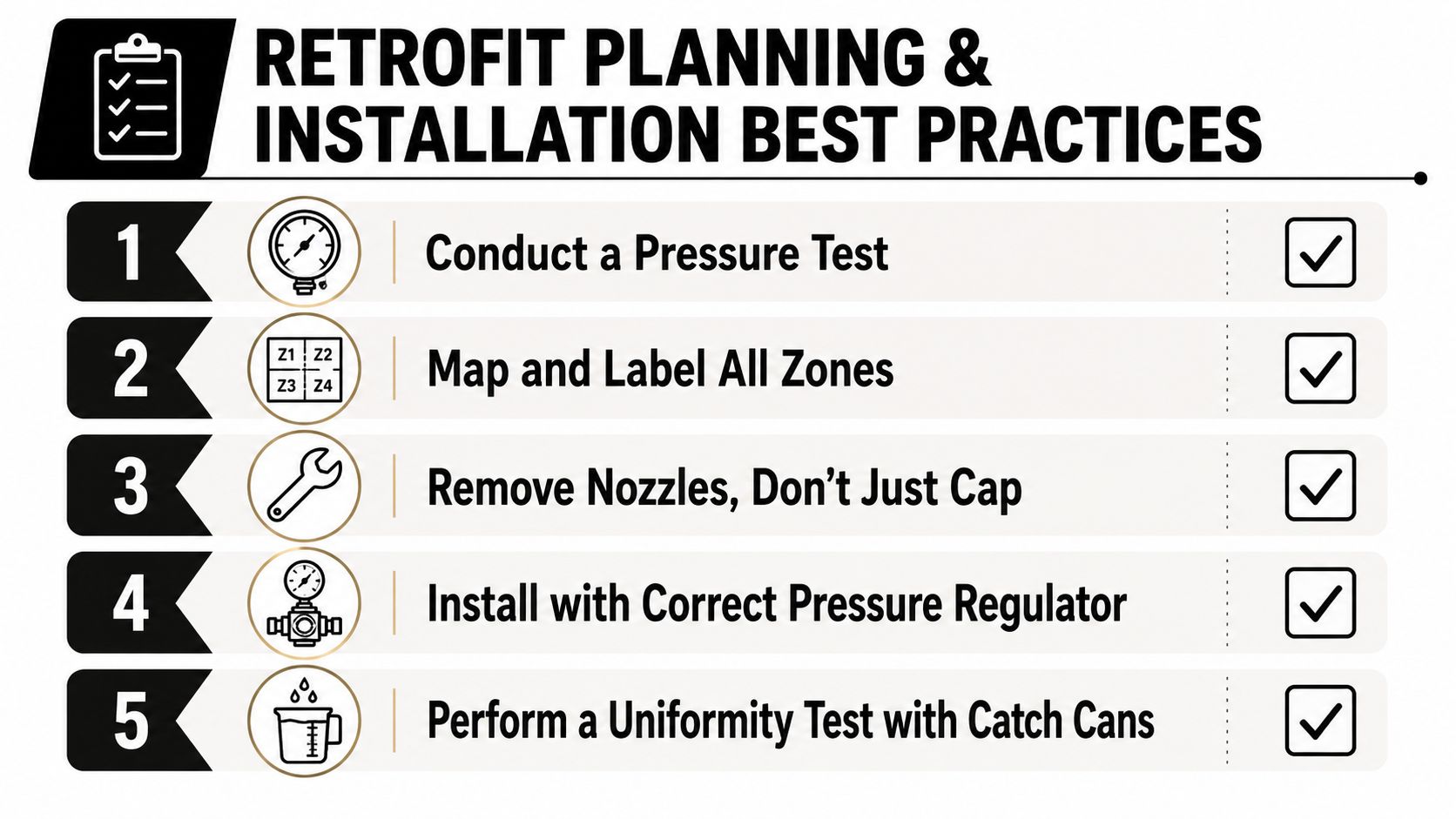
The sequence matters because high efficiency sprinkler nozzles are sensitive to the condition of the system around them. If existing spray bodies can't hold pressure where they should, or if heads are buried, tilted, or damaged, the new nozzle won't fix the underlying problem. It'll just make the flaw easier to spot.
The retrofit sequence that holds up in the field
- Test pressure at the head. Don't rely on a mainline reading when the problem is at the nozzle.
- Map every zone. Label the arcs, the plant type, and the problem areas before swapping parts.
- Replace the nozzle, don't mask the issue. Capping or partial fixes leave dead areas behind.
- Use the right pressure regulator. If the nozzle needs a controlled operating range, the body has to support it.
- Run a uniformity check. Catch cans or a similar field test will tell you whether the retrofit improved distribution.
Controller recalibration comes after the hardware work. High-efficiency nozzles apply water more slowly, so the legacy spray schedule usually won't be right anymore. If runtimes stay unchanged, the site often ends up underapplying water, which creates the false impression that the retrofit “didn't work.”
That's why sequencing is so important on occupied commercial sites. The work should be done in a way that lets crews verify each zone before moving on, especially where entrances, retail frontage, and hospitality areas can't tolerate visible disruption. If your team outsources the labor, insist on a zone-by-zone closeout, not just a general completion note.
Maintenance Realities and Long-Term Performance Considerations
On one office campus I walked, the retrofit looked solid for the first season, then the complaints started. The front beds near the drive were drying out, the slope by the sign kept showing runoff marks, and the maintenance crew insisted nothing had changed. What had changed was the pressure profile, a few clogged nozzles, and a controller that had drifted back toward the old schedule.
That's the maintenance trap with high efficiency sprinkler nozzles. They're not fragile, but they do depend on tighter operating conditions than a sloppy spray system can tolerate. If pressure creeps up or debris starts narrowing the orifice, the nozzle stops behaving the way it did on day one.
Keep an eye on the zone after installation, not just during commissioning.
Smaller orifices can be more vulnerable to clogging when water quality is poor, and that risk rises on properties that don't maintain their strainers, filters, or heads regularly. Seasonal checks matter because a system that looked balanced in spring can drift out of spec by late summer, especially when heads get bumped by outdoor work or pressure changes on the supply side.
This is also where site geometry beats theory. Windy corridors between buildings can push spray off target, and irregular spaces can make one arc behave differently from another even when the same nozzle family is installed. On some properties, rotary nozzles or drip still make more sense for specific areas, particularly when the zone is too awkward for spray to stay uniform over time.
For routine upkeep guidance that fits with a broader service program, this sprinkler system maintenance resource is a useful companion to a seasonal audit schedule. The point isn't to chase perfection, it's to catch drift before it turns into visible waste.
Calculating ROI and Planning Your Next Steps
The retrofit only pencils out when the site has real waste to cut. On commercial properties, that usually means spray zones with runoff, overspray, or inconsistent coverage, not areas that were already tuned well. If the current system is already pressure regulated and scheduled tightly, the savings still exist, but they are narrower and depend on the specific zones you touch.
Use the EPA's estimated 10% water-use reduction for high-efficiency spray sprinkler nozzles as a conservative planning baseline, then test that against what the site is doing EPA WaterSense nozzle estimate. In the field, that number only holds when the retrofit includes pressure regulation, controller recalibration, and the right arc selection for each zone. If those pieces are skipped, the nozzles may be newer, but the water savings disappear into overpressure, misting, and mismatched coverage.
A practical rollout starts with the worst-performing zones.
- Start with the worst zones: Slopes, windy edges, and tenant-facing areas usually show the fastest visible improvement.
- Document baseline use: Save current irrigation reports, controller settings, and trouble spots before the retrofit.
- Verify after installation: Walk the site, test the pattern, and confirm runtimes with the crew that will own the system.
- Check for rebates: Utility or municipal incentive programs can offset retrofit cost, but the paperwork usually has to match the installed equipment and the documented zone scope.
The strongest next move is a professional irrigation audit with a zone-by-zone nozzle review, not a generic replacement quote. That gives ownership a clearer picture of which zones need pressure regulation, which ones need controller changes, and where the arc pattern needs to be changed instead of assumed.
A good retrofit reduces water use where the old system was wasting it, evens out coverage, and cuts avoidable runoff. That result depends on treating the nozzles, pressure, and controller as one operating system, because a partial upgrade often leaves the same hidden losses in place.