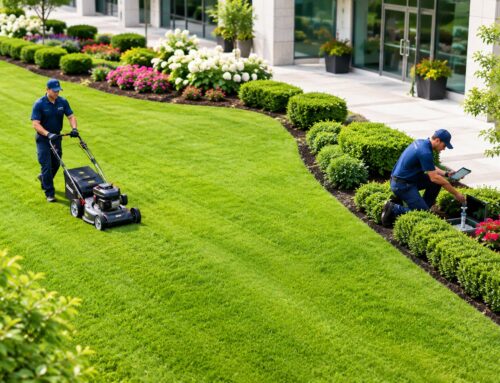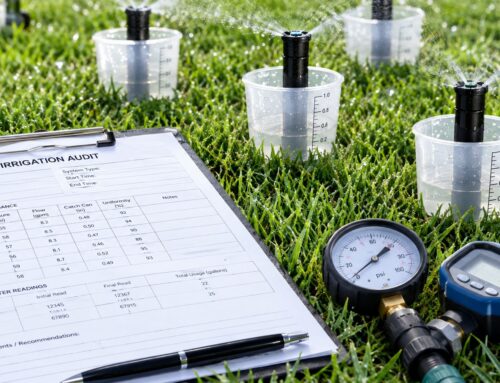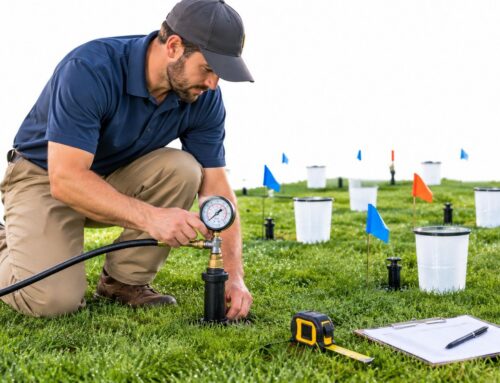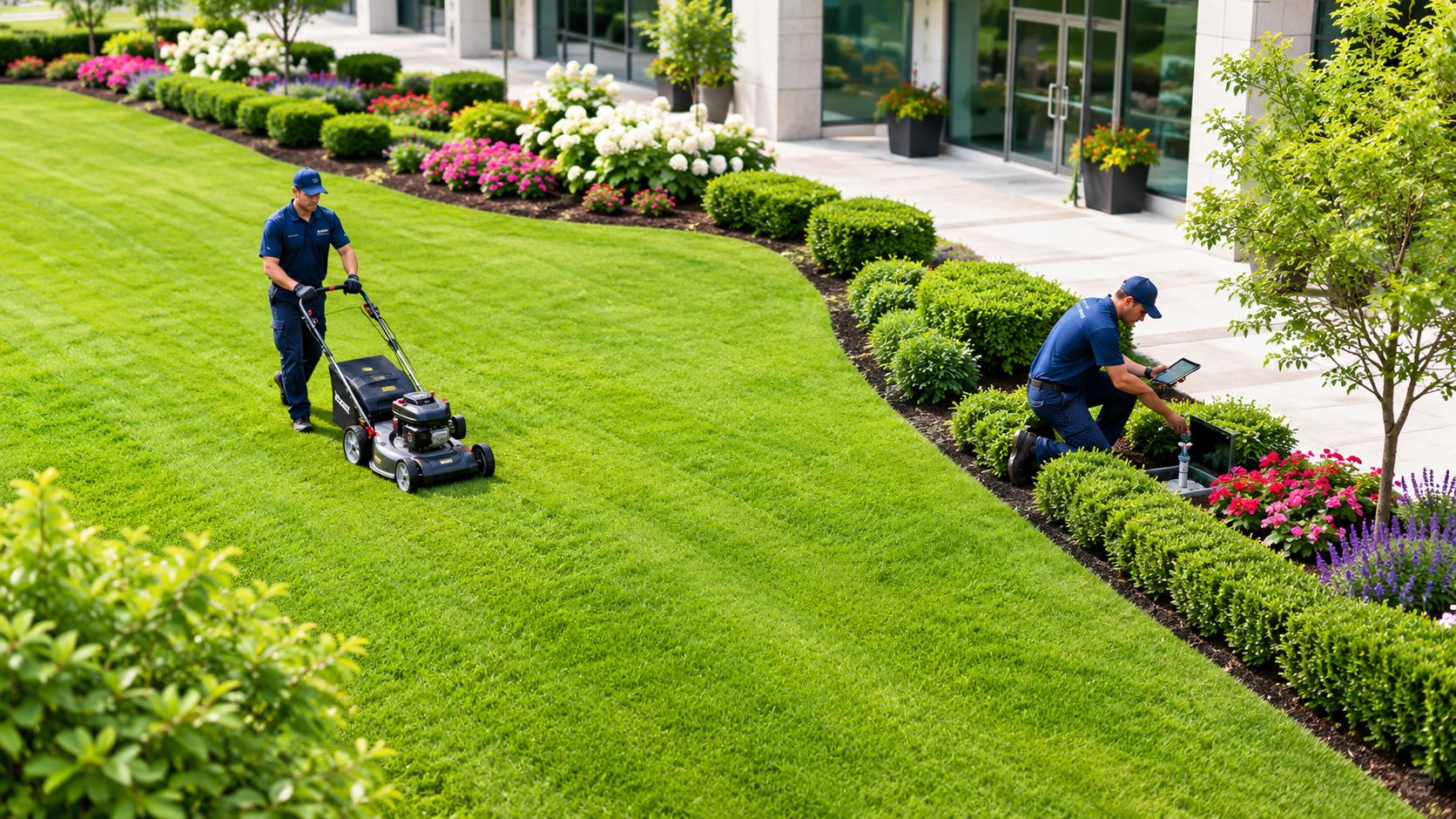
Commercial grounds maintenance usually runs $800 to $1,600 per acre per month, and annual spend can range from about $2,000 for small properties to over $50,000 for large campuses. The actual answer to how much grounds care costs depends on acreage, labor intensity, renovation scope, water management, and whether you're pricing only the install or the full cost of owning that outdoor area over time.
If you're a property manager, you've probably been handed a quote and asked one simple question: “Is this reasonable?” That question gets harder when one vendor prices by acre, another by visit, and a third folds irrigation, pruning, and seasonal work into one monthly number.
Most homeowner cost guides don't help much. Commercial properties don't live or die on curb appeal alone. Their outdoor spaces affect leasing conversations, customer impressions, pedestrian safety, operational workload, and long-term site costs. A cheap install that burns water, loses plant material, or creates constant service calls isn't cheap at all.
Table of Contents
- Decoding Your Landscape Investment Beyond Curb Appeal
- The Primary Drivers of Commercial Landscaping Costs
- Cost Breakdown by Commercial Landscaping Service
- Example Estimates for Texas Property Types
- Budgeting for Total Cost of Ownership Not Just the Initial Bid
- How to Get Accurate Bids and Reduce Landscape Costs
- Frequently Asked Questions About Commercial Landscaping Costs
- Is a professional grounds design fee worth it for commercial property
- Is a fixed monthly contract better than per visit billing
- How much should a property manager expect to spend annually
- Are renovation costs separate from maintenance
- What is the biggest mistake buyers make when asking how much landscaping costs
Decoding Your Landscape Investment Beyond Curb Appeal
A new property manager usually feels the pressure at the front drive first. The entry beds are fading, irrigation is running at the wrong times, tenants are emailing photos, and ownership wants to know why the property still looks tired after paying for weekly service. That is the true cost question. It is not just what a crew charges to show up. It is what the property's exterior costs to operate well over time.
Commercial grounds are an operating asset. They affect water use, safety, first impressions, leasing conversations, and how quickly small maintenance issues turn into replacement projects. On a multi-tenant site, they also influence recoverable expenses and budget planning. If you manage CAM-heavy properties, your guide to triple net leases helps clarify how exterior care often fits into the larger cost structure.
That is why pricing has to be judged on total cost of ownership, not just the opening bid. A cheap contract can lower this month's invoice while raising next quarter's spend through plant loss, drainage problems, hard-to-control weeds, runoff complaints, and emergency irrigation repairs. It can also weaken brand presentation at the exact spots prospects, residents, patients, or shoppers notice first.
Practical rule: If a proposal cuts inspections, pruning cycles, irrigation checks, or seasonal cleanup, it is usually shifting cost into future repairs and replacements.
National averages can offer rough context, but they do not build a usable budget for a commercial site. The key question is whether the service level matches your property's traffic, visibility, water demands, and ownership goals. A retail center with public-facing frontage should not be budgeted like a back-office industrial site, even if the acreage looks similar on paper.
Why commercial buyers should think like investors
Exterior care decisions show up later in capital planning. Missed irrigation leaks raise water bills. Poor pruning shortens plant life and forces earlier replacement. Weak bed management leads to decline that eventually requires renovation instead of routine upkeep. Once curb lines, entries, and focal areas lose definition, the fix is rarely one extra visit. It is often a larger refresh with new material, labor, and downtime.
I have seen managers save a small amount on monthly service, then spend far more correcting avoidable decline before a tenant tour, renewal push, lender visit, or ownership inspection.
Strong programs support occupancy goals and protect the asset. Weak programs create complaints, reactive vendor calls, and surprise spending.
What works and what doesn't
- What works: Setting different appearance standards by zone. Main entries, monument signage, sidewalks, and customer-facing areas usually justify more detail than service yards or low-visibility edges.
- What works: Tying routine maintenance to irrigation oversight, drainage awareness, and plant health checks so crews catch problems while they are still inexpensive to fix.
- What works: Judging proposals by expected annual ownership cost, including water waste, replacement risk, and likely corrective work, not just by the monthly number.
- What doesn't: Approving a low bid without clear visit frequency, scope limits, or responsibility for reset work when the property starts slipping.
- What doesn't: Using homeowner pricing logic for commercial sites with public exposure, liability concerns, and stricter presentation standards.
The Primary Drivers of Commercial Landscaping Costs
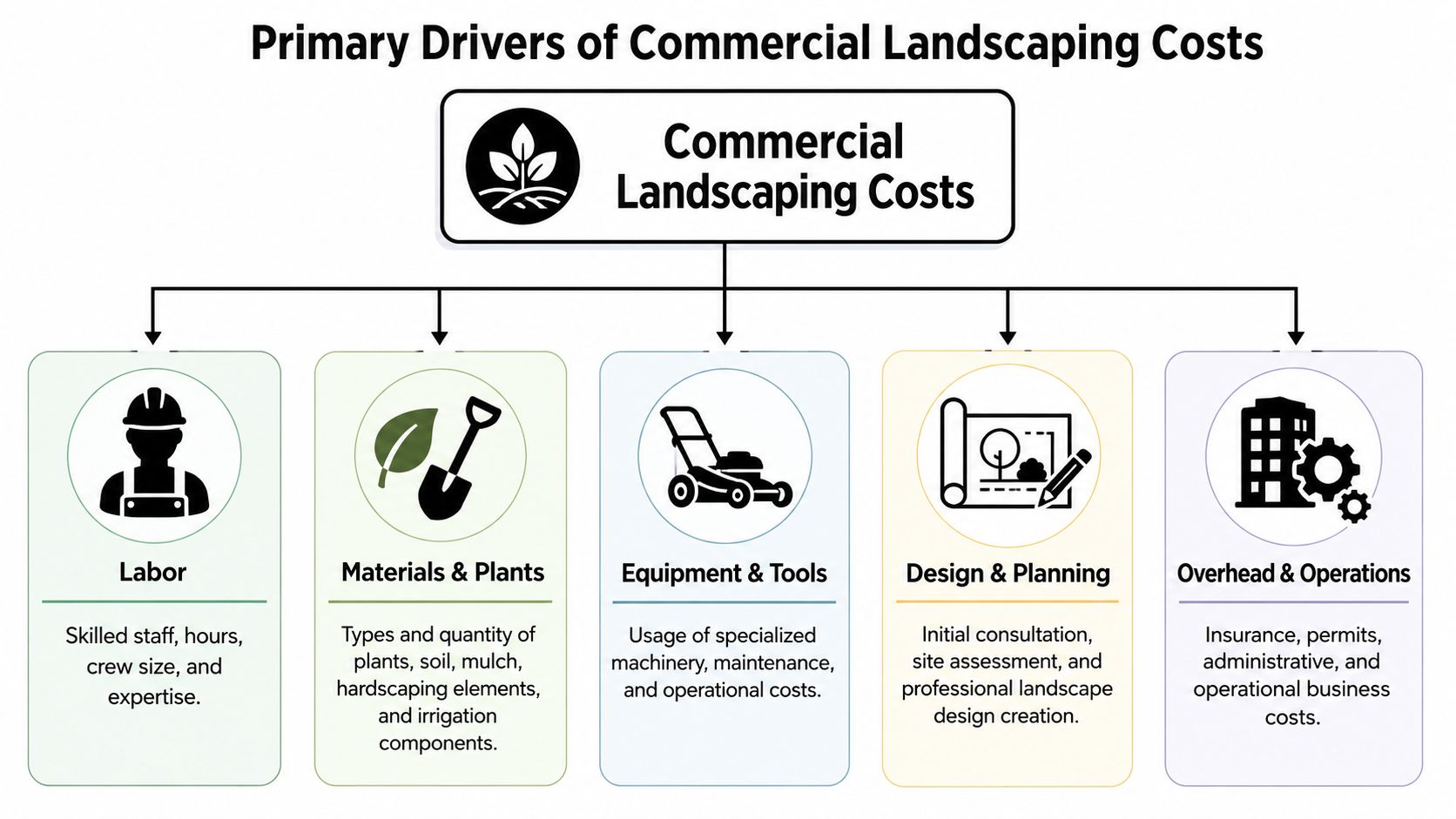
Commercial grounds budgets usually swing on a few practical variables. Property managers who understand them can spot underbids early, compare proposals on equal terms, and avoid a low monthly number that turns into higher annual ownership cost.
Size changes everything
Square footage sets the baseline. Site complexity often determines the actual price.
A flat office campus with broad turf panels and easy truck access costs less to maintain than a smaller retail center with narrow islands, decorative beds, tree rings, steep edges, heavy foot traffic, and constant litter pressure near storefronts. Crew time goes up when the property has more interruptions, more detail work, and more areas that have to look sharp every visit.
Small sites can also be expensive on a per-acre basis. Mobilization, unloading, edging, blower work, irrigation checks, and supervisor time still have to happen, even when the footprint is modest. That is one reason a simple price-per-acre comparison often misses the true cost structure behind commercial grounds maintenance services.
If your lease structure pushes operating costs through to tenants, the way grounds care is scoped can affect budget planning and recoveries. For managers reviewing site expenses alongside CAM obligations, your guide to triple net leases is a useful companion resource because it clarifies how maintenance obligations often fit into the broader property cost picture.
Labor is usually the biggest lever
Labor drives more project cost than property managers often anticipate.
According to LawnStarter's breakdown of landscaping labor costs, hourly labor rates range from $36.34 in Idaho to $69.67 in New York, specialized roles such as outdoor architects can cost $250 per hour, and recent 2026 data places the national average grounds care hourly cost at $50 to $65. Those numbers explain why a compact, detail-heavy property can outprice a larger site with open mowing patterns and fewer presentation requirements.
Labor cost is also tied to service standard, not just time on site. Retail frontage, medical office entries, hospitality properties, and investor-owned assets preparing for tours usually need tighter bed definition, cleaner pavement edges, faster issue response, and stronger horticultural judgment than a low-visibility industrial parcel. Better crews cost more, but they often reduce replacement work, complaint calls, and rushed corrective visits.
The right question is simple. How many crew hours, what skill level, and what appearance standard are included?
Materials, water, and site conditions shape long-term cost
Materials are the next major cost bucket, but the initial plant and mulch bill is only part of the story. The larger financial question is how long those materials hold up under your site conditions and how much water, adjustment, and replacement they will require over time.
Texas properties make that trade-off clear. Irrigation coverage gaps, poor drainage, reflected heat from pavement, compacted soil, storm cleanup, and high-traffic pedestrian zones all push ownership cost higher. A cheaper planting plan can look fine at turnover and still perform badly if it needs frequent replacements, excess watering, or repeated crew visits to keep presentable.
This is where total cost of ownership matters. A proposal with drought-tolerant plant selection, zoning adjustments, drainage corrections, and fewer high-maintenance focal areas may cost more up front, while producing lower water use, less material loss, and more stable appearance through the year. For commercial sites, that consistency also affects tenant perception, customer experience, and brand presentation.
Overhead matters too. Insurance, supervision, equipment transport, safety compliance, fuel, scheduling, and account management are real operating costs in commercial site maintenance. When one bid comes in far below the others, the usual explanation is not efficiency alone. More often, something has been excluded, visit time has been cut too tightly, or the contractor is pricing a service level they will struggle to sustain.
Cost Breakdown by Commercial Landscaping Service
Commercial grounds budgets usually split into two buckets. One is recurring service that keeps the property presentable week after week. The other is project work, such as bed renovations, irrigation corrections, tree replacement, drainage fixes, and seasonal upgrades that reset appearance or solve an operating problem.
That distinction matters because a cheap monthly contract can still produce a high annual ownership cost if the site needs constant catch-up work.
What common commercial services usually cost
Use these ranges as planning numbers, not quote substitutes. They help a property manager sort routine care from capital-style work and see where a low monthly number may hide later spending.
| Service | Typical Cost Structure | Estimated Cost Range (2026) |
|---|---|---|
| Full-service commercial grounds maintenance | Per acre per month | $800 to $1,600 per acre monthly |
| Annual maintenance spend | Per property per year | About $2,000 to over $50,000, with wide variation by site size, service level, and presentation standard |
| Basic mowing and trimming only | Per acre or per visit | Lower than full-service programs, especially on larger, simple properties with limited detail work |
| Renovation or installation package | Per project | Starts around $5,000 and can exceed $75,000 for larger commercial scopes |
| Small office renovation example | Per project | About $20,000 and up for a modest refresh with visible site improvements |
| Large office or hospital renovation | Per project | About $35,000 and up for higher-appearance programs with broader scope |
| Tree replacement | Per tree | $500 to $2,700 on average |
| Bush or shrub trimming | Per shrub | $5 to $20 per shrub |
| Herbicide application | Per acre | $15 to $100 per acre |
All numeric ranges above are drawn from commercial pricing benchmarks referenced earlier in this article, including HomeGuide and other industry pricing guides already cited.
If you need a plain-English scope check before comparing proposals, this overview of what grounds maintenance includes helps clarify whether a contract covers only mowing or a broader property care program.
What the low end and high end usually mean
Low-end pricing usually buys production work. The crew shows up on cycle, cuts turf, trims edges, blows hard surfaces, and leaves. That can work on a low-visibility industrial site, a simple warehouse frontage, or a property where ownership mainly wants code compliance and basic neatness.
High-end pricing buys more labor time, more supervision, and more problem-solving. On sites with tenants, patients, customers, or daily visitors, that usually means sharper bed lines, better pruning, cleaner entrances, seasonal color rotations, stronger irrigation oversight, faster issue reporting, and fewer visible dips in appearance.
The trade-off is not cosmetic alone. It affects operating cost.
A low-price contract often excludes the work that prevents larger expenses later. Heads are broken but not flagged quickly. Drainage issues are worked around instead of corrected. Shrubs get sheared into boxes because detail pruning takes longer. Annual flowers are reduced or skipped. Weed control becomes reactive. Over a year or two, the property may spend less on the monthly contract and more on replacements, water waste, emergency cleanup, and periodic reset projects.
Here are the decisions I see property managers face most often:
- Basic cycle work versus full-service care. Basic service can be enough for back-of-property zones or low-profile assets. Front entries, monument signs, leasing paths, and customer-facing areas usually need more detail time.
- Cheaper renovation versus fewer future callbacks. A light bed refresh may improve appearance for a season. If the underlying issue is poor drainage, failing irrigation coverage, or the wrong plant selection for reflected heat, the inexpensive fix rarely stays inexpensive.
- Lower install cost versus lower ownership cost. Simpler plant palettes, drought-tolerant material, and reduced high-maintenance focal beds can cost more to plan correctly, but they often lower water use, replacement frequency, and labor intensity over time.
- Minimal oversight versus active account management. Some contractors price only crew time. Others include inspections, reporting, irrigation adjustment, and coordination with property management. That added administration shows up in the bid, but it also reduces surprises.
Service conditions change pricing fast. Overgrown turf takes longer to cut than maintained turf because crews may need extra passes and cleanup time. Tree work gets expensive when access is poor or replacement includes staking, hauling, and establishment watering. Renovation budgets also move quickly once hidden issues appear under the surface, especially failed valves, compacted soil, root conflicts, or drainage corrections near paving.
For commercial properties, the better question is not "What does this service cost?" It is "What level of service prevents avoidable spending while keeping the site aligned with tenant expectations, water constraints, and brand standards?"
Example Estimates for Texas Property Types
A property manager in Texas rarely asks for a number in the abstract. The question is what the site needs to stay presentable, control water waste, avoid premature replacements, and support the image the property is selling to tenants, shoppers, or residents.
Plano office park with a year round presentation standard
A 10 acre office park usually runs on consistency. Tenants notice brown turf at the entry, thin bed color near the monument sign, and irrigation overspray on walks long before ownership sees an inspection report. For a site this size, the earlier full service acreage benchmark puts routine care in a broad monthly planning range of about $8,000 to $16,000, or roughly $96,000 to $192,000 per year before major corrective work.
That still is not the full budget.
Office properties often need a second bucket for items that do not show up cleanly in the monthly contract. Common examples include seasonal color rotation, drainage corrections near entries, tree replacement, and irrigation troubleshooting. If valve failures or poor coverage are already showing up, it helps to review typical commercial irrigation system repair cost ranges before locking the annual plan. Water mismanagement can push ownership cost up subtly through runoff, plant loss, and repeated service calls.
A practical budget framework looks like this:
- Front door zones and signage: Highest grooming level because this area shapes first impressions and leasing tours.
- Standard turf and bed areas: Maintained for consistency and predictable labor.
- Low visibility perimeter sections: Kept controlled, but usually at a lower detail level.
- Irrigation and drainage oversight: Funded separately if the property has recurring dry spots, runoff, or wet pavement complaints.
On office sites, the cheapest looking problem is often an operating problem first. Burned turf, thinning shrubs, and stained walks usually point back to water distribution, timing, or drainage, not just missed mowing.
San Antonio retail center with heavy public traffic
Retail centers are judged at walking speed. Customers see curb edges, islands, storefront beds, and litter-prone corners from a few feet away. Small defects read as neglect faster here than at an office park.
The base contract usually covers recurring grounds care. The main budgeting challenge is the visible detail work. Shrub massing near tenant bays, weed control in medians, cleanup around cart paths, and touch-up planting near entrances are what keep the center from looking tired. A manager who funds only the basic weekly visit often ends up with an acceptable back lot and a weak storefront presentation.
For retail, I usually advise splitting the budget into two tracks. One track covers recurring service. The other covers appearance-driven enhancements that protect sales appeal and brand perception. That approach also makes it easier to explain spend to ownership, because the team can separate routine upkeep from image-sensitive improvements.
If the center needs a visual reset, costs rise fast when crews uncover poor drainage, failing spray heads, or dead material that has to be replaced in groups for a consistent look. A small refresh can stay modest. A public-facing overhaul near storefronts can move well beyond that once water correction and traffic wear are part of the scope.
Fort Worth HOA balancing appearance and budget discipline
HOAs have less room for mistakes. Residents expect visible quality, boards want stable dues, and deferred work tends to turn into a more expensive discussion at the annual meeting.
The cleanest budgeting model is to separate recurring grounds care from reserves for replacements and corrections. Tree decline, irrigation failures, erosion near walks, and bed renovations should not be buried inside the monthly service number. They should be planned as reserve items so the board can see what it is buying and what can be phased.
That matters for ownership cost over time. A board that underfunds common area care may save money for a quarter, then spend more replacing material, handling drainage complaints, and responding to resident pressure once appearance drops. The same budgeting discipline used for exterior operations often applies to the rest of the property too. This landlord's guide to rental expenses is a useful reference for managers building a broader operating budget.
What tends to work well for HOA sites:
- Separate monthly care from capital work. Routine mowing and bed maintenance should not absorb renovation scope.
- Prioritize high-visibility amenities. Entry features, pool areas, mail kiosks, and club facilities influence resident perception the most.
- Address isolated failures early. A contained irrigation issue or small plant replacement is usually cheaper than a section-wide redo later.
What fails is chasing premium appearance across every inch of common area with a stripped-down service package. Texas properties can be managed efficiently, but they cannot be maintained above the funded standard for long.
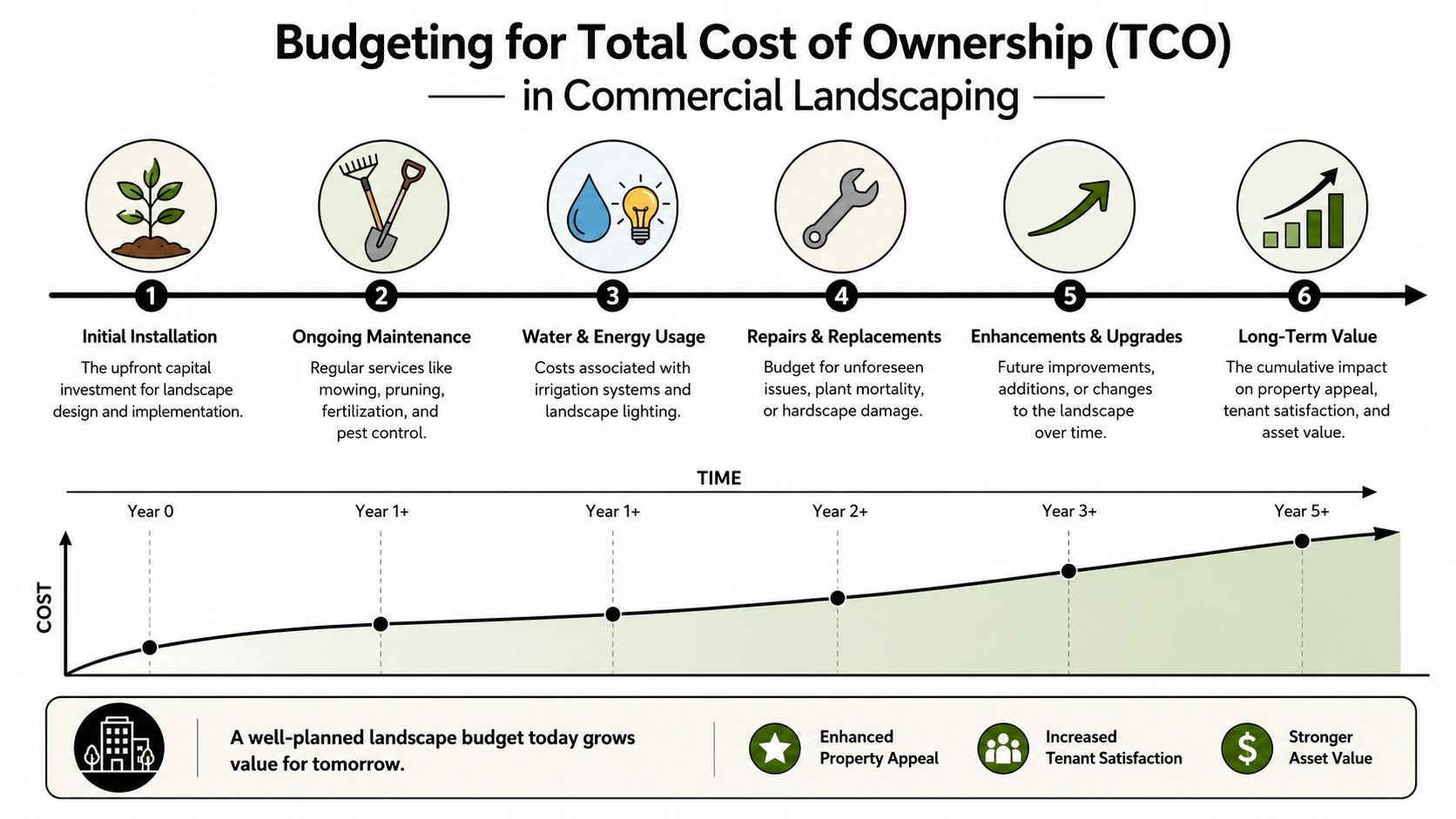
Budgeting for Total Cost of Ownership Not Just the Initial Bid
A property manager approves a low installation bid for an entry, parking lot islands, and frontage beds. Twelve months later, the site is burning extra water, plant losses are showing up in the hottest exposures, and crews are spending billable time correcting avoidable issues. The original number looked efficient. The five-year cost did not.
Commercial grounds should be budgeted as an operating asset, not a one-time project. The essential question is how the site will perform under traffic, heat, irrigation demand, and brand expectations after the install crew leaves.
Why the low bid often gets expensive later
The cheapest proposal usually trims cost in places that are hard to spot during bid review. That can mean undersized soil prep, plant material that is poorly matched to sun and drainage conditions, basic spray heads in windy areas, or too little irrigation zoning for different exposures. Those choices lower the contract value upfront, then raise operating cost for years.
A simple example makes the point. One bid saves $2,000 by using lower-grade sprinkler heads and minimal controller upgrades. On paper, that looks like a win. In practice, the system throws water onto pavement, runs longer to cover dry spots, and needs repeated repairs. If that setup wastes hundreds per year in water and needs major replacement within a few seasons, the “savings” disappear fast.
The same pattern shows up with plant selection. A cheaper install may use species that look full on day one but struggle in reflected heat near curbs, storefront glass, or south-facing masonry. Then the property pays again through replacement cycles, extra service calls, and visible decline at the exact points tenants, residents, and visitors notice first.
This same mindset shows up in other property expense categories too. If you manage broader operating budgets, this landlord's guide to rental expenses is useful because it reinforces the same financial discipline: evaluate recurring ownership cost, not just acquisition or startup cost.
How to budget like an asset manager
A better budget separates cost into three buckets:
| Budget bucket | What belongs there | Why it matters |
|---|---|---|
| Initial capital | Installation, renovation, irrigation upgrades, plant replacement | Sets the starting condition and determines how much corrective work you inherit |
| Operating cost | Recurring maintenance, inspections, pruning, weed control, water management | Controls whether the site stays stable or slides into reactive spending |
| Future reserve | Tree loss, seasonal refresh, irrigation failures, enhancement work | Prevents emergency decisions and protects appearance standards |
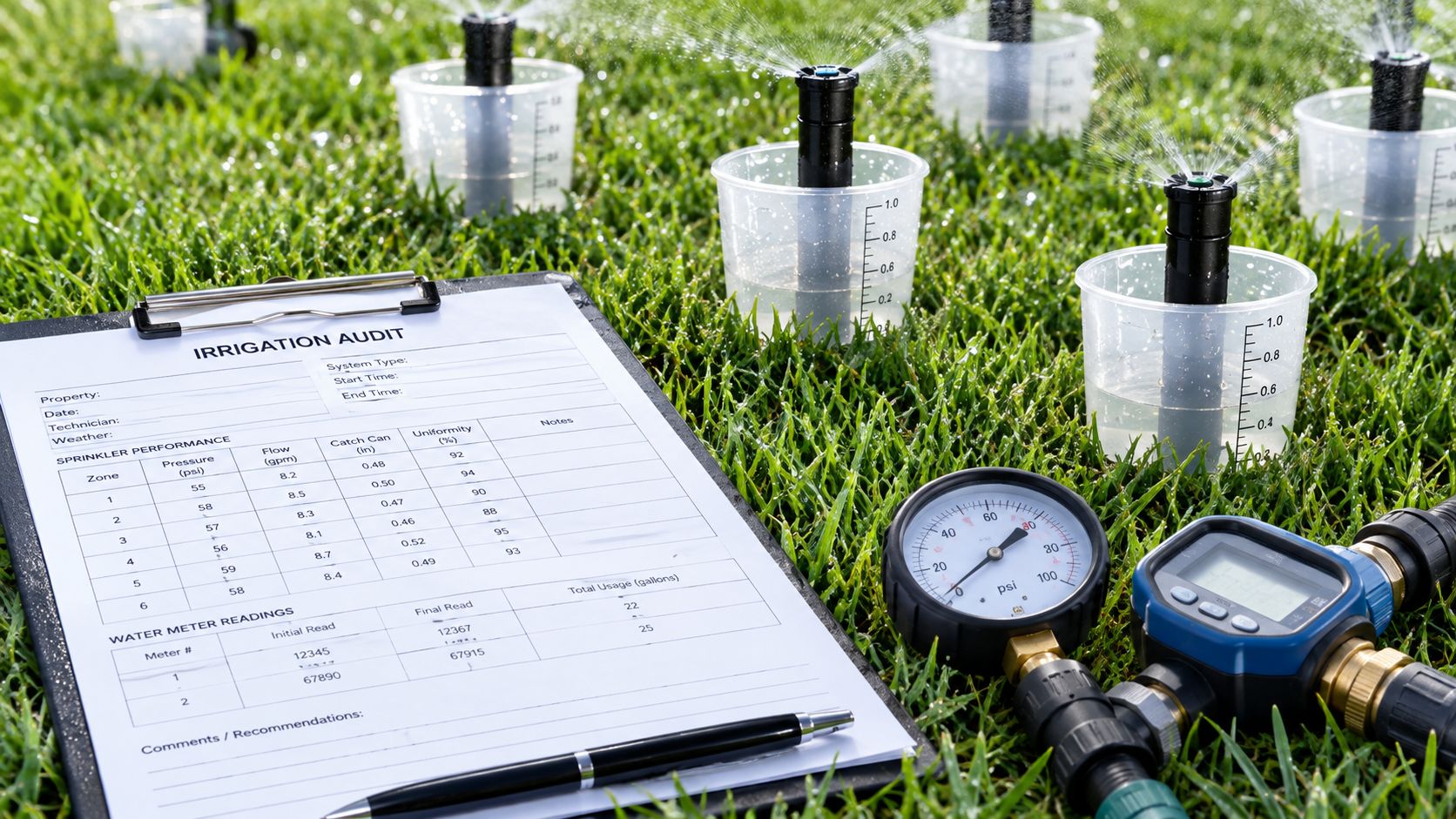
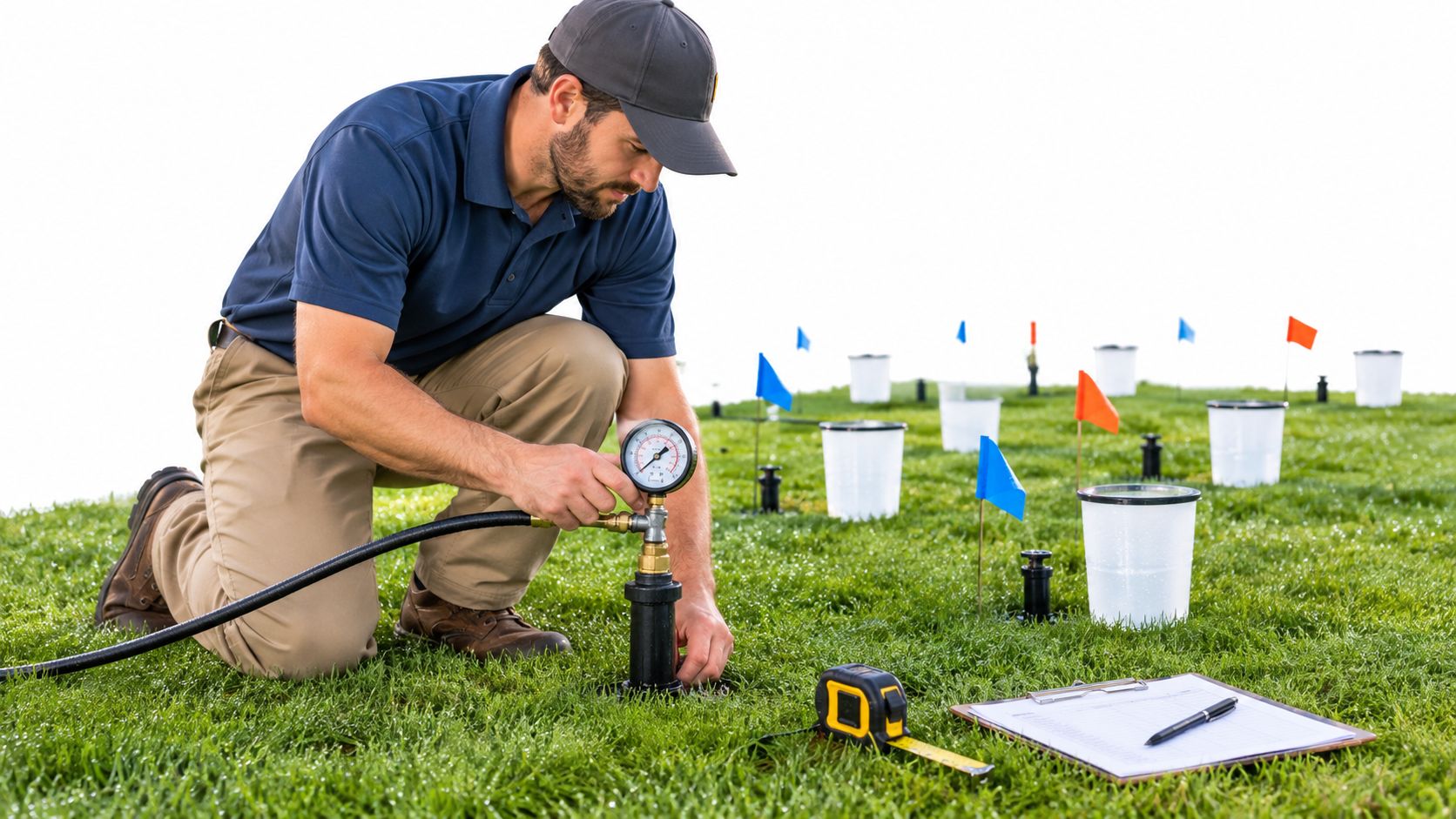
Water management deserves special attention because it affects both operating expense and site condition. Many outdoor areas do not fail because mowing was skipped. They fail because irrigation issues are missed until turf thins, shrubs decline, or runoff creates tenant complaints and pavement staining. If you are building a reserve or comparing repair versus upgrade, these irrigation system repair cost considerations help frame that decision.
Brand impact belongs in this budget conversation too. A worn front entry, dead color at monument signage, or chronic overspray on walks changes how people judge the property. On commercial sites, appearance affects leasing conversations, tenant confidence, and how well the asset supports asking rates.
A smart investment prioritizes total cost of ownership, ensuring the grounds are affordable to operate long-term.
How to Get Accurate Bids and Reduce Landscape Costs
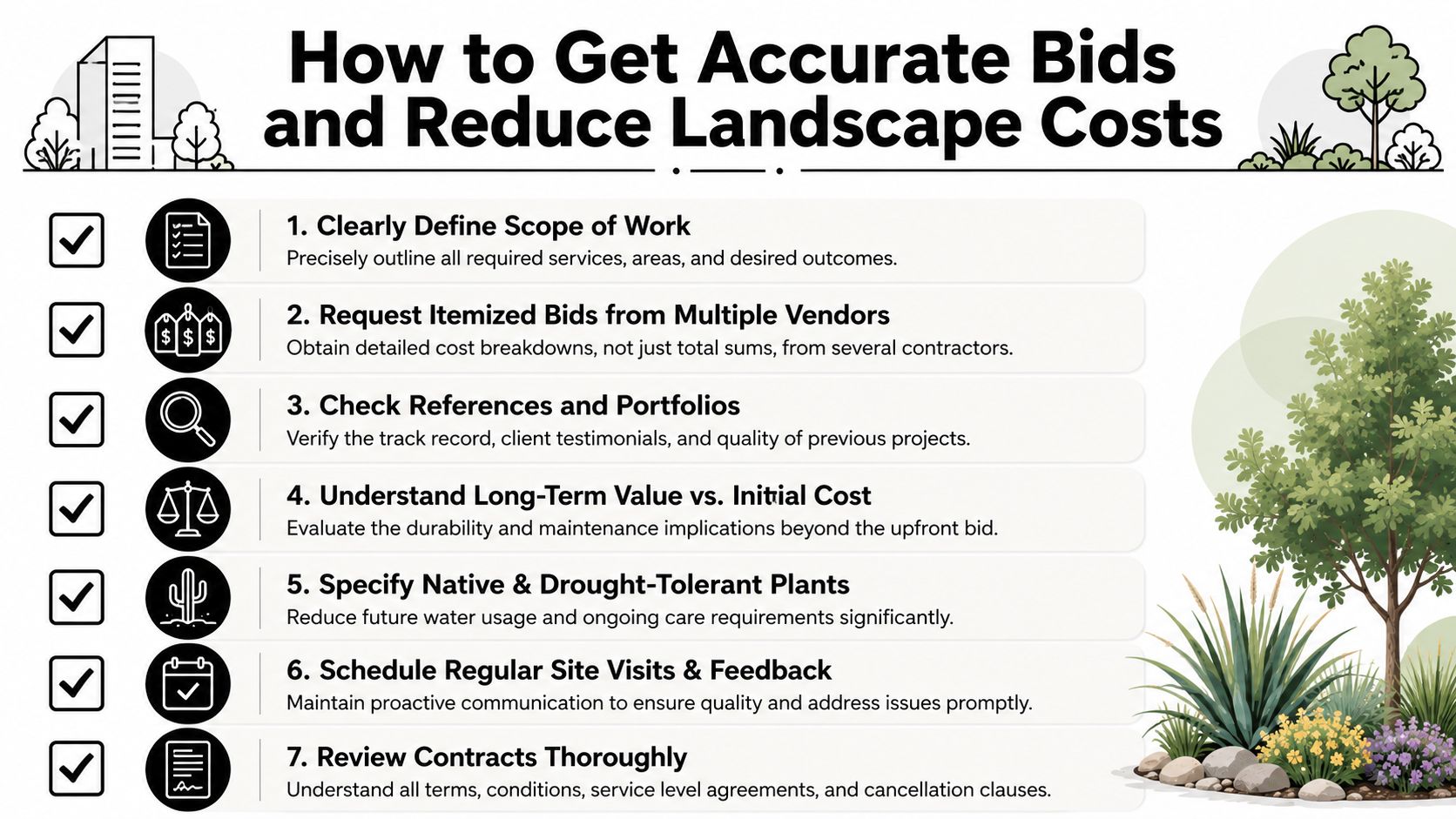
If you want cleaner pricing, you have to make the scope cleaner first. Vague bid requests create padded proposals, hidden exclusions, and apples-to-oranges comparisons.
Build a bid package vendors can price clearly
Start with a written scope that names the site zones and the service standard for each one. A front entry, monument bed, detention edge, and rear service lane shouldn't all be described with the same generic phrase.
Use this checklist:
- Map the property clearly: Mark turf, shrub beds, tree zones, irrigation controllers, and any no-service areas.
- Define frequencies: State whether you want recurring service packaged monthly or priced by visit.
- Separate maintenance from enhancements: Ask vendors to price recurring work apart from mulch refreshes, plant replacement, and renovation items.
- Request assumptions in writing: Crew size, visit cadence, scope exclusions, and response expectations should all be explicit.
Cut waste without stripping standards
The easiest way to reduce cost is to remove work that doesn't support your operating goal. The worst way is to underfund critical care and hope the site holds.
Useful cost-control moves include:
- Prioritize visible zones. Hold premium standards at entries and customer-facing areas. Loosen them where appearance has less business impact.
- Specify durable plant palettes. Native and drought-tolerant choices often lower replacement pressure and reduce watering dependence.
- Fix irrigation discipline early. Water waste and dry spots are recurring cost multipliers. A solid water conservation irrigation strategy can lower avoidable stress on the entire property.
- Compare contracts, not just totals. One vendor may include inspections and horticultural detail while another is selling basic mow-blow-go service at a lower number.
Ask every bidder one direct question: “What conditions would make this budget fail?” Good contractors answer that clearly. Weak ones dodge it.
Frequently Asked Questions About Commercial Landscaping Costs
Is a professional grounds design fee worth it for commercial property
Yes, if the site needs repositioning, tenant-facing upgrades, or a functional reset. A design fee often saves money by catching drainage conflicts, irrigation gaps, planting mistakes, and maintenance burdens before crews start work. For ownership groups comparing concepts early, an ai landscape design generator can help visualize options, but final decisions still need field review, utility awareness, and a clear operating budget.
Is a fixed monthly contract better than per visit billing
Usually, yes.
Monthly contracts make approval and forecasting easier for property managers because the spend is more predictable and service expectations are usually better defined. Per-visit billing can fit a small, simple site, but it often creates uneven presentation during peak growing periods or weather swings. That inconsistency shows up fast at entrances, monument signs, tenant storefronts, and other areas tied to brand perception.
How much should a property manager expect to spend annually
There is no useful flat number without understanding acreage, irrigation condition, bed count, tree load, service frequency, and appearance standards.
As noted earlier, national averages can provide a rough frame, but commercial budgets vary widely. A clean office park with efficient watering systems and limited planting beds will cost far less to maintain than a retail center with seasonal color, heavy foot traffic, and constant visibility demands. Annual budgeting works best when it reflects total property needs, not a generic benchmark.
Are renovation costs separate from maintenance
They should be tracked separately.
Recurring service protects the grounds already in place. Renovation work changes the site, fixes deferred issues, or improves function and appearance. Keeping those costs apart gives ownership a clearer view of true operating expense, capital needs, and whether a low monthly price is being offset by frequent corrective projects.
What is the biggest mistake buyers make when asking how much landscaping costs
They judge the bid by the first-year number alone.
The better question is what the property will cost to own and operate over three to five years. Cheap installs can bring higher water bills, plant replacement, drainage repairs, and reputational drag if the site declines in front of customers or tenants. The strongest buying decision balances appearance, water management, lifecycle cost, and the business value of a property that consistently looks cared for.
If you need a partner to evaluate your current grounds spend, compare bids, or build a lower-risk maintenance and renovation plan, Prestonwood Commercial Landscape Services works with office, retail, HOA, healthcare, education, hospitality, and industrial properties across DFW and San Antonio. Their team handles maintenance, irrigation, seasonal color, renovation, and water management with a long-term ownership mindset that helps property managers protect appearance and control lifecycle cost.