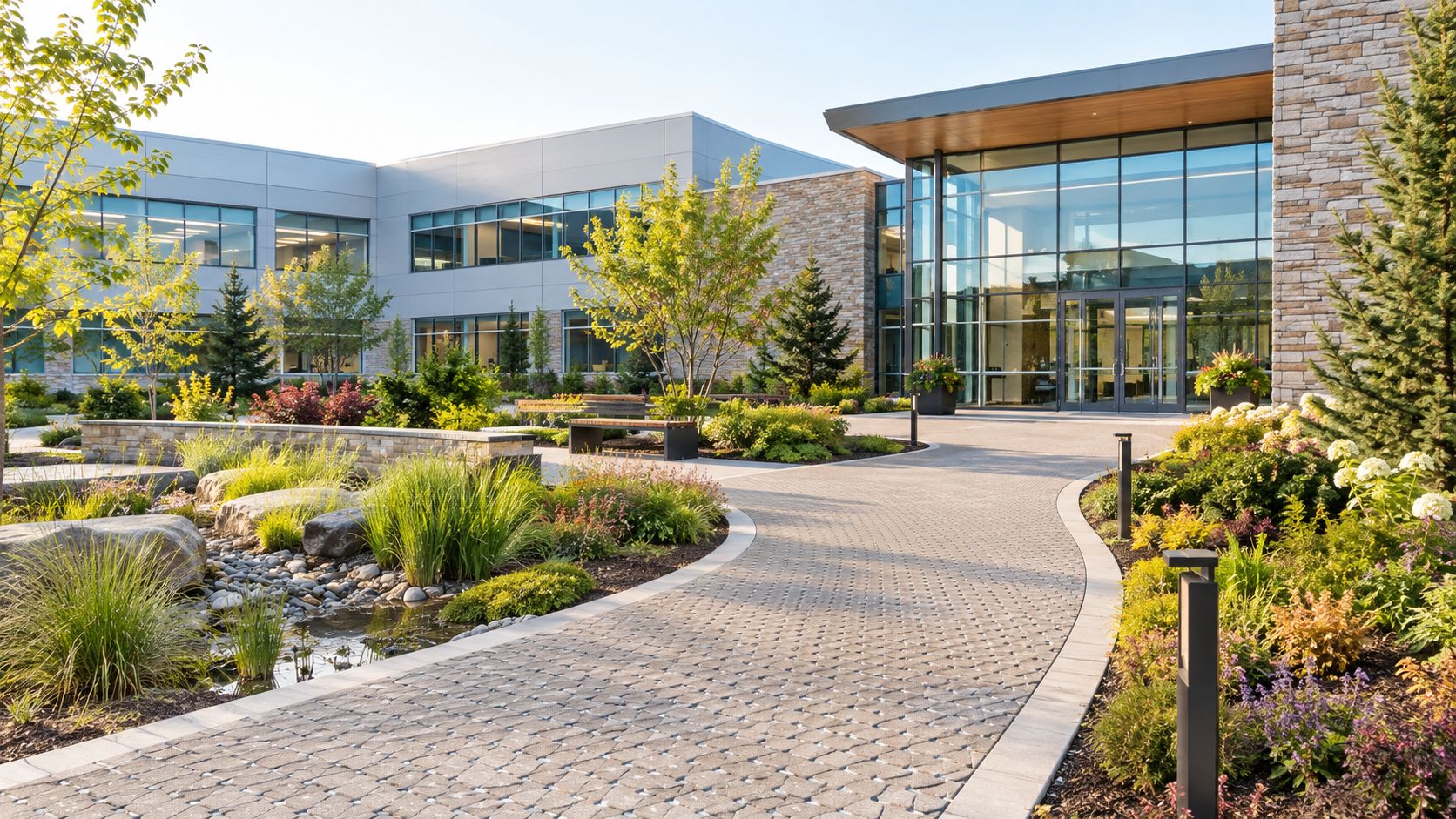
The most popular advice about commercial garden design is to start with the look. Choose attractive plants, add a strong entry feature, install clean hardscape, and finish the punch list. That approach produces photographs, but it doesn't necessarily produce a design that survives heat, inconsistent irrigation, construction traffic, or a change in maintenance staff.
A commercial groundscape is an operating asset. Its real performance emerges during the first one to three years after installation, when roots establish, irrigation zones are tuned, soil problems become visible, and the property team discovers whether the design can withstand daily use. A credible outdoor design build strategy therefore begins with lifecycle questions: Who owns the site after handover? How will water use be measured? What conditions trigger intervention? Which capital upgrades reduce operating risk rather than just improve curb appeal?
Table of Contents
- Redefining Landscape Construction for Commercial Assets
- The Design-Build Delivery Model Explained
- Phases of a Commercial Landscape Project
- Engineering Water Management and Lifecycle ROI
- Navigating the Critical Establishment Phase
- Selecting the Right Design-Build Partner
- Executing Turnkey Landscapes in Texas Markets
Redefining Landscape Construction for Commercial Assets
Many property managers treat exterior construction as complete when the contractor removes the equipment and the punch list is closed. That handoff is only the end of construction. It marks the beginning of the period when plant health, drainage, irrigation performance, and maintenance discipline determine whether the investment holds its value.
The broader green industry shows why this work deserves an asset-management perspective. The 2023 National Green Industry Survey, produced by the University of Delaware, estimated $297.5 billion in sales revenue, $73.1 billion in wages, and 1.48 million direct full- and part-time workers across the U.S. green industry in 2023. The industry's broader effects supported approximately 2.95 million jobs, and its estimated contribution to gross domestic product was $303 billion. Design planning, installation, irrigation, plant production, maintenance, and related construction sit within that substantial operating network.
That scale matters to commercial owners because design decisions affect more than appearance. They influence vendor coordination, water purchases, replacement labor, tenant impressions, access routes, stormwater behavior, and the reliability of property operations.
Handover isn't a performance milestone
A fragmented project often creates a predictable problem. The designer specifies a planting palette, the contractor installs it, and the maintenance provider inherits a site without full knowledge of the design intent. When trees decline or an irrigation zone overwatered a planting bed, each party can point to another party's scope.
Single-source accountability changes that conversation. A unified partner can coordinate site analysis, design, grading, soil preparation, planting, hardscape, irrigation, lighting, and maintenance requirements before installation begins. The team can also price constructability while the design remains flexible, rather than discovering conflicts after materials have been ordered.
Property managers should also understand how local classification and documentation can affect improvement planning. A practical overview of Texas property improvement rules can help teams distinguish construction-related work from routine maintenance questions when reviewing budgets and approvals.
For a straightforward explanation of the physical work involved, what landscape construction includes provides useful context. The key distinction is operational: construction creates the system, while the establishment and maintenance plan determine whether that system continues to perform.
Practical rule: Don't approve a landscape handoff until the irrigation settings, plant schedule, warranty responsibilities, inspection records, and maintenance transition are documented.
The Design-Build Delivery Model Explained
Design-build places design, budgeting, construction coordination, and installation under one accountable contract or operating relationship. That doesn't remove the need for engineering, permitting, or owner approval. It does reduce the number of separate parties responsible for interpreting the same site.
In a traditional design-bid-build arrangement, a designer or site planner develops drawings, contractors price the documents, and a selected installer builds from those plans. That process can work well when the owner wants independent design oversight or when procurement rules require competitive bidding. It can also expose practical gaps. A specified plant may be unavailable, a detail may conflict with existing utilities, or an irrigation concept may exceed the property's operating capacity.
With design-build, the installer contributes constructability and cost feedback during design. The team can inspect soil, grades, drainage patterns, sun exposure, existing irrigation, utility locations, access restrictions, and tenant circulation before finalizing the scope. If a planting area needs soil improvement or a drainage route requires a different grade, the owner can make that decision before crews mobilize.
Where the model creates value
The strongest benefit isn't speed by itself. It's decision continuity.
- Budget feedback: The builder can flag material, labor, access, and preparation implications while the design is still being developed.
- Constructability control: The team that interprets the drawings is also responsible for translating them into grades, irrigation stations, planting beds, and finished surfaces.
- Change management: Site discoveries can be documented with their cost and operational effect before work proceeds.
- Maintenance alignment: Plant spacing, access, pruning needs, controller programming, and replacement logistics can be considered before installation.
- Accountability: A performance issue has a clear owner instead of a chain of handoffs.
That doesn't mean design-build automatically delivers quality. An integrated firm can still underspecify soil preparation, rush commissioning, or use a plant palette that doesn't match the site's exposure. The delivery model improves coordination, but the owner must still require measurable deliverables.
A commercial scenario
Consider a retail center with an entry plaza, parking-lot islands, and a drainage low point. A design-only team may show a visually strong planting composition, while the installing contractor later discovers compacted soil, limited trench access, and pressure differences across irrigation zones. The contractor then proposes substitutions or change orders.
A design-build team should identify those constraints during site analysis. The final plan might include amended planting media, separate hydrozones, pressure regulation, a protected overflow route, and plant selections that tolerate the actual conditions. The result may look similar, but the underlying system is more likely to remain serviceable.
Phases of a Commercial Landscape Project
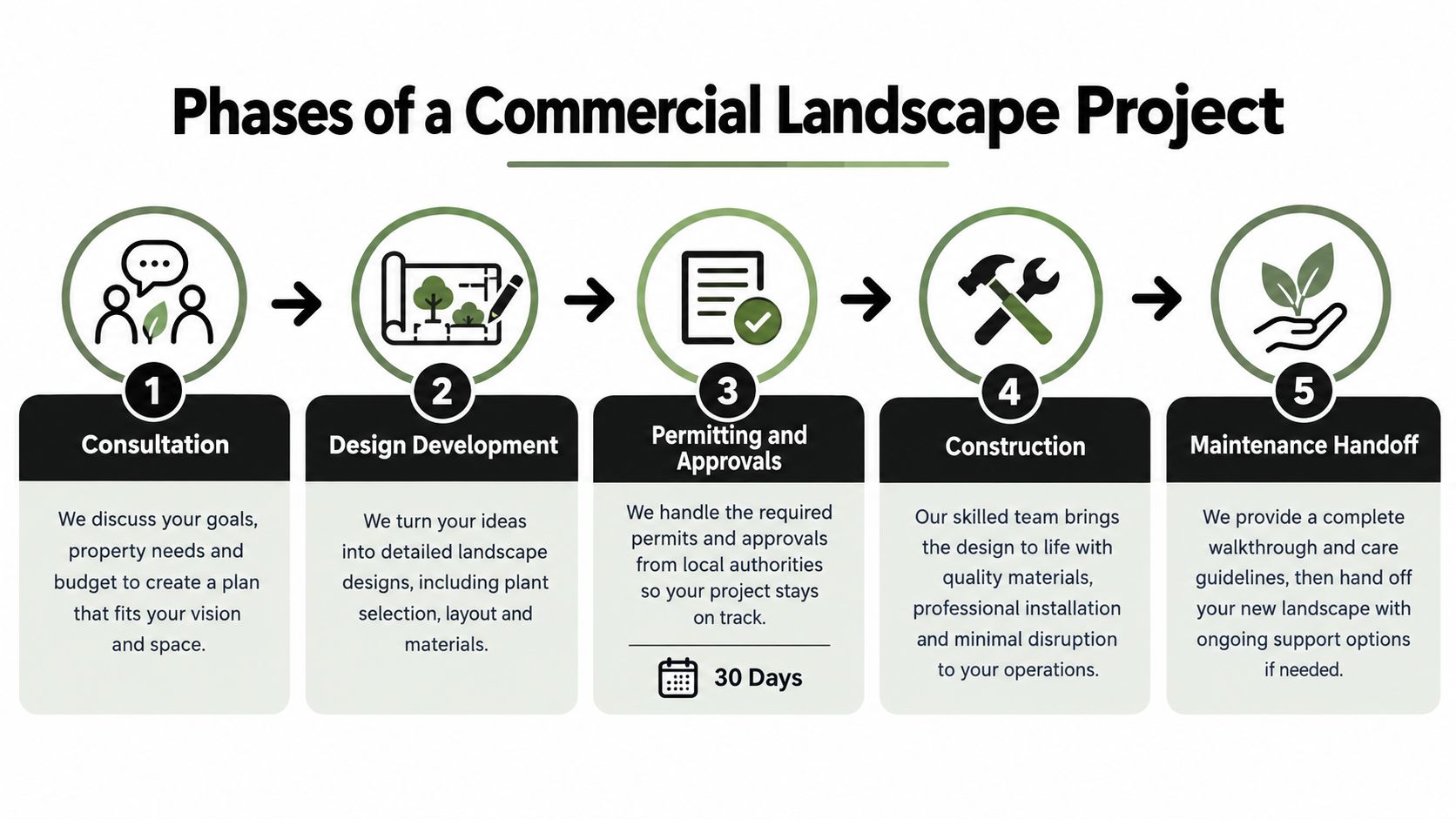
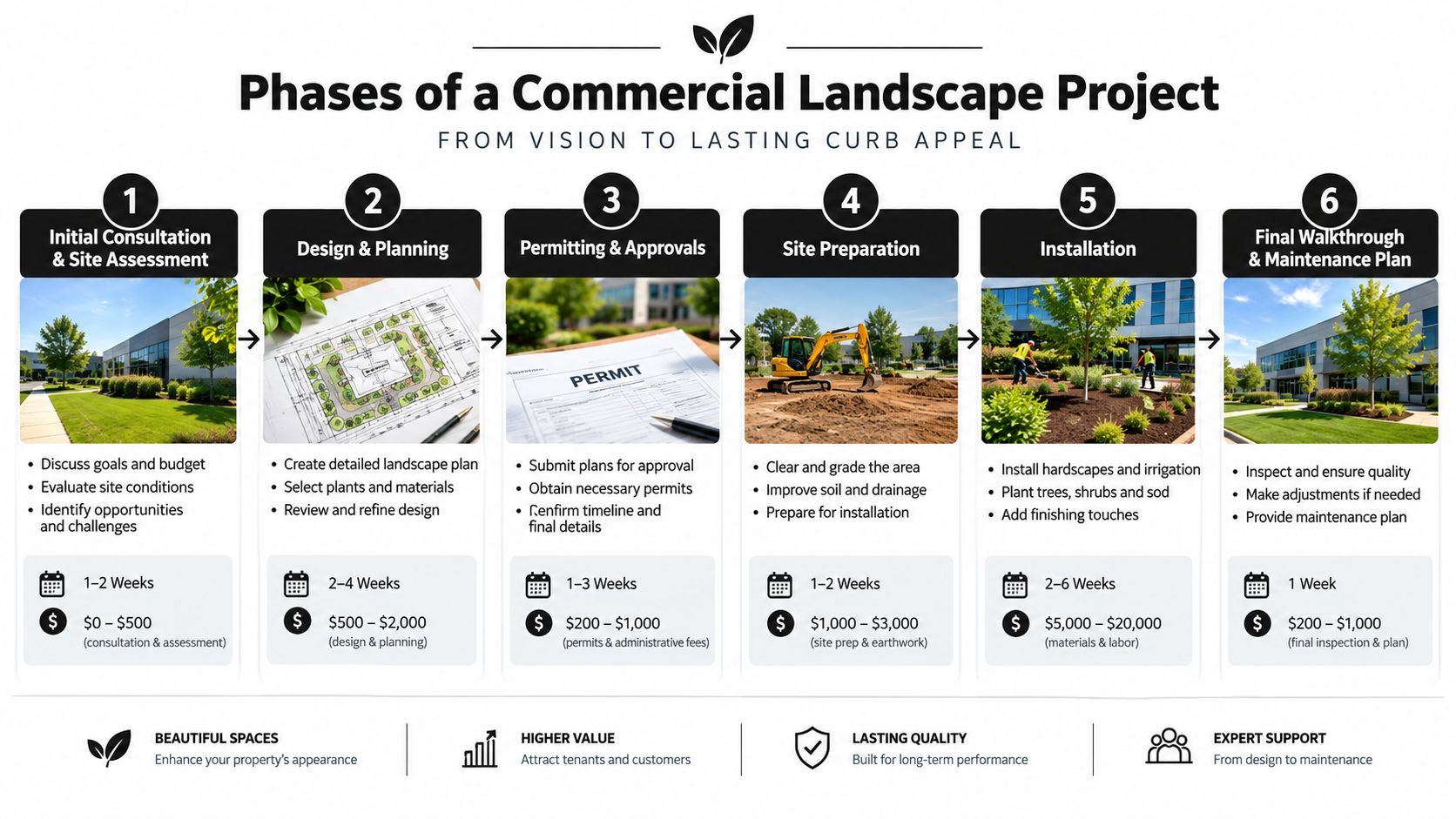
A successful commercial project has decision gates. Each gate gives the owner a chance to verify scope, risk, cost, and operating responsibility before the next phase begins.
Start with the site, not the plant list
1. Consultation and site audit. The team should document grades, drainage, soil condition, sun and shade, existing vegetation, irrigation coverage, utilities, pedestrian movement, loading activity, and maintenance access. Ask for photographs, marked-up plans, and a written list of constraints. A concept that ignores operations will eventually conflict with them.
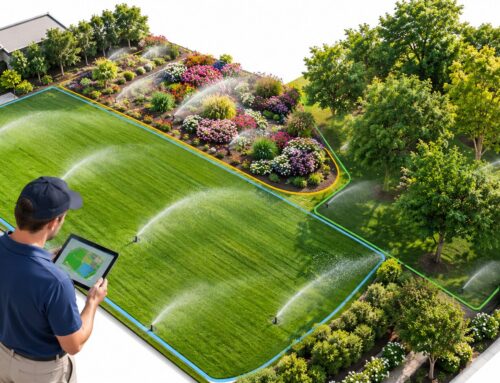
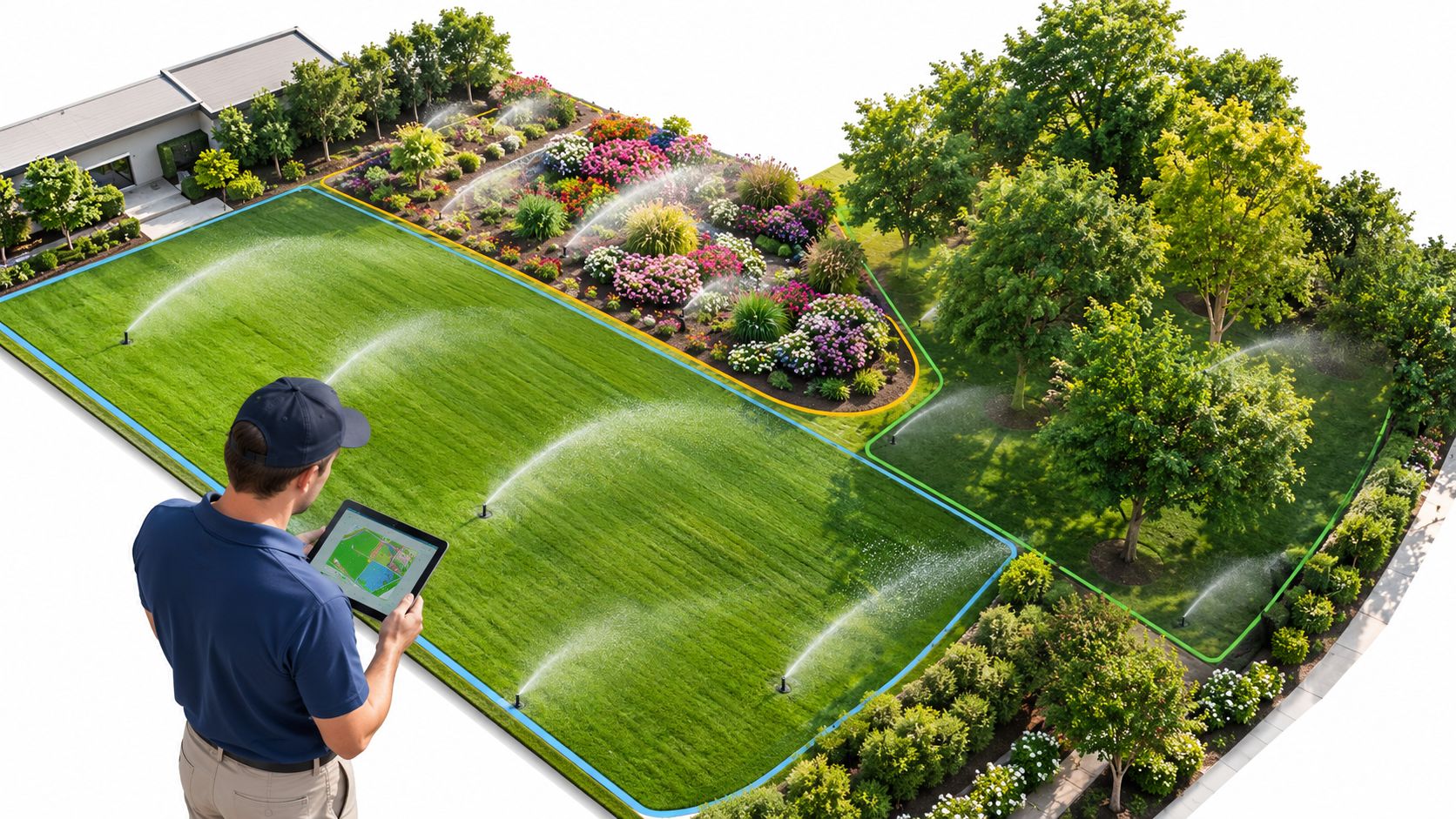
2. Design development. The design package should connect appearance to performance. Expect a scaled plan, planting schedule, hardscape materials, grading intent, drainage details, lighting locations, irrigation zones, controller strategy, and maintenance access. Hydrozone mapping is especially important because plants with different water needs shouldn't be managed as one undifferentiated area.
Property teams may use consumer-oriented visualization tools to communicate early preferences, and resources covering landscape software for homeowners can help explain the basics. Commercial decisions still require site-specific measurements, professional documentation, and coordination with construction and maintenance teams.
3. Approvals and permitting. Confirm who handles permits, utility locates, municipal reviews, inspections, and owner approvals. The project schedule should identify dependencies rather than presenting construction as an isolated start date.
4. Construction. Site protection, demolition, grading, soil preparation, drainage, irrigation installation, hardscape, planting, lighting, and cleanup should follow an agreed sequence. The owner should receive progress updates and written authorization for scope changes.
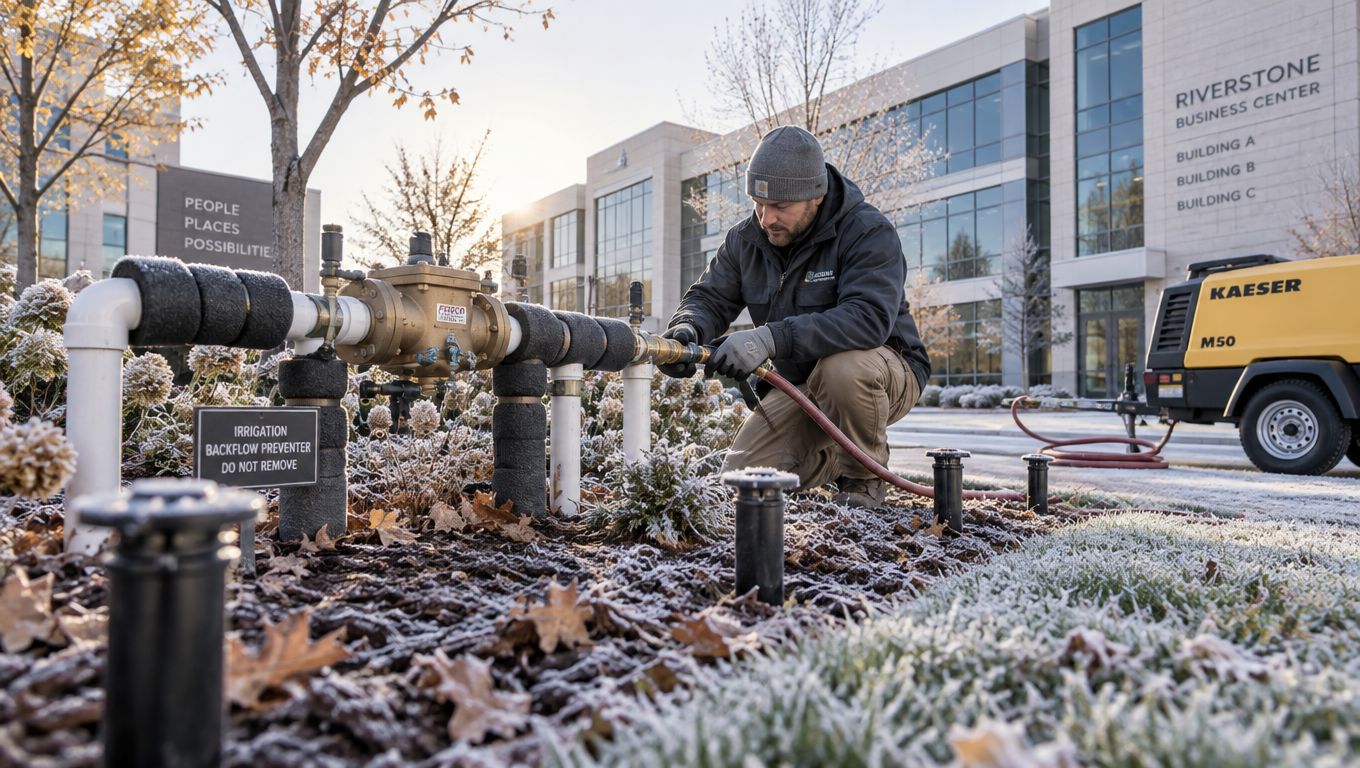
5. Commissioning. Turn on each irrigation station, verify head spacing and pressure, check controller settings, inspect sensor placement, confirm drainage routes, and review plant installation. A system isn't commissioned because water comes out of the heads.
6. Maintenance handoff. Deliver as-built irrigation information, controller access, plant schedules, warranty terms, replacement procedures, pruning expectations, fertilization guidance, and inspection intervals. The maintenance team should understand what the designer intended and what the installer built.
The handoff should include a defined transition period. Without one, the property manager inherits responsibility without the records needed to make good decisions.
Engineering Water Management and Lifecycle ROI
Water management deserves a capital decision, not a generic sustainability statement. The Environmental Protection Agency's irrigation guidance identifies weather-based WaterSense-labeled controllers as a way to adjust runtimes according to local weather and site conditions. In commercial applications, a properly installed controller can reduce irrigation water use by approximately 15% to 30%, although results depend on programming, plant type, climate, sensor performance, and system size.
The EPA also reports that outdoor water use averages more than 30% of household water consumption nationwide and can reach 60% in arid regions. Inefficient irrigation can lose as much as 50% of outdoor water through wind, evaporation, and runoff. These are residential benchmarks, not direct commercial measurements, but they show why controller selection, hydrozones, pressure regulation, matched precipitation rates, and maintenance belong in the design scope.
Build the decision around the site
A property manager should compare alternatives using baseline consumption and operating risk. Start with irrigation records, occupied ground area, weather conditions, water and sewer rates, drought restrictions, roof catchment, storage opportunities, maintenance responsibility, and failure contingencies. Then separate direct potable-water savings from broader value, including reduced plant replacement, fewer drainage problems, and improved compliance.
| Investment Category | Primary Benefit | Key Evaluation Metric |
|---|---|---|
| WaterSense-labeled weather-based controller | Adjusts runtime to weather and landscape demand | Normalized irrigation use after commissioning |
| Soil-moisture sensors | Suppress irrigation when root-zone moisture exceeds the set threshold | Sensor placement, moisture readings, and station response |
| Hydrozone redesign | Matches irrigation delivery to plant water needs | Zone uniformity and plant-health observations |
| Pressure regulation and matched precipitation | Reduces uneven application across heads | Pressure verification and distribution consistency |
| Rainwater harvesting and reuse | Replaces part of freshwater demand | Available roof catchment, storage reliability, and reuse volume |
| Bioretention, bioswales, or permeable paving | Stores, infiltrates, and routes stormwater | Infiltration, ponding duration, overflow frequency, and maintenance access |
| Engineered planting media | Supports root-zone storage and plant establishment | Soil testing, infiltration rate, compaction control, and vegetation performance |
Soil-moisture control complements weather-based control. Weather data estimates demand, while a sensor measures water availability in the root zone. Neither technology excuses poor zoning or commissioning.
Treat stormwater as infrastructure
A 2.75-acre urban park study evaluated engineered soils, vegetation, runoff, water quality, and adaptive management. The integrated system managed more than three times the stormwater volume predicted by engineering models, with extended storage and infiltration in the rhizosphere, followed by evapotranspiration. The study description supports a practical lesson for commercial projects: soil, plants, irrigation reuse, overflow routes, and maintenance access must be designed as one system.
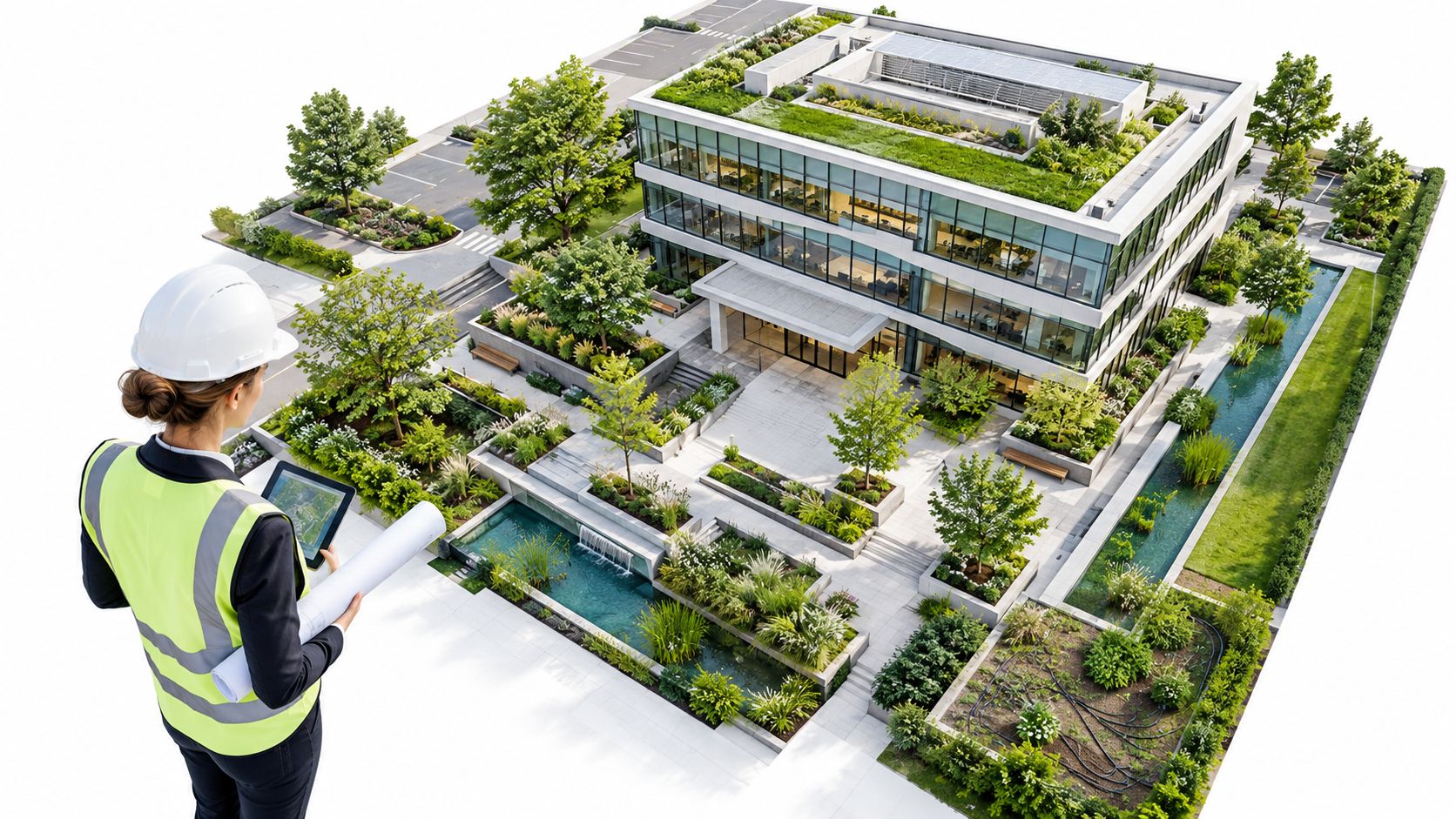
Green roofs offer another reference point. They can capture roughly 40% to 60% of incoming stormwater, while cited literature reports approximately 55% lower runoff volumes and 65% lower peak flows in some systems, according to the same source. Those figures are not universal guarantees. Media depth, rainfall intensity, slope, antecedent moisture, and maintenance all change results.
For a deeper discussion of irrigation as an operating concern, review water management and irrigation in Texas commercial landscaping. The defensible ROI case comes from documenting the baseline, specifying the intervention, commissioning the system, and comparing normalized results over time.
Navigating the Critical Establishment Phase
The first one to three years determine whether a planted site becomes a stable asset or a recurring replacement project. Turnover photographs capture only the starting condition. Roots still need to occupy prepared soil, irrigation zones need seasonal adjustment, and managers need to identify stress before plants reach a point of irreversible decline.
Specifications matter before planting. Compacted soil restricts root development and infiltration. Poor root preparation can leave trees unstable or slow to establish. Temporary irrigation may be necessary while roots expand, and construction traffic can damage the very soil intended to support the finished grounds.
Define performance before the warranty starts
A warranty shouldn't be the only performance tool. The owner and contractor should agree on inspection records, irrigation verification, plant survival expectations, replacement thresholds, and responsibility for correcting installation defects.
A 2025 study found that irrigation method influenced urban tree establishment and stability. Conventional irrigation bags produced the greatest height and caliper growth in the study, while hydrogel bags sustained soil moisture with less labor. Hand watering worked effectively early but became less practical at larger scale. The peer-reviewed framework and study record reinforces the need to match establishment methods to labor capacity, plant type, and site scale.
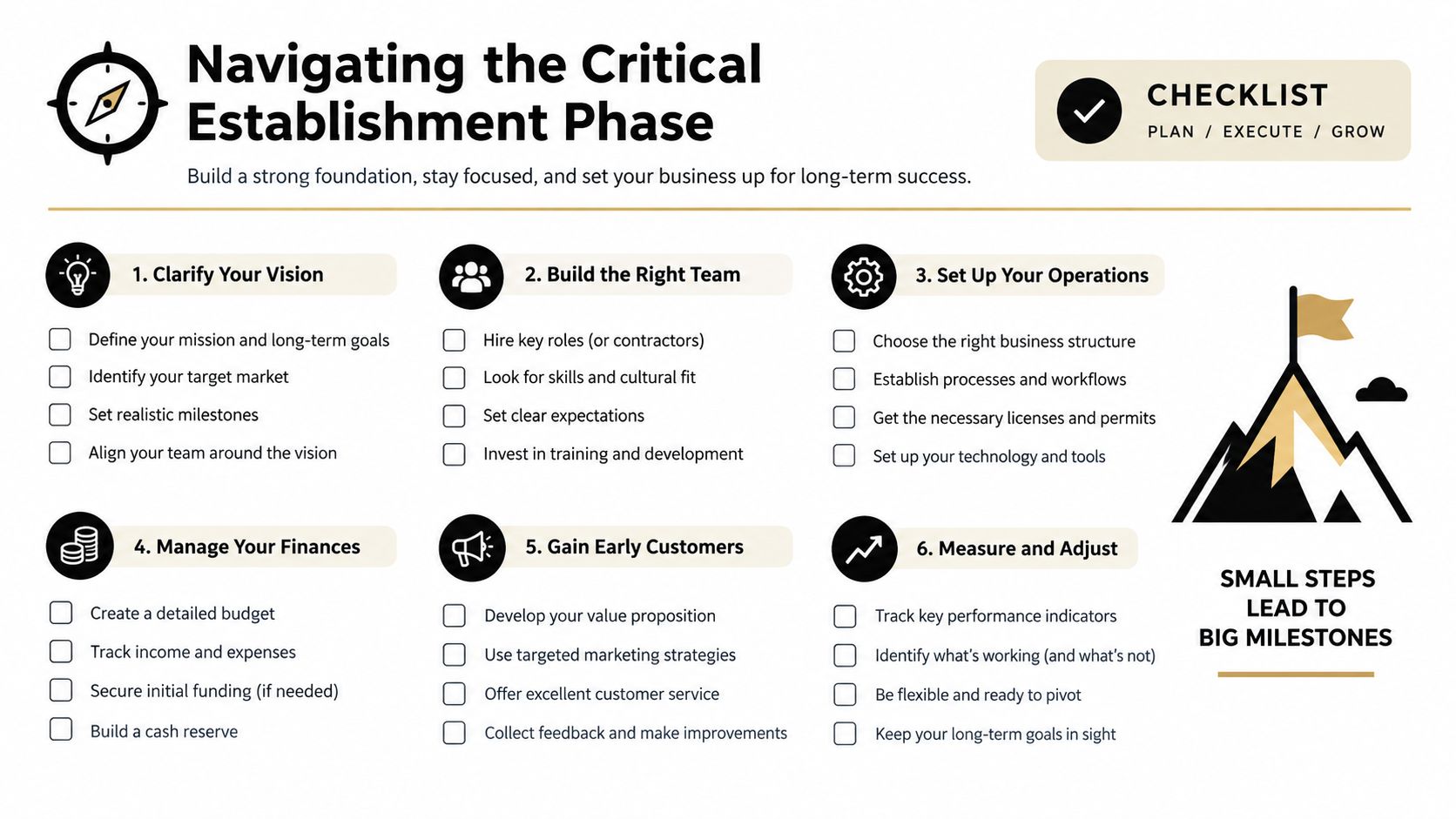
Useful establishment checkpoints include:
- Root-zone condition: Inspect soil moisture, compaction, infiltration, and root preparation rather than relying only on surface appearance.
- Irrigation verification: Confirm every station's coverage, runtime, pressure, sensor response, and seasonal adjustments.
- Plant survival: Record dead, declining, pest-damaged, and undersized plants by zone so replacements reveal patterns rather than isolated symptoms.
- Canopy development: Track tree growth and structural condition, especially where shade, pedestrian safety, and long-term identity depend on mature trees.
- Maintenance response: Establish who investigates stress, who authorizes changes, and how quickly the team must respond.
- Replacement triggers: Define when a plant is replaced, when a zone is redesigned, and when a soil or drainage problem requires corrective construction.
The cheapest installation often becomes expensive through repetition. Replacing plants without correcting compaction, irrigation coverage, or unsuitable placement only resets the failure cycle.
The handoff should include scheduled reviews through the establishment period, not just a final walk. A manager should be able to show the owner why a replacement was needed, whether the cause was weather, installation, irrigation, maintenance, or site use, and what action prevents recurrence.
Selecting the Right Design-Build Partner
The lowest bid answers one question, the initial price. It may not answer who will coordinate utilities, protect existing trees, commission irrigation, document substitutions, respond to plant decline, or maintain the site after construction. Commercial procurement should compare the full operating offer, not just the construction total.
Ask each bidder to explain how its team handles the same site from investigation through maintenance. Then compare answers in writing.
Questions that expose operating risk
Who performs the site audit? Look for evidence of drainage review, soil testing, irrigation assessment, utility coordination, and maintenance-access planning. A polished rendering isn't a substitute for field information.
Who owns the irrigation design? Ask whether the firm provides hydrozone plans, pressure checks, controller programming, sensor commissioning, and post-installation audits. A smart controller installed without proper station design can preserve the wrong assumptions.
Who will be present during construction? Identify the project manager, site lead, subcontractors, safety process, communication cadence, and method for approving changes. Clear responsibility matters more than a broad service list.
What does the maintenance handoff include? Require as-builts, plant schedules, controller credentials, warranty terms, replacement procedures, and a defined establishment schedule. If the bidder treats maintenance as a separate sale, ask how construction decisions will be transferred to the maintenance team.
What happens after a failure? A credible partner should explain how it investigates dead plants, standing water, broken heads, soil settlement, and access damage. The response should address causes, not just symptoms.
A firm with in-house horticultural knowledge may make different choices from a company that outsources every planting decision. Local experience also matters, especially in hot markets where exposure, soil, irrigation restrictions, and seasonal stress can change the maintenance burden.
For a more detailed vendor-selection framework, review how to choose among commercial landscaping companies in Dallas and San Antonio. Operational responsiveness matters too. A provider's communication system, including options such as 24/7 call answering for landscapers, can support issue intake, but it doesn't replace field expertise or accountable follow-through.
Executing Turnkey Landscapes in Texas Markets
Dallas–Fort Worth and San Antonio properties place unusual demands on grounds systems. Office campuses need consistent presentation across multiple zones. Retail centers must protect pedestrian routes and visibility. Healthcare sites require orderly access and dependable maintenance. Industrial parks often combine large areas, heavy vehicle movement, drainage constraints, and limited tolerance for service disruption.
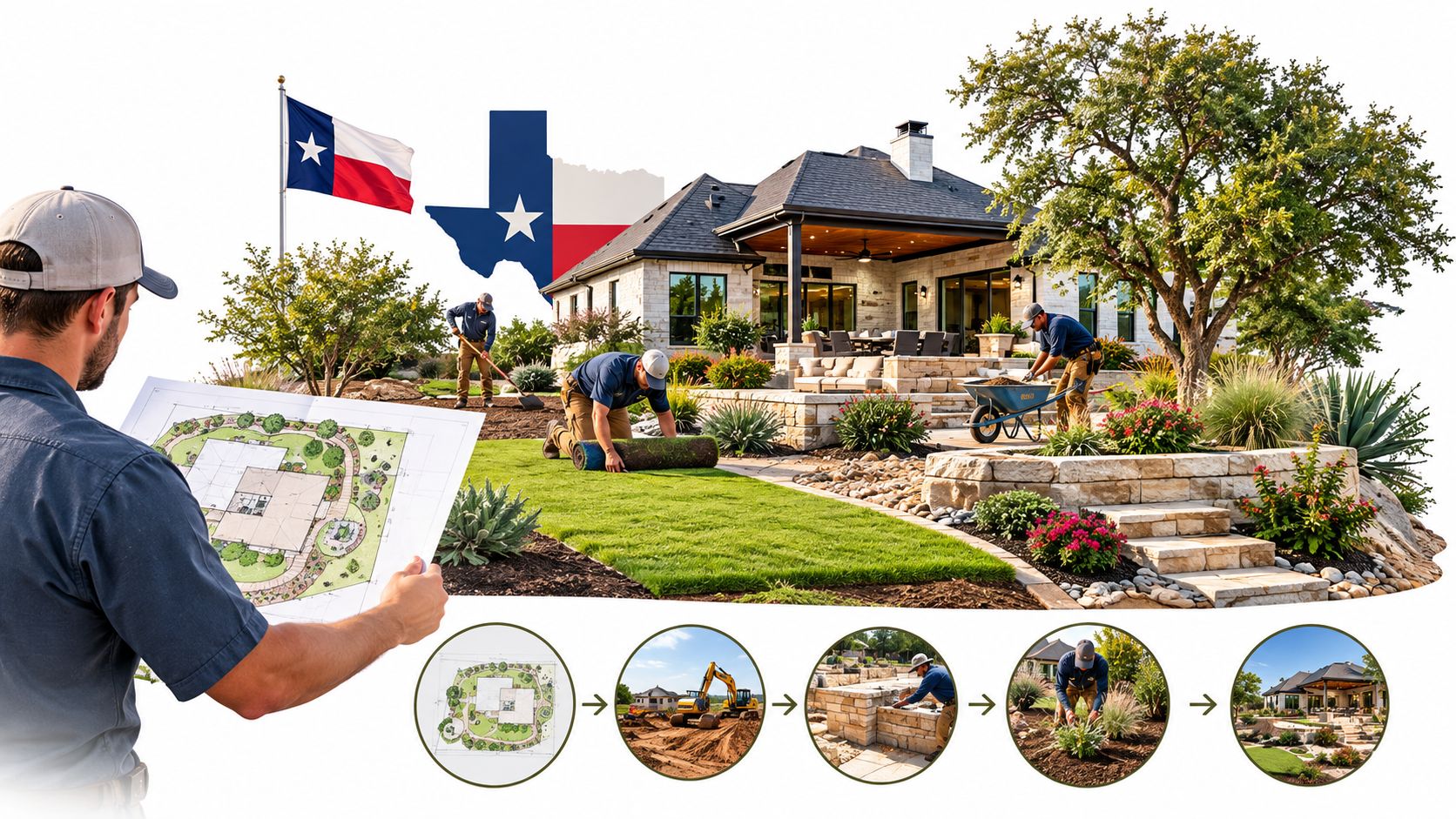
A turnkey partner approaches the property as one operating environment. The team reviews the concept, coordinates grading and soil preparation, installs planting and hardscape, builds irrigation and lighting elements, and establishes the maintenance requirements before the project is closed. During the first growing seasons, the same operating relationship can identify dry zones, saturated beds, settling, plant stress, and access conflicts before they become broad replacement programs.
Prestonwood Commercial Grounds Services is one option for property teams seeking a combined design-build and maintenance relationship across Dallas–Fort Worth and San Antonio. Its stated services include commercial grounds construction and renovation, grading and soil preparation coordination, planting, hardscape, irrigation, lighting, irrigation audits and repairs, central water management, and ongoing maintenance. For an owner, the relevant question isn't whether the finished site looks complete. It's whether the partner can document decisions, maintain standards across branches and properties, and respond when the grounds behave differently from the original plan.
A strong commercial grounds reflects the property's brand, but it also shows disciplined operations. The design should support safe circulation, efficient maintenance, appropriate water use, reliable drainage, and a clear path from installation to establishment. That is how a design build project becomes a durable property improvement rather than a short-lived visual upgrade.
Prestonwood Commercial Landscape Services can coordinate commercial grounds design build, irrigation, soil preparation, planting, hardscape, lighting, and ongoing maintenance for properties across Dallas–Fort Worth and San Antonio. Visit Prestonwood Commercial Landscape Services to discuss a site assessment and build an establishment and water-management plan around your property's operating needs.