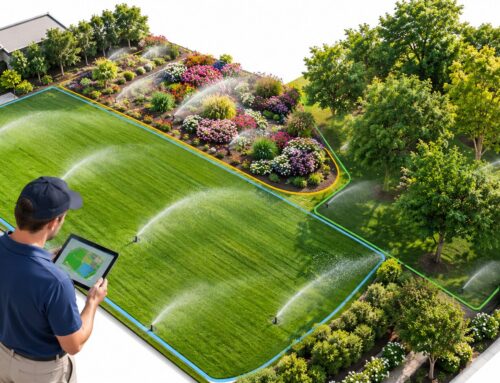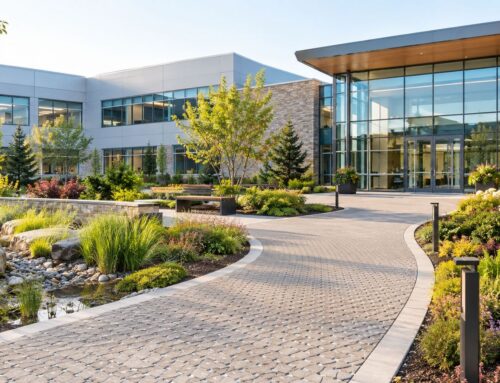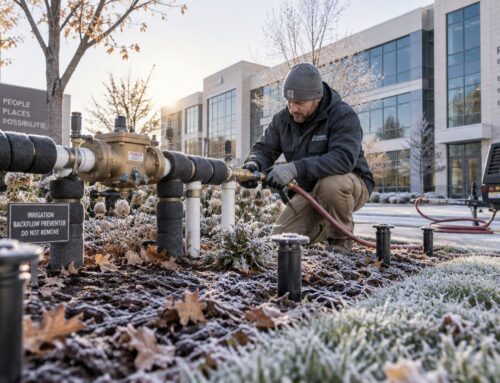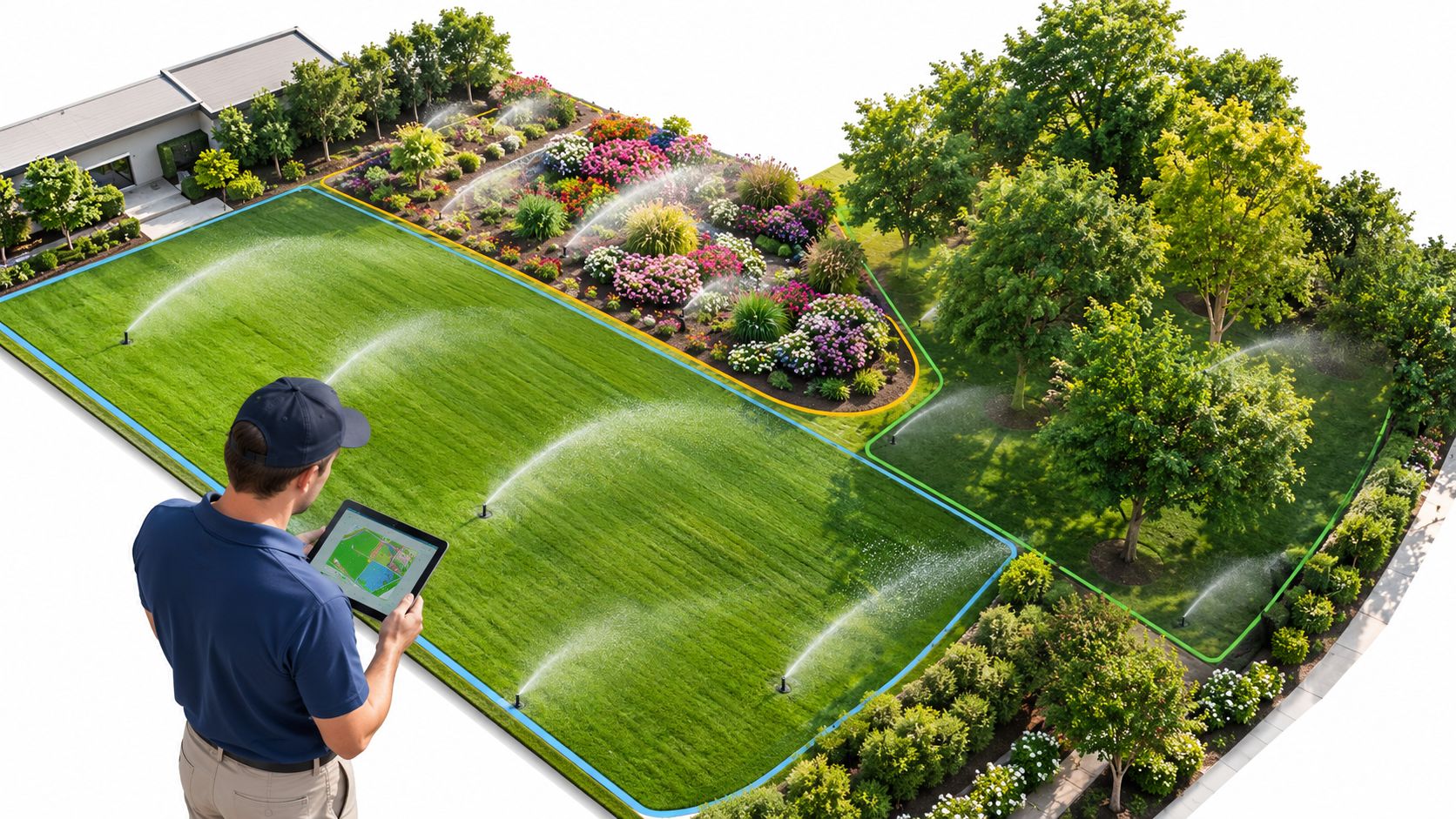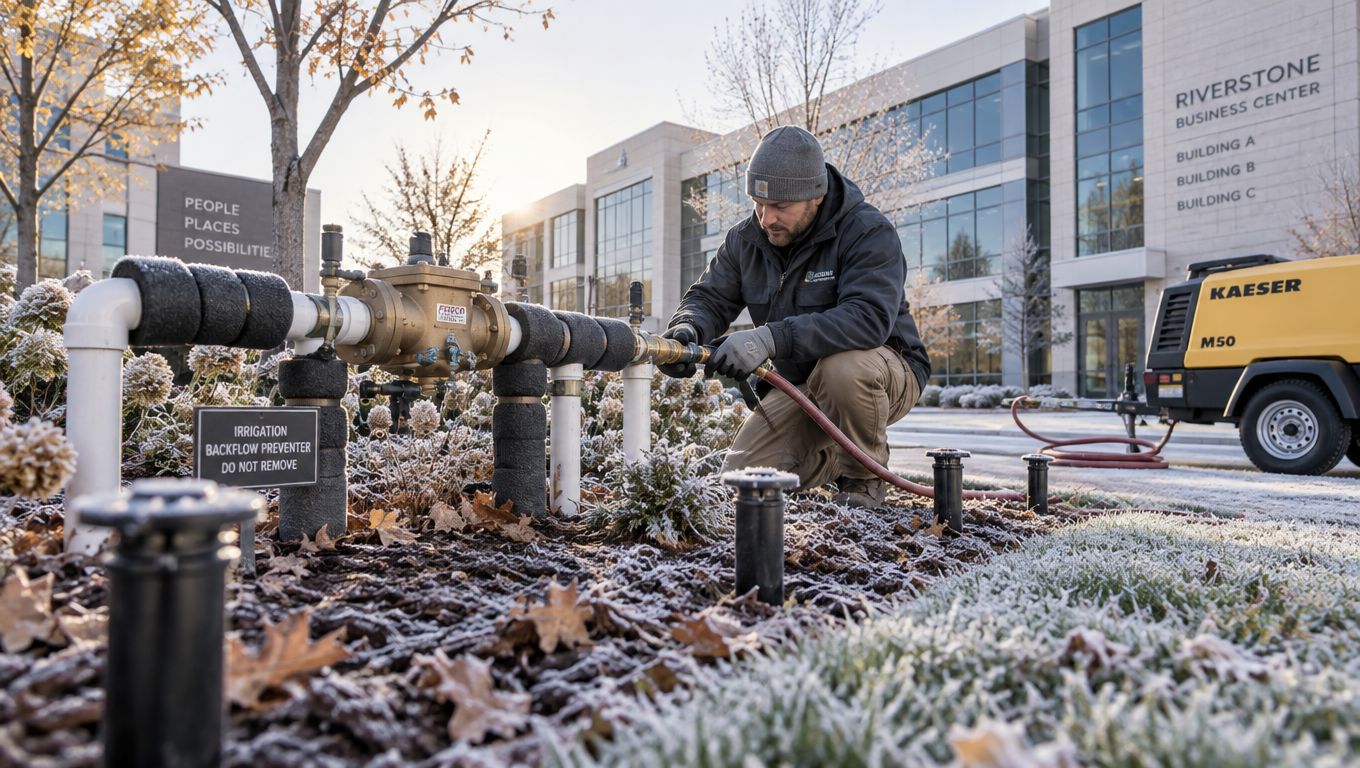

A well-structured maintenance agreement should require recurring irrigation audits and measurable quality tolerances, not just scheduled visits. EPA data shows that commercial and institutional irrigation-efficiency measures can reduce outdoor water use by more than 50%, while properly installed WaterSense-labeled controllers generally reduce irrigation use by 15% to 30% compared with conventional clock timers.
At 7 a.m., an office park can look acceptable from the entrance and still be losing money. Sprinklers may be throwing water onto pavement, weeds may be spreading through planting beds, and a crew may be moving quickly through a checklist that says “maintenance complete.” By the time a tenant complains or a water bill draws attention, the contract has already failed where it matters.
A weak agreement creates more than an appearance problem. It leaves the property exposed to avoidable water waste, trip hazards, plant loss, tenant dissatisfaction, disputed invoices, and unclear responsibility for repairs. A strong maintenance agreement turns those risks into assigned duties, response standards, documentation requirements, and payment rules.
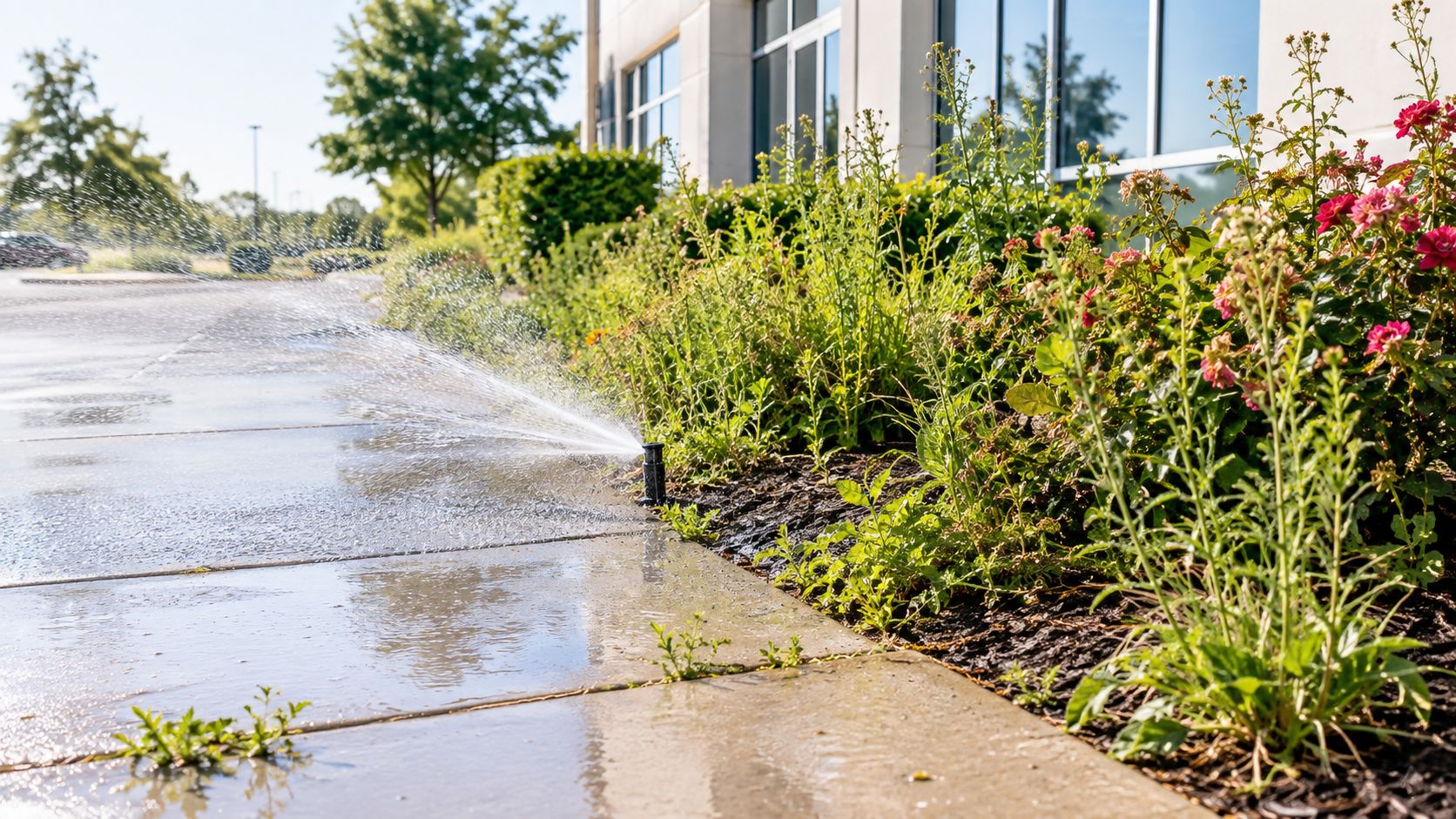
The practical test is simple. If a contractor says a visit was completed, can you determine whether the turf, beds, irrigation, and hardscape met the agreed standard? If a leak appears between visits, does the contract say who reports it, who authorizes the repair, and who pays when equipment fails?
Property managers also have to manage the communication burden around these issues. Where a portfolio includes tenants, owners, vendors, and multiple operating sites, a specialized outsourced guest communications service can help organize incoming requests and route urgent property concerns, while the agreement defines the contractor's actual obligations.
Table of Contents
- Introduction – The Hidden Cost of a Weak Contract
- Core Components of a Landscape Maintenance Agreement
- Irrigation and Water Management Clauses
- Common Misconceptions About Pricing and Value
- Risk Management – Insurance, WCB, and Termination
- Quality Control and Sample Contract Language
- Conclusion – Building a Worry-Free Partnership
Introduction – The Hidden Cost of a Weak Contract
A property manager usually discovers a weak agreement in the same way: not during procurement, but during a preventable failure. The contractor has completed the scheduled visits, yet the retail center has brown turf near the storefronts, runoff on the sidewalk, untrimmed growth blocking signage, and debris collecting around the loading area.
The contractor points to the service log. The property team points to the property condition. Both may be acting consistently with the document because the document describes activity without defining an acceptable result.
A completed visit isn't proof of completed performance. The property has to meet a standard that people can inspect.
The risk grows across office parks, healthcare facilities, industrial properties, hospitality sites, and HOAs. A missed edge is cosmetic in one location, but overspray on a walkway can become a safety issue. A broken valve can damage planting beds, erode soil, waste water, and affect a building façade. A vague promise to “maintain irrigation” doesn't tell anyone how often the system must be inspected or how quickly defects must be addressed.
The agreement should function as an operating document, not a formality filed after the bid is accepted. It needs to connect scope, frequency, quality, water performance, risk allocation, and price. It also needs to distinguish routine work from unpredictable services such as storm cleanup, major tree work, irrigation reconstruction, and emergency response.
That distinction protects both sides. The owner gets a reliable baseline and a defensible process for correcting deficiencies. The contractor gets a clear boundary around included work and a change-order procedure that prevents unpaid extras from becoming an expectation.
A property manager should audit the current agreement against one question: Could a new manager understand exactly what must happen at this site without relying on verbal history? If the answer is no, the contract is carrying operational risk that belongs on paper.
Core Components of a Landscape Maintenance Agreement
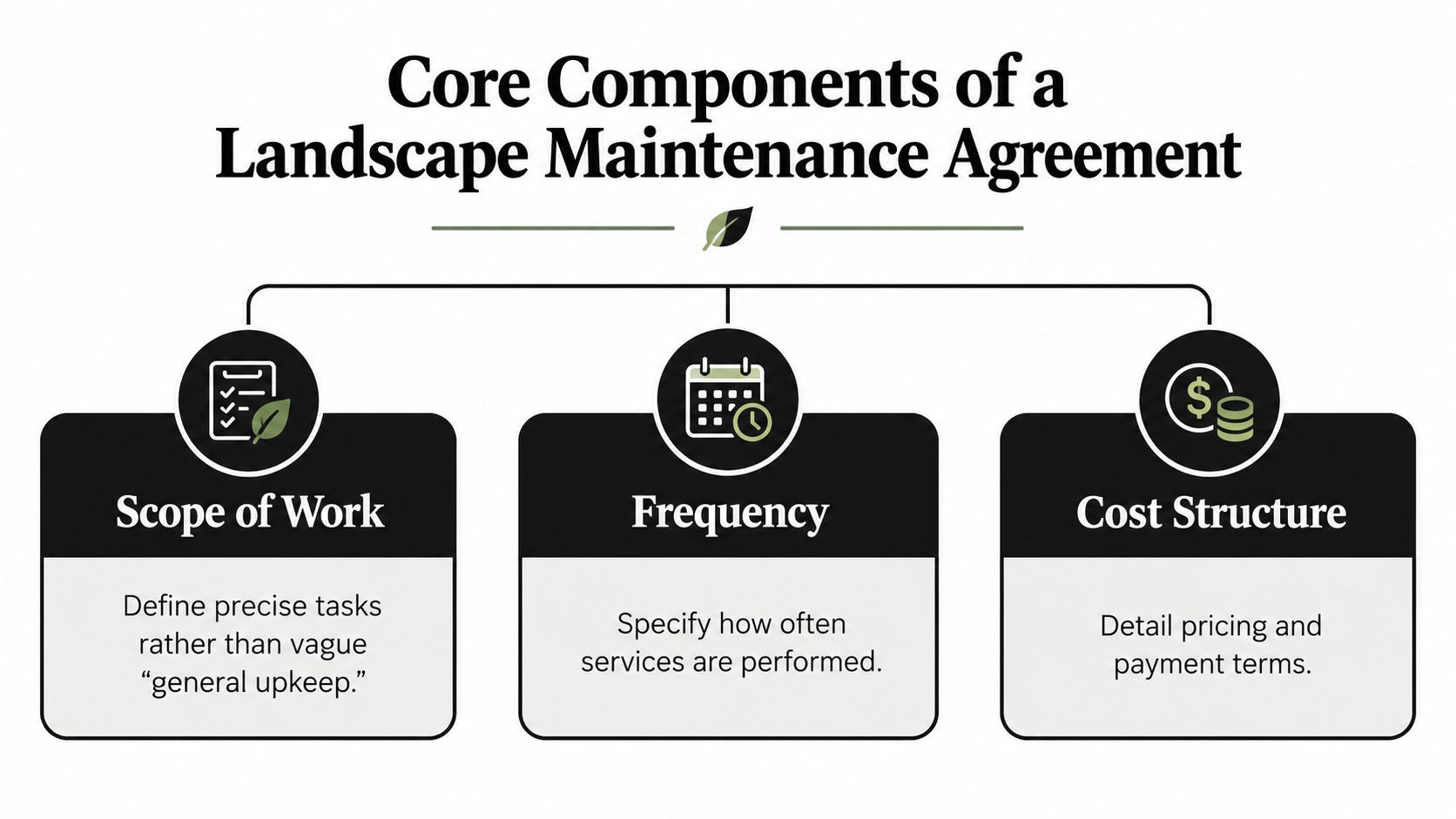
Build the agreement around three questions: what gets done, how often it gets done, and what the owner pays for it. If any one of those answers is vague, the parties will fill the gap with assumptions.
Define the work at site level
“General upkeep” belongs nowhere in a commercial agreement unless it is followed by a detailed exhibit. The scope should identify the actual tasks, affected areas, seasonal changes, and exclusions.
| Contract element | What to define |
|---|---|
| Turf | Mowing method, acceptable height range, edging, clipping handling, and high-visibility areas |
| Beds | Weeding, bed edges, pruning cycles, mulch responsibilities, and plant replacement rules |
| Irrigation | Inspections, controller adjustments, leak reporting, sensor testing, and repair authority |
| Cleanup | Litter, leaves, storm debris, hardscape blowing, and disposal responsibilities |
| Seasonal work | Color rotations, startup, winterization, and weather-related adjustments |
| Extra services | Tree work, reconstruction, restoration, and emergency callouts |
Write the scope so a supervisor can verify it from a site walk. Specify whether crews must remove clippings, whether they may blow debris into parking areas, and whether seasonal work requires approval before installation.
Separate frequency from performance
A weekly visit schedule doesn't guarantee a weekly result. Seasonal growth, weather, tenant activity, irrigation failures, and construction can change site conditions between visits. The agreement should state the normal service cadence, then add condition-based obligations for hazards and defects.
Use response standards for issues that can't wait for the next routine visit. A fallen branch near an entrance, standing water on a pedestrian route, or a failed irrigation valve should trigger a defined notification and correction process rather than an informal promise.
Make cost structure auditable
Fixed monthly pricing can simplify budgeting, but only when the included scope is precise. Time-and-materials pricing may suit unpredictable repairs, yet it requires labor rates, equipment charges, material markups, approval thresholds, and invoice documentation.
Before signing, compare the proposal against a practical contract-writing resource such as the Kons Law contract guide, then translate general principles into site-specific language. EPA's commercial irrigation guidance supports making water management part of that baseline, reporting that efficiency measures can reduce outdoor water use by more than 50% and that WaterSense-labeled controllers generally reduce use by 15% to 30% compared with conventional clock timers (EPA irrigation guidance).
Irrigation and Water Management Clauses
A 40-zone office park can burn through margin fast when irrigation accountability is vague. The controller shows completed cycles, tenants complain about dry beds by the entrance, and water still runs across pavement before sunrise. If the agreement only says the contractor will "monitor irrigation," the owner pays for the water, the plants, and the argument.
Water clauses should define performance, not just activity. EPA reports that the United States has about 28.8 million irrigation systems, and 90% use standard clock-timer technology, which leaves roughly 25.9 million systems as candidates for smarter controls (EPA WaterSense statistics). EPA also states that inefficient irrigation can lose as much as 50% of outdoor water through evaporation, wind, and runoff. Treat that as a contract risk, not a maintenance footnote.
Use public-sector discipline, but write the clause for your site. Seattle's maintenance specification is useful because it requires weekly visual inspections during irrigation season, checks for leaks, surface water, erosion, equipment damage, plant stress, and overspray, and bars runoff onto streets, sidewalks, stairs, and gutters while requiring corrective repairs (Seattle landscape-maintenance specification).
Your agreement should require:
- Inspection cadence: Weekly visual inspections during irrigation season, plus seasonal startup, shutdown, and adjustment reviews.
- Inspection evidence: A record of each zone inspected, defects found, runtime changes, photos, and repair recommendations.
- Runoff control: No discharge onto streets, sidewalks, stairs, gutters, buildings, or other non-landscaped surfaces.
- Scheduling method: Cycle-and-soak programming where slope, soil, or head layout creates runoff risk.
- Hydraulic limits: No field changes that exceed system pressure or flow capacity.
- Escalation: Clear reporting times for leaks, erosion, plant stress, controller faults, and equipment failure.
Be specific enough that a new property manager can reconstruct what happened without oral history. For a 40-zone site, the log should name the zone, note the runtime change made, show the photo timestamp, and identify whether the issue was corrected, recommended for approval, or excluded because it was an owner-side infrastructure failure.
Then settle control rights. State who has controller access, who may change runtimes, who approves parts replacement, and how change orders are priced and authorized so repair delays do not erase profit or leave the owner funding avoidable water loss. For regional portfolios, contract language should also address drought rules and site-specific restrictions, especially in markets where water management and irrigation in commercial landscaping directly affect scheduling, documentation, and fault allocation.
Common Misconceptions About Pricing and Value
The lowest monthly bid is often the easiest proposal to approve and the hardest one to defend later. Price only has meaning when the competing proposals include comparable labor, inspection duties, equipment, response times, supervision, reporting, and repair boundaries.
A low bid may exclude irrigation audits, seasonal adjustments, detailed inspections, or corrective work. It may also rely on a fixed visit count that looks substantial on paper but gives the crew no obligation to deliver a defined property condition.
The more useful comparison is lifecycle cost. Ask what happens when the irrigation system wastes water between visits, when a tenant complains about an unsafe walkway, or when the contractor identifies a repair but waits for an approval process that the agreement never defined. A cheaper base fee can become expensive when the owner absorbs avoidable water use, plant replacement, emergency labor, and repeated administrative disputes.
A 2025 case study of 15 sites found annual irrigation consumption ranging from 0.2% to 118% of the allocated water budget, as reported by Outdoor Life Pros (commercial landscape contract guidance). The range demonstrates why “irrigation monitoring” is too weak as a standalone promise. Comparable properties can perform very differently when controller access, system condition, weather exposure, repair history, and accountability differ.
Compare activity-based and outcome-based pricing
| Activity-based approach | Outcome-based approach |
|---|---|
| Pays for scheduled visits | Pays for defined service results |
| Counts mowing or crew hours | Measures turf, beds, litter, and hazard conditions |
| Leaves defects for the next visit | Creates correction duties and response times |
| Makes exclusions easy to hide | Forces the parties to define boundaries |
| Can reward speed over care | Supports inspection and documentation |
Don't eliminate visit schedules. Use them as the operating baseline, then attach measurable standards to the result. A property manager should know both whether the contractor attended and whether the site met the agreed condition afterward.
Negotiate the margin without weakening accountability
Contractors need protection from unlimited scope creep. Owners need protection from surprise invoices. The answer isn't an artificially low price. It is a clean change-order process with written triggers, estimates, approval authority, labor rates, material markups, and completion expectations.
Exclude unpredictable work from the recurring fee, but don't let ordinary corrective maintenance become an automatic extra. If the contractor caused the waste or failed to identify a visible defect within the required inspection process, the agreement should say whether the contractor bears the correction cost.
Risk Management – Insurance, WCB, and Termination
A missed mow rarely causes dispute. The fight starts after a broken head floods a walkway, a crew member gets hurt, or a manager tries to terminate for poor performance and finds the contract only lists tasks, not accountability.
Set the risk terms before work starts. Require current certificates for commercial general liability, workers' compensation or WCB coverage, automobile liability, and any other coverage appropriate to the work. Make sure the named insured and additional-insured language match the actual ownership and management structure. If the owner, asset manager, and property manager are not listed correctly, the paper file looks complete while the claim response falls apart.
Insurance does not excuse poor field discipline. The contractor still has to control access, protect pedestrians, mark active work areas, keep emergency routes clear, and report property damage immediately. Use the policy review to ask practical questions about exclusions, subcontractors, chemicals, and vehicle exposure. A useful overview of commercial lawn care protection Florida can help frame those questions, and this commercial landscaping insurance guidance is a good check on common coverage categories.
Allocate responsibility instead of relying on blame
Most maintenance contracts fail here. They describe recurring service but stay vague about who pays when site conditions, infrastructure defects, and contractor mistakes overlap.
Split incidents into three categories and assign a response to each one.
- Contractor performance failures: missed inspections, equipment damage, skipped reporting, improper crew practices, or failure to correct documented defects.
- Owner infrastructure failures: failed mainlines, obsolete controllers, inaccessible shutoffs, or defects outside the contractor's repair authority.
- Third-party or force events: vandalism, tenant interference, construction damage, severe weather, or unauthorized changes.
Then tie each category to notice requirements, temporary protection, repair approval, cost responsibility, and documentation. That step protects both sides. It also keeps water-performance disputes from turning into margin erosion, because the contractor is paid for owner-caused or third-party work through a change order instead of absorbing it in the base fee.
Make termination operational
Termination rights should follow the same logic. If the contractor loses required coverage, abandons the site, refuses corrective work, or racks up repeated service-level failures, the owner needs termination for cause. If ownership changes, budgets shift, or the asset strategy changes, both parties also need termination for convenience with a stated notice period.
Use a cure structure that people can administer. A practical clause is simple: owner may terminate for cause if three documented service-level failures remain uncorrected fifteen days after written notice. For owner-caused defects or third-party events, require documentation and a priced change order, not termination.
Do not skip the exit obligations. The departing contractor should deliver current site plans, irrigation schematics, controller data, plant inventories, inspection records, open repair lists, warranties, and all property access credentials. That handoff protects continuity and keeps the next vendor from inheriting an undocumented risk.
Quality Control and Sample Contract Language
Quality control fails when the contract says the contractor must “maintain a professional appearance” but never defines professional. The owner and contractor may agree on the intent while disagreeing on every inspection.
The agreement should attach a site-specific quality exhibit. Use photos, marked site plans, asset zones, and condition standards so the crew, supervisor, and property manager evaluate the same property features.
Use tolerances that people can inspect
Don't make every standard rigid. A healthcare entrance, a retail monument sign, an industrial perimeter, and an HOA common area have different visibility and safety priorities. Define critical zones separately from lower-visibility areas.
Useful standards include:
- Turf condition: State the acceptable height range, mowing finish, scalping prohibition, and treatment of clippings.
- Weed condition: Define the maximum visible weed coverage or identify zero-tolerance beds around entrances and signage.
- Litter and debris: Identify litter-free zones and require prompt removal from pedestrian paths, entries, and parking interfaces.
- Bed definition: Specify visible edging, pruning clearance, mulch condition, and sightline protection.
- Safety response: Set notification and correction requirements for fallen limbs, standing water, blocked paths, and overspray.
A quality exhibit should also define how weather, construction, vandalism, irrigation failure, and tenant activity affect evaluation. The contractor shouldn't be penalized for damage outside its control, but it should still document the condition and recommend corrective action.
Put correction and payment into the same process
Require photo documentation after each service visit or at an agreed inspection cadence. The record should identify the date, crew or supervisor, areas serviced, visible defects, irrigation observations, and unresolved items.
Sample language can be direct:
Quality standard: Contractor shall maintain each designated zone in accordance with the attached site standards. A service visit is complete only when the listed tasks are performed and the zone meets the stated condition tolerances, subject to documented exclusions.
Correction window: Owner may document a deficiency with photographs or an inspection record. Contractor shall acknowledge the notice, correct contractor-caused deficiencies within the agreed response period, and identify any owner-funded repair needed to resolve an infrastructure failure.
Change order: Contractor shall not perform work outside the recurring scope without written authorization, except where immediate action is reasonably necessary to protect life, property, or public access. The request shall state the cause, proposed work, labor, materials, price, and completion expectation.
A separate change order protects margin better than casual approvals by text message. It also prevents a contractor from treating every recommendation as an emergency and prevents an owner from assuming every recommendation is included.
The landscape quality control checklist can help property teams organize inspection points before attaching their own site-specific standards. The commercial RFP guidance from Good Landscaping makes the same important distinction: a contract must address what happens when service was technically performed but the property still looks unacceptable, or when outside events affect the result (commercial landscaping RFP guide).
Conclusion – Building a Worry-Free Partnership
A maintenance agreement should protect the asset between budget cycles, ownership changes, tenant complaints, and seasonal stress. That requires more than a list of mowing visits. It requires water-performance accountability, condition-based quality standards, defined risk allocation, and a change-order process that both parties can follow.
Audit the agreement in this order:
- Mark the recurring scope: Identify exactly what is included, what is seasonal, and what is excluded.
- Test the water clauses: Confirm inspection frequency, controller authority, leak response, documentation, repair responsibility, and drought procedures.
- Define visible outcomes: Add standards for turf, beds, litter, sightlines, safety hazards, and correction windows.
- Price the exceptions: Set approval thresholds and written estimates for storm debris, major tree work, reconstruction, and emergency services.
- Secure the handoff: Require insurance records, site information, irrigation documentation, and open-item reports during transition.
The best agreement doesn't make the contractor responsible for every condition on the property. It makes responsibility visible. Owners know what they're buying, contractors know what they're obligated to deliver, and managers have evidence when performance falls short.
Prestonwood Commercial Landscape Services provides recurring commercial maintenance, irrigation audits and repairs, central water management, seasonal color, and construction for properties across Dallas–Fort Worth and San Antonio. If your current agreement relies on vague visit counts, Prestonwood Commercial Landscape Services can help you evaluate the scope, water controls, quality standards, and service model around the property's actual operating risks.