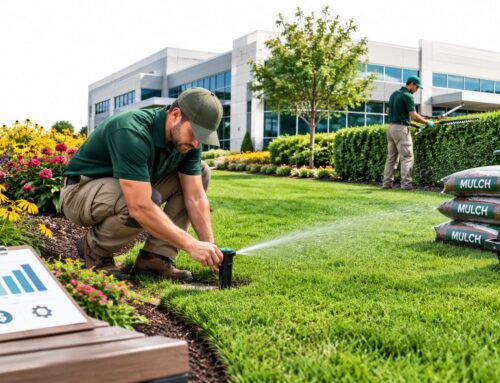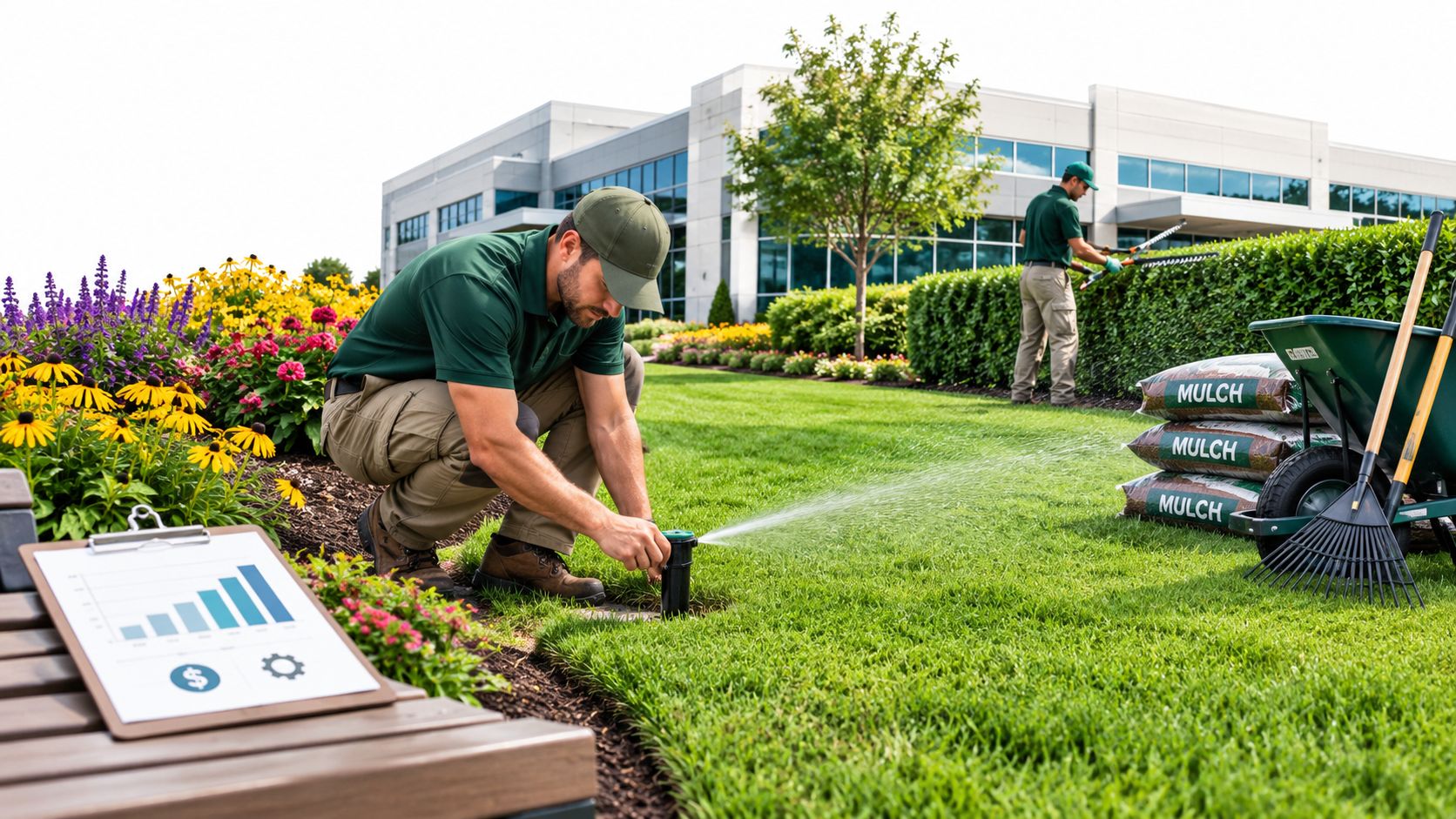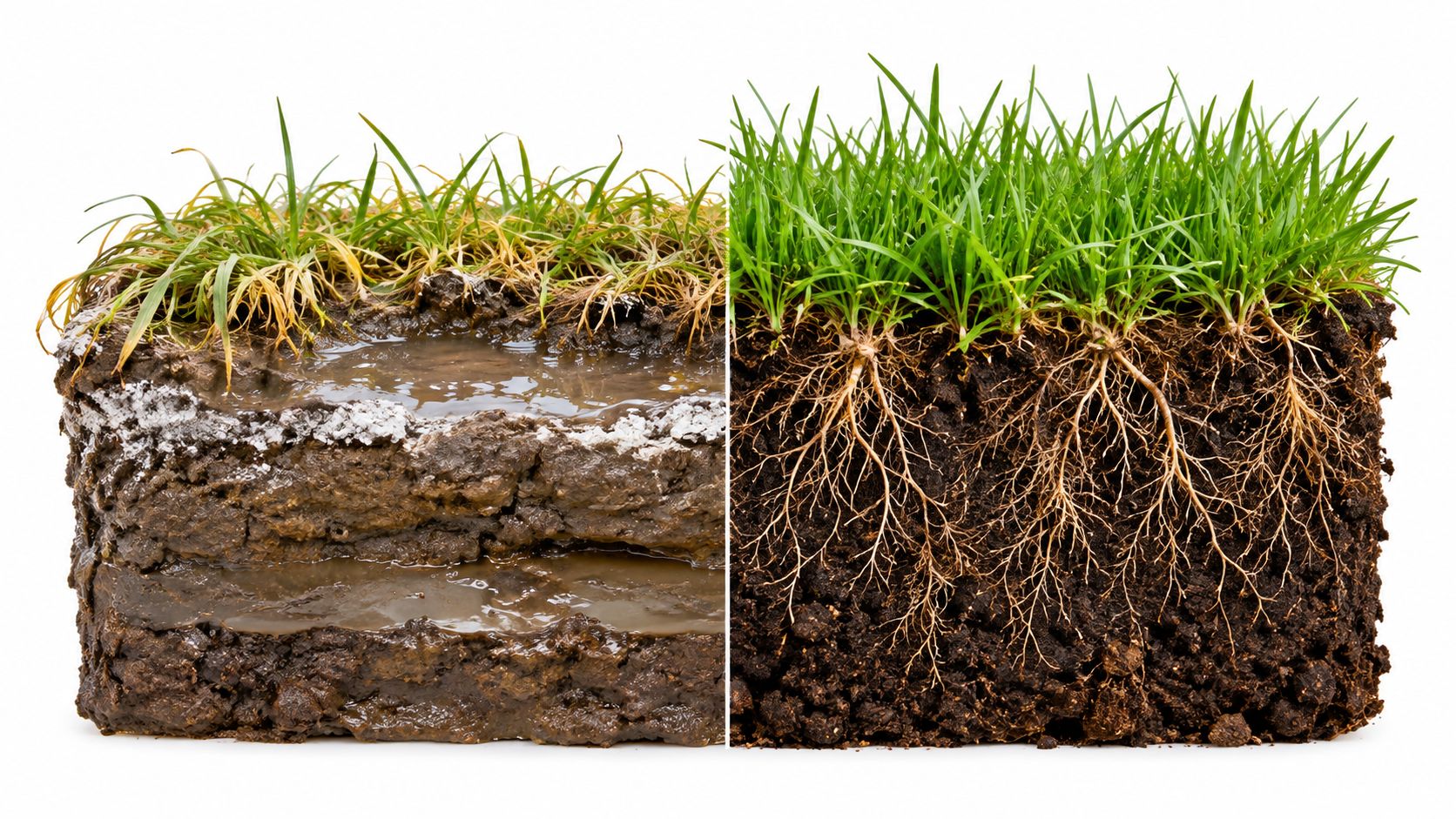
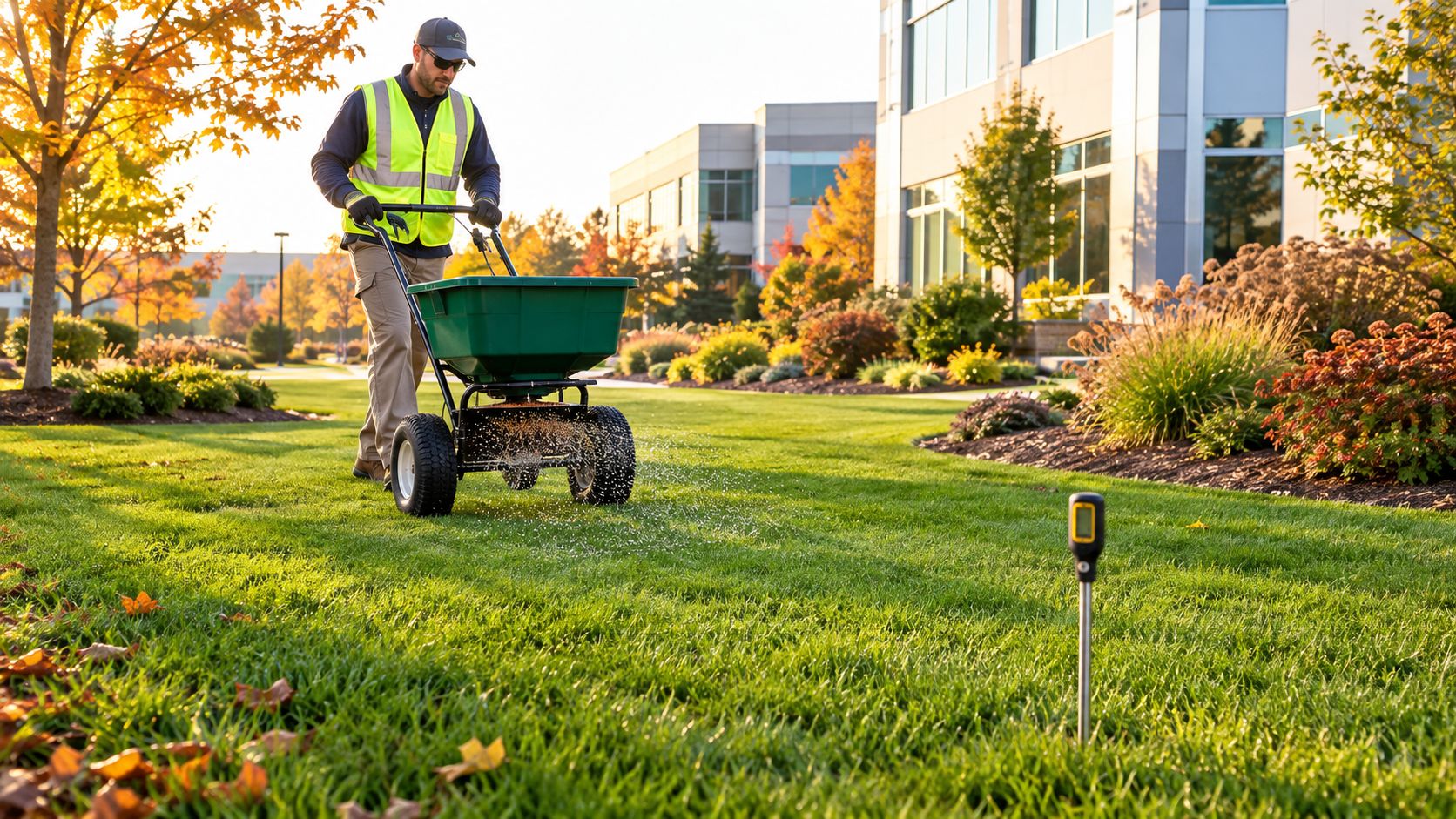
A late-August walkthrough at a Class A office park in the DFW suburbs often reveals the same warning signs: turf is worn from summer heat, beds have been turned over, and the maintenance crew is preparing the property for football season and fall traffic. The visible weeds may not have arrived yet, but the next problem is already in the soil.
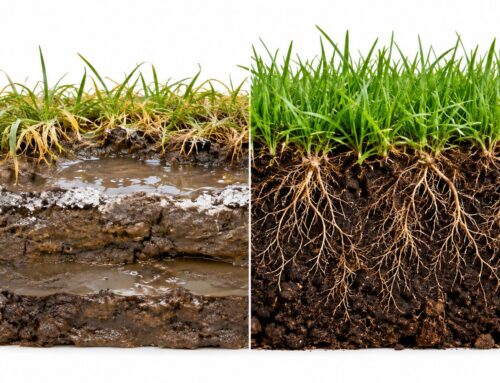
By mid-fall, henbit, annual bluegrass, also called Poa annua, and rescuegrass can emerge through thin turf, curb edges, and disturbed beds. Fall pre emergent works only when the application reaches the soil before those seeds germinate, so the commercial decision isn't whether to spray. It involves soil temperature, moisture, turf tolerance, site risk, product labels, and the property's maintenance calendar.
Table of Contents
- Why Fall Pre Emergent Is on the Calendar Right Now
- Timing the Application by Soil Temperature
- Product Families Used in Fall Programs
- Calculating Rates and Calibrating the Crew
- Activation, Weather, and the Activation Window
- Mapping the Property Before the Spray Truck Rolls
- Coordinating Pre Emergent With the Full Maintenance Calendar
Why Fall Pre Emergent Is on the Calendar Right Now
On a mixed-use commercial property, fall weed pressure starts in the soil before it appears in the weekly inspection report. As warm-season turf recovers from summer stress and soil temperatures decline, winter annual weeds begin their germination window. Texas A&M AgriLife Extension identifies fall pre-emergent herbicide as a foundational control measure and recommends beginning treatment as soil temperatures decline to approximately 70°F for several days. In Texas, that threshold commonly arrives during September or October, depending on location and weather patterns. Texas A&M AgriLife Extension guidance on fall pre-emergence timing supports setting the application window by conditions rather than a fixed calendar date.
A written site risk map should separate the property into treatment zones. The target list may include Poa annua in shaded turf, henbit along the curbs, chickweed near irrigation overspray, and rescuegrass in thin areas. These areas do not carry equal risk. A blanket application can waste product in low-pressure sections, expose sensitive areas to an unsuitable treatment, or interfere with renovation and overseeding plans.
Practical rule: Fall treatment is preventive. Once a target weed has established, a standard pre-emergent application may not provide effective control.
The annual program also needs a clear seasonal division of labor. Fall treatment addresses winter annuals, while spring treatment targets summer annuals. Oklahoma State University notes that most pre-emergence herbicides will not control weeds that have already germinated. Its seasonal benchmarks place annual bluegrass and chickweed treatment around September 15, while spring treatment for crabgrass and foxtails is generally scheduled between March 15 and April 1. These are planning benchmarks, not universal instructions. Local weather, soil conditions, rainfall, and turf condition still determine the workable window. Oklahoma State University weed-control guidance
A commercial property manager should measure the crew by whether the target weeds were identified, the product was applied before germination, and activation was documented under current site conditions. That record connects the risk map to the application decision and gives the maintenance team a defensible basis for adjusting the next visit.
Timing the Application by Soil Temperature
A DFW mixed-use property can have several application windows at once. South-facing, full-sun turf often crosses the 70°F soil-temperature threshold one to two weeks before shaded north-side zones. That difference is why a single calendar date or one reading near the office cannot control the fall program.
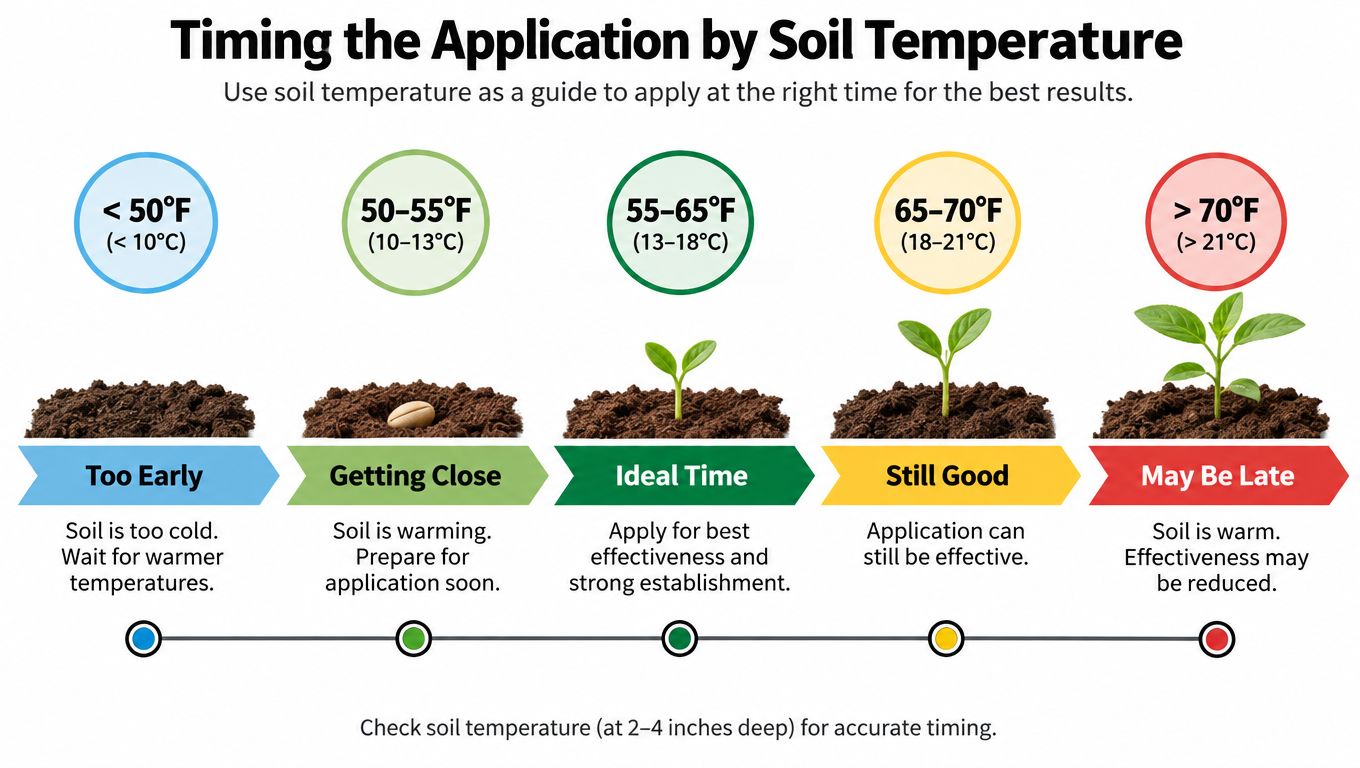
Soil temperature tells you when the application becomes operationally important. Record the trend across representative zones, then compare it with the target weed's expected germination period and the product label. Include soil moisture in the decision. A dry surface can limit activation even when temperatures are suitable.
A field check that crews can repeat
Use a soil probe or thermometer at the shallow depth relevant to the seed zone. Take readings in exposed turf, shaded turf, slopes, irrigated areas, and sections influenced by buildings or pavement. Record the location, date, temperature, shade, and recent irrigation. Several days of readings provide a better basis than one cool morning.
Build the readings into the property's written risk map:
- Identify the weed first. Annual bluegrass, chickweed, henbit, rescuegrass, annual bromes, and little barley can have different distributions and control requirements.
- Compare multiple zones. Mark warm, shaded, compacted, thin, and irrigation-affected areas rather than averaging them into one property-wide number.
- Confirm moisture and activation. Check whether rainfall or irrigation can move the product into the soil during the label's activation window.
- Apply before germination. Do not let a preferred visit date delay treatment after temperature, moisture, and site risk align.
- Inspect by species and location. After the expected emergence period, document escapes on the risk map instead of judging performance from one early walkthrough.
A manager handling both fall and spring pressure should keep the targets separate. What causes crabgrass helps distinguish spring crabgrass risk from the winter annuals that drive a fall application.
Miss the window, and germinated weeds may move beyond the product's preventive activity. Cleanup then relies more heavily on post-emergence treatment or manual removal. Pre-emergent protects the site only when the barrier is established before the target seed begins to develop. The application record should show the zone readings, moisture condition, product decision, and follow-up date.
Product Families Used in Fall Programs
Commercial product selection should begin with the label, turf species, target weeds, application site, and planned follow-up, not with the longest residual claim on a sales sheet. Prodiamine, dithiopyr, and pendimethalin are product families a Texas account manager may evaluate, but their suitability depends on the current product label and the property's turf and renovation plans.
| Active Ingredient | Primary Fall Targets | Typical Residual | Best Use on Site | Key Trade-Off |
|---|---|---|---|---|
| Prodiamine | Label-dependent annual grasses and selected broadleaf weeds | Label-dependent | Areas needing a preventive barrier with a longer planned residual | Can restrict seeding and renovation flexibility |
| Dithiopyr | Label-dependent grassy weeds and early-stage crabgrass in products that permit that use | Label-dependent | Programs that may need early post-emergence activity where the label allows it | Early post-emergence claims are product- and growth-stage-specific |
| Pendimethalin | Label-dependent grassy and broadleaf weeds | Label-dependent | Broad preventive programs where product fit and cost are appropriate | Formulation, staining, turf tolerance, and residual must be checked |
| Isoxaben | Label-dependent broadleaf weeds in approved landscape settings | Label-dependent | Selected ornamental beds and non-turf areas where the label permits use | Requires careful review of ornamental tolerance and root-zone restrictions |
How the choice changes by zone
Prodiamine may fit a stable turf area where the manager wants a preventive program and doesn't expect near-term seeding. That same residual can become a liability in a renovation strip. Dithiopyr may offer early post-emergence activity for crabgrass on products whose labels allow it, but that shouldn't be confused with reliable control of established fall annuals. Pendimethalin can be useful where its labeled targets and formulation fit the property, but the crew must account for application method and any risk around hardscape or sensitive areas.
For ornamental beds, isoxaben belongs in a separate decision. Turf safety doesn't automatically establish ornamental safety. Review the label for the specific plants, including liriope, stonecrop, shrubs, and recently installed material.
Oxadiazon also deserves caution. Rather than treating it as a default fall choice for warm-season turf, verify turf tolerance and discoloration risk under the current label and site conditions. A product that works in one zone may be a poor fit beside a highly visible entrance.
The practical choice is rarely about the active ingredient alone. It is about how long protection is needed, whether the turf will be disturbed, whether the site will be overseeded, how the product is activated, and what other work is scheduled that day. University guidance from Kansas State also emphasizes selecting a labeled active ingredient, calculating the treated area, calibrating equipment, and applying before germination. Kansas State University chemical-control guidance
Calculating Rates and Calibrating the Crew
A product rate is not a spreader setting. The label gives the legal application rate, but the crew still has to translate that rate into the product quantity for each zone and then confirm that the equipment delivers it uniformly.
Start with the treated area, not the total property acreage. Separate turf, beds, skips, bands, and restricted areas on the site map. Convert the label rate into the unit used by the crew, then determine how much product belongs in each zoned lot. If the label gives a rate in pounds per acre, the manager can convert it to a rate per 1,000 square feet before setting the spreader. The exact rate must come from the current product label.
A calibration routine that catches errors
Run a tray or catch-pan calibration on a hard surface before the crew leaves the shop. Weigh the collected product, compare it with the target output, adjust the gate, and repeat until the measured output matches the label-based target. Record the final setting on the job ticket, but treat that setting as equipment-specific, not as a universal number.
| Product Example | Label Rate | Rate per 1,000 Square Feet | Approx. Spreader Setting | Calibration Check |
|---|---|---|---|---|
| Prodiamine product | Use current label | Convert from label rate | Establish with calibration | Weigh collected output |
| Dithiopyr product | Use current label | Convert from label rate | Establish with calibration | Compare output across passes |
| Pendimethalin product | Use current label | Convert from label rate | Establish with calibration | Confirm product used per zone |
The table intentionally leaves the rate blank because there is no safe universal rate. Formulation, concentration, turf species, target weed, application timing, and site restrictions can change the instruction. The label is controlling.
Use a drop spreader or hand application method around bed edges, narrow renovation strips, and areas where a rotary spreader could throw granules beyond the intended boundary. Use a calibrated rotary spreader across open turf, keep wheel tracks straight, and avoid abrupt starts and stops that create stripes.
Calibration is part of weed control. A strong product applied unevenly still leaves untreated lanes.
Bag or stage product by mapped zone so the crew can see which quantity belongs to which area. Stop before the planned quantity is exhausted, investigate the discrepancy, and never solve a shortfall by guessing at a higher rate. The peer-reviewed research on tetflupyrolimet also shows why higher rates aren't a substitute for program design. Fall treatments provided at least 89% control of a resistant annual-bluegrass population at 11 weeks after treatment, while later differences became more apparent, and turf injury varied by species and rate. Peer-reviewed turfgrass tolerance research makes the operational point clear: early suppression doesn't prove season-long performance.
Activation, Weather, and the Activation Window
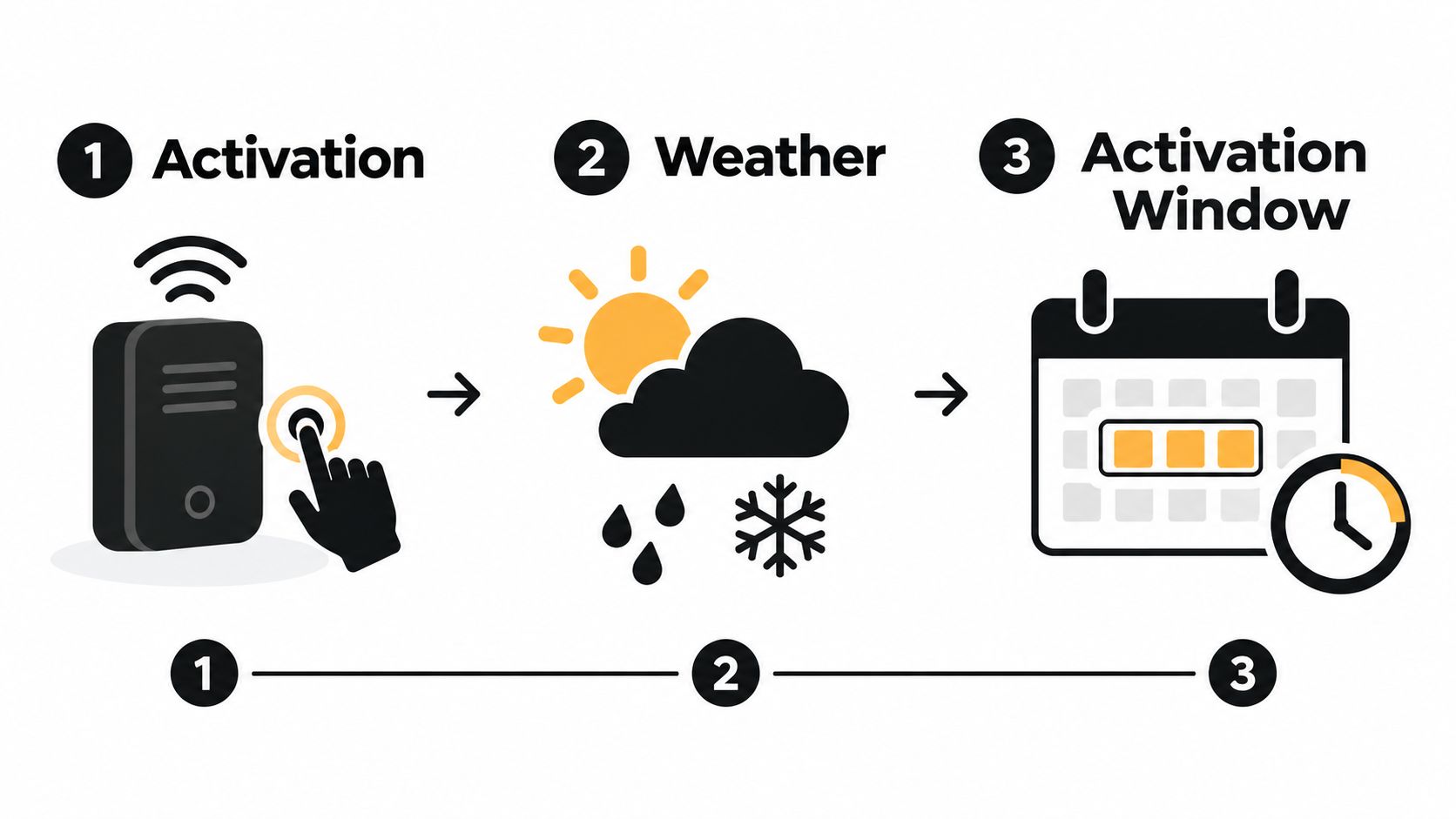
A spreader pass only places granules on the turf. The product must receive enough water to move through the canopy and into the soil surface, where it can form the intended weed barrier. Follow the product label for the required activation amount, timing, irrigation method, and limits. The label controls the application.
Moisture needs a written plan
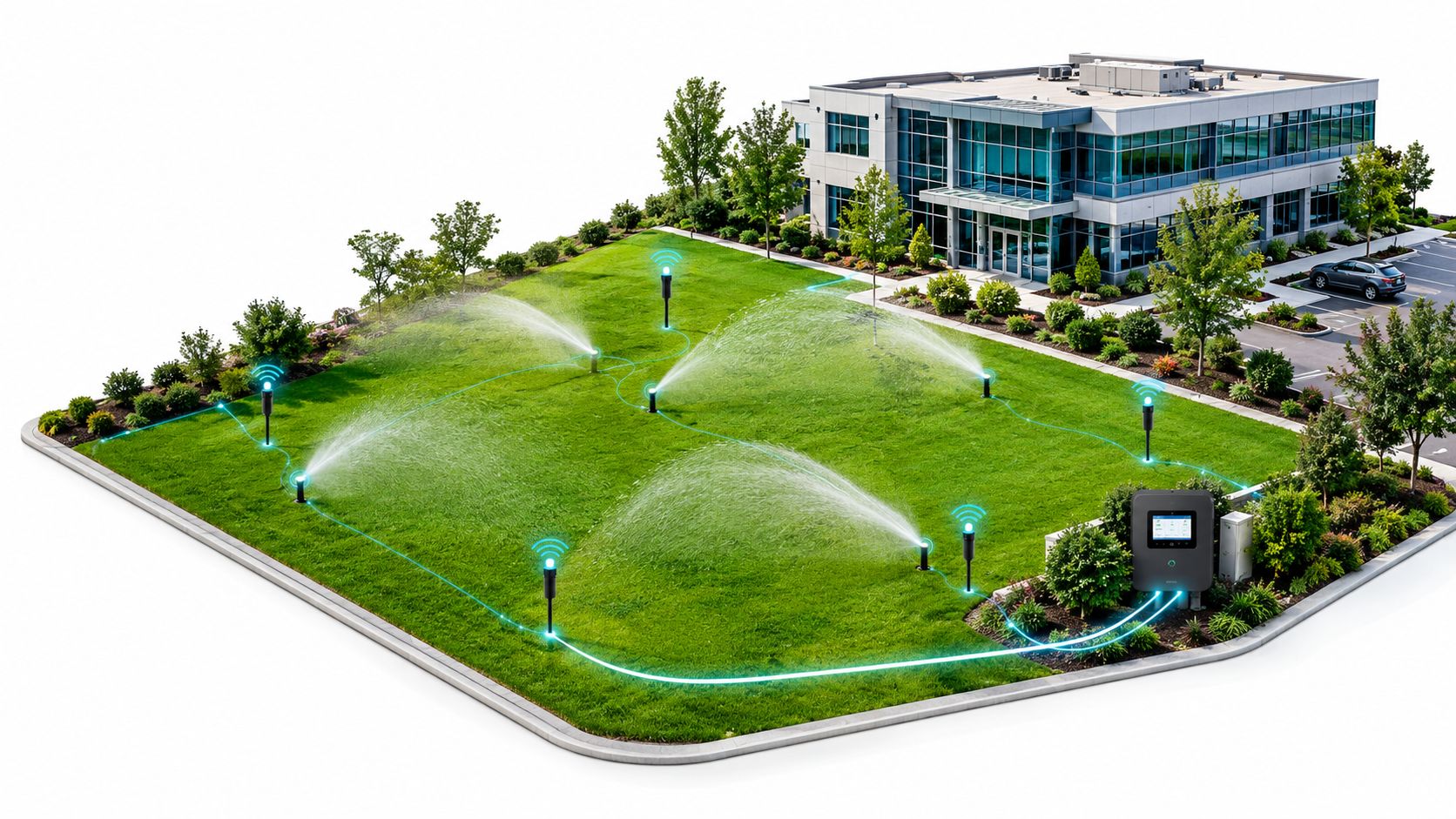
Before the crew applies product, verify that irrigation can provide even coverage across each approved zone. Check dry corners, broken heads, low-pressure areas, and overspray near sidewalks. If rainfall is uncertain, schedule irrigation that meets the label instead of relying on the forecast.
Record the activation plan on the site risk map. Note which zones will receive irrigation, which depend on rainfall, and which need inspection after application. A soil moisture monitoring resource can help the account team document conditions more consistently across commercial properties.
Weather affects where the product ends up. Heavy rain on a slope can move granules away from the target area, while too little moisture can leave them on the surface. Do not apply when the label restricts treatment because of frozen soil, snow cover, waterways, aquatic exposure, or runoff conditions. Those restrictions determine whether the treatment fits the site.
Inspect the property after irrigation or rainfall. Look for granules that remain on foliage, bare surfaces, or pavement, and check whether water reached the full treatment zone. Record the application time, irrigation volume or rainfall, weather conditions, and any area that did not receive adequate moisture.
If activation fails, pause before applying more product. Check the label, inspect the zone, document the conditions, and decide whether a compliant follow-up treatment or another control method is warranted. Product movement, residual duration, and reapplication intervals vary, so the response must follow the actual label and the site record.
Mapping the Property Before the Spray Truck Rolls
A commercial property isn't one uniform weed-control surface. An office campus may contain warm-season turf, ornamental beds, tree-root zones, drainage pathways, recently disturbed soil, and areas where the property owner plans to overseed. Applying the same treatment everywhere can waste product and create avoidable risk.
Walk the site with a current aerial image and a marked field map. Identify areas that should be skipped, banded, or handled by another method. The map should show both weed pressure and treatment restrictions.
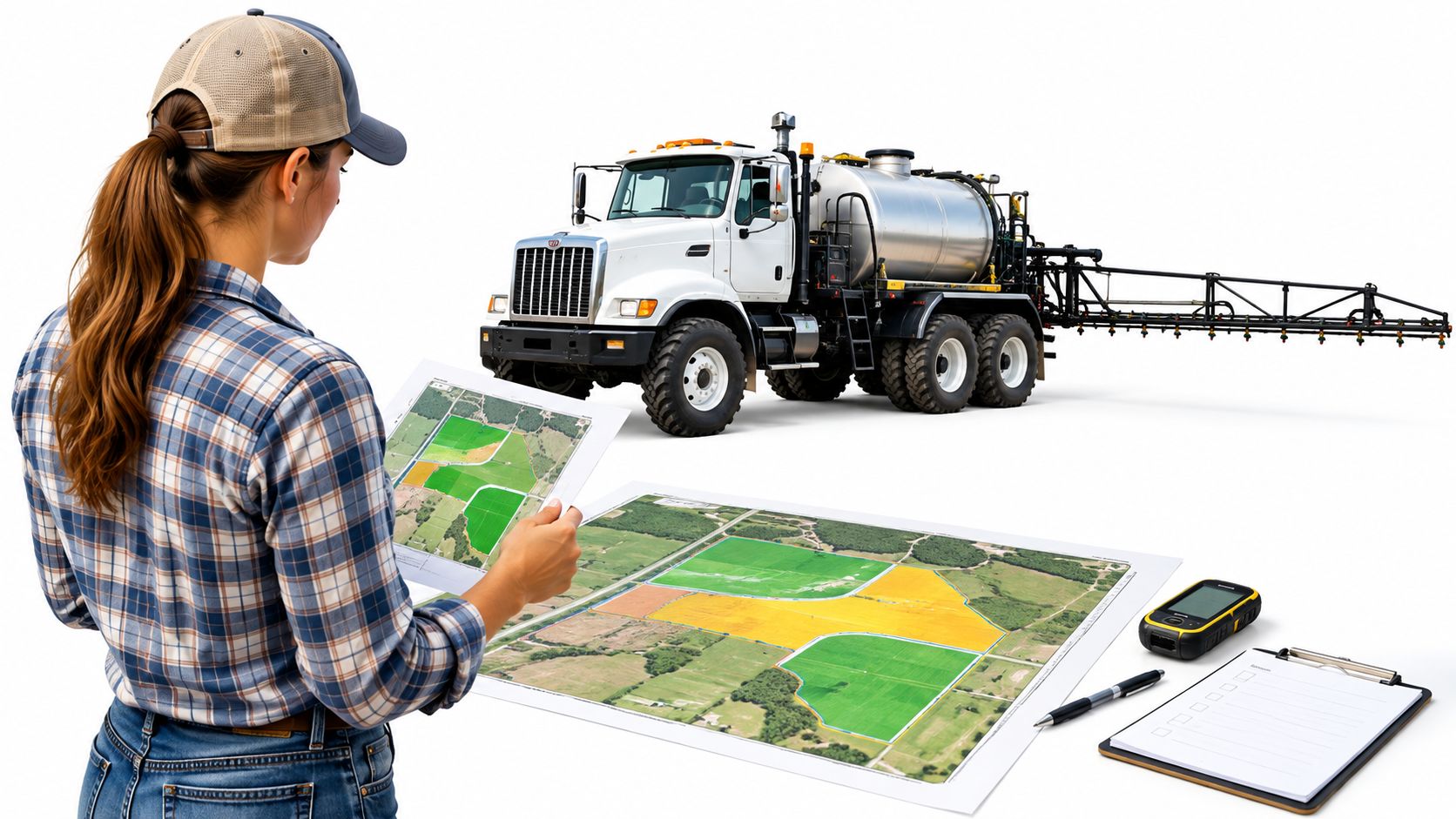
Four map colors keep the instruction usable
- Green, full broadcast: Approved turf areas with a clear target and no conflicting renovation or seeding activity.
- Yellow, banded treatment: Curbs, fence lines, edges, or high-pressure strips where a narrower application is appropriate.
- Red, skip: Overseeded areas, recently seeded turf, sensitive plantings, restricted drainage zones, or locations where the label doesn't permit treatment.
- Blue, hand pull or spot management: Small infestations or sensitive areas where a blanket application would create more risk than value.
High-pressure zones often include curb lines, fence perimeters, thin turf, and tree rings. Mark them separately from low-pressure open turf so the crew can prioritize the areas most likely to generate a callback. Also identify spots damaged by summer disease, insects, traffic, or irrigation failure. A stressed stand may not tolerate the same treatment as established, healthy turf.
A written map fits naturally into broader real estate landscape maintenance tips, especially where appearance, access, drainage, and ongoing property operations overlap. Photograph the completed map, attach it to the work order, and give the applicator a copy that can be read from the truck.
The map should remain part of the account record after application. Add photographs of escapes, irrigation failures, disturbed soil, and areas that were intentionally skipped. That record improves the next seasonal decision and helps explain to ownership why a targeted program may be more defensible than a blanket spray.
Coordinating Pre Emergent With the Full Maintenance Calendar
Fall pre emergent works best when it appears in the same written schedule as mowing, irrigation, overseeding, aerification, fertilization, and spring scouting. The application shouldn't be treated as an isolated chemical visit that the crew squeezes between routine mowing routes.
Schedule the irrigation audit before application so dry zones can be corrected or assigned a hand-watering plan. Complete disruptive soil work before treatment where possible, because aerification, digging, renovation, and other disturbance can break the preventive barrier. If the site will be overseeded, check the product's plant-back language before applying. A pre-emergent intended to stop weed seeds can also interfere with desirable seed establishment.
The account calendar should answer five questions
- What is being treated? List the target weeds and mapped zones.
- What must happen first? Confirm mowing, irrigation repairs, renovation, and soil work.
- What is restricted afterward? Record the label's mowing, seeding, irrigation, and reapplication instructions.
- Who verifies activation? Assign a person to document rainfall, irrigation, and untreated dry spots.
- When is follow-up scheduled? Inspect treated areas at approximately 4, 8, and 12 weeks, as recommended in the verified program guidance, and record escapes by species and location.
Don't make the schedule so rigid that it ignores conditions. A temperature reading may move the application earlier or later. A forecast may require a change in irrigation timing. A newly renovated bed may need to remain on the skip list even though adjacent turf is ready.
For account teams building a broader operating document, the commercial landscape maintenance checklist can help connect seasonal chemical work with irrigation, inspections, quality control, and client communication. The same discipline applies to unrelated date-based planning. For example, teams accustomed to checking calendars and dependencies can use a resource to find commercial pilot training dates, but the schedule still has to follow the product label and actual field conditions.
Close the fall program with a documented inspection and use the findings to prepare the spring plan. The spring application should revisit the risk map, not automatically repeat the fall treatment across every zone. This is how a commercial account avoids the most common failures, including missed activation, poor coverage, untreated edges, and unnecessary applications in sensitive areas.
Prestonwood Commercial Services coordinates commercial pre-emergent scheduling with irrigation audits, mapped treatment zones, turf maintenance, and seasonal follow-up across Dallas–Fort Worth and San Antonio. Visit Prestonwood Commercial Landscape Services to discuss a site-specific fall weed-control plan for your property.