By mid-July, a commercial lawn can look healthy from a distance and still be losing ground at every parking lot island, sidewalk edge, and service entrance. You may see pale, fingered blades spreading outward from a curb, a rough clump filling a thin patch, or a low mat pushing into a sidewalk joint. Those plants didn't appear randomly, and they aren't caused by one bad fertilizer application.
The practical answer to what causes crabgrass is a two-part equation: warm shallow soil plus an opening in the turf canopy. Soil temperature controls when crabgrass seeds activate, while mowing damage, compaction, drought stress, salt exposure, and bare ground determine whether seedlings can establish. That distinction matters on commercial properties, where heat-loaded edges and high-wear areas rarely behave like the center of an open lawn.
Table of Contents
- A Summer Walk Through a Crabgrass Problem
- The Crabgrass Lifecycle and Why It Is Hard to Stop
- The Soil Temperature Trigger Most People Miss
- Cultural Causes on Commercial Properties
- Where Crabgrass Shows Up First on a Property
- An Integrated Prevention Plan for Commercial Turf
- Treatment Options Once Crabgrass Is Already Up
- Putting It All Together for Property Managers
A Summer Walk Through a Crabgrass Problem
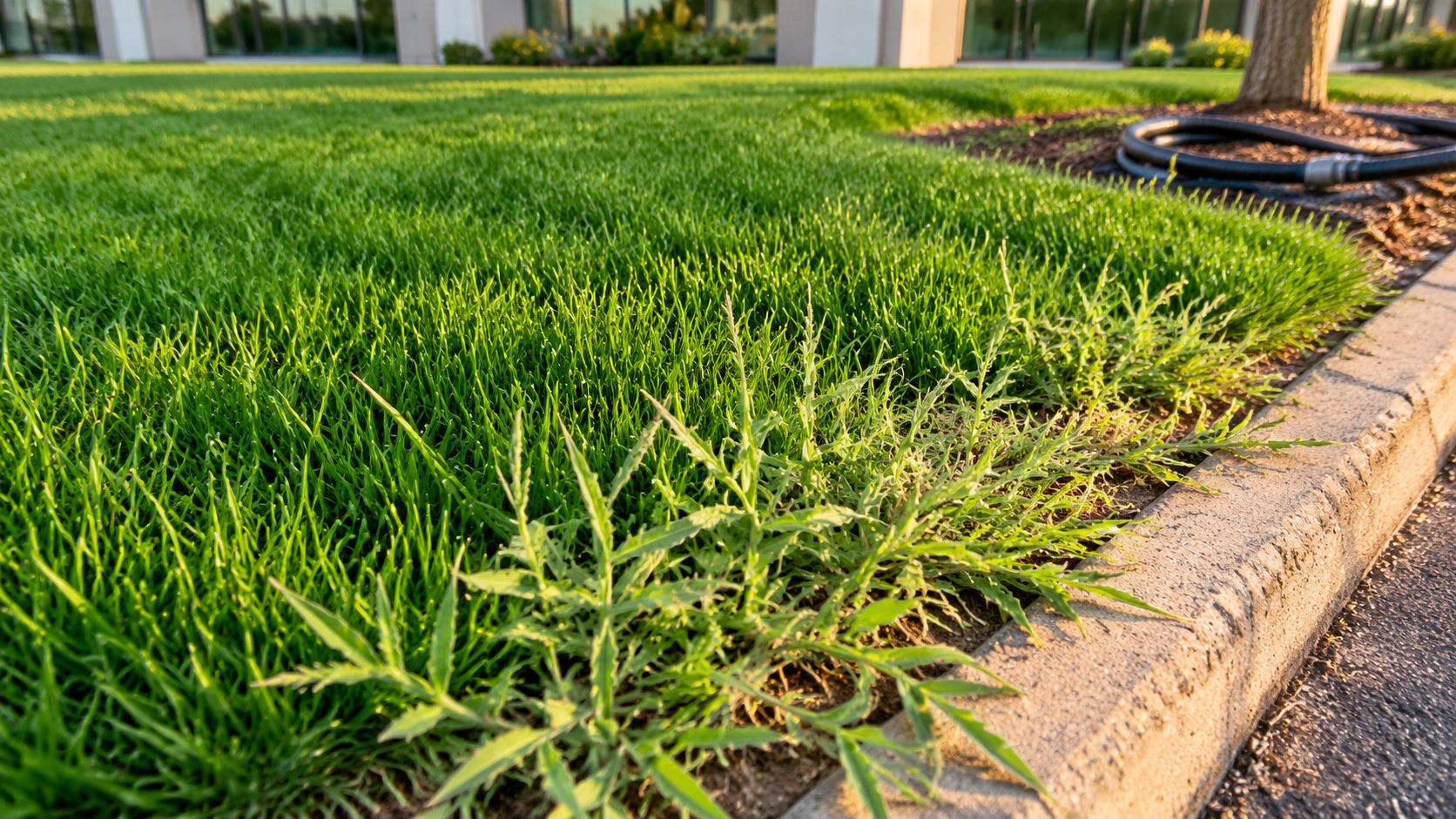
A property manager steps out of a service van in mid-July and walks toward the front entrance of a retail center. The turf in the parking lot island is green enough at a glance, but the surface has a clumpy, uneven texture. Pale blades spread in fingerlike directions, reflecting sunlight from a loose canopy instead of forming a dense carpet.
At the sidewalk, the pattern becomes clearer. Crabgrass has formed a wider mat along an expansion joint, where mower wheels and string trimmers have repeatedly stressed the desirable turf. The edge is hotter, the soil is more exposed, and pedestrians have created compacted shortcuts through the stand. The plant is taking advantage of conditions that the surrounding grass can't tolerate as well.
Two problems are stacked together
The first problem is below the canopy. The shallow soil has warmed enough to activate crabgrass seed, a process tied to soil temperatures around 55°F for several consecutive days according to Illinois Extension's crabgrass management guidance. The second problem is visible above ground. The turf stand has thinned, leaving sunlight, space, and disturbed soil where a seedling can develop.
That combination explains why a property can have crabgrass in one island but not another. The entire site may receive the same irrigation schedule and fertilizer program, yet asphalt reflection, foot traffic, mowing patterns, and runoff create different microclimates.
Field rule: Warm soil starts the process. Thin turf gives crabgrass somewhere to live.
Commercial crews also work within narrow service windows. A mower may pass quickly along a curb, a snow pile may have damaged grass through winter, and a renovation crew may leave loose soil near a building entrance. Each event can create a small opening before anyone sees a weed. By the time crabgrass becomes obvious in July, the most important prevention decision was made weeks earlier.
The Crabgrass Lifecycle and Why It Is Hard to Stop
Crabgrass is a summer annual, so the plant visible in July is part of a one-season cycle. Seeds carried over from earlier years remain near the soil surface until temperature and moisture conditions support germination. University of Massachusetts describes the strongest germination period as extending from early spring into late summer, with early-emerging plants becoming larger and more competitive because they have more time to grow before frost. Its crabgrass biology and management fact sheet connects the seed stage, growth pattern, and reproductive pressure.
The stages that matter to crews
- Seed carryover: Mature plants drop seed before frost, adding to the existing seedbank. The soil may look clean while still holding the next season's pressure.
- Germination: Once shallow soil stays warm enough for several days, seeds begin to activate. This is the stage when a pre-emergent barrier has to be present.
- Tillering: Seedlings spread and produce side shoots. UMass reports that one crabgrass plant can produce 150 to 700 tillers and as many as 150,000 seeds, making early detection important for commercial sites.
- Seed set: The plant shifts from a small seedling to a broad, clumping annual that can flower and replenish the seedbank.
- Frost and carryover: The parent plant dies, but the seeds remain available for future germination when conditions return.
The visible explosion is therefore a late symptom, not the beginning of the problem. A crew that waits until a parking lot island is filled with mature clumps is reacting after the preventive window has narrowed.
Early plants deserve special attention because they gain a longer growing period and can occupy more space than seedlings that emerge later. That difference helps explain why a few spring escapes can dominate a stressed commercial island by midsummer.
The operational lesson is straightforward. Prevention must target the invisible seed and germination stages, while late-season work must focus on stopping seed production and rebuilding the turf opening that allowed establishment.
The Soil Temperature Trigger Most People Miss
Calendar dates are useful reminders, but they don't tell you what the seedbed is experiencing. Crabgrass responds to the temperature of the surface or shallow soil, not to the date on the maintenance calendar. Michigan State University Extension identifies the practical trigger as soil reaching about 55°F for three to five consecutive days, with most germination occurring as temperatures rise into the 60°F to 70°F range.
That window can arrive first beside asphalt, concrete, south-facing walls, and sun-exposed islands. Dark pavement absorbs heat, reflected light warms nearby surfaces, and compacted soil has little protective canopy. A shaded back lawn may still be below the activation range while the entry corridor is already receiving seedlings.
Read the soil, not just the air
A soil thermometer placed at the relevant shallow depth gives crews better information than an air-temperature guess. Illinois Extension describes germination when soil temperatures stay above 55°F to 60°F for seven to ten consecutive days, and notes that germination can continue until soils reach 95°F. The precise reading varies by site and source, but the management message is consistent: the barrier needs to be down before the sustained warm-soil transition.
| Soil temperature at 2 to 4 inches | Crabgrass response | Operational implication |
|---|---|---|
| Around 55°F | Germination can begin after several consecutive days | Start monitoring high-risk zones and confirm preventive coverage |
| 55°F to 60°F held steadily | Germination pressure increases | Pre-emergent timing becomes urgent, especially on exposed edges |
| 60°F to 70°F | Most germination occurs | Missed areas can develop quickly, so inspect and document escapes |
| Up to 95°F | Germination may continue | Late applications can't replace earlier prevention, and established plants need a different response |
A single application date across an entire property can miss the earliest window because soil doesn't warm uniformly. Parking lot islands and sidewalk borders often need earlier attention than shaded turf. Track those zones separately, and record readings where the ground repeatedly shows the first signs of pressure.
Cultural Causes on Commercial Properties
Temperature sets the schedule, but turf management determines whether crabgrass can take advantage of it. Dense turf shades the soil and limits open space. Thin turf exposes the seedbed, allows more light to reach the surface, and reduces competition from desirable grass, a relationship described by University research on crabgrass emergence in turf.
Commercial properties create repeated canopy problems because the same areas receive stress week after week.
Compaction and bare ground
Foot traffic, delivery activity, service vehicles, and snow storage can compress the soil. Compacted areas drain poorly, restrict root development, and recover slowly after heat or drought. A service entrance may look like a small traffic point on a plan, but repeated turns and shortcuts can leave crowns weak and the canopy open.
Bare soil creates an even easier entry point. Edging damage, spring cleanup, construction work, and salt injury along a sidewalk remove competition completely. Once the surface warms, crabgrass seedlings don't need to fight through a dense stand.
Mowing and irrigation mistakes
Mowing too short is another common contributor. Illinois Extension notes that mowing below 2.5 inches, along with bare or thinned turf, increases crabgrass pressure because more sunlight reaches the soil surface. Crews that scalp along curbs for a sharp visual line may unintentionally create the warm, exposed strip where crabgrass establishes first.
Water management can fail in opposite directions. Overwatering keeps portions of the surface wet and can weaken turf through poor root conditions, while drought stress thins grass and leaves gaps. A property manager reviewing signs of overwatering should compare wet areas with thin, dry edges rather than assuming the entire irrigation zone receives the same treatment.
Nitrogen timing also matters operationally. Heavy spring feeding can encourage soft top growth without preparing the root system for summer stress. When heat and traffic arrive, that lush early growth may thin, exposing the soil just as crabgrass conditions become favorable.
These practices rarely act alone. A short mowing height beside compacted, salt-affected soil is more damaging than any one factor by itself. The inspection question should be, what opened this canopy, and is that cause still operating?
Where Crabgrass Shows Up First on a Property
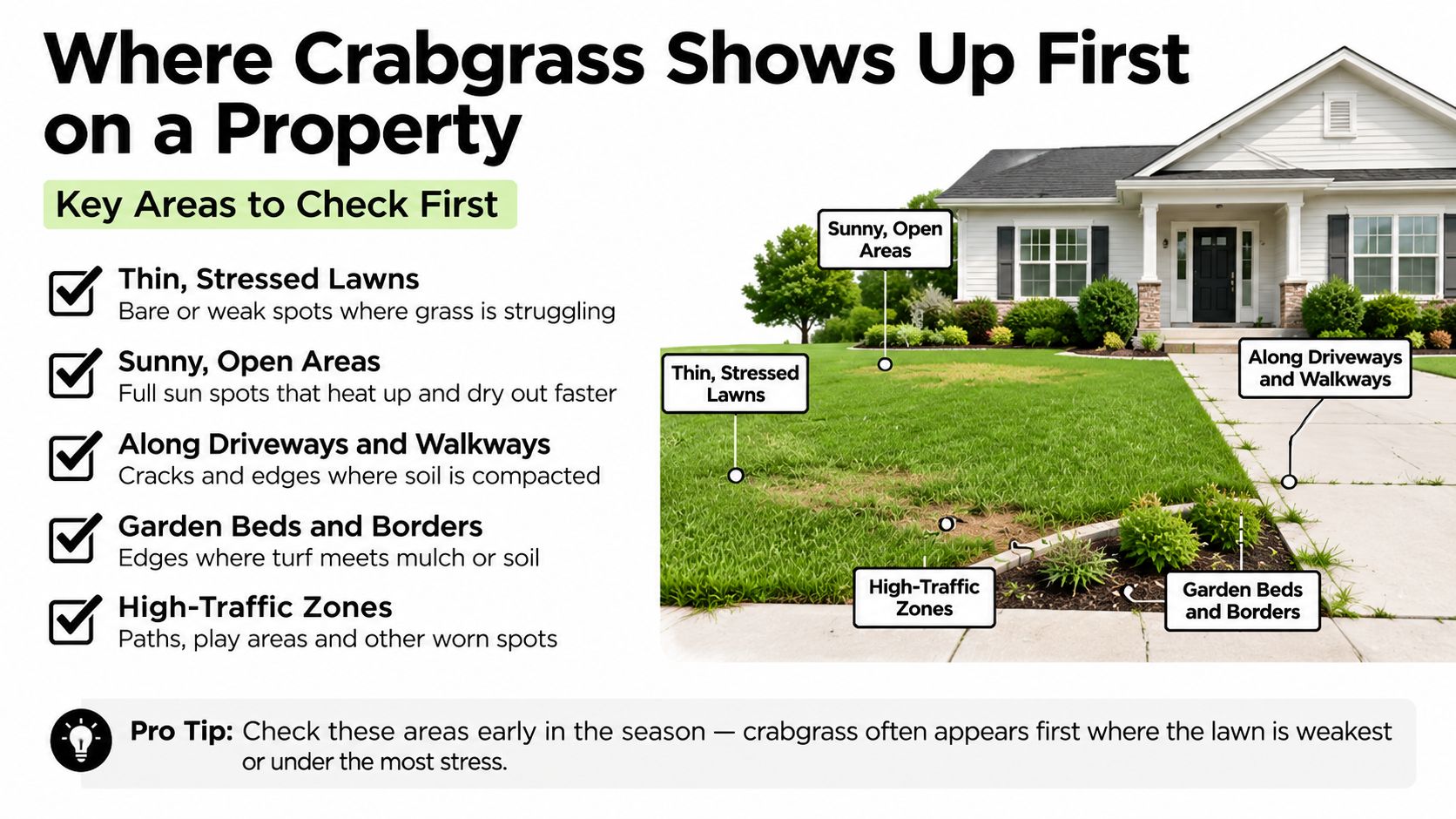
Crabgrass pressure is rarely uniform. Walk a commercial site in a deliberate pattern, and the first plants usually appear where heat, disturbance, and weak turf overlap.
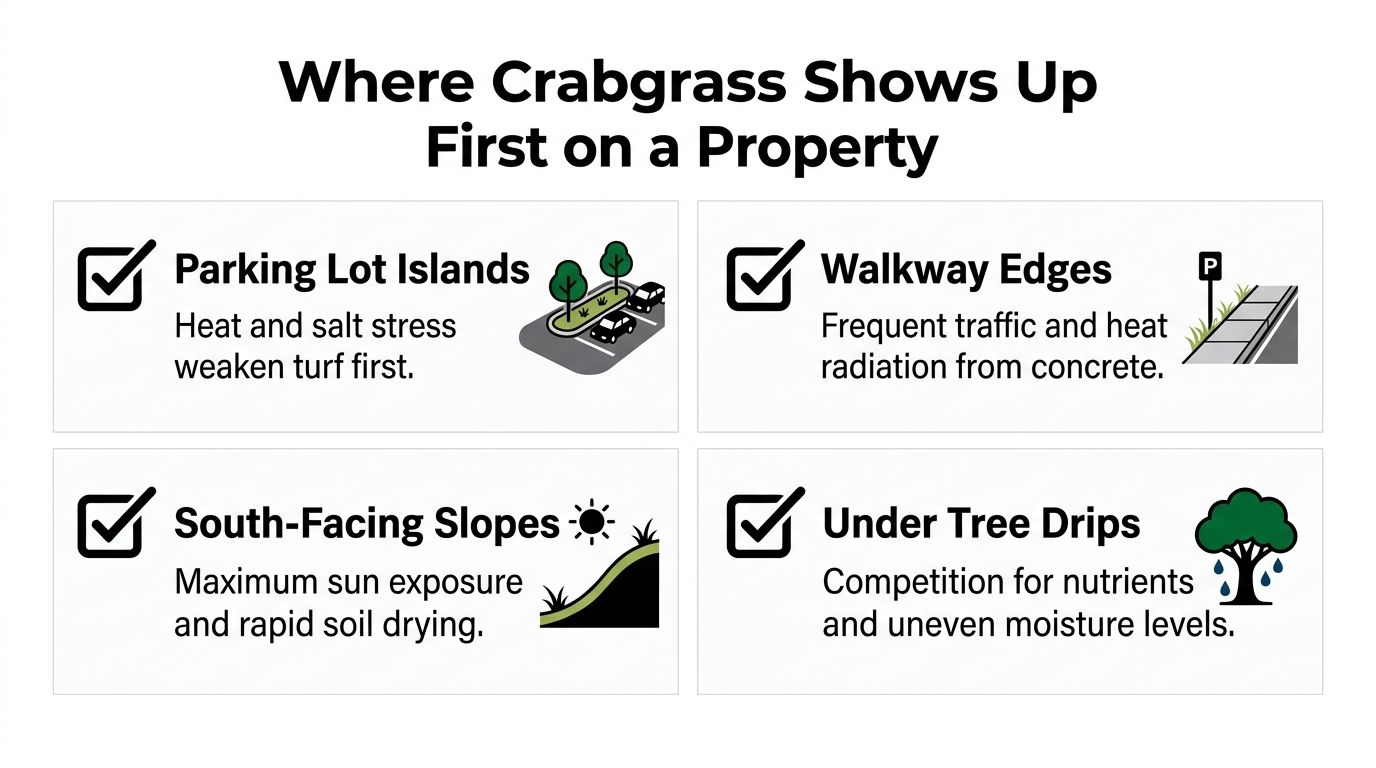
Parking lot islands are frequent starting points. Asphalt reflects heat into narrow planting areas, while vehicle doors, cart traffic, and runoff disturb the perimeter. The island may also receive uneven irrigation, leaving one side dry and another side stressed by repeated wetting.
Sidewalk and curb edges develop a different combination of problems. Mower wheels can lower the cut, string trimmers can remove leaf tissue, and pedestrians may compact the soil by taking shortcuts. Concrete borders also create a hotter, more exposed surface environment than the center of a dense stand.
Inspect the transition zones
Median strips and road-facing turf often carry salt and sand from winter operations. University of Maryland identifies thin turf, short mowing, and sunny conditions as factors that favor crabgrass, as described in its crabgrass resource for lawns. Salt-affected grass can therefore lose its competitive advantage along an otherwise healthy property.
South- and west-facing building edges receive strong heat loading and may dry faster than nearby turf. Service entrances add traffic, pallet movement, and delivery turns, which can crush crowns and leave loose or compacted soil. Newly renovated areas deserve separate monitoring because recent fill and construction traffic can leave a surface that has little established canopy.
A useful walking audit marks each zone by heat exposure, canopy density, soil disturbance, and irrigation coverage. Don't treat the property as one uniform lawn if the first crabgrass plants consistently appear in the same places. Target those locations with earlier monitoring, more careful mowing, corrected irrigation, and focused preventive coverage.
An Integrated Prevention Plan for Commercial Turf
Prevention works best as a calendar that connects soil monitoring, mowing, irrigation, aeration, and selective herbicide use. The exact product and label requirements depend on the turf species, site, and local regulations, so a licensed applicator should make chemical decisions. The operational goal is to place the barrier before the sustained warm-soil window, then keep the canopy dense enough to reduce later opportunities.
Begin in early spring by checking soil temperature in the highest-risk zones. A crew can use a soil thermometer, record readings by location, and avoid relying on a single property-wide date. Maintain a higher mowing height suited to the turf species, sharpen blades, and flag areas where curb trimming repeatedly removes the canopy.
| Season | Soil temperature cue | Cultural task | Chemical task | High-risk zone focus |
|---|---|---|---|---|
| Early spring | Monitor the approach to 55°F | Inspect thin turf, edges, and compaction | Apply an appropriate pre-emergent before germination conditions | Islands, asphalt borders, and sunny entries |
| Late spring | Watch for sustained warm shallow soil | Correct mowing and irrigation gaps | Check coverage and document escapes | Sidewalks, curbs, and disturbed soil |
| Summer | Soil remains favorable for annual growth | Reduce stress without creating saturated areas | Use labeled spot treatment where appropriate | Mature clumps and recurring hot spots |
| Early fall | Cooler conditions support turf recovery | Aerate compacted areas and overseed thin zones | Follow site-specific label guidance | Traffic lanes, salt-affected edges, and service entrances |
| Late fall | Crabgrass plants decline after the season | Review failures and prepare the next calendar | Record treated areas and next-season needs | Locations that produced seed |
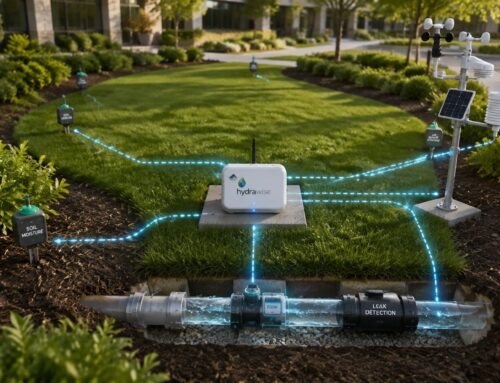
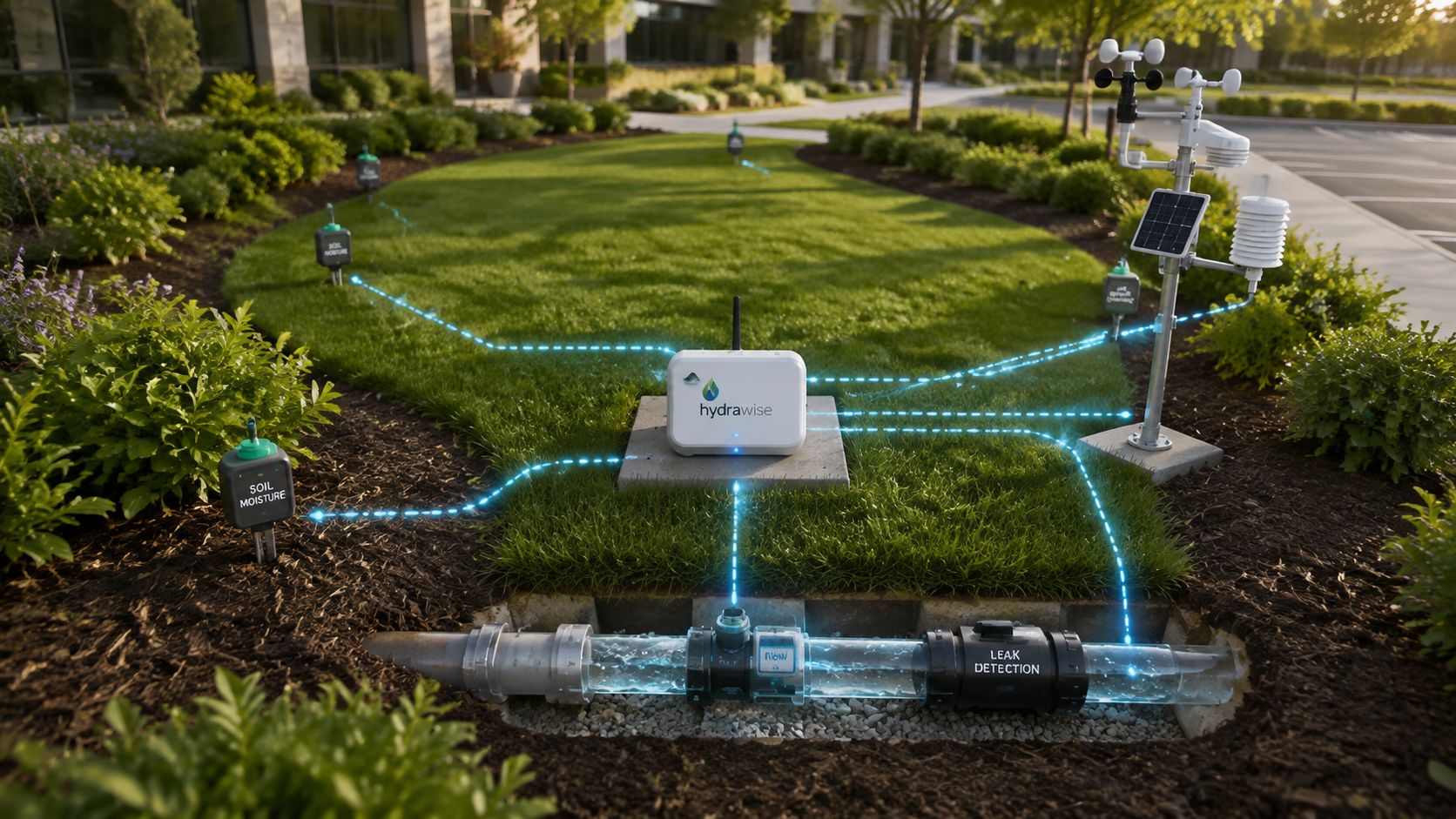
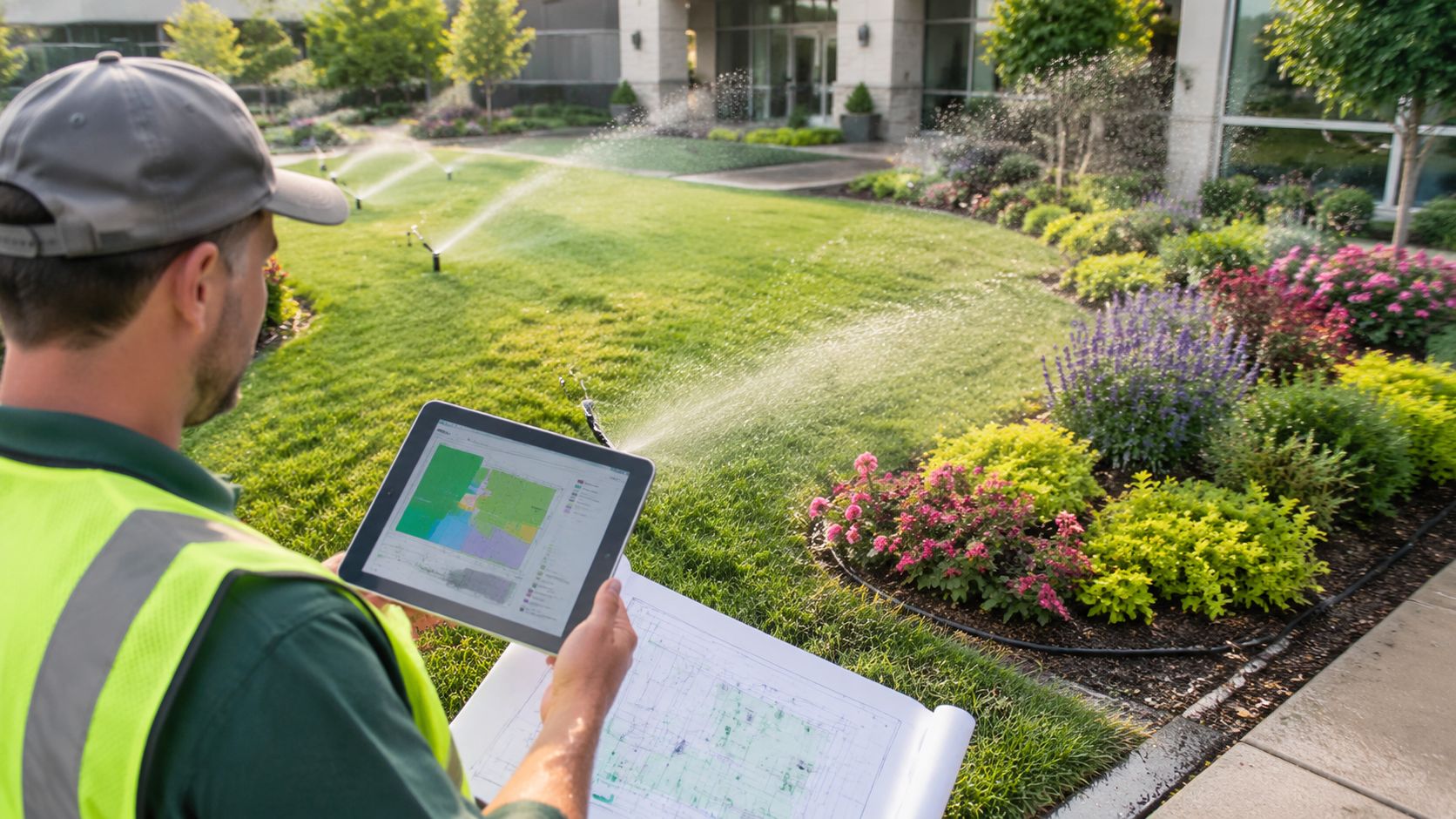
Fall recovery is especially important because it addresses the opening rather than only the weed. Core aeration can relieve compaction, and overseeding can rebuild density where the existing stand has failed. Irrigation audits should look for runoff, overspray, and dry edges. A soil moisture monitoring program can help crews compare what the controller schedules with what the root zone receives.
For hardscape-adjacent weed pressure, property managers can also review patio weed control strategies from Premier Gardens for practical guidance on keeping paved transitions clean without disturbing nearby turf. On commercial lawns, that same principle applies: control surface disturbance while protecting the grass canopy.
Treatment Options Once Crabgrass Is Already Up
Visible crabgrass changes the decision. A preventive barrier is no longer the only question, and the right response depends on plant size, distribution, desirable turf, and the likelihood of seed production.
Small infestations along a sign bed, curb, or isolated island may be handled with hand pulling or careful string trimming before seed set. This approach avoids herbicide contact with nearby ornamentals, but it requires follow-up because missed plants can mature quickly.
Post-emergent herbicides can fit larger infestations when the product is labeled for the turf species and the application conditions are suitable. Products containing quinclorac or fenoxaprop may be options in some programs, while MSMA alternatives and other products depend on the label, site, and regional restrictions. Treating at an early growth stage is generally more practical than waiting for large, mature clumps. Avoid applications during severe heat stress, and never exceed label directions.
| Method | Best timing | Infestation size | Key limitation |
|---|---|---|---|
| Hand pulling or string trimming | Before seed production | Small, isolated patches | Labor intensive and easy to miss plants |
| Labeled post-emergent treatment | Early growth, under suitable conditions | Scattered to broader patches | Turf safety, heat, and label restrictions matter |
| Renovation or reseeding | After severe thinning or widespread failure | Large, continuous damage | Requires site preparation and recovery time |
Renovation makes sense when desirable turf has lost too much density to recover through spot work. Sodding or slit-seeding can rebuild the stand, but neither solves the underlying heat, compaction, mowing, or irrigation issue. Without that correction, the new turf can open again.
For an additional practical perspective, property managers can review this crabgrass strategy from Barefoot Organics. The key is to pair current treatment with next season's prevention plan. UMass reports that one plant can produce as many as 150,000 seeds, so leaving mature plants in place can extend the problem well beyond the current summer. For regional weed-management context, Prestonwood's guide to weeds in Texas lawns can help teams connect crabgrass control with broader turf-care decisions.
Putting It All Together for Property Managers
The property-level diagnosis is simple enough to place on a contractor work order: crabgrass needs warm shallow soil and an opening in the turf canopy. Soil temperature explains why the weed appears when it does. Canopy failure explains why it appears first beside asphalt, sidewalks, service entrances, and other stressed areas.
A manager's inspection should follow the same route each season. Walk the parking lot islands, sidewalk edges, south- and west-facing turf, service corridors, and recently disturbed ground. Look for thin cover, scalped edges, standing water, dry patches, compaction, salt injury, and early seedlings. Record the location, not just the presence of the weed, because recurring locations reveal the operating cause.

A practical handoff checklist
- Monitor soil: Track shallow soil temperature in exposed zones rather than depending only on calendar dates.
- Protect the canopy: Keep mowing consistent and avoid scalping along curbs.
- Correct compaction: Schedule aeration for traffic-damaged areas during the turf's recovery window.
- Repair thin spots: Overseed or renovate areas that repeatedly lose density.
- Audit irrigation: Compare controller settings with soil moisture, runoff, and edge coverage.
- Target high-risk areas: Give islands, sidewalks, medians, and service entries separate attention.
- Stop seed production: Remove or treat mature plants before they replenish the seedbank.
- Document escapes: Mark locations that need earlier monitoring in the next spring cycle.
- Coordinate crews: Share mowing, irrigation, fertilization, and weed-control notes across vendors.
- Review annually: Treat crabgrass management as a year-round property program, not a single application.
Prestonwood Commercial Landscape Services provides commercial property maintenance, weed control, fertilization, irrigation audits, repairs, and property renovation for properties where turf appearance and site performance matter. Visit Prestonwood Commercial Landscape Services to discuss a property-specific plan for monitoring warm soil, repairing thin turf, and protecting the high-risk areas where crabgrass starts.