
A roof leak starts during a busy trading period. The facilities coordinator calls whoever can arrive first, the contractor patches the visible damage, and the invoice arrives before anyone has reviewed why the failure occurred. A month later, the same asset creates another emergency, this time with more disruption and less budget available.
That pattern is common across office buildings, retail centers, industrial parks, hospitality sites, healthcare facilities, and managed communities. The better approach isn't just to find faster commercial maintenance contractors. It's to build a partnership that combines planned inspections, condition data, clear escalation rules, and portfolio-level reporting. The contractor should help you decide where maintenance effort belongs, not just respond after something breaks.
Table of Contents
- The True Cost of Reactive Facility Upkeep
- Drafting an RFP That Attracts Top-Tier Partners
- Evaluating Vendor Maturity and Operational Discipline
- Structuring Contracts and Service Level Agreements
- Onboarding and Dynamic Quality Control
- Measuring Success and Protecting Asset Value
The True Cost of Reactive Facility Upkeep
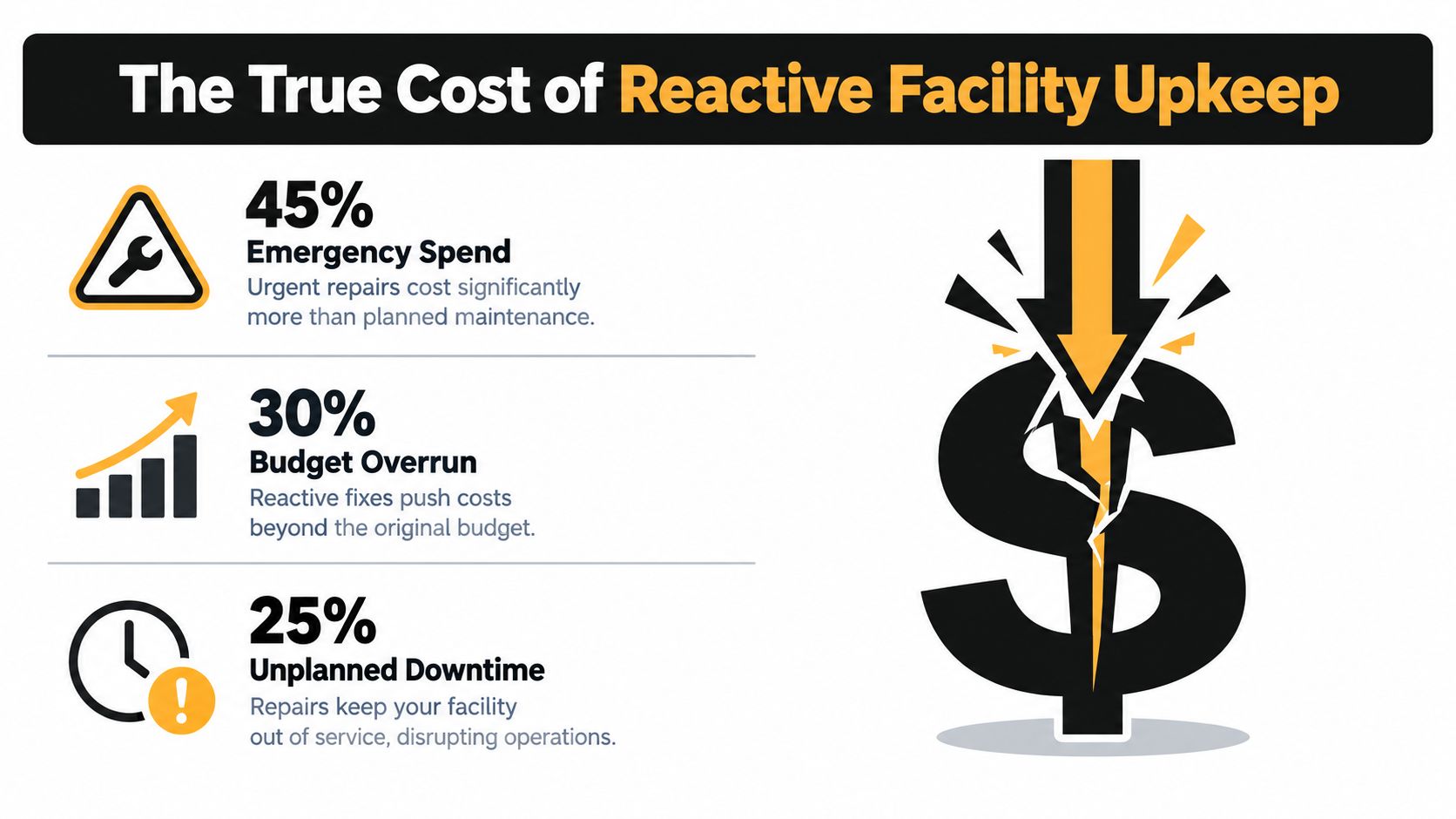
Reactive maintenance can look affordable because each expense arrives as a separate work order. A technician repairs a failed pump, replaces a damaged controller, or patches a roof, and the property returns to service. The larger cost appears later through overtime, tenant disruption, repeated callouts, rushed parts purchases, and capital work that continues to be deferred.
Unplanned repairs can cost two to three times more than planned work, according to facility maintenance industry benchmark data. Commercial properties often direct roughly 10% to 15% of their budgets to facility maintenance. That budget exposure makes preventive and condition-based maintenance an operating decision, not merely an added service. A reliable commercial maintenance contractor should help control where money is spent and which risks receive attention first.
Why emergency work distorts the budget
A reactive contractor is often measured by response time rather than system reliability. The team closes the immediate ticket, while the work order may omit the asset's condition, probable cause, or recommended follow-up. Property managers then lack the information needed to separate a one-time defect from a failing asset class.
Deferred low-visibility work creates similar exposure. A neglected valve, roof drain, irrigation zone, or air-handling component may remain unnoticed until it affects occupants or operations. The resulting repair can require emergency labor, expedited parts, and work outside normal hours. Variable occupancy also reduces scheduling flexibility, especially across a multi-site portfolio.
Practical rule: Treat emergency work as a signal to inspect the related asset class, not as a completed maintenance strategy.
The contractor should connect inspection findings to asset criticality. High-risk systems need defined inspection intervals. Work orders should be prioritized by condition and likely downtime impact. Review the backlog regularly, then schedule low-priority tasks deliberately or remove them with a documented reason.
Making the business case for a higher-tier partner
Planned work gives owners more control over labor, parts, access, and disruption. A condition-based program can begin with information already available in work orders, inspection reports, service histories, and building management systems. Sensors and advanced analytics can follow where the failure mode justifies their cost.
For practical guidance outside contractor selection, property managers can consult these building upkeep tips for property managers. The operating principle applies across specialties: appearance, safety, equipment performance, and service history belong in one view. That view should adapt to occupancy changes and show where sites share the same failure pattern.
Ask candidates to report:
- Planned versus unplanned labor: This shows whether the program is reducing dependence on emergency calls.
- Cost per square foot: Track it by site and asset class, rather than relying only on a portfolio average.
- Repeat-service frequency: Repeated work on one system may indicate poor diagnosis, weak installation, or a replacement decision that cannot be postponed.
- Condition-based recommendations: Require evidence supporting a repair, monitoring plan, or capital request.
The same facility maintenance benchmark reports that 60% of facilities experience annual maintenance cost increases of 5% to 10%. That pressure makes labor and parts forecasting important for commercial maintenance contractors and their clients. A contractor that quotes only today's repair price may appear less expensive at approval while costing more across the asset lifecycle. Require portfolio reporting that connects condition, occupancy, service history, and spend before approving the next response.
Drafting an RFP That Attracts Top-Tier Partners
A generic RFP produces generic bids. If the document says “provide routine maintenance and emergency service” without describing assets, occupancy conditions, reporting expectations, or decision rights, bidders can interpret the scope in whatever way protects their margin. The lowest price may then reflect omissions rather than efficiency.
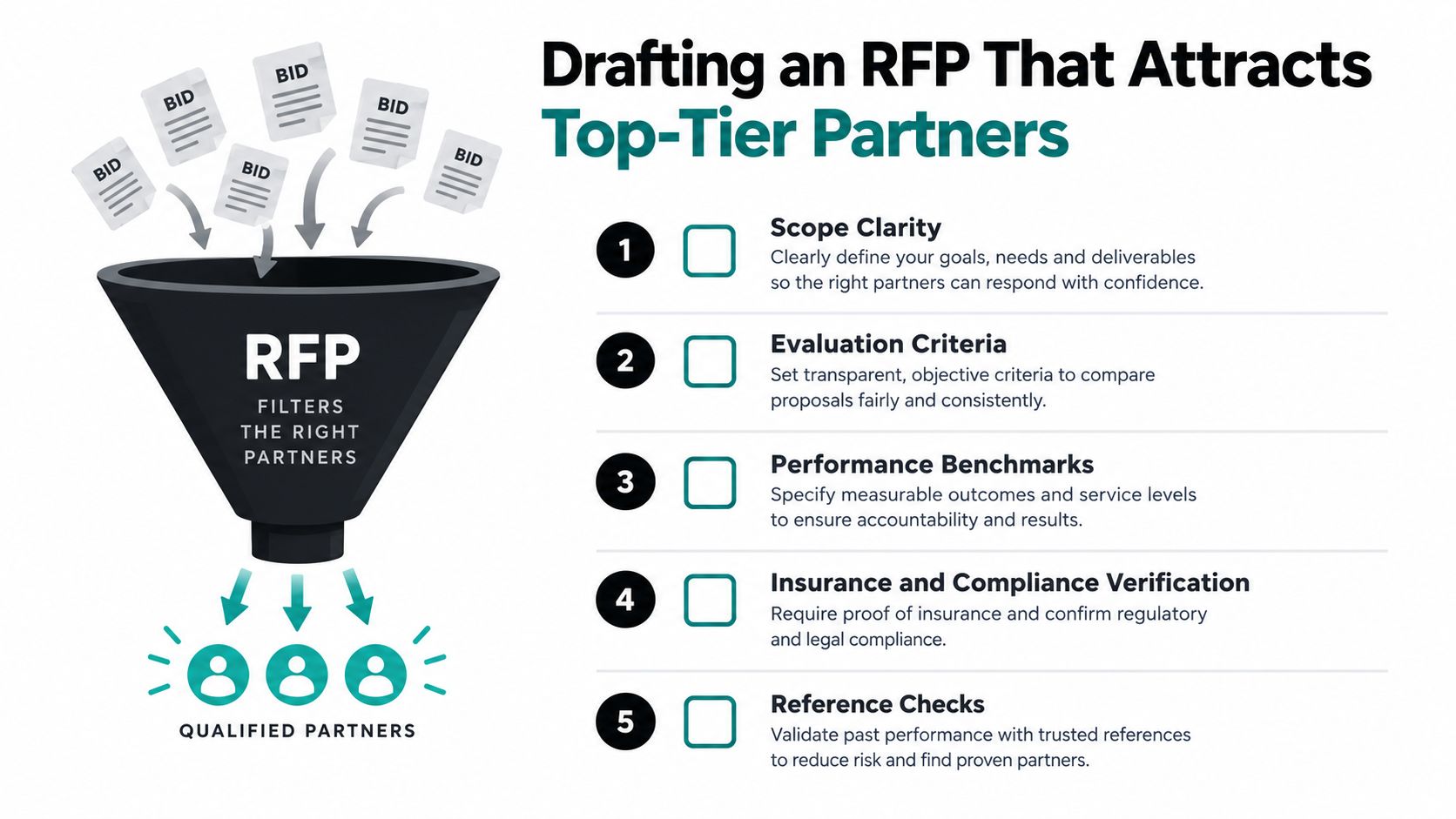
Write the RFP as an operating specification. It should tell qualified firms what they are responsible for, how you will judge performance, and what information they must provide before award.
Start with the portfolio, not the service label
Create an asset register for every site. Include equipment type, age where known, location, access constraints, operating hours, warranty status, recent failures, and the consequence of downtime. Mark systems as critical, important, or routine based on safety, regulatory exposure, tenant impact, revenue interruption, and replacement difficulty.
Describe occupancy patterns plainly. A retail center with heavy weekend activity needs a different inspection and response model from an office building with uneven midweek use. Healthcare facilities, hospitality properties, corporate campuses, HOAs, and industrial sites also have different access rules, environmental requirements, and tolerance for disruption.
Then separate the requested work into distinct categories:
- Planned maintenance: List inspections, lubrication, testing, seasonal preparation, documentation, and condition reviews.
- Corrective work: Explain approval limits, quotation requirements, parts standards, and closeout evidence.
- Emergency response: Define what counts as an emergency and identify the communication path outside normal business hours.
- Capital recommendations: Require condition evidence, urgency, probable consequence, and an explanation of whether temporary repair is sensible.
- Reporting: Specify the work-order fields, photos, technician notes, asset references, and monthly summaries you expect.
Force operational maturity into the response
Require a pricing schedule that separates base service, included labor, excluded work, after-hours rates, parts markups, subcontracting, travel, and consumables. Ask bidders to show how they handle a multi-site portfolio when several properties need attention at the same time. A credible response should explain technician coverage, supervisor ownership, dispatch procedures, backup capacity, and escalation.
Your evaluation criteria should also distinguish capability from presentation quality. Score the proposed workflow, asset data practices, communication model, safety controls, references, and transition plan. Include the contractor's ability to coordinate adjacent scopes, such as irrigation, hardscape, exterior lighting, or seasonal weather preparation, without allowing vague “as needed” language to replace a defined service level. Property teams reviewing grounds-related scopes may find this commercial landscaping contractors resource useful when separating grounds responsibilities from broader facility obligations.
Request sample documents, not promises. Ask for a redacted inspection report, a completed work order, a monthly dashboard, a sample quote, and an example of a failure investigation. Those artifacts reveal whether the bidder has a repeatable system or is relying on a persuasive salesperson.
RFP test: If two bidders can interpret the scope differently and both believe they have complied, the RFP isn't finished.
Finally, ask each finalist to walk through one realistic scenario. Give them a failed rooftop unit at a retail site, a water-use anomaly at an office campus, or a recurring drainage issue at an industrial property. The response should show who gets called, what gets inspected, how the event is recorded, when approval is requested, and how the contractor prevents recurrence.
Evaluating Vendor Maturity and Operational Discipline
A polished proposal proves presentation skill, not operating discipline. The useful evidence appears in the handoff from call intake through estimating, dispatch, field execution, closeout, and billing. Evaluate that chain directly. Years in business and a long service list matter less than a repeatable workflow that protects response times, records asset condition, and gives a multi-site team dependable control.
In one maintenance workflow benchmark of contractor operations, firms with clean, timely processes completed jobs in 11.2 days versus 21.6 days for the average contractor, a 48% faster cycle. Service days sales outstanding improved from 66.4 days to 25.2 days, while quote-to-close increased from 48.9% to 62.8%, as reported in maintenance workflow benchmark data. Treat these figures as directional evidence, not universal industry standards. They show why process quality affects service delivery, billing, and cash conversion.
Compare the operating model, not just the price
A calendar-based vendor may perform the same visit regardless of asset condition, occupancy, or recent failures. A condition-based partner still schedules inspections, then changes priorities when asset data, sensor alerts, service history, tenant activity, or site risk changes. That model requires accurate asset records, clear escalation rules, and supervision strong enough to approve a scope change for the right reason.
Evaluate each bidder against the same operating measures:
| Metric | Questions to ask |
|---|---|
| Job completion cycle | When does the clock start, and what event marks completion? |
| Work-order closure | What notes, photos, readings, approvals, and recommendations must be attached? |
| Maintenance prioritization | How do condition, criticality, occupancy, and downtime risk change the queue? |
| Quote control | Who reviews estimates, how are approvals tracked, and how are declined repairs recorded? |
| Portfolio reporting | Can managers compare properties, asset classes, technicians, and failure types? |
Use these measures to test the workflow, not to accept a vendor's dashboard at face value. A contractor can improve cycle time by closing tickets before the work is properly documented. Inspect closeout evidence, then compare the reported result with the original complaint and asset history.
Test the back office
Give finalists a sample work order and ask them to trace it through their system. Listen for how the request is classified, how the asset is identified, what context reaches the technician, who communicates with the property team, and how a supervisor verifies the result. Vague answers such as “the technician will figure it out” signal a handoff risk.
Look for:
- Accurate intake: Symptoms, access details, urgency, affected assets, and occupancy constraints are recorded.
- Fast approval: Estimates reach the correct decision-maker instead of sitting in an unowned inbox.
- Capacity-aware dispatch: The scheduler confirms technician availability before promising a response.
- Reliable closeout: Notes, photos, materials, recommendations, and customer approval are captured before billing.
- Useful reporting: Portfolio managers can identify recurring failures and condition changes across sites.
- Defined adjacent scopes: Irrigation, hardscape, exterior lighting, and seasonal weather preparation have named owners, response expectations, and documented service levels.
Request references from comparable sites and ask to see a transition plan, safety controls, and examples of asset-data maintenance. A vendor may complete individual repairs well yet create portfolio risk through weak records, unclear communication, or poor coordination. Growth exposes every weak handoff.
Structuring Contracts and Service Level Agreements
The contract should make the desired behavior easier and the undesired behavior visible. A standard vendor agreement rarely captures the operational detail needed across multiple properties, especially when occupancy changes by season, tenant, event, or site type.
Start with a service-level schedule attached to the main agreement. Define priority categories by consequence, not by the contractor's internal terminology. An active water intrusion affecting occupied space, a life-safety concern, and a cosmetic defect shouldn't enter the same queue.
Define service levels that people can measure
For each priority, specify the required acknowledgment, remote triage, site arrival, stabilization, diagnosis, customer update, and final closeout. Separate response from resolution. A contractor may arrive quickly but need more time to source a part or coordinate a specialist. The property team needs visibility into both events.
Include these clauses:
- Scope boundaries: State what the base fee includes and what requires approval.
- After-hours rules: Define who can authorize emergency work and what documentation follows.
- Parts and subcontracting: Require disclosure of markups, substitutions, and outside labor.
- Approval thresholds: Set clear limits for urgent work, planned corrective work, and capital recommendations.
- Service credits: Tie credits or corrective action to missed obligations that the contractor controls.
- Data ownership: Ensure the owner receives work-order history, asset records, inspection findings, and closeout documents.
- Termination and transition: Require orderly transfer of records, open work, keys, access credentials, and warranties.
A service credit shouldn't encourage a contractor to delay a difficult job just to avoid a performance penalty. Use a balanced structure that recognizes access problems, owner-caused delays, weather, unavailable parts, and genuine force majeure while still holding the contractor accountable for poor dispatch or incomplete documentation.
Contract flexibility matters when occupancy varies. Allow inspection frequency, staffing, and site sequencing to change through a documented change-control process. That prevents the property from paying for an identical service pattern at a low-traffic site while a high-traffic location needs more attention.
For specialized exterior assets, a narrow trade partner may be appropriate instead of forcing one general contractor to cover every discipline. Property teams can use this trusted CT fence repair service as an example of how a clearly defined specialty scope can sit alongside a broader maintenance program.
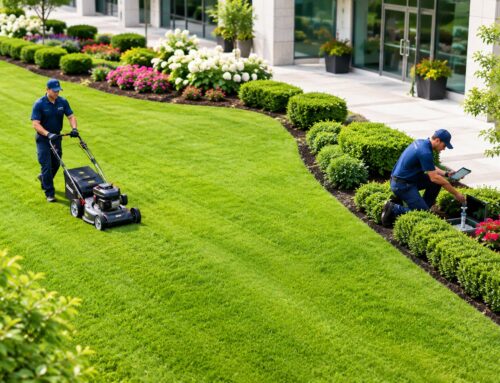
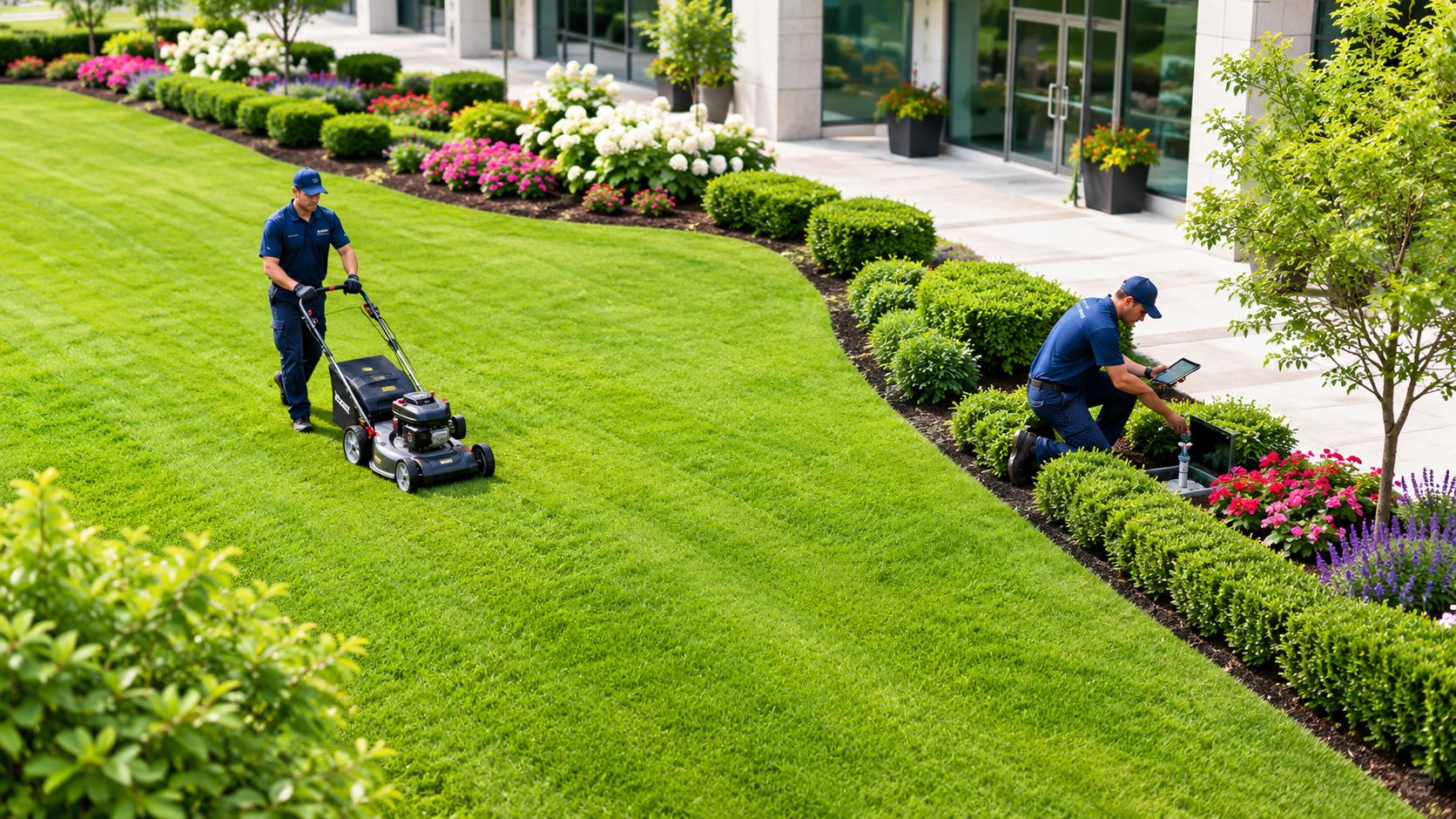
The same principle applies to grounds maintenance agreements. Define seasonal work, irrigation response, storm preparation, irrigation audits, and renovation recommendations in writing. This commercial landscape contracts guide can help teams distinguish recurring services from separately approved improvements.
Onboarding and Dynamic Quality Control
The first weeks determine whether the contractor's process becomes part of the property team's process or remains an outside service layered on top. A kickoff meeting alone isn't enough. The parties need a shared asset picture, working access, agreed communication paths, and a baseline against which performance can be judged.
Build the operating connection
Begin with a site-by-site transfer of knowledge. Walk the contractor through critical equipment, restricted areas, tenant sensitivities, shutoffs, seasonal risks, current projects, warranty obligations, and known defects. Provide the asset register and ask the contractor to verify it in the field rather than accepting it as complete.
Connect the contractor to the systems that carry operational truth. Depending on the portfolio, that may include a computerized maintenance management system, a cloud-first building management system, utility dashboards, access-control tools, tenant request platforms, and digital floor plans. A digital twin can help teams visualize assets and relationships, but only if field updates flow back into the record.
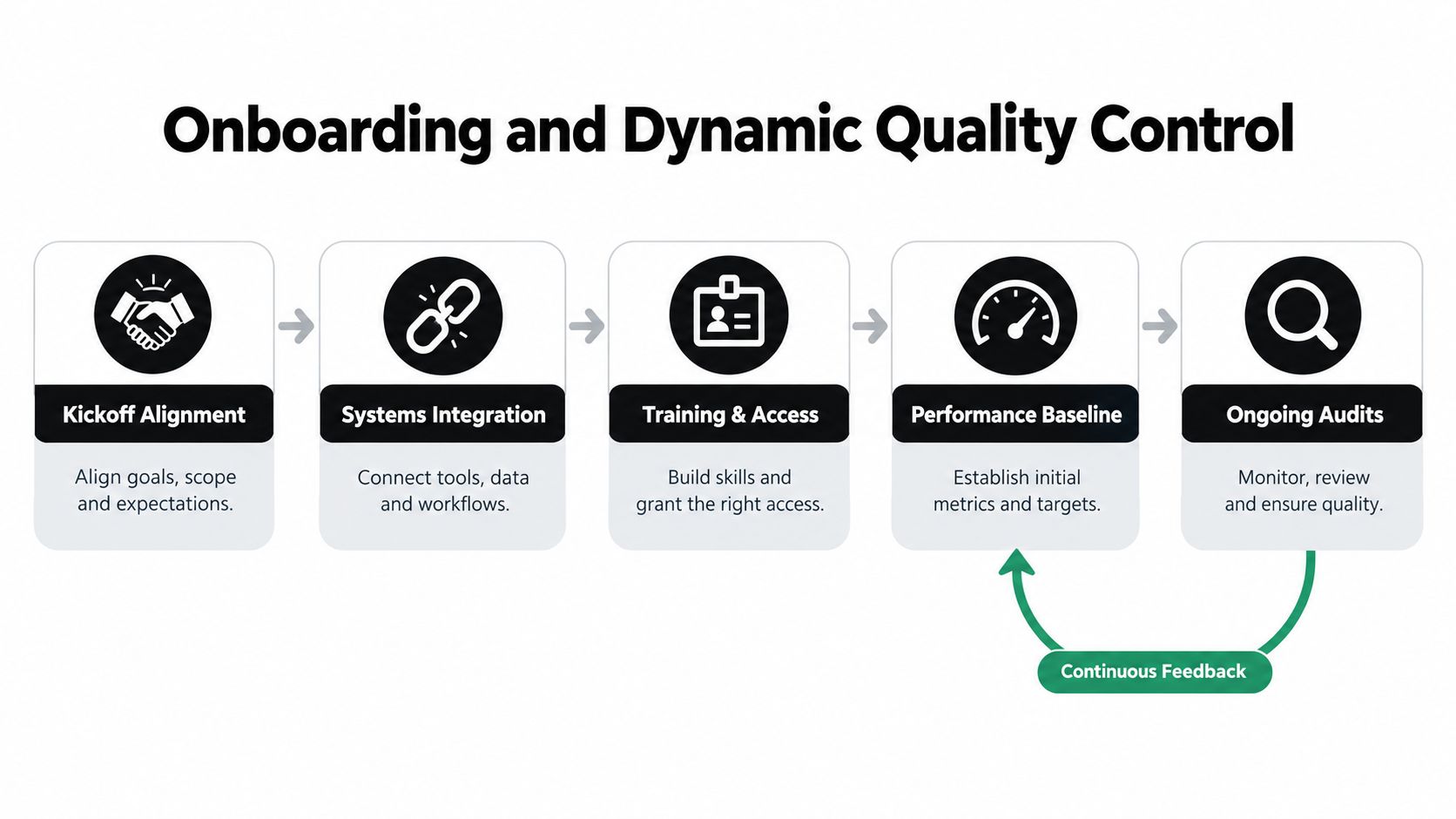
Set permissions carefully. Technicians need enough access to complete work, supervisors need enough visibility to review it, and property managers need control over approvals and sensitive information. Test the workflow with a real or simulated work order before the service launch.
Let occupancy shape quality control
Variable occupancy should change the inspection conversation. A retail property may require more attention around entrances, restrooms, loading areas, and HVAC zones during busy periods. A corporate campus may have underused areas where fixed-frequency servicing creates little value. Healthcare and hospitality properties require tighter escalation because service failures can affect comfort, safety, and reputation.
Use occupancy patterns, water use, temperature alarms, equipment runtime, leak detection, and recurring tickets to adjust attention. Don't let a sensor automatically create unnecessary work. Have the contractor explain what threshold triggers a review, who validates the signal, and what action follows.
A practical governance rhythm includes:
- Weekly exception review: Look at overdue work, repeat failures, critical alarms, access barriers, and open approvals.
- Monthly performance meeting: Review service levels, planned work, unplanned events, recommendations, and site-specific trends.
- Quarterly portfolio review: Reassess asset criticality, staffing, seasonal exposure, occupancy changes, and capital priorities.
- Annual operating reset: Update the scope, service frequencies, asset register, and budget assumptions.
A dashboard is useful only when someone has authority to act on what it shows.
Quality audits should sample completed work, not just count completed work orders. Check whether the technician solved the reported problem, documented the condition, restored the area, and identified related risk. That approach creates consistency across sites without forcing every property into the same monthly checklist.
Measuring Success and Protecting Asset Value
A contractor earns its place in the budget when the monthly report helps a facility director make better decisions. Fewer emergency calls matter, but so do cleaner records, more reliable planning, fewer repeat visits, clearer capital requests, protected curb appeal, and fewer surprises for occupants and owners. Track evidence that changes what the team does next.
An office campus, retail center, and industrial property will not produce the same maintenance profile. The office site may generate more comfort complaints because schedules and occupancy vary. The retail center may demand closer attention to entrances, lighting, drainage, parking areas, and grounds presentation. The industrial property may place more weight on access control, hardscape wear, stormwater performance, and equipment uptime. Use one scorecard structure across the portfolio, then set site-specific targets and action thresholds.
Track the indicators that change decisions
Review planned and unplanned labor hours, work-order completion time, repeat-service frequency, cost per square foot, open backlog, emergency events, and aging recommendations each month. Segment every measure by property and asset class. A portfolio average can hide a failing system at one site, particularly when a large, stable property offsets a smaller property with recurring problems.
Quarterly reviews should test whether the contractor's recommendations are becoming more useful. Are recurring failures identified before they become emergencies? Do proposed repairs include photos, condition notes, and the likely consequence of delay? Does the work address the cause, or only restore operation for a short period?
Teams building a broader operating scorecard can use this how to measure what actually matters for operational efficiency to connect activity measures with decisions and outcomes. A high ticket-closure count says little if the same assets keep generating new tickets.
Protect the exterior asset as part of the operating system
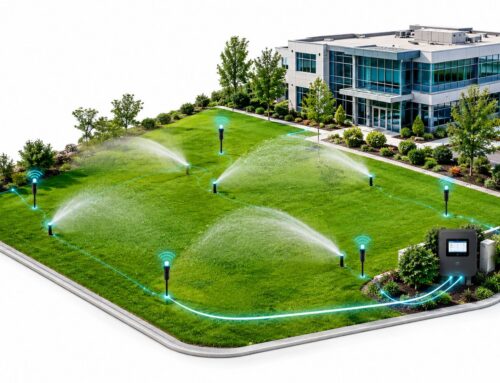
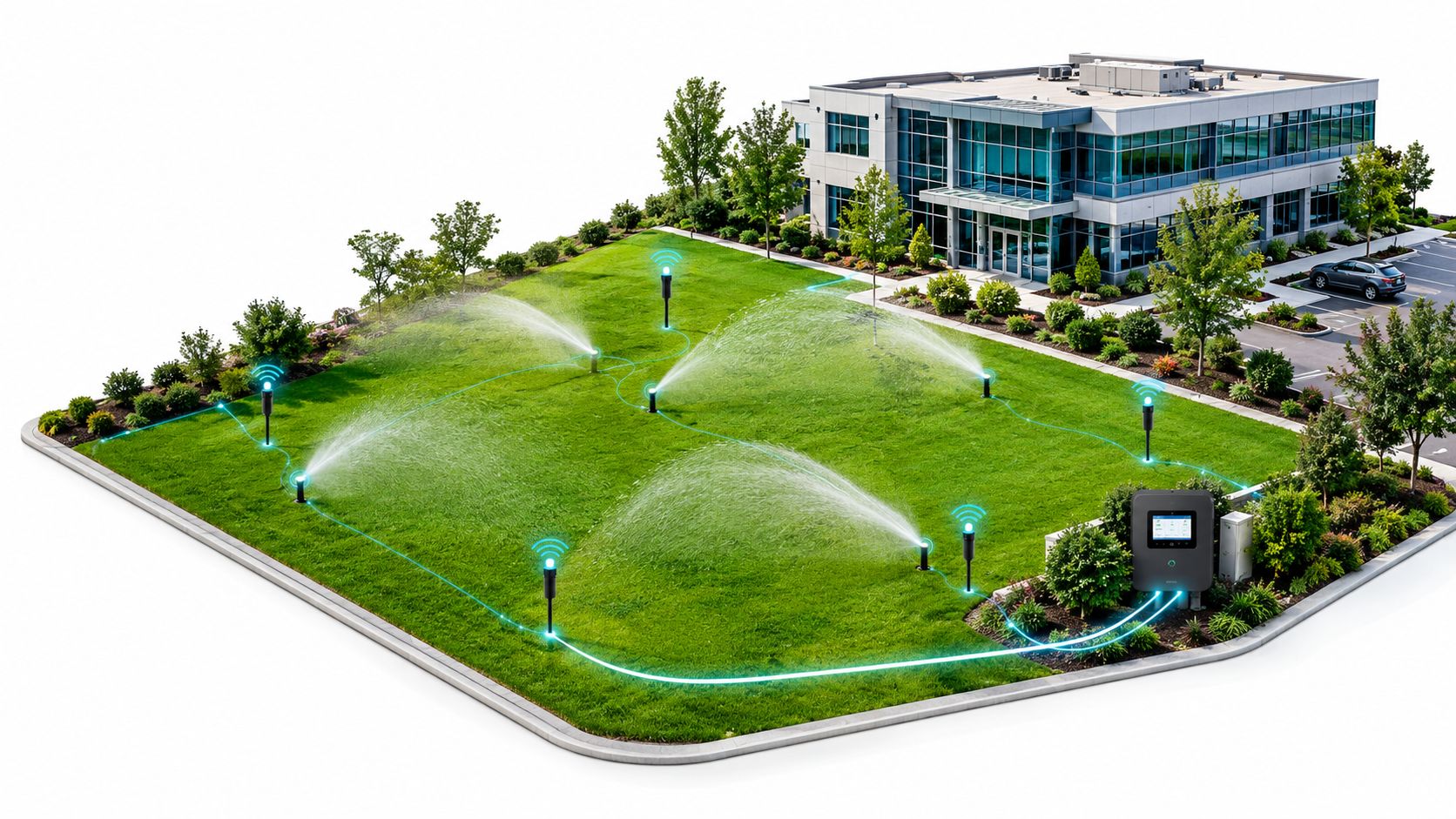
Outdoor areas, irrigation, hardscape, drainage, and exterior lighting shape occupant experience and often reveal problems before an indoor complaint reaches the help desk. A broken irrigation zone can waste water and damage planting areas. Poor drainage can weaken pavement or create recurring safety concerns. Neglected trees, beds, and turf can reduce curb appeal while building systems continue to perform.
A documented landscape asset management program records exterior assets, condition, service history, and improvement needs alongside other property information. Require the contractor to separate immediate corrections from monitored conditions and planned renovation or capital work. That distinction protects the operating budget from treating every observation as an emergency.
Annual business reviews should finish with decisions. Approve the next period's inspections, revise service levels where occupancy has changed, identify assets that need replacement planning, and assign ownership for accepted recommendations. If field observations never reach budget decisions, the relationship remains transactional.
The strongest commercial maintenance contractors make property operations more predictable. They adjust service to site conditions, explain why priorities change, and protect both cash flow and physical asset value.
If your portfolio needs a grounds partner that reports condition and occupancy data alongside routine care, Prestonwood Commercial Landscape Services covers commercial grounds maintenance, irrigation audits and repairs, central water management, seasonal care, and proactive exterior asset recommendations for office, retail, industrial, hospitality, healthcare, HOA, and campus properties. Visit Prestonwood Commercial Landscape Services to discuss a service model that fits your occupancy patterns, portfolio standards, and long-term maintenance goals.