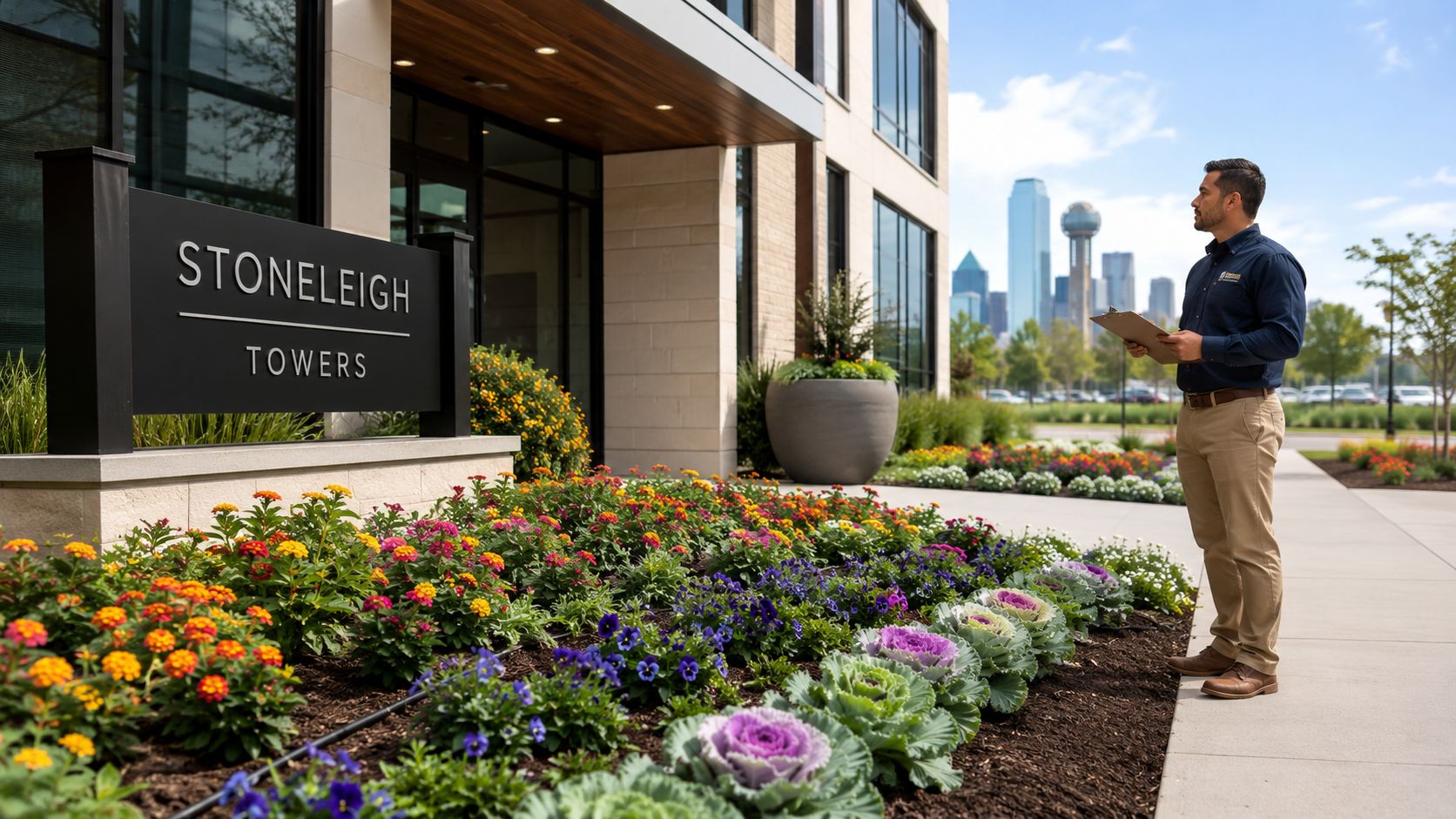
A week before a tenant prospect tour or ownership visit, many property managers notice the same thing. The asphalt was striped, the windows were cleaned, the monument sign looked fine, but the entry beds still looked tired. Faded annuals, patchy mulch, and a few stressed plants can make a well-run property feel neglected faster than anticipated.
That's where seasonal color installation stops being a cosmetic add-on and starts acting like an operations decision. In Dallas-Fort Worth and San Antonio, color beds have to survive heat, swings in rainfall, irrigation inconsistencies, and high visibility at entrances, retail frontages, and amenity zones. If the program is planned late or installed on poor soil, the flowers become a short-lived expense. If the program is managed correctly, the same beds become one of the simplest ways to keep a property looking active, leased-up, and cared for.
Table of Contents
- Beyond Curb Appeal The Strategic Value of Seasonal Color
- Planning Your Seasonal Color Installation Calendar
- Site Assessment and Plant Selection for Texas Climates
- Essential Soil and Irrigation Preparation
- Best Practices for Installation and Ongoing Maintenance
- Budgeting for ROI and Selecting the Right Partner
Beyond Curb Appeal The Strategic Value of Seasonal Color
Seasonal color usually gets discussed as a beauty item. That's too narrow. On commercial properties, it functions more like a high-visibility asset management tool.
A leasing prospect doesn't inspect your irrigation controller or ask how recently the shrub beds were cultivated. They notice the front drive, the monument, the main entrance, and the spaces where visitors slow down. If those areas look sharp, the whole property feels managed. If they look worn out, people assume other things are slipping too.
For office, retail, healthcare, and mixed-use sites, seasonal color installation helps in three practical ways:
- It controls first impressions. Entrances, drop-offs, and signage beds tell visitors what to expect before they step inside.
- It supports tenant confidence. Existing tenants notice whether ownership keeps visible areas current and cared for.
- It protects brand consistency. Hospitality sites, campuses, and retail centers need exterior presentation to match the standards inside the building.
The mistake new managers make is treating color as a one-time swap of flowers. That's how budgets get wasted. The full lifecycle starts earlier and lasts longer than installation day.
| Lifecycle stage | What matters most |
|---|---|
| Planning | Timing, availability, approved palette, budget alignment |
| Site review | Sun exposure, drainage, traffic, irrigation coverage |
| Bed prep | Soil condition, pH, grading, weed prevention |
| Installation | Plant spacing, placement, clean execution, immediate watering |
| Maintenance | Grooming, irrigation adjustment, replacement strategy |
| Review | Which beds performed, which failed, what to change next round |
Practical rule: Seasonal color should be judged by how long it looks strong in the right places, not by how good it looked on install day.
In Texas, that lifecycle matters even more. DFW can punish beds with heat, drying winds, and hard freezes. San Antonio adds long warm stretches and intense sun exposure that can burn through marginal plant choices fast. The properties that get good return from seasonal color aren't always the ones spending the most. They're the ones planning ahead, concentrating investment where people look, and refusing to skip the groundwork.
Planning Your Seasonal Color Installation Calendar
The easiest way to overspend on seasonal color is to wait until beds already look bad. By then, plant availability is tighter, install dates are harder to secure, and the conversation becomes reactive. That usually leads to compromises on design, timing, or both.
The broader market points the same direction. The Global Holiday Seasonal Decor Market was valued at $9.88 billion in 2026 and is projected to reach $14.38 billion by 2034, reflecting the role seasonal enhancements play in commercial property management and curb appeal investment according to Stratistics market forecasts for holiday seasonal decor. Property managers aren't imagining the pressure. Owners and tenants increasingly expect properties to look refreshed at the right times of year.
Why Texas properties need a proactive calendar
Dallas-Fort Worth and San Antonio don't reward last-minute plant decisions. Spring can turn hot quickly. Summer can be punishing. Fall and winter displays need to be installed early enough to establish before weather swings or holiday traffic picks up.
A workable calendar gives you three advantages:
- Better plant selection. Growers and suppliers can reserve stronger material when orders are placed early.
- Cleaner labor scheduling. You get preferred installation windows instead of whatever is left.
- Fewer emergency replacements. Good timing improves establishment and reduces stress on new plantings.
This is the planning rhythm most commercial sites should follow.
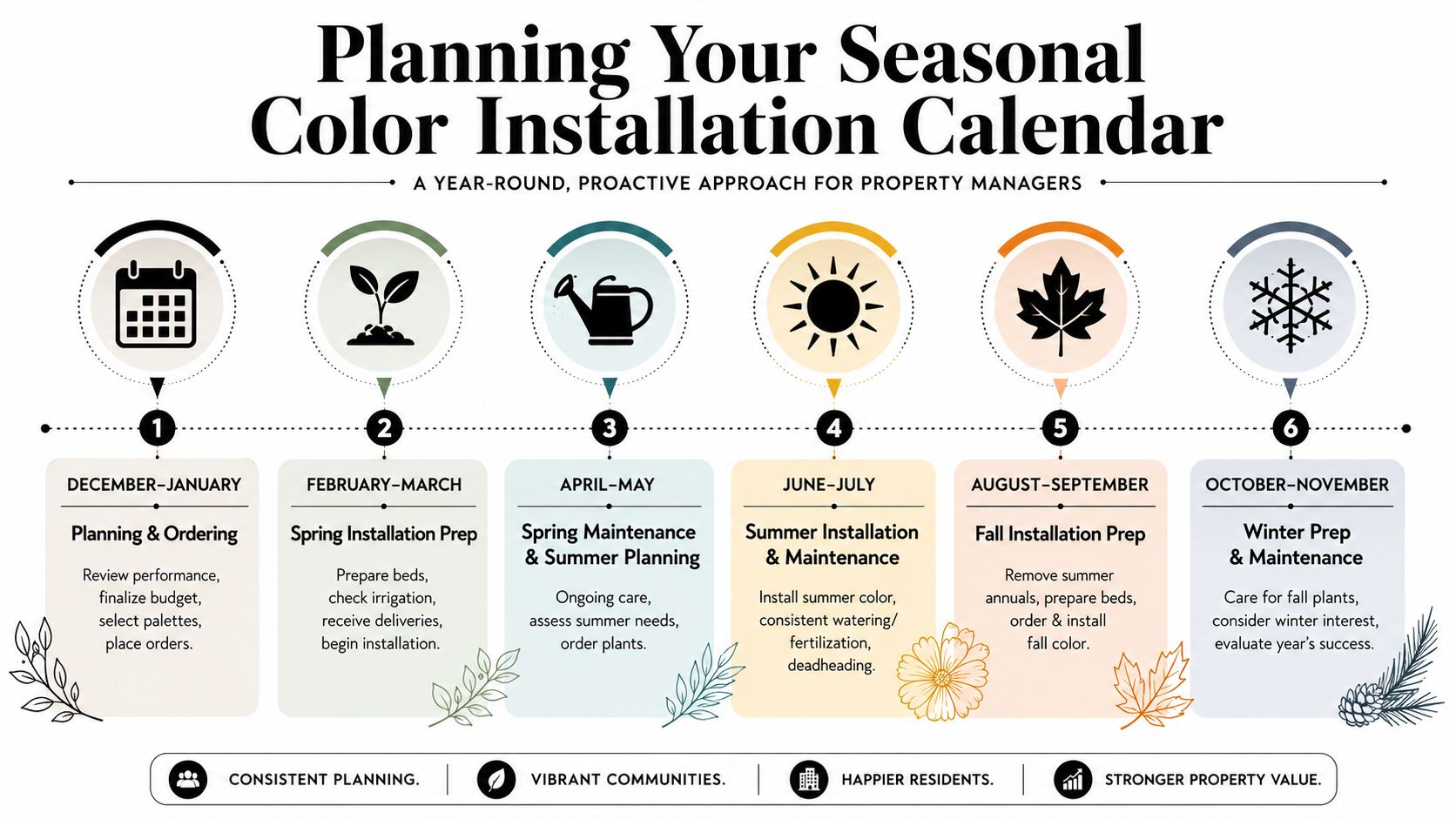
A working calendar for DFW and San Antonio
The exact week will shift with weather, but the pattern shouldn't.
- December and January. Review what held color well, what burned out early, and which beds never justified the spend. Confirm budgets, approve themes, and place early orders for spring.
- February and March. Prepare beds, correct irrigation issues, and install spring color when weather allows. In both markets, this is also the time to decide whether high-exposure areas need a staggered approach into hotter weather.
- April and May. Maintain spring beds aggressively. Grooming matters because this is when prospects, shoppers, and tenants are outside more often. At the same time, finalize the summer palette and verify water coverage in the hottest zones.
- June and July. Install only plants that can handle real Texas heat. DFW sites with reflective pavement and western exposure need tougher selections than a shaded courtyard. San Antonio sites often need even tighter irrigation oversight because hot spells can stress new installs quickly.
- August and September. This is when disciplined managers are already ordering for fall. Remove failing summer annuals before they drag down the property's appearance, then reset beds for the cooler season.
- October and November. Fall color should already be established. This period is also when many commercial sites transition into holiday-driven visual enhancements and winter interest planning.
Don't let the property tell you it's time to plan. By then, you're already late.
A simple way to stay ahead is to schedule design approval one season early. In practice, that means discussing fall and winter in late summer, spring in winter, and summer before the spring program is even fully finished. That may feel early to a new manager, but it's how reliable programs avoid rushed decisions.
For multi-building properties, another smart move is to divide beds into tiers. Tier one includes the main entrance, monument sign, leasing office, and key pedestrian nodes. Tier two includes secondary entries and amenity spaces. If budget pressure shows up midyear, tiering lets you preserve visual impact where it counts instead of underfunding every bed equally.
Site Assessment and Plant Selection for Texas Climates
Plant failure usually isn't a flower problem. It's a placement problem. A nice-looking plant set into the wrong bed, under the wrong exposure, with the wrong irrigation pattern won't perform no matter how good it looked at the nursery.
Before a single palette is approved, walk the property like a visitor and like a maintenance crew. Those are different viewpoints, and both matter.
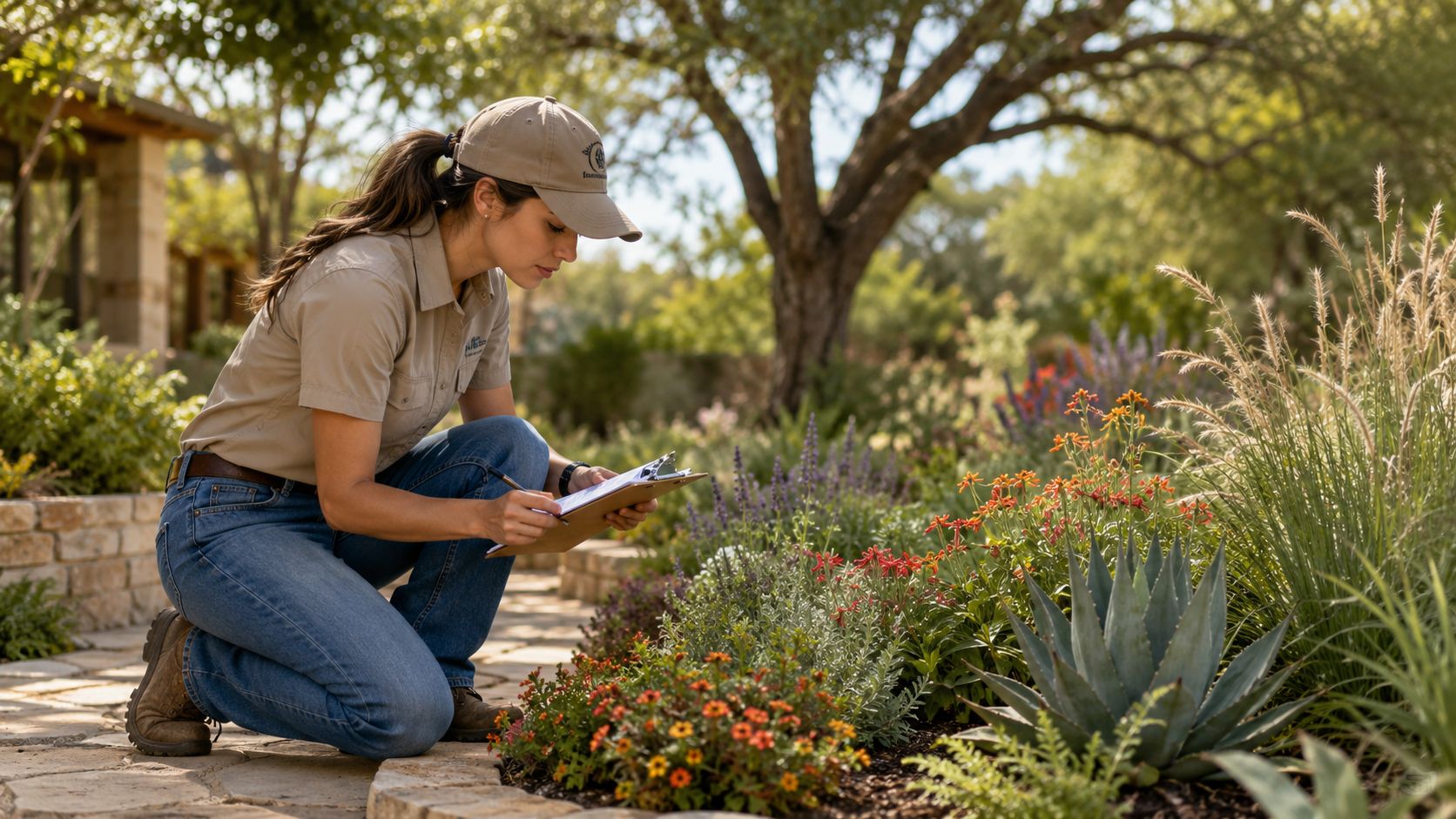
Start with visibility and microclimates
Some beds are decorative. Some beds carry the whole property image. If budgets are limited, expert guidance is clear: focus seasonal color on high-visibility showcase entrances, and don't skip soil chemistry testing because pH problems can drive premature decline regardless of fertilizer, as noted in Landscape Workshop's guidance on preparing properties through seasonal color planting.
That means a proper site assessment should rank beds by impact, then by difficulty.
Look at these factors first:
- Visibility from the drive aisle. A bed at the primary entry can justify more color density than a side elevation hardly anyone sees.
- Pedestrian pause points. Building entries, outdoor seating, monument signs, and mail or package zones deserve stronger presentation because people stand there.
- Sun pattern. Full sun, afternoon blast exposure, and deep shade need different plant choices. Don't trust a single midday observation. Track where the harshest light lands.
- Heat reflection. Concrete, glass, metal panels, and asphalt can turn an acceptable bed into an oven.
- Drainage behavior. If water sits after irrigation or rain, that bed needs correction before it needs flowers.
For planning color themes that fit architecture and branding, this guide to a commercial landscape color palette is a useful reference point.
Choose plants for performance first
In North and Central Texas, summer color has to tolerate stress. Beds in open sun and high heat often perform better with dependable warm-season choices like Vinca and Lantana than with softer plants selected only for bloom style. For cooler-season displays, Pansies and ornamental Kale are practical because they keep visual structure when many summer flowers would collapse.
A clean selection process often looks like this:
| Bed condition | Better fit |
|---|---|
| Hot, sunny entry bed | Heat-tolerant annuals and tougher accent plants |
| Partial shade at a building face | Plants that hold color without midday scorch |
| Winter gateway display | Cool-season bloomers plus structural foliage |
| Monument sign with irrigation drift issues | Lower-risk plant choices until coverage is corrected |
A strong seasonal color installation starts with a hard question. “Will this plant still look good here after real weather hits?”
Avoid overdesigning with too many plant types in one bed. Commercial properties usually benefit from a simpler mix with clear color blocking, reliable growth habits, and enough contrast to read from the street. Intricate combinations can look impressive on paper and messy from a vehicle.
In DFW, north-facing winter beds may hold color differently than exposed southern frontages. In San Antonio, long hot stretches can favor conservative summer selections over trendier choices. The point isn't to be boring. It's to choose plants that can finish the season.
Essential Soil and Irrigation Preparation
A seasonal color program usually succeeds or fails before the first flat is unloaded. On Texas commercial properties, the expensive mistake is treating soil prep and irrigation review like minor pre-work. In DFW and San Antonio, heat, wind, clay-heavy soils, and uneven drainage expose weak preparation fast. If the bed profile is wrong or water coverage is inconsistent, the install may look good for a week and then start losing uniformity, which hurts both appearance and return on the spend.
The bed has to support the full season, not just installation day.
The technical basics still matter. According to Ruppert Landscape's bed preparation standards, crews should till soil 8–10 inches deep, target a pH between 6.0 and 7.0, apply slow-release 14-14-14 NPK granular fertilizer, and raise beds at least 4–6 inches to reduce root disease risk. Those steps are not box-checking. They directly affect how evenly color develops, how often replacements are needed, and whether the display finishes the cycle strong enough to justify the budget.
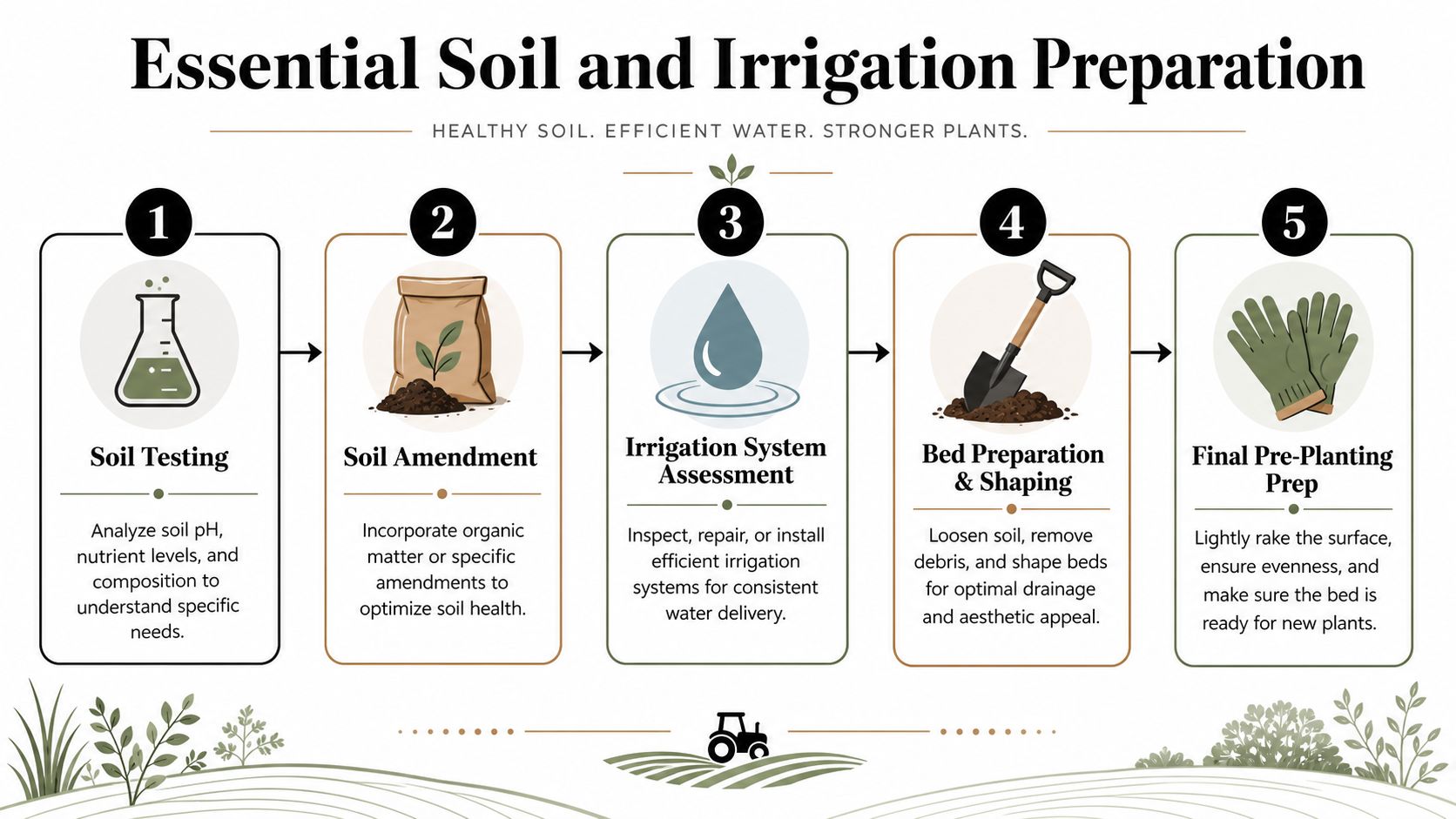
What proper bed prep actually requires
On commercial sites, surface cultivation is rarely enough. Beds often contain compacted subgrade, leftover construction material, thin topsoil, or grade problems that keep water where it should not sit. A seasonal rotation planted into those conditions becomes a replacement program.
A reliable prep sequence includes:
- Loosen the full root zone. Deep tilling gives annual roots room to establish instead of circling in a shallow worked layer.
- Improve the soil profile. Organic amendments help balance drainage and moisture holding capacity, which matters in both drought periods and heavy rain.
- Build the bed to drain. Raised contours help move excess water away from crowns and reduce disease pressure.
- Correct pH before planting. Nutrients in the soil do little good if roots cannot take them up efficiently.
- Start with a controlled fertilizer base. Slow-release nutrition supports steadier performance and reduces the need for reactive corrections later.
Site judgment matters as much as the checklist. An entry drive near hardscape may collect runoff. A median can heat up and dry out faster than nearby beds. A shaded building edge may stay wet long after the rest of the property has drained. Treating all beds the same increases risk and usually lowers ROI because the weakest areas consume the most labor and replacement material.
Irrigation checks that prevent expensive failures
Irrigation needs to be tested before installation, while corrections are still cheap. Seasonal color is less forgiving than established shrubs, and many systems were originally set up for deeper-rooted material with different spacing and water demand. On a commercial property, one bad zone can make the entire front entry look neglected.
Run every zone that serves the color beds. Check arc alignment, pressure, nozzle condition, low-head drainage, and overspray onto pavement. Watch for dry pockets near corners and saturated pockets near valves, building downspouts, and low spots. In North Texas, wind can distort spray patterns enough to leave visible gaps in coverage. In San Antonio, long hot stretches can push crews to add runtime when the actual problem is poor distribution uniformity.
Use this field checklist before approving install:
- Run every zone that serves the color beds.
- Flag dry pockets and oversaturated pockets separately.
- Repair coverage issues before plant material arrives.
- Adjust controller timing for the new crop and current weather.
- Confirm drainage after the first full watering cycle.
Wet roots kill just as effectively as drought. On many Texas commercial properties, overwatering causes decline faster because stressed plants often look dry before root damage is obvious.
A good water plan protects the investment during establishment and controls replacement cost later in the season. For a closer look at system oversight, scheduling, and risk reduction, review this guide to water management and irrigation in Texas commercial landscaping.
Best Practices for Installation and Ongoing Maintenance
Installation day tells you a lot about whether the program will hold up. Good crews don't just place flowers. They stage material carefully, set plants at the right depth, protect traffic flow, clean edges, and water immediately so the roots settle into the prepared soil.
Most failures that show up later started with shortcuts that looked minor at the time.
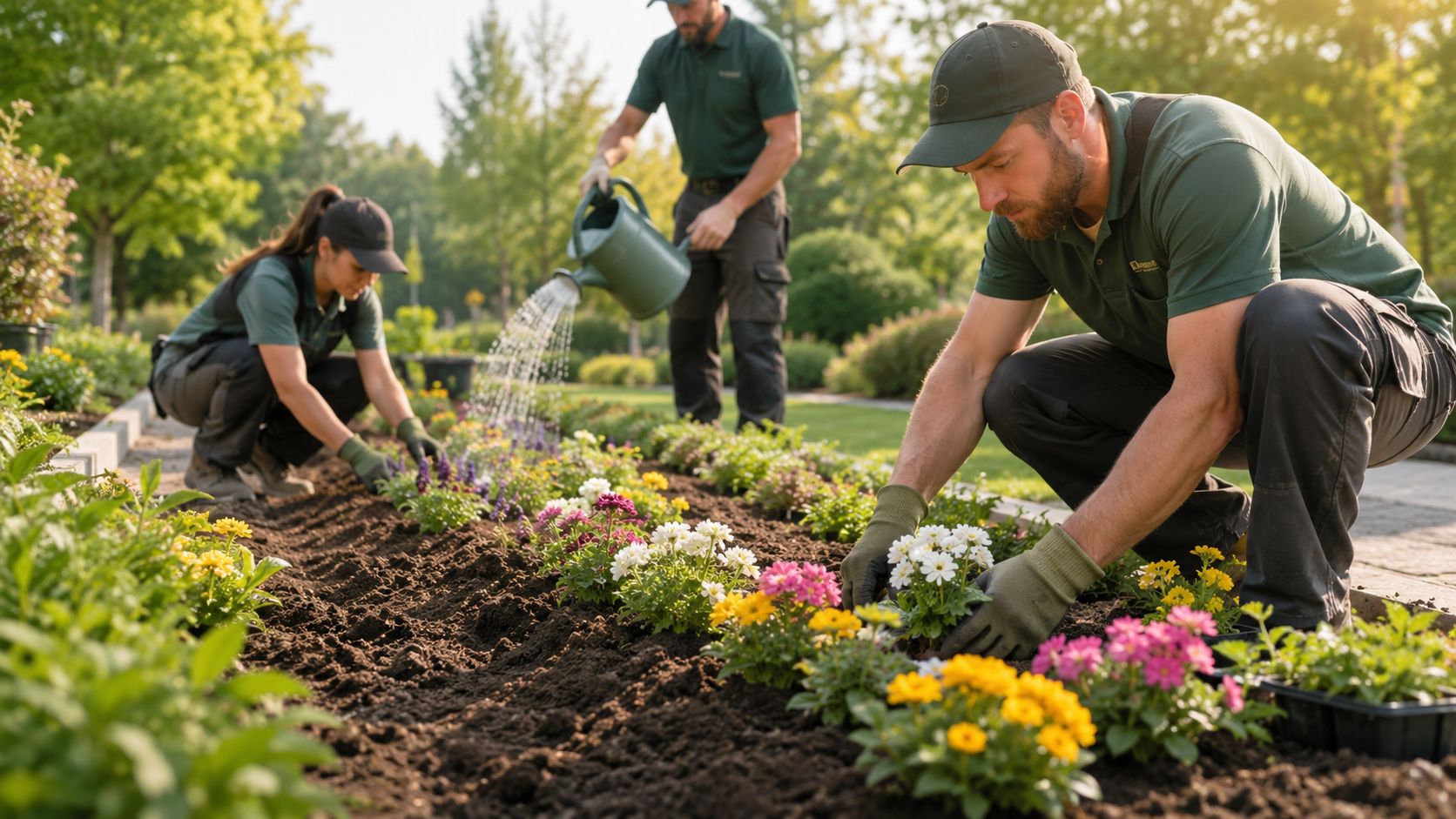
What a professional installation day should look like
A disciplined seasonal color installation usually follows a clear sequence on site.
First, crews set the layout before planting begins. That helps avoid crowded centers, uneven color blocking, and awkward gaps at curves or corners. Then plants go in at consistent depth, with root balls settled firmly but not buried too deep. After that, beds are watered thoroughly to eliminate air pockets and reduce transplant shock.
Several practical details separate clean installs from sloppy ones:
- Proper spacing keeps beds full without forcing unhealthy competition later.
- Planting lines set back from edges reduce washout and protect roots near hardscape.
- Immediate cleanup matters because loose soil on sidewalks and curbs makes even a fresh install look unfinished.
- Mulch refresh should support the design instead of burying crowns or hiding poor grade.
If a crew is rushing, you'll usually see it at the edges first. Curves won't read well, spacing will drift, and the bed won't look intentional from the street.
Maintenance is what protects the display
In this scenario, many managers get burned. The flowers looked excellent for a week or two, then performance dropped because nobody adjusted the water, removed spent blooms, or addressed pest and disease pressure early.
A working maintenance program should include regular visits for:
| Maintenance task | Why it matters |
|---|---|
| Deadheading and grooming | Keeps blooms presentable and redirects plant energy |
| Irrigation monitoring | Matches watering to weather and plant maturity |
| Weed control | Prevents visual clutter and resource competition |
| Fertility follow-up | Supports color and vigor without forcing weak growth |
| Targeted replacement | Corrects isolated failures before beds look patchy |
Commercial beds don't have to be perfect every day. They do need to stay intentional. That means catching issues while they're small.
The best seasonal color programs don't avoid every problem. They respond before the public notices the problem.
Mulch depth also matters more than some teams think. If the bed loses coverage, weeds gain ground, soil temperatures swing harder, and moisture management gets less consistent. On properties with tight labor budgets, that usually becomes visible before anyone wants to approve an enhancement.
In DFW and San Antonio, maintenance teams also need judgment about weather swings. A cooler stretch can reduce water demand sharply. A run of intense heat against south and west exposures can require tighter oversight. Programs fail when crews follow a fixed routine instead of reacting to site conditions.
Budgeting for ROI and Selecting the Right Partner
A seasonal color program can look fine on installation day and still waste money by week three. That usually happens when the budget covers plants but not performance.
On commercial properties in Dallas-Fort Worth and San Antonio, return comes from staying power. The beds at the main entry, leasing office, monument signage, or patient drop-off need to hold color through heat swings, rain events, irrigation problems, and regular foot traffic. If the display collapses early, the low bid was expensive.
Seasonal color should be budgeted the same way managers budget other visible property improvements. Start with the business purpose. Support leasing. Improve arrival experience. Protect asset presentation during tours, renewal periods, and high-traffic seasons. Then assign dollars to the beds that influence those moments most.
Year-end expectations add another layer. The Christmas Decorative Products Market reached $12.68 billion in 2025 and is forecast to grow to $19.36 billion by 2033, according to Grand View Research on the Christmas decorative products market. On many commercial sites, that demand carries over into winter color, holiday enhancements, and stronger entrance presentation.
How to budget for results instead of appearances
Low pricing often comes from scope cuts that are easy to miss in a proposal review. Bed prep gets reduced. Plant spacing gets stretched. Irrigation inspection is treated as optional. Replacement terms stay vague. The install may still look acceptable at turnover, but the program has very little margin for Texas weather or site-specific stress.
Review proposals across the full life cycle, not just the install date:
- Placement strategy. Are dollars focused on the highest-visibility zones or spread too thin across the whole property?
- Preparation scope. Does the price include soil work, cleanup, edging, and a real review of water coverage?
- Installation detail. Are plant sizes, spacing, varieties, and bed quantities clearly stated?
- Care after install. Who handles grooming, monitoring, replacements, and service adjustments if performance drops?
A practical budget structure uses two tiers. Fund the showcase beds that tenants, visitors, and ownership notice first. Treat secondary beds as flexible enhancements. That approach protects the public-facing areas while giving ownership room to tighten or expand spend without weakening the whole presentation.
If you need a stronger screening process, this guide on what property managers should look for in a commercial landscaping partner gives a useful framework.
How to vet a commercial grounds maintenance partner
Choose based on operating discipline, not plant photos.
Ask questions that expose how the provider manages risk:
- How do you adjust plant selection between DFW and San Antonio? A qualified team should talk about heat, exposure, freeze timing, and seasonal transitions, not just list popular varieties.
- Who owns irrigation review before and after installation? If there is no clear answer, expect preventable losses.
- What is the replacement policy? Managers need to know what gets replaced, what documentation is required, and how quickly corrections happen.
- Who manages communication? A dedicated account manager matters when approvals, tenant schedules, and event dates affect service timing.
- Can you show comparable commercial properties? Retail, medical, office, multifamily, and HOA entrances do not all operate the same way.
For broader market context outside your immediate service area, a directory like Top landscape companies in Kingwood TX can help show how commercial buyers compare providers by responsiveness, service mix, and local fit.
One practical option in North and Central Texas is Prestonwood Commercial Services, which provides commercial seasonal color, irrigation audits and repairs, maintenance, and enhancement work across Dallas-Fort Worth and San Antonio. The key factor is the service model. Property managers get better results when one provider can connect design intent, bed preparation, water management, and ongoing care instead of leaving gaps between crews.
The right partner reduces noise in your week. Fewer reactive emails. Fewer emergency replacements before a visit from ownership. Fewer beds that need an explanation instead of delivering the image the property is paying for.
If you need a seasonal color program that's built for Texas conditions and commercial expectations, Prestonwood Commercial Landscape Services can help assess your site, prioritize high-impact areas, coordinate installation timing, and support the irrigation and maintenance work that keeps the investment performing.