
A crape myrtle can make a property look polished all summer, or it can sit there with lush leaves and no color right when tenants, guests, and visitors are most likely to notice. On a commercial site, that isn't a small detail. It affects how the entire property reads from the parking lot, the entrance drive, and the front walk.
The challenge is that crape myrtle bloom time isn't a single date on the calendar. It moves with climate, cultivar, pruning, sunlight, and water management. For a property manager, the core responsibility is not just knowing when blooms start, it's building a planting and maintenance plan that keeps curb appeal predictable across multiple sites.
Table of Contents
- Understanding the Crape Myrtle Bloom Cycle
- How Region and Climate Zone Affect Bloom Time
- Strategic Cultivar Selection for Season-Long Color
- Four Key Factors That Influence Flowering
- A Commercial Maintenance Calendar for Peak Blooms
- Troubleshooting Why Crape Myrtles Fail to Bloom
- Frequently Asked Questions About Crape Myrtle Blooms
Understanding the Crape Myrtle Bloom Cycle
A property manager usually gets the same complaint from two sites, one is already flowering and the other still looks green. The delay usually comes from plant biology, not the calendar. Crape myrtles bloom on new growth, so spring shoot development determines when buds form and when the first flowers open North Carolina State University.
New growth is the trigger
That growth pattern sets the schedule. A warm spring shortens the gap between leaf-out and flower set, while a cool spring stretches it out. On many sites, bloom onset follows about 6 to 8 weeks after active spring growth begins, depending on cultivar and local climate North Carolina State University.
Practical rule: if a crape myrtle is pushing soft new shoots but hasn't bloomed yet, the plant is often still on schedule, not failing.
For commercial properties, first bloom depends less on a fixed date and more on how fast the plant moves from vegetative growth into flowering. In warm, sunny locations, that transition happens sooner. In shaded areas or where nitrogen is too heavy, the plant keeps making leaves and delays the floral display. For sites built around drought-tolerant planting strategies, that growth pattern is one reason crape myrtles are often used in commercial drought-tolerant tree plans, where predictable summer color matters.
What the seasonal window really means
Most references describe crape myrtles as long-blooming summer plants, often flowering for about 90 to 120 days and continuing until the first fall frost My Gardening Zone. In practice, that usually means color from late spring or early summer into fall, as long as temperatures stay warm and frost arrives late.
That long window is why they fit commercial plantings so well. A single planting can carry front-entry color across much of the season, but only if the site is managed to avoid excess leafy growth. The plants are dependable, yet they still respond to pruning timing, exposure, and fertility, which makes bloom scheduling a maintenance issue as much as a planting choice.
How Region and Climate Zone Affect Bloom Time
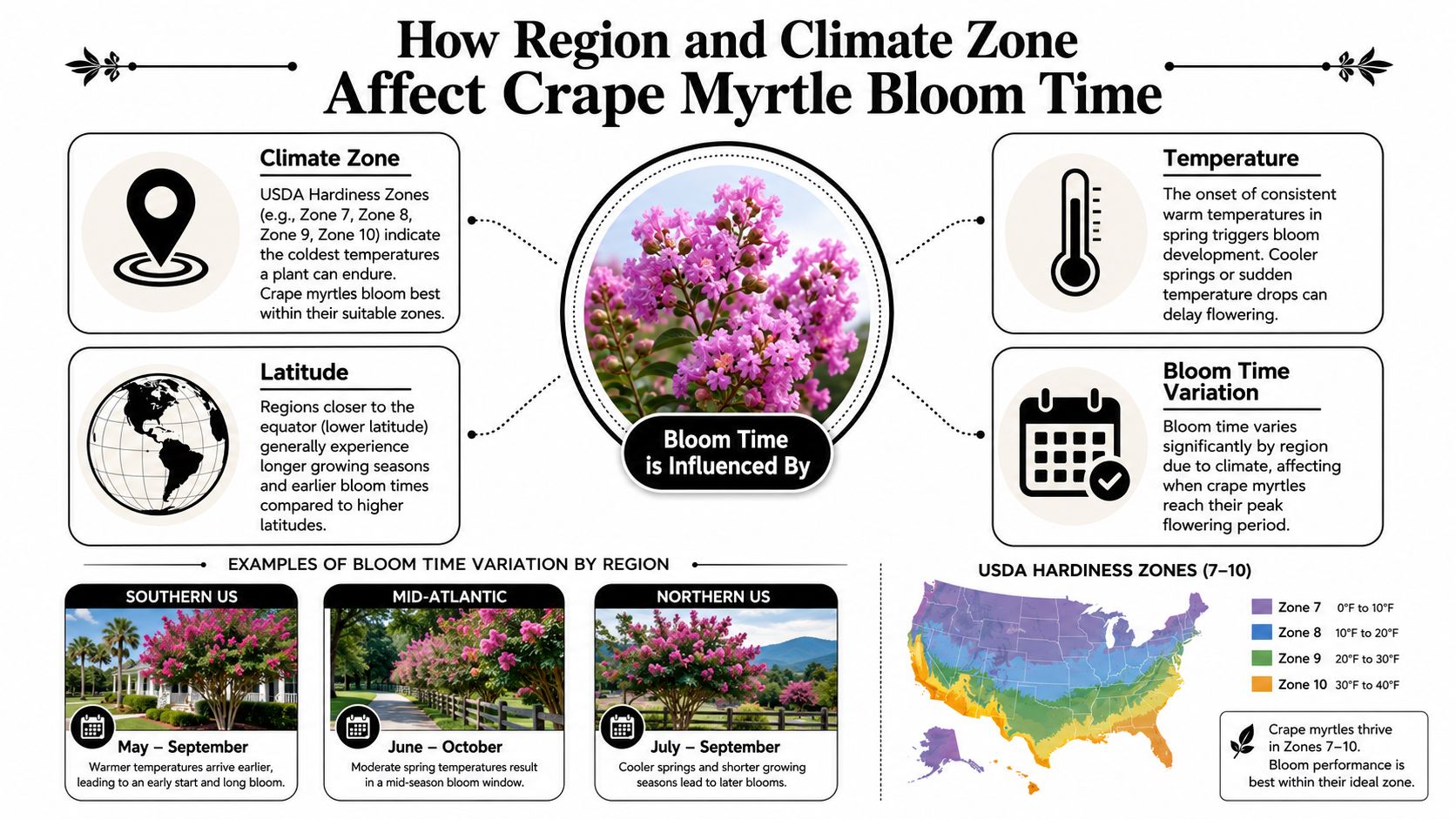
A property can have the same cultivar in two locations and still get a different bloom schedule. Warmer sites push crape myrtles into flowering sooner, while cooler sites hold them back. Latitude, spring heat, and local exposure all affect when the first color opens, so bloom time is a site condition, not a fixed calendar event LSU AgCenter timing guidance.
Climate zone sets the baseline
Climate zone gives you the first planning frame. In USDA zone 9, bloom can begin much earlier than it does in cooler zones, while zone 7 and zone 6 usually shift the first flush later in the season. For commercial sites, that difference changes how you schedule visual coverage across a property portfolio and how you set client expectations for first color.
A site in a warmer part of Texas may break bloom while another property farther north is still building canopy. That matters for mixed portfolios, because one generalized maintenance calendar will not keep every location on the same visual schedule. If you are planning around heat, irrigation limits, and durable plant selection, drought-tolerant trees in Texas is a useful planning reference.
Local temperature changes the schedule
Regional climate sets the window, but local temperature decides how quickly plants move through it. In practice, crape myrtles usually start somewhere in the warm season and keep going until frost, with bloom timing shifting earlier in warm exposures and later in cool ones LSU AgCenter timing guidance. Property managers should expect the first flowers to arrive sooner on south-facing beds, sheltered courtyards, and heat-reflective hardscape edges.
That variation is why timing checks need to happen by site, not by city name alone. A shaded entry, a wind-exposed median, and a protected courtyard can each run on a different schedule even within the same campus. For managers focused on presentation standards, the right approach is to pair bloom timing with tips for improving curb appeal, then adjust pruning and plant placement to match the exposure on each property.
Strategic Cultivar Selection for Season-Long Color
For a property manager, predictable bloom comes from treating crape myrtles as a scheduling tool, not a single planting choice. Different cultivars open at different points in the warm season, so the right mix can keep entrances, medians, and street-facing beds in color longer without forcing every site to peak at once.
Compare cultivars before you plant
A blend of early, mid, and later bloomers helps spread color across the season. That gives one portfolio a staggered display instead of a single flush that fades together. The cultivar timeline below shows how much the plant choice can shift the visual calendar, as summarized by My Gardening Zone.
| Commercial Crape Myrtle Cultivar Bloom Schedule | Typical Bloom Start | Bloom Duration | Best Use Case |
|---|---|---|---|
| Natchez | Early June | 100 to 120 days | Early color where long-season coverage matters |
| Dynamite | Early July | 90 to 110 days | Midseason impact near entrances and focal points |
| Tonto | Mid-July | 80 to 100 days | Later color for staggered portfolio planning |
This kind of staggered planting supports season-long color without depending on extra inputs. It also reduces the risk of a site blooming hard, then dropping off all at once, which is a common weak point in commercial presentation planning.
For broader palette planning, the internal guide on flowering plants for full sun is useful when crape myrtles need to be paired with other summer performers.
Match the variety to the site's role
A tree near a main entry needs a different cultivar choice than one placed in a back lot. If the goal is front-door curb appeal, a longer window such as Natchez can fit well. If the goal is to extend visual interest later in the season, Tonto may be the better fit. Dynamite sits in the middle for properties that need a strong midsummer color break.
That choice should also align with broader tips for improving curb appeal. A planting plan reads as intentional when the bloom calendar is selected to match how each part of the site is used and viewed.
Four Key Factors That Influence Flowering
A property can have the right cultivar in place and still miss the bloom window if day-to-day care is off. Crape myrtles are adaptable, but they still respond to predictable inputs, especially light, water, and fertility. In commercial work, those inputs decide whether the plant puts energy into flowers or into excess foliage that looks full but does little for curb appeal.
Sunlight, irrigation, and fertilizer all pull the plant in different directions
Crape myrtles need full sun, at least 6 hours of direct light daily Monrovia care guide. If nearby trees, walls, or building mass block that exposure, bloom density usually drops. The plant can still look healthy in shade, but the floral display will not match an open median or parking lot island.
Practical rule: if a crape myrtle gets less than full sun, it will not perform like the same plant in a bright, open site.
Water matters most in the stretch just before bloom, during bloom, and just after bloom. The plant does not want constant saturation, but it does need steady moisture when buds are forming and flowers are opening, especially in dry weather. Crews that let beds swing from drought stress to heavy watering usually get erratic bloom performance and shorter color runs.
Fertility should support flowers, not foliage
Heavy nitrogen pushes crape myrtles toward leafy growth rather than flower production. That pattern shows up often on commercial properties where turf fertilization influences nearby ornamental beds. The plant may look vigorous from a distance, but the bloom display stays thin.
If a soil program is being reviewed, deep tree root fertilization is a useful point of comparison for how nutrient delivery can be handled in larger cultivated areas. The goal is restraint. Crape myrtles usually respond better to balanced nutrition than to aggressive feeding, and that matters when the site has to keep a predictable color schedule.
Pests and disease pressure matter too. Insects, leaf spots, and other stressors can reduce flower performance even when the plant still appears serviceable. That is also why maintenance teams often pair bed monitoring with using cedar mulch for pest control, especially on properties where ornamental beds sit close to public entry points. A stressed plant spends its energy on recovery first, then on blooms.
A Commercial Maintenance Calendar for Peak Blooms
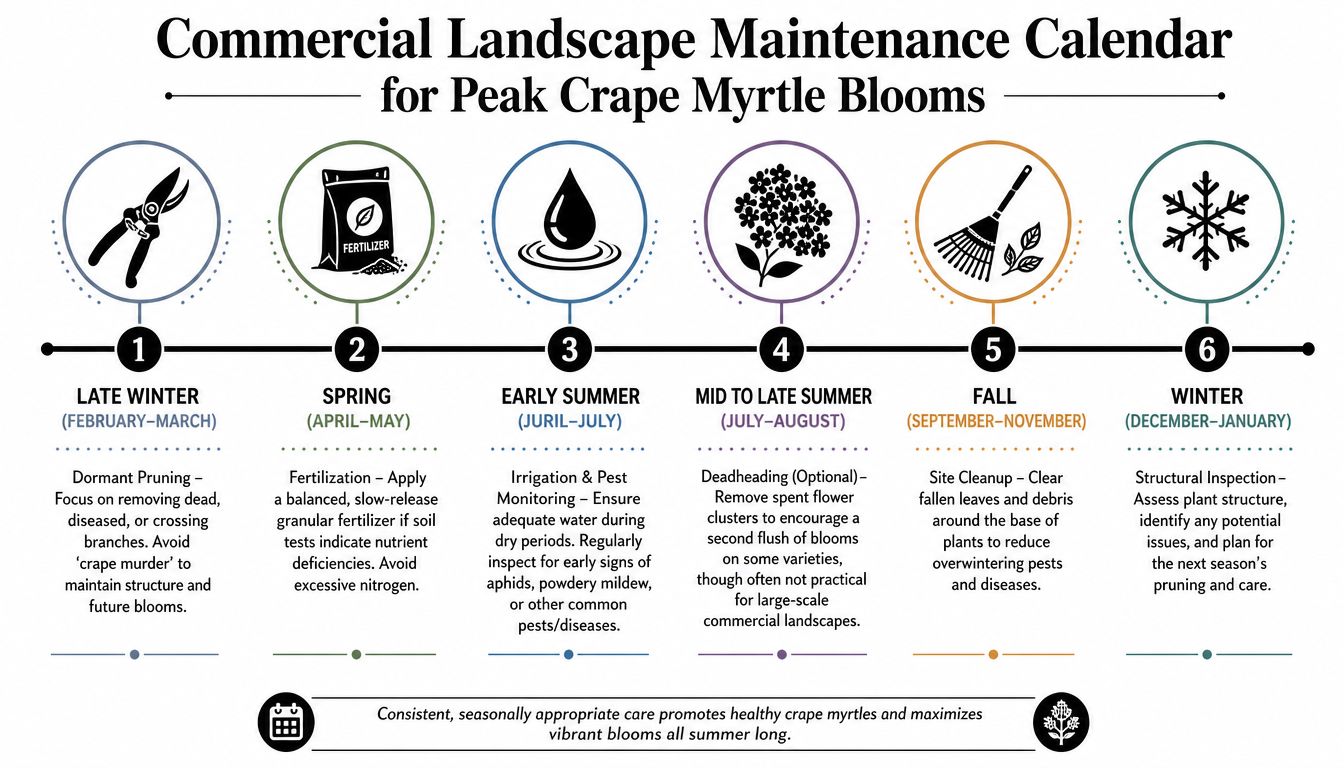
The best bloom results come from timing, not guesswork. A commercial maintenance calendar lets crews do the right work before the plant starts making flowers, then stay out of the way while it blooms. That's the operational difference between an outdoor space that looks planned and one that looks reactive.
Late winter and spring set the structure
Late winter is the time for structural pruning, not heavy reshaping. Remove dead, crossing, or diseased wood, then leave the plant's framework intact so it can push new growth cleanly. The goal is to support future bloom wood, not strip it away.
Spring is when crews should keep fertilizer conservative and intentional. If the site has a documented deficiency, use a balanced approach rather than a high-nitrogen push. This is also the season to confirm irrigation coverage before heat arrives, because bloom performance depends on the plant having water when the flower cycle starts.
Summer is about protection and consistency
Early summer is the period for close observation. Watch irrigation frequency, monitor for pest pressure, and keep eyes on beds that dry faster than others. If a site has a mulch program, some teams consider using cedar mulch for pest control as part of a broader bed-management discussion, but mulch should still be selected for overall site conditions and not as a replacement for scouting.
Mid to late summer is also the window when deadheading can encourage a rebloom on some varieties, although that isn't practical on every large commercial site. The work has to fit the property's labor schedule and appearance standards. For many portfolios, the smarter move is to protect the first bloom and keep the rest of the bed clean.
A practical option for some properties is to coordinate these tasks through a service team like Prestonwood Commercial Grounds Services, especially where irrigation checks, seasonal color, and scheduled pruning need to line up across multiple sites. The value is in consistent timing, not in doing more work than the plant needs.
Troubleshooting Why Crape Myrtles Fail to Bloom
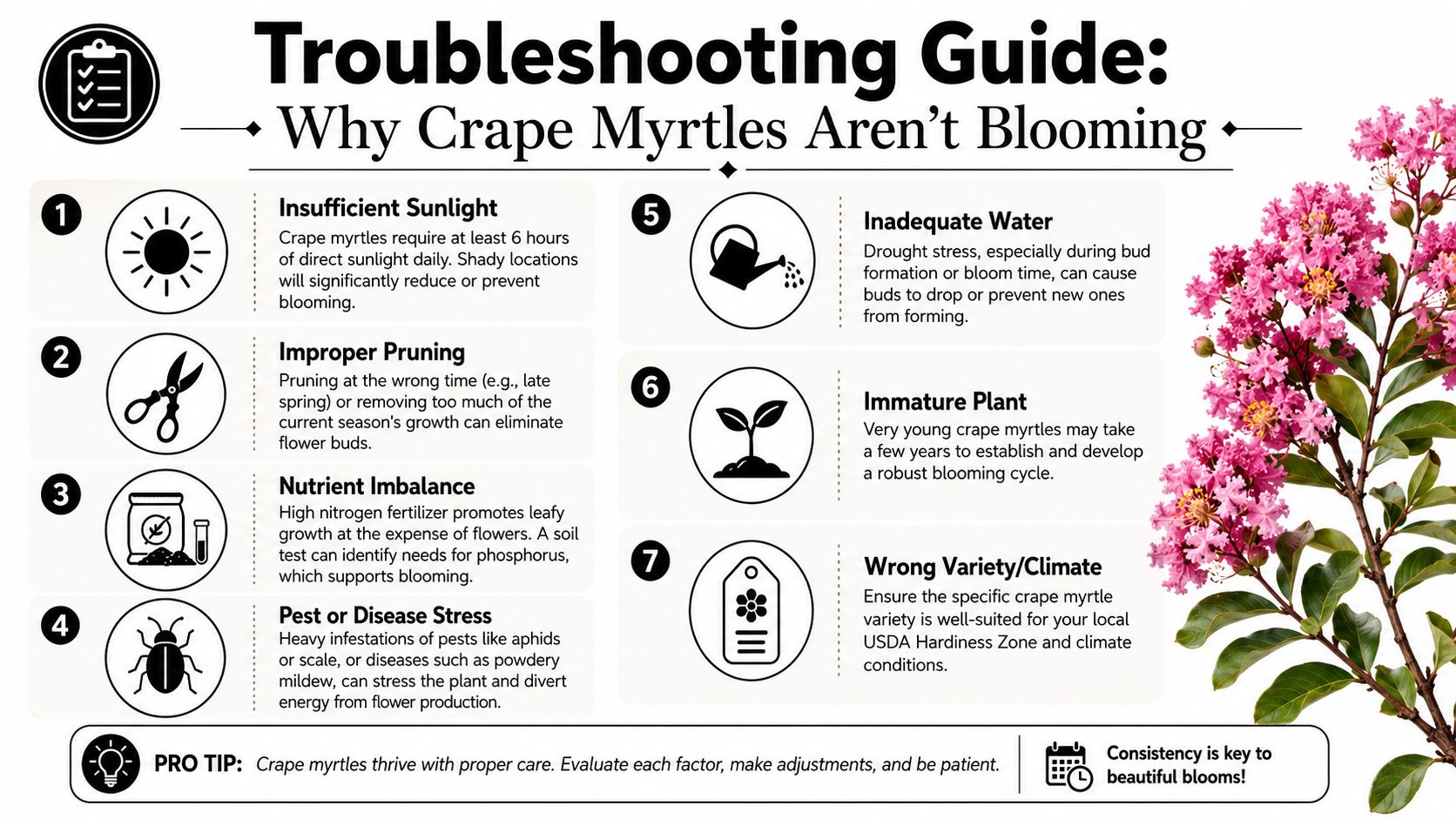
A crape myrtle that misses its bloom window is not always failing. On managed properties, the first job is to separate a normal delay from a site problem that needs correction. A cultivar that blooms later than expected may only need time. A plant in shade, under heavy nitrogen, or cut back too hard needs a different response.
Start with timing, then move to stress
Bloom timing can shift with cultivar and climate, so a plant that looks late may still be behaving normally Rainbow Gardens. In warmer zones, flowering can begin much earlier than it does in colder areas, and the gap between sites is large enough that managers should avoid judging every planting by the same calendar. A late-flowering shrub on one property may be right on schedule for another.
After timing is ruled out, inspect the site conditions. Shade is usually the first limitation, followed by excess nitrogen, then pruning history. Hard cuts can push the plant into recovery growth instead of flowering, and a tree that has been shaded by a maturing canopy may lose bloom performance gradually over time.
Use a simple diagnostic order
- Check sun exposure first: the plant needs full sun to perform properly.
- Review the pruning record: late spring cuts can remove developing bloom wood.
- Look at fertilization history: high nitrogen often produces leaves instead of flowers.
- Inspect for water stress: drought during bud formation can interrupt the bloom cycle.
- Consider plant age: young plantings may still be establishing themselves.
- Confirm cultivar and zone fit: the plant may be scheduled to bloom later.
That order saves time because it separates plant behavior from management errors. It also gives property staff a clear way to explain the situation to stakeholders without guessing. When the cause is light, fertility, or pruning, the fix is usually straightforward. When the issue is plant age or cultivar timing, the correct response is patience and a better match for the site on the next installation cycle.
Frequently Asked Questions About Crape Myrtle Blooms
Does deadheading help crape myrtles bloom again
It can, if the cultivar has the habit of reblooming and the site has enough sun, water, and basic care. Mid-summer deadheading can keep flowers coming on some plantings, but on large commercial properties the labor often does not justify the result unless the bed is highly visible. In practice, I treat deadheading as a finishing task, not a rescue plan. If crews are short on time, keep the plant irrigated through bloom and avoid stress before spending labor on spent flowers.
Will a late frost ruin this year's flowers
A late frost can push bloom later, especially if it slows spring shoot growth. Since crape myrtles flower on new growth, anything that slows that growth delays the first flush. Warm springs can flip the schedule the other way, and the first flowers may show up much sooner than expected North Carolina State University.
Why do I get lots of leaves but almost no flowers
That pattern usually points to too much nitrogen, too little sun, or both. The plant puts its energy into foliage instead of bloom production Monrovia care guide. On commercial sites, fertilizer spillover from adjacent turf is a common cause, especially when crews are feeding lawns on the same schedule as the shrub beds. Shade from nearby trees or buildings can have the same effect, so both the nutrition program and the light exposure need to be checked before the plant gets blamed.
How soon after planting will a new crape myrtle bloom
A new planting does not always bloom right away because the plant has to establish roots and then push seasonal shoot growth. Since flowers form on new growth, the first strong bloom depends on how well the plant settles in during spring and early summer. Young material often spends the first stretch of the season building structure rather than making a full flower display, so the bloom schedule can be lighter than the tag photo suggests North Carolina State University.