
Your tenant inbox is already full, and now the site superintendent says the fire sprinkler system didn't pass a routine test. Maybe it's a valve left shut, a pressure issue, or a zone that looks fine on paper but isn't delivering water where it should. Either way, you need a straight answer fast, because commercial sprinkler system repair is never just a plumbing task. It's a safety issue, a compliance issue, and a budget issue all at once.
Property managers get burned by the same mistake over and over, they treat sprinkler work as a small fix until it becomes a documented impairment. That's the wrong mindset. In major commercial markets, the cost of delay shows up in failed tests, tenant disruption, and avoidable exposure, while the repair often starts with the basics, open valves, intact supply, and a system that's been maintained. NFPA's long-running data shows sprinklers were present in an estimated average of 52,948 structure fires per year from 2017 to 2021, about 11% of all structure fires, and they operated in 92% of those incidents and were effective in 97% of incidents, yet those sprinkler-protected fires still caused an annual average of 36 civilian deaths, 1,002 civilian injuries, and $1.2 billion in direct property damage, which is why reliability matters so much in commercial facilities (NFPA sprinkler experience report).
If you manage office, retail, industrial, healthcare, or campus property, you don't need vague reassurance. You need a practical way to identify what failed, what it means, who should fix it, and what to do before the next inspection or emergency forces your hand.
Table of Contents
- Introduction to Commercial Sprinkler System Repair
- Common Sprinkler System Failures
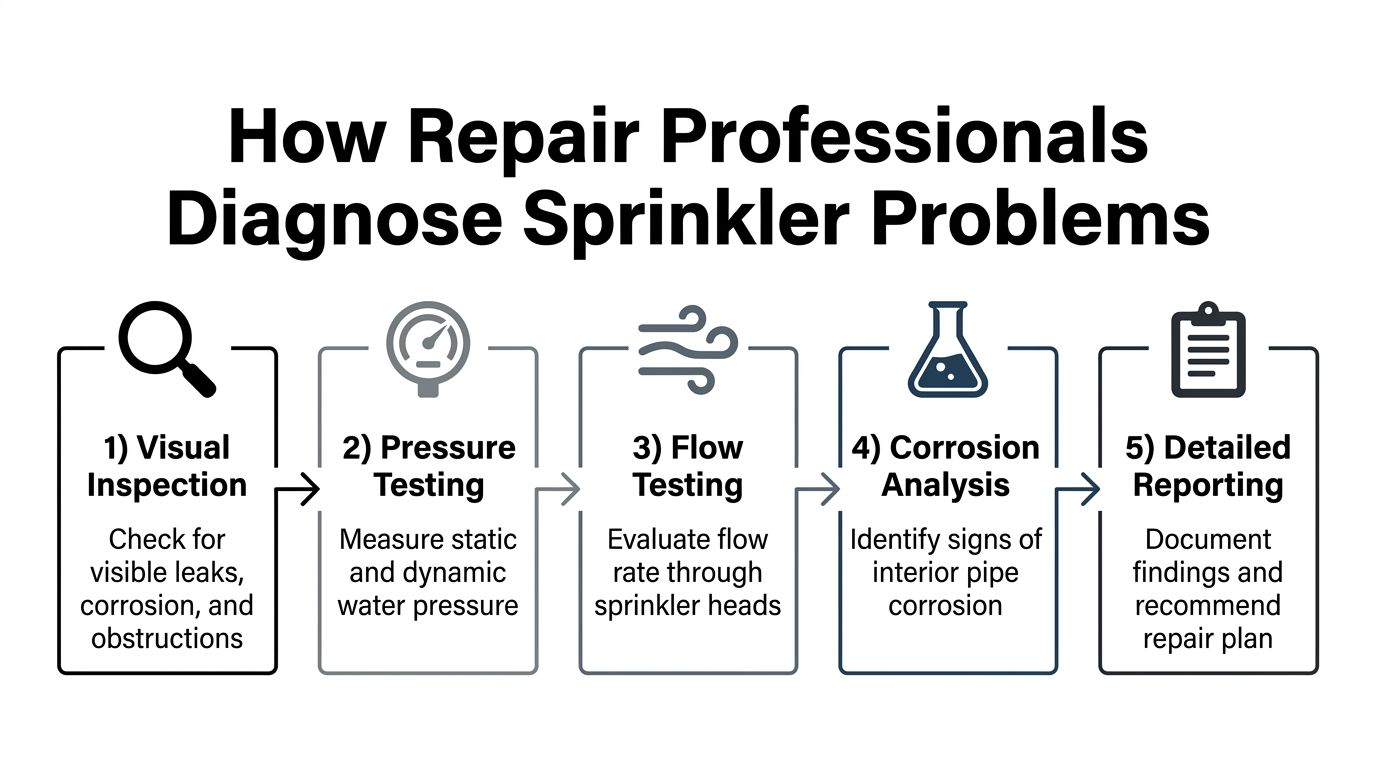
- How Repair Professionals Diagnose Sprinkler Problems
- Realistic Cost Ranges for Commercial Sprinkler Repair
- Emergency Response Steps When Your System Fails
- How to Choose the Right Sprinkler Repair Contractor
- Preventative Maintenance and Water Management Strategies
- Conclusion and Next Steps
Introduction to Commercial Sprinkler System Repair
A regional property manager once told me the worst phone call he got that quarter wasn't about a break-in or a roof leak. It was a Monday morning alarm test that exposed a sprinkler zone no one had properly verified in months. The controller looked normal, the building looked normal, and the system still wasn't ready when it mattered.
This is the reality of commercial sprinkler system repair. The visible failure is often just the symptom, not the problem. Behind it sits a shut valve, pressure loss, a clogged or damaged component, a neglected inspection item, or a maintenance decision that looked harmless at the time and expensive later.
What property managers need to understand first
The biggest mistake is waiting until water is dripping or an alarm is sounding before you ask the right questions. In commercial properties, repair work should be tied to performance, compliance, and documentation, not just to the obvious defect. NFPA guidance makes that clear through recurring checks, testing, and internal inspections that catch deterioration before it becomes an outage.
Practical rule: If a repair doesn't restore function, verify compliance, and leave a paper trail, it isn't finished.
This guide takes a facility-manager view, not a technician-only view. You'll see how to spot the common failures, how a real diagnosis should unfold, what repairs cost, and how water management habits can reduce future work instead of feeding it. That perspective matters just as much in common areas and irrigation zones as it does in mechanical rooms, because sloppy water control creates avoidable pressure on both systems.
If you've got an active issue now, treat it as a business risk, not a maintenance ticket. If you're planning ahead, use this as the framework for smarter budgeting, tighter contractor oversight, and fewer surprises during inspections. A disciplined approach to repairs protects uptime, limits repeat labor, and keeps you from paying twice for the same problem.
Common Sprinkler System Failures
Most property owners think of a sprinkler failure as a broken head or a visible leak. Those happen, but they're not the whole picture. The more dangerous failures are the ones that look ordinary from the ceiling grid, yet leave a zone underperforming, shut down, or out of tolerance when the building needs it most.
The failure patterns that show up most
NFPA-derived summaries report that 59% of sprinkler failures involved someone turning the system off, while 51% were related to water dispersal concerns, 30% tied to water supply or pressure problems, 17% came from manual intervention, and 11% involved lack of maintenance or damaged components (NFPA-linked failure breakdown). That's the part too many managers miss. The majority of failures aren't dramatic hardware blowups, they're operational mistakes or maintenance gaps.
A shut valve can happen after work in a mechanical room. A pressure issue can hide behind a gauge that hasn't been checked closely enough. Manual intervention can follow a contractor's well-meant but poorly documented change. And a dirty, damaged, or neglected component can sit until flow demand rises and the zone underperforms.
What to look for during a walkthrough
Use a simple mental checklist.
- Valve position and supervision: Confirm critical valves are open, tagged, and accessible.
- Pressure behavior: Watch for gauges that don't match expected conditions or drift over time.
- Visible distress: Look for rust staining, leakage, broken heads, or damp ceilings.
- Recent work history: Ask whether anyone recently isolated the system, modified the zone, or replaced equipment.
- Coverage clues: Uneven turf wetting or dry spots can signal a distribution problem rather than a dead system, especially in adjacent areas.
A system that looks “fine” from the hallway can still be underperforming in the area that matters.
The point is simple. Don't assume the obvious symptom is the root cause. Treat every failure as a chain of conditions, because that's usually what it is.
How Repair Professionals Diagnose Sprinkler Problems
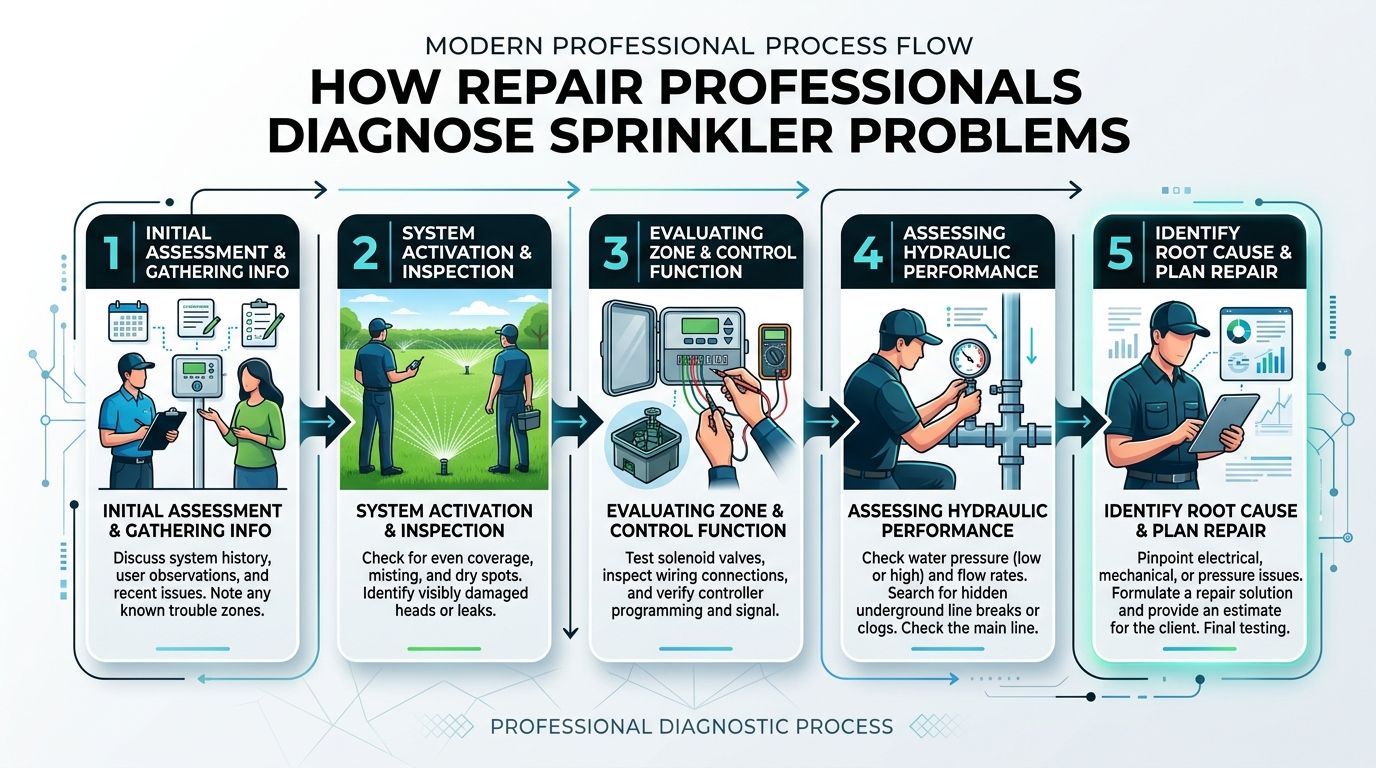
A good technician doesn't start by swapping parts. They start by isolating the fault. In commercial work, that discipline matters because the wrong repair wastes money and leaves the problem in place.
What a real diagnostic sequence looks like
The highest-value technical work in commercial sprinkler system repair is usually hydraulic troubleshooting. First, the technician verifies the controller-mapped zone. Then they isolate whether the failure sits in the mainline or lateral piping, the valve manifold, or the head and nozzle set, because each fault creates a different pressure-loss pattern and coverage deficit (sprinkler repair diagnostic approach).
That sequence should feel methodical, not rushed. If a contractor jumps straight to replacing heads without checking pressure or confirming the correct zone, they're guessing. Guessing is expensive.
You can compare that mindset with the structured approach described in the MA Hydraulics troubleshooting method, which is useful because it reinforces the basic discipline of isolate, test, confirm, and only then repair. That's the standard you want on a commercial site.
What the technician should prove to you
A credible diagnosis usually answers four questions clearly.
- Where is the problem? The zone, line, valve, or emitter set should be identified.
- What kind of problem is it? Pressure loss, blockage, control issue, or mechanical damage.
- Why did it happen? Wear, obstruction, poor adjustment, or an upstream system issue.
- What gets fixed now versus later? Some issues need immediate correction, while others belong in a broader remediation plan.
Uneven precipitation or a partially stuck valve can create chronic under-irrigation in high-traffic commercial properties even when the controller appears to be operating normally. That's why a “looks fine” inspection isn't good enough. You want evidence, not assurances.
If a contractor can't walk you through their logic, they're not diagnosing, they're improvising.
Realistic Cost Ranges for Commercial Sprinkler Repair
Property managers hate vague estimates, and they should. A bid that shows up without scope usually means the contractor has not diagnosed the problem well, or they are padding for unknowns. Price should be tied to access, age, system complexity, and the actual repair path, not to a number that sounds neat in an email.
What Drives the Bill
Older systems cost more to repair because fittings crack, parts take longer to source, and corrosion hides in places you do not see until work starts. Access changes the labor fast. Buried lines, tight mechanical rooms, ceiling obstructions, and work that interrupts tenants all push the bill up because they slow the crew and raise the chance of follow-up work.
The cost driver is downtime. A sprinkler fault that sits unresolved can create water waste, inconsistent coverage, tenant complaints, and compliance headaches long before anyone calls it a fire risk. That is why repair decisions on commercial sites should account for both protection and water management. A system that leaks, misfires, or loses pressure can distort irrigation schedules, damage finishes, and leave you paying for repeated mobilizations instead of one clean fix.
If you need a wider cost frame for the water side of the property, the commercial irrigation repair cost guidance is a useful benchmark. It helps you compare how commercial water systems are usually scoped, while still keeping fire protection work in its own compliance lane.
Budgeting without getting trapped
Use a tiered budget approach. Small component repairs belong in routine maintenance. Zone problems, repeated leak calls, or pressure issues that keep returning belong in a corrective line item. If the repair is tied to a larger loss, bring in someone who knows documentation and claim handling, not just replacement work. For The Public Adjusters on commercial claims is a practical reference when you need to document impairment, property damage, and the cost of getting the system back into service.
Do not let a contractor sell you the cheapest fix if it only buys a short reprieve. A bad repair often costs more than the original failure because it adds another dispatch, another shutdown, and more tenant disruption. On commercial properties, savings come from solving the root problem once and avoiding a second outage next month.
Emergency Response Steps When Your System Fails
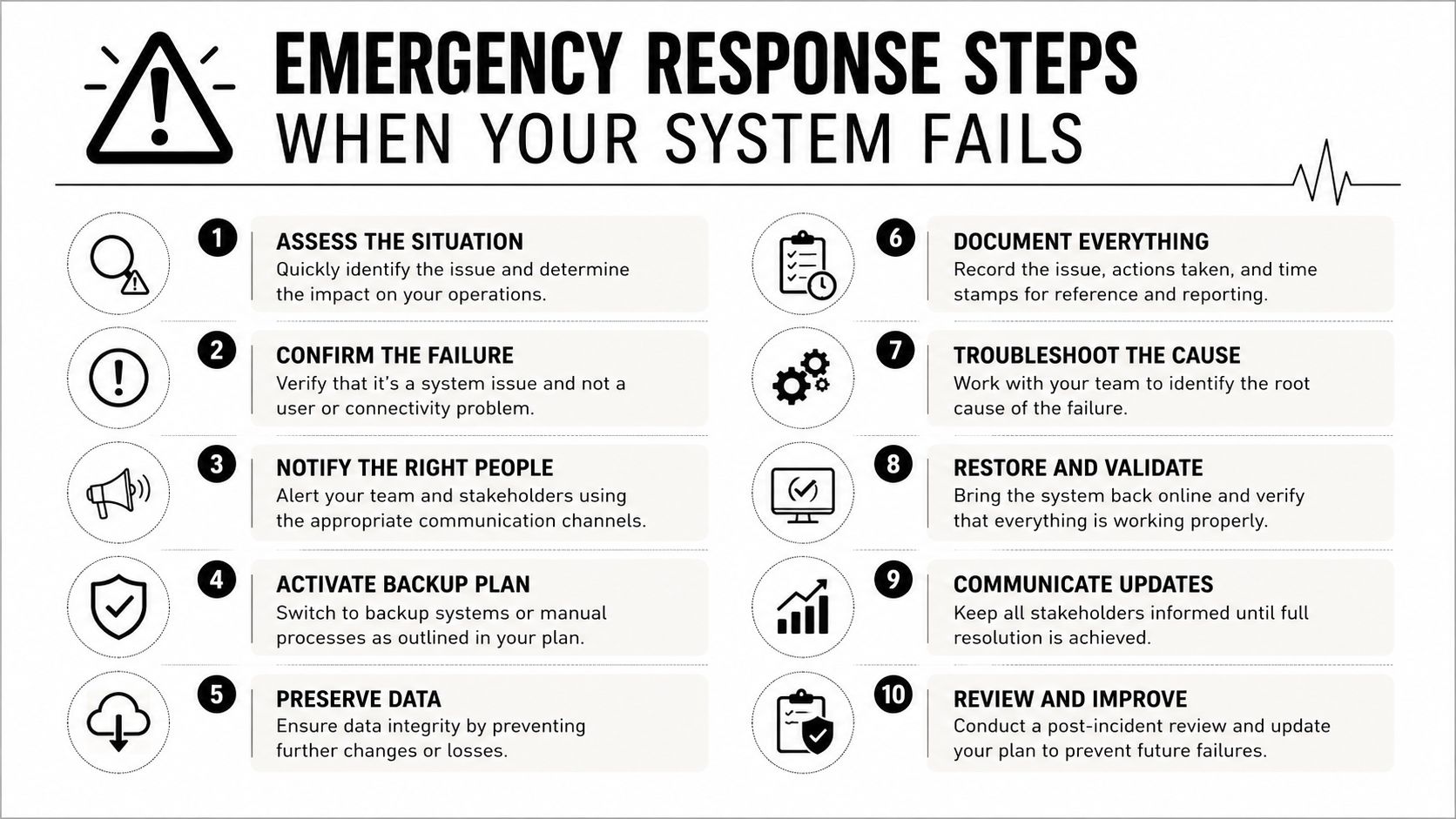
When a sprinkler system fails, one person should own the response. Usually that is the facility manager or on-site lead, and that person needs a clear sequence to follow so decisions do not split across the building team.
First Actions to Reduce Damage
Secure the affected area if there is standing water, exposed electrical risk, or any hazard to occupants. Identify the impairment as precisely as possible, because responders move faster when they know whether the problem is a head, pipe, valve, or supply issue. If the system has to be shut down or isolated, record exactly who did it, when it happened, and why.
If the failure looks tied to poor upkeep rather than a sudden break, pull the maintenance records and compare them with the current condition. A quick review of sprinkler system maintenance practices can help you separate a simple repair from a broader pattern of neglect.
Keep the response narrow. Protect the area, limit the impairment, and restore protection as fast as possible.
Communication and Documentation Are More Critical Than They Might Seem
Tell tenants or occupants what happened in plain language, without guessing about the cause. Notify the fire protection contractor, building leadership, and any required emergency contacts. If the impairment affects life safety coverage, decide quickly whether temporary protection or occupancy limits are needed.
Preserve photos, alarm logs, valve status notes, contractor arrival times, and every message about the outage. Those records are not busywork. They are what you will need if the repair turns into an insurance discussion, a code question, or a dispute about response time. If that part of the process gets messy, fair insurance settlement advice helps explain how documentation shapes the claim path.
A rushed, undocumented shutdown creates more risk than the original fault in many commercial properties. Water losses, tenant disruption, and compliance exposure all get worse when no one keeps a clean record. The best response is calm, narrow, and documented.
How to Choose the Right Sprinkler Repair Contractor
The wrong contractor turns a repair into a repeat problem. They patch the symptom, leave the defect in place, and hand you a compliance headache when the next inspection comes around. That is why choosing the right repair company needs more scrutiny than a routine maintenance vendor search. If you want a contractor who understands both repair and water control across the property, start by reviewing choosing the right repair company and then measure every bidder against the same standard.
What to verify before you approve work
Start with credentials and insurance. Then ask whether the contractor understands NFPA 25-based inspection and testing requirements, because repair and compliance are not the same job. A contractor who only talks about leaks and broken heads is thinking too small.
Most visible content focuses on leaks, broken heads, and zone failures, but NFPA 25-based guidance emphasizes recurring inspections, supervisory valves, backflow preventers, gauges, and five-year internal checks. That means the question for property managers is which repair triggers reinspection, documentation, or a licensed contractor (commercial sprinkler maintenance problems). That distinction keeps you from paying twice for the same work.
Questions that separate a pro from a bidder
- Can you explain the fault path? A serious contractor should describe what they tested and why.
- Will this repair require reinspection or documentation? They should know.
- What gets restored immediately, and what gets monitored? Good answers are specific.
- Do you handle both repair and records? If yes, ask how they document completed work.
If you also manage irrigation on the property, look for a vendor who understands water systems as connected infrastructure, not separate silos. Prestonwood Commercial Services provides commercial irrigation and water management work alongside broader service, which can help when you are coordinating site-wide water use and repair scheduling. Keep it in the running as one option, but do not treat it as a substitute for fire-protection-specific expertise.
Red flags you should not ignore
Walk away if the contractor gives you a price without diagnostic detail, refuses to discuss documentation, or treats reinspection as optional. Be cautious if they cannot distinguish a repair from a condition that triggers compliance work. That is not a small gap. It tells you they do not understand the job you are paying them to do.
Preventative Maintenance and Water Management Strategies
The cheapest sprinkler repair is the one you never have to make. That happens only when failures get caught early, records stay organized, and maintenance follows the actual demands of the property instead of a loose calendar reminder.
The inspection rhythm that keeps systems honest
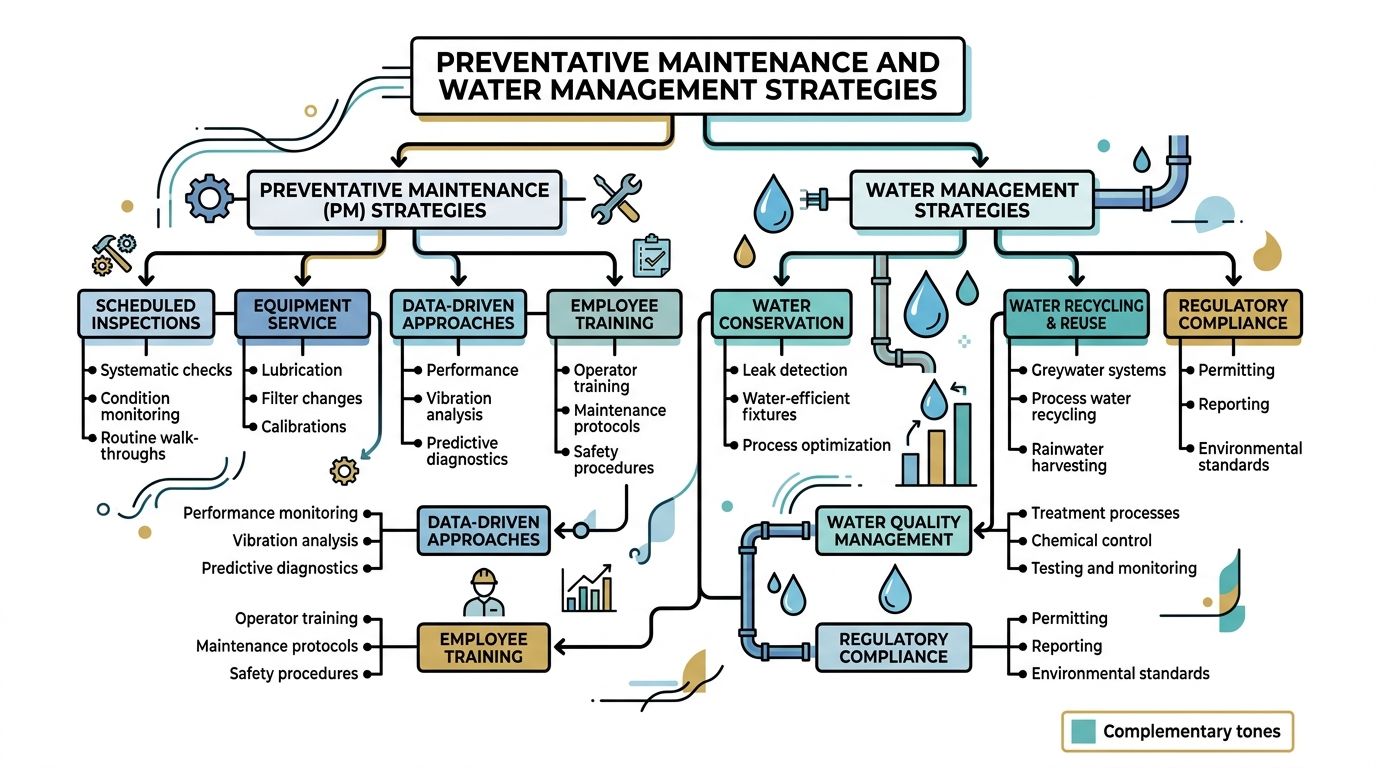
NFPA 25-based guidance calls for weekly checks of critical valves, monthly gauge inspections, quarterly alarm and supervisory-device testing, annual main drain testing, and five-year internal inspection of alarm and check valves and backflow preventers. For systems supplied through a backflow preventer or pressure-reducing valve, quarterly main drain testing is required.
That schedule is not paperwork for the shelf. It is how you catch pressure loss, worn valves, and supply issues before a zone fails. Main drain testing matters because the static-versus-residual pressure comparison exposes supply problems that visual checks will miss.
Water management is part of repair strategy, not a side issue
Commercial properties with irrigation infrastructure need a wider view of water performance. Brown turf is not always a failed sprinkler. It can come from compaction, shade, runoff, or poor coverage. Coverage gaps, arc misalignment, and pressure imbalance often sit lower on the repair list, but they still drain money when nobody audits them properly.
Sprinkler system maintenance should include more than fixing broken heads. It should also include zone checks, pressure review, seasonal adjustments, and a hard look at where water is wasted across the site. Prestonwood's maintenance and irrigation resources are useful in that context, especially when you need the grounds and the building's water systems managed as one operational program.
Don't wait for obvious failure before you act on uneven coverage. Small defects become recurring budget leaks.
For ongoing planning, review your service rhythm, your repair history, and your documentation together. If those three do not match, you are not maintaining the system. You are reacting to it.
Conclusion and Next Steps
Commercial sprinkler work should never be treated as a one-off plumbing fix. It's part of a wider facility strategy that protects occupants, preserves property value, and keeps you from losing time to avoidable downtime and documentation problems. The properties that stay out of trouble usually have one thing in common, they don't wait for a visible disaster before they pay attention.
If you're dealing with a failure today, start with containment, clear communication, and solid documentation. If you're choosing a contractor, demand a real diagnosis, a compliance-aware scope, and a repair plan that includes testing and records. If you're building a long-term program, follow the inspection cadence, verify valves and pressures, and look at water management across the site, not just inside the ceiling grid.
The smarter move is to manage repair as part of a maintenance system, not as a standalone emergency. That approach lowers repeat calls, reduces confusion during inspections, and gives you a much better shot at keeping the building ready when it counts.
Prestonwood Commercial Landscape Services helps commercial properties with irrigation audits, repairs, and water management as part of broader property care, which makes it a practical resource when site water issues and repair coordination start overlapping. If you want a partner that understands commercial property operations and long-term water performance, visit Prestonwood Commercial Landscape Services and see how their services fit your facility strategy.