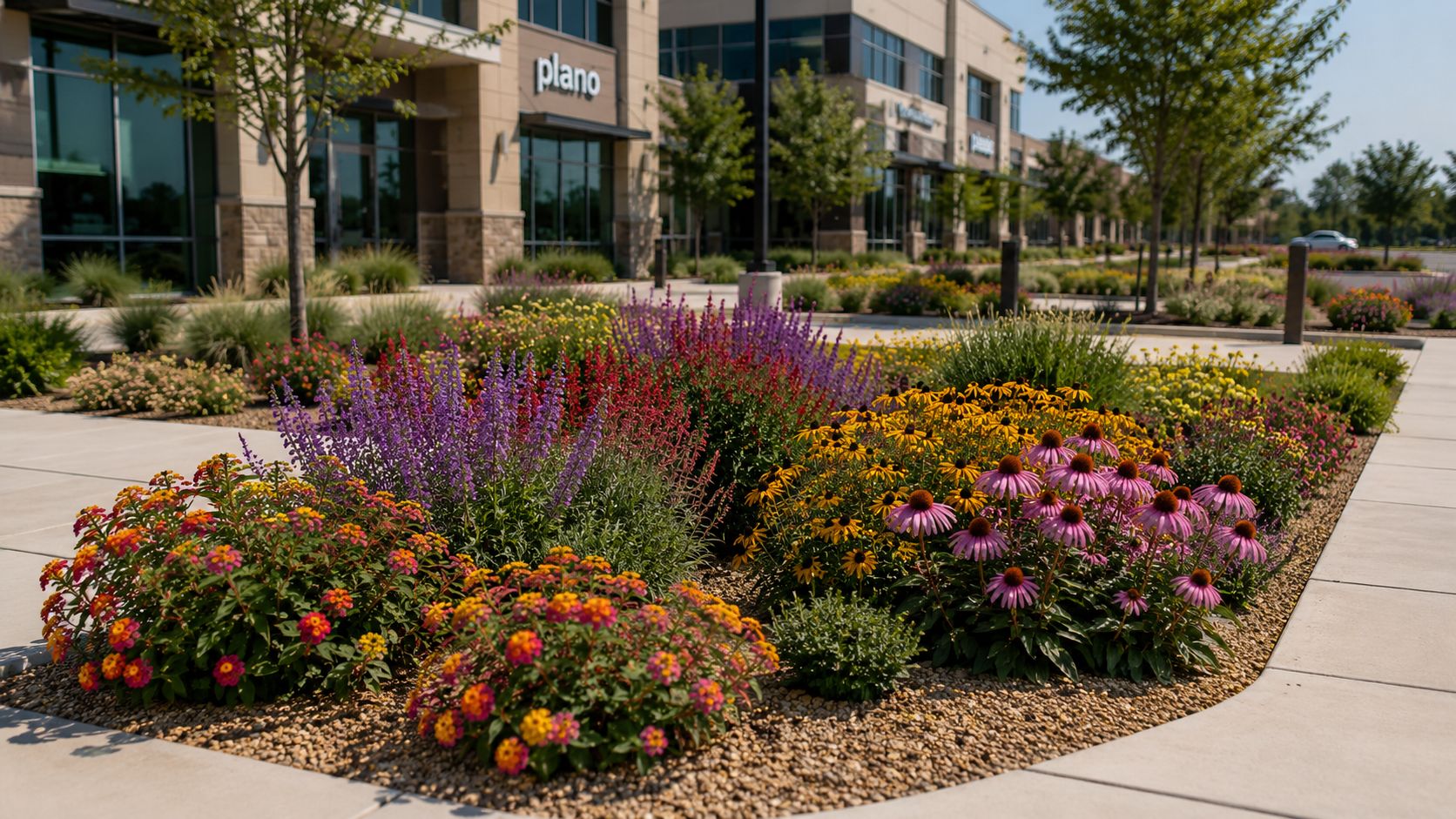
Beat the Texas heat with planting choices that hold their shape, keep color in place, and don't turn every summer into a maintenance scramble. For commercial properties in Dallas-Fort Worth and San Antonio, the test isn't whether a perennial looks good in spring, it's whether it still looks intentional after weeks of reflected heat, tight irrigation schedules, and heavy foot traffic. That's where heat tolerant perennial plants earn their keep, because they can support curb appeal without forcing crews into constant rescue mode, and the broader shift toward resilience matters as warming intensifies, as the USDA climate hubs guidance on heat- and drought-tolerant plants notes. If your property strategy already includes environmental adaptation for business, this is the version of that thinking, and the logic is straightforward, plant for survivability first, then for style.
Table of Contents
- 1. Esperanza
- 2. Lantana
- 4. Rosemary
- 5. Desert Marigold
- 5. Desert Marigold
- 6. Purple Heart
- 7. Desert Rose
- 8. Cuphea Mexican Heather
- Comparison of 8 Heat-Tolerant Perennials
- From Planting to Partnership Long-Term Landscape Success
1. Esperanza
Esperanza, or Tecoma stans, is one of the most dependable choices for Texas properties that need a bright focal point without a constant water bill. Its yellow trumpet flowers read clearly from the street, which matters on entrances, parking-lot edges, and perimeter beds where managers need color to do some of the branding work. In South Texas, it fits native-inspired xeriscapes especially well, and on commercial sites it often functions best as a structural shrub that keeps the bed from looking thin during peak heat.
Where Esperanza pays off
On corporate campuses in San Antonio, Esperanza gives designers a way to add height and movement without leaning on thirsty seasonal color. Retail centers also benefit because the plant's upright form helps anchor large beds near sign pylons or sidewalk corners where people form first impressions quickly. In HOA common areas, the yellow bloom can carry a visual theme across multiple spaces without requiring a different annual rotation every few months.
Practical rule: Put Esperanza where it can own the view, not where it has to compete with dense foundation shrubs or low light. It performs best as a statement plant in full sun, then gets weaker when it's crowded or asked to behave like a groundcover.
A smart installation plan starts in spring so the root system has time to settle before any winter stress arrives. In DFW, a protected south or west-facing exposure helps the plant handle colder snaps better, and heavy mulch protects both soil temperature and moisture retention. Annual late-winter pruning keeps the canopy tighter, which is useful for commercial sites that need clean sightlines and a more formal presentation. Pairing Esperanza with other heat lovers keeps the bed cohesive, especially when the rest of the palette is chosen for long-term survivability rather than novelty.
2. Lantana
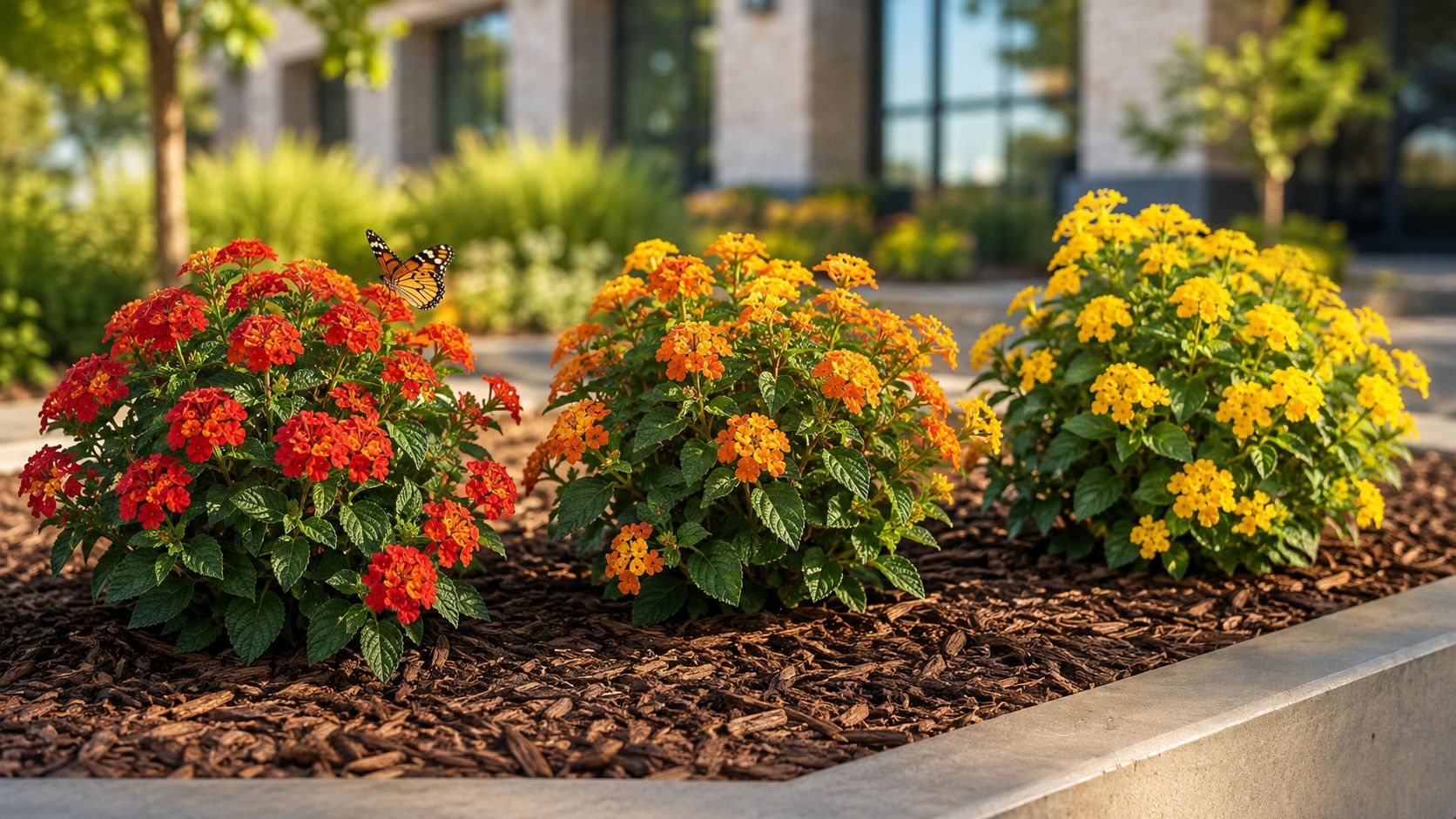
Lantana is one of the easiest plants to justify in a commercial budget discussion because it brings color, pollinator activity, and resilience into the same line item. The plant tolerates heat that would flatten many flowering shrubs, and that makes it especially useful in Texas markets where summer beds have to keep performing after the first irrigation cycle gets stretched. The color range, especially in reds, yellows, oranges, and pinks, gives designers enough flexibility to match property style without sacrificing toughness. See the way Prestonwood recommends full-sun flowering plants for sites that need durable color with less fuss.
How to use Lantana without creating maintenance problems
Lantana works best when it's massed, not sprinkled. Three to five plants together give a stronger visual block than a lone specimen, and that matters in front of retail centers, hospitality entries, and office parks where managers need the bed to read as intentional from the car window. Upright forms are useful near signage and walks, while spreading forms fill larger beds and softscape islands more efficiently.
Overwatering is the fastest way to weaken lantana performance. Let the soil dry between irrigations, then water deeply enough to support rooting instead of surface growth.
Choose dependable forms such as Texas or Gold Flame when the site needs more reliability. Space upright plants with enough breathing room for mature width, and give spreading types a wider footprint so crews aren't constantly cutting them back from sidewalks or curb lines. Early spring pruning removes winter damage and resets the canopy, while deadheading at the start of the season encourages better branching. That kind of light, strategic maintenance is exactly why lantana works well in high-traffic commercial settings.
4. Rosemary
Rosemary earns its place in commercial planting plans because it functions as both an ornamental and a practical evergreen. That matters on properties where beds need year-round structure without adding seasonal replanting costs. The foliage keeps its shape in heat, the fragrance gives walkways and patios a clear sensory cue, and the flowers, when they show up, soften the planting without forcing a color-change program. In San Antonio, it fits Mediterranean-inspired settings naturally, and in DFW it still performs well when drainage and cultivar choice are handled with care.
Upright or spreading, the site decides
Upright forms work as compact screens or low specimen shrubs, while spreading types make more sense where managers want ground-level coverage with little day-to-day intervention. On industrial parks and office campuses, that makes rosemary a dependable backbone plant that holds its form instead of breaking down into bare stems after a stretch of heat. The issue is soil profile, especially in heavy clay where water can sit around the crown too long.
Rosemary hates wet feet more than it hates heat. If the soil stays saturated, the plant declines faster than many managers expect.
That is why xeriscape design principles matter on problem sites, especially where irrigation overshoots the soil's capacity to drain. See what xeriscape landscaping means for water-wise planting decisions when the goal is to match plant choice to soil, exposure, and water use instead of fighting those conditions later.
Planting in fall gives the root system time to establish before summer pressure arrives, and that timing can improve performance under the next irrigation cycle. For DFW sites, hardier cultivars such as Tuscan Blue, Arp, and Hill Hardy are the practical shortlist, while drainage still has to come first on every site plan. If the bed holds moisture, even a tough cultivar will struggle, so the installation spec should call for well-drained soil and careful watering after planting. That keeps the plant useful longer and reduces the kind of replacement work that hurts curb appeal and operating budgets.
5. Desert Marigold
Desert marigold helps a commercial site hold color without turning the planting budget into a recurring repair line. The blooms are bright and straightforward, the plant stays compact enough for low beds and islands, and it handles rough soil conditions that are common near pavement, curb edges, and utility runs. For managers in DFW and San Antonio, that matters because annual color can look good at installation and still become expensive to keep consistent through heat.
Why it works in the places crews dislike most
Parking lot islands, curb cuts, and exposed accent beds punish delicate ornamentals. Desert marigold handles those zones better because it is built for heat and lean soils, and it does not need rich soil to stay presentable. Grouping it in masses gives a cleaner read from the road, which helps when the plants sit low and the site needs rhythm more than height.
Practical rule: Treat Desert Marigold like a repeatable color module. One plant looks incidental, five or more look designed.
Planting in early spring gives the roots time to establish before the hardest heat arrives, and tighter spacing can help the bed close in faster. Light deadheading during bloom keeps the display tidier, while some self-seeding can refresh the stand over time if the manager is comfortable with a looser, naturalized effect. For properties that need a wider pool of dry-site options, drought tolerant landscape plants give crews more room to build beds that hold up in poor soils without constant replacement work.
5. Desert Marigold
Desert marigold is the kind of plant that makes a garden budget easier to defend because it gives a long run of color without requiring constant replanting. The flowers are bright and simple, the size stays manageable for low beds and islands, and the plant fits the rougher soil conditions that often show up around commercial pavement and utility zones. In practical terms, that makes it a strong candidate for places where annual color beds are expensive to maintain and visually inconsistent under heat.
Why it works in the places crews dislike most
Parking lot islands, curb cuts, and sunbaked accent beds tend to punish delicate ornamentals. Desert marigold handles those areas better because it's built for heat and lean soils, and it doesn't demand rich conditions to stay presentable. Massing it in groups gives a cleaner reading from the road, which is important when the individual plants are relatively low and the site needs visual rhythm more than height.
Practical rule: Treat Desert Marigold like a repeatable color module. One plant looks incidental, five or more look designed.
Planting in early spring gives the roots a head start before the toughest heat arrives, and spacing them tightly enough for groundcover density can help the bed close in quickly. Light deadheading during the bloom season keeps the display tidier, while some self-seeding can refresh the stand over time if the manager is comfortable with a looser, naturalized effect. For properties that want lower seasonal labor and more predictable color, it's a strong alternative to beds that rely on frequent annual replacement. It pairs especially well with purple salvia or lantana because the contrast reads clearly from a distance.
6. Purple Heart
Purple Heart, Tradescantia pallida, is often used for color contrast, but on commercial sites its bigger value is consistency. The foliage stays vividly purple through intense heat, which means the plant can carry a premium color story even when flowering plants are between bloom cycles. That makes it especially useful in modern outdoor spaces where managers want strong visual identity without asking crews to manage delicate color beds every few weeks.
Use it as a color anchor, not an afterthought
In South-facing foundation beds and protected courtyard edges, Purple Heart can create a striking look against silver or gold foliage. In retail centers, it reads especially well when placed where customers see it at walking speed, because the color is strong enough to register quickly without becoming loud. For DFW, the plant is best treated as a zone-sensitive choice, and northern exposures may need more caution than San Antonio microclimates.
Late-winter pruning helps reset damaged stems, and heavy mulch improves root protection where winter stress is a concern. Spring planting gives the plant time to establish before the next cold season, which is the right sequence if the goal is to reduce replacement risk. Dense spacing can also turn it into a low, broad groundcover, but that requires the site to have enough protection and moisture management to keep the canopy even.
Purple Heart is most effective when it's part of a deliberate palette, not when it's dropped in as a filler plant. Used next to warm yellows, soft grays, or clipped evergreen structure, it gives a property a clean, contemporary look that survives the worst months better than many more fragile color plants.
7. Desert Rose
Desert Rose, or Adenium obesum, is not a mass-market workhorse, and that's exactly why it has a place on certain properties. It delivers sculptural form, thickened trunks, and showy blooms that can make an entry court, courtyard, or container display feel curated rather than merely planted. For San Antonio hospitality and high-end retail settings, that visual effect can carry a lot of weight with a relatively small number of specimens.
Best used where heat is high but exposure can be controlled
Desert Rose handles drought very well, but it still needs the right setup. In DFW, container use is usually the safer route because it lets managers control winter exposure, while San Antonio offers more in-ground opportunity in protected locations. Extremely well-draining soil is essential, because the plant declines quickly if water lingers around the roots.
Keep Desert Rose dry between irrigations. In winter dormancy, withholding water entirely is part of the maintenance plan, not a mistake.
The plant can create real value in the right microclimate, but it is not the species to use if the crew needs a broad, forgiving bed cover. It's a statement plant, and that means the site has to support its needs with drainage, winter protection, and a watering approach that respects dormancy. In courtyard work, that can be an advantage because the plant becomes an architectural object rather than just another flowering shrub. For managers who want an exotic look in a controlled environment, it's one of the more distinctive heat tolerant perennial plants available.
8. Cuphea Mexican Heather
Mexican Heather, or Cuphea hyssopifolia, gives commercial settings a fine-textured, tidy look that works well where a site needs softness without losing structure. The small flowers and compact habit make it useful in foundation beds, protected entries, and container areas where a refined finish matters. For hospitality and office environments, it often serves as the plant that makes a bed look complete rather than overbuilt.
A good choice for detail work
In DFW, Mexican Heather can handle full sun if moisture is consistent, while in San Antonio a bit of afternoon shade helps it stay cleaner through extreme heat. That flexibility makes it useful in places where the sun exposure changes across the property. It also works as a low, attractive bridge between taller shrubs and broader groundcover, which helps designers avoid awkward gaps in the bedline.
Spacing matters here. Tight spacing gives quicker coverage, but the plant still needs room for air movement so the crowns don't stay damp and weak. Light spring pruning keeps the form compact, and mulch should be kept off the crown to reduce rot risk. During hot, dry periods, crews should watch for spider mites, because stress can show up there before it becomes obvious to everyone else.
Mexican Heather isn't the boldest plant in the list, but it's one of the most useful for finishing work. On a property where detail, order, and low maintenance all matter, that's enough to make it valuable.
Comparison of 8 Heat-Tolerant Perennials
| Plant | Implementation complexity | Resource requirements | Water & soil needs | Expected outcomes | Ideal use cases | Key advantages |
|---|---|---|---|---|---|---|
| Esperanza (Tecoma stans) | Moderate, spring planting, annual pruning, frost protection in colder sites | Low ongoing maintenance, minimal pesticides, occasional frost protection in DFW | Drought-tolerant once established, tolerates poor soils, needs full sun and good drainage | High visual impact: continuous bright yellow blooms summer–fall; 6–8 ft fast grower | Entrances, parking islands, focal beds | Long bloom season, low irrigation, fast establishment |
| Lantana | Low, easy to establish and mass | Very low ongoing maintenance, occasional light pruning, monitor self-seeding | Excellent drought tolerance once established; tolerates poor soils; allow to dry between waterings | Long, prolific bloom season; strong pollinator attraction; variable heights (1–6 ft) | Foundation plantings, perimeters, mixed borders, parking screening | Pollinator-friendly, virtually pesticide-free, long season color |
| Salvia (Autumn/Desert Sage) | Moderate, select cultivars, improve drainage, prune to avoid legginess | Low maintenance long-term, occasional pruning, soil amendment in heavy clay | Extremely drought-tolerant with excellent drainage; reduce overwatering | Refined texture, hummingbird/pollinator attraction, 2–4 ft, long-lived | Entry foundation, pollinator gardens, mixed borders | Sophisticated aesthetic, pollinator magnet, water-efficient |
| Rosemary (upright/spreading) | Low–Moderate, amend soils for drainage, regular pruning to prevent woodiness | Minimal irrigation after establishment, low pest pressure, pruning for shape | Mediterranean needs: excellent drainage, minimal water, evergreen in most TX sites | Year-round structure and fragrance; screening or groundcover depending on form | Screening, foundation plantings, containers, mixed borders | Evergreen year-round, edible/functional, multiple form options |
| Desert Marigold (Baileya) | Low, simple mass planting and occasional deadheading | Very low maintenance; periodic replacement every few years possible | Thrives in poor, sandy/rocky soils; zero supplemental water after establishment; excellent drainage | Low-growing groundcover (8–18 in) with continuous bright yellow blooms spring–frost | Parking islands, mass color beds, difficult soil areas, medians | Reliable, low-input color; native; ideal for poor soils |
| Purple Heart (Tradescantia pallida) | Low–Moderate, full sun placement, mulch for winter, prune for shape | Moderate initial watering, low long-term irrigation, may need seasonal replacement in cold | Moderate drought tolerance once rooted; needs full sun for best purple color and good drainage | Year-round purple foliage with subtle pink flowers; 2–4 ft (or dense groundcover) | Contemporary foundations, accent borders, protected south/west exposures | Consistent foliage color, sophisticated tropical look, low maintenance |
| Desert Rose (Adenium obesum) | High, strict drainage, container use or protected microclimate, winter protection | Low water but high care for drainage and frost protection; slow to mature | Succulent: minimal water, excellent drainage required; deciduous with frost | Distinctive specimen with sculptural trunk and showy flowers; strong focal interest | Courtyards, containers, high-end focal specimens, protected DFW microclimates | High-impact architectural specimen, container flexibility, drought-adapted |
| Cuphea (Mexican Heather) | Low–Moderate, plant spring, provide consistent moisture at start, occasional pruning | Moderate irrigation during establishment, monitor for spider mites, light maintenance | Prefers consistent moisture while establishing; tolerates heat but is less drought-tolerant than natives | Continuous small flowers from spring–frost; compact 2–3 ft refined habit | Foundation plantings, containers, raised borders, under-canopy areas | Fine texture, continuous bloom, naturally compact and low-prune |
From Planting to Partnership Long-Term Landscape Success
Choosing the right heat tolerant perennial plants is the first move toward a planting design that looks better and costs less to run. The better long-term results come from matching plant habit to site stress, then backing that choice with good soil preparation, smart irrigation timing, and maintenance that supports the plant instead of constantly correcting it. That approach matters in DFW and San Antonio because heat is only one part of the equation. Reflective pavement, tight root zones, and inconsistent watering are what usually push attractive beds into decline.
The broader market direction supports that strategy. The perennials market is projected to grow from about USD 8.5 billion in 2024/2025 to USD 12.3–14.49 billion by 2032–2033, with a projected ~4.9% to 7.0% CAGR depending on the research firm, which signals that resilient, lower-input planting systems are becoming a more important part of planning (global perennials market forecast). That doesn't mean every heat-tolerant plant is automatically right for every property. It does mean managers have more reason than ever to specify plants that can hold curb appeal through stress, not just peak for a few weeks and then fall apart.
The maintenance side still matters. Heat-tolerant perennials perform best when crews water less often, at the right time of day, and with proper soaking and early-morning irrigation management (garden guidance on drought-tolerant perennials). That's where a commercial partner can make the difference between a decent install and a durable one. Prestonwood Commercial Landscape Services works across Dallas-Fort Worth and San Antonio with design, installation, irrigation management, and ongoing maintenance that supports long-term performance rather than short-term patch jobs. For properties that need reliable curb appeal and fewer surprises, that kind of service model is the right fit. If you're ready to improve your planting plan and reduce summer friction, visit Prestonwood Commercial Landscape Services and start a conversation about your site.